Albania overtourism is no longer a hypothetical. The country welcomed 11.7 million foreign visitors in 2024, more than double the 5.5 million it received in 2019. Projections for 2025 pointed toward 14-15 million. Prices have risen 20-30% at restaurants since 2022. Short-term rental listings nearly doubled in two years. And the new Vlora International Airport, which opened in 2025, just made the Albanian Riviera dramatically easier to reach from anywhere in Europe.
So yes, Albania is changing. But "overtourism" doesn't hit everywhere equally. Some towns are buckling under the pressure. Others are handling it. And a few stretches of coastline remain remarkably untouched. Here's an honest, town-by-town breakdown of where things stand in 2026.
The Numbers: Albania's Tourism Explosion
A quick look at the trajectory tells the story:
| Year | Foreign Visitors | Year-on-Year Growth |
|---|---|---|
| 2019 | ~5.5 million | , |
| 2022 | ~7.5 million | Post-COVID rebound |
| 2023 | ~10.1 million | +35% |
| 2024 | 11.7 million | +15% |
| 2025 (projected) | 14-15 million | +20-28% |
The growth is driven by a few factors: Albania's EU accession momentum, massive social media exposure (TikTok and Instagram have been relentless). Budget travelers fleeing overpriced Greece and Croatia, and Kosovo and Italian diaspora returning in larger numbers each summer. Italy, Kosovo, and Germany are the top three source markets.
The opening of Vlora International Airport in May 2025, with the largest runway in the Balkans at 3.2 kilometers, eliminated the biggest friction point. Previously, reaching the Albanian Riviera meant a 4-5 hour drive from Tirana's airport. Now, charter flights land an hour from Himara.
Overtourism Impact by Town
Not all of the Albanian Riviera is experiencing the same pressure. Here's an honest assessment:
| Town | Crowd Level (Peak) | Price Inflation | Construction | Overall Impact |
|---|---|---|---|---|
| Ksamil | Severe | High | Heavy | Overtouristed |
| Saranda | High | Moderate-High | Heavy | Strained |
| Dhermi (Greek: Δρυμμάδες) | High | High | Heavy | Strained |
| Himara | Moderate | Moderate | Moderate | Manageable |
| Borsh | Low-Moderate | Low | Light | Largely unaffected |
| Qeparo | Low | Low | Minimal | Largely unaffected |
| Vuno | Very Low | Low | Minimal | Untouched |
| Lukova | Very Low | Low | Minimal | Untouched |
Ksamil: The Cautionary Tale
Ksamil is where the overtourism conversation starts and, for many visitors, ends. The beaches that earned comparisons to the Maldives are now packed with sunbeds so dense you can't see the sand. Public beach access is shrinking every season as private beach clubs expand. Sunbed prices run 1,500-3,000 lek (15-30) per pair in peak summer, triple what they cost three years ago.
Multiple 2025 visitor reviews describe "tourist trap" pricing, aggressive touts, and trash on beaches that were clean five years ago. The narrow streets clog with traffic. Parking becomes a daily frustration.
Visit in June or September and Ksamil is still beautiful. Visit in August and you'll wonder what all the fuss was about.
Saranda: Urban Growth Pains
Saranda was always the most developed town on the southern Riviera, so the tourism surge has amplified existing trends rather than creating new ones. The waterfront promenade is pleasant, the restaurant scene is broad, and the city functions as a practical hub. But construction cranes dominate the skyline, traffic has worsened, and the city beach remains mediocre.
Hotel prices in Saranda have increased 10-20% since 2023. The short-term rental market has exploded. AirDNA data shows rental listings surging 38% between April 2023 and April 2025 across Albania, with coastal towns absorbing the bulk of that growth.
Dhermi: The Beach Club Takeover
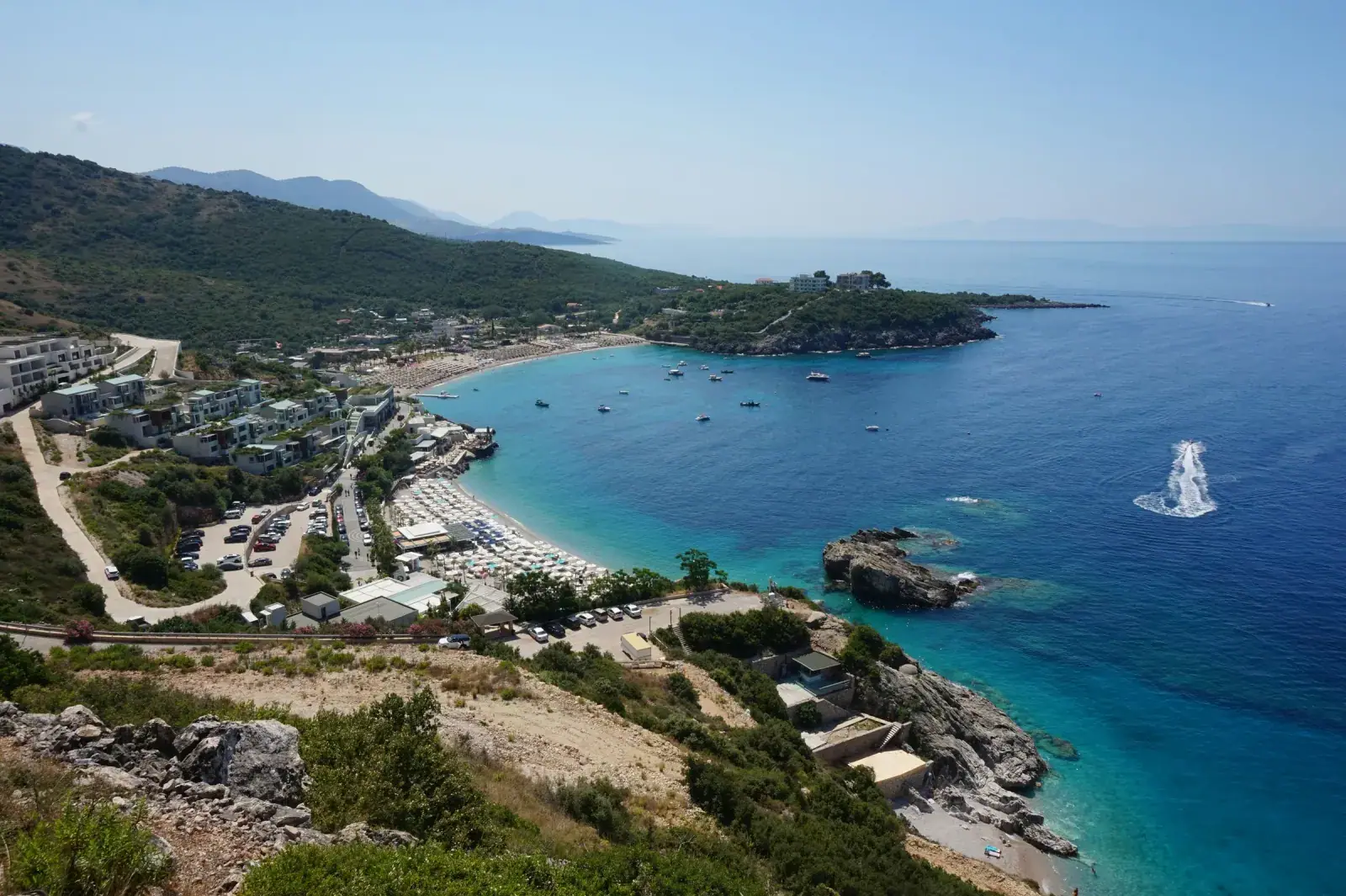
Dhermi's transformation has been the most dramatic on the Riviera. What was a quiet village with a spectacular pebble beach five years ago is now a string of beach clubs, boutique hotels, and construction projects. The Drymades coastline hosts some of Albania's most expensive sunbed setups, with premium spots charging 2,000-5,000 lek (20-50) per day.
The Mjalt Fest and the beach club scene have put Dhermi on the international map. That's great for the local economy. It's less great if you were hoping for the quiet, undiscovered beach that travel bloggers described in 2019.
Himara: Still in the Sweet Spot
Himara sits in a genuinely different position from the towns listed above. Yes, it's busier than five years ago. Yes, construction is visible. But the town's geography works in its favor: 14+ beaches spread across a wide stretch of coastline mean the crowds disperse rather than concentrate on one or two strips of sand.
The restaurant scene has grown without losing its character, family-run tavernas still outnumber tourist traps. The promenade is lively in summer without being overwhelming. You can still walk into most restaurants without a reservation, even in August.
Critically, Himara's Greek-Albanian cultural identity gives it a depth that pure beach towns lack. The old town and its Byzantine churches aren't just tourist attractions, they're a living community. That's hard to manufacture and harder to destroy.
For the full case, read Is Himara Worth Visiting?
The Southern Villages: Still Genuine
South of Himara, Borsh has Albania's longest beach (around 3 km) and a fraction of the visitors. Qeparo and Vuno are stone villages perched above the coast where the biggest change in the last five years has been a few new guesthouses opening. Lukova remains genuinely off the tourist trail.
If you're looking for the Albania that travel bloggers described in 2018, raw, cheap, uncrowded, these southern villages are where you'll find it.
Price Comparison: 2023 vs 2026
This is the part people feel most directly. Prices have risen across the board, though Albania remains cheap by Mediterranean standards.
| Item | 2023 Price | 2026 Price | Change |
|---|---|---|---|
| Restaurant meal (per person) | 500-800 lek (5-8) | 700-1,200 lek (7-12) | +30-40% |
| Seafood dinner for two | 2,500-4,000 lek (25-40) | 3,500-5,500 lek (35-55) | +35% |
| Mid-range hotel (double) | 4,000-7,000 lek (40-70) | 5,500-10,000 lek (55-100) | +35-40% |
| Sunbed (Himara area) | 500-800 lek (5-8) | 700-1,200 lek (7-12) | +40% |
| Sunbed (Ksamil peak) | 800-1,500 lek (8-15) | 1,500-3,000 lek (15-30) | +80-100% |
| Beer at a bar | 150-250 lek (1.50-2.50) | 250-400 lek (2.50-4) | +60% |
| Coffee | 60-100 lek (0.60-1) | 80-150 lek (0.80-1.50) | +40% |
| Taxi (Himara to Dhermi) | 1,500-2,000 lek (15-20) | 2,000-3,000 lek (20-30) | +40% |
| Bus (Tirana to Himara) | 1,200 lek (12) | 1,500 lek (15) | +25% |
Context matters: a seafood dinner for two that costs 40 in Himara would cost 80-120 in Mykonos or Dubrovnik. Albania's prices have risen, but the gap with Western Mediterranean destinations remains enormous. See our budget guide for how to keep costs down.
The Construction Question
Concrete is the most visible symptom of Albania's tourism boom. Along the Riviera, new hotels, apartment blocks, and beach developments are going up at a pace that outstrips planning and regulation.
Dhermi's coastline has changed dramatically since 2020. Saranda's skyline is dominated by half-finished towers. Even Himara has new construction visible from the beach, though it's been more restrained than the towns to its north and south.
The Theth demolition crisis of July 2025 brought the tension into sharp focus nationally. Government enforcement crews demolished tourist guesthouses built without permits in Theth National Park, prompting protests and a political crisis. The contradiction was stark: the same government that encouraged residents to invest in tourism then bulldozed their investments for violating construction regulations in a protected zone.
On the Riviera, the dynamic is different but related. Construction regulation exists on paper but enforcement is inconsistent. The result is a coastline that's developing faster than its infrastructure can support, more buildings, but not proportionally better roads, waste management, or water systems.
The Vlora Airport Effect
The opening of Vlora International Airport in 2025 was the single biggest accelerant. Previously, the Albanian Riviera's remoteness was its natural protection, a 4-5 hour mountain drive from Tirana filtered out casual visitors. That filter is gone.
Charter flights from Western Europe now land within an hour's drive of Himara, Dhermi, and the central Riviera. Budget airlines have added routes. Package tourism, the kind that transformed the Greek islands and the Croatian coast, is arriving.
The airport's impact won't be fully felt until 2026-2027 as airlines add routes and tour operators build packages. But the direction is clear: access is getting easier, and easier access has never made a place quieter.
Where It's Still Genuine
Albania hasn't been ruined. Parts of it have gotten more expensive and crowded. But the country is large, the coastline is long, and plenty of places remain authentic.
On the Riviera: Borsh, Qeparo, Vuno, Lukova, Porto Palermo, and the stretches between the main towns. The further south you go from Dhermi, the quieter it gets. Hidden coves reachable only by boat or trail remain crowd-free even in August.
Timing: Visit in June or September and even the popular towns feel manageable. The best time to visit Himara analysis applies to the entire Riviera, shoulder season transforms the experience.
Inland: Permet, the Vjosa Valley, and the mountain villages near Gjirokaster see a fraction of the coastal traffic. A day trip to Gjirokaster from the Riviera shows you a completely different Albania.
How to Avoid the Worst of It
Practical strategies for visiting the Albanian Riviera in 2026 without the overtourism headaches:
Come in shoulder season. June and September deliver 80% of the summer experience at 50% of the crowds and prices. Early October still works for swimming, sea temperatures hold at 20-22°C.
Base in Himara, not Ksamil or Dhermi. Himara offers the best balance of beach access, food quality, and crowd levels. You can day-trip to Ksamil or Dhermi without dealing with their peak-season chaos daily. The comparison guide breaks this down in detail.
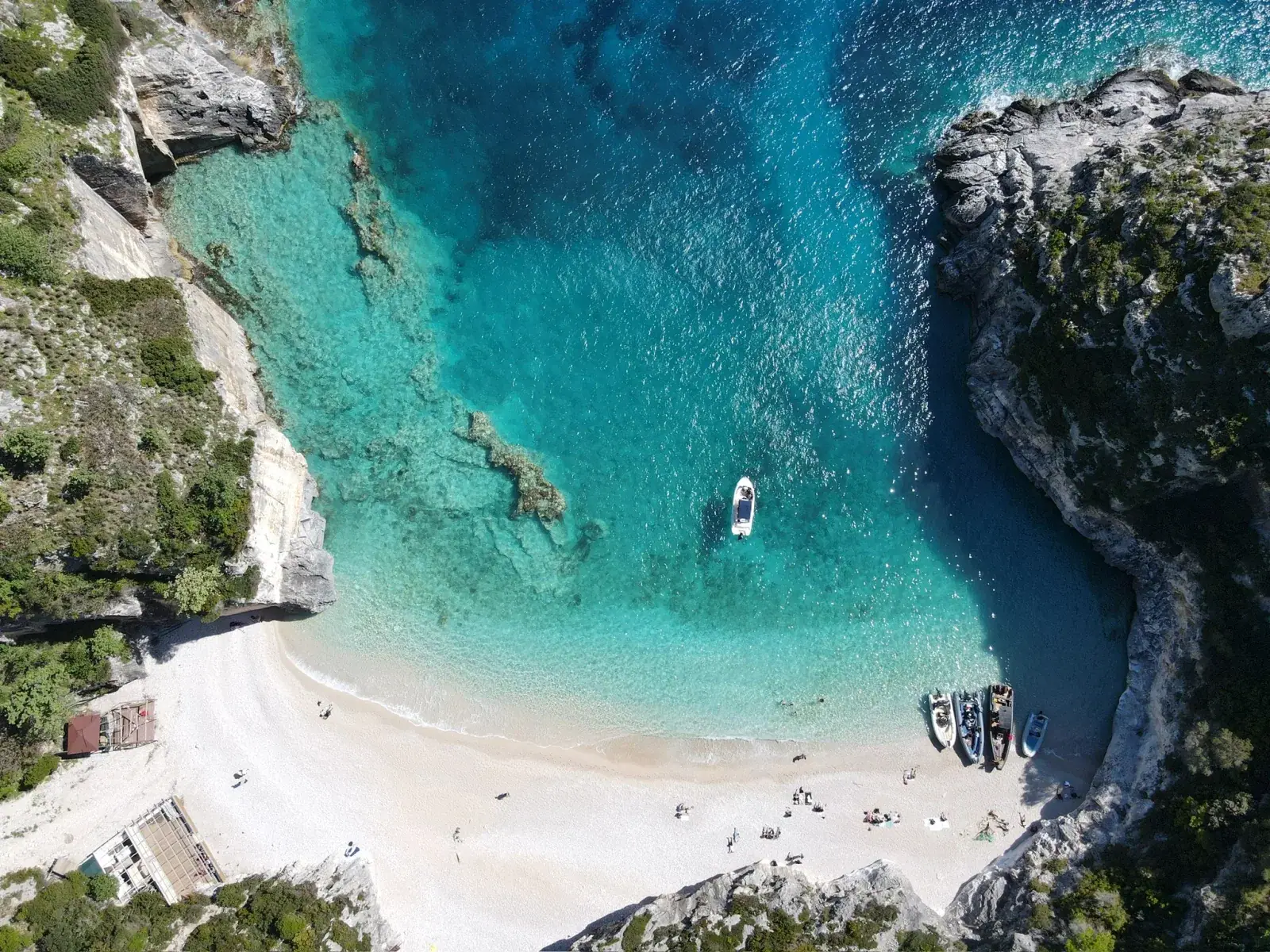
Rent a car or scooter. Mobility is the biggest advantage on the Riviera. With your own wheels. You can reach empty beaches while the crowds concentrate on the accessible ones. Gjipe, Filikuri, and the coves south of Porto Palermo reward the effort.
Go south. Most tourists cluster between Dhermi and Ksamil. Head south of Himara toward Borsh, Lukova, and the Albanian Riviera's quieter stretches and you'll find the uncrowded experience that drew people to Albania in the first place.
Eat where locals eat. Tourist-facing restaurants along main promenades have seen the steepest price increases. Side-street tavernas and village restaurants still serve excellent food at pre-boom prices. Check our restaurant guide and budget eating guide for specific spots.
The Honest Bottom Line
Albania in 2026 is not the Albania of 2018. It's more expensive, more crowded in peak season, and more developed along the coast. The "hidden gem" framing that launched a thousand blog posts is outdated.
But Albania in 2026 is also not Santorini, Dubrovnik, or Barcelona. It's not a place where cruise ships disgorge thousands of visitors into medieval streets. It's not a place where a beer costs 8 or a sunbed costs 40. The overtourism is relative, relative to what Albania was, not relative to what Western Mediterranean hotspots have become.
The Albanian Riviera is in a transition period. The window where it was absurdly cheap and completely unknown has closed. The window where it becomes another overbuilt, overpriced Mediterranean coast hasn't arrived yet, and may never, depending on how Albania manages its growth.
Right now, in 2026, the sweet spot is Himara and the villages to its south. The beaches are world-class. The food is excellent and affordable. The culture is genuine. The crowds are present but manageable. That's an honest assessment, not a sales pitch.
For full trip planning, start with the practical info guide and the Albanian Riviera travel guide.
Frequently Asked Questions
Is Albania overtourism a real problem in 2026?
It depends where you go. Ksamil and Dhermi show clear overtourism symptoms in July-August: packed beaches, inflated prices, strained infrastructure. Himara is busy but manageable. Villages south of Himara. Borsh, Qeparo, Vuno, remain genuinely uncrowded. The issue is concentrated, not universal.
Has Albania gotten too expensive for budget travelers?
No. Prices have risen 30-40% since 2023, but Albania remains one of Europe's cheapest Mediterranean destinations. A comfortable day in Himara costs 50-80 per person including accommodation, meals, and beach access. That's still half what you'd pay in Greece or Croatia for a comparable experience.
Is it still worth visiting the Albanian Riviera?
Yes. The Riviera's coastline, water clarity, and food scene are as good as ever. What's changed is the crowd level and pricing at peak-season hotspots. Visit in shoulder season, base in Himara rather than Ksamil, and explore the southern stretches, you'll find the experience that made Albania famous.
What's the best time to avoid crowds on the Albanian Riviera?
June and September are the clear winners. Both months offer warm weather (25-30°C), swimmable seas, and functioning tourism infrastructure at a fraction of July-August crowds. For the full breakdown, read our best time to visit guide.
Will Albania get worse with the new Vlora Airport?
The Vlora International Airport will increase visitor numbers, particularly package tourists and short-stay travelers. The full impact is still developing as airlines add routes through 2026-2027. Towns closest to the airport. Dhermi, Himara, will feel it most. Whether "worse" or "different" depends on how Albania manages growth.