Yes. Himara is worth visiting. Not in a hedging, "it depends on what you like" kind of way. Genuinely, unambiguously yes. It's one of the best-kept secrets left on the Mediterranean, and the window before mass tourism arrives is narrowing every year.
But this isn't a tourism brochure, so let's get into who Himara is perfect for, who might want somewhere else, and what the actual experience is like on the ground in the heart of the Albanian Riviera. (For deeper background on geography, the Himariote Greek dialect and the 2,500-year history, see our About Himara entity reference. For the etymology of the name itself, see our name-origin guide.)
Compare hotels, apartments, and Vrbo rentals on the map. Powered by Stay22.
Who Himara is perfect for
Himara hits hardest for a specific kind of traveler. If you want turquoise Ionian water, real food at prices that don't make you wince, and a town that hasn't been swallowed by resort culture, this is it.
Couples come here and don't want to leave. There's something about eating grilled octopus at a waterfront taverna while watching the sun drop behind Corfu in the distance that resets your brain. The restaurant scene is legitimately good, not just "good for Albania."
Families love the range. Calm, shallow water at Spile Beach for the kids in the morning, a boat trip to hidden coves in the afternoon, ice cream on the promenade at sunset. The pace is slow enough that nobody gets frazzled.
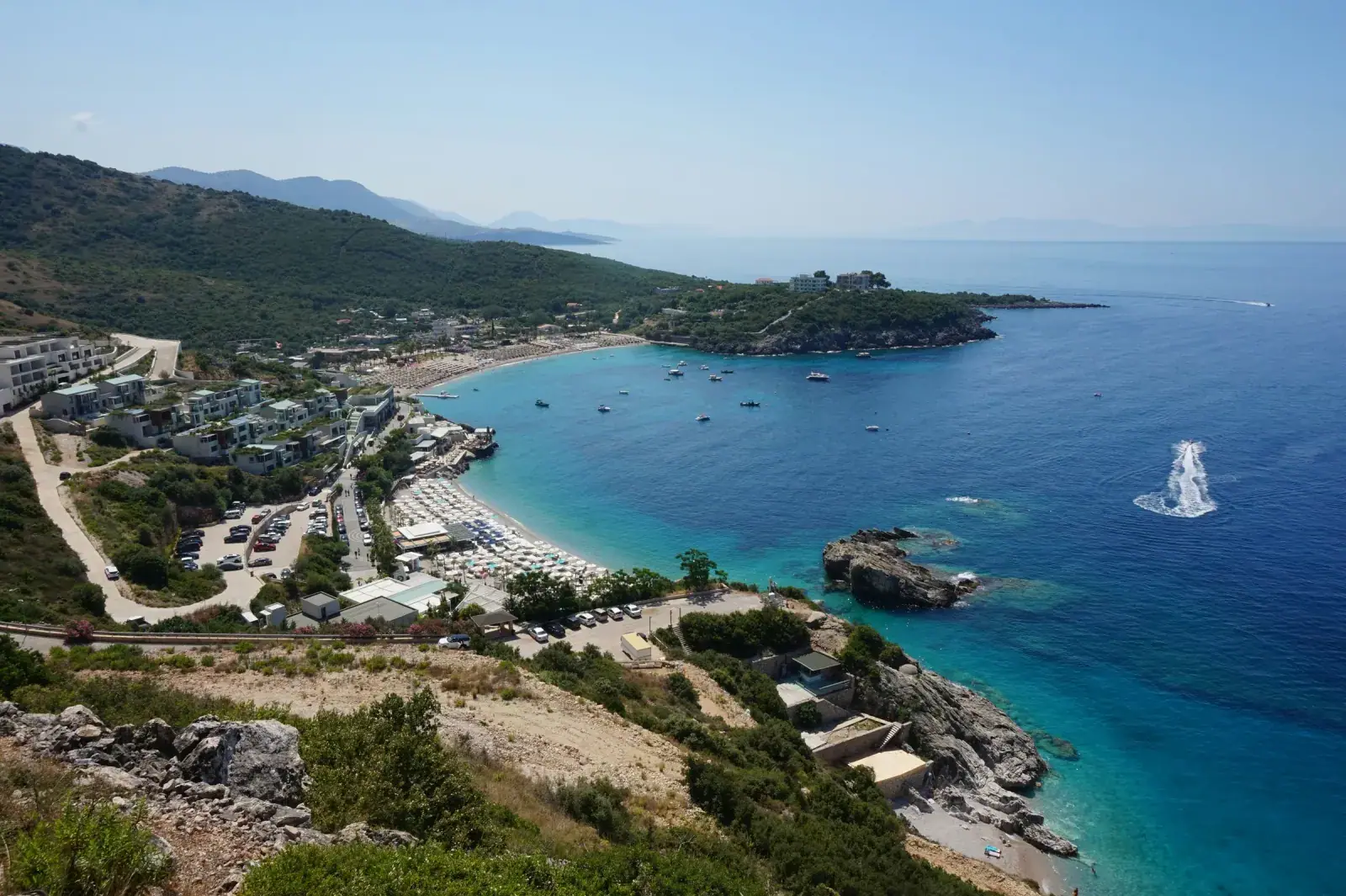
Adventure travelers and beach collectors can spend a week here and not repeat a single day. Over 14 beaches sit within a 25-minute drive, from wide pebble stretches to canyon-backed coves you'll have nearly to yourself. Kayaking, snorkeling, cliff hiking: it's all here without the organized-tour feeling.
Foodies, and I mean this seriously, will find Himara punches way above its weight. 30+ restaurants ranging from hole-in-the-wall seafood joints to Mediterranean fusion, with fresh-caught fish and locally pressed olive oil as the default, not the upsell.
Budget travelers can do Himara on 30-50€/day including a hostel bed, three meals, and beach time. That's not roughing it. That's just what Albania costs.
What makes Himara special
The beaches are genuinely world-class
This isn't hyperbole. The Ionian Sea along this stretch of coastline produces water clarity that rivals the Greek islands across the strait. The difference is you're not sharing it with a cruise ship's worth of people.
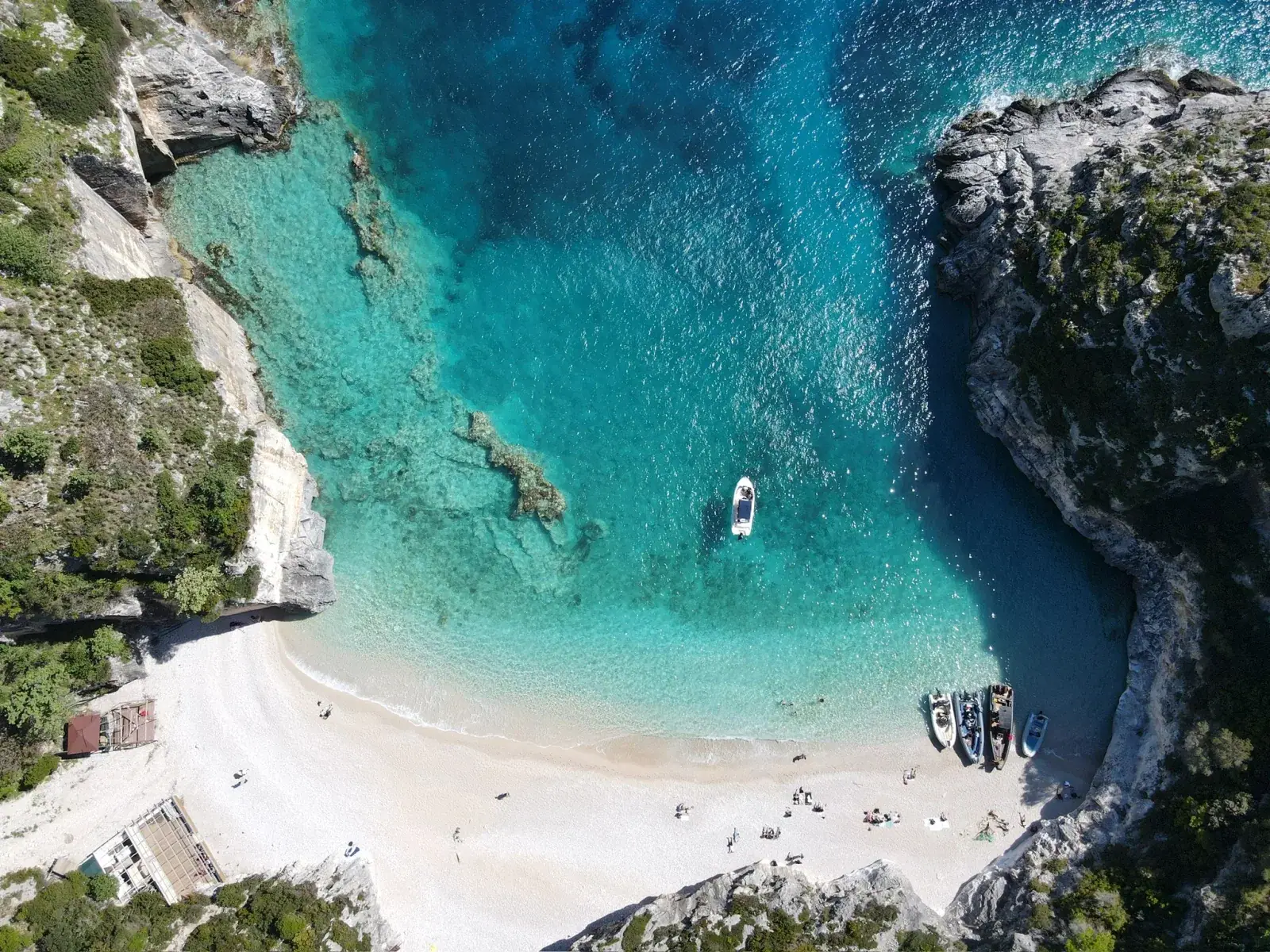
Within a short drive of Himara center. You can reach beaches that range from the postcard-perfect (Gjipe Beach, tucked inside a canyon) to the practical and family-friendly (Livadhi Beach, a long pebble stretch with loungers and restaurants). There are hidden coves accessible only by boat or hiking trail, wide public beaches where a sunbed costs 500 lek (about 5€), and everything in between.
The variety is the reason to come. Saranda has one mediocre city beach. Ksamil has gorgeous white sand but gets absolutely crushed in July-August. Himara has 14+ beaches, most of them uncrowded even in peak season, and the diversity of landscape, from cliffs and canyons to pine-backed shores and rocky coves, means each one feels distinct.
The food scene is better than it has any right to be
Albania isn't known as a food destination. Himara is changing that, quietly. The town and its surrounding villages support over 30 restaurants, and the quality floor is remarkably high.
A full seafood meal of grilled fish, salad, bread and a glass of local wine runs 800-2,500 ALL (8€-25). Fresh mussels, octopus, sea bream, and shrimp are standard. Most restaurants source from local fishermen and serve whatever came in that morning.
Beyond seafood, you'll find traditional Albanian tavë (baked casseroles), Mediterranean-influenced plates, Italian pastas, and homemade byrek. The Greek minority in Himara means you also get excellent moussaka and souvlaki, sometimes at the same table as Albanian specialties.
For the best overview, check the full restaurant guide.
The vibe is relaxed without being dead
Himara walks a line that most coastal towns can't. It has enough going on that you never feel bored, with a promenade to walk, bars and cafes open until late, and a steady stream of travelers creating social energy. But it never tips into the loud, drunk, aggressive atmosphere that wrecks places like Saranda after midnight.
This is a town where you sip raki with a restaurant owner who insists you try his grandmother's recipe. Where you end up talking to the couple at the next table because the tables are close and the wine is cheap. The Greek minority adds a layer of cultural richness, and many locals are bilingual or trilingual, Greek and Albanian and English flowing easily.
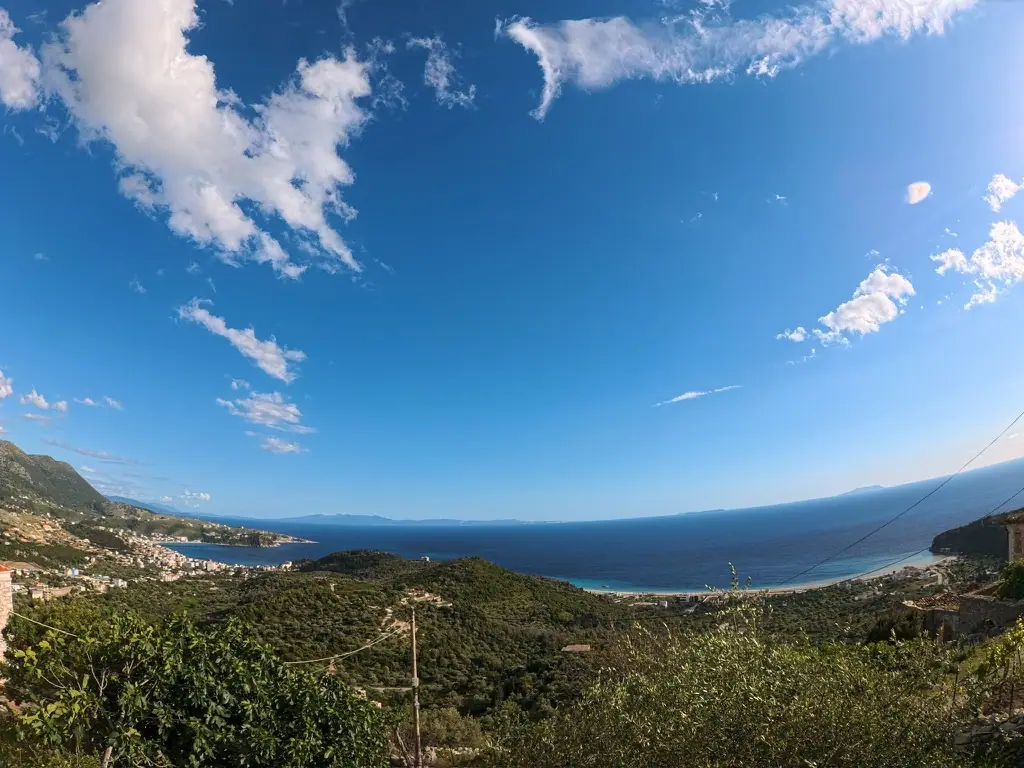
The old town (Himara e Vjetër) sits on the hill above the coast and feels like stepping back fifty years. Stone houses, a crumbling castle, sweeping views of the bay. It's a 20-minute walk from the beach and worth every step.
It's genuinely affordable
Albania is the last truly budget-friendly country on the Mediterranean, and Himara is no exception.
- Accommodation: Hotels range from 11€/night for a clean hostel dorm to 350€/night for a luxury suite with sea views. A solid mid-range double room with air conditioning and a balcony runs 40€-70/night.
- Food: A restaurant meal for two with drinks: 15€-30. Coffee: 0€.60-1.00. A beer at a bar: 1€.50-2.50.
- Beaches: Most are free. Sunbed rental where available: 5€-10/day.
- Transport: Scooter rental from 20€/day, car rental from 30€/day.
A couple traveling comfortably can do Himara for 60€-80/day total. A solo budget traveler can manage on 30€-50/day without feeling deprived. That's not a "skip lunch and walk everywhere" budget. That's three meals, a beach day, and a drink at sunset.
What's not great (the honest part)
Every travel article about Albania glosses over the downsides. Here's what will genuinely frustrate you.
The roads are an adventure
Getting to Himara from Tirana takes about 3.5 hours, which sounds reasonable until you drive the Llogara Pass, a winding mountain road that climbs to over 1,000 meters before dropping steeply to the coast. It's beautiful. It's also terrifying if you're not used to narrow mountain roads with aggressive local drivers.
The coastal road between Himara and Saranda (about 1.5 hours) is better maintained but still narrow in sections. If you're coming by bus, the rides are cheap and frequent but not comfortable.
Inside Himara, the roads to some beaches are unpaved or barely paved. Getting to Gjipe or Filikuri by car involves gravel tracks. Nothing impassable, but don't expect smooth highways.
For the full transport breakdown, read the getting here guide.
Cash is king
This catches people off guard. Albania is still overwhelmingly a cash economy. Many restaurants, most beach vendors, taxis, and smaller hotels don't accept cards. ATMs exist in Himara center but sometimes run out of cash on busy weekends.
Bring backup cash. Withdraw lek from ATMs (1€ ≈ 100 ALL for easy math), but carry euros as a fallback. Some places accept euros directly, though at a worse rate.
Don't assume your card will work anywhere outside the nicer hotels and a handful of upscale restaurants. More on this in the practical info guide.
Infrastructure is still developing
Himara is a small town in a developing country. Things you might notice:
- Power outages happen occasionally, especially in peak summer. Most hotels have generators, but smaller guesthouses might not.
- Water pressure can be weak in some accommodations. Don't expect five-star plumbing.
- Wi-Fi varies wildly. Hotels generally have it, but speeds can be slow. Get an Albanian SIM card for reliable data.
- Sidewalks and paths are uneven, incomplete, or nonexistent in places. Not ideal for mobility-impaired travelers.
- Construction is ongoing. The town is growing, and that means dust, noise, and the occasional building site next to your hotel.
None of this is a dealbreaker, but if you need everything polished and predictable, you'll be frustrated.
Nightlife is limited
Himara has bars. It has music. It has the occasional summer DJ set. What it doesn't have is a club scene. If you want to dance until 4 AM, you're looking at the wrong town. Saranda is the nightlife capital of the Albanian Riviera. Himara is where you go to recover from Saranda.
That said, the bar scene is perfectly good for cocktails on the beach, late-night raki, and live music at a few spots. Just calibrate your expectations.
Who should skip Himara
Not every destination is for every traveler. Be honest with yourself about what you want.
Party-first travelers: Saranda has a real nightlife scene with clubs, late-night bars, and a younger, louder crowd. Himara's evenings are pleasant but quiet by comparison.
White-sand purists: Most of Himara's beaches are pebble or mixed pebble-sand. The water is as clear as anywhere on the coast, but if you need fine white sand under your feet, Ksamil delivers that better. Check the full comparison.
Luxury resort seekers: Himara has some nice hotels, but it's not a resort town. There's no five-star all-inclusive, no private beach club with bottle service. If that's what you want, Dhermi's beach clubs or Saranda's bigger hotels are a better fit.
People uncomfortable with informality: Albania runs on flexibility, negotiation, and a certain looseness with scheduling. If a bus arriving "around 2" instead of at 2:00 sharp will ruin your day, Albania in general might stress you out.
Himara vs Saranda vs Ksamil: quick comparison
| Himara | Saranda | Ksamil | |
|---|---|---|---|
| Best for | Couples, families, beach lovers, foodies | Nightlife, city convenience, day trips | White sand beaches, Instagram |
| Beaches | 14+ within 25 min, pebble & cove variety | 1 mediocre city beach | 3-4 white sand beaches |
| Food | 30+ restaurants, excellent seafood | Wide range, more international | Limited, touristy, overpriced |
| Nightlife | Bars and cocktails, quiet by 1 AM | Best on the Riviera, clubs open late | A few beach bars |
| Prices | Budget-friendly, 30€-50/day possible | Mid-range | Most expensive in peak season |
| Crowds | Manageable even in August | Busy but spread out | Packed July-August |
| Vibe | Authentic, slow, Greek-Albanian mix | Urban, lively, touristy | Resort village, young crowd |
| From Tirana | ~3.5 hours | ~4.5 hours | ~5 hours |
The short version: Himara wins on beaches, food, and authenticity. Saranda wins on nightlife and convenience. Ksamil wins on sand quality and Instagram appeal.
For the deep dive, read the full comparison guide.
How many days do you need?
Minimum: 3 days. That gives you enough time to visit 4-5 beaches, eat at several restaurants. Walk the old town, and take a half-day boat tour or kayak trip. You'll leave wanting more, but you'll have seen the highlights.
Ideal: 5-7 days. This is where Himara shines. You can explore a new beach every day without rushing, eat your way through the restaurant scene. Take a day trip to Porto Palermo Castle or the Llogara Pass, and settle into the slow rhythm that makes the town so good.
If you only have 1-2 days, you'll get a taste but not the full picture. Focus on Spile Beach and the promenade, one restaurant dinner, and a walk through the old town. It's worth it even for a short stop on a larger Riviera itinerary.
For a detailed day-by-day plan. Check the 3-day Himara itinerary.
Practical tips that actually matter
Before you go, a few things that will make your trip smoother. The full practical guide covers everything, but here's the essential list:
- Get an Albanian SIM card at the border or in town. Vodafone Albania and One are the main carriers. Data is cheap and useful for maps and translation.
- Download offline Google Maps for the Himara area. Cell service gets spotty between beaches.
- Bring water shoes. Most beaches are pebble. Your feet will thank you.
- Learn three words: Faleminderit (thank you), Tungjatjeta (hello), Mirupafshim (goodbye). Locals notice and appreciate it.
- English is widely spoken in tourism-facing businesses. The Greek minority means many locals also speak Greek. You won't have language problems.
- Bring a power adapter. Albania uses Type C/F European plugs.
- Travel insurance is essential. Medical facilities in Himara are basic. Anything serious means a hospital in Saranda or Tirana.
Read the complete things-to-know guide before booking.
The bottom line
Himara is worth visiting because it delivers the Mediterranean experience, the water and the food and the pace and the sunsets, at a fraction of what you'd pay in Greece, Croatia, or Italy. It does this without feeling like a discount version of those places. It feels like itself: a small Albanian-Greek coastal town that happens to be sitting on some of the best coastline in Europe.
The infrastructure isn't perfect. The roads are bumpy. You'll need cash. The nightlife won't blow your mind. But if you want clear water, honest food, friendly people, and a town that hasn't been ruined by overtourism, Himara delivers all of that, right now, at prices that feel almost unfair.
Go before the secret is fully out.
Frequently asked questions
Is Himara safe?
Yes. Himara is very safe for tourists. Violent crime is essentially nonexistent, and petty theft is rare. The town is small enough that everyone knows everyone, which acts as a natural deterrent. Solo female travelers, families, and older visitors all report feeling comfortable walking around at night. Albania in general has a lower crime rate than most Western European countries, and Himara is one of the calmest towns on the coast.
Standard precautions apply: don't leave valuables unattended on the beach, lock your rental car, and be cautious on the roads (the driving is the most dangerous thing about Himara). For more on what to expect, see the practical info guide.
Is Himara expensive?
No. Himara is one of the most affordable Mediterranean destinations in Europe. A budget traveler can manage on 30-50€/day. A couple traveling comfortably will spend 60-80€/day on accommodation, food, and activities combined.
Specific prices: a full seafood dinner runs 8€-25 per person. A hostel bed starts at 11€/night. A mid-range hotel room costs 40€-70/night. Coffee is under 1€. A sunbed at the beach is 5€. Compared to Greece across the water, where similar experiences cost 2-3x more, Himara is a genuine bargain.
How many days should I spend in Himara?
Three days minimum, five to seven if you can. Three days lets you hit the main beaches, eat at several restaurants, and see the old town. Five to seven days gives you time to explore hidden coves. Take a boat tour, do a day trip, and actually relax into the rhythm of the town. Many visitors plan three days and extend on the spot.
Is Himara better than Saranda?
They serve different purposes. Himara is better for beaches (14+ versus Saranda's one mediocre city beach), food quality, and a relaxed authentic atmosphere. Saranda is better for nightlife, as a base for day trips to Butrint and Ksamil, and for travelers who want a more urban feel with more shopping and services.
If you have time, visit both; they're only 1.5 hours apart. If you have to pick one: choose Himara for a beach-and-food vacation, Saranda for a nightlife-and-exploration vacation. The detailed comparison breaks this down further.
When is the best time to visit Himara?
June and September are the sweet spot. The weather is warm (25-30°C), the sea is swimmable, all restaurants and hotels are open, and the crowds are a fraction of what you'll see in July-August. Peak summer works too. It's hotter and busier but still manageable compared to Greek islands or the Amalfi Coast.
May and October are shoulder season: some businesses may be closed, but the weather is often still good enough for beach days, and you'll have the town largely to yourself. November through April, most things shut down and the town goes quiet. Plan your trip around getting here and seasonal availability.