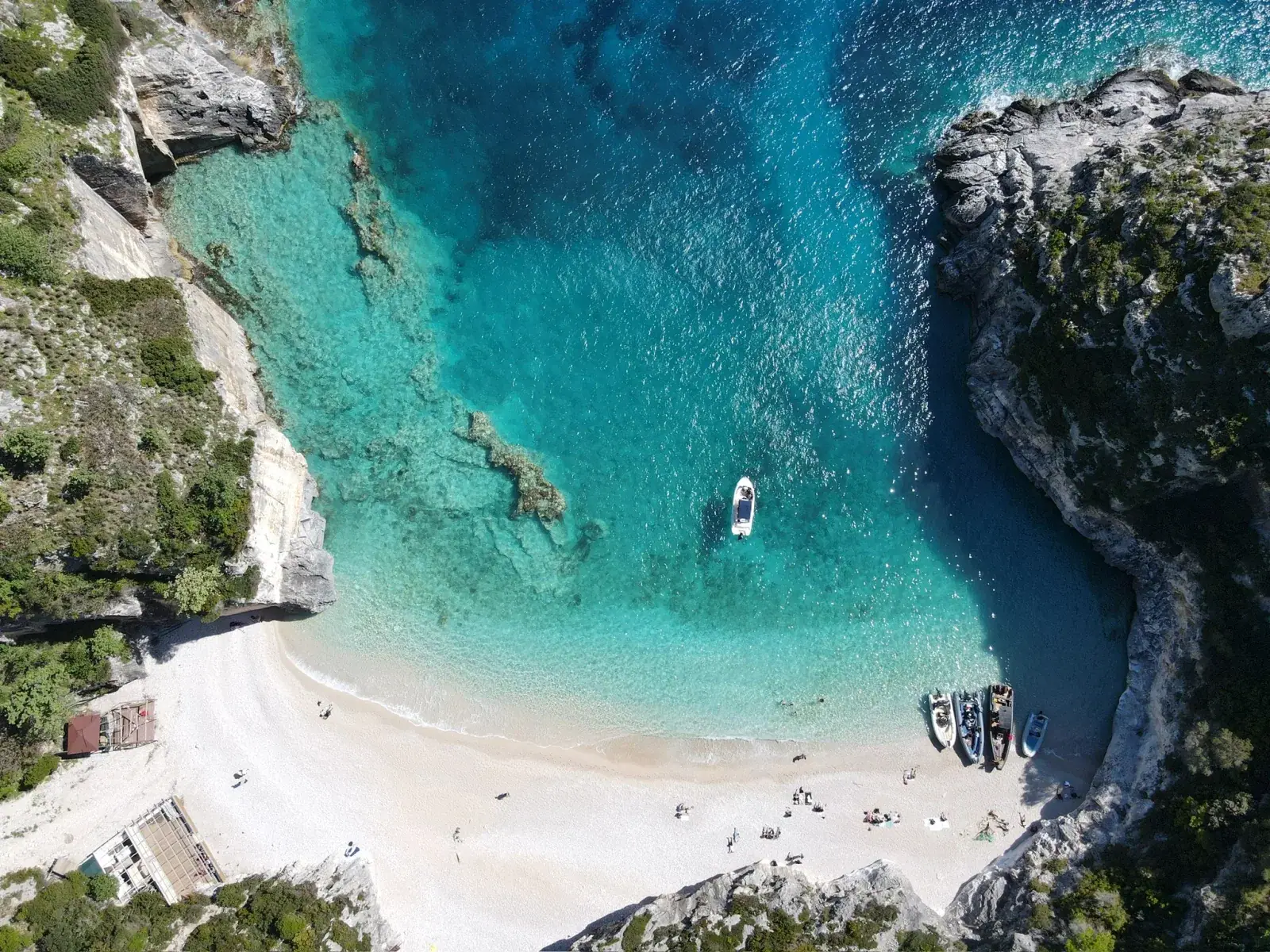
Albania scams targeting tourists are uncommon compared to most European destinations. The country has no organized touts, no aggressive street vendors, and none of the elaborate cons you encounter in Rome, Paris, or Barcelona. Most Albanians are genuinely hospitable. The cultural concept of besa (protecting guests) is real, not a marketing slogan. But Albania's tourism boom means a small number of opportunistic actors have learned to exploit unfamiliar visitors, especially in peak season and at tourist hotspots. This guide covers every scam worth knowing about, what each one looks like, and exactly how to avoid it.
Himara and the Albanian Riviera are among the safest areas in the country. Most of these scams cluster in Tirana, at airports, and in heavily touristed spots like Saranda and Ksamil. Knowing the patterns means you can travel with confidence rather than paranoia.
Quick summary
| Scam type | Risk level | Where it happens | How to avoid |
|---|---|---|---|
| Taxi overcharging | Medium | Airports, Tirana, tourist hotspots | Agree fare upfront or insist on meter |
| Restaurant bill padding | Low-medium | Tourist-heavy restaurants | Check menu prices, review bill line by line |
| Old lek price confusion | Medium | Markets, taxis, small shops | Ask "new lek or old lek?" when prices feel off |
| ATM/currency exchange tricks | Low-medium | Standalone ATMs, street exchangers | Use bank-branch ATMs, decline DCC |
| Accommodation bait-and-switch | Low | Online booking platforms | Book through reputable platforms. Check recent reviews |
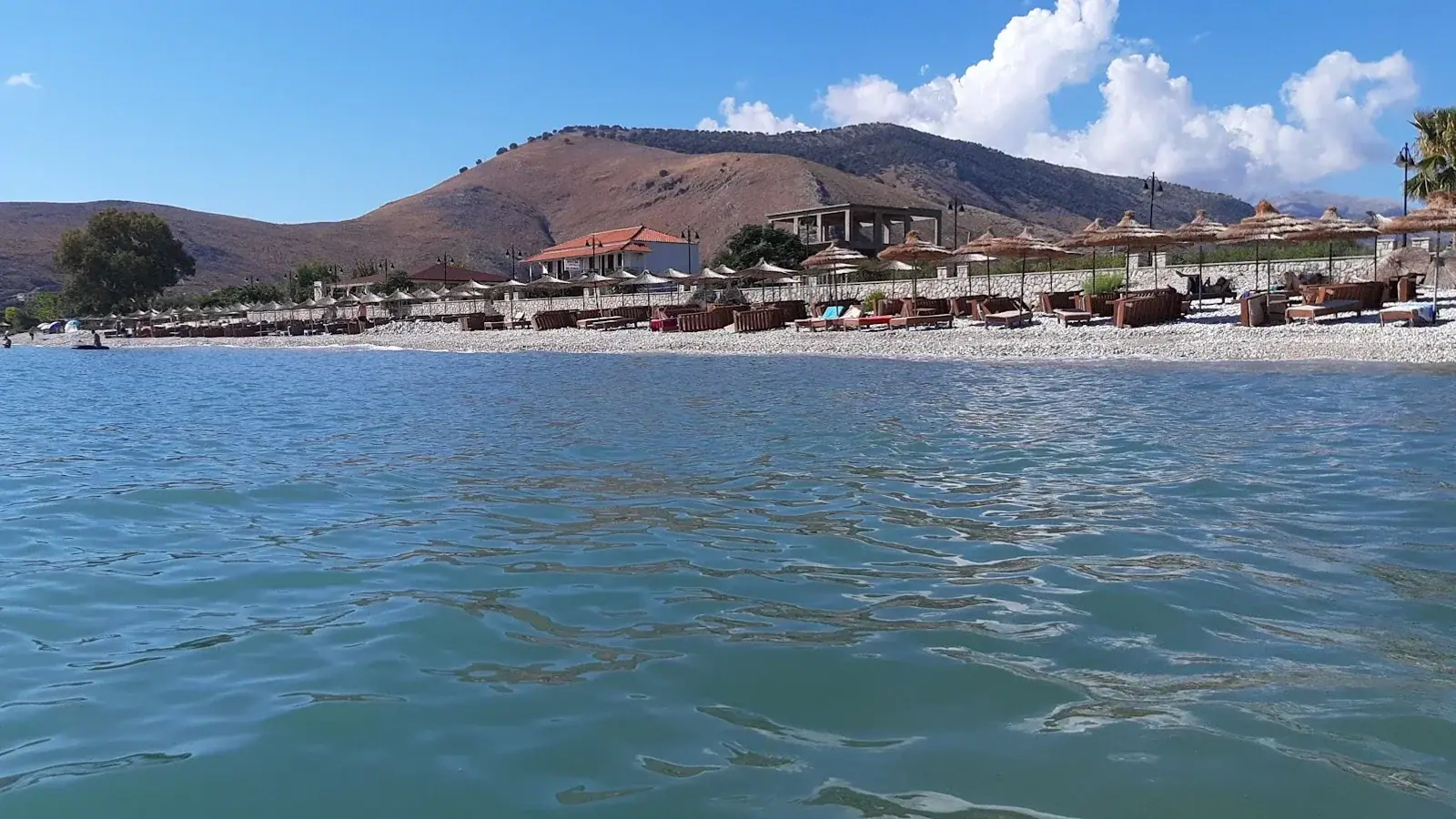
| Sunbed and beach overcharging | Medium | Popular beaches in peak season | Ask price before sitting down |
| Rental car deposit scams | Low-medium | Small local rental agencies | Never pay cash deposits, document the car on video |
| Fake tour guides | Low | Major tourist attractions | Book through established agencies |
Taxi overcharging
This is the most common scam tourists encounter in Albania, and it follows a pattern familiar across Southern Europe and the Balkans.
What it looks like
A driver quotes a price significantly above the going rate, takes a longer route to inflate the fare, or claims the meter is broken. At Tirana International Airport, unofficial drivers may approach you in the terminal offering rides at 3,000-5,000 ALL (30-50 EUR) for a trip to the city center that should cost 2,000-2,500 ALL (20-25 EUR). Some drivers refuse to use meters entirely, banking on tourists not knowing local rates.
Where it happens
Mostly at Tirana airport, around Skanderbeg Square in Tirana, and at ferry ports in Saranda. On the Albanian Riviera, taxi scams are much rarer. Distances are short, prices are locally known, and drivers depend on repeat business and reputation.
How to avoid it
- Agree on the fare before getting in. Say the destination, ask for the price, and confirm it. If the driver deflects or gets vague, find another taxi.
- Say "taximeter" before you sit down. If the driver says no, walk away.
- Use taxi apps. Apps like Speed Taxi or VrapOn show fare estimates and track routes. They are not available everywhere, but work well in Tirana.
- Know the going rates. Tirana airport to city center: 2,000-2,500 ALL. Within Himara town: 300-500 ALL. Himara to Dhermi (Greek: Δρυμάδες, Albanian: Dhërmi): 2,000-3,000 ALL.
- Carry small bills. If you agreed on 2,000 ALL, hand over 2,000 ALL, not a 5,000 ALL note that requires change.
For a full breakdown of fares and how taxis work locally, read the Himara taxi guide.
Restaurant bill padding
Albania's restaurant scene is overwhelmingly honest. Prices are low by European standards, portions are generous, and most owners take pride in fair dealing. But a small number of tourist-facing restaurants have adopted tricks common in other Mediterranean countries.
What it looks like
The bill includes items you did not order, such as a bread basket, appetizer dips, or a complimentary-looking raki that turns out to cost 300-500 ALL. Some restaurants bring these automatically and add them to the tab. In rare cases, the bill total simply does not match the menu prices, banking on the assumption that tourists will not check the arithmetic.
Another variant: restaurants without visible menus or with prices missing for certain items (especially fish and seafood, which may be priced by weight). You order grilled fish, expecting a normal meal cost of 1,000-1,500 ALL, and the bill comes to 4,000-5,000 ALL because the fish was priced at 5,000 ALL per kilo and nobody mentioned it.
Where it happens
Primarily at tourist-heavy restaurants in Saranda, Ksamil, and along busy promenades. Far less common in Himara, Dhermi, and smaller Riviera villages where restaurants rely on word-of-mouth reputation.
How to avoid it
- Check the menu has prices. If prices are missing for certain items. Ask before ordering.
- Ask about items that arrive unordered. "Is this included or extra?" takes two seconds and prevents surprises.
- For fish priced by weight, ask to see the fish and confirm the weight and price per kilo before they cook it.
- Review the bill line by line. Match each item to what you ordered and check the math. This is normal practice in the Mediterranean. Nobody will be offended.
- Keep a mental tally. If your two mains and a couple of beers should total about 2,500 ALL and the bill says 4,000 ALL, something is wrong.
For trustworthy restaurant recommendations. Check our guide to the best restaurants in Himara.
The old lek trap
This is not technically a scam. It is a genuine source of confusion rooted in Albanian monetary history, but it costs tourists real money when misunderstood.
What it looks like
In 1965, Albania redenominated its currency at a ratio of 10:1. Decades later, many Albanians, especially older people and in markets, still quote prices in "old lek," which means multiplying the actual price by 10. A taxi driver says the fare is "1,000 lek." He means 100 ALL (1 EUR). But if you hand over a 1,000 ALL note (10 EUR). He is unlikely to correct you.
A meal "costs 5,000" could be either 5,000 ALL (50 EUR, suspiciously expensive) or 500 ALL (5 EUR, very cheap). Context usually makes it obvious, but in the moment, especially when tired or unfamiliar with local prices. It is easy to overpay by a factor of 10.
Where it happens
Markets, taxis, small shops, and informal transactions across the country. Less common in tourist-facing businesses that list printed prices, and rare in Himara's main restaurants and hotels.
How to avoid it
- When a price sounds wrong, ask: "Is that new lek or old lek?"
- Learn the rough price anchors. A coffee is 80-150 ALL. A casual lunch is 600-1,200 ALL. A short taxi ride is 300-500 ALL. If a quoted price is 10x these ranges, it is probably old lek.
- Look at banknotes. Albanian banknotes show the denomination clearly. The most common notes are 200, 500, 1,000, 2,000, and 5,000 ALL. Match what you hand over to the actual figure.
For more on navigating Albanian currency, read our Albania cash vs card guide.
ATM and currency exchange tricks
Albanian ATMs are generally reliable and safe. Card skimming is not a notable problem. But there are two common ways tourists lose money at the ATM without realizing it.
Dynamic Currency Conversion (DCC)
The ATM asks if you want to be charged in your home currency (EUR, USD, GBP) instead of Albanian lek. This sounds convenient. It is not. The conversion rate the ATM applies is significantly worse than what your bank would give you. Accepting DCC typically costs 3-7% more per transaction.
Always choose to be charged in ALL (Albanian lek). Let your own bank handle the conversion.
Standalone ATM fees
ATMs attached to bank branches (Credins, BKT, Raiffeisen, Intesa Sanpaolo) charge standard foreign card fees of 500-700 ALL (5-7 EUR) per withdrawal. Standalone ATMs in tourist zones may charge more, and their fee disclosure can be easy to miss on screen.
Street currency exchangers
Unlicensed individuals offering to exchange money on the street exist in Tirana and near border crossings. Some use sleight of hand, provide counterfeit notes, or give old/withdrawn banknotes. Others simply apply terrible rates.
How to avoid it
- Use bank-branch ATMs. Walk into a bank lobby or use the machine attached to the building.
- Always decline DCC. Choose "Albanian lek" or "local currency" on every ATM screen.
- Make fewer, larger withdrawals to reduce the per-transaction fee drag. Withdrawing 30,000 ALL once beats three withdrawals of 10,000 ALL.
- Never exchange money on the street. Use bank-affiliated exchange offices or withdraw directly from ATMs.
- Check the exchange rate. As of 2026, 1 EUR is approximately 100 ALL. If someone offers you 80 ALL per euro. Walk away.
Accommodation bait-and-switch
Albania's accommodation market has grown rapidly, and most listings on Booking.com, Airbnb, and similar platforms are legitimate. But the speed of growth means quality control can lag behind.
What it looks like
Photos show a clean, modern apartment with a sea view. You arrive to find a different unit, smaller, older, or with a view of the parking lot instead of the coast. In more extreme cases, the property advertised as a "boutique hotel" or "hostel" turns out to be someone's spare room with unwashed bedding.
Another variant: the listing exists, the photos are accurate, but critical details were buried, such as no air conditioning in August, construction noise next door, or a shared bathroom that was not obvious from the description.
Where it happens
Across Albania, but more common in fast-growing tourist towns like Saranda, Ksamil, and Vlore where new properties list before they are fully finished. Less common in established Himara guesthouses that have years of reviews.
How to avoid it
- Book through major platforms with buyer protection (Booking.com, Airbnb). These give you recourse if the property does not match.
- Read recent reviews. Not the 5-star reviews from two years ago, but the 3-star reviews from last month that mention specifics.
- Contact the host before booking. Ask for current photos if the listing is new or has few reviews.
- Have a backup plan. If you arrive and the place is genuinely not as described, message the platform immediately and request alternative accommodation. Do not accept a downgrade without a refund.
Sunbed and beach overcharging
Many Albanian beaches have free public sections alongside paid sunbed areas operated by beach bars and restaurants. The problem is not that sunbeds cost money, which is standard Mediterranean practice, but that pricing is not always transparent.
What it looks like
You sit down on a sunbed, order a drink, and at the end of the day the bill includes 1,500-3,000 ALL (15-30 EUR) per sunbed that was never mentioned upfront. At some popular beaches in Ksamil and Saranda, operators have been known to charge 2,500-3,000 ALL per set (two sunbeds and an umbrella) during peak August weeks, competitive with Greek island prices.
A related issue: some operators tell you sunbeds are "free if you order food" but then inflate the food prices to compensate, or set a minimum spend that was not clearly communicated.
Where it happens
Popular beaches in Ksamil, Saranda, and along the Riviera during July-August peak season. Himara's beaches generally have more reasonable pricing. 500-1,500 ALL per sunbed set is typical.
How to avoid it
- Ask the price before you sit down. "Sa kushton?" (How much?) is two words that prevent every sunbed dispute.
- Clarify the deal. "Is that per sunbed or per set? For the full day? Is food included or separate?"
- Use free beach sections. Most Riviera beaches have public areas where you can lay your own towel at no cost.
- Bring your own gear. A beach towel and a small umbrella make you independent of paid sunbed operators entirely.
Rental car deposit scams
Car rental in Albania is generally straightforward, especially through international or well-reviewed local agencies. But deposit disputes are a recurring complaint from tourists.
What it looks like
You rent a car and pay a cash deposit of 200-500 EUR. When you return it, the agency claims minor scratches or damage that was already there, and withholds part or all of the deposit. With a cash deposit, you have no recourse. The money is gone.
A less dramatic variant: the rental agreement includes vague terms about "damage responsibility" that the agency interprets broadly. A stone chip on the windshield, a scuff on the bumper, or dirty upholstery becomes a 100-200 EUR deduction.
Where it happens
Small, unaffiliated rental agencies throughout Albania. Larger agencies and internationally franchised operations are much less likely to pull this.
How to avoid it
- Never pay a cash deposit. Use a credit card hold instead. If the agency insists on cash, rent from someone else.
- Document the car before you drive away. Walk around it filming a video of every scratch, dent, and mark, with the date visible. Include the odometer and fuel level.
- Take the same video when you return. With the agent present if possible.
- Read the contract. Understand what damage you are responsible for and what the insurance covers.
- Book through reputable platforms. Agencies listed on comparison sites have review accountability.
For more on rentals and insurance, read our guide to car and scooter rental in Himara and the Albania car rental insurance guide.
Fake tour guides
This is minor compared to what you encounter in Egypt, India, or even Istanbul, but it exists at major Albanian attractions.
What it looks like
Someone approaches you at a tourist site like Berat Castle, Butrint, or the streets of Gjirokaster and offers a guided tour. They may claim to be a licensed guide or a "local historian." The tour quality varies from genuinely informative to completely improvised, and the price is often negotiated only at the end, when social pressure makes it harder to push back.
Where it happens
Major historical sites and UNESCO locations. Not a problem on the Albanian Riviera beaches, and very unlikely in Himara.
How to avoid it
- Book tours through established agencies with online reviews and clear pricing.
- If someone approaches unsolicited. Ask for credentials. Licensed Albanian guides carry identification.
- Agree on a price before the tour starts. If they are vague about cost. That is your signal.
- Politely decline if you are not interested. A confident "no, thanks" is enough.
What Albania gets right
This article covers scams, but context matters. Albania has fewer tourist scams than most popular European destinations. The country does not have:
- Organized pickpocket gangs (common in Barcelona, Rome, Paris)
- Bracelet/friendship scams (common in Paris, Rome, Prague)
- Rigged card games or shell games (common in major Western European cities)
- Aggressive touts dragging you into restaurants (common in Istanbul, Athens tourist zones)
- Clipboard petition scams (common in Paris, Milan)
The typical Albania trip involves zero scam encounters. Most visitors report that the biggest surprise was how honest and generous people were, with unsolicited help with directions, free raki at the end of a meal, and genuine warmth that has nothing to do with extracting money.
The scams listed above are worth knowing about precisely because Albania is otherwise so straightforward. When you know the handful of patterns that exist, you can stop worrying and enjoy a country that remains one of Europe's most honest, affordable, and welcoming destinations.
What to do if you get scammed
If something does happen, here is how to handle it.
| Situation | Action |
|---|---|
| Overcharged at a restaurant | Politely dispute the bill. Ask to see the menu again. If unresolved, pay and leave a review. |
| Taxi fare dispute | If the amount is small, pay and move on. For large discrepancies, call the police (129). |
| Rental car deposit withheld | Dispute through your credit card company if you paid by card. If cash, your options are limited. |
| Fraudulent accommodation | Report through the booking platform immediately. Request a refund and alternative placement. |
| ATM or currency issue | Contact your bank. File a dispute for unauthorized charges. |
For emergencies, call 112 (general emergency) or 129 (police). See our practical info page for full contact details and useful Albanian phrases.
Frequently asked questions
Is Albania a scammy country for tourists?
No. Albania has fewer tourist scams than most of Western Europe. There are no organized scam operations targeting visitors. The issues that exist are opportunistic and avoidable with basic awareness. Most travelers complete their trip without encountering any scam at all.
How do I avoid getting ripped off by taxis in Albania?
Agree on the fare before you get in, or insist the driver uses the meter. Use taxi apps like Speed Taxi where available. Know the approximate rates for common routes. Tirana airport to the city center costs 2,000-2,500 ALL (20-25 EUR). Read our Himara taxi guide for specific Riviera fares.
Should I carry cash or use cards to avoid scams?
Carry both. Cards leave a transaction trail and give you dispute rights, so use them for larger purchases. Cash is necessary for small transactions where card terminals are unavailable. Avoid carrying large amounts of cash that make you a target. See our cash vs card guide.
What is the old lek vs new lek confusion?
Albania redenominated its currency in 1965 at a 10:1 ratio, but many people still quote prices in old lek (10x the actual amount). If a price sounds ten times too high. Ask "new lek or old lek?" A coffee costing "1,000 lek" almost certainly means 100 ALL (about 1 EUR), not 1,000 ALL.
Are beaches free in Albania or is there always a sunbed charge?
Most Albanian Riviera beaches have both free public sections and paid sunbed areas. You are never required to rent a sunbed. Bring a towel and use the free section. If you choose a sunbed, always ask the price before sitting down. Typical rates are 500-1,500 ALL per set in Himara.