What Does "Himara" Mean?
From the mythological Chimera to the coast that carries her name. The story behind the word.
Himara Meaning: The Quick Answer
The name Himara comes from the Ancient Greek Chimaera (Χίμαιρα, "she-goat"), the same word behind the fire-breathing monster of Greek myth. It described the goat-grazed cliffs above the Ionian Sea. Over the centuries it passed through Byzantine Greek Cheimarra (Χειμάρρα) and Latin Chimara to become today's Albanian Himarë and English Himara.
Himara is a coastal town and municipality on the Albanian Riviera. The English spelling is Himara; the Albanian official spelling is Himarë; the Greek-language form is Χειμάρρα (Cheimarra) or older Χίμαιρα (Chimaira).
The name comes from Ancient Greek Χίμαιρα (khimaira), meaning "she-goat" or "young goat," the same word as the mythological Chimera. It described the precipitous, goat-grazed cliffs tumbling into the Ionian Sea.
Modern Albanian uses Himarë (with a final ë, the schwa sound). Locally, in the Greek-speaking villages of the Himara region, you will also hear Χειμάρρα.
The Chimera
In Greek mythology, the Chimera (Χίμαιρα, "Khimaira") was a fearsome fire-breathing creature, part lion, part goat, part serpent. The name comes from the Greek khimaira (χίμαιρα), meaning "she-goat" or "young goat," the feminine of khimaros (χίμαρος). Both words trace back to kheima ("winter"), since young livestock were reckoned by the number of winters they had survived.
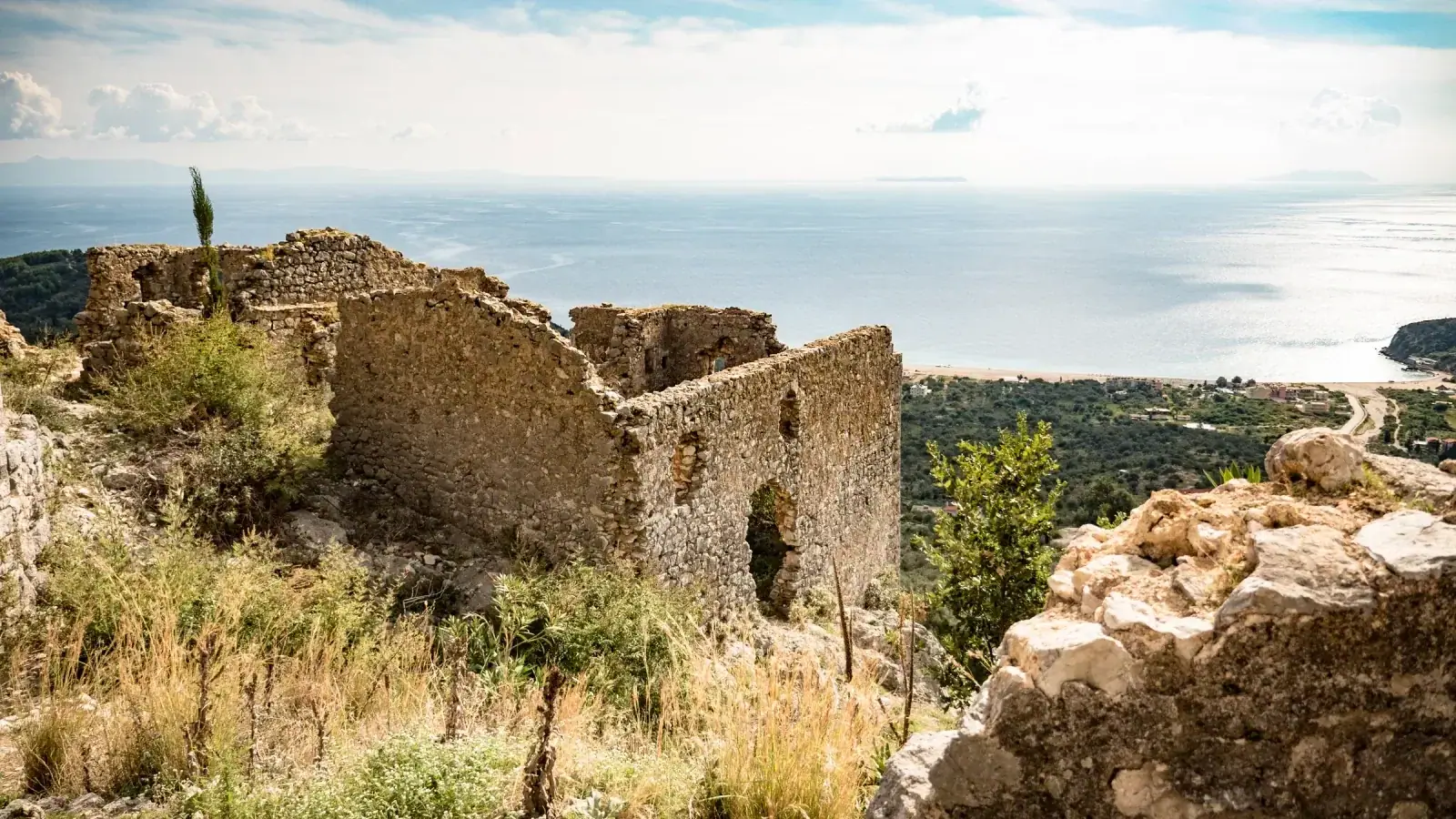
But the Chimera was more than a monster. In the ancient world, the word was also used to describe wild, rugged landscapes, places where goats roamed steep cliffs above the sea. And that is exactly what the coastline around Himara looks like.
From Chimera to Himara
The ancient settlement was called Χίμαιρα (Chimaira), the same word as the mythological creature. An ancient inscription found at the site reads "ΦΟΙΒΟΣ ΑΠΟΛΛΩΝ ΧΙΜΑΙΡΑΝ ΕΠΟΛΙΣΕΝ", "Phoebus Apollo founded the city of Chimaira." The name described the precipitous terrain where flocks grazed on near-vertical slopes above the Ionian Sea, a land of she-goats.
During the Byzantine period, scribes began writing the name as Χειμάρρα (Cheimarra), reinterpreting it as a connection to cheimarros (χείμαρρος, "winter torrent"), the seasonal streams that rush down the mountains after heavy rains. This was a folk etymology, not the original meaning, though the confusion is understandable. Both words share a deep Proto-Indo-European root in *gheim- ("winter").
Both readings describe the same place: sheer cliffs, gorges and mountain pasture running down to the water. Anyone who has driven the SH8 or walked down to Gjipe Canyon will recognise it.
Over the centuries, the name evolved through the languages of the peoples who inhabited the coast:
Χίμαιρα (Chimaira), "she-goat," the same word as the mythological creature
Χειμάρρα (Cheimarra), a folk-etymological respelling that links the name to "winter torrent"
Chimara, adapted by Roman and Venetian writers
Himara / Himarra, the "Ch" softens to "H"
Himarë, the official name today
The shift from "Ch" to "H" follows a well-attested pattern in Greek loanwords entering Albanian: the ancient Greek chi (/kh/) evolved over centuries into a velar fricative (/x/), which Albanian then adapted to its native /h/. The core of the word, though, has stayed stable for over two millennia.
Why Our Logo is a Chimera

The chimera icon you see on this site is a nod to the mythological roots of the name. It connects the modern beach town to its ancient identity, a place shaped by wild mountains, seasonal torrents, and the restless sea. The creature stands for the wildness that drew people here thousands of years ago and still draws travelers today.
A Name Shared Across the Mediterranean
Himara is not the only place that owes its name to the Chimera. The mythological creature left its mark across the ancient Greek world. Chimaera in Lycia (modern Turkey) is perhaps the best known, a site where natural gas vents produce eternal flames on the mountainside, thought by the ancients to be the fire-breathing monster itself.
But on the Albanian Riviera, the name took on a meaning more grounded in the landscape than in legend. Here, Chimera was not about fire. It was about the raw, vertical terrain where goats still outnumber tourists in the hills above town, and where the mountains meet the sea with no apology.
Himara Name: Frequently Asked Questions
What does Himara mean?
Himara comes from the Ancient Greek Chimaera (Χίμαιρα), meaning "she-goat" or "young goat," the same word as the mythological fire-breathing Chimera. It described the steep, goat-grazed cliffs of this stretch of the Ionian coast. A later Byzantine folk etymology linked it to cheimarros, "winter torrent."
Is it Himara or Himarë?
Both are correct. Himarë (with the final ë, a schwa sound) is the official Albanian spelling; Himara is the form most commonly used in English. You will also see Himarra and, in Greek, Χειμάρρα (Cheimarra).
What is Himara called in Greek?
In Greek, Himara is called Χειμάρρα (Cheimarra). The ancient name was Χίμαιρα (Chimaira), the same word as the mythological Chimera, and an ancient inscription records that "Phoebus Apollo founded the city of Chimaira."
How do you pronounce Himarë?
Roughly hee-MAH-ruh. The stress falls on the second syllable, and the final Albanian ë is a soft schwa, like the "a" in "sofa," often barely voiced in everyday speech.
Explore the Land of the Chimera
Discover the beaches, mountains, and villages that give Himara its wild character.