Himara is one of the easiest places on the Albanian Riviera to visit, but a few things catch first-timers off guard. This is everything you actually need to know before you go. No fluff, just the practical stuff that makes the difference between a good trip and a great one.
Compare hotels, apartments, and Vrbo rentals on the map. Powered by Stay22.
1. Bring cash (and Albanian lek)
Albania runs on cash. The local currency is the Albanian Lek (ALL), and while some hotels and upscale restaurants accept cards, most places in Himara don't. Beach vendors, parking lots, small restaurants, and taxis are cash-only.
Key numbers:
- 1€ is roughly 100 ALL (easy mental math)
- ATMs are available in the Himara town center, but charge fees (typically 500-700 lek per withdrawal)
- Euros are accepted at many businesses, but you'll usually get a worse exchange rate
- Withdraw lek from ATMs or exchange at banks for the best rates
Don't rely on cards. Carry enough lek for a full day of spending (3,000-5,000 lek for a couple covers meals, beach, and drinks).
2. Rent a car if you can
The best beaches and day trips require driving. Spile and Sfageio (the town beaches) are walkable, but Gjipe, Jale, Dhermi, Porto Palermo, and Livadhi are all a 10-25 minute drive away.
Rental info:
- Scooter rental starts around 20€/day
- Car rental starts around 20-25€/day
- Book in advance during July-August
- Local rental operators include EasyRide Himara and Himara Rent
Driving in Albania is straightforward on the main highways. The coastal road between Himara and Saranda is scenic and well-maintained. The Llogara Pass from Vlore is dramatic but safe if you drive carefully.
3. The best time to visit is June or September
July-August is peak season: hotter, busier, and pricier. June and September offer warm weather (25-30C), swimmable sea temperatures, all restaurants and hotels open, and significantly fewer crowds.
| Month | Weather | Crowds | Prices | Verdict |
|---|---|---|---|---|
| May | Warm, sea is cool | Very quiet | Low | Early birds only |
| June | Hot, sea is warm | Moderate | Mid | Sweet spot |
| July | Very hot | Packed | High | Peak season |
| August | Very hot | Packed | Highest | Peak season |
| September | Hot, sea is warm | Moderate | Mid | Sweet spot |
| October | Warm, cooling | Quiet | Low | Many places closing |
If you can only go in peak summer, book accommodation early and arrive at popular beaches before 10 AM.
4. Most beaches are pebble, not sand
If you're expecting Caribbean-style sand, adjust your expectations. Most beaches near Himara are pebble or mixed pebble-sand. Gjipe Beach has the most sand, and Borsh has a comfortable sand-gravel mix, but the rest are primarily pebble.
Pack water shoes. Seriously. They make the difference between wincing across stones and walking comfortably into the water. A cheap pair from any sports shop is fine.
The upside of pebble beaches: the water clarity is extraordinary. Pebble beaches don't create the sand suspension that muddies water, which is why Himara's coastline has some of the clearest water in the Mediterranean.
5. Albanian beaches are public by law
Unlike some Greek islands or Croatian beaches where entire stretches are privatized, Albanian law guarantees public beach access. You can lay your towel on any beach for free.
Sunbed and umbrella rentals are optional, typically 500-2,000 lek (5€-20) depending on the beach. No one will hassle you for bringing your own setup. The only parking fee you'll encounter is at Gjipe Beach (400 lek).
6. Himara has a Greek minority (and Greek food)
Himara sits in a region with a significant Greek minority. Many locals are bilingual in Albanian and Greek, and the cultural influence shows up most clearly in the food. Expect excellent horiatiki salads, grilled octopus, proper taverna cooking, and mezze spreads alongside Albanian classics like byrek and tave kosi.
This is a feature, not a footnote. The Greek-Albanian food culture in Himara produces some of the best meals on the Riviera. A full seafood dinner for two with wine runs 3,000-5,000 lek (30€-50) at a good taverna.
Useful phrases in both languages:
| English | Albanian | Greek |
|---|---|---|
| Hello | Pershendetje | Yia sou |
| Thank you | Faleminderit | Efharisto |
| How much? | Sa kushton? | Poso kani? |
| The bill | Llogarine, ju lutem | To logariasmo |
| Beer | Birre | Bira |
| Beautiful | E bukur | Oreo |
7. Take a boat tour, it's the best activity
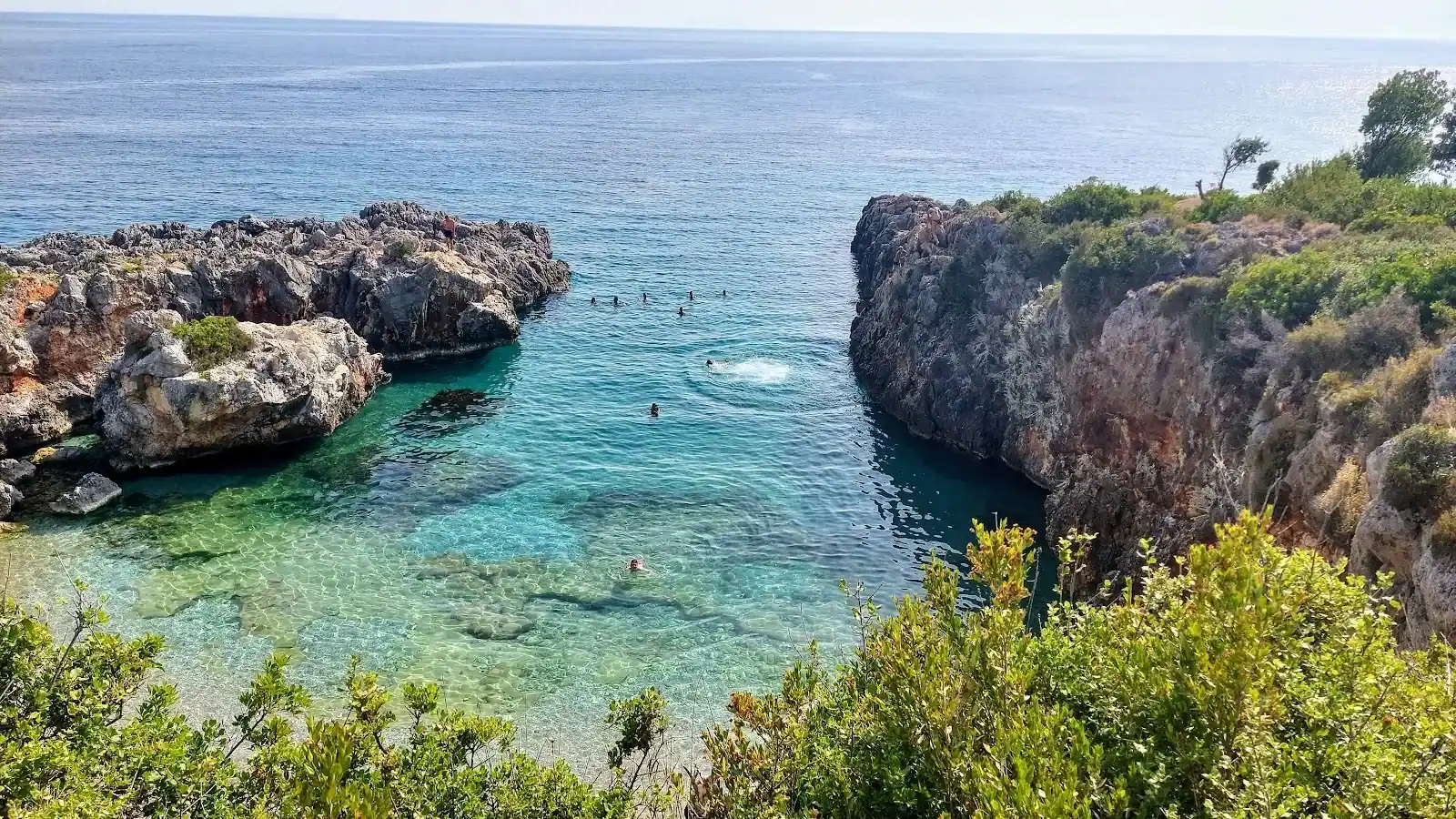
If you do one thing besides the beach, make it a Himara boat tour. Group speedboat tours depart from the main beach and visit sea caves, hidden coves, and swimming spots you can't reach by land.
Options:
- Pirate's Cave tour: 2.5-4 hours, approximately 30€ per person. Visits Pirate's Cave, Blue Cave, and swimming stops.
- Grama Bay full-day tour: 5-6 hours, approximately 60€ per person. Adds Aquarium Beach, Crystal Beach, and Grama Bay.
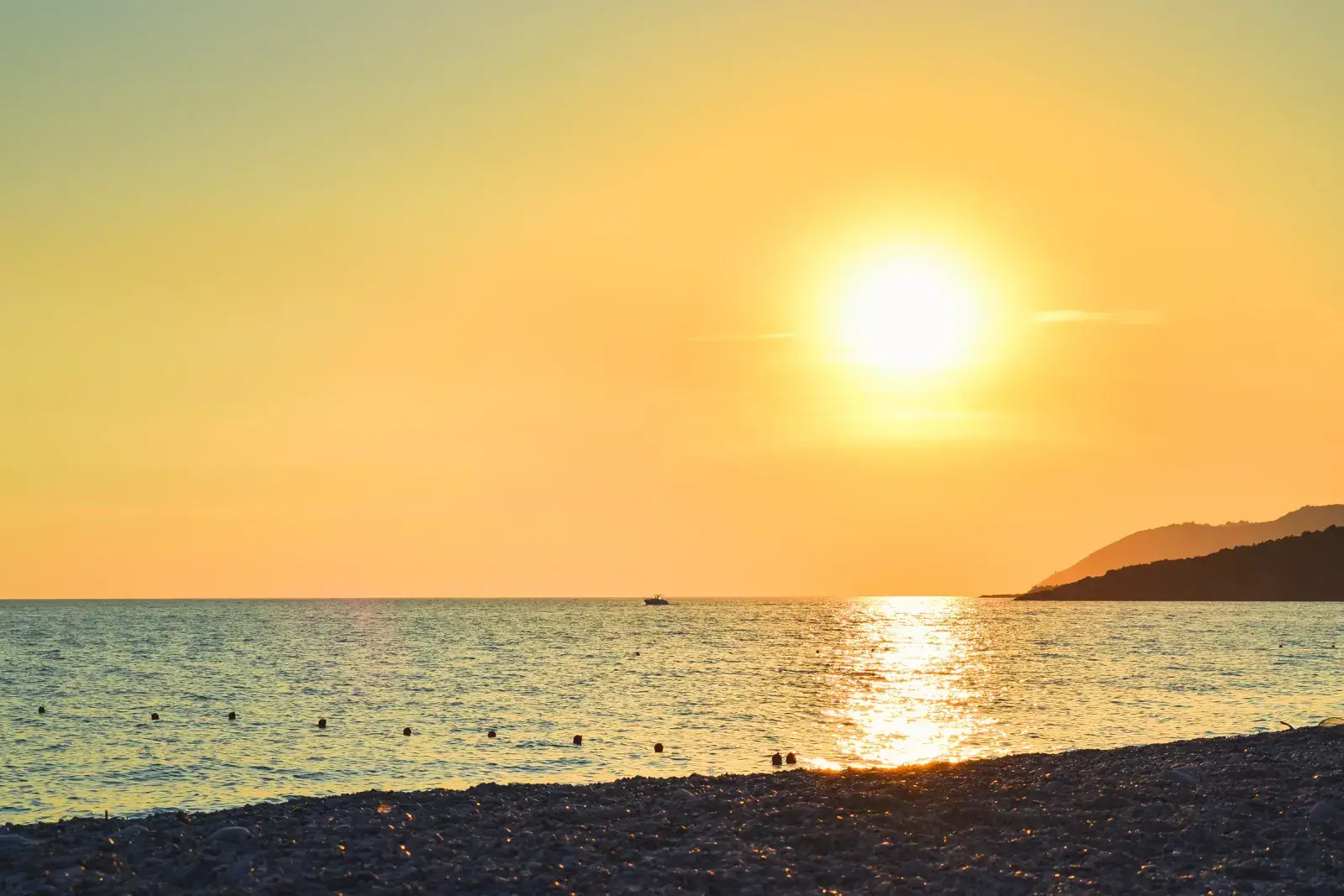
- Sunset cruise: 2.5-3 hours. Coastline views during golden hour.
Book at the "Himara Seas The Day" stand on the main beach, or contact operators the day before. Tours run daily June through September.
8. The bus system works, but plan ahead
Direct buses run from Tirana to Himara multiple times daily:
| From | Departure | Duration | Price |
|---|---|---|---|
| Tirana | 7:30 AM | 3.5-5h | 10-15€ |
| Tirana | 1:00 PM | 3.5-5h | 10-15€ |
| Tirana | 6:00 PM | 3.5-5h | 10-15€ |
| Saranda | 7:00 AM | 1h 30min | 6-8€ |
| Saranda | 9:00 AM | 1h 30min | 6-8€ |
| Vlore | 10:00 AM | 1.5-2.5h | 8€ |
Travel times from Tirana vary depending on whether the bus takes the Llogara Tunnel (faster) or the scenic Llogara Pass. Buses between Himara and other Riviera towns are less frequent. If you're planning to visit Saranda, Ksamil, or Dhermi as day trips, a rental car is much easier.
9. Himara is very safe
Albania in general, and the Riviera in particular, is extremely safe for tourists. Violent crime is virtually nonexistent in tourist areas. Petty theft is rare. Locals are famously hospitable, so don't be surprised if a restaurant owner gives you free raki at the end of your meal.
Emergency numbers:
- General emergency: 112
- Police: 129
- Ambulance: 127
Standard travel precautions apply (don't leave valuables unattended on the beach), but safety is not a concern in Himara. Solo female travelers, families, and older visitors all report feeling very comfortable here.
10. The Llogara Pass is a big climb (and a little intense)
If you're driving from Tirana or Vlore, you'll cross the **Llogara Pass ** at over 1,000 meters elevation. It's one of the most dramatic mountain roads in Europe, with switchbacks through pine forests and sudden views of the Ionian coastline dropping away below you.
The road is well-maintained and safe at normal speeds. But if you're not used to mountain driving. Take it slow and pull over at the viewpoints. The views from the top are worth stopping for. There's a small restaurant at the pass where you can break the journey.
On the other side, the descent into the Riviera is jaw-dropping.
11. WiFi is decent, mobile data is cheap
Most hotels, restaurants, and cafes have free WiFi. Speeds are generally fine for browsing, social media, and video calls. If you need more reliable connectivity, Albanian SIM cards are affordable. Vodafone Albania and ONE Albania offer tourist packages with several GB of data for around 20-25€.
Buy a SIM at the airport in Tirana or at a phone shop in town. You'll need your passport.
12. Budget expectations
Himara is affordable by European standards. Here's what to expect per day for a couple:
| Style | Daily Budget | Includes |
|---|---|---|
| Budget | 30-50€ | Hostel, street food, free beaches |
| Mid-range | 70-120€ | Hotel, restaurant meals, boat tour |
| Luxury | 200+ EUR | Boutique hotel, fine dining, private tours |
Compared to similar beach destinations in Greece or Croatia, Himara is roughly 40-60% cheaper for equivalent quality.
13. Visit the old town at sunset
**Himara Castle ** sits on Barbaka hill above the town with ruins dating to the 5th century BC. Most visitors skip it entirely, which is a mistake. The 15-minute walk up rewards you with panoramic views of Livadhi Beach, the Ionian Sea, and on clear days, Corfu.
Go in the late afternoon when the light turns golden and the heat eases. Entry is 300 lek. Budget an hour for exploring the Byzantine churches, stone houses, and fortification walls.
14. Don't try to see everything
Himara's appeal is the pace. Resist the urge to pack every day with activities. The best days here usually look like: beach in the morning, long lunch at a taverna, different beach in the afternoon, promenade walk and dinner in the evening.
If you have 3 days, you can comfortably see the top beaches, do a boat tour, and visit the old town. If you have 5-7 days, add day trips to Porto Palermo, Dhermi, and Gjipe without rushing.
15. Power adapters and plugs
Albania uses Type C and Type F plugs (standard European two-pin). If you're coming from the US, UK, or Australia. Bring an adapter. Voltage is 230V/50Hz.
Frequently asked questions
Is Himara worth visiting?
Yes. Himara offers the best balance on the Albanian Riviera: beautiful beaches without Ksamil's crowds, authentic food without Saranda's tourist-trap restaurants, and a relaxed atmosphere that rewards slow travel. It's the town most repeat visitors to Albania come back to.
How many days do you need in Himara?
Three days is the sweet spot for hitting the best beaches, a boat tour, and the old town. Five to seven days lets you explore at a relaxed pace with day trips to Porto Palermo, Gjipe, Dhermi, and the southern coast. You won't get bored.
Do I need to speak Albanian?
No. English is widely spoken in tourist-facing businesses, especially by younger Albanians. Many Himara locals also speak Greek. Learning "faleminderit" (thank you) goes a long way, but you won't have communication problems.
Can I use Euros in Himara?
Euros are accepted at many hotels and some restaurants, but you'll get a worse exchange rate than withdrawing lek from an ATM. For the best value, pay in lek. Carry cash, because most places don't accept cards.
Is the tap water safe to drink in Himara?
Technically safe in most accommodations, but locals and visitors generally drink bottled water. A 1.5L bottle costs about 50-80 lek (0€.50-0.80) at any shop. If you want to reduce plastic waste. Bring a filtered water bottle.