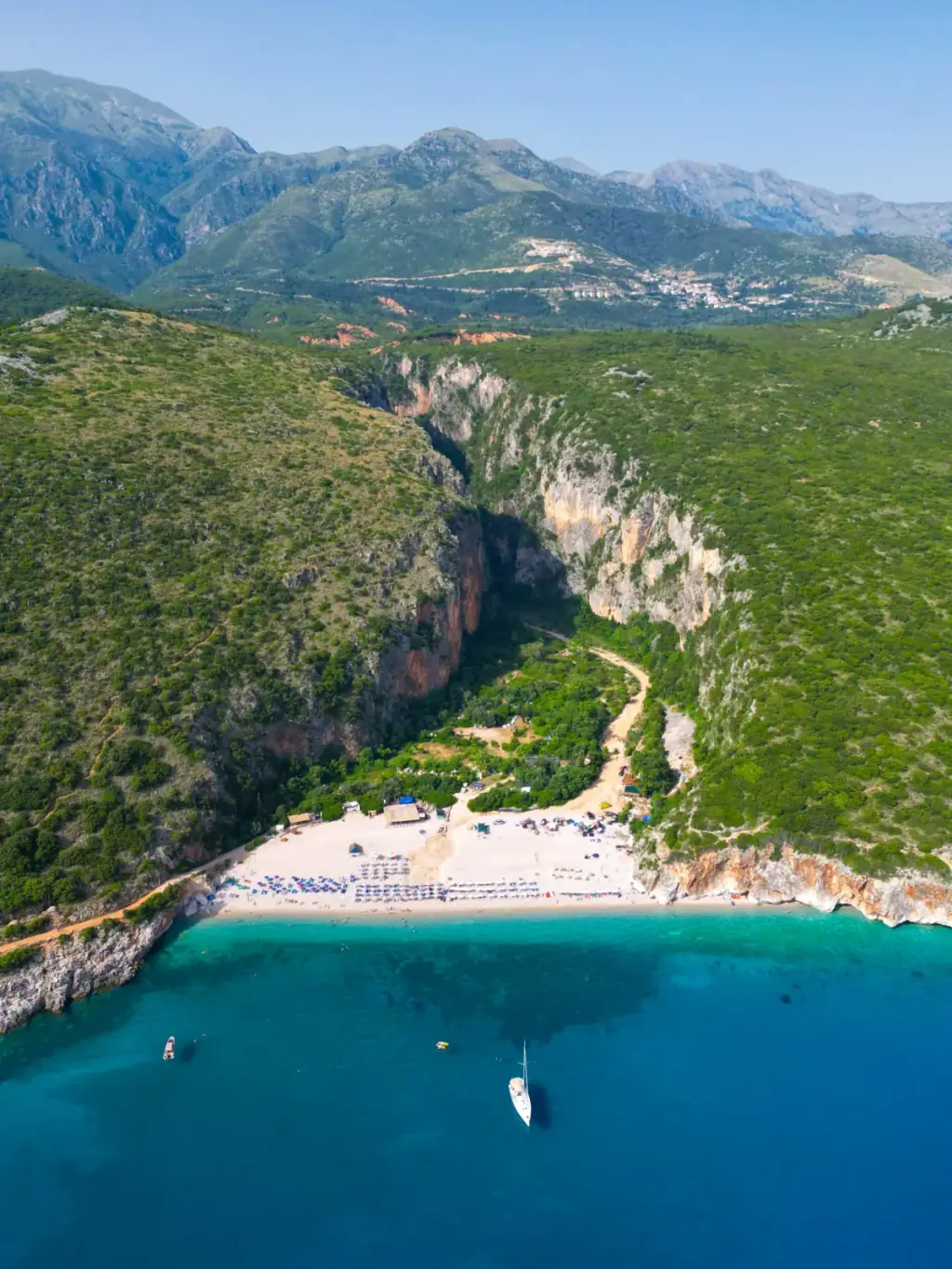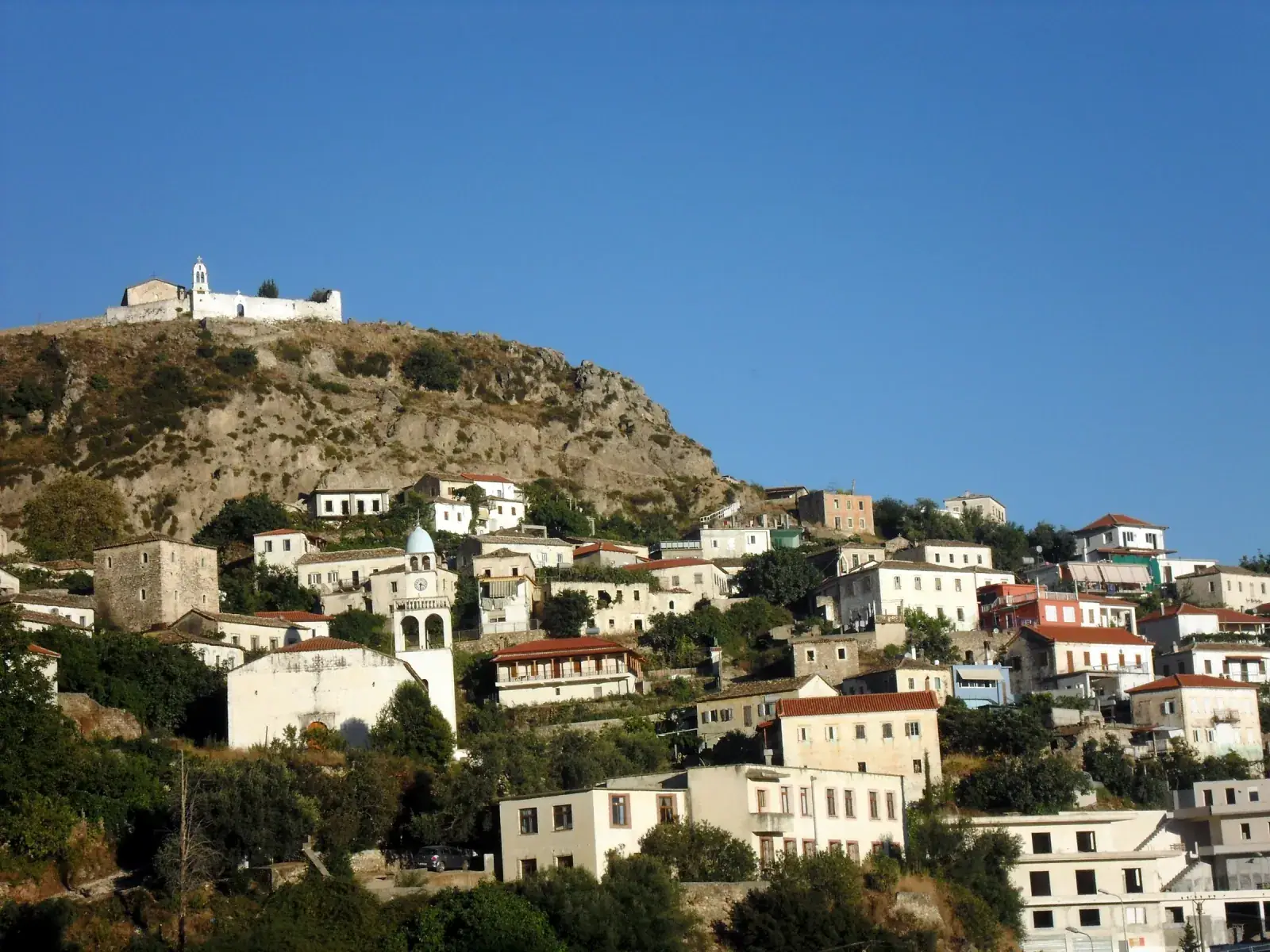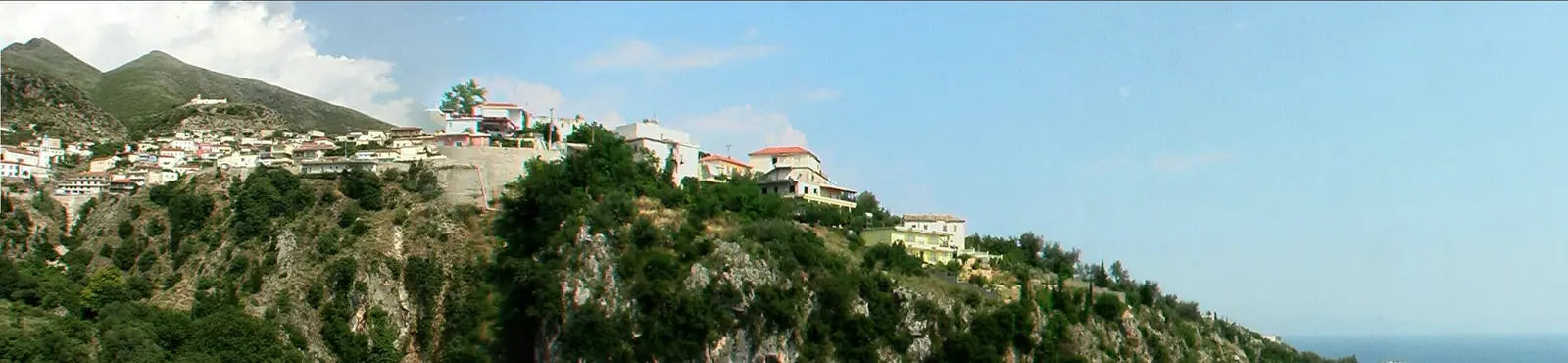
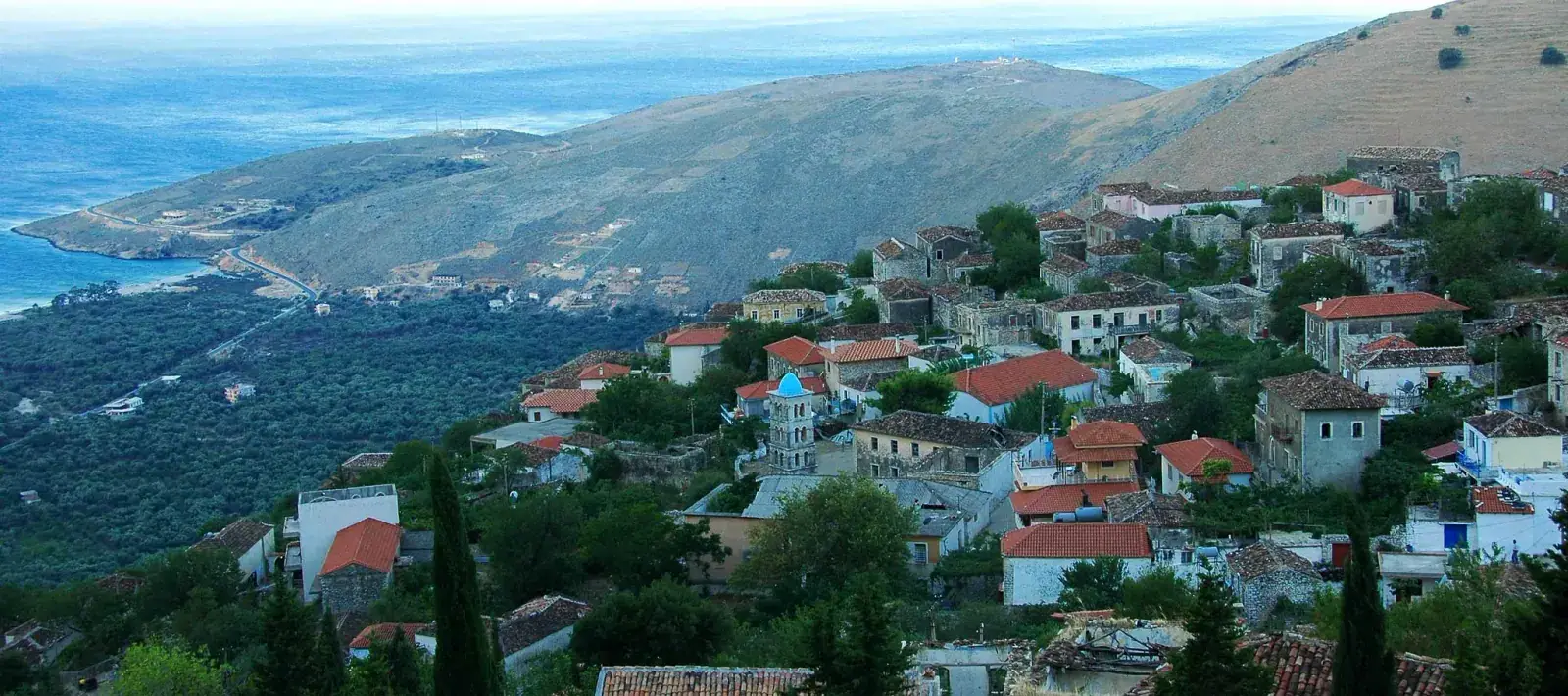
Old Qeparo sits roughly 450 meters above sea level on a steep hillside overlooking the Ionian coast, a semi-abandoned stone village where time effectively stopped when most families moved downhill to the coast in the mid-20th century. Cobblestone paths wind between crumbling limestone houses with carved wooden doors and weathered balconies. A few hundred meters northeast, the ruins of Karos Fortress mark one of the oldest known settlements on the Albanian Riviera, with fortification walls dating to the Late Bronze Age.
Together, Old Qeparo and Karos Fortress offer a half-day trip that covers roughly 3,000 years of habitation, from Bronze Age hilltop fortress to medieval stone village, all set against panoramic views of the coast. If you have already explored Himara's beaches and are looking for something different, this is it.
Compare hotels, apartments, and Vrbo rentals on the map. Powered by Stay22.
Quick facts
| Detail | Info |
|---|---|
| Location | 4 km above Lower Qeparo (coastal village) |
| Altitude | ~450 meters above sea level |
| Settlement age | 2,000+ years (village); Bronze Age (Karos) |
| Current state | Semi-abandoned, slowly reviving |
| Entrance fee | Free |
| Getting there | Drive or hike from Lower Qeparo (40–50 min walk) |
| Time needed | 2–3 hours (village + Karos) |
| Distance from Himara | ~12 km south on SH8, then 4 km uphill |
Old Qeparo village
What you will see
Stone architecture. Old Qeparo's buildings use traditional Albanian limestone construction: thick walls for insulation, small windows originally designed for defense, red-tiled roofs, and arched gateways. Many houses stand empty but intact, with original carved wooden doors and interior furnishings still visible through open doorways.
Church of Saint Mary. The village's primary church, known for its frescoes and peaceful position overlooking the valley. This is one of several Byzantine-era churches that once made the Himara coast a center of Orthodox Christianity.
Cobblestone paths. The village layout follows the natural hillside contours rather than any grid. Winding stone paths connect clusters of homes, courtyards, and small terraces. Walking through feels like exploring a maze. Every turn reveals a new view of the sea or mountains.
Panoramic terraces. Several points in the village offer expansive views south toward Borsh Beach and north toward Himara. On clear days, the coastline stretches in both directions.
Revival efforts
Old Qeparo is not entirely abandoned. In recent years, a handful of old stone houses have been converted into guesthouses and small cafes, attracting visitors looking for an authentic Albanian mountain village experience rather than a beach resort. The revival is slow and organic: no mass tourism infrastructure, no souvenir shops. This is part of the appeal.
Olive grove walking trails connect Old Qeparo to neighboring villages, and local families offer olive oil and raki tasting experiences.
Karos Fortress
History
The Hill of Karos sits approximately 200 meters northeast of Old Qeparo, at roughly the same 450-meter elevation. Archaeological excavations conducted between 1970 and 1990 revealed two major construction phases:
| Period | Evidence |
|---|---|
| Late Bronze Age | First fortification walls built, multiple defense lines |
| Iron Age | Second construction phase, expanded fortifications |
| 4th century BC–4th century AD | Continued occupation through Chaonian and Roman periods |
| 6th–7th century AD | Possible late antique reoccupation |
The fortified settlement belongs to the wider Chaonian defense network, the same system that included Borsh Castle and Himara's acropolis. These hilltop fortifications protected the communities of ancient Epirus along the Ionian coast.
What remains
Outer fortification wall. The most significant surviving feature extends roughly 340 meters, following the natural contours of the hill. The highest preserved section stands about 1.5 meters. While not towering, the wall's extent across the hilltop gives a clear sense of the settlement's scale.
Multiple defense lines. Karos had concentric fortification walls, indicating a settlement that was seriously defended rather than merely enclosed.
Tower of Ali Pasha. A three-story Ottoman-era structure with distinctive arches, representing a much later layer of occupation on the same hilltop. Ali Pasha of Ioannina, the same ruler who built Porto Palermo Castle, left his mark here as he did across the entire coast.
Getting to Karos
From Old Qeparo, an old shepherd's path leads roughly 200 meters northeast through olive groves to the fortress ruins. The walk takes 10–15 minutes and is relatively flat compared to the climb from the coast. The path is not signed. Ask at one of the village guesthouses for directions if unclear.
How to get there
From Lower Qeparo (coastal)
By car: A steep, winding road climbs 4 km from the SH8 coastal highway to Old Qeparo. The road is asphalted but narrow, so take it slowly, especially on blind curves. Limited parking at the village entrance.
On foot: A hiking trail connects Lower Qeparo to Old Qeparo in roughly 40–50 minutes. The path is steep and uphill the entire way, gaining about 400 meters of elevation. Bring water. There is no shade for most of the climb.
From Himara
Drive south on SH8 for approximately 12 km (~15 minutes) to the Qeparo turnoff. From there, it is 4 km uphill to Old Qeparo by car (10–15 minutes) or 40–50 minutes on foot from the coast.
Minibuses between Himara and Saranda stop at Lower Qeparo. From there you will need to walk or arrange a local taxi up the hill.
From Saranda
Drive north on SH8 for approximately 50 km (~1 hour) to the Qeparo turnoff.
Combining Old Qeparo with other sites
Old Qeparo sits between several other landmarks on this stretch of coast. A full-day itinerary could include:
| Stop | Distance from Old Qeparo | Time |
|---|---|---|
| Porto Palermo Castle | ~5 km south | 10 min drive |
| Porto Palermo Submarine Tunnel | ~5 km south | 10 min drive |
| Borsh Beach | ~10 km south | 15 min drive |
| Borsh Castle | ~12 km south | 20 min drive |
| Himara Old Town | ~12 km north | 15 min drive |
| Lower Qeparo Beach | 4 km downhill | 10 min drive / 30 min walk |
Suggested half-day route: Old Qeparo + Karos (morning, 2–3 hours) → Porto Palermo Castle + tunnel viewpoint (1.5 hours) → swim at Porto Palermo Bay or Lower Qeparo Beach (afternoon).
Old Qeparo vs Vuno: two Riviera hill villages
Travelers often ask which hilltop village to visit. Both are covered in our Vuno & Qeparo guide, but here is a quick comparison:
| Feature | Old Qeparo | Vuno |
|---|---|---|
| Altitude | ~450m | ~350m |
| Walk from coast | 40–50 min | 20–30 min |
| Current state | Semi-abandoned, fewer visitors | More active, some restaurants |
| Historical anchor | Karos Fortress (Bronze Age) | St. Mary's bell tower (27m) |
| Best for | Solitude, deep history | Easier access, village life |
| Nearby beach | Qeparo Beach | Gjipe Beach |
When to visit
Best months: April–June and September–November. The climb from the coast is brutal in summer heat, and the exposed hillside offers little shade.
Best time of day: Morning. Start early to hike up in cooler temperatures, explore the village and Karos Fortress, then descend to the beach by midday.
Time needed: Allow 2–3 hours minimum: 30–45 minutes exploring the village, 30 minutes at Karos Fortress, plus transit. If hiking from the coast, add 40–50 minutes each way.
Practical tips
- Bring water. No shops or reliable cafes in Old Qeparo (a few seasonal guesthouses may sell drinks, but do not count on it)
- Wear sturdy shoes. Cobblestone paths in the village are uneven, and the shepherd's path to Karos is rocky
- Respect private property. Some houses appear abandoned but are still privately owned. Look but do not enter
- Photography. Old Qeparo is exceptionally photogenic. The contrast of weathered stone against the blue Ionian below works in any light, but golden hour is the pick
- Cash only. No ATMs. Bring cash from Himara or Saranda
- Combine with a swim. Lower Qeparo has a pebble beach with a handful of beachfront restaurants. Perfect for cooling off after the hilltop exploration
FAQ
Is Old Qeparo worth visiting?
Yes, if you enjoy exploring semi-abandoned villages, ancient ruins, and hilltop panoramas with almost no other tourists. It is not a manicured tourist attraction. It is an authentic Albanian mountain village that happens to sit above one of the most beautiful coastlines in Europe, with a Bronze Age fortress 200 meters away.
How long does it take to walk from Lower Qeparo to Old Qeparo?
The uphill hike takes 40–50 minutes, gaining roughly 400 meters of elevation. The path is steep and exposed with no shade. Start early in summer or drive up instead (10–15 minutes by car on a narrow but paved road).
What is Karos Fortress?
Karos Fortress (Kalaja e Karosit) is a fortified hilltop settlement roughly 200 meters northeast of Old Qeparo. Archaeological excavations revealed fortification walls from the Late Bronze Age and Iron Age, making it one of the oldest known settlements on the Albanian Riviera. Outer walls extend 340 meters with preserved sections up to 1.5 meters high. Entry is free and the site is always accessible.
Can I stay overnight in Old Qeparo?
A small number of traditional stone houses have been converted into guesthouses. Availability is limited and mostly seasonal (June–September). Book ahead or ask in Lower Qeparo for recommendations. Alternatively, stay in Himara and visit as a half-day trip.
Is there food available in Old Qeparo?
Facilities are minimal. A few seasonal guesthouses may offer basic meals or drinks, but do not rely on this. Eat in Lower Qeparo (beachfront restaurants) or bring supplies from Himara.