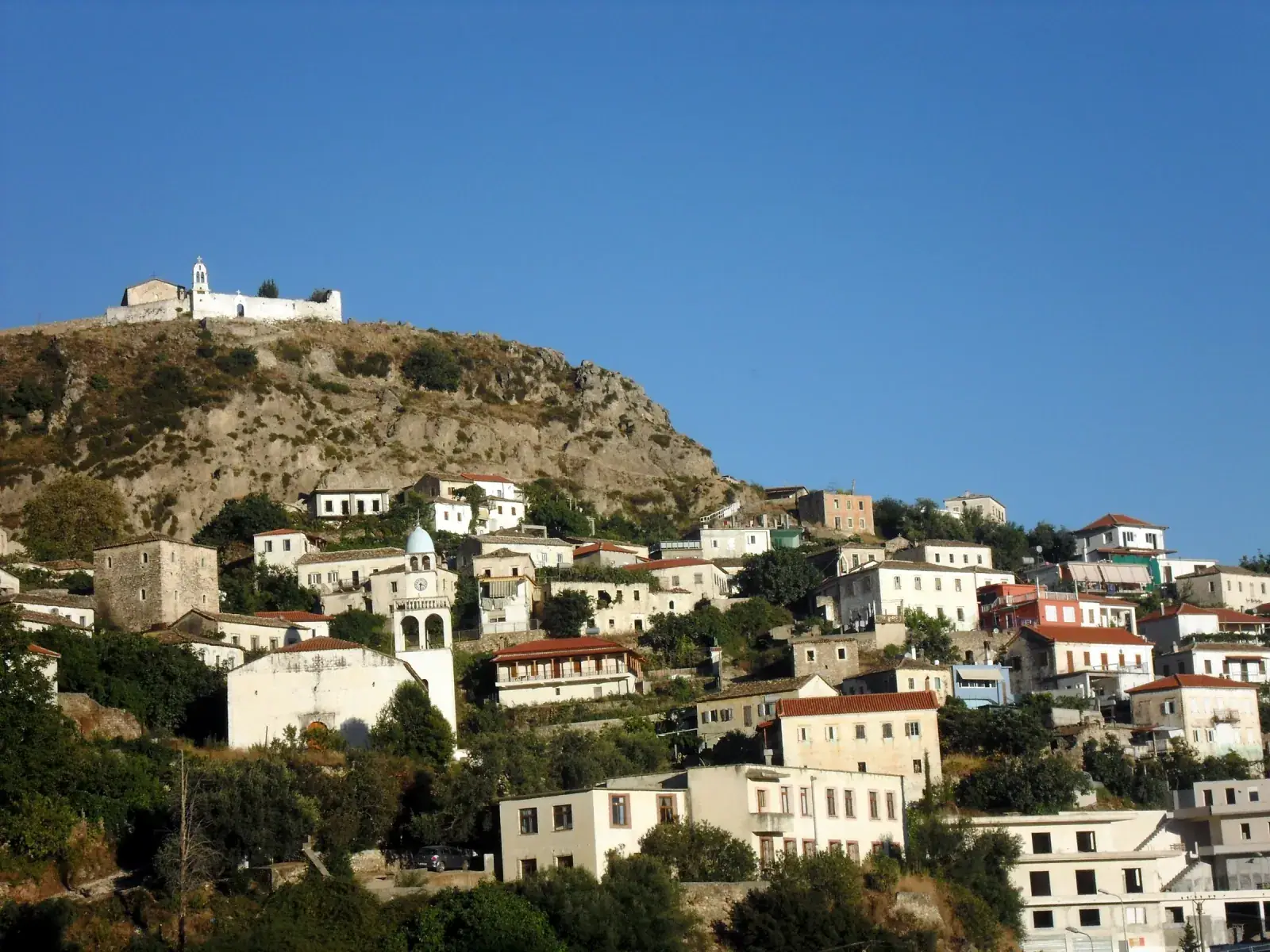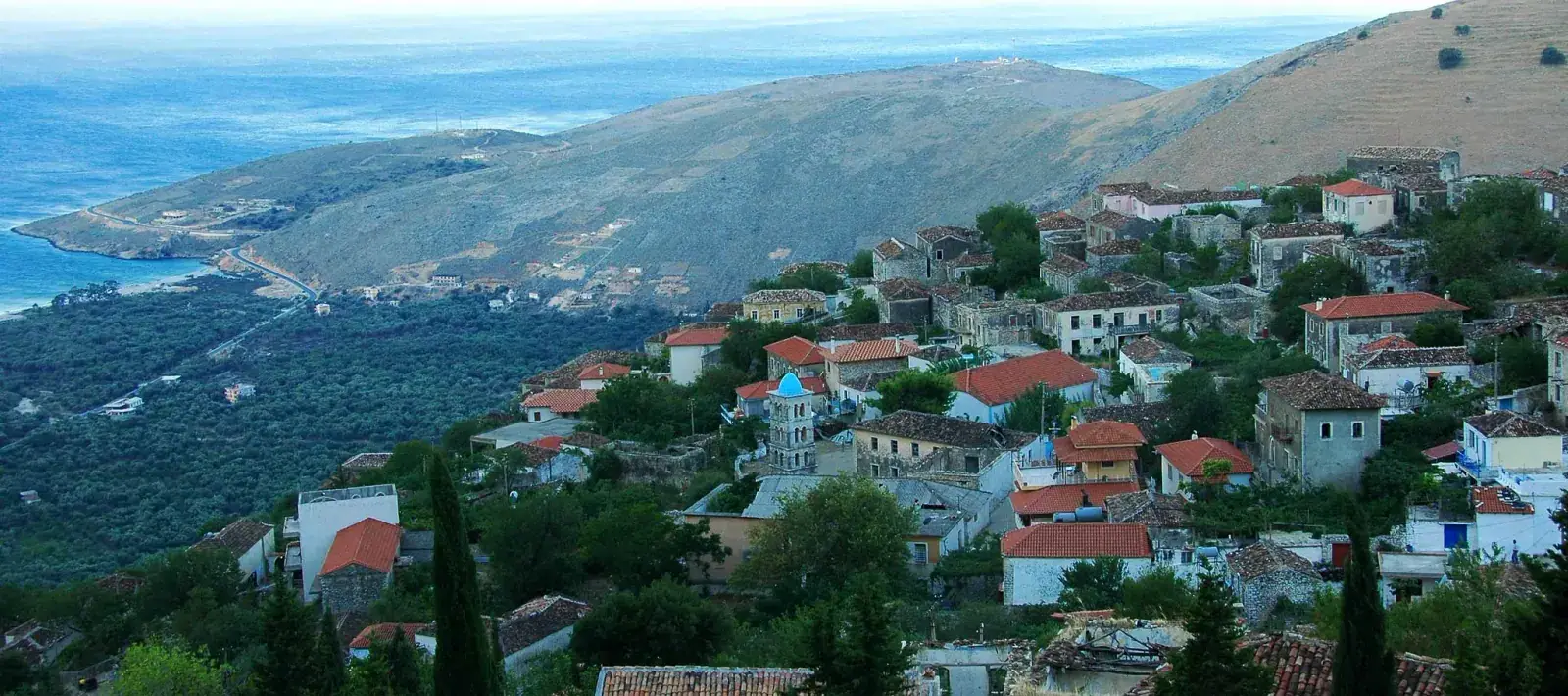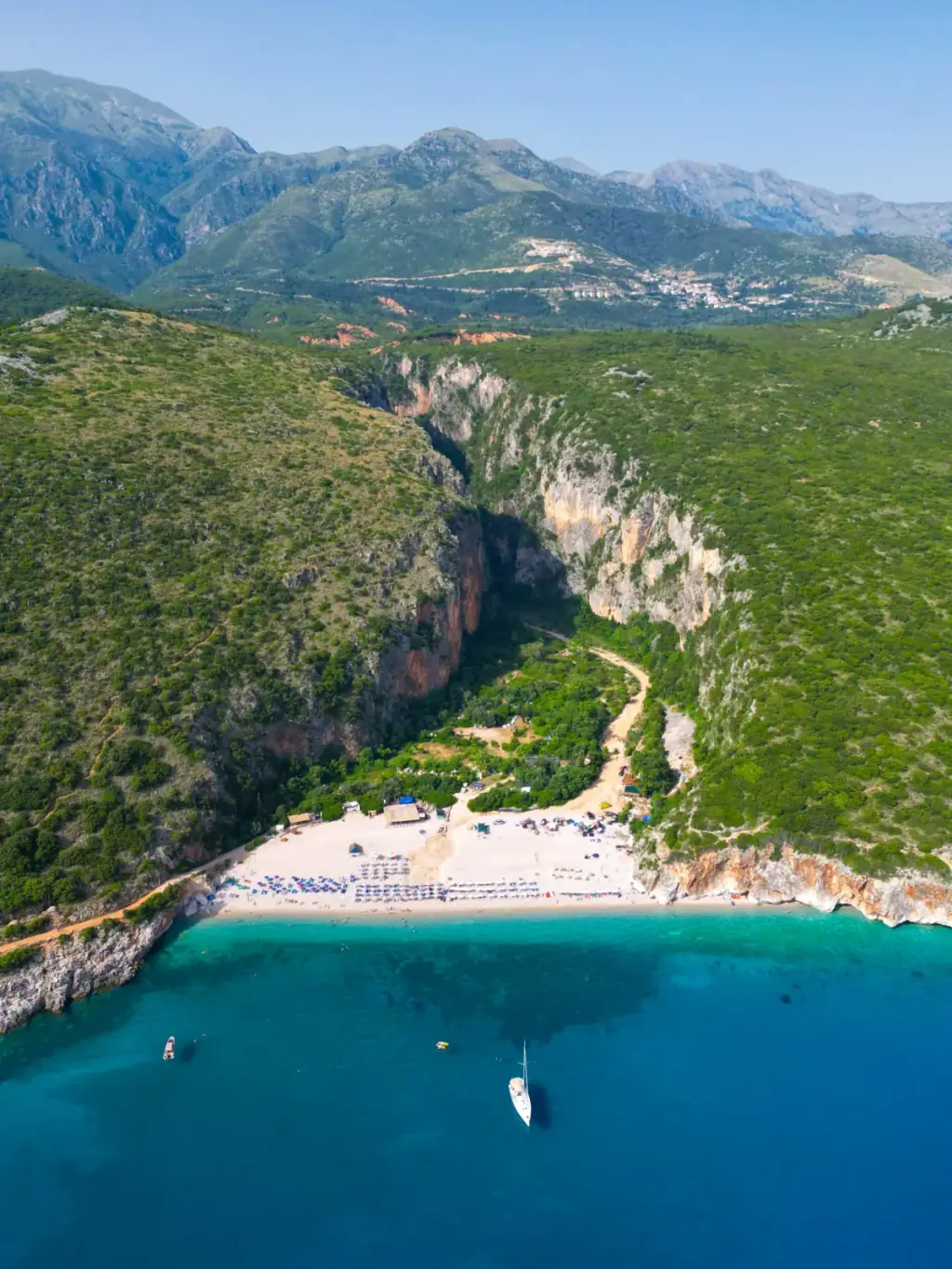
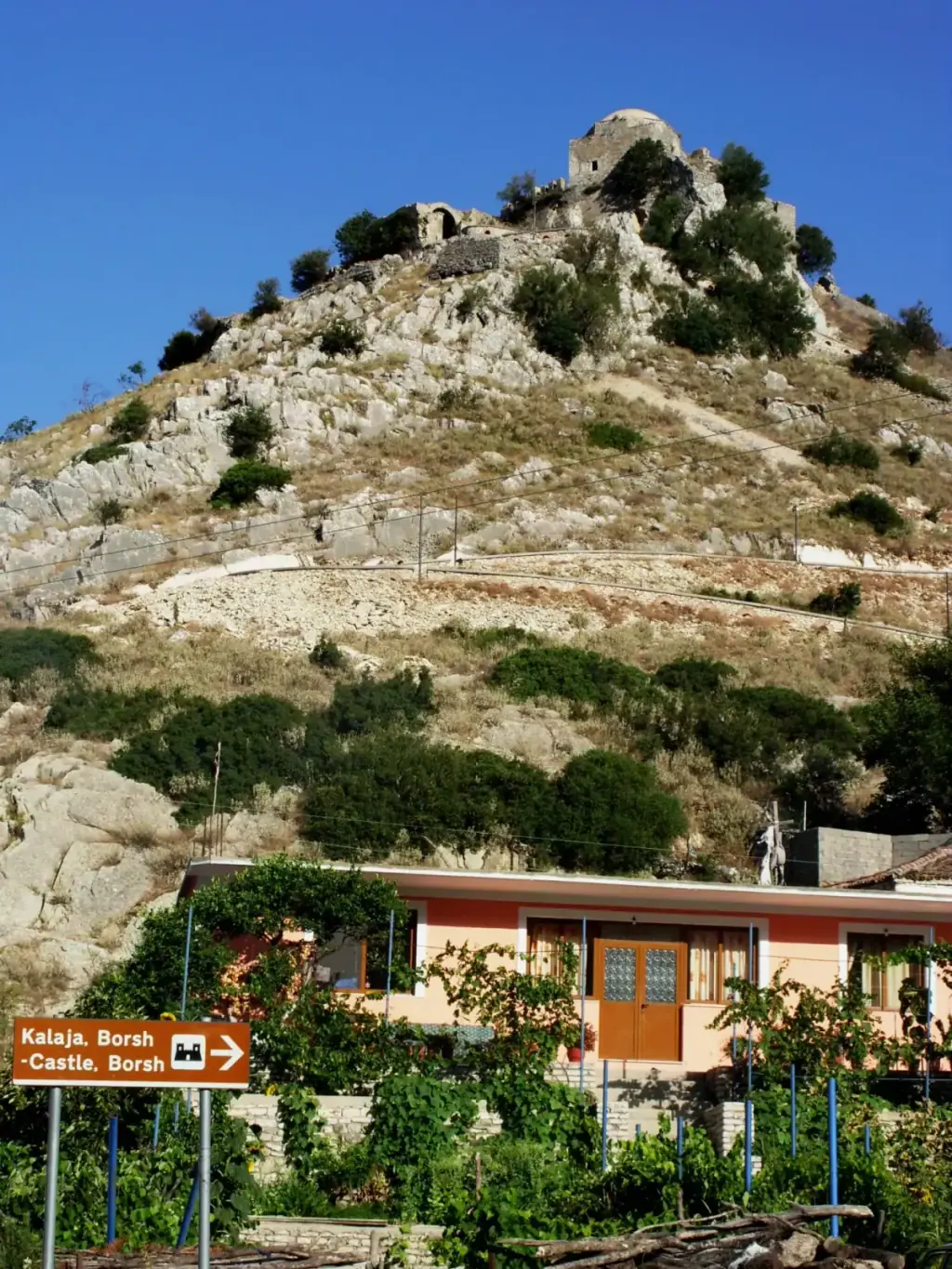
Borsh Castle, historically known as Sopot Castle, sits on a rocky hill 500 meters above sea level, overlooking Borsh Beach, Albania's longest stretch of sand at 7 km. The fortification has been occupied since the 4th century BC, making it one of the oldest continuously used defensive sites on the Albanian Riviera.
From ancient Chaonian acropolis to Byzantine stronghold to Venetian outpost to Ottoman fortification under Ali Pasha. Borsh Castle's walls have been built, torn down, and rebuilt by nearly every power that controlled the Ionian coast. Today it sits in ruin, free to visit, and rewards the steep uphill hike with panoramic views over the village, the beach, and the mountains behind.
Compare hotels, apartments, and Vrbo rentals on the map. Powered by Stay22.
Quick Facts
| Detail | Info |
|---|---|
| Also known as | Sopot Castle (Kalaja e Sopotit) |
| Location | Hill above Borsh village |
| Altitude | ~500 meters above sea level |
| First settlement | 4th century BC |
| Area | 5 hectares |
| Entrance fee | Free |
| Hike duration | 30–60 minutes from village |
| Difficulty | Moderate (steep, no shade) |
History: 3,000 Years of Occupation
Chaonian Acropolis (4th Century BC)
Archaeological research places the first settlement here in the 4th century BC, when Borsh belonged to the Chaonians, one of the major ancient Greek tribes of Epirus. The hilltop likely served as the acropolis of a small town and formed the northwestern-most stronghold in Chaonia's fortification system after Himara.
Stone blocks up to 3 meters wide from this period remain visible in the lower fortification walls, massive cyclopean masonry that has outlasted everything built on top of it.
Byzantine Fortress (6th–12th Century)
The castle first appears in written records during the reign of Byzantine Emperor Justinian I (527–565 AD), listed among his empire's fortifications. It surfaces again in the 12th century in Anna Komnena's Alexiad, confirming its continued strategic importance during the Byzantine period.
The fortifications follow the trace of the original acropolis, with four distinct reconstruction phases spanning from the early Byzantine period to the late Middle Ages.
Medieval Power Struggles (13th–15th Century)
Borsh Castle changed hands repeatedly during one of the most turbulent periods in Balkan history:
| Year | Event |
|---|---|
| 1258 | Michael II of Epirus gave the castle as dowry to Manfred, King of Sicily |
| 1279 | Ceded to Charles I of Anjou by Nikephoros I of Epirus |
| 1338 | Sided with the Byzantine Empire during an Epirote rebellion |
| 1417 | Fell to the Ottoman Empire |
| 1470–1479 | Captured by Venice during the First Ottoman-Venetian War, then returned |
| 1481–1484 | Briefly taken by Albanian forces under Gjon Kastrioti II |
Venetian & Ottoman Periods (15th–19th Century)
The Venetians held the castle again from 1571 until finally losing it to the Ottomans in 1790. Under Ottoman rule, the fortress came under the control of Ali Pasha of Ioannina, the same powerful semi-autonomous ruler who built Porto Palermo Castle down the coast.
The most significant surviving structure from this period is the ruin of the Haxhi Bendo Mosque, built near the castle entrance to honor a Borsh-born Ottoman official. The mosque's minaret was severely damaged during the communist era and has not been restored.
Abandonment (20th Century–Present)
The castle was likely abandoned in the early 20th century. Unlike many Albanian historical sites repurposed by the communist regime, Borsh Castle was simply left to decay. No restoration efforts have been carried out to date, which means what you see today is authentic ruin, crumbling walls, overgrown courtyards, and original stonework spanning two and a half millennia.
What to See
Fortification walls. The most impressive feature. Sections from different eras are visually distinct: massive Chaonian stone blocks at the base, Byzantine repairs in the middle layers, and Ottoman additions on top.
Entrance gate. One of the best-preserved elements, still standing with its original arch and flanking walls.
Haxhi Bendo Mosque ruin. Just inside the entrance. The walls remain but the minaret is partially collapsed. A rare example of Ottoman religious architecture in a fortification context on the Riviera.
360-degree views. From the highest point, you can see Borsh Beach stretching 7 km below, the Borsh River valley cutting inland, and the mountains rising behind. On clear days, the view south extends toward Saranda.
Cyclopean masonry. Look for the massive stone blocks (up to 3 meters wide) in the lower walls. These are the oldest surviving elements, dating to the 4th century BC Chaonian period.
How to Get There
From Borsh Village
The castle is visible on the hill above the village. A cobblestone path begins at the upper edge of Borsh and zigzags up the hillside. The path is steep, exposed, and takes 30–60 minutes depending on pace and fitness.
No shade. The hillside is bare. Bring water and avoid midday in summer.
From Himara
Borsh is approximately 20 km south of Himara on the SH8 coastal road (about 25 minutes by car). You can also take the Himara–Saranda minibus, which stops in Borsh.
From Saranda
Borsh is roughly 40 km north of Saranda on SH8 (about 45 minutes). Minibuses run several times daily.
Driving Up
A narrow asphalted road leads from the SH8 toward the village and partway up the hill. You can drive closer to the castle than the village path, reducing the hike to 15–20 minutes, though the final stretch is always on foot over cobblestone.
Borsh Castle vs Other Riviera Fortifications
| Feature | Borsh Castle | Himara Castle | Porto Palermo |
|---|---|---|---|
| Age | 4th century BC | 5th century BC | 1804 AD |
| Entrance fee | Free | 300 ALL (~3€) | 300 ALL (~3€) |
| Hike required | 30–60 min | 10 min | None (drive to gate) |
| Condition | Unrestored ruin | Partially restored | Well preserved |
| Best for | History, hiking | Old town atmosphere | Photography, easy access |
| Crowds | Almost none | Moderate | Moderate–high |
When to Visit
Best months: April–June and September–November. The exposed hillside makes summer visits brutal. There is no shade on the path or at the castle.
Best time of day: Early morning or late afternoon. Sunset from the castle walls is exceptional, with the light falling across Borsh Beach below.
Time needed: Allow 2–3 hours total, 30–60 minutes hiking up, 30–45 minutes exploring the ruins, and 20–30 minutes descending.
Practical Tips
- Bring water. No facilities at the castle or along the trail. Stock up in Borsh village first
- Wear hiking shoes. The cobblestone path is steep and uneven. Sandals are a bad idea
- No ATMs in Borsh. Bring cash from Himara or Saranda before visiting
- Watch your step. The ruins are unrestored with no guardrails. Crumbling walls and uneven ground require caution
- Combine with the beach. Visit the castle in the morning, then spend the afternoon on Borsh Beach below. The 7 km beach has sunbed rentals (700–1,000 ALL) and several restaurants
- Photography. The contrast of ancient ruins against the turquoise Ionian below makes this one of the most photogenic spots on the Riviera
Borsh Village: More Than a Castle
While you are in Borsh, the village itself is worth exploring:
- Borsh Beach, 7 km of coastline, Albania's longest. See our complete guide
- Borsh Waterfall. A natural monument in the heart of the village, fed by the Borsh River. See our waterfall guide
- Olive groves. Borsh is one of Albania's major olive oil producing areas. Local families sell homemade oil from roadside stalls
- Ujvara restaurant. Positioned near the waterfall, a popular spot for fresh trout and traditional Albanian dishes
For more castles and historical sites along the coast, see our landmarks guide.
FAQ
Is Borsh Castle worth the hike?
Yes, if you enjoy history and do not mind a steep 30–60 minute climb. The combination of 2,400-year-old cyclopean walls, Ottoman mosque ruins, and panoramic views over Albania's longest beach is unlike anything else on the Riviera. It is also completely free and almost never crowded.
How hard is the hike to Borsh Castle?
Moderate difficulty. The cobblestone path gains roughly 250 meters in elevation over about 1.3 km. The main challenge is the lack of shade, on hot days, the exposed hillside is relentless. Start early or visit in the late afternoon.
Is there an entrance fee for Borsh Castle?
No. The castle is freely accessible at all times. There are no gates, no ticket booth, and no opening hours. Bring your own water and supplies. There are no facilities.
Can I combine Borsh Castle with Borsh Beach?
This is the best way to visit. Hike the castle in the cool morning hours (allow 2–3 hours total), then descend to Borsh Beach for the afternoon. Sunbeds cost 700–1,000 ALL and several beachfront restaurants serve fresh seafood.
How do I get to Borsh without a car?
Minibuses run between Himara and Saranda several times daily, stopping in Borsh village. From the stop, it is a short walk to the castle trailhead. For more transport options, see our getting around guide. You can also browse Borsh waterfall and Riviera tours on GetYourGuide if you'd prefer a guided visit.