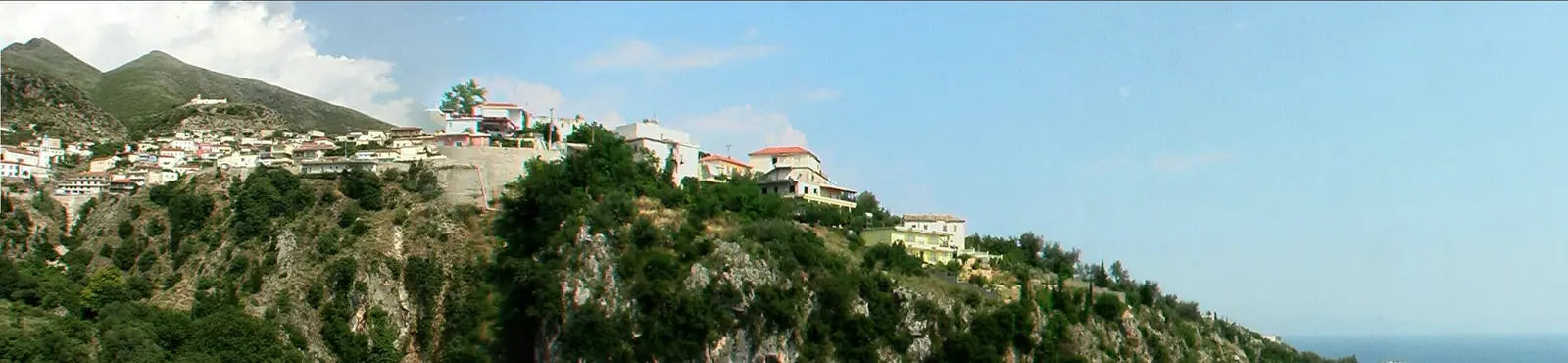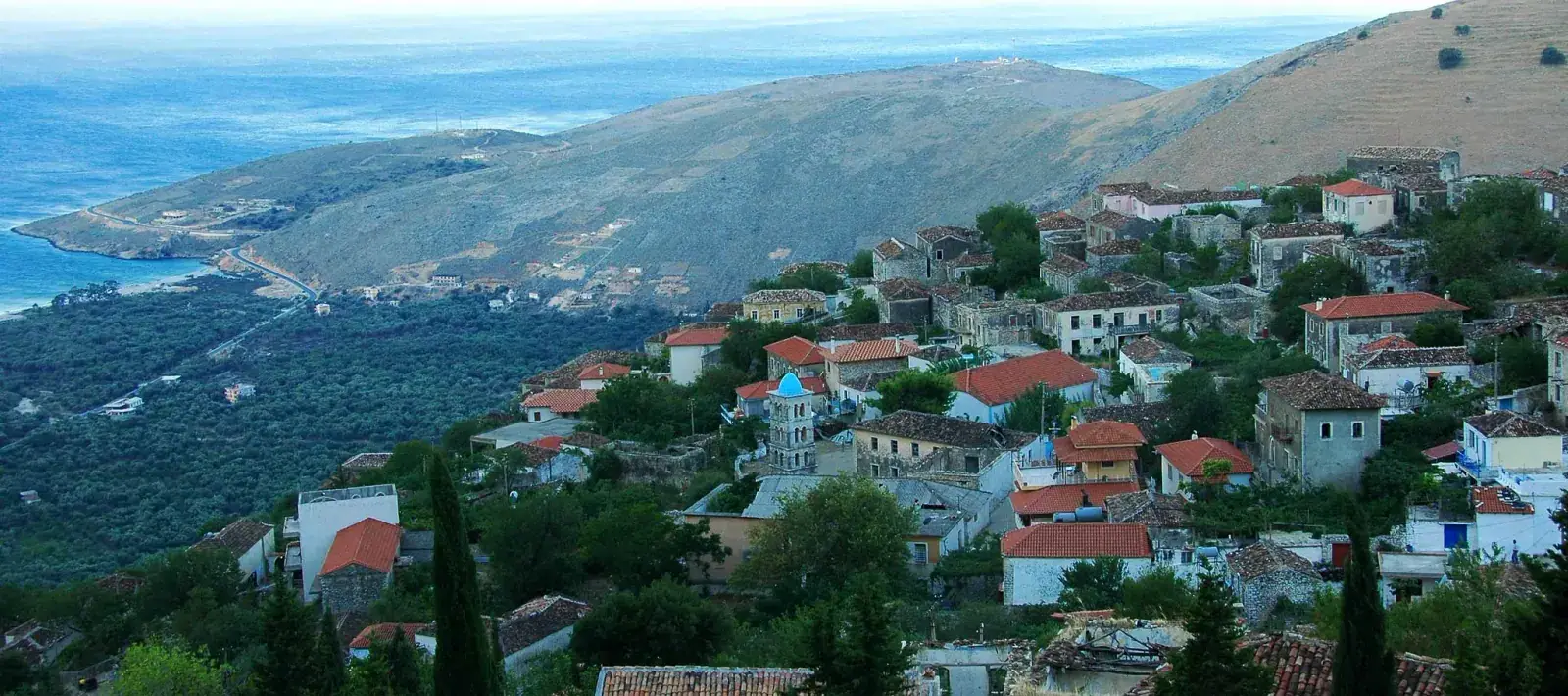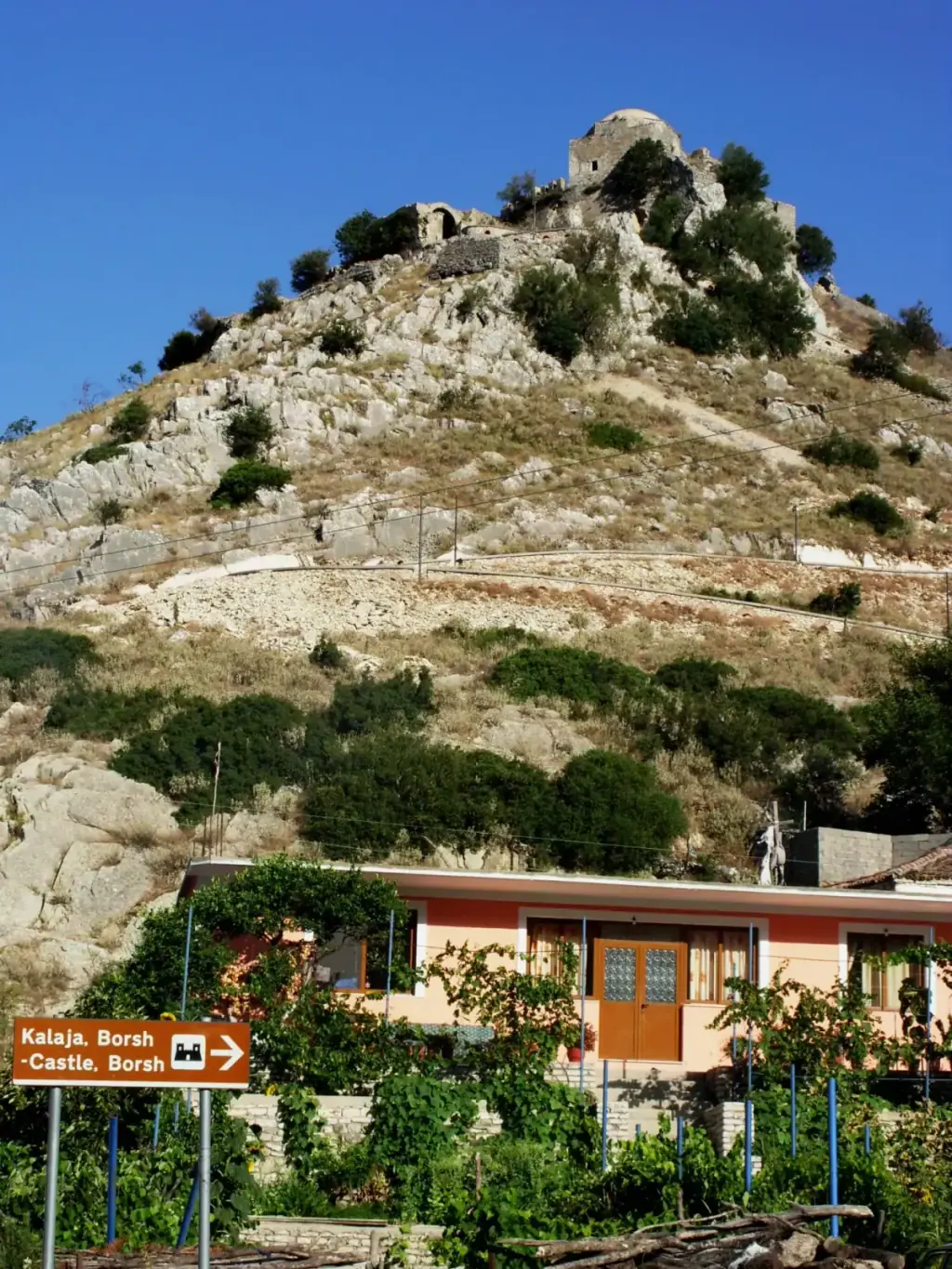
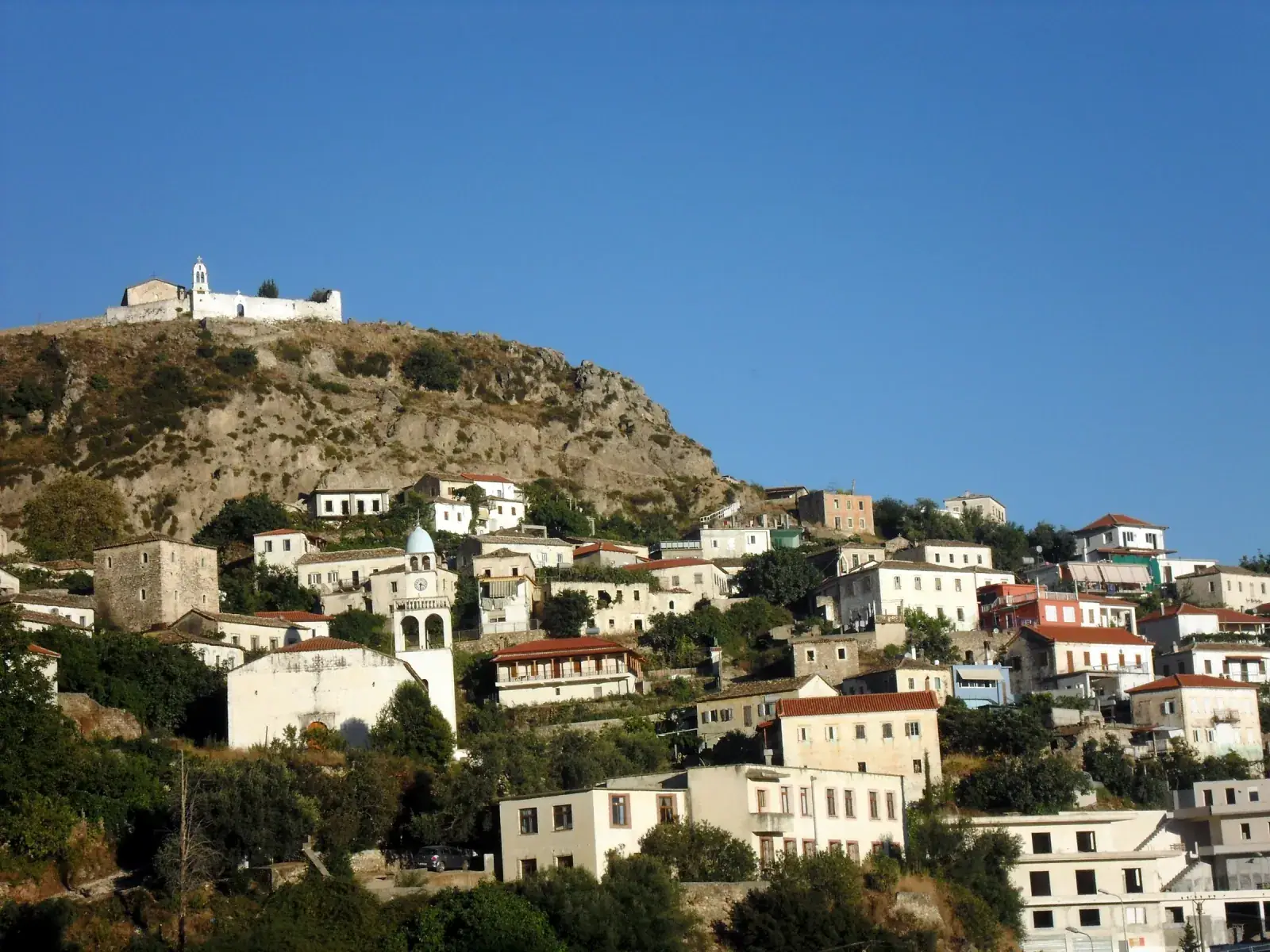
Saint Theodore Monastery sits on a hilltop between Dhermi and Gjipe Beach, making it one of the most historically layered sites on the Albanian Riviera. Built on the ruins of an ancient temple to Zeus, converted into an Orthodox monastery in the 14th century, repurposed as a Soviet navy holiday resort in the 1950s, and now under restoration. This single hilltop tells the entire story of Albania in miniature.
Combined with a Gjipe Beach trip or visited on its own, Saint Theodore Monastery rewards the short uphill walk with wide coastal views and centuries of compressed history.
Compare hotels, apartments, and Vrbo rentals on the map. Powered by Stay22.
Quick facts
| Detail | Info |
|---|---|
| Location | Hilltop between Dhermi and Gjipe Beach |
| Built | 14th century (on ancient temple site) |
| Last major rebuild | 1882 |
| Feast day | March 4 (St. Theodore's Day) |
| Entrance fee | Free (donations welcome) |
| Parking | 200–300 ALL (~2–3€) |
| Walk from parking | 10–15 minutes uphill |
| Current status | Under restoration (partially accessible) |
History: five lives on one hilltop
Ancient temple (pre-Christian era)
Long before any monastery stood here, this hilltop hosted a temple dedicated to Zeus and Artemis. Early Christians built directly on top of pagan sacred sites across the Mediterranean, claiming spiritual authority over the old gods. Saint Theodore's follows this pattern exactly.
Orthodox monastery (14th–19th century)
Construction of the monastery began in the 14th century and continued in stages for roughly 500 years. The area between Himara and Dhermi was once called "little Mount Athos" for its concentration of monasteries and churches. Saint Theodore's is one of the few that survived.
The church was substantially rebuilt in 1882, giving it the form visitors see today: a wooden-roofed basilica with alternating courses of slim bricks and local limestone, a style known as Albanian-Byzantine architecture. Inside, carved wooden sanctuary screens and surviving icons reflect centuries of craftsmanship.
Soviet holiday resort (1952–1961)
In 1946, Albania's communist regime shuttered every religious institution in the country. Saint Theodore's sat empty until 1952, when the Soviets converted it into holiday quarters for Russian navy officers stationed at the nearby Pasha Liman naval base (near Orikum, Greek: Ωρικός, Albanian: Orikum) on Vlora Bay. Monastic cells became bedrooms. The church became a recreation hall. For nearly a decade, Soviet sailors vacationed where monks once prayed.
Albanian military post (1961–late 1980s)
After Albania broke with the Soviet Union in 1961, a split that culminated in the Vlora incident and saw Albanian forces blockade the Pasha Liman base, Russian personnel left the country. The Albanian army took over the monastery as a military observation post, its hilltop position offering strategic views of the coastline. Concrete bunkers from this era remain visible around the site.
Restoration era (2010s–present)
The Orthodox Autocephalous Church of Albania has been working to restore the monastery since the late 2010s, part of a broader effort to rebuild over 250 churches damaged during the communist era. As of 2025, the site is described by visitors as "mostly a construction site," with scaffolding and building materials visible. The church structure is largely complete, and the courtyard is accessible when gates are open.
What to see
The church. The basilica's simple exterior belies a rich interior with surviving frescoes and carved wooden iconostasis. Some areas remain restricted during restoration.
Ancient foundations. Look for the massive stone blocks beneath the monastery walls, remnants of the original temple to Zeus that predate the Christian construction by over a millennium.
Concrete bunkers. Communist-era military bunkers dot the hillside around the monastery, a jarring reminder of Albania's 20th-century isolation. These are the same type found across the entire Albanian Riviera.
Panoramic views. On clear days, the hilltop offers views stretching south along the coastline toward Himara and north toward the mountains of Llogara Pass. Some visitors report seeing Corfu on exceptionally clear days.
How to get there
From Dhermi
The monastery is signed as "Manastiri i Shën Theodhorit" on the coastal highway SH8 between Dhermi and the Gjipe Beach turnoff. A narrow single-lane road winds 2.5 km through olive groves from the highway to a small parking area.
From parking, a recently paved stone path climbs 10–15 minutes to the monastery gates.
From Himara
Drive north on SH8 toward Dhermi, roughly 20 minutes (15 km). The turnoff is before you reach Dhermi village, signed on the left.
Parking
A small lot at the trailhead costs 200–300 ALL (~2–3€). This is the same parking area used for access to Gjipe Beach, so it fills up in peak summer.
Combining with Gjipe Beach
Most visitors pair the monastery with a trip to Gjipe Beach. The parking lot serves both destinations. After visiting the monastery (allow 30–45 minutes), you can hike down to Gjipe Beach via a separate trail, about 30–40 minutes downhill through the canyon.
This makes for an excellent half-day trip: monastery in the morning, beach in the afternoon.
| Destination | Walk from parking | Difficulty |
|---|---|---|
| Saint Theodore Monastery | 10–15 min uphill | Easy–moderate |
| Gjipe Beach | 30–40 min downhill | Moderate (steep return) |
When to visit
Best months: April–June and September–October. Summer temperatures above Gjipe regularly exceed 35–40°C, and the uphill walk with no shade makes midday visits uncomfortable.
March 4. The monastery's feast day (St. Theodore's Day) draws worshippers from across the Himara region. If you visit around this date, expect a more active and festive atmosphere.
Restoration note: The monastery has no fixed opening hours. Gates may be closed during active construction. Visiting on weekends or during religious holidays improves your chances of finding the gates open.
Practical tips
- Bring water. No facilities at the monastery or along the path
- Wear sturdy shoes. The stone path is manageable but uneven in places
- Dress modestly. As a functioning religious site, cover shoulders and knees if entering the church
- Donations. No entrance fee, but a donation box supports the restoration
- Photography. Generally permitted in the courtyard; ask before photographing inside the church
- Combine trips. The Gjipe Beach parking lot is the same trailhead, making a combined visit efficient
The bigger picture: Dhermi's monastery trail
Saint Theodore's is just one piece of Dhermi's monastic heritage. The village area was once home to dozens of churches and monasteries, earning the "little Mount Athos" nickname. Another significant site is the Panagia Drymadon, a 13th-century hilltop monastery overlooking the village. Together, these sites make Dhermi one of the richest areas for Byzantine heritage on the entire Albanian Riviera.
For a broader look at the region's historic sites, see our landmarks guide.
FAQ
Is Saint Theodore Monastery open to visitors?
The courtyard is accessible when gates are open, but there are no fixed hours. The site is under active restoration, so some areas are restricted. Weekends and religious holidays offer the best chances of finding it open. There is no entrance fee.
How long does it take to visit the monastery?
Allow 30–45 minutes for the monastery itself, plus 10–15 minutes walking each way from the parking area. If you combine it with Gjipe Beach. Budget a full half-day.
Can I drive all the way to the monastery?
No. You can drive 2.5 km from SH8 to the parking area through olive groves, but the final 10–15 minute stretch is a paved stone footpath. Parking costs 200–300 ALL (~2–3€).
What was the monastery used for during communism?
From 1952 to 1961, Soviet navy officers from the Pasha Liman base used it as a holiday resort. After the Soviet-Albanian split in 1961, the Albanian army converted it into a military observation post until the late 1980s. Concrete bunkers from this period are still visible on the hillside.
Is the monastery worth visiting if I'm already going to Gjipe Beach?
Absolutely. The monastery adds only 30–45 minutes to your Gjipe trip and offers a completely different experience: ancient ruins, Cold War history, and views you will not get from the beach below.