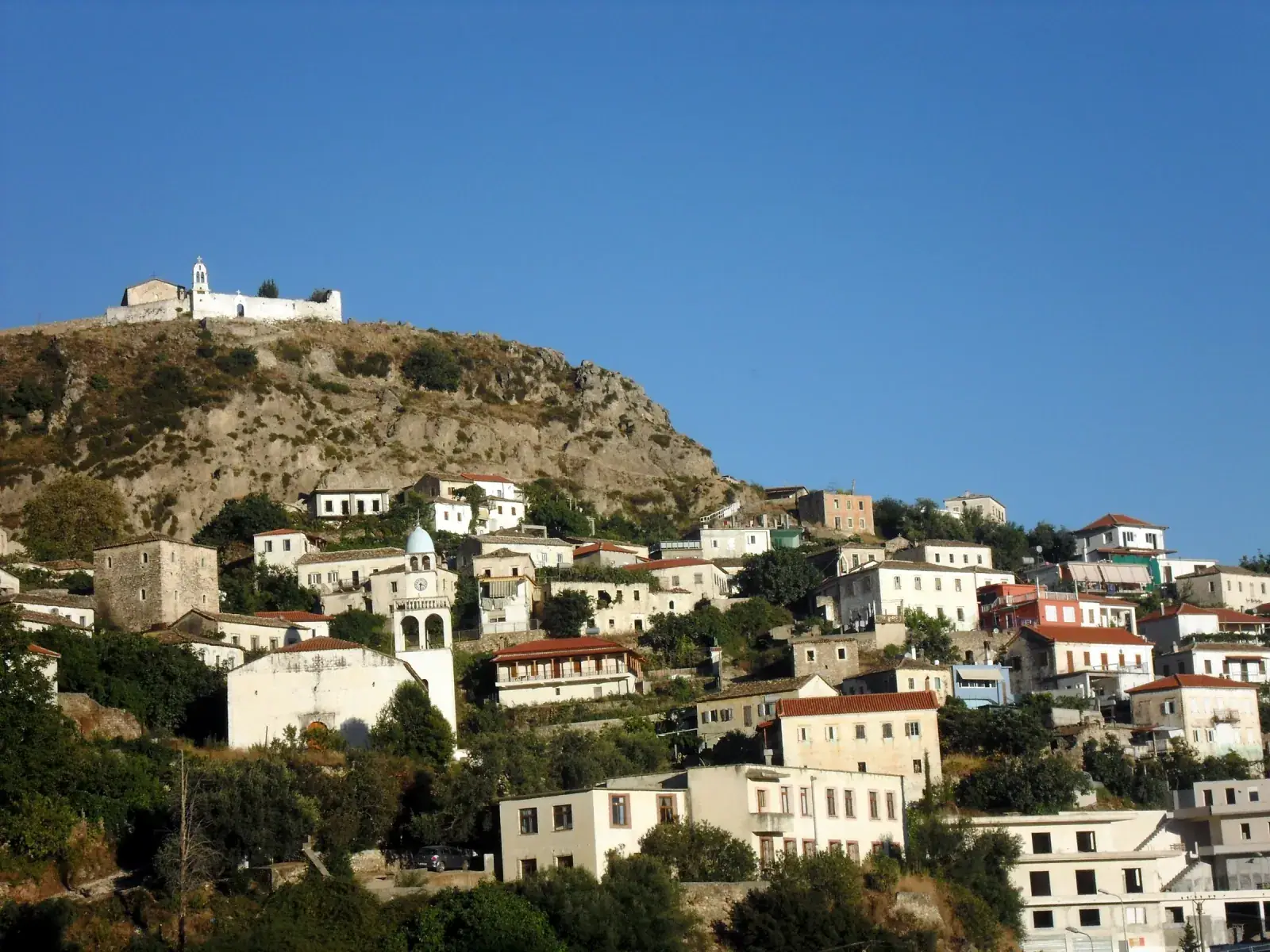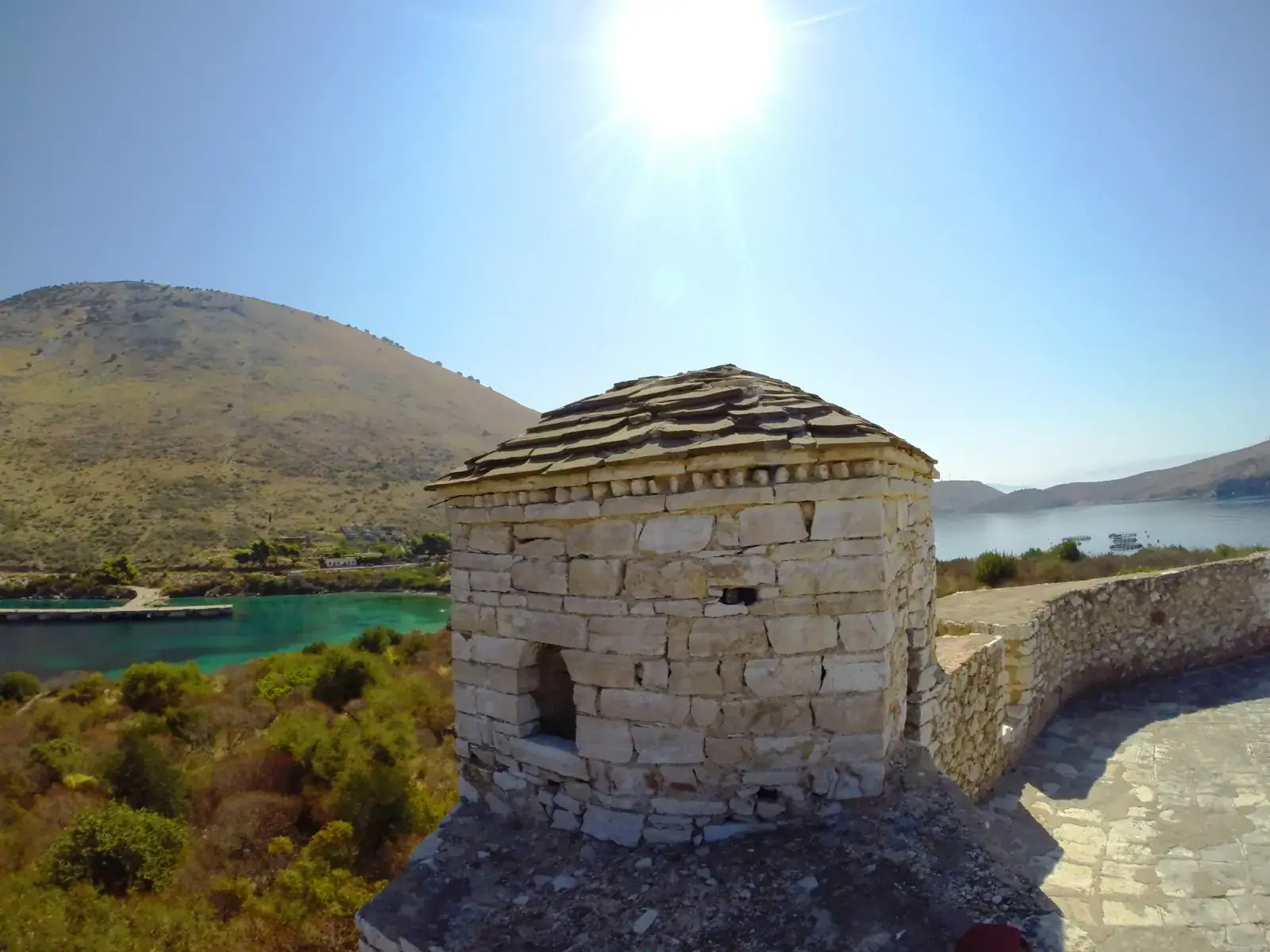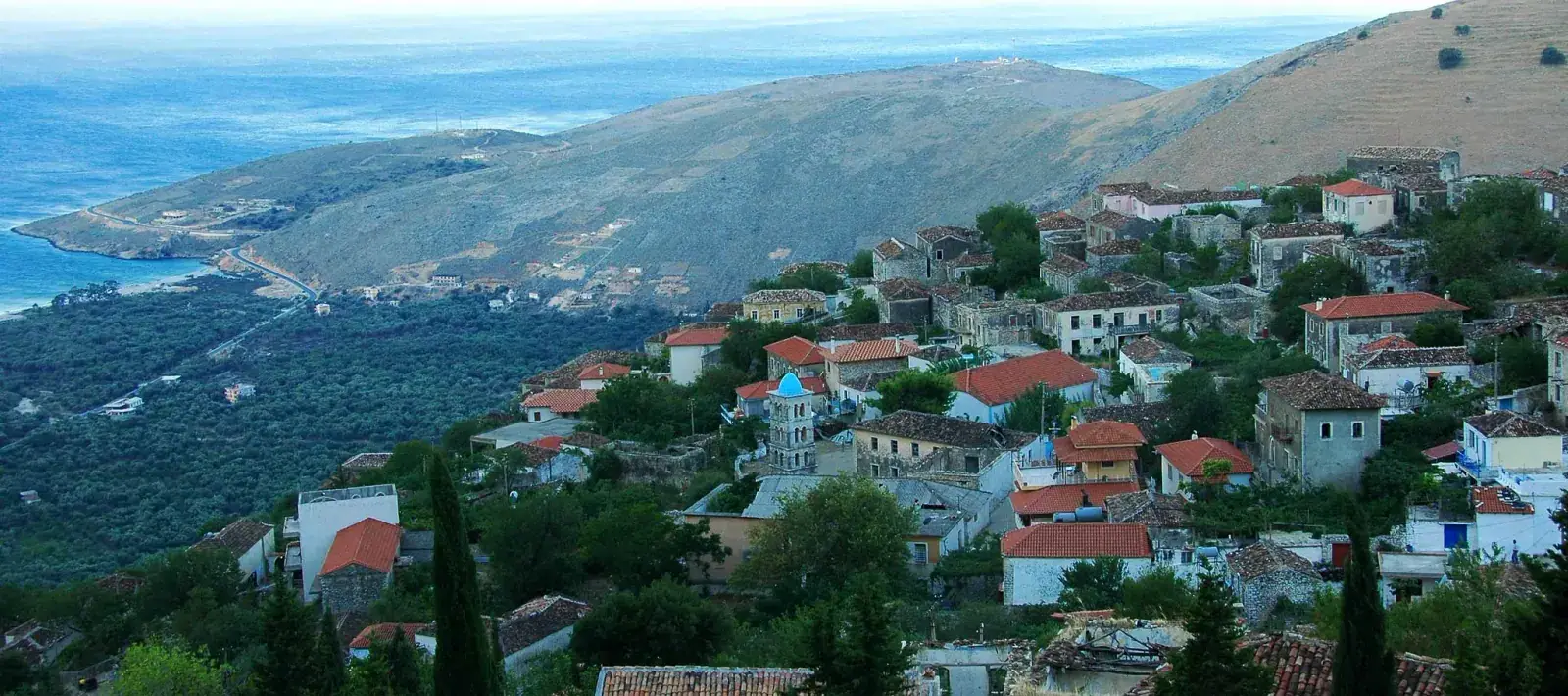
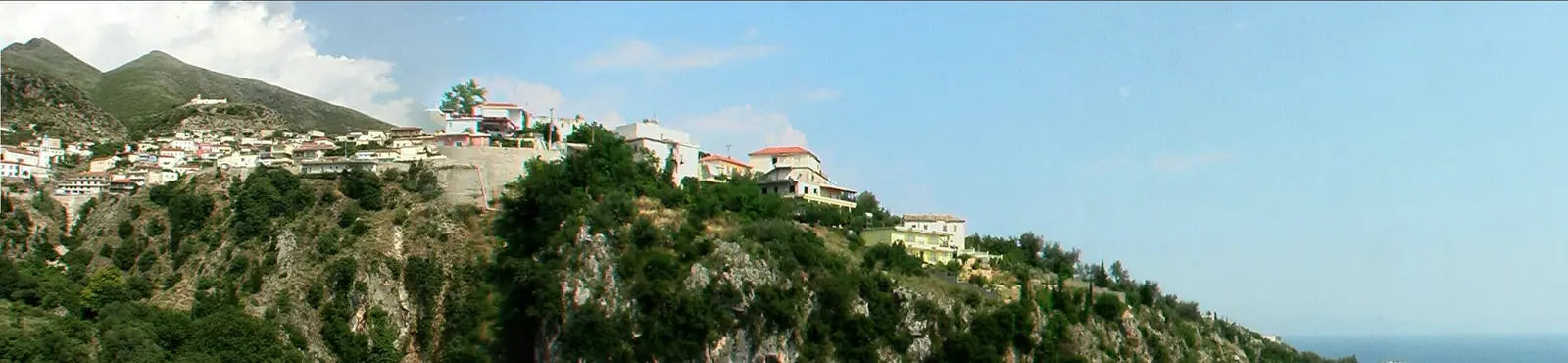
The Panagia Drymadon, also known as the Monastery of Saint Mary, sits on a hilltop at 257 meters elevation above the village of Dhermi, overlooking the Ionian Sea. Built in the 13th–14th century. It is a Cultural Monument of Albania and one of the best-preserved examples of Byzantine-era religious architecture on the Albanian Riviera.
The monastery operated continuously for over 600 years, outlasting Byzantine decline, Ottoman occupation and Italian invasion. It closed in 1967, when Albania's communist regime forced the last nun to leave. Today, the restored church still houses frescoes commissioned in 1781 by the Archbishop of Himara and Delvina, and the hilltop offers some of the finest panoramic views on the coast.
Compare hotels, apartments, and Vrbo rentals on the map. Powered by Stay22.
Quick facts
| Detail | Info |
|---|---|
| Also known as | Monastery of Saint Mary / Our Lady Monastery |
| Location | Hilltop above Dhermi, Rruga Vlladas |
| Elevation | 257 meters |
| Built | 13th–14th century |
| Architecture | Basilica with Byzantine dome, single nave |
| Frescoes | 1781, by Archbishop Ioanni of Himara and Delvina |
| Status | Cultural Monument of Albania |
| Last active as monastery | 1967 (communist closure) |
| Entrance fee | Free |
History
Foundation (13th–14th century)
The Panagia Drymadon was built during the late Byzantine period when the Dhermi area was a center of Orthodox monasticism. The coastline between Himara and Dhermi was once called "little Mount Athos" for its concentration of churches and religious communities. The monastery's name derives from "Drymadon," linked to the Greek name of Dhermi itself (Δρυμάδες), from the ancient word for forest or oakwood.
The basilica-style church with its Byzantine dome and single nave was constructed in this period, following the regional Albanian-Byzantine building tradition: local limestone and brick courses with wooden roof elements, adapted to the hillside topography rather than imposed as formal geometry.
Frescoes of 1781
The monastery's most significant artistic treasure was commissioned in 1781 by Archbishop Ioanni (Ioannis) of Himara and Delvina. These frescoes, religious scenes painted directly onto the interior walls, remain in good condition today, offering a rare window into 18th-century Orthodox artistic tradition on the Albanian coast.
The mural paintings on the church walls date from the same period and complement the frescos, creating an interior that rewards careful attention despite the church's modest size.
The last nun (1967)
The Panagia Drymadon operated as an active monastery for over six centuries, surviving political upheavals that destroyed most of the region's religious communities. In 1967, Albania became the world's first officially atheist state, and the communist regime systematically closed every religious institution in the country. The last nun at Panagia Drymadon was forced to leave that year.
Unlike many Albanian religious sites, the church was not destroyed, but it ceased to function as a monastery. It stood empty through the remainder of the communist period until Albania's religious freedoms were restored in the early 1990s.
Cultural Monument status
The Panagia Drymadon is officially designated as a Cultural Monument of Albania, recognizing both its architectural significance and its historical role in the region's Orthodox heritage.
What to see
The basilica church has a single nave topped with a Byzantine dome. The exterior is modest: limestone walls, a simple profile against the sky. The interior is where the monastery reveals itself: frescoes from 1781 covering the walls and dome, along with mural paintings and religious iconography.
The 1781 frescoes were commissioned by Archbishop Ioanni of Himara and Delvina, and they are the best-preserved frescoes in the Dhermi area. The condition is good given the building's history, with vivid colors and detailed religious scenes still clearly visible.
The cemetery sits inside the walled compound, ringing the church, a reminder of the centuries of monastic life that sustained this site.
Panoramic views open from the hilltop over Dhermi village below, the Ionian Sea to the west, and the mountains rising behind. On clear days, the coastline stretches in both directions, north toward Llogara Pass and south toward Himara.
How to get there
From Dhermi village
The monastery sits on the hill directly above the village. A path climbs from the upper part of Dhermi to the monastery, roughly 15–20 minutes of uphill walking on a mix of stone path and village lane.
From Himara
Drive north on SH8 toward Dhermi, roughly 20 minutes (15 km). In Dhermi, follow signs or ask locally for directions to the monastery (Rruga Vlladas). The path starts from the upper village.
From Llogara Pass
If you are driving south from Vlora over Llogara Pass, Dhermi is the first major village you reach after descending. The monastery is visible on the hillside above the village.
Panagia Drymadon vs Saint Theodore Monastery
Dhermi has two significant monastery sites. Here is how they compare:
| Feature | Panagia Drymadon | Saint Theodore |
|---|---|---|
| Built | 13th–14th century | 14th century |
| Location | Above Dhermi village | Between Dhermi and Gjipe |
| Walk from road | 15–20 min | 10–15 min from parking |
| Condition | Good: restored, frescoes intact | Under active restoration |
| Best feature | 1781 frescoes | Multi-era history (Zeus temple → Soviet resort) |
| Combine with | Dhermi village, Drymades Beach | Gjipe Beach |
| Current use | Church (occasional services) | Restoration site |
Do both? If you have a full day in Dhermi, visiting both monasteries is feasible. Panagia Drymadon in the morning (1 hour), Saint Theodore + Gjipe Beach in the afternoon (half day). Together they show the full span of Dhermi's "little Mount Athos" heritage.
When to visit
Best months: April–June and September–October. The uphill walk is exposed to sun and can be uncomfortable in summer heat.
Best time of day: Morning, when the light illuminates the frescoes through the church windows and the hilltop views are clearest.
Time needed: Allow 45 minutes to 1 hour: 15–20 minutes walking up, 20–30 minutes at the monastery, and 10–15 minutes descending.
Access note: The church may not always be open. As with many rural Albanian churches, there are no fixed hours. Visiting during weekends or asking in the village for the keyholder improves your chances.
Practical tips
- Dress modestly. Cover shoulders and knees when entering the church. This is an active religious site
- Bring water. There are no facilities at the monastery
- Photography. Exterior shots are fine. Ask before photographing interior frescoes, because flash can damage centuries-old paint
- Combine with the village. Dhermi itself has restaurants, Drymades Beach, and the Albanian Riviera's best beach club scene
- Internal links. The monastery connects to the broader landmarks circuit and the Dhermi chapter of any Albanian Riviera road trip
Dhermi's religious heritage
The Panagia Drymadon is just one piece of Dhermi's rich Orthodox heritage. Other significant churches in the area include:
- Church of Ipapandis, with works by the medieval painter Nikola
- Church of Saint Charalambos, an Orthodox church within the village
- Saint Theodore Monastery, a 14th-century monastery between Dhermi and Gjipe, built on a temple to Zeus
Together, these sites make Dhermi the richest area for Byzantine-era religious architecture on the entire Albanian Riviera. For a broader look at the region's historic sites, see our landmarks guide.
FAQ
Can you visit the Panagia Drymadon monastery?
Yes. The monastery is free to visit and accessible year-round. The church may not always be open, and there are no fixed hours. Ask in Dhermi village for the keyholder, or visit during weekends when services occasionally take place.
How old are the frescoes?
The frescoes were commissioned in 1781 by Archbishop Ioanni of Himara and Delvina. They remain in good condition and are the monastery's most significant artistic feature. The church itself dates to the 13th–14th century.
How long does it take to visit?
Allow 45 minutes to 1 hour total: 15–20 minutes walking uphill from Dhermi village, 20–30 minutes exploring the monastery and views, and 10–15 minutes descending. The walk is moderate, mostly stone paths through the upper village.
Is the Panagia Drymadon the same as the Monastery of Saint Mary?
Yes. "Panagia" (Greek: Παναγία) means "All-Holy" and is the Orthodox title for the Virgin Mary. The monastery is referred to as Panagia Drymadon, Our Lady Monastery, or Monastery of Saint Mary. They are the same site.
What happened to the monastery during communism?
In 1967, Albania declared itself the world's first atheist state and closed all religious institutions. The last nun at Panagia Drymadon was forced to leave. The church was not destroyed but stood empty until religious freedoms were restored in the early 1990s. The 1781 frescoes survived the communist period in good condition.