You will notice them within minutes of arriving on the Albanian Riviera, small concrete domes poking out of hillsides, sitting on beaches, crouching beside roads. Albania's communist-era bunkers are everywhere. Between 1967 and 1986, dictator Enver Hoxha ordered the construction of an estimated 175,000 or more concrete bunkers across the country, roughly 5.7 per square kilometer, making Albania the most heavily fortified nation on Earth per capita.
The Albanian Riviera got its share. From the mushroom-shaped firing posts on Borsh Beach to the massive submarine tunnel at Porto Palermo, these Cold War relics are now part of the landscape, strange, indestructible, and surprisingly photogenic against the turquoise Ionian.
Quick Facts
| Detail | Info |
|---|---|
| Total bunkers built | 175,000+ confirmed (some estimates reach 750,000) |
| Construction period | 1967–1986 |
| Ordered by | Enver Hoxha, communist dictator (ruled 1944–1985) |
| Designer | Military engineer Josif Zagali |
| Cost | Up to 20% of Albania's GDP during peak years |
| Density | ~5.7 bunkers per square kilometer |
| Construction deaths | 70–100 workers per year from accidents |
| Bunkers used in combat | Zero |
Why Did Albania Build So Many Bunkers?
Hoxha's Paranoia
Enver Hoxha ruled Albania from 1944 until his death in 1985. Under his leadership, Albania became the most isolated country in Europe, breaking first with Yugoslavia (1948), then the Soviet Union (1961), and finally China (1978). By the late 1960s, Hoxha was convinced that invasion was imminent from virtually every direction.
His solution: fortify every square meter of Albania.
The "Bunkerization" Campaign (1967–1986)
Starting in 1967, Hoxha launched a systematic program of "bunkerization" (Albanian: bunkerizimi). The philosophy was simple, if Albania could not match its enemies in tanks, aircraft, or navy. It would make the country itself into a fortress. Every hilltop, every beach, every road junction, every field got bunkers.
The program was designed by military engineer Josif Zagali, who observed that dome-shaped structures were nearly impervious to artillery, shells ricocheted off the curved surface rather than penetrating. He designed the now-iconic mushroom-shaped bunker accordingly.
The human cost was staggering. Each small bunker consumed enough concrete and steel to build a modest family apartment. An estimated 70–100 construction workers died annually from accidents. At peak construction, the program consumed up to 20% of Albania's GDP, in one of Europe's poorest countries.
The Result
Not a single bunker was ever used in combat. Albania was never invaded. The bunkers were, by every practical measure, a colossal waste of resources in a country that desperately needed housing, hospitals, and infrastructure. But they are nearly indestructible, and so they remain.
Key Historical Dates
| Year | Event |
|---|---|
| 1944 | Communist regime established under Enver Hoxha |
| 1948 | Break with Yugoslavia, first perceived invasion threat |
| 1961 | Break with Soviet Union. Albania seizes Soviet submarines at Pasha Liman |
| 1967 | Bunkerization program begins, first QZ bunkers constructed |
| 1968 | Prague Spring invasion validates Hoxha's fear of Soviet aggression |
| 1978 | Break with China. Albania now isolated from all major allies |
| 1985 | Enver Hoxha dies; succeeded by Ramiz Alia |
| 1986 | Bunkerization program effectively ends, ~175,000 bunkers built |
| 1991 | Communist regime falls; bunkers abandoned |
| 2014 | Bunk'Art 1 museum opens in Tirana |
| 2016 | Bunk'Art 2 museum opens in Tirana |
Types of Bunkers You Will See
QZ Bunkers (Qender Zjarri, "Firing Position")
The most common type. These are the iconic mushroom-shaped domes you see on beaches and hillsides:
- Diameter: 3 meters
- Wall thickness: 0.6–1.1 meters of reinforced concrete
- Capacity: 1–2 soldiers
- Features: Hemispherical dome with firing slit, supported by a hollow cylinder on a concrete base
- Weight: Several tons
- Grouped: Often built in clusters of three, connected by prefabricated concrete tunnels
These are the bunkers you will photograph on the beach. They were designed as individual fighting positions, the equivalent of a permanent foxhole.
Pike Zjarri ("Point of Fire"). Command Bunkers
Larger and rarer than QZ bunkers:
- Diameter: 8 meters
- Weight: ~400 tons
- Features: Multiple rooms, ventilation systems, communication equipment
- Purpose: Coordinating military responses across wider areas
You are less likely to stumble across these on the Riviera, as they tend to be further inland or disguised within hillsides.
Submarine and Naval Bunkers
The largest military bunkers on the Riviera:
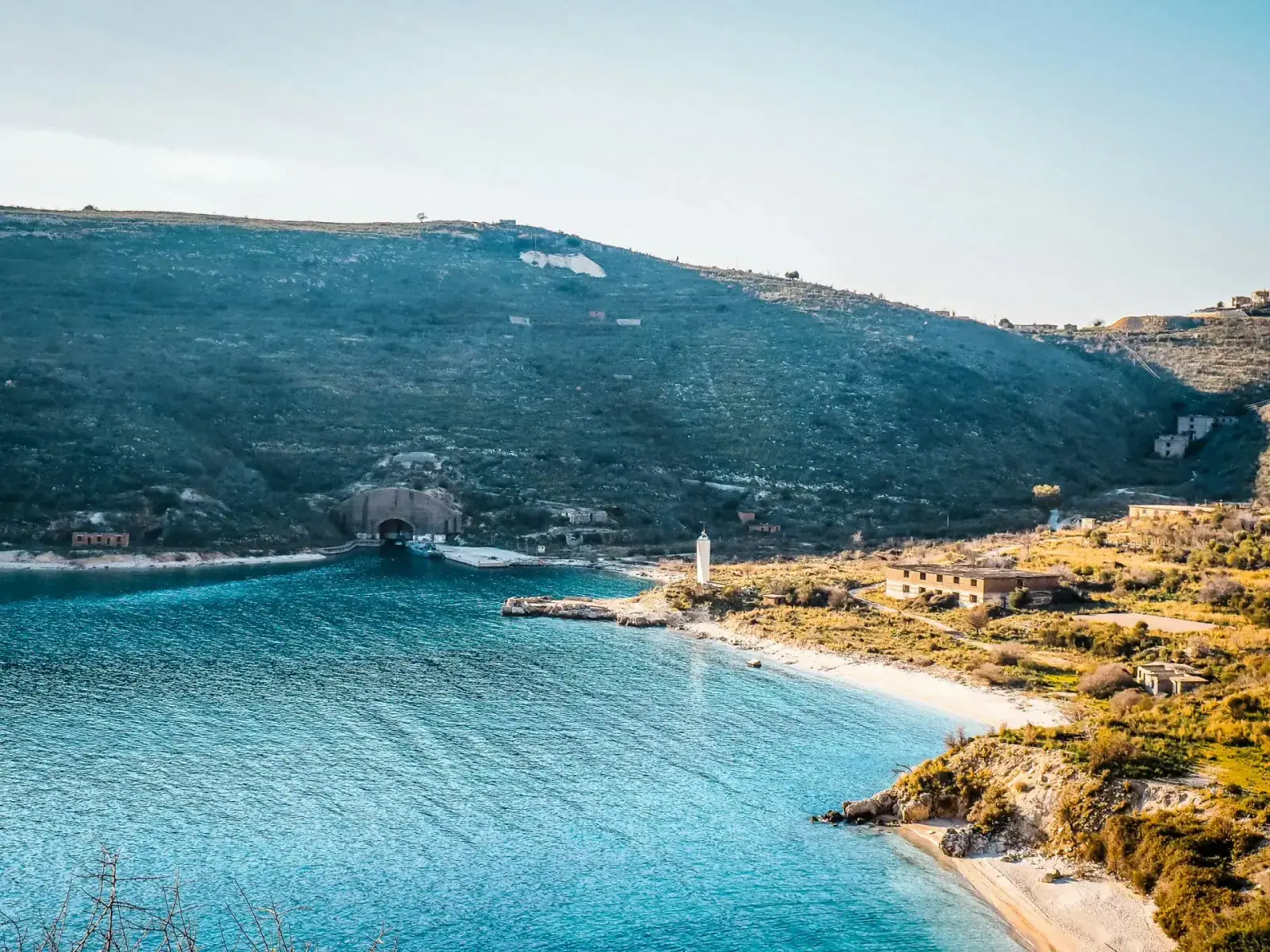
- Porto Palermo Submarine Tunnel, 650 meters long, 12 meters high, built to shelter four Whiskey-class submarines
- Pasha Liman Base (Vlora Bay). The original Soviet submarine base, where Albania seized the submarines in 1961
Where to Find Bunkers on the Albanian Riviera
Himara Area
Spile Beach & promenade. A few QZ bunkers dot the hillside above Himara's main beach. They are easy to spot from the promenade path.
Himara Castle hillside. Several bunkers sit around the approaches to Himara Castle, positioned for coastal defense.
Road between Himara and Dhermi. Bunkers appear along the SH8 highway, especially at curves and elevated viewpoints that offered strategic sight lines.
Dhermi & Gjipe Area
Saint Theodore Monastery. The hillside around the 14th-century monastery above Gjipe Beach has visible communist-era bunkers from when the Albanian army used the monastery as an observation post (1961–late 1980s).
Palase area. Near the Green Coast resort development, beach bunkers sit incongruously beside luxury sun loungers.
Jalë Beach. QZ bunkers remain on the hillside above this popular beach between Dhermi and Himara.
South of Himara
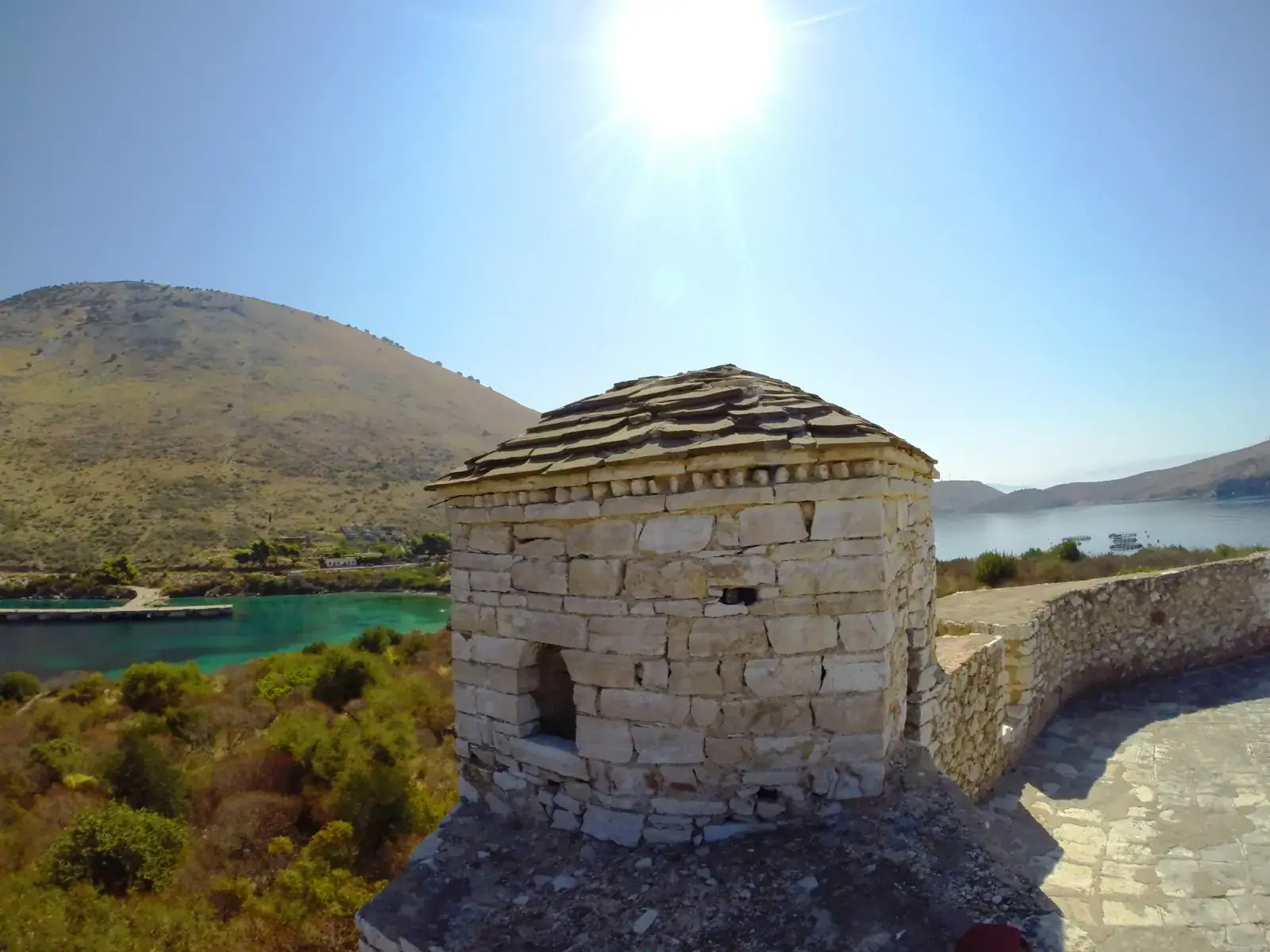
Porto Palermo Bay. The most dramatic concentration of military infrastructure on the Riviera. The submarine tunnel (650m, military restricted), abandoned barracks, and scattered QZ bunkers around the bay.
Borsh Beach. QZ bunkers appear along the 7 km stretch of Albania's longest beach, particularly at the northern and southern ends.
Qeparo hillsides. The area around Old Qeparo and the coastal road has scattered bunkers.
North of Himara
Llogara Pass area. Bunkers along the mountain pass road at strategic viewpoints, where the entire coast is visible from above.
The Riviera's Bunker Highlights
| Location | Type | GPS | Access | Best Photo Angle |
|---|---|---|---|---|
| Porto Palermo submarine tunnel | Naval bunker | 39.9767, 20.0683 | View only (military zone) | From the castle hill looking down at the tunnel entrance |
| Borsh Beach QZ bunkers (north end) | Firing positions | 40.0590, 19.8570 | Walk up from beach | Low angle with sea and mountains behind |
| Himara Castle hillside | QZ bunkers | 40.1020, 19.7490 | Easy walk from old town | With Spile Beach visible below |
| Saint Theodore Monastery | Military observation | 40.1520, 19.6280 | 30-min hike from road | Wide shot showing canyon and bunker together |
| Palase beach | QZ bunkers | 40.1780, 19.5890 | Beach access | Concrete dome against turquoise water |
| Jale Beach hillside | QZ cluster | 40.1280, 19.6950 | Walk from beach | Three bunkers in a row with Ionian backdrop |
How to Plan a Self-Driven Bunker Route From Himara
If you want to see bunkers as a deliberate trip, not just photograph the ones you happen to drive past, here's the half-day route we recommend for visitors based in Himara, with stops in geographic order.
| Stop | Drive time from Himara | What you see | Time on site |
|---|---|---|---|
| 1. Spile Beach hillside QZ bunkers | 0 min (in town) | Easy-access mushroom domes above the promenade; good orientation to bunker shape and scale | 15-20 min |
| 2. Himara Castle hillside cluster | 5 min | Strategic-position QZ bunkers around castle approaches; sea views | 20-30 min |
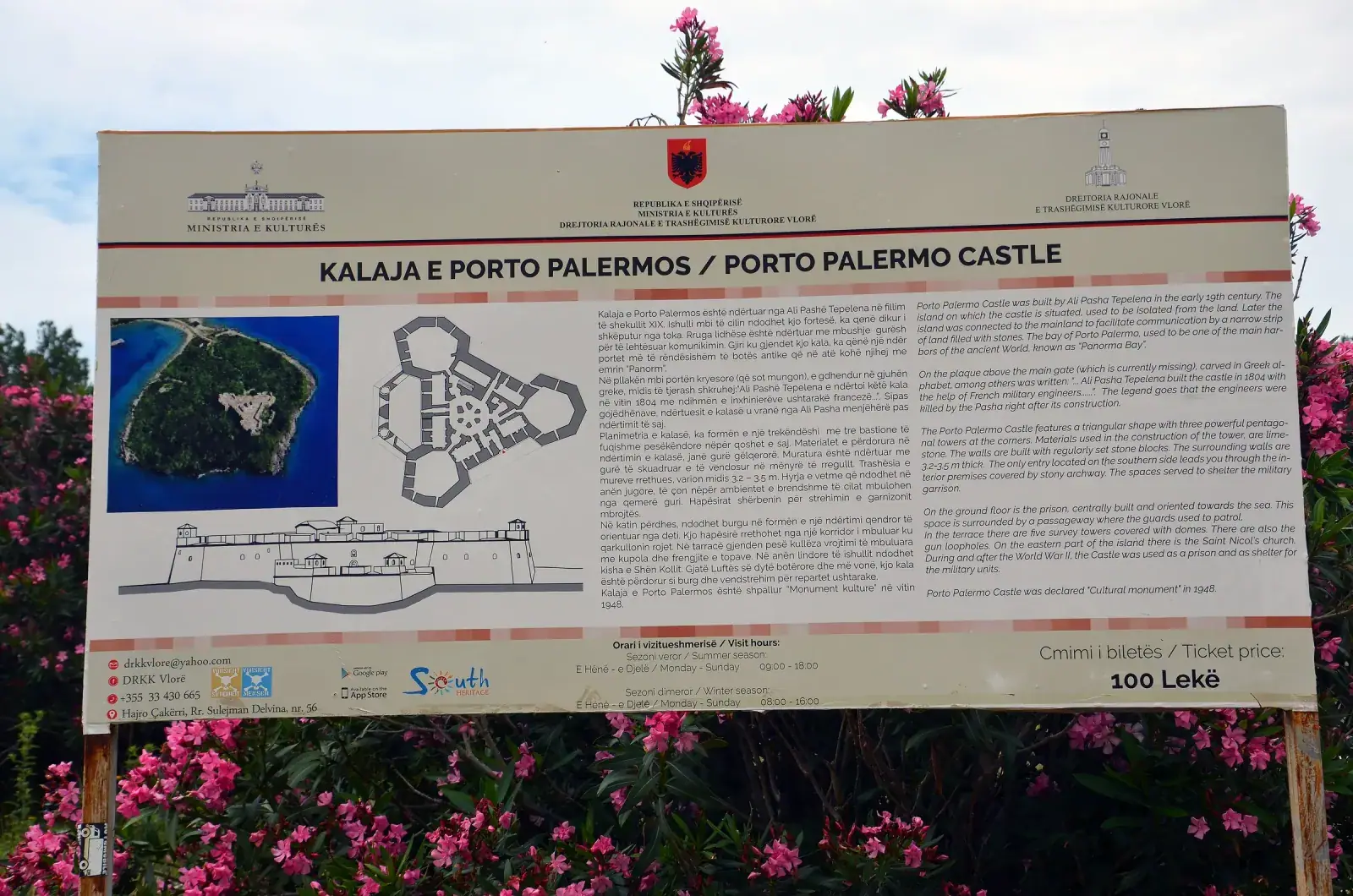
| 3. Porto Palermo Bay & submarine tunnel | 15 min south | The largest single piece of military infrastructure on the Riviera, 650m submarine tunnel (view-only, military zone) plus surrounding QZ bunkers and Ali Pasha's fortress | 60-90 min |
| 4. Borsh Beach QZ bunkers (north end) | 25 min south | Multiple QZ bunkers along Albania's longest beach, with Bunec headland visible | 30 min |
| 5. Llogara Pass viewpoint bunkers | 30 min north (return loop) | Strategic-elevation bunkers with the entire Riviera coast visible from above | 30 min |
Total: roughly 4-5 hours including drive time and stops, doable as a single half-day. Take it as a clockwise loop south then north (1 → 2 → 3 → 4 → back to Himara → 5), or split across two days. A standard rental car handles every stop. See our Albanian Riviera road trip guide for combining this with other coastal sights, or Llogara Pass driving guide for the northbound leg.
For US travelers: Coordinates above are decimal degrees, paste directly into Google Maps or Apple Maps for navigation. Distances are short (~85 km / 53 mi total loop). The submarine tunnel at Porto Palermo is the single most photogenic Cold War site on the Riviera and tracks well as a "Soviet-era infrastructure" sightseeing draw similar to Berlin or East-Bloc tours.
For UK travelers: Albania's 175,000 bunkers makes it the most fortified country per capita in history, useful framing for context against UK Cold War heritage sites (Kelvedon Hatch, Hack Green) that operate as museums. Albania's bunkers are mostly in situ, weathered, on beaches, a different and arguably more visceral experience than UK preserved sites.
Bunkers Beyond the Riviera
If the Riviera's bunkers interest you, Albania has dedicated museum sites:
Bunk'Art 1 (Tirana)
A five-story underground nuclear shelter built in the 1970s for Albania's political elite. Now a museum covering military history from World War II through the communist period, with contemporary art installations. Located on the outskirts of Tirana near Dajt Mountain.
Bunk'Art 2 (Tirana)
A smaller bunker near Skanderbeg Square, focused on the Sigurimi. Albania's feared communist-era secret police. The exhibitions document surveillance, persecution, and political imprisonment.
Cold War Tunnel (Gjirokastra)
Largely untouched since the communist era, this military tunnel beneath Gjirokastra's castle offers a rawer, less curated experience than Tirana's museums.
What Happened to the Bunkers?
After communism fell in 1991, Albania was left with hundreds of thousands of concrete structures that were essentially impossible to demolish cost-effectively. Over the decades, bunkers have been:
- Left in place. The vast majority. Too expensive to remove, too sturdy to collapse
- Repurposed. Tattoo parlors, hamburger joints, hostels, storage sheds, animal shelters
- Converted to museums. Bunk'Art 1 and 2 in Tirana
- Demolished for development. Some coastal bunkers removed for hotel and resort construction, though this is expensive and slow
- Adopted by nature. Many inland bunkers are now overgrown, creating accidental wildlife habitats
On the Albanian Riviera specifically, beach and roadside bunkers have simply become part of the scenery. Most visitors take a photo, read about the history, and move on. Some have become unofficial changing rooms or shade shelters on beaches.
Photographing Riviera Bunkers
The contrast between brutalist concrete and the turquoise Ionian is what makes Riviera bunkers unusually photogenic:
- Best light: Golden hour (early morning or late afternoon) for warm tones on the concrete
- Best locations: Borsh Beach bunkers with the sea behind, Porto Palermo tunnel entrance from the water, Palase beach bunkers with mountains in background
- Composition tip: Include the sea or beach to emphasize the absurdity, military fortifications on a holiday coastline
- Safety note: Do not enter bunkers. Interiors are dark, may contain debris or collapsed sections, and occasionally host wildlife (snakes, rodents)
FAQ
How many bunkers are in Albania?
The confirmed number exceeds 175,000, built between 1967 and 1986. Some estimates go as high as 750,000, but the lower figure comes from construction records. Either way, Albania has more bunkers per capita and per square kilometer than any country in history.
Were the bunkers ever used?
No. Albania was never invaded, and the bunkers were never used in combat. They were a product of Enver Hoxha's extreme isolationist paranoia, he feared attack from NATO, the Soviet Union, Yugoslavia, and China simultaneously. The entire program is widely regarded as a monumental waste of resources.
Can you go inside the bunkers on the Riviera?
You should not. Most are in various states of disrepair, unlit, and potentially dangerous. The Porto Palermo submarine tunnel is explicitly a military restricted zone. Small beach QZ bunkers are sometimes entered by visitors, but this is not recommended, interiors may contain debris, standing water, or wildlife. For a safe, curated bunker experience, visit Bunk'Art 1 or 2 in Tirana.
Why can't they just remove the bunkers?
The bunkers were designed to withstand direct artillery fire and aerial bombardment. Their reinforced concrete construction makes demolition expensive and slow. For most of Albania's countryside and coastline. It is simply cheaper to leave them in place. Some coastal bunkers have been removed for resort development, but this requires heavy machinery and significant cost.
Where is the best bunker to see on the Albanian Riviera?
The Porto Palermo submarine tunnel is the most dramatic, a 650-meter passage carved through a mountain for submarines. You cannot enter, but you can see it from the road or by boat tour. For easily accessible QZ bunkers, Borsh Beach and the hillside above Himara's Spile Beach are the most convenient.