Most waterfalls require a hike. Borsh Waterfall requires about ten steps from the main road. This natural monument sits in the very center of Borsh village on the Albanian Riviera, where mountain springs from the hills above cascade down through lush greenery, directly underneath a traditional restaurant where you can eat fresh trout while water flows on all sides of your table.
It is not a towering, thundering waterfall. It is a gentle, multi-stream cascade woven into the fabric of a working village, with olive groves above, the 7 km stretch of Borsh Beach below, and the sound of running water everywhere. If you are driving the Albanian Riviera coastal road between Himara and Saranda, Borsh Waterfall is the easiest and most rewarding 30-minute stop you can make.
Compare hotels, apartments, and Vrbo rentals on the map. Powered by Stay22.
Quick facts
| Detail | Info |
|---|---|
| Location | Center of Borsh village, right off SH8 |
| Status | Natural monument |
| Water source | Mountain springs from hills above Borsh |
| Entrance fee | Free |
| Access | Steps from the main road, fully accessible |
| Parking | Free, directly in front |
| Time needed | 20–30 minutes (longer if eating at Ujvara) |
| Best combined with | Borsh Beach, Borsh Castle |
What you will see
The waterfall
The Borsh Waterfall is not a single dramatic drop but a network of streams flowing from the hills behind the village down toward the Ionian Sea. The water descends through terraced levels of rock and vegetation, creating multiple cascading channels surrounded by lush Mediterranean greenery, including fig trees, oleanders, and the omnipresent olive groves that define Borsh.
The streams converge near the village center before continuing downhill toward the coast. The overall effect is less "tourist attraction" and more "village built around living water", which is exactly what Borsh is.
Restaurant Ujvara
The highlight for most visitors is Restaurant Ujvara, built directly over and around the cascading water. The restaurant's outdoor terrace sits on platforms positioned between the different streams, so you eat surrounded by the sound and sight of flowing water on multiple sides.
The menu focuses on traditional Albanian food. Fresh trout is the specialty, pulled from local mountain streams. Grilled meats, salads, and raki round out the experience. Prices are modest by Riviera standards.
| Dish | Approximate Price |
|---|---|
| Fresh trout | 800–1,200 ALL (~8–12€) |
| Grilled meat platter | 600–1,000 ALL (~6–10€) |
| Salad | 300–500 ALL (~3–5€) |
| Raki (homemade) | 100–200 ALL (~1–2€) |
| Coffee | 100–150 ALL (~1–1.50€) |
The village setting
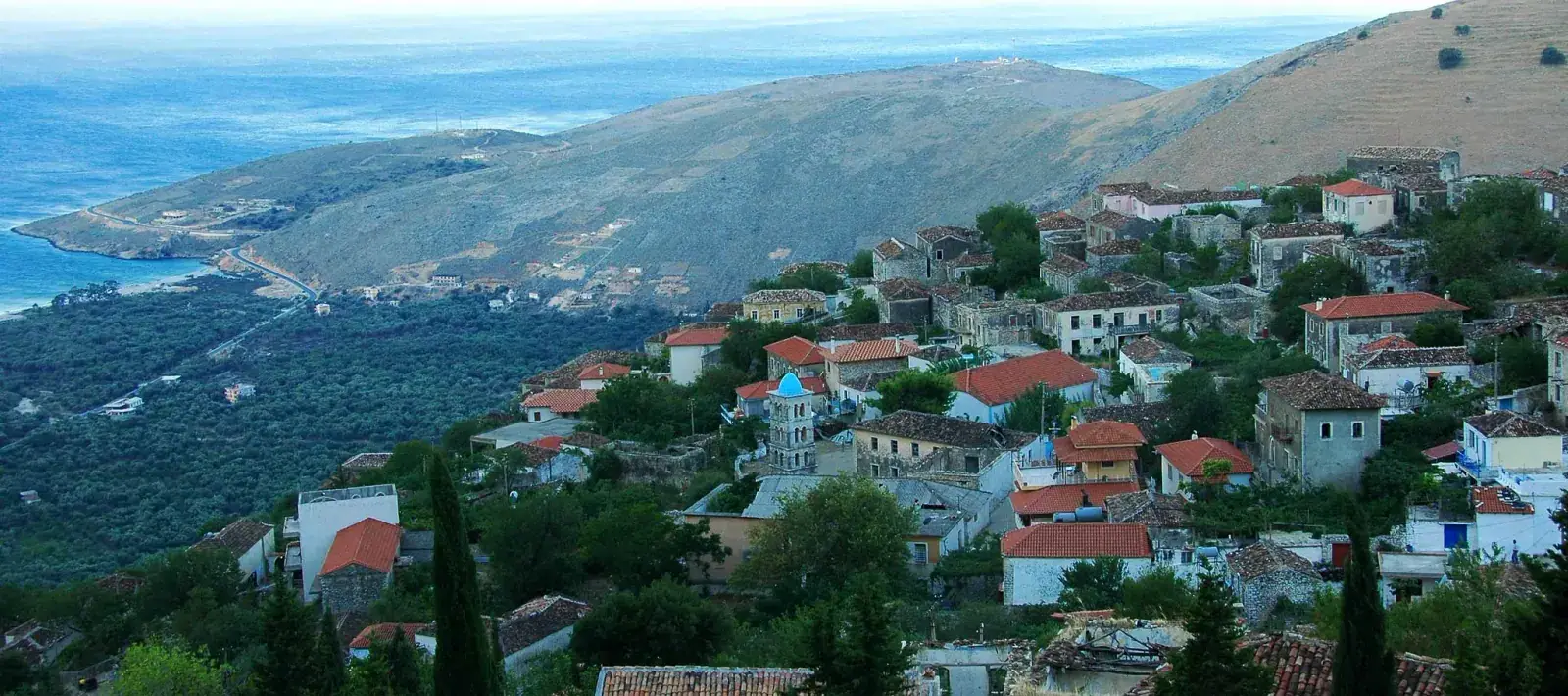
Borsh is one of the Albanian Riviera's most authentic villages, less developed than Himara or Dhermi, more agricultural, and deeply connected to its olive oil and citrus production. The waterfall sits at the junction of village life: locals fill water containers from the springs, children play near the streams, and the restaurant hums with a mix of visitors and regulars.
The village belongs to the Laberia region, historically connected to the Illyrian tribe of Kaoneve. Borsh's communities include both Bektashi Muslim and Orthodox Christian families, a coexistence reflected in the village's mosque and churches.
How to get there
By car
Borsh is on the SH8 coastal road between Himara and Saranda. The waterfall is visible from the main road as you pass through the village center. You cannot miss it. Parking is free directly in front.
| From | Distance | Drive Time |
|---|---|---|
| Himara | ~20 km south | 25 min |
| Saranda | ~40 km north | 45 min |
| Porto Palermo | ~10 km south | 15 min |
By bus
Minibuses (furgons) running between Himara and Saranda stop in Borsh village. The waterfall is a short walk from any drop-off point in the village center.
No car needed
Unlike most Albanian Riviera landmarks (which require hiking or driving remote roads), Borsh Waterfall requires zero effort to reach. It is right on the main road, with parking in front. This makes it the single most accessible natural attraction on the entire Riviera.
A full day in Borsh
The waterfall alone takes 20–30 minutes. But Borsh has enough to fill a half day or more:
| Activity | Time | Notes |
|---|---|---|
| Borsh Waterfall + Ujvara lunch | 1–1.5 hours | Eat trout over flowing water |
| Borsh Beach | 2–4 hours | 7 km, Albania's longest beach |
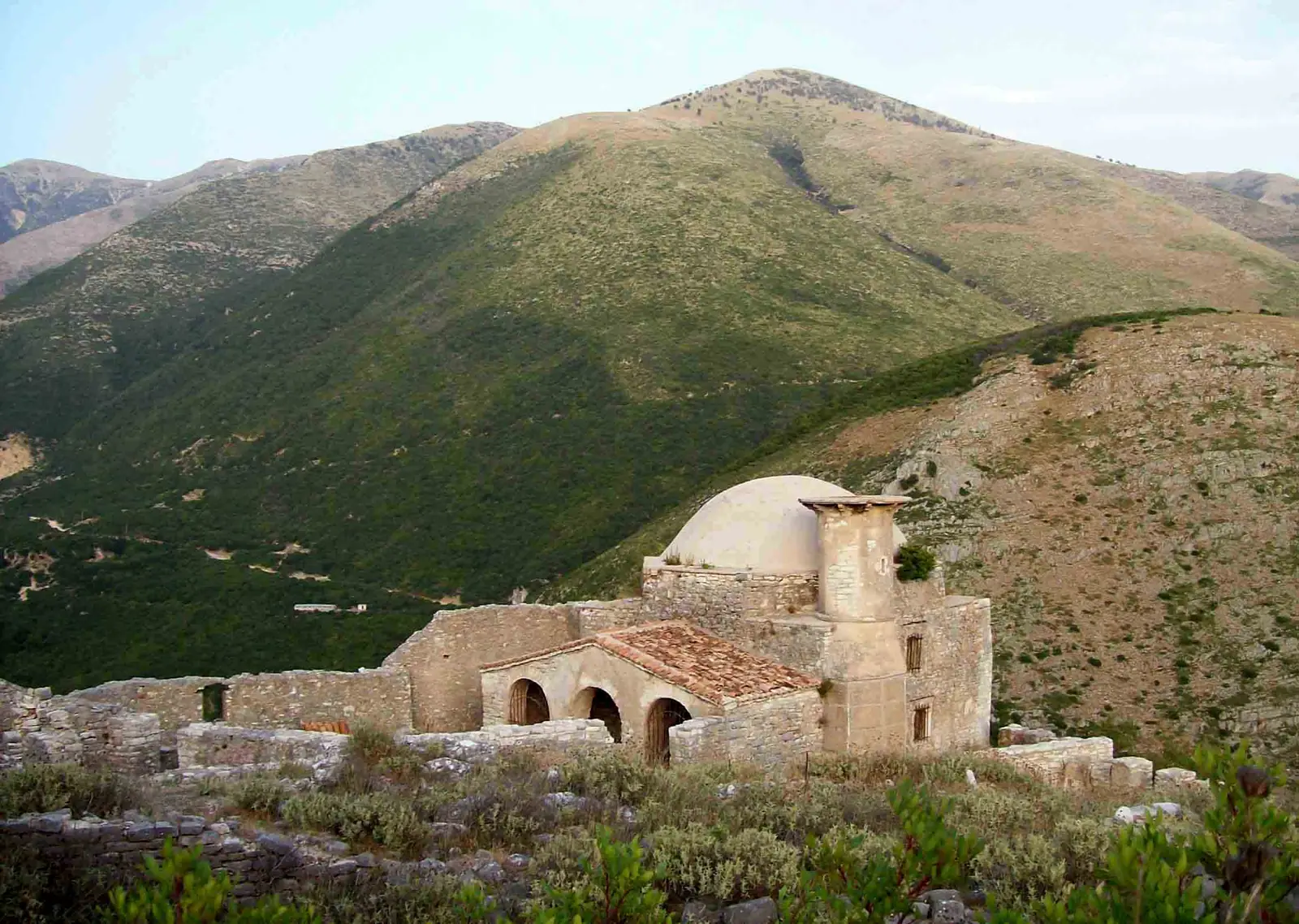
| Borsh Castle | 2–3 hours | 30–60 min hike, 3,000-year ruins |
| Olive grove walk | 30–60 minutes | Borsh produces some of Albania's best olive oil |
Suggested itinerary: Borsh Castle in the morning (cool air for the hike) → Waterfall + Ujvara lunch → Borsh Beach for the afternoon.
Borsh's water heritage
The waterfall is part of a broader water story in Borsh. Mountain springs from the hills behind the village have sustained the settlement for millennia, providing irrigation for the extensive olive and citrus groves that remain Borsh's primary agricultural output. The natural water system is the reason the village exists where it does.
This water also feeds into the Borsh River, which cuts inland through a valley visible from Borsh Castle above. The whole landscape of waterfall, river, olive groves, and beach is connected by the same mountain water source.
When to visit
Best months: The waterfall flows year-round, but water volume is highest in spring (April–May) after winter rains. Summer months see reduced flow but the waterfall remains active.
Best time of day: Midday. The waterfall and restaurant make a perfect lunch stop between morning activities and an afternoon at the beach.
Time needed: 20–30 minutes for the waterfall alone. 1–1.5 hours if eating at Restaurant Ujvara.
Practical tips
- Cash only. No ATMs in Borsh. Bring cash from Himara or Saranda
- Free access. No entrance fee, no tickets, no barriers. The waterfall is part of the village
- Combine with the beach. Borsh Beach (7 km, sunbeds 700–1,000 ALL) is a few minutes' drive downhill
- Photography. The interplay of water, vegetation, and restaurant architecture is photogenic. A slow shutter speed captures the water flow nicely
- Olive oil. Local families sell homemade olive oil from roadside stalls throughout the village. Borsh olive oil is well-regarded in Albania
- Polyphonic singing. Borsh is part of the Laberia region known for UNESCO-protected iso-polyphonic singing. Ask locally about performances during summer festivals
FAQ
Is Borsh Waterfall worth stopping for?
Yes, especially as a lunch stop. The waterfall itself is modest, but eating at Restaurant Ujvara with water cascading around your table is a uniquely Albanian Riviera experience. Combined with Borsh Beach and Borsh Castle. It makes for a full half-day outing. The whole stop is free and takes no effort to reach.
How big is the waterfall?
Borsh Waterfall is a gentle multi-stream cascade rather than a single dramatic drop. The water flows from mountain springs through multiple channels over terraced rock and vegetation. It is not comparable to Albania's larger waterfalls (like Grunas in Theth), but the appeal is the village integration, water flowing through the center of daily life.
Can I eat at the waterfall?
Yes. Restaurant Ujvara is built directly over and around the waterfall. Outdoor tables sit between the different water streams. Fresh trout (800–1,200 ALL / 8–12€) is the specialty. No reservations needed for most of the season.
Is there parking at Borsh Waterfall?
Yes, free parking directly in front of the waterfall, right off the main SH8 road. This is one of the most accessible stops on the Albanian Riviera. No hiking, no remote roads, no entrance procedures.
When does the waterfall flow?
Year-round, though water volume varies seasonally. Spring (April–May) sees the strongest flow after winter rains. Summer flow is reduced but the waterfall remains active. It never dries completely thanks to the mountain spring source.
Are there guided tours to Borsh Waterfall?
A handful of operators bundle the waterfall with Borsh Beach or castle stops as part of a Riviera day. Browse Borsh waterfall day trips on GetYourGuide if you'd rather not drive yourself.