The SH8 coastal highway between Himara and Dhermi passes through some of the most dramatic scenery on the Albanian Riviera. Most travelers drive it with their eyes on the sea, watching the turquoise water flash between cliffs and pine trees. What they don't notice, or notice but don't stop for, are the stone villages clinging to the hillsides above the road. Vuno sits to the north, perched at 300 meters with a direct line down to Jale Beach. Qeparo sits to the south, split between a half-abandoned medieval upper village and a quiet coastal settlement below.
Both villages are older than anything on the coast. Both have churches with centuries of frescoes and carved iconostases. Both anchor hiking trails that rank among the best on the Riviera. And both can be visited in a few hours from Himara, though once you arrive, you may not want to leave that quickly.
This guide covers everything you need to explore both villages: what to see, how to get there, where to eat, and whether to make it a day trip or stay overnight.
Compare hotels, apartments, and Vrbo rentals on the map. Powered by Stay22.
Quick Overview
| Vuno | Qeparo | |
|---|---|---|
| Distance from Himara | ~15 km north | ~10 km south |
| Drive time | ~20 min | ~15 min |
| Elevation | ~300 m | ~400 m (Old Qeparo) |
| Year-round population | ~80 | ~100 |
| Key churches | St Spyridon (1778), St Mary (1783) | St Mary with 27 m bell tower (1796) |
| Nearest beach | Jale Beach (10 min drive down) | Qeparo Beach (5 min drive down) |
| Best hike | Vuno to Himara Coastal Trail (8 km, 3-4 hrs) | Kudhes to Qeparo Loop (12 km, ~4 hrs) |
| Vibe | Artistic, quietly reviving | Atmospheric, semi-abandoned upper village |
Vuno
Vuno is the kind of place that stops you mid-sentence. The village sits in a natural amphitheatre on the hillside above Jale Beach, its stone houses tiered like seats in a theatre, all facing the Ionian Sea. The name derives from the Greek word "vouno" (mountain), which tells you something about both the geography and the village's deep Greek-speaking roots.
About 80 people live here year-round. In summer, that number swells to around 500 as diaspora families return and a trickle of hikers and travelers discover the place. A handful of guesthouses have opened in restored stone buildings, and a couple of small cafes operate on the main path through the village. But Vuno hasn't been packaged for tourism. There are no tour buses, no souvenir shops, no ticket booths. It's a real village that happens to be extraordinary.
Lord Byron passed through in 1809 and wrote about the views. Edward Lear came later and sketched the architecture. The churches they admired are still standing.
Getting There
From Himara, drive north on the SH8 toward Dhermi. After roughly 15 km, you'll see a sign for Vuno on the right. The turnoff leads up a narrow, paved road that switchbacks through olive groves for about 2 km before reaching the village. The road is tight in places, manageable in a car, less fun in a large van, and parking at the top is limited to a small open area near the village entrance.
If you're coming from Dhermi or the Llogara Pass, Vuno is about 10 km south of Dhermi, same road, same signed turnoff.
By bus: The Himara-Vlore bus passes the Vuno turnoff on the SH8, but it won't drive up to the village. Buses also operate directly from Himarë to Vuno three times a day (approx. 20 min). You'd need to walk the 2 km uphill from the highway, steep, hot in summer, and not recommended unless you enjoy suffering. Better to drive or take a taxi from Himara (around 1,500-2,000 ALL one way).
What to See
Church of St Spyridon (1778). The larger and more prominent of Vuno's two main churches. The exterior is modest stone construction, but step inside and the walls are covered in frescoes, vivid scenes in the post-Byzantine tradition, remarkably well-preserved given the building's age and the fact that Albania spent 50 years under an atheist regime that dynamited churches elsewhere. The wooden iconostasis is original and intact.
Church of St Mary (1783). Five years younger than St Spyridon, smaller and quieter. The interior murals are less extensive but arguably more intimate. Both churches are usually open during the day in summer; in the off-season. Ask at any house and someone will find the key.
The village itself. Vuno's architecture is its primary attraction. Stone houses with slate roofs, connected by narrow cobbled paths too tight for vehicles. Arched doorways, walled courtyards, fig trees pushing through cracks in the stone. The layout follows the contours of the hillside, and every turn opens a new angle on the coast below. Allow at least an hour just to walk through the village slowly, without any particular destination.
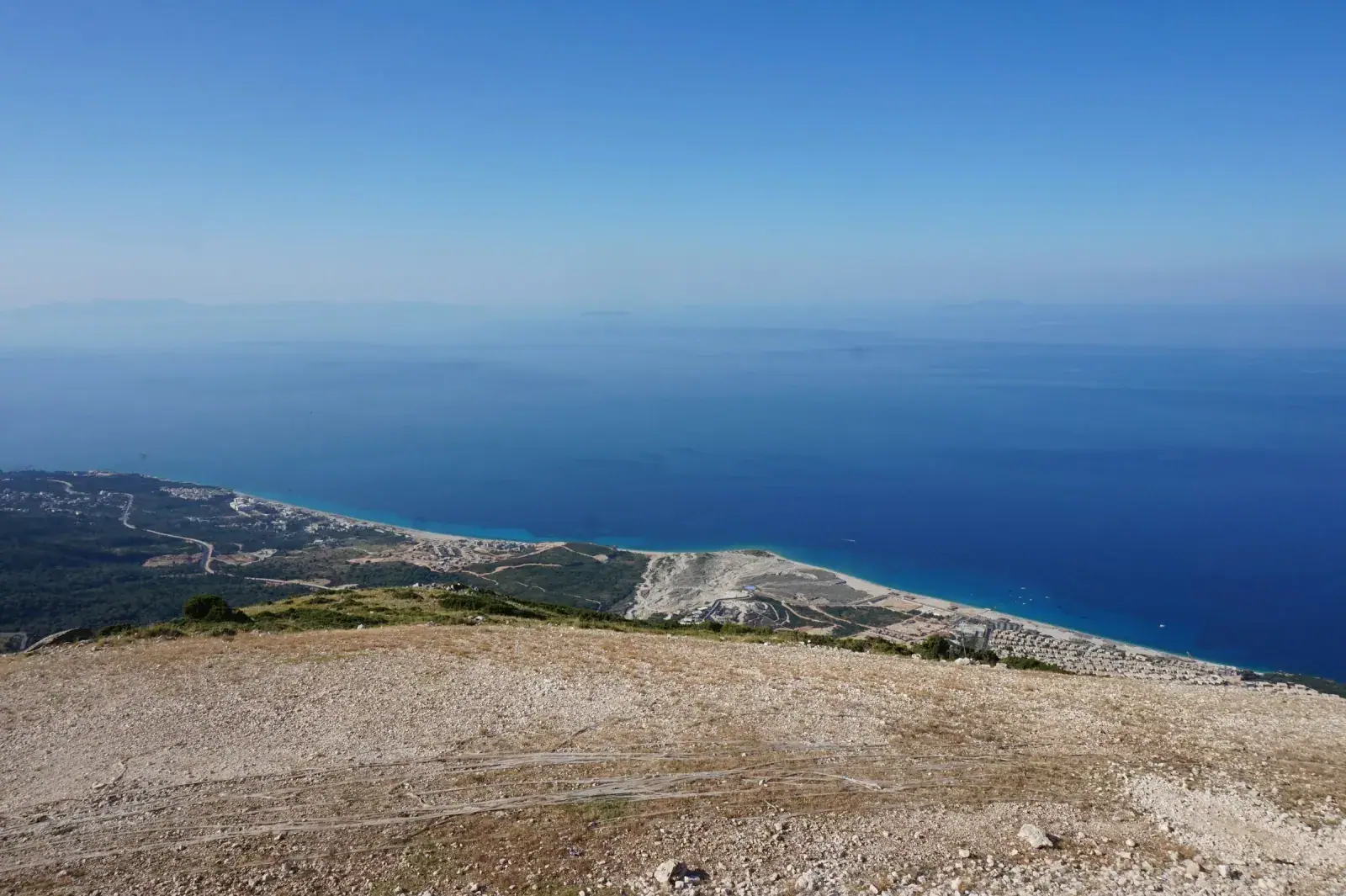
The viewpoints. From the upper edge of the village, the panorama extends from Jale Beach directly below to Himara and the coast beyond. On clear days, Corfu is visible to the west. This is one of the highest accessible viewpoints on this section of the Riviera without actually climbing into the mountains, and it costs nothing but the walk up.
The Vuno to Himara Coastal Trail
This is one of the best hikes on the Albanian Riviera, 8 km of coastal trail, moderate difficulty, 3-4 hours one way. The path follows the hillside south from Vuno toward Himara, passing through olive groves, scrubby maquis, and rocky terrain with near-continuous views of the Ionian Sea below.
Trailhead: The path starts at the southern edge of Vuno village. Look for a marked path heading downhill and south, locals can point you in the right direction if the signage is unclear.
Terrain: Mostly rocky footpath and old mule trails. Some sections are exposed with loose stones, so proper footwear matters, hiking shoes or at minimum sturdy trainers. Flip-flops will end your hike early.
Elevation profile: The trail descends gradually from Vuno's 300 meters toward sea level at Himara, with some undulating sections in between. Net elevation loss makes the Vuno-to-Himara direction easier than the reverse.
Water and shade: Limited. Bring at least 1.5 liters per person. Shade exists in the olive grove sections but disappears on the exposed coastal stretches. Start early in summer, by 10 a.m. the trail is fully baked.
Logistics: The smart play is to arrange a taxi from Himara to Vuno in the morning, then hike back to Himara. This gives you downhill momentum and avoids needing transport at the end. Alternatively, combine the hike with a stop at Jale Beach, descend from Vuno to Jale first, swim, then continue south to Himara along the coast.
For more hiking routes in the area, see the complete hiking guide.
Where to Stay & Eat
Vuno has a small but growing number of accommodation options, mostly restored stone houses and family-run guesthouses. Don't expect hotels, this is village stays with character.
Guesthouses in the village typically run 3,000-5,000 ALL (roughly 30-50€) per night for a double room. Several have been tastefully restored with stone walls, wooden beams, and terraces overlooking the sea. Booking in advance for July-August is wise, as there are genuinely only a handful of rooms.
Food is limited to a couple of small cafes and tavernas in the village. Expect simple, home-cooked Albanian food, grilled meats, salads, homemade bread, and whatever the family ate that day. The quality is high; the variety is not. If you need options, Himara's restaurant scene is 20 minutes away.
For a broader look at accommodation along the Riviera, the Himara hotel guide covers everything from hostels to boutique stays.
Qeparo
If Vuno is the village that's quietly coming back to life, Qeparo is the one still deciding. The settlement is split in two: Old Qeparo perched at 400 meters on the mountainside, and New Qeparo (also called Lower Qeparo) down at the coast. The upper village is partially abandoned, its stone houses slowly losing their roofs to time and gravity. The lower village has a pebble beach, a new promenade, and a handful of restaurants that fill up in summer. Between the two sits one of the most interesting historical landscapes on the Riviera. Iron Age fortress ruins, eight historic churches, and olive groves that have been producing oil for centuries.
Qeparo, like Vuno, has a significant Greek minority. Many residents are bilingual, switching between Albanian and Greek mid-conversation. This cultural layer shows in the architecture, the church traditions, and the food.
Old Qeparo vs New Qeparo
Old Qeparo is the reason to come. The upper village sits at roughly 400 meters elevation, accessible by a winding road from the coast. Walking through it feels like exploring a place frozen between centuries, solid stone houses with Ottoman-era detailing stand next to roofless shells overtaken by vegetation. The paths are narrow, uneven, and mostly unpaved. A few families still live here year-round, and their presence, laundry on lines, cats on doorsteps, the smell of wood smoke, makes the village feel haunted in the best possible way: not quite gone, not quite back.
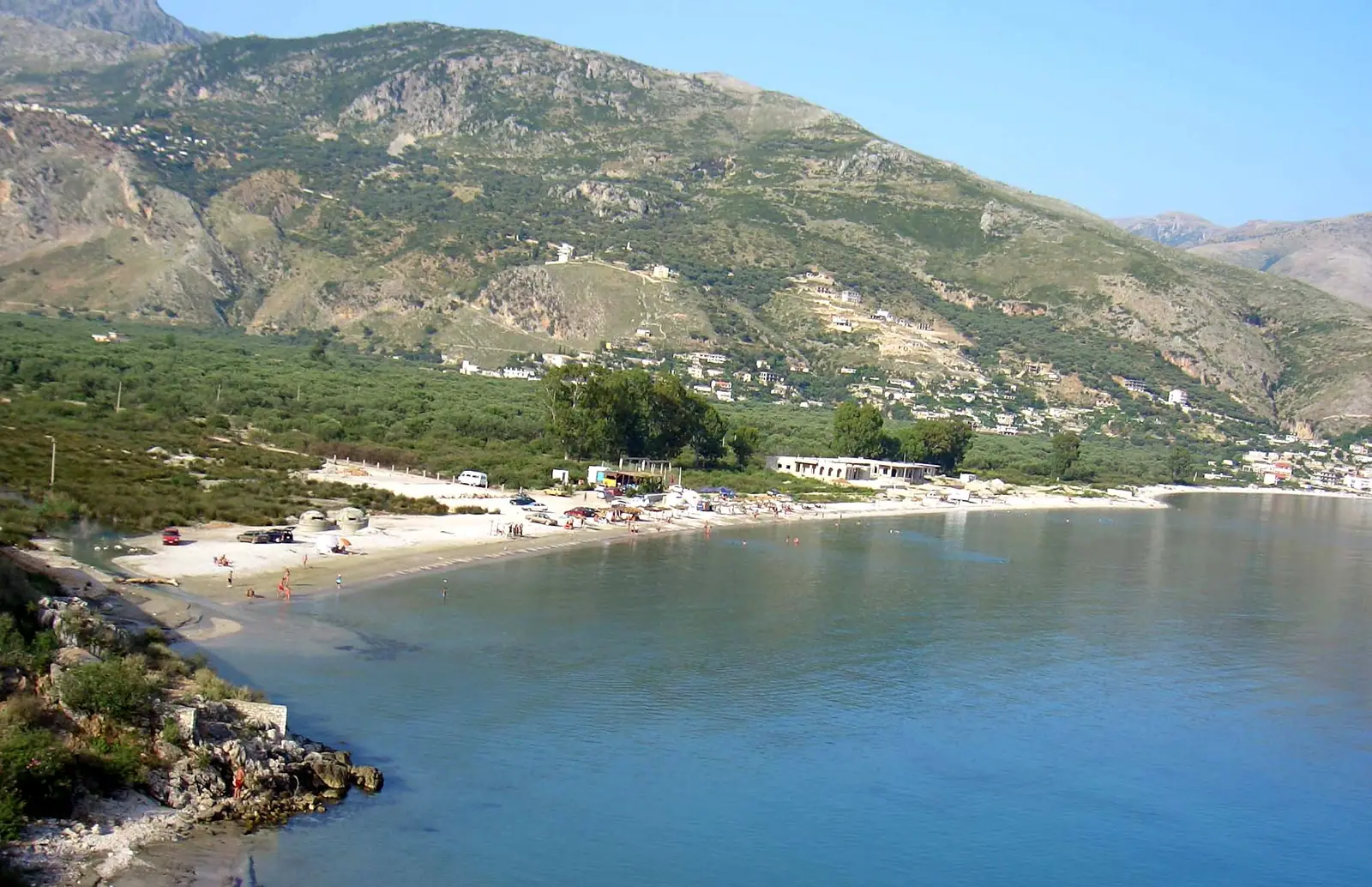
New Qeparo is the practical base. The lower settlement has Qeparo Beach (white pebbles, clean water, less crowded than anything north of Himara), several beachfront restaurants, a new promenade for evening walks, and a handful of rooms for rent. It's quiet by Riviera standards, no beach clubs, no thumping music, which is exactly the appeal. The vibe is closer to a Greek coastal village than anything you'd find in Dhermi or Saranda.
Getting There
From Himara, drive south on the SH8 toward Saranda. After about 10 km, a signed turnoff on the left leads down to New Qeparo and the beach. The road is paved and manageable. For Old Qeparo, continue past the lower turnoff and take the next signed road that climbs steeply up the hillside, the road narrows significantly and is rough in patches, but passable in a standard car.
Drive time: 15 minutes from Himara to New Qeparo. Add another 10 minutes for the climb to Old Qeparo.
By bus: The Himara-Saranda bus stops at the Qeparo junction on the SH8. From there, it's a 15-minute walk downhill to New Qeparo, far more pleasant than the equivalent walk up to Vuno. Old Qeparo requires a steeper walk of about 45 minutes from the coast.
What to See
Church of St Mary and the 27-Meter Bell Tower (1796). This is Old Qeparo's centrepiece. The church was built at the end of the 18th century and its bell tower, at 27 meters, is one of the tallest historic structures on the Riviera. The carved wooden iconostasis inside is genuinely impressive: detailed relief work, gilded panels, and a craftsmanship that speaks to the wealth and devotion of the community at the time. The church is usually accessible during the day in summer; in winter. Ask around.
The eight churches of Old Qeparo. St Mary gets the attention, but Qeparo has seven other historic churches scattered through and around the village. Some are small family chapels, others are proper parish churches with frescoes and carved stone details. Walking between them provides the structure for a thorough exploration of the old village, each one sits in a different corner, forcing you through lanes and courtyards you'd otherwise miss.
Karos Fortress. About 200 meters from the village, reached by a path through olive groves, the ruins of Karos Fortress sit on a rocky outcrop above the valley. The fortification has Iron Age origins, making it potentially one of the oldest defensive structures on this coastline. What remains is fragmentary, walls, foundation lines, the outline of towers, but the setting is striking and the historical layers run deep. The walk out and back takes about 30 minutes, and the olive groves along the way are beautiful in their own right.
Qeparo Beach. Down in New Qeparo, the beach is a white pebble stretch with remarkably clear water. A new promenade runs along the shore, and a handful of restaurants offer grilled fish and cold beer at prices well below what you'd pay in Dhermi or even central Himara. It's one of the least touristy swimmable beaches on the Riviera, a real find in July and August when everywhere else is packed. For more beach options in the region, see the beach guide.
The Kudhes to Qeparo Trail
The Kudhes to Qeparo shepherd's trail is a 12 km loop that takes roughly 4 hours and passes through some of the most rural landscape left on the coast. The trail connects the inland hamlet of Kudhes with Old Qeparo, following ancient paths used by shepherds moving their flocks between highland pastures and coastal winter grazing.
Terrain: A mix of dirt tracks, rocky paths, and overgrown mule trails. The route passes through dense olive groves, rocky hillsides, and patches of Mediterranean scrub. Some sections are steep, and the trail is not always clearly marked, a GPS track downloaded in advance is strongly recommended.
Difficulty: Moderate to strenuous, primarily due to length and elevation changes rather than technical difficulty. The total elevation gain across the loop is approximately 500 meters.
Highlights: Panoramic views of the coastline, the experience of complete solitude on a trail that sees perhaps a handful of hikers per week, and the arrival into Old Qeparo from the mountain side, a perspective most visitors never get.
Logistics: The loop can be started from either end. Starting at Old Qeparo and hiking to Kudhes before looping back is the most common route. Bring plenty of water, there are no services along the trail.
For trail maps and other hiking options around Himara. Check the hiking guide.
Where to Stay & Eat
New Qeparo has the accommodation. A handful of guesthouses and rooms for rent line the road near the beach, with prices typically ranging from 2,500-4,500 ALL (25-45€) per night. These are simple, clean rooms, don't expect luxury, do expect friendly hosts and proximity to the water.
Old Qeparo has almost no tourist facilities. One or two enterprising families offer rooms, but availability is unpredictable. If you want the atmospheric experience of sleeping in the old village. Ask around in New Qeparo, someone will know someone.
Restaurants in New Qeparo cluster near the beach. Expect fresh fish, grilled meats, Greek salads, and traditional Albanian dishes. Portions are generous and prices are low, a full seafood meal for two with wine runs 2,000-3,000 ALL (20-30€). The beachfront restaurants are the best option; the food is honest and the view handles the rest.
Day Trip or Overnight?
Day trip works for one village. You can drive from Himara to either Vuno or Qeparo, spend 2-3 hours exploring, and be back in time for dinner. This gives you enough time to walk through the village, visit the main churches, and soak in the atmosphere without feeling rushed.
Both villages in one day is possible but tight. Vuno in the morning, Qeparo in the afternoon, with a beach stop in between. You'll be moving, not lingering. If you have a car and start early, it works. If you're relying on taxis or buses, pick one.
Overnight is the better experience. Staying one night in either village transforms the visit. The light changes, the day-trippers leave, and you get the village in the early morning and late evening, which is when these places are most themselves. A stone guesthouse in Vuno at sunset, or a room near Qeparo Beach with nothing to do but swim and eat, that's a different kind of travel than ticking off sights from a car window.
If you're spending a week or more in Himara, one overnight in Vuno or Qeparo is the single best way to experience the Riviera beyond the beaches.
Combining with Other Stops
Both villages sit on the SH8, which makes them natural additions to a Riviera road trip or a day trip from Himara.
From Vuno, add:
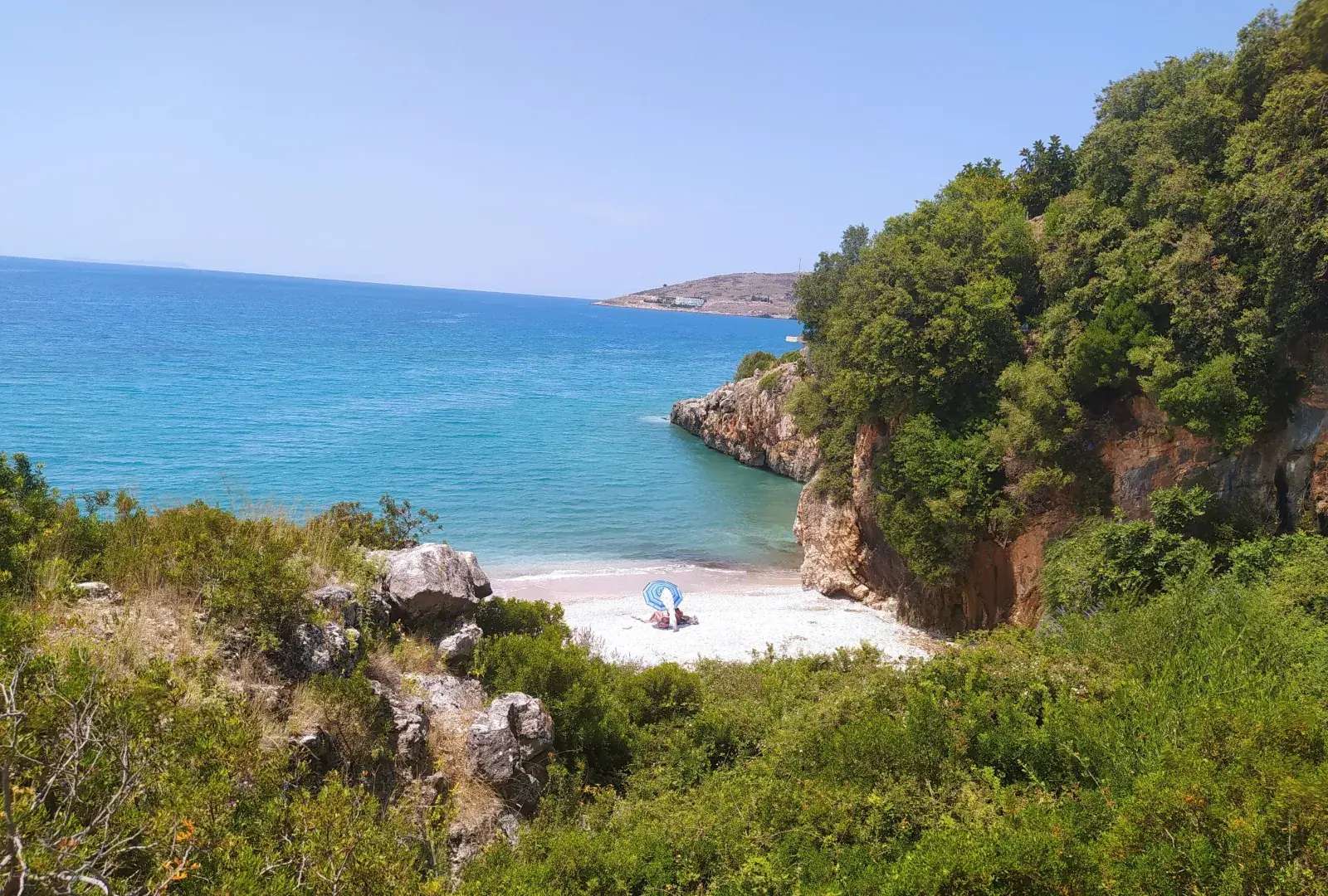
- Jale Beach. The turnoff to Jale is right near the Vuno junction. Drive down for a swim after exploring the village, the beach is one of the best on the Riviera, with clear water and a more relaxed feel than Dhermi.
- Dhermi & Drymades. Another 10 km north of Vuno. Combine a morning in Vuno with an afternoon at Dhermi's beach clubs for a full day of contrast, ancient stone village followed by cocktails on white pebbles.
- Llogara Pass. Continue north from Vuno and you'll hit the pass within 15 minutes. The viewpoints and mountain restaurants make a natural extension. See the Llogara Pass guide.
From Qeparo, add:
- Porto Palermo Castle. Just 15 minutes further south from Qeparo on the SH8. Ali Pasha's triangular fortress on its own peninsula, one of the most photogenic stops on the entire coast. See the Porto Palermo guide.
- Borsh Beach. Ten minutes beyond Porto Palermo, the longest beach on the Riviera stretches for 7 km. Quiet, uncrowded, perfect for an afternoon. See the Borsh Beach guide.
- Llamani Beach. Between Qeparo and Porto Palermo, a small cove with some of the bluest water on the coast. Good for a quick swim stop.
A full south-of-Himara day trip might look like: Old Qeparo in the morning, Porto Palermo for lunch, Borsh Beach in the afternoon. That's three excellent stops with minimal driving.
Best Time to Visit
May-June and September-October are ideal. The weather is warm enough for comfortable walking, wildflowers cover the hillsides, the light is golden, and both villages are at their quietest. Churches are generally open, trails are passable, and you'll have the old stone lanes mostly to yourself.
July-August brings heat and the returning diaspora. Vuno's population quintuples, Qeparo's beach fills up, and walking through either village at midday is an exercise in sun endurance. Start early, be at the villages by 9 a.m., and save the beach for the afternoon. The evening atmosphere in both villages is best in high summer, when families are out, cafes are open, and the stone walls radiate the day's warmth back into the night air.
November-April is quiet to the point of emptiness. Most guesthouses and restaurants close. The villages are atmospheric in winter, rain-darkened stone, low clouds, smoke from the few occupied houses, but facilities are essentially nonexistent. Come for photography and solitude, not for services.
For the full seasonal breakdown, see Best Time to Visit Himara.
Frequently Asked Questions
Can I visit Vuno and Qeparo without a car? Yes, but it's harder. Taxis from Himara run 1,500-2,500 ALL each way. The Himara-Vlore and Himara-Saranda buses stop on the SH8 near both turnoffs, but you'll need to walk uphill to reach the villages, manageable for Qeparo (15 min to the lower village), less so for Vuno (30 min steep climb). Renting a scooter from Himara is the best middle ground.
Are the churches always open? In summer (June-September), usually yes during daytime hours. In the off-season, they're often locked. Ask at any occupied house in the village, someone will have a key or know who does. A small donation (200-500 ALL) is appreciated.
Is Old Qeparo safe to walk through? Yes. The paths are uneven and some buildings are in disrepair, so watch your step around crumbling walls. Don't enter obviously unstable structures. But the village itself is safe, the families who still live there are welcoming, and there's nothing to worry about beyond the physical condition of the paths.
How long do I need at each village? For a basic visit, walk through the village, see the main churches. Take in the views, allow 1.5-2 hours per village. If you're adding a hike (the Vuno-Himara trail or the Kudhes-Qeparo loop). Budget a full half-day for that village.
Can I hike from Vuno to Qeparo? Not directly on a single trail. The two villages are on opposite sides of Himara and about 25 km apart by road. You'd need to hike the Vuno to Himara trail (8 km), then find transport from Himara to Qeparo. It's doable as a full-day adventure but requires planning.
Is there mobile signal in the villages? Generally yes, though coverage can be spotty in Old Qeparo and on the hiking trails. Download offline maps and trail GPS tracks before you leave Himara.
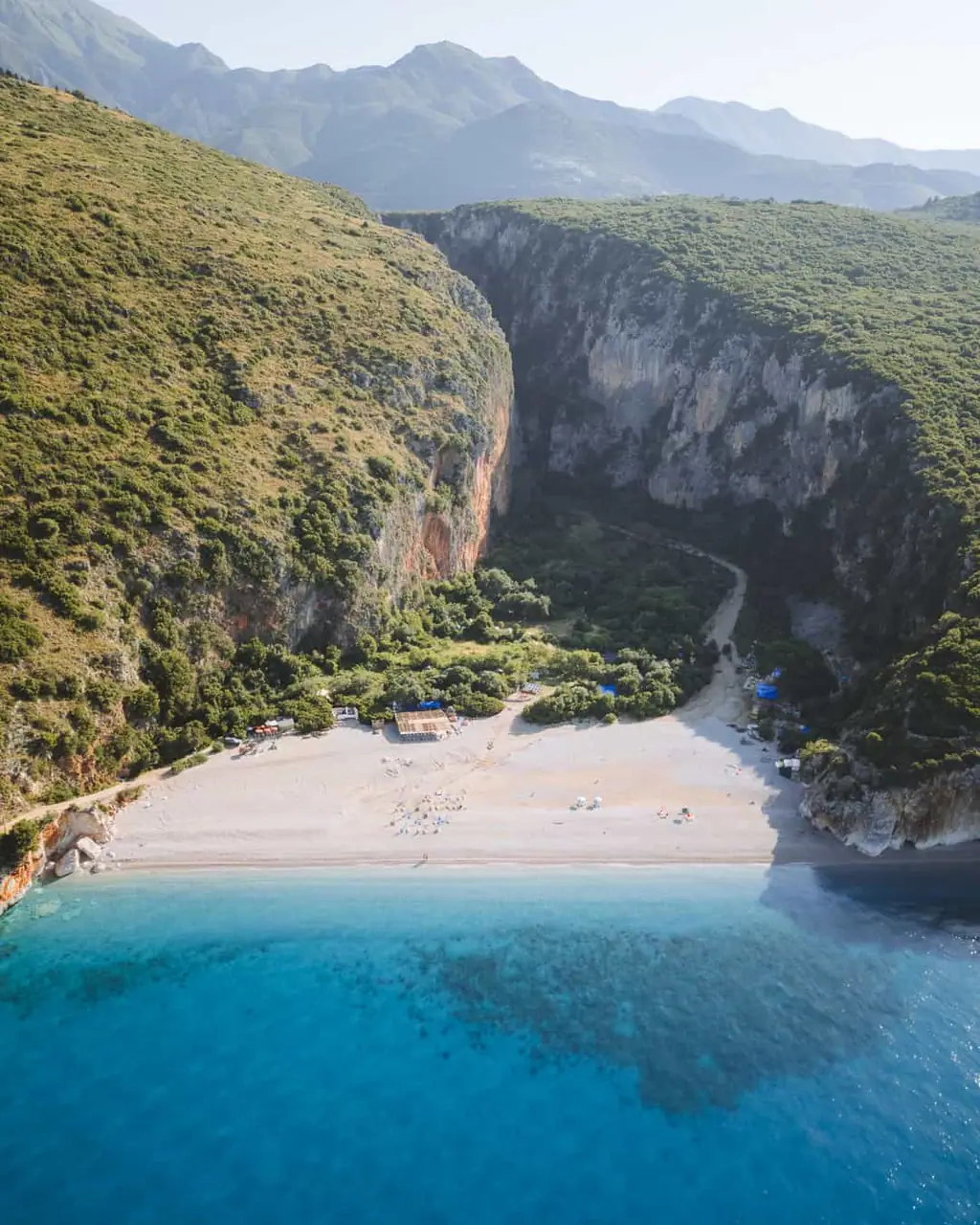
What about the beaches near each village? Jale Beach (near Vuno) and Qeparo Beach are both excellent. Jale is the more dramatic, turquoise water backed by steep cliffs. Qeparo Beach is quieter and less developed, with a new promenade and a handful of low-key restaurants. Both are covered in the beaches directory.
Are these villages worth it if I only have 2-3 days in Himara? If your time is short, one village as a half-day trip is worthwhile, and I'd pick Qeparo for the combination of Old Qeparo's atmosphere, the fortress ruins, and the beach. If you have a full week, visit both. They're among the most rewarding experiences on the Riviera for anyone interested in seeing more than sand and sea.