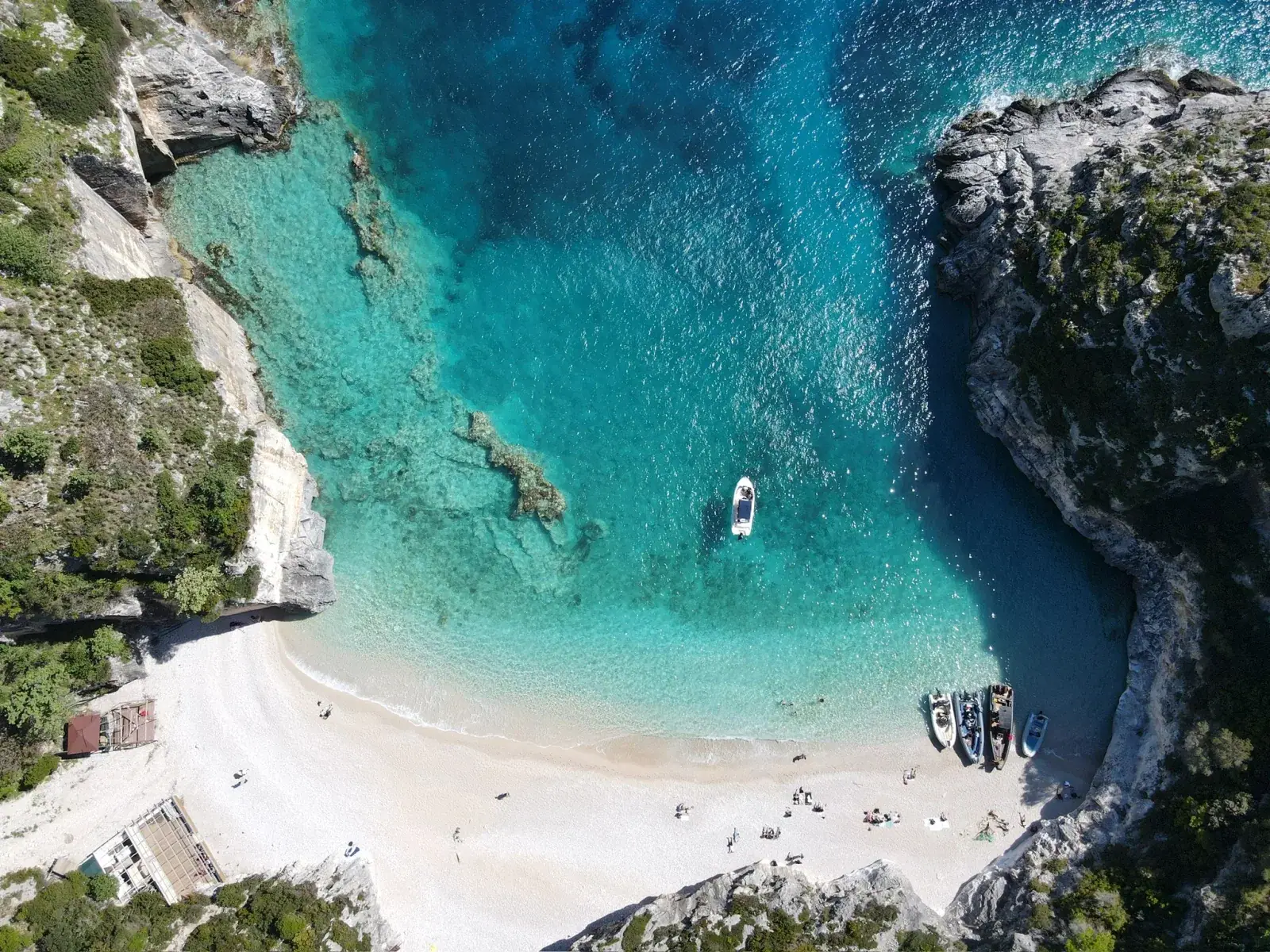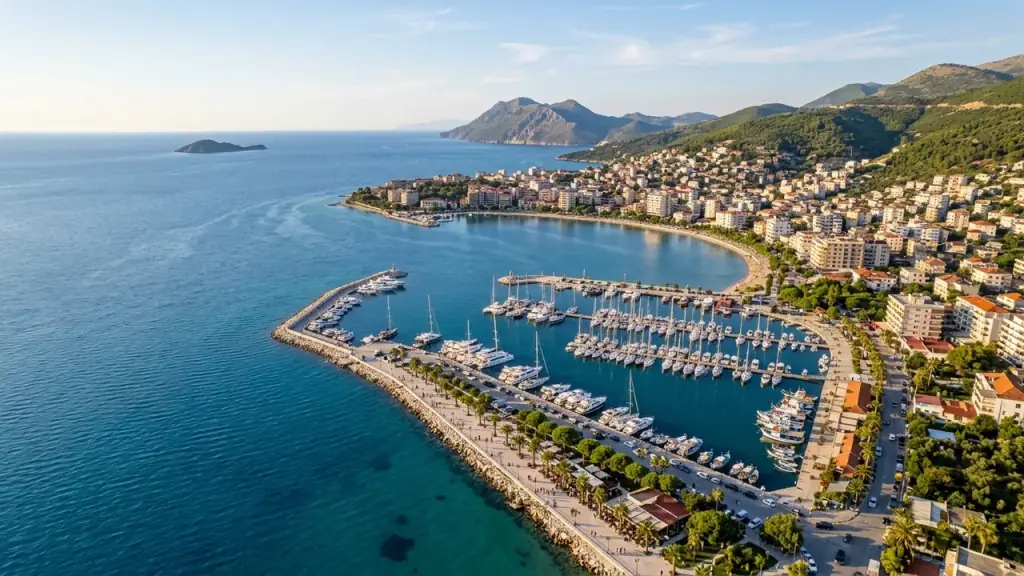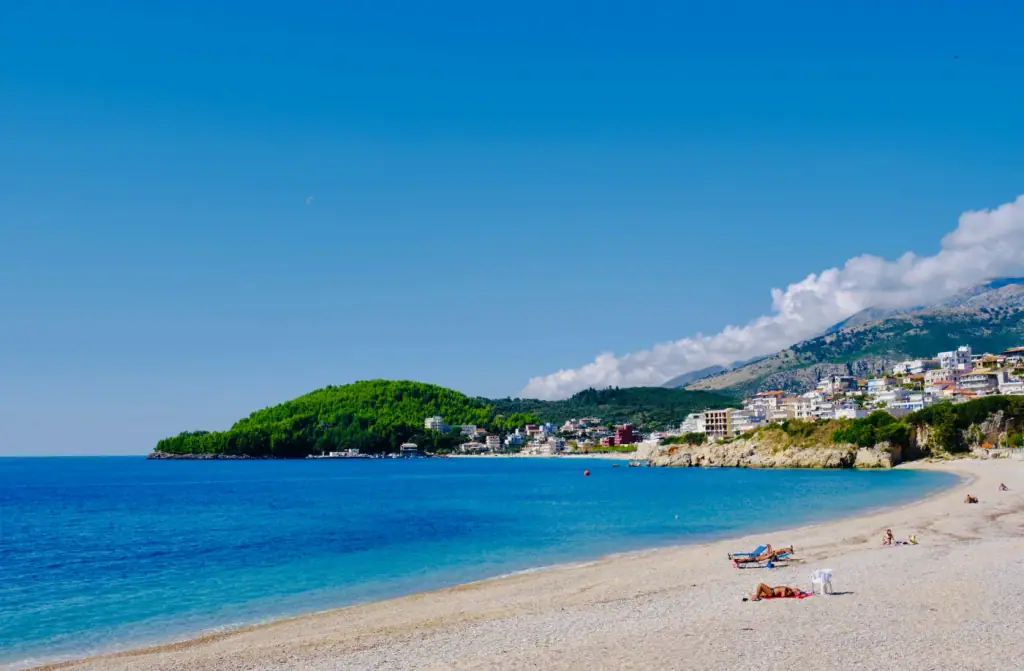
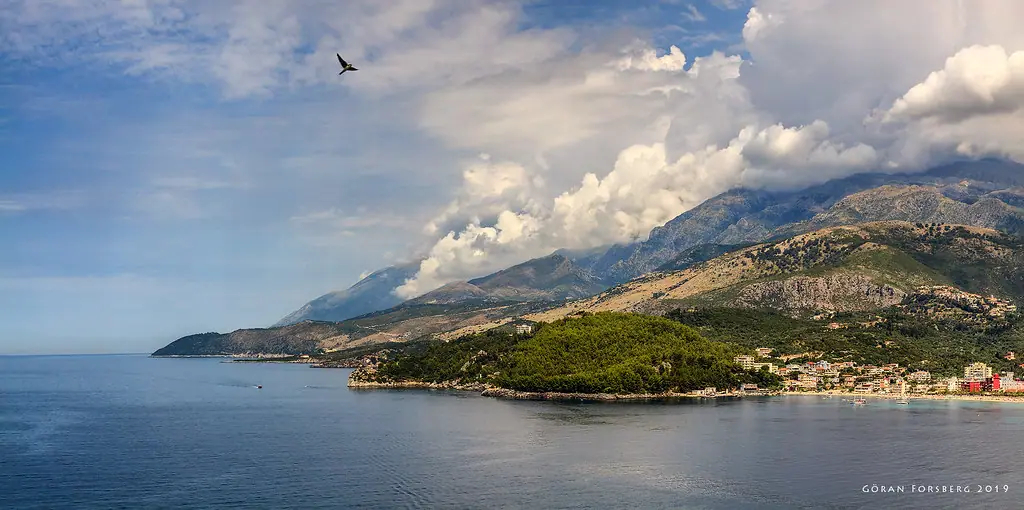
If you are planning a trip to Albania from the US (or USA), three facts make this country uniquely good for American travelers: there are no direct flights but plenty of one-stop options through European hubs, US passport holders get a 1-year visa-free entry under Albania's own entry rules (longer than the 90 days other nationalities get), and your dollar goes remarkably far once you arrive. Albania is one of the most affordable Mediterranean destinations accessible from the United States, with a coastline rivaling Greece or Croatia at 40-60% the price.
This guide covers the full planning chain, flights from the US, entry requirements (including the 1-year allowance most articles still get wrong), jet lag management, onward transport to the coast, daily budgets, and the practical details that US-based travel blogs tend to skip. If you are heading to Himara or the Albanian Riviera, everything here applies directly.
Compare hotels, apartments, and Vrbo rentals on the map. Powered by Stay22.
Quick Overview for US Travelers
| Detail | What to Know |
|---|---|
| Visa required? | No. US passport holders enter visa-free for up to 1 year (365 days) under Albanian joint instruction nr. 91 of 30 April 2026, then must leave Albania for 90 days before re-entering |
| Direct flights from the US? | None. Connect through a European hub |
| Total travel time | 10–14 hours depending on connection city |
| Time difference | EST + 6 hours (CET time zone) |
| Currency | Albanian lek (ALL). Euro widely accepted in tourist areas |
| Language barrier | English widely spoken in tourist areas and by younger Albanians |
| US Embassy | Located in Tirana only |
| Travel advisory level | Level 2: Exercise Increased Caution (same as France and Germany) |
Getting to Albania from the US
There are no direct flights from any US airport to Albania. Every route requires at least one connection through a European hub city. This is the single biggest logistical factor for Americans planning an Albania trip.
How Connections Work
You fly from your US departure city to a European hub, then take a short onward flight to Tirana International Airport (TIA), Albania's main gateway. Some travelers also fly into Corfu (Greece) and take a ferry to Saranda, or will soon be able to use the new Vlora International Airport once it opens.
Best Connection Cities
The four most practical European hubs for US-to-Albania routing are Rome, Istanbul, Athens, and Vienna. Each has trade-offs.
| Connection City | Flight to Tirana | Typical Total Travel Time | US Departure Options | Notes |
|---|---|---|---|---|
| Rome (FCO) | ~2 hours | 11–13 hours | JFK, EWR, BOS, MIA, LAX | Most frequent Albania connections. Italian carriers + budget options |
| Istanbul (IST) | ~1.5 hours | 12–14 hours | JFK, IAD, LAX, ORD, MIA | Turkish Airlines has strong US network. Good for West Coast |
| Athens (ATH) | ~1 hour | 12–14 hours | JFK, EWR, PHL | Combine with a Greece-Albania itinerary |
| Vienna (VIE) | ~1.5 hours | 11–13 hours | JFK, EWR, ORD, IAD | Austrian Airlines operates direct Tirana service |
Airlines That Fly to Tirana
From European hubs to Tirana. You will typically fly on:
- Turkish Airlines, via Istanbul. Consistent service, good baggage allowance, and one of the few carriers offering single-ticket booking from US cities all the way to Tirana.
- Wizz Air, budget carrier with routes from Rome, Vienna, Milan, and other European cities. Separate booking from your transatlantic leg.
- Air Albania, national carrier with Istanbul and Rome routes.
- Austrian Airlines. Vienna to Tirana.
- Aegean Airlines. Athens to Tirana.
- ITA Airways. Rome to Tirana.
Booking Strategy
Two approaches work:
- Single ticket through a hub. Turkish Airlines and Lufthansa Group (via Vienna/Munich/Frankfurt) can sell you a single itinerary from US to Tirana. This protects you if the first leg is delayed, the airline rebooks you on the connection.
- Separate tickets. Book your transatlantic flight independently, then book a budget carrier like Wizz Air for the European-hub-to-Tirana leg. This is often cheaper but carries connection risk. Build in at least a 4-hour buffer between flights, and ideally overnight in the connection city.
Typical round-trip pricing from the US East Coast to Tirana ranges from $500–$900 in economy depending on season and how far ahead you book. Summer peak (July–August) pushes prices toward the higher end.
Visa and Entry Requirements for US Citizens
US passport holders do not need a visa to enter Albania, and the allowance is unusually generous: US citizens can stay in Albania for up to one year (365 days) visa-free, a longer allowance than nearly any other passport receives. This is not a treaty. It is a unilateral Albanian measure, joint ministerial instruction nr. 91 of 30 April 2026, published in Fletorja Zyrtare nr. 96 on 8 May 2026, which tells border officers to verify "90 days in 180, or one year for citizens of the United States of America"; the State Department states the same one-year allowance from its side. After the year, you must leave Albania for 90 days before re-entering. Most other nationalities (UK, EU, Canada, Australia) get only 90 days in any 180-day period.
What you need at the border:
- A US passport valid for at least 3 months beyond your planned departure date
- That is it. No pre-registration, no e-visa, no arrival fee, no immigration form
Border processing is fast, typically under 10 minutes at Tirana airport. Heads-up: some border officers apply the 90-day stamp by default and aren't aware of the US-specific 1-year allowance. If you're planning a long stay, politely reference the one-year allowance the instruction names; they will adjust if needed. For a deeper breakdown of Albania's visa regime across nationalities, see our full visa requirements guide.
Important for multi-country trips: Albania is not in the Schengen Area. Days spent in Albania do not count toward your 90/180-day Schengen limit. Combined with the 1-year US allowance, Albania is one of the most practical "Schengen pause" destinations for Americans doing extended European travel, see our Albania Schengen status guide for the timing logic.
Jet Lag and Arrival Strategy
Albania is 6 hours ahead of US Eastern Time (CET/CEST). If you are flying from the West Coast, the gap is 9 hours, this is a meaningful jet lag factor, similar to flying to any Western European destination.
Practical Jet Lag Plan
- Take an overnight flight from the US. Most transatlantic departures leave in the evening and arrive in Europe in the morning. This works in your favor, you land, connect, and reach Tirana by afternoon local time.
- Do not go straight to the Riviera on arrival day. The drive from Tirana to Himara is 4–5 hours through mountain roads. Doing this jet-lagged and after 14+ hours of travel is a bad idea, especially if you are driving yourself.
- Spend one night in Tirana. Arrive, eat, sleep, and start the coastal drive or bus the next morning when you are rested. Tirana itself has enough to fill half a day.
- Shift your sleep schedule 2–3 days before departure. Go to bed one hour earlier each night. This reduces the adjustment period from 3–4 days to 1–2 days.
- Stay hydrated on the flight. Standard advice, but it matters. Dehydration compounds jet lag fatigue.
Getting to the Albanian Riviera from Tirana
Once you land in Tirana, the Riviera is still 4–5 hours south, you have several options.
| Option | Time | Cost | Notes |
|---|---|---|---|
| Rental car | 4–5 hours | $25–$50/day | Maximum flexibility. Road through Llogara Pass is scenic but demanding |
| Private transfer | 4–5 hours | $80–$150 one way | Book ahead. Door-to-door convenience |
| Bus (Tirana to Himara) | 5–6 hours | $8–$12 | Daily departures. See our Tirana to Himara guide |
| Domestic flight + transfer | 1 hour + 1–2 hours | Varies | When Vlora Airport opens, this becomes the fastest option |
For most American travelers arriving jet-lagged, a private transfer or rental car the next morning is the most comfortable option. If budget is the priority, the bus works well and you can book it for the morning after arrival.
For a detailed breakdown of all routing options, including the new airport, see our closest airport to Himara guide.
Budget for American Travelers
Albania is dramatically cheaper than Western Europe and significantly cheaper than neighboring Greece. Your US dollars convert favorably, and daily costs in Albania are roughly one-third to one-half of what you would spend in the Greek islands for a similar experience.
Daily Budget Breakdown
| Category | Budget Traveler | Mid-Range | Comfortable |
|---|---|---|---|
| Accommodation | $20–$40/night | $50–$90/night | $100–$180/night |
| Meals (3/day) | $10–$15 | $20–$35 | $40–$60 |
| Transport | $5–$10 | $15–$25 | $30–$50 |
| Activities/beaches | $0–$5 | $10–$20 | $20–$40 |
| Daily total | $35–$70 | $95–$170 | $190–$330 |
A couple traveling mid-range for 10 days can expect to spend $2,000–$3,500 total in-country, excluding flights. That includes good hotels, restaurant meals, car rental, and activities. For context on how this compares to Greece, see our Albania vs Greece cost comparison.
Currency Practicalities
- The official currency is the Albanian lek (ALL). As of 2026, roughly 100 ALL ≈ $1.20 USD.
- USD is not accepted for everyday transactions. Do not expect to pay in dollars anywhere.
- Euro is widely accepted in tourist areas, hotels, and restaurants, but you will get change in lek and the exchange rate may not favor you.
- ATMs are available in Tirana, Saranda, Himara, and Vlora. Withdraw lek directly for the best rate.
- Cards work in hotels, larger restaurants, and supermarkets. Beach bars, small shops, and transport often require cash.
For a complete breakdown, read our cash vs card guide for Albania.
What American Travelers Should Know
These are the practical details that catch US visitors off guard.
Tipping Culture
Tipping is not expected in Albania the way it is in the US. There is no 20% norm. Rounding up the bill or leaving 5–10% for good service at restaurants is appreciated but not obligatory. For more detail, see our tipping guide for Himara.
Phone and Data
Your US phone plan almost certainly does not include Albania. Options:
- Use an eSIM, services like Saily (our top pick), Airalo, or Holafly offer Albania data plans you can activate before departure. See our best eSIM for Albania guide.
- Buy a local SIM card at Tirana airport or any Vodafone/ONE shop. Costs $5–$10 for a tourist plan with generous data.
- T-Mobile international plans include some Albania coverage, but speeds may be throttled. Verify before relying on it.
For the full breakdown, check our Albania SIM card and WiFi guide.
Health Insurance
US health insurance (including most employer plans) does not cover you in Albania. Medicare does not cover any international travel. You need separate travel medical insurance that explicitly includes Albania.
Key coverage points:
- Emergency medical treatment
- Medical evacuation (critical, advanced care may require transfer to Tirana or out of country)
- Trip interruption
Travel insurance from providers like World Nomads, SafetyWing, or Allianz typically costs $30–$80 for a 2-week Albania trip. This is not optional, it is essential. Read our full Albania travel insurance guide for policy recommendations.
Power and Plugs
Albania uses European-standard Type C and Type F plugs (220V, 50Hz). You need a plug adapter. US devices with universal power supplies (laptops, phone chargers) only need an adapter. Anything with a fixed 110V input (hair dryers, some curling irons) needs a voltage converter or you should leave it home. See our Albania power plug guide for specifics.
Driving
Americans can drive in Albania with a US license for short-term tourism, but an International Driving Permit (IDP) is recommended and sometimes required by rental companies. Albanian driving culture is more aggressive than most Americans are used to. Mountain roads to the Riviera are winding, narrow in sections, and shared with buses and trucks. Review our Albania road conditions guide before your trip for current hazards and construction zones.
Safety
Albania is safe for American tourists. The US State Department Level 2 advisory (Exercise Increased Caution) is the same rating given to France, Germany, and the UK. Petty theft in tourist areas is the primary risk, same as any Mediterranean destination. Violent crime against tourists is rare.
Best Time to Visit Albania from the US
| Period | Weather | Crowds | Flight Prices | Best For |
|---|---|---|---|---|
| June | Warm, sunny, 25–30°C | Moderate | Mid-range | Beach + sightseeing balance |
| July–August | Hot, 30–35°C | Peak season | Highest | Pure beach vacation |
| September | Warm, 25–30°C | Decreasing | Dropping | Best overall value |
| May | Pleasant, 20–25°C | Low | Lower | Hiking, culture, quiet beaches |
| October | Mild, 18–24°C | Low | Lowest | Budget travel, fewer crowds |
For Americans with limited vacation days, September offers the best combination: warm water, reduced crowds, lower flight prices, and enough daylight for full beach days. July and August work if those are your only options, but expect peak pricing and crowded beaches.
For month-specific planning, see our guides for June and July.
Sample 10-Day Albania Itinerary for US Travelers
This itinerary accounts for jet lag recovery and transit time that American travelers specifically need to plan around.
| Day | Location | What to Do |
|---|---|---|
| Day 1 | Arrive Tirana | Land, settle in, explore Blloku district, early dinner, sleep |
| Day 2 | Tirana → Himara | Morning drive or transfer (4–5 hours). Afternoon at Livadhi Beach |
| Day 3 | Himara | Beach hopping: Livadhi, Spile, Sfageio |
| Day 4 | Dhermi day trip | Dhermi and Drymades beaches |
| Day 5 | Gjipe + Jale | Gjipe Canyon hike in the morning, Jale Beach afternoon |
| Day 6 | Himara | Old town walking tour, local restaurants, relax day |
| Day 7 | Borsh + Porto Palermo | Borsh day trip, castle visit, long beach walk |
| Day 8 | Saranda + Ksamil | Saranda day trip, Ksamil beaches, Butrint if time allows |
| Day 9 | Himara → Tirana | Morning at the beach, afternoon drive back via Llogara Pass |
| Day 10 | Fly home | Morning departure from Tirana |
For shorter trips, see our 3-day Himara itinerary or the full 7-day version. For an extended trip combining both countries, see our Albania-Greece itinerary.
Frequently Asked Questions
Can I fly direct from the US to Albania?
No. As of 2026, there are no direct flights from any US city to Albania. All routes require at least one connection through a European hub. The shortest total travel times (10–12 hours) come from East Coast departures connecting through Rome or Vienna.
Do I need a visa to visit Albania as a US citizen?
No. US passport holders enter Albania visa-free under Albanian joint instruction nr. 91 of 30 April 2026, which grants up to 1 year (365 days) of stay, a longer allowance than nearly any other passport receives. After the year, you must leave Albania for 90 days before re-entering. You only need a US passport valid for at least 3 months beyond your departure date. See our visa requirements guide for full details on US, UK, EU, and other nationalities.
Is Albania safe for American tourists?
Yes. Albania is rated Level 2 (Exercise Increased Caution) by the US State Department, the same level as France, Germany, and the UK. Tourist-targeted violent crime is extremely rare. Standard precautions against petty theft apply, same as any European destination.
How much does a trip to Albania cost from the US?
Flights typically run $500–$900 round trip from the US East Coast. In-country, a mid-range daily budget of $95–$170 per person covers good accommodation, restaurant meals, transport, and activities. A 10-day trip for two people, including flights, typically totals $4,000–$6,500, roughly half what you would spend on a comparable Greek island trip.
Do they speak English in Albania?
English is widely spoken in tourist areas, especially by younger Albanians and hospitality workers. In Himara, Saranda, and Tirana. You can navigate almost entirely in English. In smaller villages and with older residents, basic Albanian phrases or a translation app will help. Italian is also widely understood, particularly along the coast.