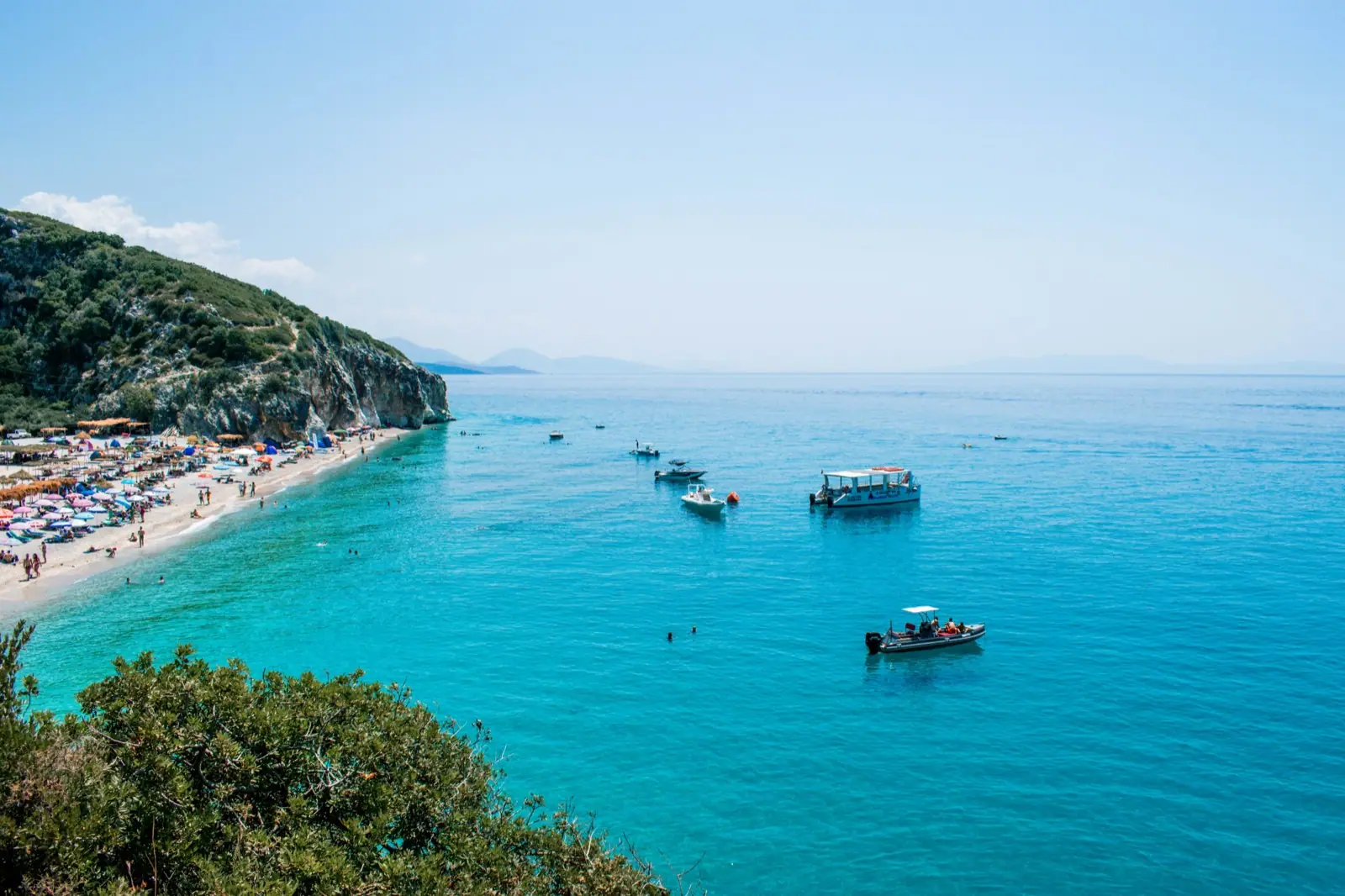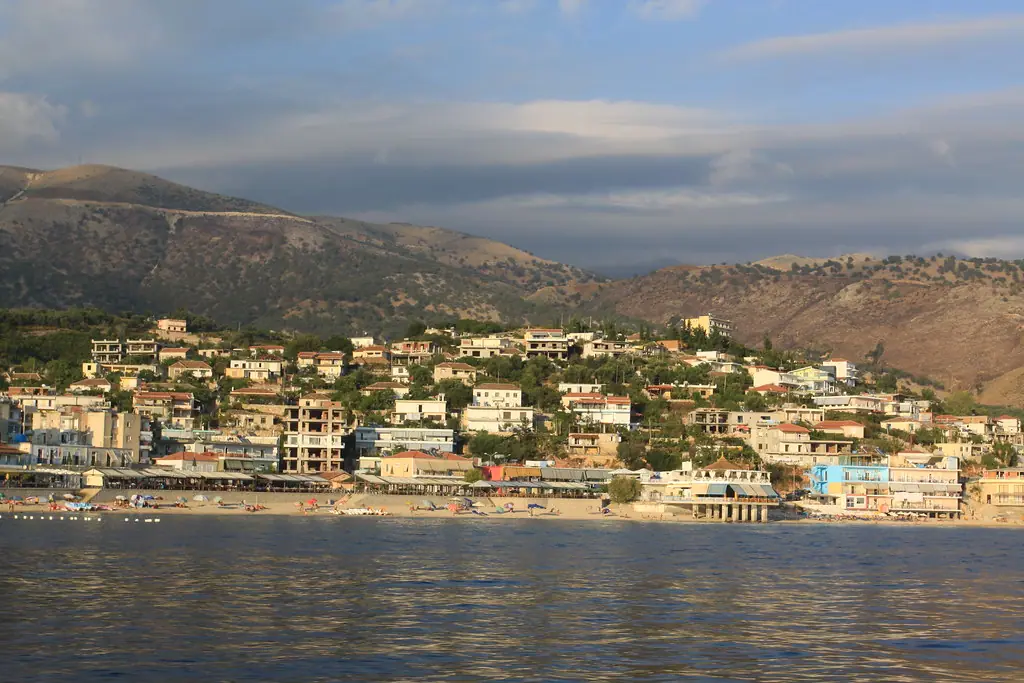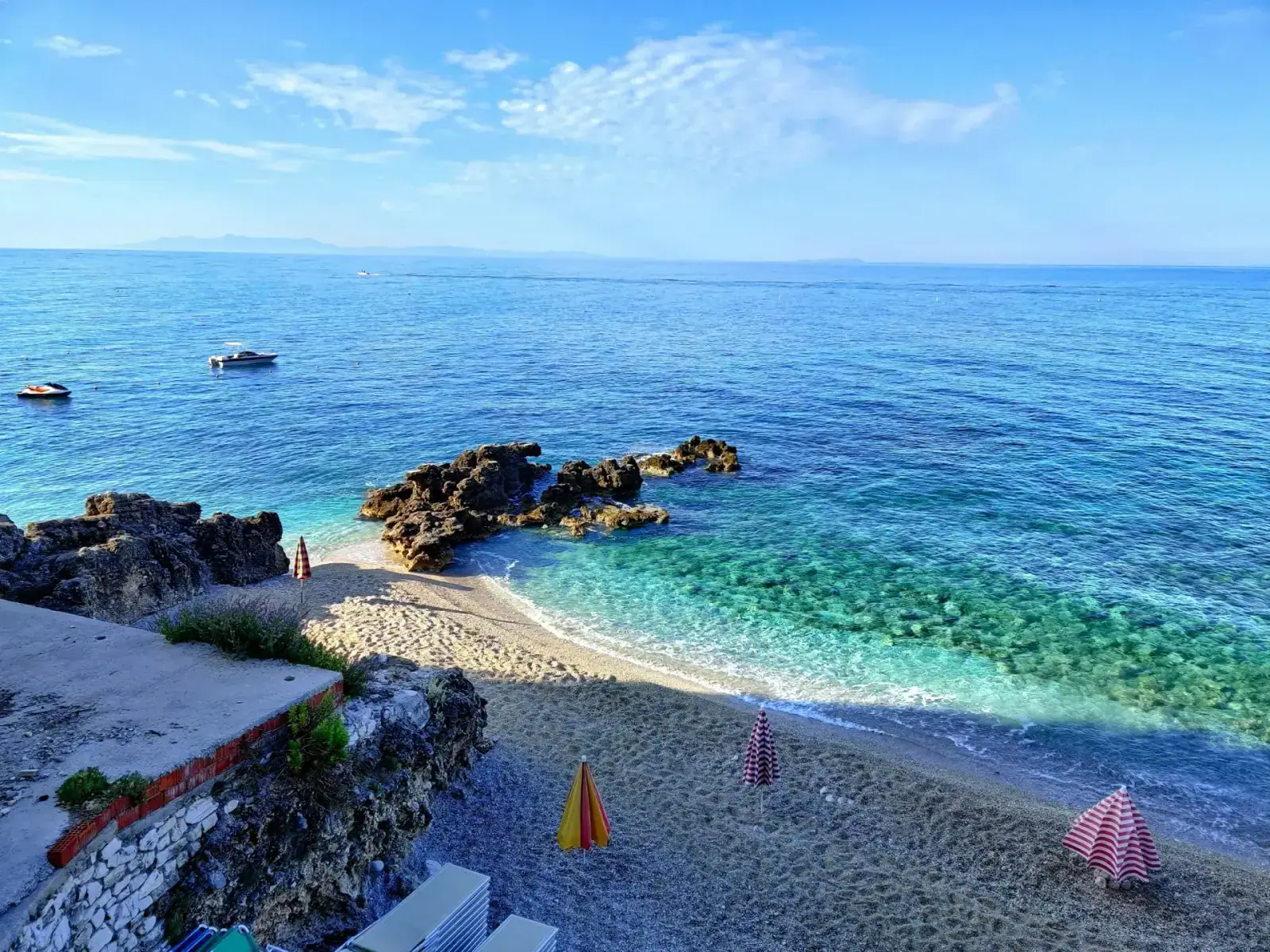
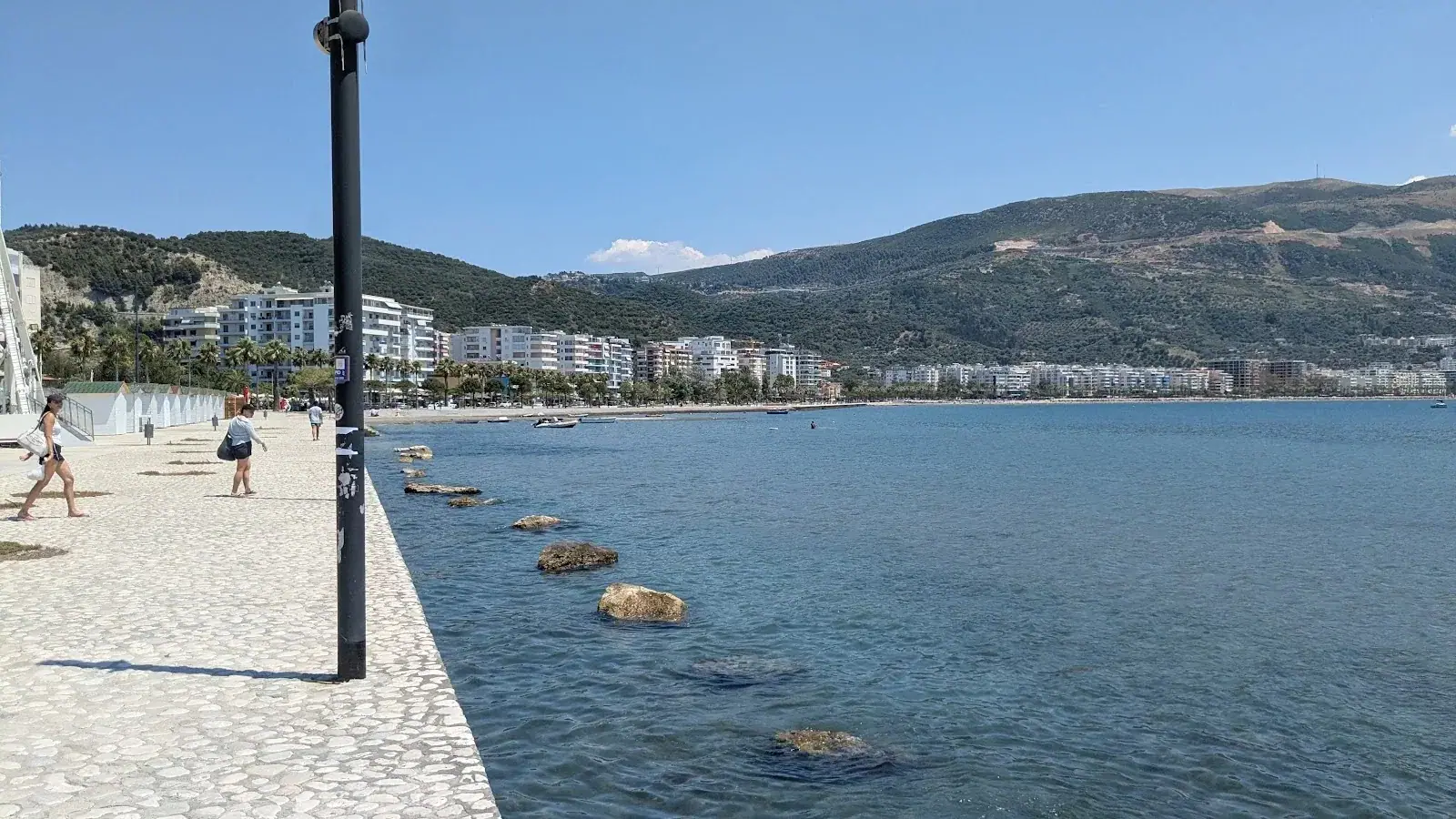
The ferry from Corfu to Albania looks simple on the timetable page, a 25 to 35 minute hop across the Ionian Sea, and mostly it is. What trips people up isn't the crossing itself, it's the parts the booking sites gloss over: which port on the Corfu side you actually need, whether your rental car is even allowed onboard, and how much buffer to leave for passport control before a summer sailing that "leaves in 30 minutes" actually leaves.
Compare hotels, apartments, and Vrbo rentals on the map. Powered by Stay22.
Route at a glance (2026)
| Route | Corfu (Greece) → Saranda (Albania) |
| Distance | ~18 km across the Ionian Sea |
| Crossing time | 25–35 minutes |
| Operators | Ionian Seaways, Finikas Lines, Albania Luxury Ferries |
| Frequency (summer) | Roughly 4–8 sailings per day each direction combined across operators |
| Frequency (winter) | 1–2 sailings per day |
| Adult one-way fare | 19–25€ |
| Corfu-side port | Corfu New Port (Neo Limani), ~15 min walk from Corfu Old Town |
| Albania-side port | Saranda Port, central waterfront |
There is no direct Corfu-to-Himara ferry. Saranda is the only Albanian port this route serves, and Himara is a further 60 km / roughly 1–1.5 hours north by road. If Himara is your actual destination, see our dedicated Corfu to Himara guide for the full two-leg journey planner.
Ferry operators compared
Three companies run this crossing, all using fast catamarans or hydrofoils rather than large car ferries:
| Operator | Vessel type | Crossing time | Adult one-way | Car transport |
|---|---|---|---|---|
| Ionian Seaways | Catamaran / fast ferry | ~30 min | 19–22€ | Available on select sailings |
| Finikas Lines | Hydrofoil / fast ferry | ~25–35 min | 20–25€ | Available on select sailings |
| Albania Luxury Ferries | Fast ferry | ~30 min | Comparable range | Confirm directly with this smaller, newer operator |
All three sell tickets online and at port ticket offices. Finikas Lines typically offers a discount (around 10%) for early online bookings. In July and August, book at least a day or two ahead for the popular morning departures (commonly 09:00–09:30). Walk-up tickets are usually fine for afternoon sailings, but the morning slot can sell out. Shoulder season (May–June, September–October) rarely requires advance booking.
Prices in full (2026)
| Category | Cost |
|---|---|
| Adult one-way | 19–25€ |
| Adult return | 32–42€ |
| Child (4–12) one-way | 10–13€ |
| Under 4 | Free |
| Car one-way | 40–70€ (varies by vehicle size and operator) |
| Motorcycle one-way | 15–25€ |
| Port taxes / fees | Included in the listed ticket price |
Prices climb toward the top of these ranges in peak July–August and for last-minute bookings; the bottom of the range is realistic for early online bookings in shoulder season. For a deeper cost breakdown, including a full day-trip budget and the cheapest booking strategies, see our dedicated Corfu to Albania ferry price guide.
The Corfu side: which port and how to get there
Ferries to Saranda leave from Corfu New Port (Neo Limani), not the old fishing harbor near the Old Town. Look for signs to "Neo Limani / New Port" if you're driving or walking:
- On foot from Corfu Old Town / Liston: about 15 minutes, mostly flat, along the waterfront.
- From Corfu Airport (CFU): roughly 10–15 minutes by taxi (approximately 10–15€) or a longer walk not recommended with luggage.
- Ticket offices: located at the New Port terminal building; most operators also sell online in advance, which is worth doing in peak season to skip the counter queue.
Arrive at least 45–60 minutes before departure in summer to allow for ticket collection and passport control. This is an international border, and Albania is outside both the EU and Schengen, so full passport checks apply in both directions even though the crossing itself is short.
Vehicle ferry rules: what to check before you book a car on
Car transport is available on this route, but treat it as conditional, not guaranteed, every time you book:
- Availability varies by sailing. Not every departure carries vehicles. Car transport runs on select sailings per operator, so confirm at booking rather than assuming any listed time works.
- Rental car contracts often restrict cross-border ferry use. Many Albanian and Greek rental agreements exclude taking the vehicle across an international ferry route entirely, or require written pre-authorization. Verify this in writing before you drive to the port, not at check-in.
- Vehicle check-in closes earlier than foot-passenger boarding. Budget 60+ minutes before departure as a baseline, more on peak summer weekends when car slots are limited and queues build.
- Required documents: passport/ID, driver's license, vehicle registration, and proof of insurance (including Green Card coverage where applicable for cross-border use).
- Owner vs. renter: if the driver isn't the vehicle's registered owner, authorization paperwork may be required at check-in.
Because vehicle rules and pricing are genuinely more involved than the foot-passenger crossing, we've written a full separate walkthrough covering required documents, the realistic door-to-door time model, and the exact rental-contract questions to ask before you book, in our Corfu-Saranda ferry with car guide.
Saranda side: arrival and onward travel
Saranda Port sits on the central waterfront, walkable from most hotels in town. After disembarking:
- Albanian entry stamp: processed at the port terminal, typically 10–30 minutes depending on how many sailings have just arrived.
- Onward to Himara: roughly 60 km, 1–1.5 hours by rental car, bus (5–8€, though morning schedules don't always align neatly with the first ferry), or private taxi/transfer (40–50€). See our Corfu to Himara ferry guide for the full connection plan, including which ferry sailings actually leave enough daylight for the onward drive.
- Border crossing context: if you're continuing overland rather than by ferry on a future leg, our Qafë Botë border crossing guide covers the alternative southern land route between Albania and Greece.
Booking direct vs. aggregators
You can book this crossing three ways: directly through an operator's own site (Ionian Seaways or Finikas Lines), through an aggregator (Ferryhopper, Direct Ferries, Omio), or in person at the port counter. Each has a trade-off worth knowing before you commit:
| Method | Pro | Con |
|---|---|---|
| Direct with operator | No booking fee, direct customer service if something changes | Have to compare operators yourself; some sites are Greek/Albanian-first with clunky English |
| Aggregator (Ferryhopper, Direct Ferries) | Compares all operators and times in one search, easier English UX | Small booking fee often built into the fare shown |
| At the port counter | No pre-booking needed, flexible for same-day plans | Risky in peak summer, the popular morning sailing can sell out before you arrive |
For a fixed-date summer trip, book ahead through either the operator or an aggregator. For a flexible shoulder-season day, showing up at the counter works fine and gives you the freedom to pick whichever operator's next sailing suits you.
What to expect at check-in
Both ports run a similar sequence, and knowing it in advance saves the "wait, where do I go" scramble that eats your buffer time:
- Ticket collection or confirmation at the terminal counter (if you didn't print/download your ticket already).
- Passport control queue. This is the step that varies most in length; budget 15–45 minutes depending on how many sailings have clustered together.
- Security/boarding check. Light, typically just a bag scan or visual check, not a full airport-style screening.
- Boarding. Seating is open on most sailings, no assigned seats, so there's no advantage to being first in line beyond grabbing a window seat.
Foot passengers can generally arrive later than the vehicle cutoff, with 45–60 minutes before departure a safe baseline in summer, 30 minutes in the quieter shoulder months.
Seasonal schedule shifts
- Peak summer (July–August): most frequent service, up to 4-plus daily sailings across operators combined, but also the tightest car-slot availability and the longest passport-control queues. Book ahead for popular times.
- Shoulder season (May–June, September–October): service holds at a good frequency with less booking pressure. This is the easiest window to travel this route.
- Winter (November–April): frequency drops sharply, to as little as 1–2 sailings daily. Confirm the current schedule directly with an operator before planning a winter crossing rather than relying on summer timetables.
For international travelers
US travelers: you're entering Albania (non-Schengen, non-EU) from Corfu (Greece, Schengen). Keep track of Schengen day-counting if you're combining this trip with other EU travel. Days spent in Albania don't count against your 90/180-day Schengen limit, but days in Corfu/Greece do. No visa is required for US citizens for Albania stays up to 90 days.
UK travelers: the same Schengen day-counting logic applies since Corfu is in Greece. Check the FCDO travel advice for Albania before crossing, and note that UK passports need to meet standard EU entry validity requirements for the Corfu/Greece leg specifically.
EU travelers: EU/EEA citizens get a straightforward passport scan (no stamp) entering Greece and a standard entry stamp into Albania. The Albania side is the only actual border formality on this route since you're already inside the EU on the Corfu side.
FAQ
How long does the ferry from Corfu to Albania take?
The Corfu–Saranda crossing takes 25–35 minutes depending on the operator and vessel. It's one of the shortest international ferry crossings in the Mediterranean, though total port-to-port time including check-in and passport control typically runs closer to 90 minutes to 2 hours door-to-door.
Which port do I need in Corfu?
Corfu New Port (Neo Limani), about a 15-minute walk from Corfu Old Town. Don't confuse it with the old harbor near the Liston. Ferries to Saranda leave from the New Port terminal.
Can I take a rental car on the Corfu to Albania ferry?
Sometimes. Car transport runs on select sailings per operator, not every departure, and many rental contracts restrict cross-border ferry use entirely. Confirm both with the ferry operator and your rental agreement in writing before planning around it. See our car ferry guide for full details.
Does this ferry go to Himara?
No. The ferry only serves Saranda. Himara is a further 60 km / 1–1.5 hours north by road. See our Corfu to Himara connection guide for the full two-leg journey.
How much does the Corfu to Albania ferry cost?
Adult one-way fares run 19–25€, with return tickets around 32–42€. Cars cost 40–70€ one-way when space is available. Full pricing breakdown, including day-trip budgets, is in our ferry price guide.
Bottom line
The Corfu-to-Saranda crossing is short, frequent, and easy for foot passengers. The main things to get right are booking the morning summer sailing ahead of time and knowing you need Corfu's New Port, not the Old Town harbor. If you're bringing a car, treat availability and your rental contract as things to verify twice, not assume. And if Himara is the actual destination. Budget the extra 60 km onward drive from Saranda into your day.