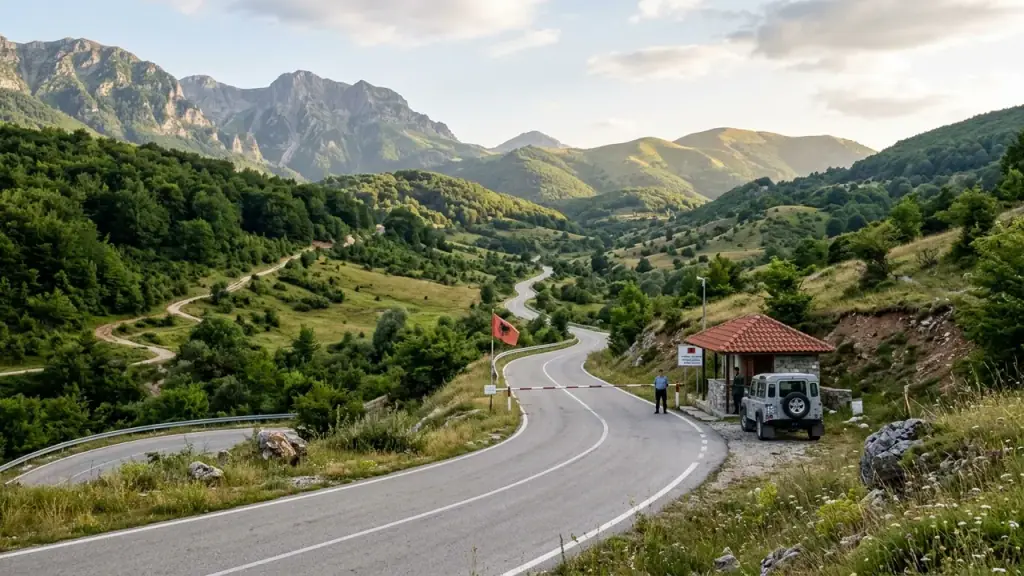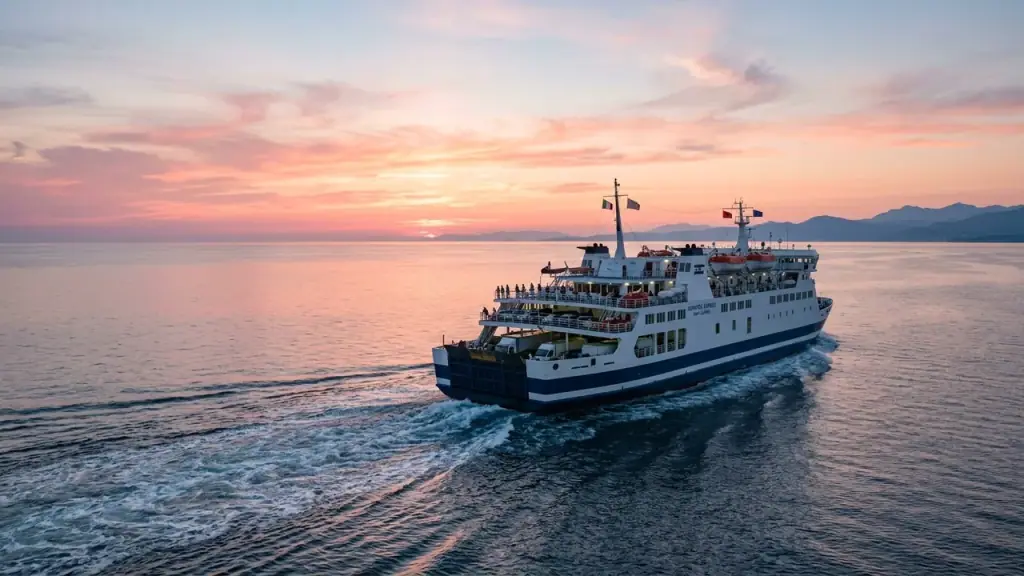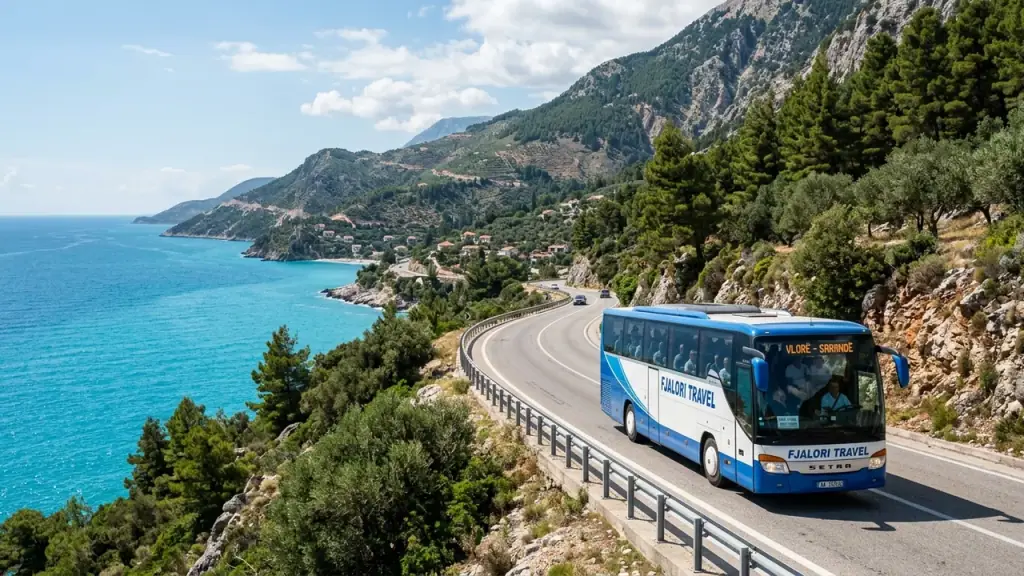
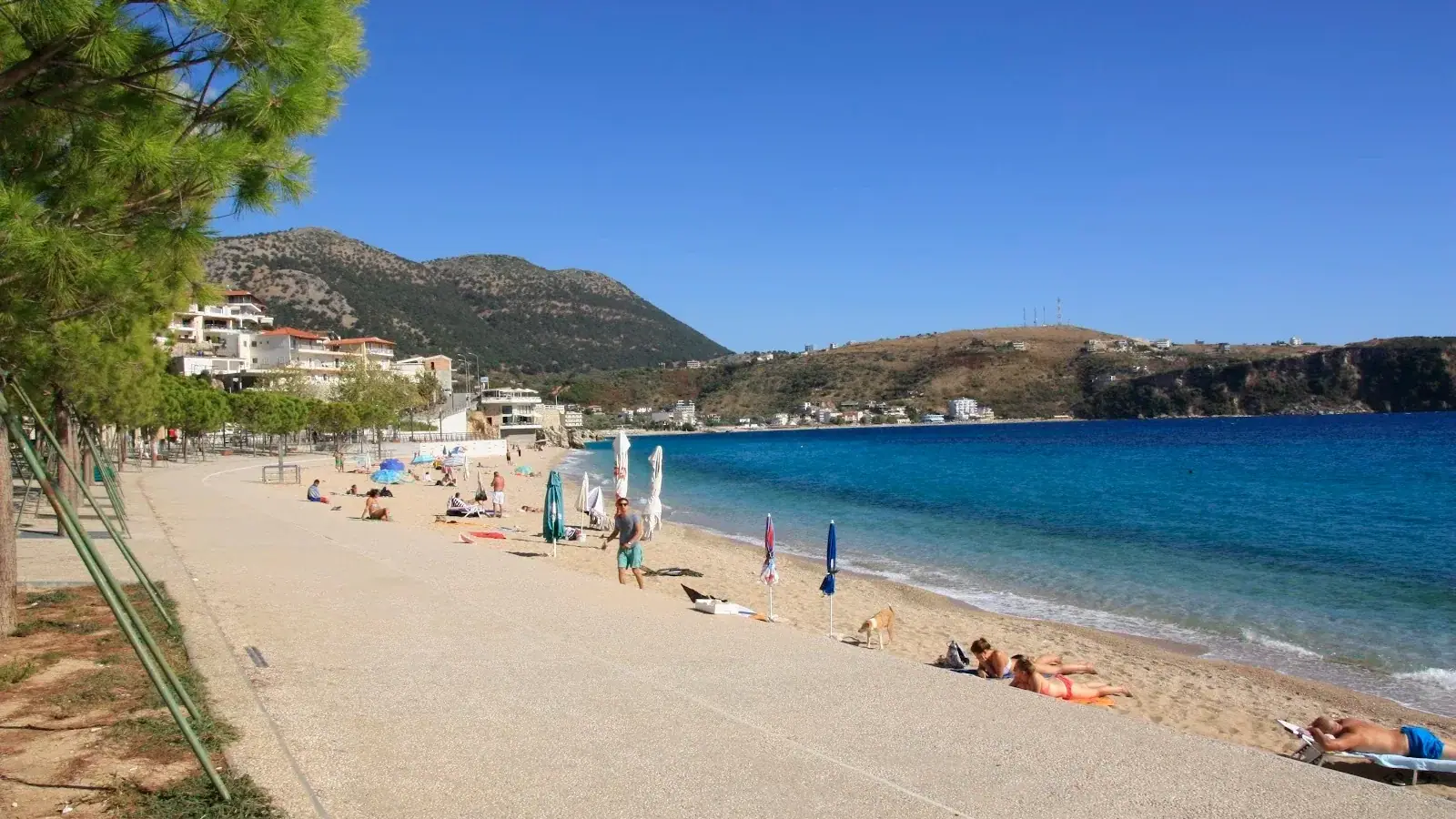
If you are planning the Corfu to Saranda ferry with car, the short answer is: the sea crossing is quick, but your day succeeds or fails on document prep and check-in timing. Corfu to Saranda is one of the fastest Albania entries for Riviera travelers, but vehicle rules add complexity compared with foot-passenger travel.
This guide is for drivers who need practical border logistics, realistic timing windows, and cost planning before moving onward to Himara, Ksamil, or the south coast.
Compare hotels, apartments, and Vrbo rentals on the map. Powered by Stay22.
TL;DR: Car Ferry Route Basics
| Item | Practical Baseline |
|---|---|
| Crossing duration | Commonly around 30-70 minutes depending on vessel/service |
| Vehicle check-in target | 60+ minutes before departure (more in peak) |
| Peak season pressure | Higher queue risk and limited car slots on popular departures |
| Minimum documents | Passport/ID, vehicle registration, driving license, insurance evidence |
| Main mistake | Treating it like a foot-passenger hop with no time buffer |
Why This Route Is Popular
This route is attractive because it compresses sea distance and gives immediate access to southern Albania road corridors. Compared with long overland alternatives, Corfu-Saranda can be faster for many itineraries, especially if your onward route is Saranda to Himara or Ksamil.
End-to-End Time Model (Door to Door)
| Segment | Typical Time Window |
|---|---|
| Arrival and vehicle check-in at port | 45-120 min |
| Border/document pre-boarding process | 15-45 min |
| Sea crossing | 30-70 min |
| Disembark + arrival-side controls | 20-90 min |
| Exit port and join road route | 10-30 min |
A listed 40-minute crossing can still become a 3+ hour travel block when queues are heavy.
Vehicle Check-In Rules: What Actually Matters
Rule 1: Arrive earlier than foot-passenger guidance
For vehicles, 60 minutes is a baseline, not a guarantee. In peak summer weekends, 90 minutes is often safer.
Rule 2: Keep your booking and plate info exact
Mismatch between booking details and vehicle documentation creates avoidable delays.
Rule 3: Treat border workflow as variable time
Even when ferry runs on time, border flow can change your real arrival.
Required Documents for Car Ferry Travel
| Document | Why It Is Needed |
|---|---|
| Passport/ID | International entry/exit controls |
| Driver's license | Legal proof of driving authority |
| Vehicle registration | Vehicle ownership/identity verification |
| Insurance proof (incl. Green Card context where applicable) | Valid operation and liability checks |
| Booking confirmation | Boarding priority and slot validation |
If the driver is not the owner, owner authorization paperwork may be required. For rentals, your contract must explicitly allow cross-border ferry use.
Rental Cars: The Critical Contract Check
Many travelers fail at this exact point. Your rental agreement can restrict:
- cross-border use,
- ferry transport,
- specific destinations,
- or insurance validity after crossing.
Get written confirmation before you pay for ferry tickets.
Cost Planning: Car Ferry Budget Framework
| Cost Line | Typical Behavior |
|---|---|
| Driver ticket | Base fare by departure and operator |
| Passenger tickets | Added per person |
| Vehicle fare | Based on class/length |
| Port/service charges | May apply separately |
| High-season premium | More likely on weekend peak departures |
Do not evaluate price using one screenshot. Compare multiple departure windows and operators for your specific date.
Peak vs Shoulder Season Strategy
| Season Window | What Changes |
|---|---|
| July-August | Maximum demand and queue pressure |
| May-June | Better balance of frequency and stress |
| September | Often easier operations with still-good frequency |
| Winter | Lower pressure but fewer departures |
If your itinerary has hard commitments (hotel check-in, transfer pickup). Avoid stacking them too tightly after ferry arrival.
How to Build a Low-Risk Crossing Day
- Book a departure with a realistic pre-port window.
- Arrive at port with all originals organized in one folder.
- Keep 1 backup departure option in peak months.
- Avoid non-refundable same-hour onward commitments.
- Confirm your first-night parking and arrival logistics.
Practical Onward Routes from Saranda
Saranda to Himara
A common onward route for coastal travelers. Build road-time buffers, especially around evening traffic periods.
Saranda to Ksamil
Shorter and easier segment, but popular dates still create congestion and parking friction.
Saranda to inland destinations
If your plan includes Butrint or Gjirokaster. Keep daylight and heat timing in mind.
Border-Day Mistakes to Avoid
- Arriving with digital-only documents when originals are expected.
- Assuming rental paperwork automatically permits ferry transfer.
- Underestimating port queue variability on weekends.
- Booking hard onward transfers without slack.
- Ignoring weather/sea-state implications.
Family and Group Considerations
| Traveler Type | Better Approach |
|---|---|
| Solo/couple with flexible schedule | Can optimize for price and later departures |
| Family with children | Prioritize earlier departures and wider timing buffers |
| Group with multiple cars | Coordinate document checks before port day |
| Tight multi-stop itinerary | Book conservative windows and backup departure |
Port-Side Vehicle Workflow (Minute-by-Minute Model)
Use this operational model on travel day:
| Time Before Departure | Action |
|---|---|
| T-120 to T-90 | Arrive, park in staging, verify docs |
| T-90 to T-60 | Ticket and vehicle check-in sequence |
| T-60 to T-30 | Border and pre-boarding process |
| T-30 to T-0 | Vehicle loading and final call |
This model reduces panic and missed-call risk, especially during summer weekends.
Document Readiness Audit for Drivers
Before leaving for the port, run this audit:
- Passport and license physically present (not digital-only).
- Vehicle registration original available.
- Insurance evidence and policy scope understood.
- Rental authorization confirmed if using a rented car.
- Booking details match plate and traveler names.
Small mismatches become major delays at the terminal.
Insurance and Liability Context
Vehicle insurance assumptions cause frequent mistakes on this route. Practical rule: verify in writing what your policy and contract cover once the vehicle crosses into Albania.
| Risk Area | Why to Check Before Boarding |
|---|---|
| Cross-border permission | Some rental contracts restrict it |
| Ferry transport clause | Not all providers include it by default |
| Damage and excess exposure | Claim handling differs by contract |
| Breakdown response | Confirm where roadside support applies |
Never rely on verbal "should be fine" when legal liability is involved.
Cost Optimization Without Losing Reliability
Travelers usually choose between:
- Cheapest departure with higher uncertainty,
- Mid-priced departure with better timing fit,
- Premium option with tighter reliability.
For itineraries with hard evening check-ins, choice 2 often creates the best real value.
| Decision Style | Outcome Pattern |
|---|---|
| Lowest fare only | Higher missed-connection risk |
| Time-fit first | Lower stress and better day quality |
| Flexible booking + backup | Best resilience under disruption |
High-Season Congestion Strategy
During July and August:
- avoid weekend midday compression when possible,
- pre-arrange first-night parking in Saranda/Himara,
- keep food, water, and child comfort kit in vehicle,
- set realistic arrival expectations for onward road legs.
The crossing itself is short; queue management is the real challenge.
Shoulder-Season Advantage
In May, June, and September, many travelers get:
- easier terminal handling,
- lower probability of extreme queue times,
- better flexibility on departure choices.
If your dates are flexible, shoulder season can significantly improve logistics quality.
Road Continuation Planning After Arrival
| Onward Route | Practical Note |
|---|---|
| Saranda to Himara | Scenic but variable in traffic; keep daylight buffer |
| Saranda to Ksamil | Short but can be crowded in peak beach hours |
| Saranda to inland sites | Add fuel and service-stop planning early |
Do not stack border day with a fully packed multi-stop agenda.
Failure Recovery Plan (If You Miss the Departure)
- Confirm next available vehicle slot immediately.
- Re-check border and check-in windows for the alternative sailing.
- Notify first-night accommodation of delay.
- Keep all receipts if a claim/dispute route is needed.
- Adjust onward stops instead of forcing original schedule.
Having this fallback ready prevents one missed departure from damaging your entire itinerary.
Driver Safety and Fatigue Timing
This route often precedes coastal driving. Fatigue risk increases when travelers:
- wake very early,
- stand in port queues,
- then drive long scenic roads at dusk.
If needed, keep your first road segment short and avoid aggressive same-day destination goals.
Professional Planning Template (Copy/Paste)
| Field | Fill Before Departure |
|---|---|
| Primary sailing | [time/operator] |
| Backup sailing | [time/operator] |
| Check-in target | [arrival time at port] |
| Document owner | [who carries originals] |
| Onward destination | [city/hotel] |
| Delay trigger action | [what you do at +60 min delay] |
This is simple, but it prevents coordination errors in groups and families.
Price-Quality Decision Table for Vehicle Travelers
| Booking Style | Typical Benefit | Typical Risk |
|---|---|---|
| Cheapest slot only | Lowest ticket outlay | Higher disruption cost if missed handoffs |
| Mid-range with better timing | Better onward reliability | Slightly higher fare |
| Flexible option + backup | Highest resilience | Requires more planning effort |
When your onward destination is fixed (for example, a paid hotel in Himara), reliability usually creates better total value than minimum fare.
24-Hour Pre-Departure Port Checklist
Do this the day before crossing:
- Confirm sailing status and check-in guidance.
- Re-validate all driver and vehicle documents.
- Verify route to port with realistic traffic margin.
- Confirm arrival-side first stop and parking.
- Set one fallback departure and communication plan.
This short routine lowers both missed-departure and border-document risk.
Operational Notes for Mixed-Group Travel
If one group has vehicle booking and others are foot passengers, synchronize meeting and check-in times early. Vehicle processing is usually slower, and mixed assumptions create avoidable stress.
For multi-car groups:
- share document checklist in one message thread,
- align arrival time to the strictest vehicle requirement,
- assign one person to monitor live schedule changes.
Coordination failures are a bigger risk than sea conditions for most summer crossings.
Frequently Asked Questions
Can I take a rental car on Corfu to Saranda ferry?
Yes in some cases, but only if your rental contract explicitly allows cross-border ferry use. Many providers restrict this by default. Always get written confirmation before buying tickets.
How early should I arrive with a car?
Use 60 minutes as a minimum baseline and 90 minutes in summer peaks. Vehicle processing and border formalities make this route less predictable than foot-passenger boarding.
How long is the crossing from Corfu to Saranda?
The sea leg is commonly about 30-70 minutes depending on vessel and operator, but total travel time includes check-in, border flow, and disembark processing.
Which documents are most important at check-in?
Passport/ID, license, vehicle registration, insurance evidence, and booking confirmation. Missing any of these can delay or block boarding.
Is this route good for same-day arrival to Himara?
Yes, but only with realistic buffers. Avoid tight same-hour commitments after arrival, especially in high season when queue times expand.
Conclusion
The Corfu to Saranda ferry with car is efficient when you treat it as a border logistics operation, not just a short boat ride. Arrive early, carry complete documentation, and protect your onward plan with time buffers.