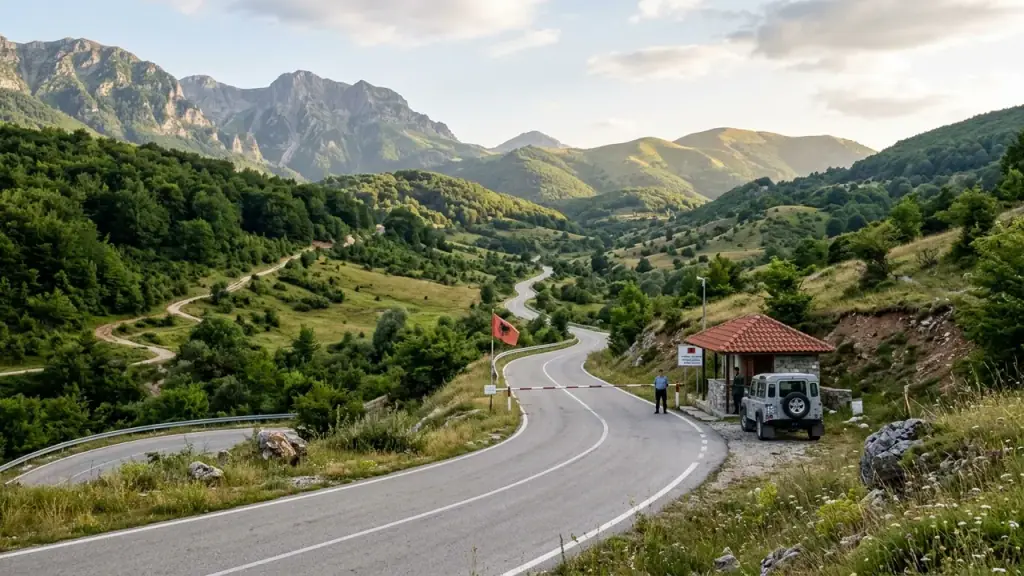
Qafë Botë is the border crossing most travelers heading to the far south of Albania have never heard of. It occasionally saves them an hour, or strands them at a closed gate at 22:30. It's the southernmost Albania–Greece checkpoint, a small mountain pass connecting Konispol country with the Greek village of Sagiada, and the shortest road between Ksamil/Saranda and the Greek Epirus coast. But it's a secondary, local crossing with limited hours and no facilities, and treating it like the big Kakavia highway border is how people get caught out. Here's exactly how it works and when to use it.
Qafë Botë at a glance
| Connects | Konispol area (Albania) ↔ Sagiada (Greece, Thesprotia) |
| Albanian side | Qafë Botë checkpoint |
| Greek side | Sagiada / Mavromati checkpoint (~4.5 km on) |
| Elevation | ~137 m mountain pass |
| Opening hours | 06:00–22:00 daily (verify before relying on it) |
| Traffic type | Passenger cars and local traffic, secondary crossing |
| Nearest Albanian town | Konispol, ~1 km from the border |
This is a small crossing. There are no big duty-free shops, no money-changers worth the name, and queues are usually short. The trade-off for that calm is restricted hours and a "verify it's actually open" caveat, because secondary crossings change their schedules with little notice.
Where it actually gets you
Qafë Botë's value is geographic: it's the shortcut between the southern Albanian beach cluster and the Greek Ionian coast/Epirus, avoiding the longer inland haul to the main Kakavia crossing near Gjirokaster.
| Route | Via Qafë Botë | Via Kakavia (main border) |
|---|---|---|
| Ksamil ↔ Sagiada/Igoumenitsa area | Short, direct | Long detour inland |
| Saranda ↔ Greek Epirus coast | ~45–60 min to border | Significantly longer |
| Onward to Igoumenitsa (Greek ferry port for Corfu/Italy) | Logical southern route | Indirect |
From the Albanian side, the border sits just past Konispol, Albania's southernmost town, reachable from Saranda and Ksamil by car. On the Greek side, Sagiada opens onto the Thesprotia coast and the road toward Igoumenitsa, which is itself the ferry port for Corfu and Italy.
When to use it (and when not to)
Use Qafë Botë if:
- You're driving between the Ksamil/Saranda area and the Greek mainland coast (Sagiada, Igoumenitsa, Parga direction) and want the direct southern route
- You're crossing in daylight within the 06:00–22:00 window
- You have your own car or a rental cleared for cross-border use
- You want a calm, queue-light crossing over the busy Kakavia highway
Use a different crossing if:
- You're traveling at night or early morning outside opening hours. The gate is genuinely closed, and there's nothing at the border to wait at
- You're on a bus or coach. Scheduled cross-border services use the main crossings, not this local one; Saranda–Corfu by ferry is the practical public-transport route to Greece anyway
- You're heading inland to Ioannina or northern Greece, since Kakavia near Gjirokaster is more direct
- Your rental car contract doesn't permit Albania–Greece crossings (most don't, so check in writing)
The crossing procedure
It's a standard two-stage international crossing, and because Greece is in the EU/Schengen area while Albania is not, the Greek-side inspection is a full Schengen entry check:
- Albanian exit at the Qafë Botë checkpoint: passport/ID check, quick for cars.
- Short drive (~4.5 km) through the pass to the Greek side.
- Greek (Schengen) entry at Sagiada/Mavromati, full passport inspection; have documents ready.
Documents: passport (or EU national ID for EU citizens). Driving your own car means carrying registration and a Green Card insurance extension valid for both countries, the same paperwork as any Albania border crossing by car. Note the Schengen 90/180 rule: entering Greece restarts your Schengen clock, and time in Albania does not count toward it.
Always verify the hours before you go. Secondary crossings like Qafë Botë can change their operating schedule with little public notice, and there is nothing at the border to wait for if it's shut. Confirm with current official sources or recent traveler reports, and have the Kakavia crossing as your fallback. Carry data to check en route. An eSIM sorted in advance keeps maps and border updates live where roaming gets patchy in the hills.
Basing near the crossing
There's nothing to stay at the border itself. Konispol is a small town and Sagiada a Greek village. Most travelers crossing here are based in Ksamil or Saranda and using Qafë Botë as a day-route into Greece or an exit toward Igoumenitsa. If you want a comfortable last Albanian night before crossing south, base in the Ksamil/Saranda cluster and drive down in the morning:
FAQ
What are the Qafë Botë border crossing opening hours?
Qafë Botë operates daily, generally 06:00–22:00, for passenger cars and local traffic. As a secondary crossing, its schedule can change with little notice, so verify current hours before relying on it, there are no facilities at the border to wait at if the gate is closed, and the main Kakavia crossing is the fallback.
Where does the Qafë Botë border crossing lead?
It connects the Konispol area of southern Albania with the Greek village of Sagiada in Thesprotia, opening onto the Epirus coast and the road toward Igoumenitsa (a ferry port for Corfu and Italy). It's the direct southern route between the Ksamil/Saranda area and the Greek mainland coast.
Can you cross at Qafë Botë by bus?
No. Scheduled cross-border buses and coaches use the main crossings, not this small local one. Qafë Botë is for passenger cars and local traffic. If you're traveling to Greece without a car, the Saranda–Corfu ferry is the standard public-transport route; from Corfu you can reach the Greek mainland.
Is Qafë Botë better than the Kakavia crossing?
For travel between the Ksamil/Saranda area and the Greek Ionian coast, yes, it's shorter and quieter. For travel inland toward Ioannina or northern Greece, or anytime outside its 06:00–22:00 hours, the larger Kakavia crossing near Gjirokaster is more practical and runs longer hours with full facilities.
What documents do you need to cross at Qafë Botë?
A passport, or an EU national ID card for EU citizens. The Greek side is a full Schengen entry inspection. Driving your own car requires registration documents and a Green Card insurance extension covering both countries. Remember that entering Greece restarts your Schengen 90/180 clock; time spent in Albania doesn't count.
The bottom line
Qafë Botë is the handy southern shortcut between Albania's beach south and the Greek coast. It's calm, quick, and well-placed past Konispol, provided you cross within its 06:00–22:00 window with the right documents and a verified-open gate. Base in Ksamil or Saranda. Check the hours before you set out, and keep Kakavia as your backup.