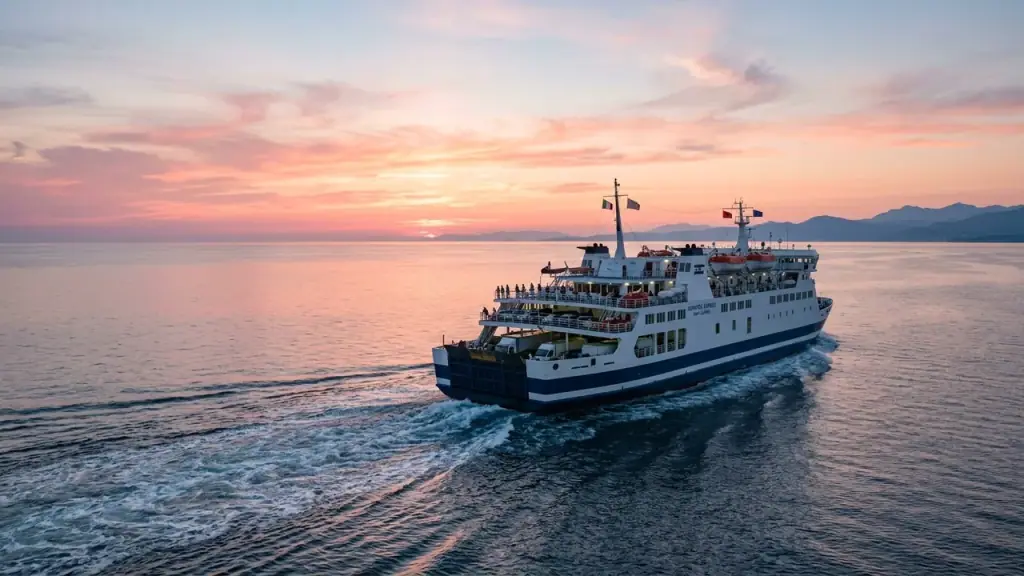
The Brindisi–Vlora ferry is the most direct way to bring a car from Italy onto the Albanian Riviera, and in 2026 it's also one of the cheapest border crossings in the Adriatic, with foot passengers from €44 and cars around €50 on top. But "direct" hides a lot of variation: the crossing takes anywhere from 4.5 to 9 hours depending on which boat you catch, day and overnight sailings price and feel completely differently, and Vlora port drops you 90 minutes of mountain road short of the beaches most people are actually heading for. Here's the route decoded: timetable, real costs, documents, and the part the ferry websites skip, which is what to do when you land.
Brindisi–Vlora ferry at a glance (2026)
| Route | Brindisi (Italy) → Vlorë (Albania) |
| Operator | Starlines (primary 2026 operator) |
| Frequency | ~1 sailing daily / ~7 weekly (more in high season) |
| Crossing time | 4.5 hrs (fast) to ~7.5–9 hrs (standard/overnight) |
| Foot passenger | from €44–55 |
| Car | from ~€50 (plus passengers) |
| First departure | ~11:00 (day) |
| Overnight option | ~23:58 dep → ~08:01 arrival |
Prices move with season and how far ahead you book. High-summer car-plus-two crossings can land near €200–250 total, while a shoulder-season foot passenger booked early is the €44 floor. Compare live fares and dates on aggregators like Direct Ferries or Ferryhopper before committing.
Day vs overnight: they're different trips
This is the choice that shapes your crossing, and it's not just about timing.
Day sailing (~11:00 departure): You see the Adriatic and arrive in Vlora in the afternoon with time to drive on in daylight. Best if you want to reach the Riviera beaches the same day: land mid-afternoon, cross Llogara before dark, sleep in Dhermi or Himara. The downside: a long daytime crossing eats a holiday day.
Overnight sailing (~23:58 → ~08:01): You board late, sleep across, and wake up in Albania, arriving fresh at 08:00 with the whole day ahead. Best for car travelers who'd rather not lose daylight, and it can save a hotel night. The catch: book a cabin if you want real sleep; reclining-seat overnight crossings are rough. Cabins add €40–90.
Our pick for most Riviera-bound travelers with a car: the overnight boat with a cabin. You trade a hotel night for a ferry cabin and gain a full first day.
Prices broken down
| Who/what | Typical 2026 fare |
|---|---|
| Foot passenger (early booking, shoulder) | €44–55 |
| Foot passenger (peak) | €60–80 |
| Car (vehicle only) | ~€50–77 |
| Car + 2 adults (peak) | €180–250 |
| Cabin supplement (overnight) | €40–90 |
| Pet | €15–40 (book ahead; see pet entry rules) |
Booking early is the single biggest lever. The same crossing can double between a month-ahead and a day-ahead booking in July. The route runs year-round with thinner winter frequency.
Documents and the crossing itself
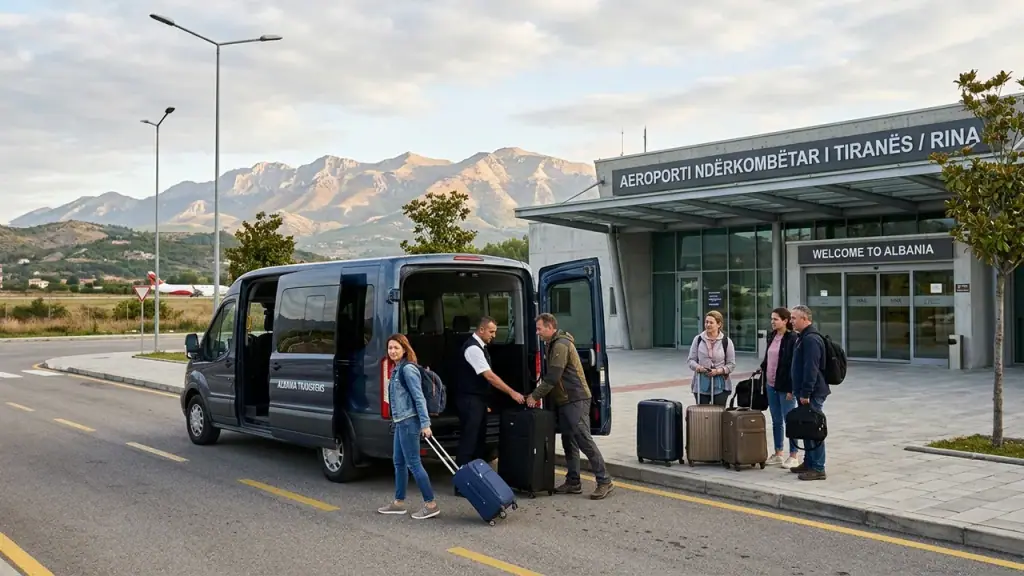
Crossing the Adriatic into Albania is straightforward, but it is an international border (Albania is outside the EU and the Schengen area; see Albania's Schengen status):
- Passport or EU national ID. Albania accepts EU national identity cards for entry; most other nationalities need a passport. Check your nationality's rules in our visa guide.
- Driving a car: bring the V5/registration document, your licence, and a Green Card (international motor insurance extension valid for Albania, arranged with your insurer before leaving; not all default policies cover Albania). Details in our border-crossing-by-car guide.
- Rental cars: most Italian rental agreements prohibit taking the car into Albania, so verify in writing or you'll be turned back at check-in. Renting in Albania after you land is usually cheaper anyway.
- Boarding: arrive at Brindisi port 2 hours before departure (3 with a vehicle). Passport control happens at the port.
For drivers from Italy and the EU: the Green Card is the document people forget. Albania is not covered by standard EU motor-insurance territory, so you must request the Albania extension from your insurer in advance. Without it you'll buy border insurance on arrival (more expensive, cash). EU citizens enter on a national ID card; keep it separate from your wallet for the port check.
The part nobody tells you: Vlora isn't the Riviera
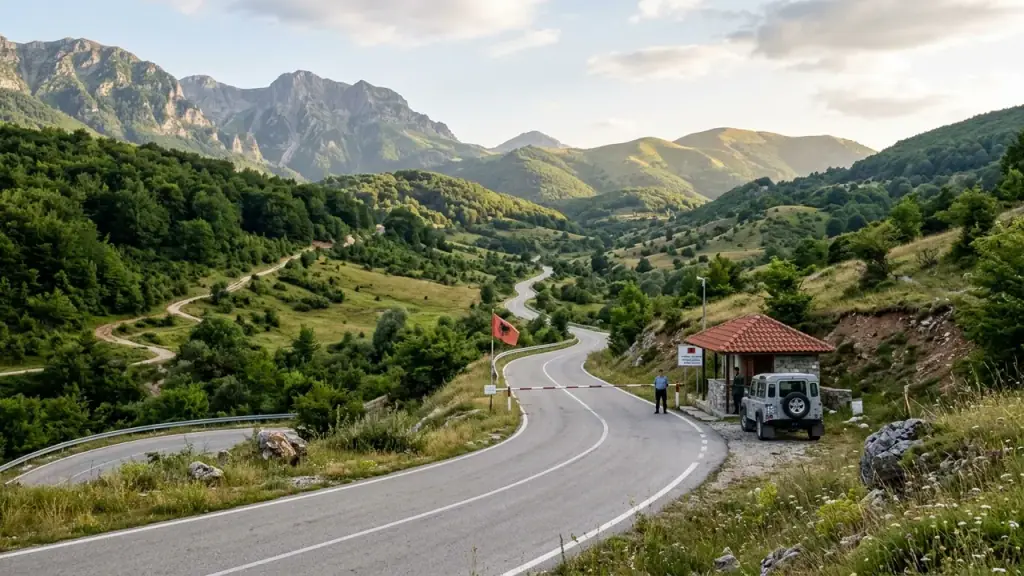
Here's the gap. The ferry lands you in Vlora, a real city and the place the coast road starts, but not the turquoise-beach Riviera of the photos. That starts on the far side of the Llogara Pass:
| From Vlora port to | Time | How |
|---|---|---|
| Vlora town / beaches | 10–15 min | Taxi / drive |
| Dhermi / Palasa | ~1.25 hrs | Over Llogara |
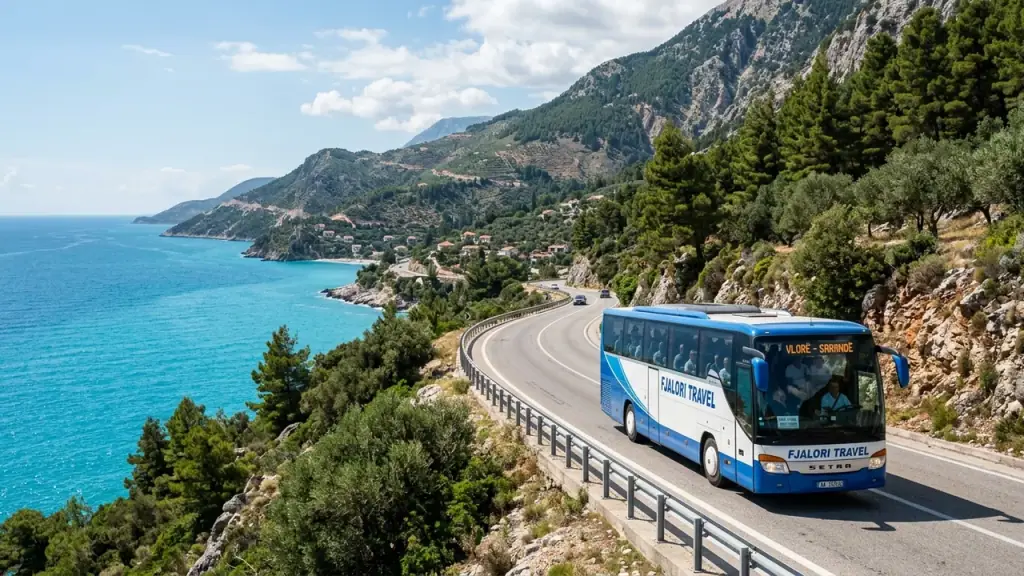
| Himara | ~1.5 hrs | Coastal SH8 |
| Saranda | ~2.5–3 hrs | Full Riviera drive |
If your boat lands late afternoon, sleeping in Vlora the first night and driving the scenic Llogara coast fresh the next morning beats arriving in Himara after dark on an unfamiliar mountain road. Vlora has a full range of places to stay near the port and along its own waterfront. Check what's available for your arrival date:
If you'd rather push straight through to the coast, our Vlora-to-Himara drive guide covers the SH8 road and where to break the journey.
Before you sail: prep checklist
- Sort mobile data before boarding. You'll want maps and booking access the moment you roll off in Vlora, and Italian roaming stops at the Albanian border. Install an eSIM before you leave Italy. Saily is our Albania pick, with Balkans regional plans if you're combining countries.
- Carry euros and some lek. Albania uses the lek; euros are widely accepted at the port and on the coast, but you'll want lek for smaller purchases. There are ATMs at Vlora.
- Green Card and registration in the glovebox, not the suitcase.
- Download offline maps of the Llogara route. Coverage is fine but the mountain has dead spots, and Google Maps mis-routes in parts of Albania.
- Book the onward first night before you sail if landing after 16:00.
FAQ
How much is the ferry from Italy to Albania?
In 2026, foot passengers on the Brindisi–Vlora route start around €44–55 booked early in shoulder season, rising to €60–80 in peak. A car costs roughly €50–77 on top, so a car plus two adults in summer can total €180–250. Booking weeks ahead is the biggest cost saver.
How long is the ferry from Brindisi to Vlora?
Between 4.5 and 9 hours depending on the vessel. The fast Starlines service does it in about 4.5 hours, while standard and overnight crossings run roughly 7.5–9 hours. The overnight boat departs around 23:58 and arrives about 08:01, letting you sleep across the Adriatic.
Can you take a rental car from Italy to Albania on the ferry?
Usually not. Most Italian rental agreements prohibit taking the vehicle into Albania, and you'll be refused at check-in without written permission. Bring your own car with its registration and an Albania Green Card insurance extension, or rent a car in Albania after you land (typically cheaper anyway).
Do you need a passport for the Italy–Albania ferry?
EU citizens can enter Albania with a national ID card; most other nationalities need a passport. Albania is outside the EU and Schengen, so it's a full international border crossing with passport control at the port. Check your nationality's specific entry rules before booking.
Where does the Albania ferry arrive and how do you reach the Riviera?
The ferry lands at Vlora port, where the road to the Riviera starts, not on the beach coast itself. The turquoise beaches start beyond the Llogara Pass: Dhermi is ~1.25 hours, Himara ~1.5 hours, Saranda ~2.5–3 hours. If you arrive late afternoon, stay in Vlora overnight and drive the scenic coast fresh the next day.
The bottom line
The Brindisi–Vlora ferry is the cheapest, most direct way to land a car on the Albanian Riviera. Pick the overnight cabin to save a day, sort your Green Card and eSIM before sailing, and remember the beaches are over the mountain from where you dock. Stay in Vlora your first night if you arrive late, then drive the Llogara coast into the Riviera in daylight.