Whether you need a plug adapter for Albania depends entirely on which country you're flying from, and it's not as simple as "Europe versus everywhere else." Continental Europeans can usually skip this problem, while Americans, Brits, Australians, and several other nationalities can't, though the fix costs less than a coffee. The part that actually trips people up isn't the plug shape at all. It's voltage, and one specific category of device, the kind with a heating element, is the one thing that genuinely breaks if you get it wrong. Here's the country-by-country answer, what to buy instead of what your packing list tells you, and what 2026 hotel USB reality actually looks like once you land in Himara.
Do You Need an Adapter? Check Your Country
Run your home country against this table before you pack anything.
| Home country/region | Plug type at home | Adapter needed for Albania? | Voltage compatible? |
|---|---|---|---|
| Most EU countries | Type C / Type F | No | Yes, 230V matches |
| UK / Ireland | Type G | Yes | Yes, 230V matches, plug shape only |
| US / Canada | Type A / Type B | Yes | Check label, home is 110-120V, Albania is 230V |
| Australia / New Zealand | Type I | Yes | Yes, 230/240V matches |
| Switzerland | Type J | Sometimes. Type C fits, Type J does not | Yes, 230V matches |
| Japan | Type A | Yes | No, 100V vs 230V. Check for a dual-voltage label |
| India | Type D / Type M | Yes | Yes, 230V matches |
| Brazil | Type N | Yes | Varies, 127V/220V regional split. Check label |
If your home plug is Type C or Type F. Skip ahead to the voltage section below to double-check your appliances. Everyone else, keep reading.
Is the Albanian Plug the Same as Europe?
For most of continental Europe, yes. Albania's Type C and Type F sockets are the same as those used in Germany, France, Italy, Spain, the Netherlands, Greece, and most other EU countries. There's no Albania-specific plug standard.
The exceptions worth knowing:
- United Kingdom and Ireland use Type G (the bulky three-pin), not the same as Albania. UK travelers need an adapter.
- Switzerland uses Type J. Albanian sockets accept Type C plugs (which Swiss devices often have), but not Type J directly.
- Italy sometimes uses Type L alongside Type C/F. Type L doesn't fit Albanian sockets, but the Type C end of most Italian chargers does.
- Denmark uses Type K, similar shape to Type F but with a different ground pin, usually fits, occasionally doesn't.
If your charger has the slim two-round-pin shape that's standard across continental Europe, you're set in Albania. No adapter, no converter, no worries.
Quick Reference
| Detail | Albania Standard |
|---|---|
| Plug types accepted | Type C (Europlug) and Type F (Schuko) |
| Voltage | 230V |
| Frequency | 50Hz |
| Adapter needed from EU? | No (Type C/F plugs are universal across continental Europe) |
| Adapter needed from US/UK/AU/JP/IN? | Yes |
| Voltage converter needed? | Almost never, modern chargers are dual-voltage 100-240V |
| USB-A ports in hotels | Common in newer properties, not guaranteed in older |
| USB-C ports in hotels | Newer-build only; bring your own charger brick |
| Power reliability in Himara | Generally stable; brief storm-related outages possible |
Plug Types Explained
Albania uses two plug types, both standard across continental Europe.
Type C (Europlug) -- Two round pins, ungrounded. This is the slim, lightweight plug found on most phone chargers, laptop bricks, and small electronics sold in Europe. It fits into both Type C and Type F sockets.
Type F (Schuko) -- Two round pins plus grounding clips on the sides. This is the heavier-duty plug used for appliances that draw more power: hair dryers, laptops with three-prong plugs, electric kettles. Type F sockets accept Type C plugs as well, so in practice you encounter both socket types interchangeably.
If your device has a Type C or Type F plug, you are set. No adapter, no converter, no worries.
What Adapter to Buy
You have two choices, and one is clearly better for most travelers.
Universal multi-adapter (recommended)
A compact universal adapter with fold-out prongs for US, UK, AU, and EU sockets. Good models include built-in USB-A and USB-C ports, which means you can charge your phone directly from the adapter without needing your original charger brick at all.
Brands like Epicka, TESSAN, and Ceptics make solid options in the 15-25 USD range. Look for one rated for at least 10A and ideally with a fuse for safety.
The universal adapter is worth the small extra cost over a single-country adapter because it works across your entire trip if you are combining Albania with Greece, Italy, or other countries with different plug standards.
Single EU adapter
A basic US-to-EU or UK-to-EU adapter plug. These cost 3-8 USD and do exactly one thing. Fine if Albania is your only stop and you only need to adapt one or two plugs.
What NOT to buy
Avoid cheap, unbranded adapters with no fuse and loose pin tolerances. A bad adapter that wobbles in the socket or intermittently disconnects can damage your electronics. This is not hypothetical -- it happens.
Voltage and Converters: Do You Need One?
Albania runs on 230V / 50Hz. The US, Canada, and Japan use 110V / 60Hz. This voltage difference matters for some devices.
The good news: Almost all modern electronics are dual-voltage (100-240V). This includes:
- Phone chargers
- Laptop chargers
- Tablet chargers
- Camera battery chargers
- Electric toothbrushes
- Most modern hair tools from international brands
Check the label. Every charger has fine print on it (or on a sticker). If it says "Input: 100-240V, 50-60Hz," you only need a plug adapter, not a voltage converter.
Devices that may NOT be dual-voltage:
- Older American hair dryers and straighteners
- Some curling irons
- Certain US-market heated rollers
- Vintage or specialty electronics
If your device only says "120V" on the label, plugging it into a 230V Albanian socket will burn it out -- sometimes with visible sparks and a distinctive smell. Either leave it home, or buy a proper step-down voltage converter (bulky and heavy, usually not worth it for travel).
The practical advice: buy a dual-voltage travel hair dryer before your trip instead of hauling a converter. Or just use the one your hotel provides.
Where to Buy Adapters in Albania
Before you arrive (best option)
Order online or buy at your departure airport. Selection is better and prices are reasonable. Amazon, airport electronics shops, and travel stores all carry universal adapters.
Tirana
If you forgot or need a backup, Tirana has several options:
- Neptun and Media Market -- Electronics chains in Tirana's shopping centers (TEG, QTU, Ring Center). Reliable stock of adapters and power strips.
- Small electronics shops along Rruga e Barrikadave and near Skanderbeg Square. Prices are fair, typically 500-1,500 ALL (4-13 EUR) for a basic adapter.
- Tirana International Airport (TIA) -- The small shops in departures/arrivals occasionally have adapters, but selection is limited and prices are marked up. Do not count on this.
Himara
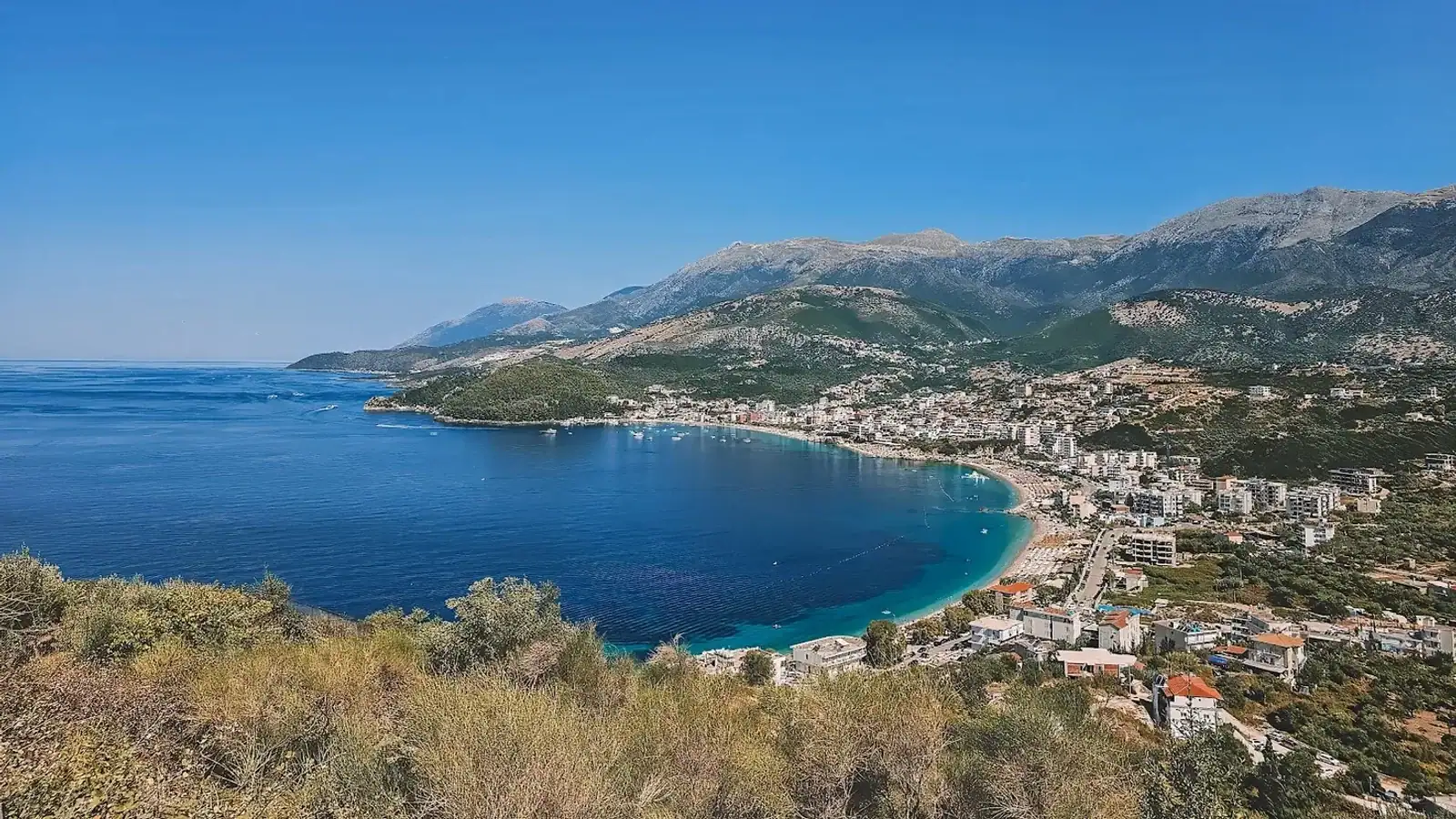
In Himara, Albanian: Himare), your options are more limited but not zero.
- Mini markets and general shops along the promenade and in the old town sometimes carry basic EU adapters. Availability is inconsistent -- this is a beach town, not a tech hub.
- Ask your hotel. Many guesthouses and hotels in Himara keep a few spare adapters at reception for guests. This is surprisingly common and worth asking about before buying.
If you are heading to Himara directly from Tirana or Saranda, buy your adapter before you leave the city. Treating Himara as your adapter backup plan is a gamble you do not need to take.
USB Charging Situation
Most hotels and guesthouses in Himara built or renovated in the last decade have USB-A ports built into bedside outlets or power strips. Some newer properties include USB-C as well. But "most" is not "all."
Budget guesthouses, older family-run properties, and some Airbnbs may only have standard wall sockets. If USB charging is critical to your setup. Bring your own charger brick and adapter rather than assuming USB ports will be available.
A practical move: carry a small USB-C charger with at least two ports (one USB-C, one USB-A). Anker and Ugreen make excellent compact options that weigh almost nothing. This, combined with your adapter, covers every charging scenario.
Power Reliability
Albania's power grid has improved significantly over the past decade, and Himara specifically is quite reliable. That said, brief outages do happen, particularly during summer storms or in peak season when demand spikes.
What to expect:
- Himara town center: Power is stable. Outages are rare and typically last minutes, not hours.
- Old town / Kastro area: Similar reliability to the center, though wiring in older buildings can be less robust.
- Rural areas and mountain roads: More variable. If you are staying in an agrotourism property or remote guesthouse. Ask about generator backup.
- During storms: Brief outages are normal across the Riviera. Nothing unusual for a Mediterranean coastal area.
For most travelers, power reliability is a non-issue. If you are a digital nomad working from Himara. Consider a small power bank (20,000 mAh) as insurance for work sessions at coworking-friendly cafes where an outage mid-afternoon would disrupt your day.
Packing Recommendations for Electronics
Based on what actually matters when you arrive:
Essential
- One universal adapter (or a EU-specific adapter matching your home country's plug)
- Your primary phone/laptop chargers (verify dual-voltage labels before packing)
- A compact multi-port USB charger if you travel with more than two devices
Strongly recommended
- A small power strip or extension cord with 2-3 outlets -- Albanian hotel rooms often have only one or two accessible sockets, and they may be behind the bed or in awkward locations. A short extension cord with a home-country plug on one end lets you use a single adapter to power multiple devices. This is one of the most underrated travel accessories.
- A 10,000-20,000 mAh power bank -- Essential for long beach days, boat trips, and day trips where you will not have access to an outlet for 8+ hours.
Skip it
- Voltage converters -- Unless you are specifically bringing a 120V-only appliance. You do not need one.
- Multiple adapters -- One adapter plus a power strip from home is better than carrying three separate adapters.
For a full gear list, see the Himara packing list.
Country-Specific Advice
American travelers
Your Type A/B plugs will not fit Albanian sockets. You need an adapter. The good news: virtually all US-sold phone chargers, laptop chargers, and camera chargers are dual-voltage. Just check the label. The only common problem items are hair dryers and some older heated styling tools.
British travelers
Your Type G plugs are too large for Albanian sockets. You need an adapter. UK electronics are already rated for 230V, so voltage is identical -- only the physical plug shape differs. A simple UK-to-EU adapter is all you need.
Australian travelers
Your Type I plugs need an adapter for Albania. Like UK travelers, your home voltage (230V) matches Albania exactly. Plug shape is the only issue.
EU travelers
Your plugs work. Your voltage matches. You can stop thinking about this entirely. The only edge case: if you are from Switzerland or Italy and have a device with a Type J or Type L plug that is not also Type C compatible, you may need a simple adapter. But most modern Swiss and Italian chargers use Type C anyway.
For US travelers: US Type A/B plugs do not fit. Buy a universal adapter ($15-25 USD) before flying or pick one up at any departure-airport electronics shop. Phone, laptop, camera, tablet chargers are all dual-voltage 100-240V, no converter needed. The main devices that aren't: older 120V-only American hair dryers, curling irons, and heated stylers, leave these home and use the hotel's. USB-A and USB-C ports in newer Albanian hotels are common but not universal; bring your own charger brick.
For UK travelers: UK Type G plugs do not fit. Buy a UK-to-EU adapter (£3-8 from any travel shop, supermarket, or online) before flying. UK voltage matches Albanian voltage exactly (230V), no converter, no compatibility issues, just the plug shape. UK three-pin chargers slot into a UK-EU adapter and into Albanian sockets without any voltage concern.
For Australian / NZ travelers: Type I plugs don't fit. Buy a universal adapter or AU-to-EU adapter before flying. Voltage matches (230V/240V, close enough for all modern devices). Same dual-voltage rule applies to your phone, laptop, and camera chargers, verify the label, then plug in confidently with the adapter alone.
For Japanese travelers: Type A plugs need an adapter, and you need to verify voltage. Japan runs 100V; Albania runs 230V. Most modern Japanese phone, laptop, and camera chargers are dual-voltage. Check the label for "100-240V". Devices marked 100V-only (older hair dryers, certain electronics) will burn out on Albanian voltage. When in doubt, leave it home and buy locally if needed.
Things to Know Before You Go
For broader trip preparation, the things to know before visiting Himara guide covers practical essentials beyond power adapters. And if you are still building your pre-trip checklist, the Himara travel checklist provides a structured overview.
Pair your power adapter purchase with getting your SIM card and connectivity sorted -- these two items together eliminate the most common "first day in Albania" frustrations.
Frequently Asked Questions
What type of power plug does Albania use?
Albania uses Type C (Europlug) and Type F (Schuko) plugs with 230V/50Hz electricity. These are the same plug types used across most of continental Europe, including Germany, France, Spain, and the Netherlands.
Do I need a voltage converter for Albania?
Almost certainly not. Check the label on your charger -- if it reads "Input: 100-240V, 50-60Hz," you only need a plug adapter, not a voltage converter. This covers the vast majority of modern phones, laptops, tablets, and cameras. The main exceptions are older American hair dryers and some heated styling tools that only support 120V.
Can I buy a power adapter in Himara?
You can sometimes find basic adapters in Himara's mini markets or general shops, but availability is inconsistent. Your best bet is to buy one before you arrive -- either online, at your home airport, or in Tirana. Many Himara hotels also keep spare adapters at reception, so ask when you check in.
Do hotels in Himara have USB charging ports?
Many recently built or renovated hotels in Himara have USB-A ports in bedside outlets. Some newer properties offer USB-C as well. However, older guesthouses and budget accommodation may only have standard wall sockets. Bring your own charger brick to be safe.
Is the electricity reliable in Himara?
Yes, generally. Himara's power supply is stable for a coastal Albanian town. Brief outages can occur during storms or peak summer demand, but they are typically short-lived. If you are working remotely, carrying a power bank provides adequate backup for occasional interruptions.
Should I bring a power strip to Albania?
Strongly recommended. Albanian hotel rooms often have limited accessible outlets. A compact power strip from home, connected through a single adapter, lets you charge multiple devices simultaneously from one socket. It is one of the most practical small items you can pack.
Will my iPhone/Android charger work in Albania?
Yes, with a plug adapter. All modern Apple and Android chargers (including USB-C and Lightning bricks) are dual-voltage (100-240V). You only need a physical plug adapter to fit the Albanian Type C/F socket -- no voltage conversion required.
What charger type does Albania use?
Albania's electrical sockets accept Type C (Europlug, two slim round pins) and Type F (Schuko, two round pins with grounding clips). The same charger types used across Germany, France, Spain, Italy, the Netherlands, Greece, and most of continental Europe. The voltage is 230V at 50Hz.
Is the Albanian plug the same as in Europe?
Yes, for most of continental Europe. Albania uses the same Type C and Type F sockets as Germany, France, Spain, Italy, Greece, the Netherlands, and most EU countries. There is no Albania-specific plug standard. The exceptions are the UK and Ireland (Type G), Switzerland (Type J), Denmark (Type K), and parts of Italy (Type L), travelers from those countries need an adapter even though they're "in Europe."
What's the charging port situation in Albanian hotels in 2026?
Mixed. Newer hotels and renovated guesthouses in Himara, Saranda, and Tirana commonly include USB-A ports in bedside outlets; the newest properties often add USB-C. Older guesthouses, family-run accommodations, and some Airbnbs only have standard wall sockets. Don't assume USB ports will be available. Bring your own charger brick and adapter, and a small power strip if you charge multiple devices simultaneously.