Packing for Himara comes down to one thing: you need beach gear, sun protection, and light layers, and not much else. The Albanian Riviera is informal, hot in summer, and has limited shopping options if you forget something critical. Get the essentials right and you'll be comfortable for a week with a single carry-on. Get them wrong, especially water shoes and sunscreen, and you'll feel it on day one.
This list covers everything you need, what you can skip, and what to buy once you arrive.
Quick Packing Checklist
| Item | Priority | Notes |
|---|---|---|
| Water shoes | Essential | Pebble beaches will destroy bare feet |
| SPF 50+ sunscreen | Essential | Expensive and limited locally |
| Quick-dry towel | Essential | Saves space, dries fast between beaches |
| Reusable water bottle | Essential | Tap water not safe, refill with bottled |
| Light layers | Essential | Cool evenings, church visits |
| Sturdy walking shoes | Essential | Rocky trails, cobblestone old town |
| Snorkel mask | Recommended | Visibility 15-20m in Ionian water |
| Dry bag | Recommended | Protects phone/wallet on boat tours |
| Power adapter (Type C/F) | Essential | 230V European standard |
| Prescription meds | Essential | Pharmacies exist but selection is limited |
| Motion sickness pills | Recommended | Llogara Pass road is brutal on winding sections |
| Power bank | Recommended | Long beach days away from outlets |
Beach Essentials
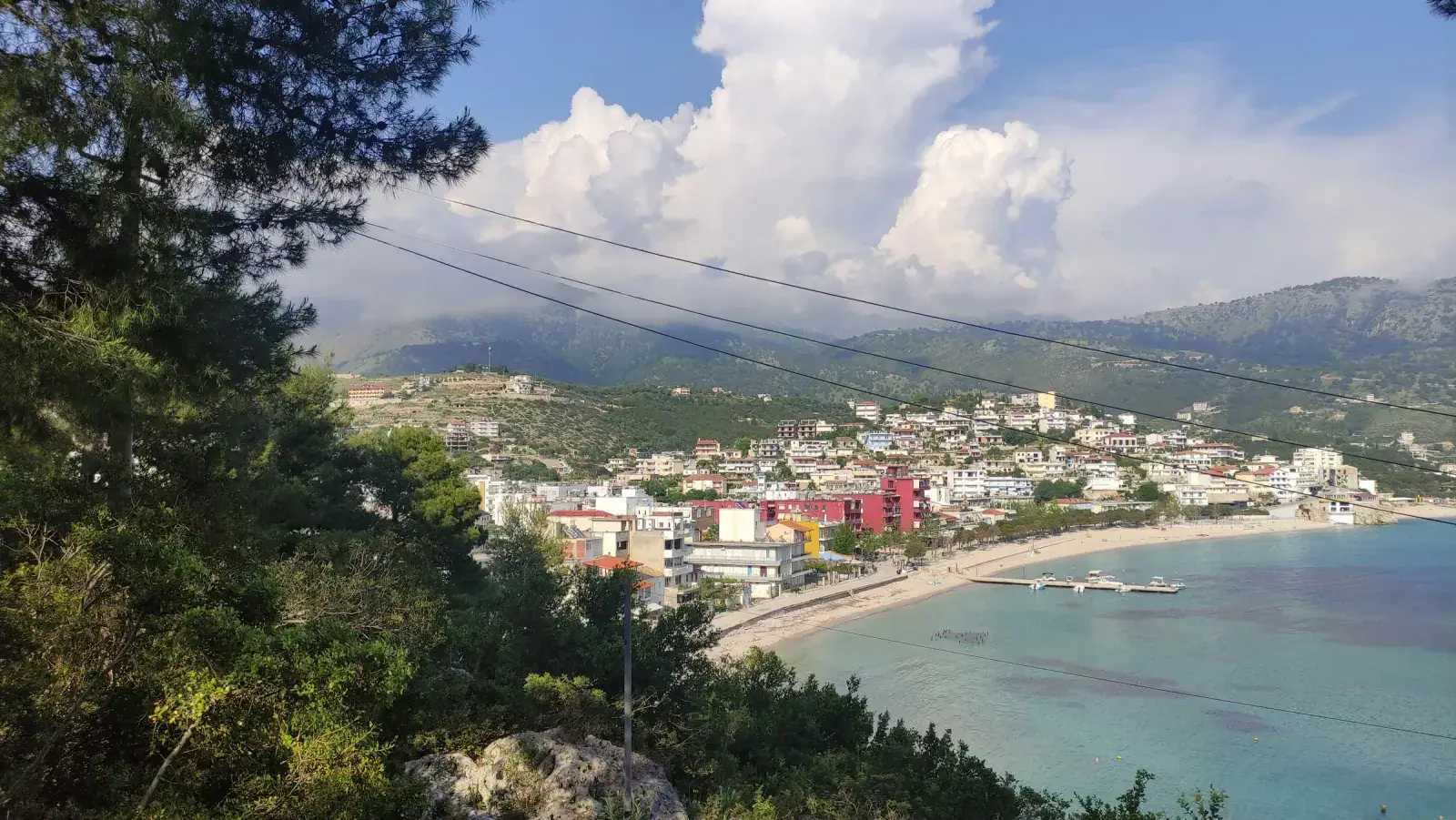
Himara's beaches are almost entirely pebble and rock. This isn't the soft sand of the Adriatic. The Ionian coastline from Dhermi to Himara is beautiful, clear, and punishing on bare feet. Your beach packing list needs to account for this.
Water Shoes
Non-negotiable. Every beach in Himara, Livadhi Beach, Spile Beach, Potami Beach, Gjipe Beach, has pebble or rocky entry points. The stones are smooth but uneven, and walking into the water barefoot ranges from uncomfortable to genuinely painful. Cheap foam flip-flops won't cut it; you need shoes with a proper sole that stay on in the water. Rubber-soled water shoes or reef walkers work best. Buy them before you arrive, options in Himara are limited and overpriced.
Quick-Dry Towel
A microfiber quick-dry towel packs to the size of a paperback and dries in an hour between beaches. If you're beach-hopping, and you should be, the coastline between Dhermi and Himara has 14+ beaches worth visiting, you don't want a soggy full-size towel marinating in your bag all day.
Snorkel Mask
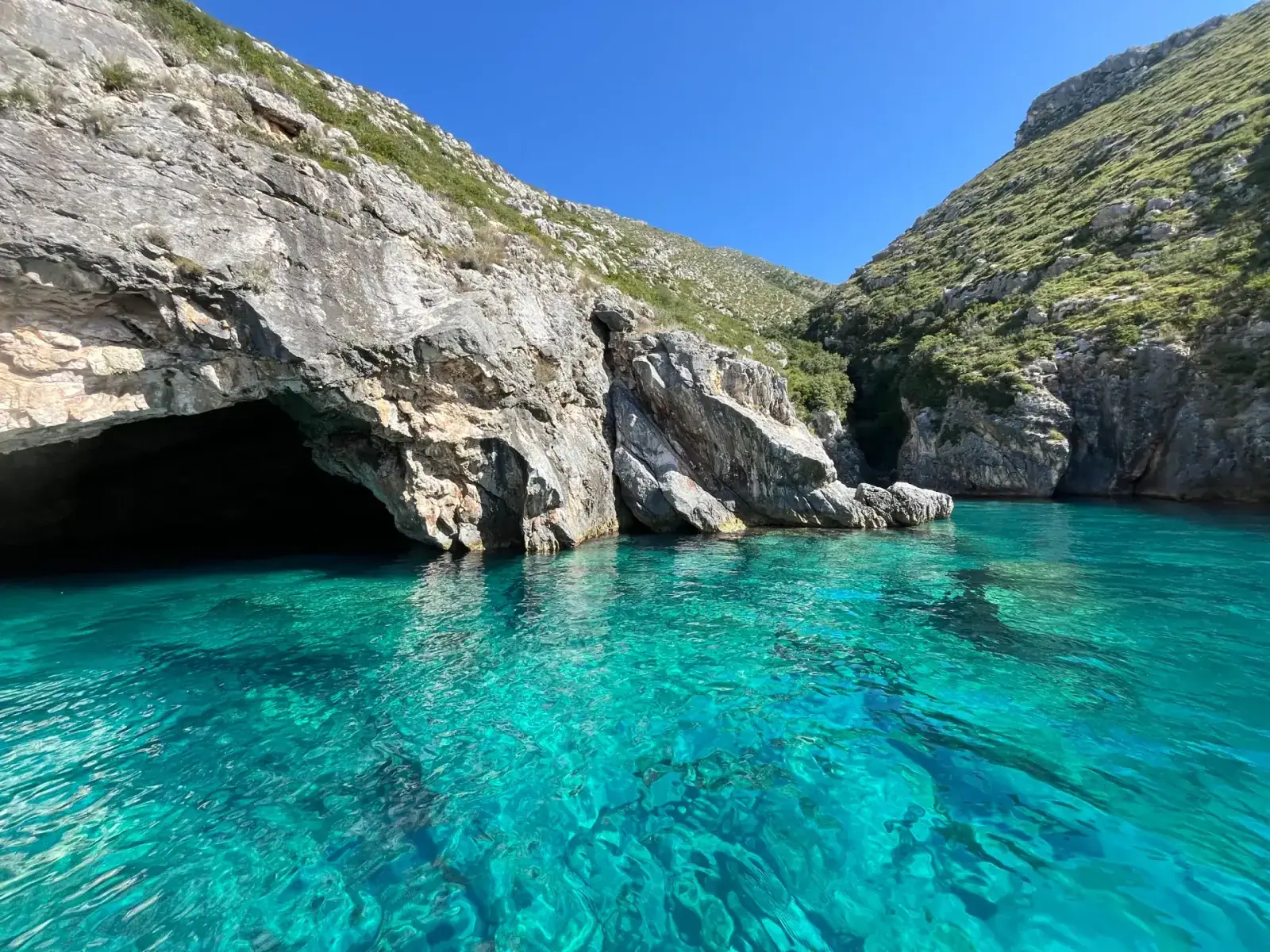
The Ionian Sea along Himara's coast has 15-20 meter visibility on calm days. Rocky coves like Filikuri and Llamani are teeming with fish, sea urchins, and underwater rock formations. Bring your own mask, rentals are available at some beaches but the quality is hit-or-miss. A decent mask and snorkel set weighs almost nothing. For more on underwater spots. Check our snorkeling and diving guide.
Dry Bag
A small waterproof dry bag (5-10 liters) keeps your phone, wallet, and keys safe on boat tours, kayak trips, and beach hops where there's no locker. Boat tours are one of the best activities in Himara and you'll want your phone for photos without risking it in the spray.
Reef-Safe Sunscreen
Bring it from home. Sunscreen in Himara is expensive (double or triple what you'd pay at home) and the selection is poor, usually just a couple of brands at the mini-market. Reef-safe formulas protect the marine environment in the coves where you'll be swimming.
Sun Protection
The UV index along the Albanian Riviera hits 10-11 in July and August. That's extreme, unprotected skin burns in 15-20 minutes. Sun protection isn't optional here; it's the difference between enjoying your trip and spending three days in your hotel room with second-degree burns.
What to bring:
- SPF 50+ broad-spectrum sunscreen. Apply before you leave the hotel and reapply every 2 hours, more if you're swimming. Bring at least two bottles for a week-long trip.
- Wide-brim hat. Baseball caps leave your ears and neck exposed. A wide-brim hat covers everything.
- UV-blocking sunglasses. The glare off the Ionian Sea is intense. Polarized lenses make a real difference.
- Rash guard or UV swim shirt. If you're snorkeling or spending hours in the water, a rash guard prevents the worst back-of-neck and shoulder burns that sunscreen misses when it washes off. They also work well for kids.
The sun is strongest between 11 AM and 4 PM. Most locals and experienced travelers head to a shaded restaurant during this window and return to the beach in the late afternoon. Smart packing doesn't replace smart behavior.
Clothing
Albania is relaxed and secular. Himara is a beach town. Nobody is dressing up. Pack light, pack casual, and you'll fit in perfectly.
Everyday Wear
- 3-4 lightweight shirts/tops. Cotton or moisture-wicking. You'll sweat through at least one per day in summer.
- 2-3 pairs of shorts/skirts. Quick-dry fabric is ideal for beach-to-town transitions.
- 1 pair of light pants/trousers. For hiking, cooler evenings, or if you plan to visit the churches in the old town.
- Swimsuit (2 if possible). Having a dry one while the other dries is a small luxury that makes a big difference.
- Light jacket or hoodie. Summer evenings on the promenade can get breezy, and the Llogara Pass is 10-15 degrees cooler than sea level, even in August.
- Sandals for evening. Something nicer than flip-flops for dinner along the promenade.
Cover-Ups for Churches
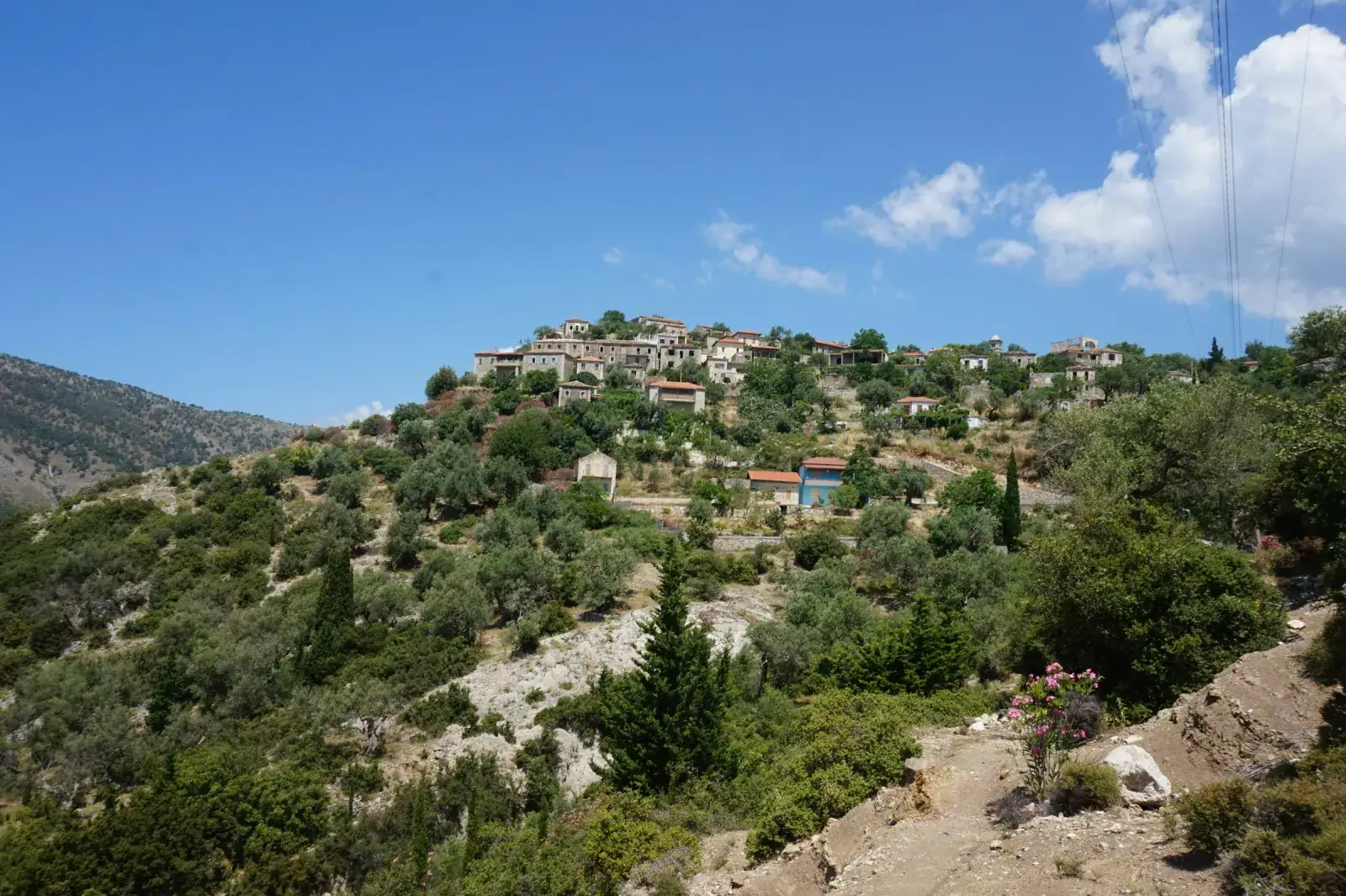
Himara's old town has several Byzantine-era churches with active congregations, particularly in the Greek-Albanian community. If you plan to visit, and the castle and old town are worth exploring. Bring something that covers your shoulders and knees. A light sarong or cover-up works fine. Nobody will turn you away, but it's respectful.
One Nice Outfit
Not formal. Just a step above beachwear. A clean pair of shorts and a collared shirt, or a sundress. Useful for a nicer dinner or an evening out. That said, even the best restaurants in Himara won't bat an eye at shorts and sandals.
Temperature Reference
| Month | Temperature Range | What to Wear |
|---|---|---|
| May | 18-25°C | Light layers, a jacket for evenings |
| June | 25-30°C | Shorts and t-shirts, light layer for night |
| July-August | 30-35°C | As little as possible. Breathable fabrics only |
| September | 25-30°C | Similar to June, slightly cooler evenings |
Hiking Gear
The terrain around Himara is steep, rocky, and dry. The trails to Gjipe Canyon, along the coastal cliffs, and through the Ceraunian mountain foothills are not boardwalked tourist paths, they're rough tracks that demand proper footwear. Check our hiking guide for trail details.
What to bring:
- Sturdy closed-toe shoes. Trail runners or lightweight hiking shoes with good grip. The Gjipe Canyon descent is loose rock and steep switchbacks. Sandals or sneakers are asking for a twisted ankle.
- 1.5-2L water capacity. There are no water sources on the trails. Carry at least 1.5 liters, more in July and August. A hydration bladder or two water bottles. Remember, tap water is not safe, so fill up with bottled water before you head out.
- Headlamp. If you're hiking to Gjipe Beach or doing any coastal trail, a headlamp is a safety essential. Trails aren't marked well and you don't want to be caught on a cliff path at dusk.
- Small daypack. 15-20 liters is enough for water, snacks, sunscreen, and a towel for a swim at the end of the hike.
If you're planning to camp along the Riviera, that's a separate gear list, but the basics above cover day hikes.
Electronics
Power
Albania uses Type C and Type F plugs at 230V/50Hz. This is the standard European two-round-pin socket. If you're coming from the US, UK, or Australia, you'll need an adapter.
Good news: virtually all modern phone chargers, laptop chargers, and camera battery chargers are dual-voltage (100-240V input). Check the fine print on your charger, if it says 100-240V, you only need a plug adapter, not a voltage converter. A voltage converter is dead weight for 99% of travelers.
SIM Card or eSIM
The easiest option is a travel eSIM installed before you fly, Saily is our top pick for Albania (instant QR delivery, no airport queue). If you prefer a physical SIM, buy one at Tirana airport before heading south, mobile shops in Himara are small and may not have tourist-friendly plans in stock.
| Provider | Type | Data | Price | Notes |
|---|---|---|---|---|
| Saily | eSIM | 10-20 GB | ~$15-30 | Activate before arrival; reader discount available |
| Vodafone Albania | Local SIM | 40 GB | 2,000 ALL (~$22) | Best coverage on the Riviera |
| One Albania | Local SIM | 40 GB | 2,600 ALL (~$28) | Good coverage, slightly pricier |
Both work fine in Himara and along the coast. Coverage gets spotty on remote beaches and in Gjipe Canyon, but that's part of the appeal. EU roaming does not apply in Albania, your European SIM will charge roaming rates unless you have a specific Balkans add-on.
Power Bank
Bring a 10,000-20,000 mAh power bank. Beach days mean long hours away from outlets, and if you're using your phone for photos, maps, and navigation on the winding road from Vlore, the battery drains fast. Charge the power bank overnight at your hotel and you're covered for the day.
Health & Toiletries
Prescription Medications
Bring everything you need from home. Himara has pharmacies, but the selection is limited compared to any city. If you take daily medication, bring enough for your entire trip plus a few extra days in case of travel delays. Keep medications in their original packaging for any border checks.
Motion Sickness
The road to Himara crosses Llogara Pass, a winding, hairpin-turn mountain road at 1,000 meters elevation. Even people who never get carsick sometimes struggle with this stretch. Take motion sickness pills (dramamine or similar) 30 minutes before the drive. Sit in the front seat if possible and look at the horizon. This applies whether you're driving or on the bus.
Sunscreen & After-Sun
As noted above, bring your own. A 200ml bottle of SPF 50 that costs 8€ at home might run 15€-20 at a mini-market in Himara, if they have it at all.
Tap Water
Not safe to drink anywhere in Albania. Don't brush your teeth with it, don't use it for ice. Buy bottled water, it's cheap (50-80 ALL / 0€.50 for 1.5L) and available at every shop. A reusable water bottle to refill from large bottles at your hotel saves money and plastic.
Emergency Numbers
- 112. General emergency
- 127. Ambulance
The nearest hospital with full services is in Vlore (about 2 hours north). Himara has a small health center for basic care.
What NOT to Bring
Save the luggage space. These are common over-packing mistakes for the Albanian Riviera:
- Heavy cotton beach towels. Bulky, slow to dry. A microfiber towel does the job in a quarter of the space.
- Hair dryer. Every hotel has one. If you're in a budget guesthouse without one, the summer heat dries your hair in 10 minutes.
- Formal clothes. There is nowhere in Himara that requires or expects formal attire. A sundress or clean shorts are the maximum dress code.
- Full-size toiletries. Shampoo, conditioner, and body wash are available at shops in town. Bring travel sizes or buy locally.
- Voltage converter. Unless you're traveling with a vintage appliance, your chargers are dual-voltage. Check the label. An adapter (plug shape) is all you need.
- Excess footwear. Water shoes, walking shoes, and sandals. Three pairs is plenty for any trip length.
- Books (physical). Heavy. Bring a Kindle or download to your phone. You'll want that luggage space for other things.
What to Buy in Himara
Don't overstuff your bag. Some things are better bought on arrival:
- Bottled water. Cheap everywhere. Alpha Supermarket and Imeraj Market in Himara center have the best prices (around 50-80 ALL for 1.5L).
- Fresh produce. Tomatoes, cucumbers, peaches, watermelon. Albanian produce in summer is exceptional and dirt cheap. Self-catering a few lunches is one of the best budget strategies.
- Basic toiletries. Shampoo, soap, toothpaste, all available at the mini-markets in town.
- Cheap flip-flops. If you forgot sandals, pick up a pair for 300-500 ALL. Not a substitute for proper water shoes, but fine for walking around town.
Don't count on buying locally: Sunscreen (limited stock, expensive), specific medications, quality snorkel gear, power adapters (not widely sold), or any specialty outdoor equipment.
Luggage Tips
Travel Light
The bus from Tirana to Himara has limited luggage storage. If you're taking the bus (the most common way to arrive), a carry-on-sized bag plus a daypack is the practical maximum. Oversized suitcases are possible but awkward, you'll be wrestling them onto a crowded bus and then hauling them up Himara's steep streets to your accommodation.
The Llogara Pass Warning
Bus or car, the road from Vlore to Himara crosses Llogara Pass: 45 minutes of steep switchbacks at altitude. Pack any motion sickness medication in your daypack where you can reach it, not buried in your checked luggage. Keep a water bottle accessible. And avoid eating a big meal right before the drive. Read our full Llogara Pass driving guide for what to expect.
Packing for Beach-Hopping Days
On days when you're hitting multiple beaches. Pack a small daypack with: water shoes, dry bag, snorkel mask, sunscreen, water, a snack, your quick-dry towel, and a change of clothes. Leave the rest at your hotel. Himara is compact, you can always swing back for something you forgot.
Frequently Asked Questions
Do I need a power adapter for Albania?
Yes, if you're coming from outside continental Europe. Albania uses Type C and Type F plugs (two round pins) at 230V/50Hz. Bring a universal adapter or a European-specific one. You do NOT need a voltage converter, modern chargers handle 100-240V automatically.
Can I buy sunscreen in Himara?
You can, but the selection is poor and prices are significantly higher than at home. The mini-markets stock a few brands, mostly low SPF. Bring your own SPF 50+ from home, especially if you have skin sensitivities or prefer reef-safe formulas.
What shoes do I need for Himara beaches?
Water shoes are essential. All of Himara's beaches are pebble or rock, the stones are smooth but walking into the water barefoot is uncomfortable to painful. Rubber-soled water shoes or reef walkers that stay on your feet in the water are the single most important item on this packing list.
Is tap water safe to drink in Himara?
No. Tap water is not safe to drink anywhere in Albania, including Himara. Buy bottled water from shops, it's cheap at 50-80 ALL (around 0€.50) for 1.5 liters. Bring a reusable bottle and refill from large bottles to reduce plastic waste and save money.
Planning Your Trip
Once you're packed, these guides cover the rest:
- Best Time to Visit Himara. Month-by-month weather, crowds, and prices
- Things to Know Before Visiting. Cash, transport, language, and practical tips
- Himara on a Budget. Daily costs and money-saving strategies
- Best Beaches in Himara. All 14+ beaches ranked
- Practical Info. ATMs, safety, SIM cards, and logistics