Your himara beach packing list depends on three things: which month you're visiting, which beach you're heading to, and whether you're spending the day at a beach club or a wild cove with zero facilities. Himara has pebble beaches, intense summer sun, and some of the most remote coves on the Albanian Riviera, and each of these factors changes what you need in your bag. This guide breaks it down season by season, beach type by beach type, so you pack exactly what you need and nothing you don't.
For the full trip-level packing list covering clothing, electronics, and luggage strategy, see our comprehensive Himara packing guide. This article focuses specifically on what goes in your daypack for a beach day.
Compare hotels, apartments, and Vrbo rentals on the map. Powered by Stay22.
Quick Reference: What to Pack for Any Himara Beach Day
| Item | Priority | Why |
|---|---|---|
| Water shoes | Essential | Pebble beaches punish bare feet, every beach here needs them |
| SPF 50+ sunscreen | Essential | UV index hits 10-11 in summer; limited stock locally |
| 1.5L+ water | Essential | No taps at most beaches; dehydration risk is real |
| Quick-dry towel | Essential | Dries between beaches; packs small |
| Dry bag (5-10L) | Essential | Protects phone/wallet from spray and sand |
| Snorkel mask | Recommended | 15-20m visibility in the Ionian; coves teem with fish |
| Snacks/lunch | Recommended | Many beaches have no food vendors |
| Cash (small bills) | Recommended | Sunbed rentals and kiosks rarely take cards |
| Hat + sunglasses | Essential | Minimal natural shade on most beaches |
| Phone power bank | Recommended | Long days with no outlets |
Core Packing List: The Non-Negotiables
These items go in your bag every single beach day, regardless of season or destination.
Water Shoes
The single most important item on this list. Every beach near Himara, Spile Beach, Livadhi Beach, Potami Beach, Gjipe Beach, has pebble or rocky entry. Walking in barefoot ranges from uncomfortable to painful. Rubber-soled water shoes or reef walkers that stay on in surf are what you need. Buy before you arrive, options in Himara are limited and overpriced (1,500-2,500 ALL / 15-25€ vs. 8-12€ online). For a deeper breakdown, see our water shoes guide.
Sunscreen (SPF 50+)
The UV index along this coast hits 10-11 from June through August, unprotected skin burns in 15-20 minutes. Bring reef-safe SPF 50+ from home. Sunscreen at Himara mini-markets costs double (15-20€ for what you'd pay 7-8€ at home) and the selection is poor. Apply before leaving your hotel, reapply every two hours.
Water
Minimum 1.5 liters per person, more on hot days or for remote beaches. Tap water in Albania is not safe to drink. Bottled water is cheap in town (50-80 ALL / ~0.50€ for 1.5L), but there's no place to buy it at most beaches. Fill a reusable bottle at your accommodation and carry extra.
Quick-Dry Towel
A microfiber towel packs to the size of a paperback and dries in an hour. If you're beach-hopping, and you should be, a soggy full-size towel gets old by beach two. Microfiber is lighter, faster-drying, and pebble grit shakes right off.
Season-by-Season Additions
The core list above covers every month. But June, peak August, and September each bring specific conditions that change what else belongs in your bag.
June: Early Season Extras
| Condition | What to pack |
|---|---|
| Water temp 20-22°C | Rash guard or thin wetsuit top for long swims |
| Cooler evenings (18-20°C) | Light layer for post-beach sunset walks |
| Lower crowds | Less competition for shade spots, but still bring a hat |
| Occasional rain | Compact rain jacket (fits in daypack pocket) |
June is shoulder season. The water is swimmable but noticeably cooler than August, especially in the morning. A rash guard does double duty: keeps you warm during longer snorkel sessions and blocks UV on your back and shoulders. Evenings can drop enough that a light hoodie feels good walking the Himara promenade. The trade-off is crowds, you'll find shaded spots more easily in June than you ever will in August.
July-August: Peak Heat Additions
| Condition | What to pack |
|---|---|
| Air temp 30-35°C, UV index 10-11 | UV swim shirt, wide-brim hat (not just a cap) |
| Water temp 24-26°C | Snorkel gear, visibility is at its best |
| Maximum crowds | Book sunbeds early or bring your own shade |
| Long days (sunrise ~5:45, sunset ~8:15) | Extra water (2L+), extra sunscreen, power bank |
July and August are brutal on unprepared skin. A baseball cap leaves your ears and neck exposed, a wide-brim hat covers everything. A UV swim shirt prevents the back-of-neck burn that sunscreen misses after it washes off. Bring at least 2 liters of water per person. The midday heat between 11:00 and 16:00 is best spent under shade or at a restaurant, locals know this, and you should follow their lead. For beaches with some natural cover. Check our guide to Himara beaches with shade.
September: Shoulder Season Adjustments
| Condition | What to pack |
|---|---|
| Air temp 25-28°C, water 22-24°C | Light layer for breezy afternoons |
| Shorter days (sunset ~7:15) | Headlamp if hiking to remote beaches |
| Thinner crowds, some facilities closing | Extra snacks/water, kiosks may be shut |
| Best hiking weather | Trail shoes if combining beach + hike |
September is arguably the best beach month on the Riviera. The water is actually warmer than June (it retains months of summer heat), crowds thin dramatically after the first week, and the golden autumn light is spectacular. The catch: some beach bars at remote locations close for the season, and boat tour schedules get irregular. Pack extra food and water because you can't rely on buying it at the beach. If you're combining a morning hike to Gjipe or Filikuri with an afternoon swim. Bring trail shoes and swap to water shoes at the shore. For the full September picture, see our shoulder season guide.
Pebble Beach vs. Sand: What Changes
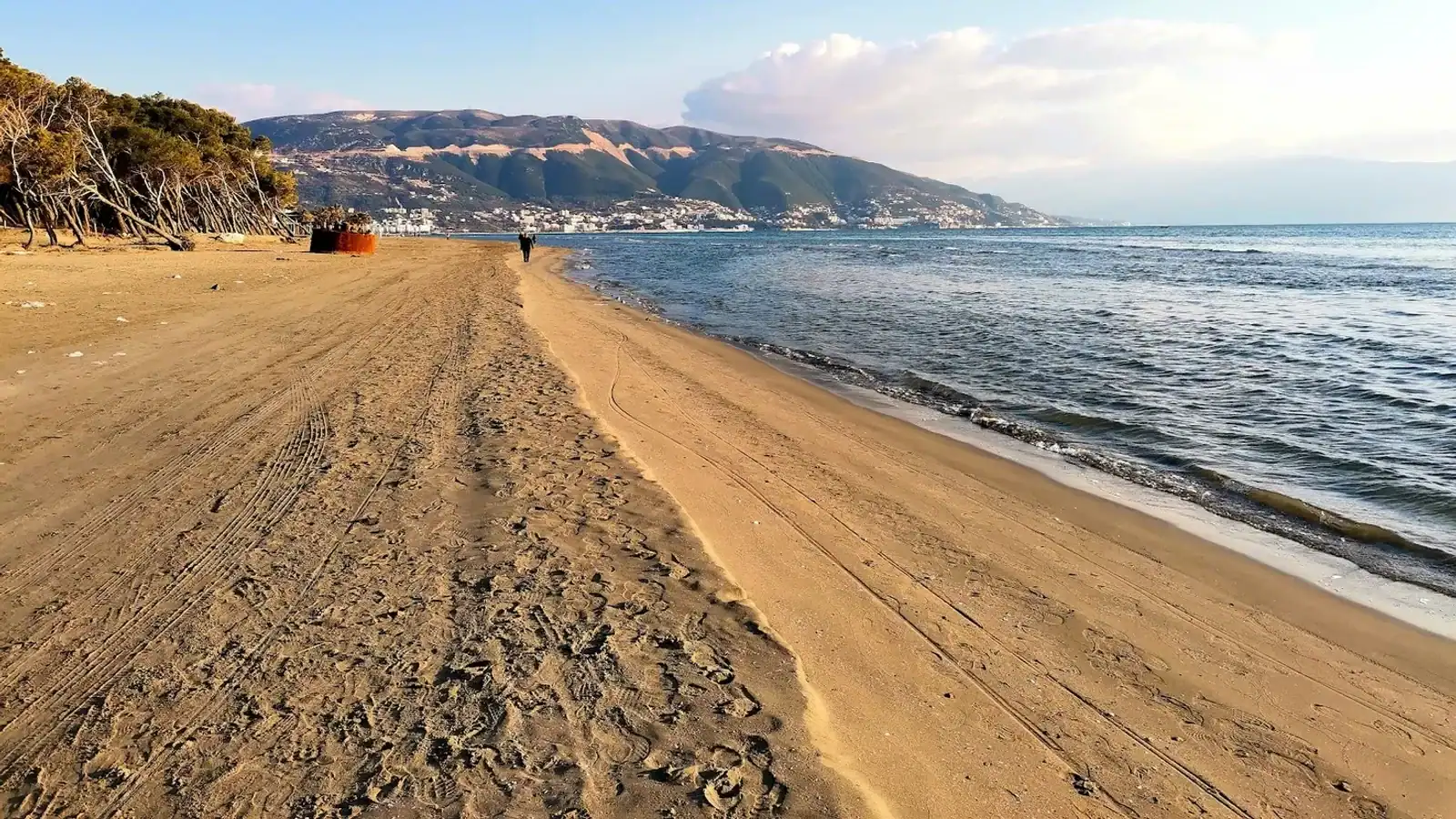
Almost every beach near Himara is pebble or mixed pebble-rock. This isn't the soft sand of Ksamil or the Adriatic. The packing implications are real.
| Factor | Pebble beach (most of Himara) | Sandy beach (rare: parts of Borsh, Gjipe) |
|---|---|---|
| Footwear | Water shoes mandatory | Optional but still helpful at entry |
| Towel placement | Pebbles are uneven, a thick mat or doubled towel helps | Standard towel works fine |
| Getting comfortable | Inflatable beach pillow or rolled clothing for support | Sand molds to you |
| Entering water | Shoes on until you're waist-deep | Can wade barefoot |
| Sand in belongings | Not a problem, pebbles don't stick | Everything gets sandy; zip bags help |
The one upside of pebble beaches: your bag, phone, and food stay clean. No sand in your sandwich, no grit in your camera. The downside is comfort. A thin foam sit-pad or inflatable pillow (available for 300-500 ALL at shops in town) makes a surprising difference on a full beach day. Borsh Beach is the closest thing to a sand beach in the Himara area, 7 km of mixed sand and gravel, but it's a 25-minute drive south.
Remote Beach Packing: Filikuri, Gjipe, and Akuarium
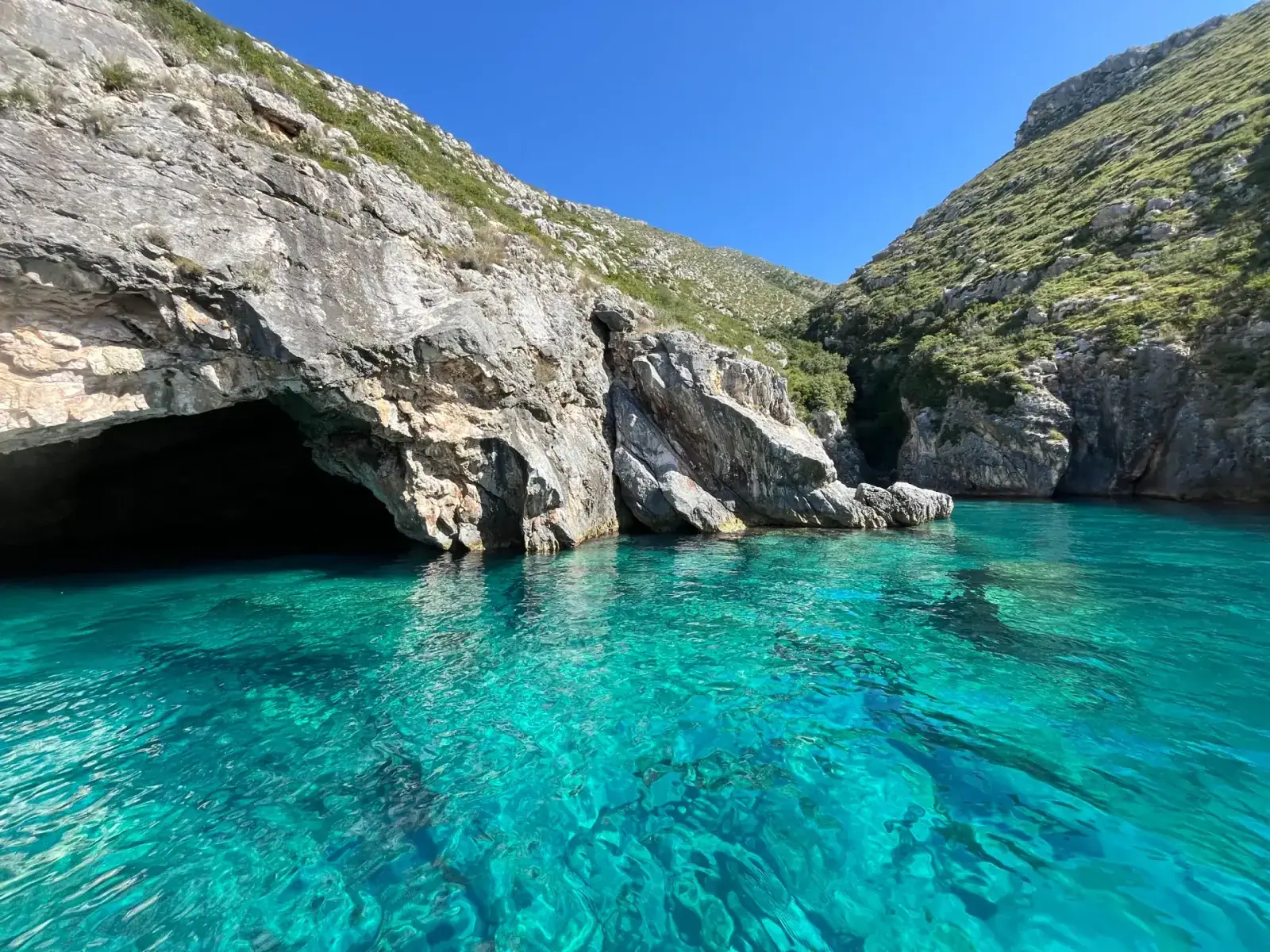
The wildest and most beautiful beaches near Himara, Filikuri Beach, Gjipe Beach, and Akuarium Beach, have zero facilities. No sunbeds, no shade structures, no food, no fresh water, and often no phone signal. Getting to them requires hiking (20-45 minutes on steep, exposed trails) or arriving by boat or kayak. Everything you need for the day comes in your pack, or you don't have it.
Remote Beach Essentials (On Top of Core List)
- 2+ liters of water per person. There are no water sources on the trails or the beaches. In August heat, you'll go through this faster than you think.
- Packed lunch and snacks. Sandwiches, fruit, nuts. There's nowhere to buy food.
- Trail shoes for the approach. The Gjipe Canyon descent is loose rock and steep switchbacks. The Filikuri trail drops steeply over exposed terrain. Sneakers or sandals are asking for a twisted ankle. Swap to water shoes at the beach.
- Compact shade. A lightweight beach umbrella or pop-up sunshade if you can manage the weight. Most remote coves have no natural shade after mid-morning, Filikuri gets cliff shade until early afternoon, but Gjipe is exposed once the sun clears the canyon walls.
- First aid basics. Band-aids, antiseptic wipes, ibuprofen. You're 30+ minutes from any help.
- Headlamp. If you stay for sunset (hard to resist at Gjipe), the trail back is unlit and poorly marked.
- Trash bag. Pack out everything. These beaches stay clean because visitors carry out what they bring in.
The Filikuri trail and Gjipe Canyon hike both have full access details if you want to plan the route.
Beach Club Day vs. Wild Beach Day
The packing list for a sunbed-and-cocktails day at a Dhermi beach club is very different from a self-sufficient day at an empty cove. Here's what changes.
| Item | Beach club day | Wild beach day |
|---|---|---|
| Water shoes | Yes (still pebble entry) | Yes |
| Cash/card | Card often accepted; budget 3,000-5,000 ALL (30-50€) for sunbeds + food | Cash for parking at trailheads (400-500 ALL) |
| Food/water | Buy on-site (meals 800-1,500 ALL) | Pack everything |
| Shade | Provided (umbrella/parasol with sunbed) | Bring your own or find cliff shade |
| Towel | Often provided with sunbed rental | Bring your own |
| Phone charger | Some clubs have outlets | Power bank |
| Valuables | Safer (more people around, some lockers) | Dry bag. Keep with you at all times |
| Footwear | Water shoes + nice sandals for the bar | Trail shoes + water shoes |
Beach clubs along the Dhermi coastline and at Jale Beach handle most of your needs. Sunbed setups typically run 1,000-2,000 ALL (10-20€) per person, with food and drinks on top. A beach club day for two can easily hit 8,000-10,000 ALL (80-100€). Check our sunbed pricing guide for current rates.
For a wild beach day at Filikuri or Akuarium, you're fully self-sufficient. Heavier pack, but free.
What NOT to Bring to the Beach
Some items are dead weight, others are actively unwelcome.
- Glass bottles. Several beaches prohibit them, and broken glass on pebbles is dangerous. Use plastic or aluminum.
- Heavy coolers. If you're hiking to Gjipe or Filikuri, a rigid cooler is impossible on the trail. An insulated soft bag keeps drinks cool enough and packs flat.
- Bluetooth speakers. Remote beaches are quiet by nature. Playing music ruins the experience for everyone sharing a 30-meter cove. Use earbuds.
- Valuables you can't get wet. Laptops, expensive jewelry, paper books. No lockers at wild beaches.
- Full-size beach towels. Bulky and slow-drying. Quick-dry microfiber does the job in a quarter of the space.
- Excess cash. Bring what you need (2,000-5,000 ALL for a day), leave the rest at your hotel.
Items You Can Buy Locally vs. Must Bring
| Buy in Himara | Bring from home |
|---|---|
| Bottled water (50-80 ALL / 1.5L) | SPF 50+ sunscreen (limited, overpriced locally) |
| Cheap flip-flops (300-500 ALL) | Quality water shoes (limited selection, 2x price) |
| Basic snacks, fruit, bread | Snorkel mask (rentals are hit-or-miss) |
| Foam sit-pad (300-500 ALL) | Dry bag (not sold locally) |
| Ice cream from beach kiosks | Power adapter (Type C/F, not widely sold) |
| Sun hat (tourist shops, 500-1,000 ALL) | Reef-safe sunscreen (unavailable locally) |
Alpha Supermarket and Imeraj Market in Himara center have the best prices on water, snacks, and basic supplies. Stock up in the morning before heading to the beach. For practical details on shopping, currency, and getting around. Check our info page.
Frequently Asked Questions
Do I really need water shoes for Himara beaches?
Yes, without exception. Every beach near Himara has pebble or rocky entry points. The stones are smooth but uneven, and walking into the water barefoot is painful enough to ruin a swim. Rubber-soled water shoes that stay on in surf are the only thing that works, foam flip-flops slide off and provide no protection on submerged rocks.
What's the biggest packing mistake visitors make?
Underestimating sun exposure. The UV index along the Albanian Riviera hits 10-11 in July and August, and most beaches have zero natural shade. Visitors who bring a small sunscreen bottle and a baseball cap end up burned by day two. Pack SPF 50+, a wide-brim hat, UV sunglasses, and consider a rash guard for long water sessions.
Can I buy everything I need once I arrive in Himara?
You can buy water, basic snacks, cheap flip-flops, and a sun hat locally. But quality water shoes, reef-safe sunscreen, snorkel gear, dry bags, and power adapters are either unavailable, poor quality, or significantly overpriced. Bring the specialized items from home and buy the consumables on arrival.
How much water should I carry for a remote beach day?
At minimum 2 liters per person, and 3 liters if hiking to the beach in July or August heat. There are no water sources on any trail or remote beach near Himara. Dehydration on an exposed 30-minute hike back from Filikuri or Gjipe is a real risk, not a hypothetical one. Freeze a bottle overnight so it stays cold longer.
Is there phone signal at Himara's remote beaches?
Signal is unreliable to nonexistent at Filikuri, parts of Gjipe Canyon, and Akuarium. Vodafone Albania tends to have slightly better coverage along the coast than One Albania, but don't count on it. Download offline maps before you leave your hotel, tell someone where you're going, and treat these beaches as off-grid experiences.