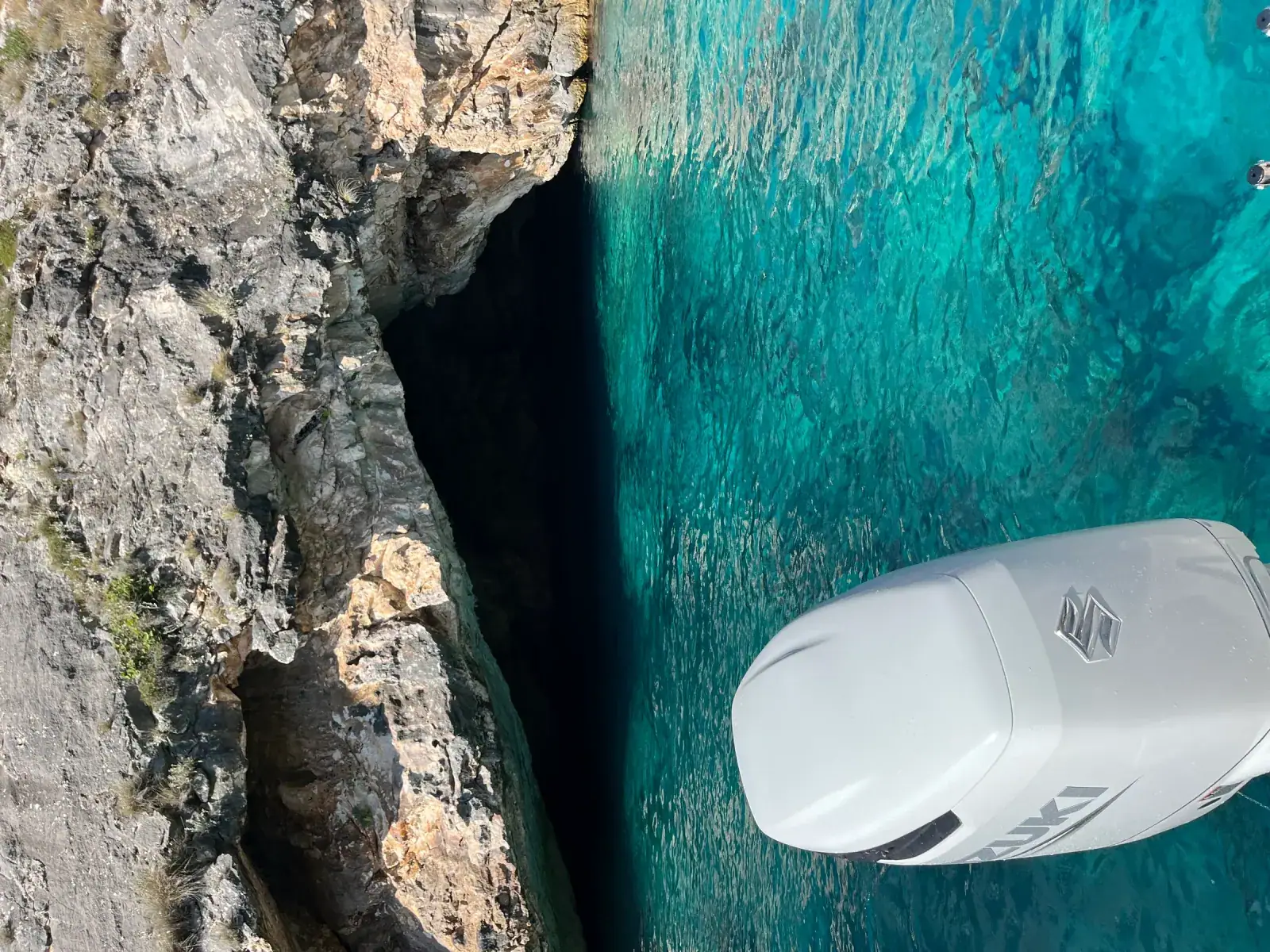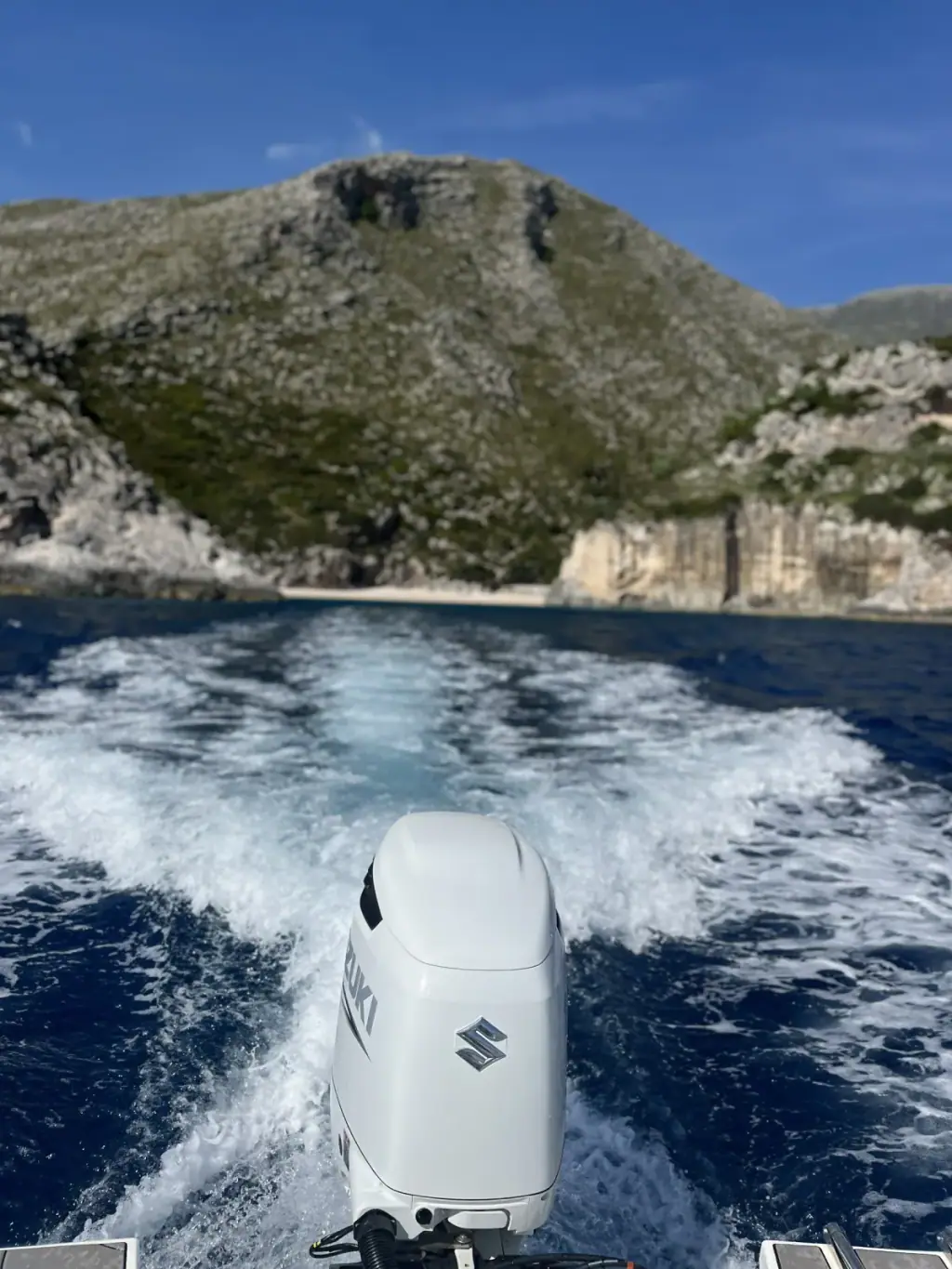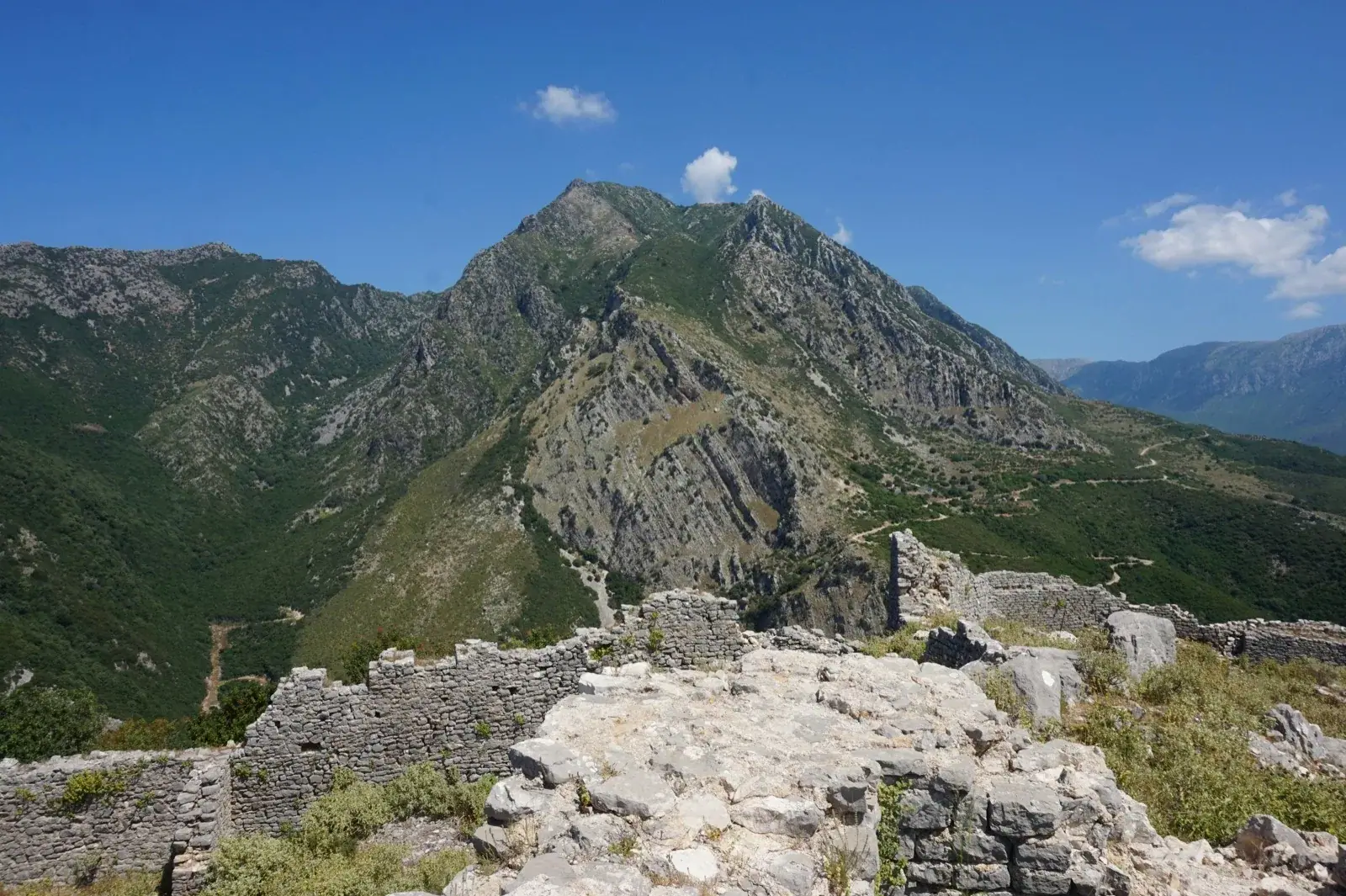
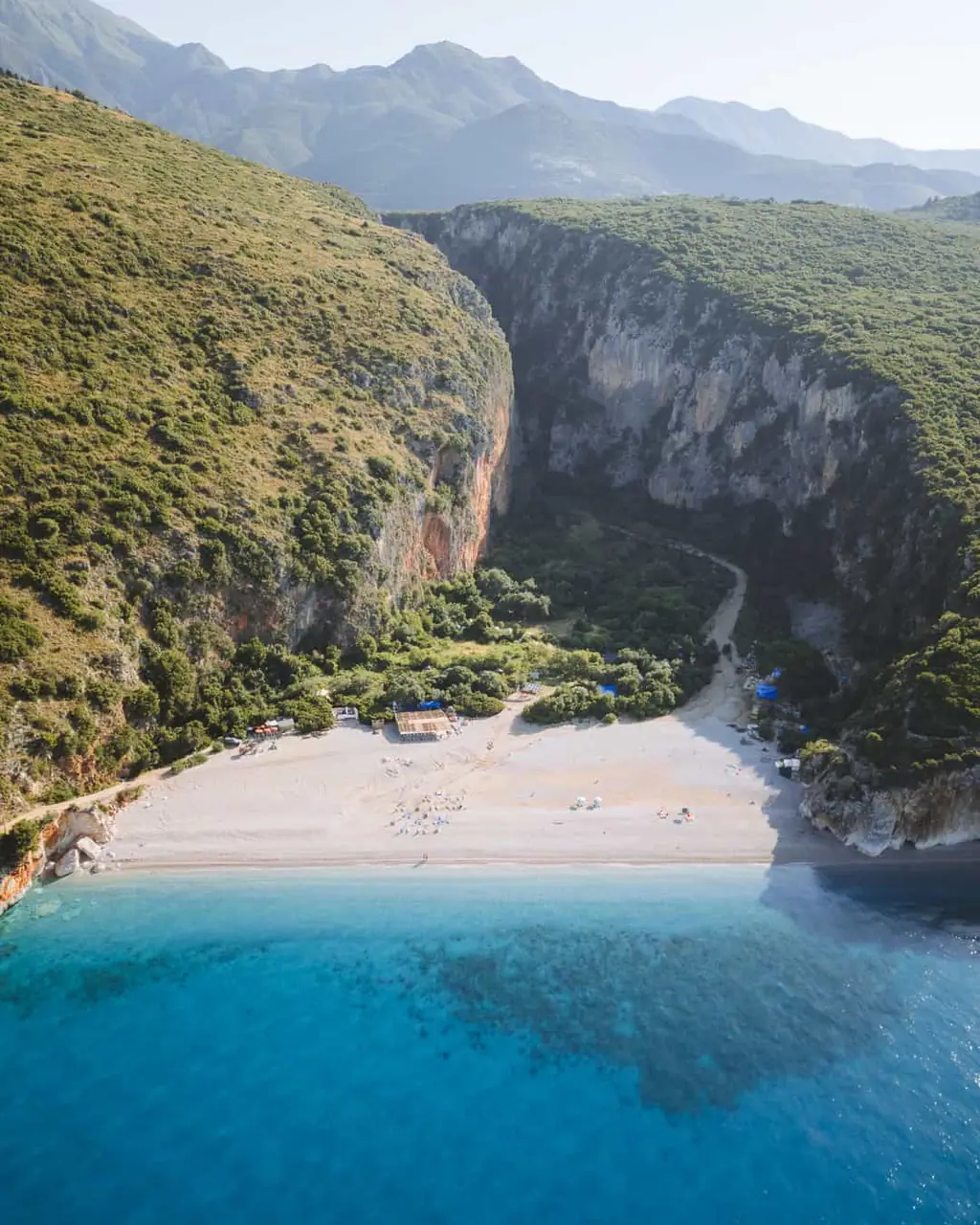
Access notice, the cliff descent is no longer recommended. A visitor died on the final descent to Filikuri Beach in 2025, and a second person survived a fall months later and was airlifted out. Authorities have since removed the fixed rope that the last section depended on, and a sign reading "Do Not Enter, Dangerous Overlook" now stands where the path reaches the cliff edge. Reach Filikuri by boat or kayak instead. This guide describes the walk as far as the clifftop, and the water routes that replace the descent.
The Filikuri trail is a coastal walk near Himara along the cliffs above one of the most secluded coves on the Albanian Riviera. The clifftop stretch is a straightforward 1.5 km with big views over Filikuri Beach -- a small pebble cove backed by limestone cliffs with some of the clearest water on the coast. What has changed is the last part: the drop from the clifftop to the sand was always the crux. It was roped, and the rope is gone. Walk out for the view, and go down to the water by boat or kayak.
Compare hotels, apartments, and Vrbo rentals on the map. Powered by Stay22.
Book tours & activities: Compare guided day trips, boat tours, and excursions on GetYourGuide.
Quick Summary
| Detail | Info |
|---|---|
| Distance | ~1.5 km one way |
| Time | 20-30 min down, 30-40 min up |
| Difficulty | Clifftop walk: easy to moderate. Final descent to the sand: not recommended, rope removed, fatal fall in 2025 |
| Elevation change | ~100-150 m descent |
| Trail type | Dirt footpath, uneven rock, no pavement |
| Best time | Early morning (before 10 AM), May-June or September-October |
| Entry fee | Free |
| Facilities at beach | None |
Trail Overview
The Filikuri trail starts south of Himara center and follows the coastline above the cliffs before descending steeply to the cove. The total distance is roughly 1.5 km, with an elevation drop of about 100-150 meters -- most of it concentrated in the final descent section.
The path is not paved. You walk on packed dirt, loose gravel, and exposed rock for most of the route. There are no formal trail markers, but the path is well-worn enough that you are unlikely to lose it in daylight. The trail is narrow in places -- single-file width -- and there are no guardrails or handrails on the steep sections.
As far as the clifftop this is not a technical hike -- you need shoes with decent grip, enough water, and respect for the heat in summer. The final drop to the beach is a different matter. It was never a walking route; it was a scramble that people did on a fixed rope, and after two serious falls the authorities took the rope out. Do not treat the last section as a continuation of the path.
The return climb is harder than the descent. Plan for it. Budget 30-40 minutes for the way back, and do not leave it until late afternoon if you want daylight for the uphill.
Step-by-Step Route Description
Finding the Trailhead
The trailhead is located above the coast, south of Himara center. You can walk from town or drive to the upper road that runs along the hillside above the coastline. The starting point is not signed with a formal marker, but you will see a clear dirt path heading toward the coast. If you are walking from the Himara waterfront, head south past the port area and follow the road uphill -- the trailhead is roughly a 15-minute walk from the center.
There is no formal parking lot at the trailhead, but there is room to leave a car or scooter on the road shoulder. No parking fee applies.
Initial Path Along the Coast
The first section of the trail is the easiest. You follow a dirt path that runs roughly parallel to the coastline, staying on the upper ridge above the cliffs. The terrain here is relatively flat with gentle undulations. You get wide views of the Ionian Sea to the west and can see the coast stretching toward Spile Beach and beyond.
This section takes about 5-10 minutes. Vegetation is low scrub and Mediterranean macchia -- minimal shade. In summer, you will be fully exposed to the sun from the start.
The Descent
After the initial coastal traverse, the trail turns downhill and the character changes. The descent is the defining section of the Filikuri trail. You lose roughly 100-150 meters of elevation over a relatively short distance, with the path zigzagging down the hillside in loose switchbacks.
The surface shifts to loose rock and gravel. Some sections are steep enough that you want to watch every footstep. On the clifftop stretch a twisted ankle is the most common problem, almost always caused by rushing, poor footwear, or both. Past the warning sign the exposure is real and the consequences are not a twisted ankle.
Take your time. Keep your weight centered. If you are carrying a backpack, tighten the straps so it does not shift on the steep parts. The switchbacks are not always obvious -- in a few spots, it looks like you could shortcut straight down, but that leads to loose scree and steeper drops. Stick to the worn path.
Final Approach to the Beach
The last 50-100 meters flatten out as you reach the base of the cliffs. You will see the cove ahead -- a small pebble strip hemmed in by rock walls on both sides. The water is typically a vivid blue-green, clear enough to see the bottom from above.
Step carefully on the final rocks leading onto the beach itself. The pebbles can be slippery when wet. Once you are on the beach, congratulations -- you have earned one of the most beautiful swims on the Riviera.
Difficulty and Fitness Requirements
The clifftop walk is easy to moderate. The descent to the beach is not rated here at all, because it is not a route this guide sends anyone down. What follows applies to the walk out and back along the top:
You will be fine if you:
- Walk regularly and can handle 30-40 minutes of uphill effort
- Have no serious knee, ankle, or balance issues
- Wear proper footwear (closed-toe shoes or sturdy sport sandals with heel straps)
- Take your time and do not rush the steep sections
This trail is not ideal if you:
- Have mobility limitations or significant joint problems
- Are bringing small children (under 6-7) who cannot manage steep rocky terrain independently
- Plan to go in flip-flops or smooth-soled shoes
The most common difficulty people report is not the descent -- it is the return climb in heat. Going down feels manageable. Climbing back up with the sun overhead after an hour of swimming hits differently. This is not a fitness challenge for an active person, but it catches people off guard, especially in July and August.
For context, this trail is comparable in difficulty to the Gjipe Canyon descent or the path down to Akuarium Beach from Livadhi. If you have done either of those, you know what to expect on the Filikuri trail.
What to Bring
Filikuri Beach has zero facilities. No bar, no restaurant, no toilets, no shade structures, no sunbed rentals. Everything you need, you carry in.
Essentials:
- Water -- 1.5 liters minimum per person. In summer heat, 2 liters is safer. There is no tap water on the trail or at the beach.
- Sunscreen -- High SPF, applied before you start. You will be in direct sun for most of the hike and at the beach.
- Shoes with grip -- For the hike. Hiking shoes, trail runners, or sturdy sport sandals with heel straps all work. Not flip-flops.
- Water shoes -- For the beach. The pebbles are rough underfoot, and you will want protection getting in and out of the water.
- Hat and sunglasses -- No shade on the trail and limited shade at the cove.
Strongly recommended:
- Snorkel and mask -- The underwater visibility at Filikuri is among the best on the coast. Rocky formations close to shore attract fish. A snorkel makes the trip significantly better.
- Food and snacks -- A sandwich, fruit, energy bars. You cannot buy anything at the beach or on the trail.
- A light towel or sarong -- For drying off and sitting on the pebbles.
- A dry bag or waterproof pouch -- For your phone and valuables while swimming.
- Trash bag -- Pack out everything you bring in. There are no bins.
Leave behind:
- Heavy coolers (you will regret carrying them on the descent and especially the climb back)
- Glass bottles (risk of breakage on the rocky path)
- Beach umbrellas or large chairs (impractical on the trail)
Safety Tips
Do not attempt the final cliff descent. It is the one part of this route that has killed someone. The rope it relied on has been removed, and the warning sign at the top is there because of two separate falls. Turn around at the sign and take a boat or kayak to the sand.
For the clifftop walk itself:
Go in daylight. The trail is not lit. Start early enough to complete the return before sunset.
The return climb is harder than the descent. Budget more time going up. If you descended in 20 minutes, expect 30-40 minutes for the return.
Avoid midday summer heat. July-August midday temps reach 35-40°C on this exposed trail. Go before 10 AM or after 5 PM.
Tell someone your plan. Filikuri has limited cell coverage. Let your hotel know where you're going.
Watch your footing. Loose rock sections cause ankle injuries. Short steps, weight forward on steep parts.
Stay hydrated. Drink steadily throughout, not just when thirsty.
Best Time to Hike the Filikuri Trail
Time of Day
Early morning is best -- ideally starting the descent between 7:30 and 9:00 AM. You get cooler temperatures, the trail is partially shaded in the first hour of sun, and you arrive at the beach before anyone else. By 10 AM in summer, the trail is fully sun-exposed and the temperature is climbing fast.
Late afternoon (after 5 PM) is the second-best window. The sun angle is lower, temperatures drop, and the light on the water is beautiful. The trade-off: you have less time at the beach before you need to start the return climb before dark.
Midday (11 AM to 4 PM) in July and August is the worst time. Full sun, peak heat, maximum effort for the climb back. Avoid it if you can.
Time of Year
- May and June -- Excellent. Warm enough to swim, trails are quiet, wildflowers on the hillside. Water temperature reaches comfortable levels by late May.
- July and August -- Hot. The beach and water are perfect, but the hike is punishing in the heat. Go very early or very late in the day.
- September and October -- Ideal. Water is at its warmest from summer heat retention, crowds thin out, and daytime temperatures are comfortable for hiking. Early October can still be warm enough for swimming.
- November to April -- Not recommended. The trail can be muddy and slippery, the sea is too cold for most swimmers, and the cove gets less sun as the days shorten.
For more on seasonal planning, see best time to visit Himara.
Alternative Access: Getting to Filikuri Without Hiking
The trail is the most reliable way to reach Filikuri Beach, but it is not the only option.
Kayak or SUP from Spile Beach
You can paddle from Spile Beach to Filikuri in roughly 20-30 minutes, depending on conditions. This avoids the steep hike entirely and lets you approach the cove from the water -- which is a spectacular arrival. Several rental outfits on Spile and nearby beaches rent kayaks and SUP boards by the hour.
The catch: you need calm seas. Check conditions and be realistic about your paddling fitness. See secret coves near Himara by kayak.
Boat Drop-Off
Some boat tour operators from Himara include Filikuri as a stop, or you can negotiate a private water taxi drop-off and pickup. This is the easiest option physically but the least flexible -- you are on someone else's schedule, and if the sea turns rough, pickups can be delayed or cancelled.
Boat access is best arranged through operators at Himara port. Expect to pay around 15-25 EUR per person for a drop-off and pickup, depending on the operator and whether it is part of a larger tour. For boat tour options, see Himara boat tours.
The trail gives you full control over timing, no dependence on sea conditions, and the views from the ridge are part of the experience.
For more hiking options, see hiking near Himara. For beach rankings, see best beaches in Himara. For general planning, check the practical info page.
Frequently Asked Questions
How hard is the Filikuri trail?
The walk along the clifftop is easy to moderate -- steep and rocky in places, with loose gravel and no handrails, but not technical, and a reasonably fit person in proper shoes will manage it. The descent from the clifftop to the beach is a different question and is no longer recommended at all: it depended on a fixed rope that has been removed after a fatal fall in 2025 and a second, airlifted casualty.
How long does it take to hike to Filikuri Beach?
The descent takes 20-30 minutes for most people. The return climb takes 30-40 minutes. Total round-trip hiking time is roughly one hour, not counting time spent at the beach. Plan for a minimum half-day outing when you include swimming and relaxing at the cove.
Is the Filikuri trail safe?
The clifftop walk is safe enough for anyone reasonably fit and prepared -- the risks there are ankle injuries from loose rock, heat exhaustion in summer, and fading light on the return. The final descent to the beach is not safe and is not recommended. Someone died on it in 2025, another person was airlifted after a fall months later, the fixed rope has been removed by the authorities, and a "Do Not Enter, Dangerous Overlook" sign now marks the top. Go down by boat or kayak instead.
Can you kayak to Filikuri instead of hiking?
Yes, and since the rope was removed this is the way to reach the sand. Kayak or SUP from Spile Beach in about 20-30 minutes, or take a boat drop-off. It needs calm sea conditions -- if there is wind or swell, wait for a better day or settle for the clifftop view rather than trying the descent.
Is there anything at Filikuri Beach?
No. Filikuri Beach has no facilities, no bar, restaurant, toilets, sunbeds, or shade structures. Bring everything you need including water, food, sunscreen, and a bag for trash. That's also what makes it special.