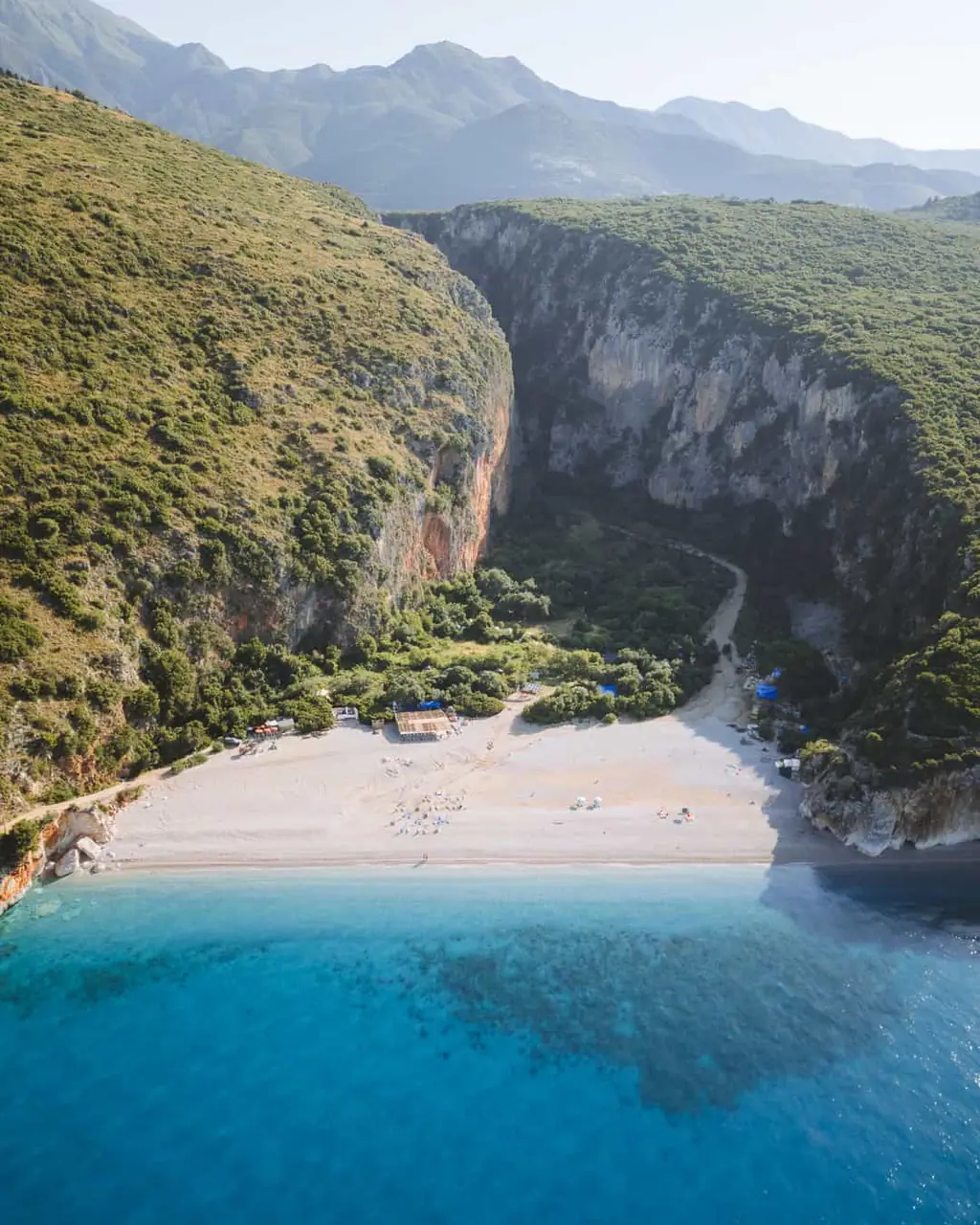
The Gjipe Canyon hike from Himara is one of the best half-day adventures on the Albanian Riviera. The trailhead sits 15 km north of Himara, at a turnoff between Dhermi and Vuno. From the parking area, you hike roughly 2.5 km through scrubby hillside and into a limestone canyon that narrows dramatically before opening onto Gjipe Beach, a turquoise cove framed by vertical cliff walls. The whole descent takes 30-45 minutes. The return uphill takes longer. The beach at the end makes every step worth it.
Prefer the canyon from the water? See our Gjipe Canyon boat-tour guide, the same cliffs framed from offshore, plus operators that include the cove on every Himara coastline tour.
Compare hotels, apartments, and Vrbo rentals on the map. Powered by Stay22.
Book tours & activities: Compare guided day trips, boat tours, and excursions on GetYourGuide.
Quick Summary
| Detail | Info |
|---|---|
| Drive from Himara | 15 km, ~25-30 minutes |
| Trail distance | ~2.5 km one way |
| Hike time | 30-45 min down, 45-60 min up |
| Difficulty | Moderate |
| Parking | ~400 ALL (~4 EUR) when attended |
| Beach entry fee | Free |
| Total time needed | 4-5 hours including beach time |
Getting to the Trailhead from Himara
Head north on the SH8 coastal highway toward Dhermi. The drive climbs through hairpin turns above the Ionian coast, cutting through the Ceraunian Mountains. After roughly 15 km, between Dhermi and Vuno, a signed turnoff on the left points toward Gjipe Beach. If you're coming from Dhermi, it's about 7 km south.
The turnoff leads to an unpaved road. The condition varies by season, in summer it's dusty but passable in a standard car if you drive slowly. After roughly 2 km of dirt road, you reach the parking area above the canyon. Total time from Himara: 25-30 minutes.
If you don't have your own wheels, renting a car or scooter in Himara is the most practical option. A scooter handles the SH8 well and the dirt road is manageable at low speed. Taxis from Himara to the trailhead cost roughly 2,000-2,500 ALL (20-25 EUR) one way, agree on the price before departing and arrange a pickup time for the return, since there's no reliable phone signal at the canyon.
Parking and the Trailhead
The parking area is a flat clearing at the end of the dirt road. During summer, an attendant collects a parking fee of around 400 ALL (roughly 4 EUR). Outside peak season, the lot is often unattended and free.
The trail starts at the far end of the parking area. You'll see a clear dirt path heading toward the coast, there's basic signage and the route is obvious. A few seasonal vendors near the lot sell water and snacks, but don't count on them outside July-August. Buy your supplies in Himara before driving up.
The Canyon Hike Step by Step
The trail breaks down into three distinct sections.
Section 1: The Initial Descent
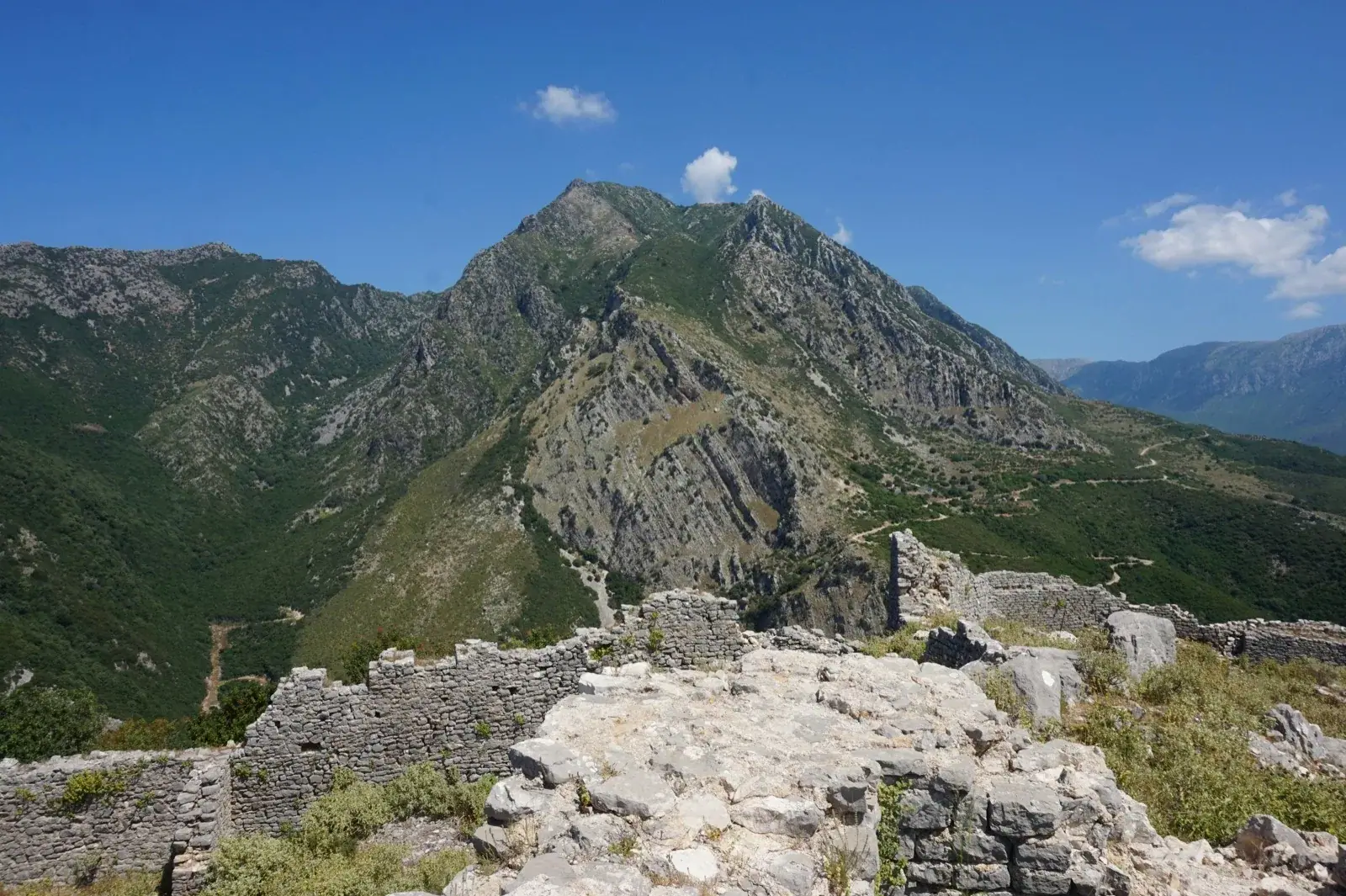
The first kilometer takes you from the parking area down a gradual slope through low Mediterranean scrub, olive bushes, wild sage, dry grasses. The path is wide and easy to follow. Views open up across the hillside toward the sea. There's zero shade here, so on a hot day you'll feel the sun immediately.
Section 2: The Dry Riverbed
The trail drops into the canyon's upper reaches, where the landscape shifts. You're now walking along a dry riverbed strewn with rocks and boulders. The terrain becomes rougher, you'll need to pick your footing over loose stones and occasional larger rocks. The canyon walls begin to appear on either side, still low at first but growing taller as you descend.
This section is where proper footwear matters. Flip-flops are a bad idea here. Trail shoes or sturdy sandals with grip will keep your ankles intact.
Section 3: The Canyon Narrows
This is the payoff. The limestone walls rise sharply on both sides, closing in until the canyon is only a few meters wide in places. The light shifts. The temperature drops slightly. You're walking between vertical rock faces that tower 50-100 meters above you, layered in pale gray and cream-colored stone. It feels like walking through a geological doorway.
The footing in the narrow section is uneven. Expect loose gravel and some scrambling over small boulders. Nothing technical, but watch your step. After 10-15 minutes in the narrows, the canyon opens suddenly and you're standing at Gjipe Beach, looking out at the Ionian Sea.
Difficulty Assessment
The Gjipe Canyon hike is moderate. The trail is 2.5 km one way with roughly 200 meters of elevation change, mostly downhill on the way in, which means entirely uphill on the way back. That return climb is the hardest part of the day, especially in afternoon heat.
Here's an honest breakdown:
- Going down: Easy to moderate. The slope is gradual for most of it, steeper in the canyon narrows. Anyone in reasonable shape can manage it.
- Coming back up: Moderate to hard, depending on conditions. In summer heat, the exposed uphill section from the canyon mouth back to the parking lot is physically demanding. Budget 45-60 minutes for the return.
- Technical difficulty: None. No ropes, no climbing, no scrambling that requires hands. The terrain is rocky and uneven but nothing beyond basic trail walking.
- Who can do it: Fit adults and older children (10+) will handle it fine. It's not ideal for very young children, anyone with knee problems, or people who struggle with uneven rocky terrain. Elderly visitors in good health can manage it if they take their time.
No technical gear is needed. Just decent shoes, water, and a willingness to sweat on the way back.
What to Expect at Gjipe Beach
The canyon opens directly onto a cove roughly 100 meters wide. Steep cliff walls frame both sides. The beach surface is a mix of pebbles and coarse sand, finer than most Albanian Riviera beaches. The water is an almost absurd shade of turquoise, deepening quickly from the shoreline.
This is consistently rated as one of the best beaches on the Albanian Riviera, and the setting alone justifies the ranking. The combination of the canyon backdrop, cliff walls, and clear water creates something that looks like it should be behind a velvet rope.
Facilities
Keep expectations minimal:
- Summer vendors sell cold drinks, beer, and basic snacks (sandwiches, chips). Prices are higher than town. Everything gets carried down the same trail you just walked.
- Umbrella and sunbed rentals are available in peak season.
- No toilets and no running water. Plan accordingly.
- Camping is possible and popular. Backpackers pitch tents at the edges of the beach, especially in June and September. There's no formal campsite, it's informal and unregulated. For more on camping options, see the camping guide.
Swimming and Snorkeling
The water at Gjipe is excellent for both. Visibility is outstanding, you can see the bottom clearly even where it's several meters deep. Snorkeling along the base of the canyon walls reveals rocky formations, small fish, and occasional sea urchins. Bring your own mask and snorkel; there are no rentals at the beach.
The cove is usually sheltered from waves, though a northwesterly wind can create some chop. Mornings are typically the calmest.
Essential Gear
Pack for a hike in exposed Mediterranean terrain with a beach reward at the end. Here's the non-negotiable list:
- Proper footwear. Trail shoes or sturdy sandals with ankle support and grip. Not flip-flops. Not fashion sneakers with flat soles. The rocky terrain will punish poor shoe choices. Carry flip-flops or water shoes in your bag for the beach.
- Water, 2 liters per person minimum. There is no drinkable water along the trail or at the beach. In summer heat, you'll go through this faster than you expect.
- Food. Sandwiches, fruit, nuts, whatever you prefer. Don't rely on the seasonal vendors at the beach.
- Sunscreen. High SPF, applied before you start. The trail is fully exposed and the beach has limited natural shade.
- Hat and sunglasses. Essential for the exposed hillside sections.
- Swimsuit and towel. You're hiking to a beach. Come prepared to swim.
- Snorkel and mask. Optional but highly recommended. The underwater visibility at Gjipe is some of the best on the coast.
- A light daypack. Something comfortable to carry everything in. Plastic bags and loose items become annoying on rocky terrain.
Timing Your Visit
When you start matters more than you might think. The trail is fully exposed to the sun for the first kilometer and the last kilometer on the return. In July and August, midday temperatures regularly exceed 35 degrees Celsius. Hiking in full sun at that temperature is miserable and potentially dangerous.
Best approach: Leave Himara by 8:00-8:30 AM. You'll reach the trailhead by 9:00 AM. Start hiking in still-tolerable morning temperatures, and arrive at the beach before the crowds. Spend 2-3 hours swimming and relaxing, then hike back up before the worst afternoon heat. You'll be back at your car by 1:00-2:00 PM.
Second-best option: Go late afternoon. Drive out around 4:00-4:30 PM, hike down as the heat eases, and enjoy the beach in golden afternoon light. The downside: you'll be hiking back up as it gets dark, and the trail is not lit. Bring a headlamp if you go this route.
Avoid: Starting the hike between 11:00 AM and 3:00 PM in summer. The exposed hillside becomes an oven, and you'll arrive at the beach exhausted and dehydrated before you've even had a swim.
Budget 4-5 hours total for the experience: 30 minutes driving, 30-45 minutes hiking down, 2-3 hours at the beach, and 45-60 minutes hiking back up.
Alternative Access by Boat
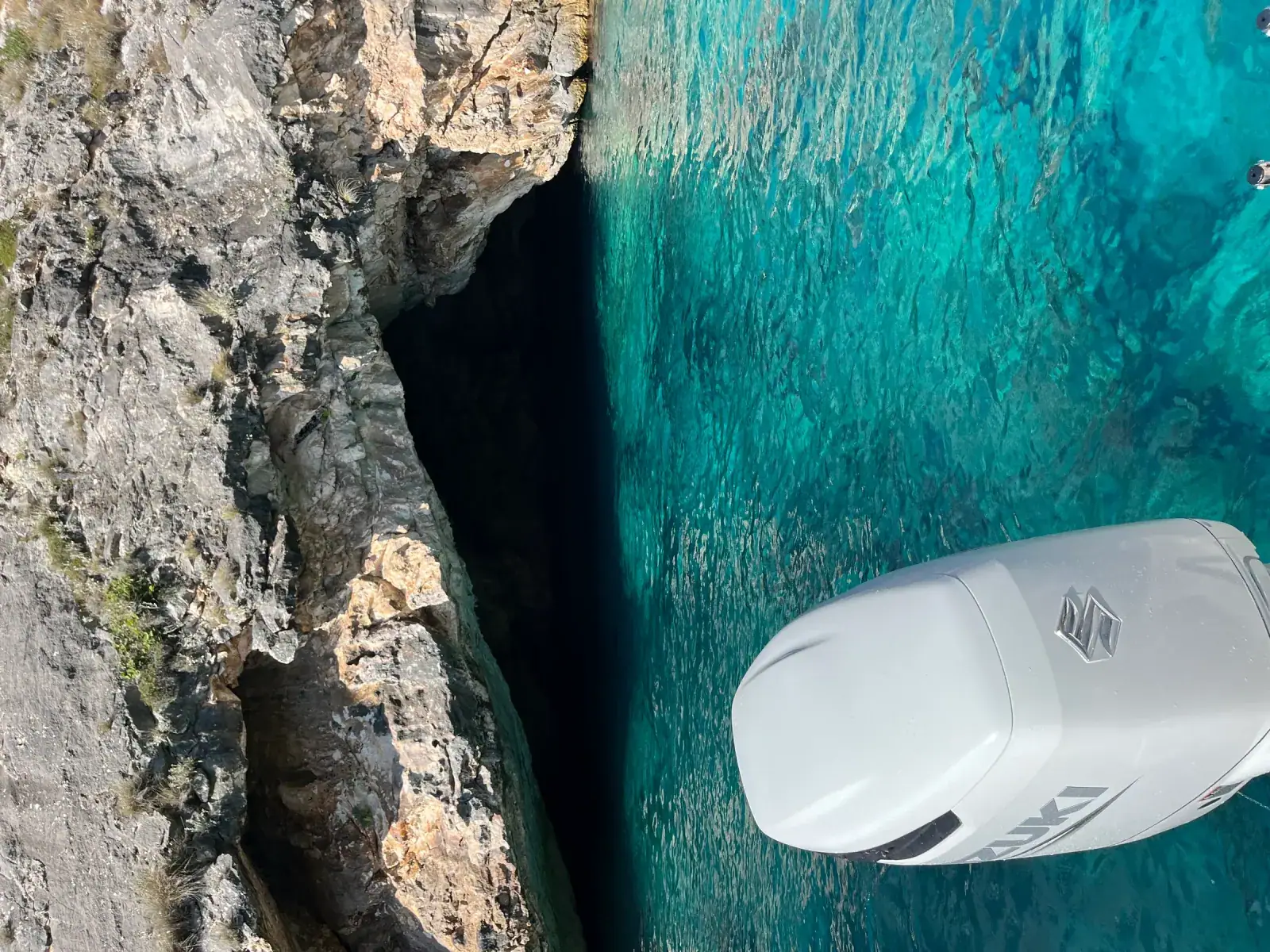
If the hike doesn't appeal to you, or if you want to save your energy for the beach, you can reach Gjipe by boat from Himara or Dhermi.
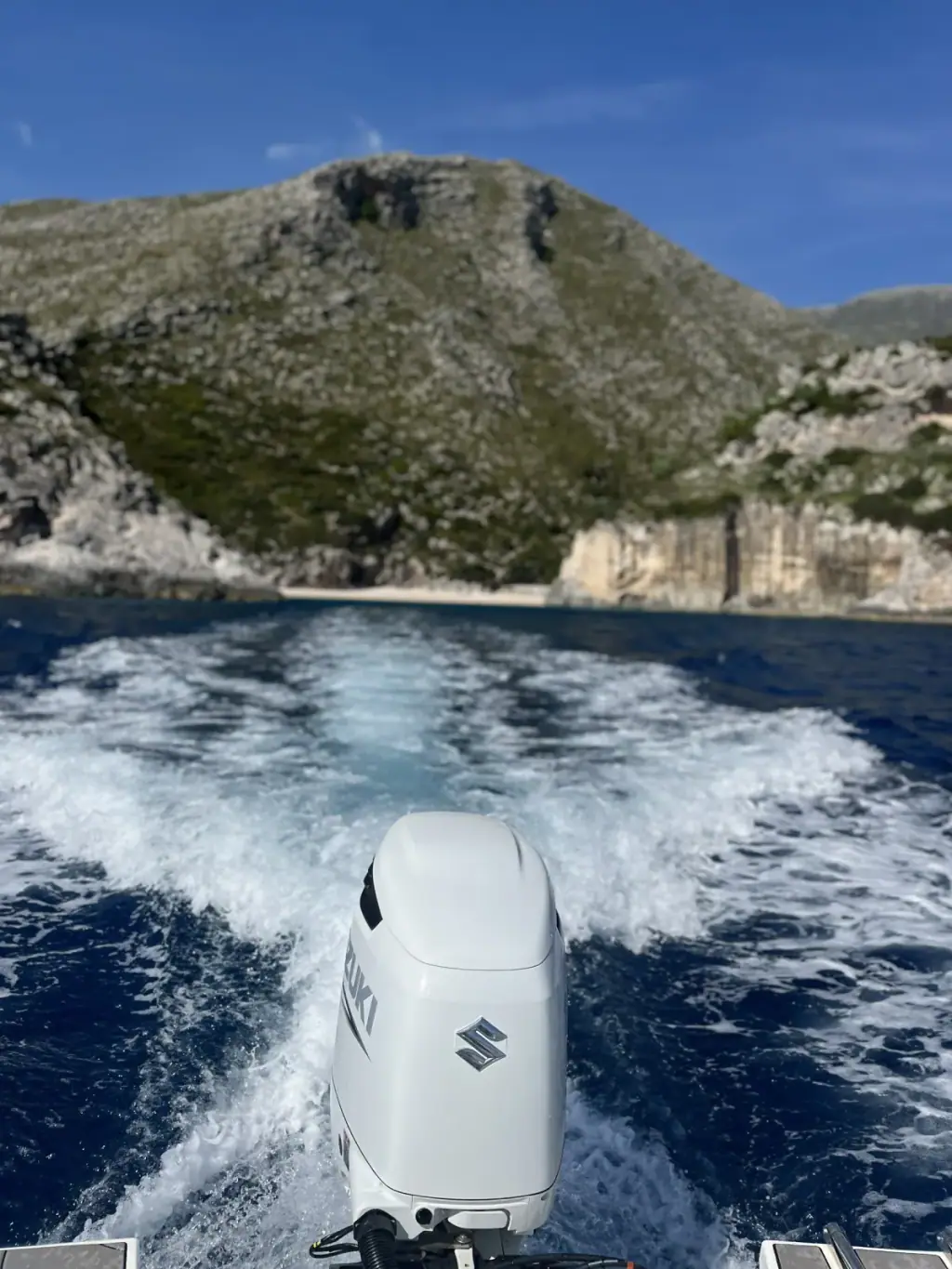
Boat tours from Himara typically include Gjipe as one of several stops along the coast. Full-day tours run roughly 30-60 EUR per person and visit multiple beaches and coves. Some operators offer a drop-off service: they'll leave you at Gjipe and pick you up a few hours later, giving you real time on the beach. You can also browse Himara boat tours on GetYourGuide for fixed-price options with reviews.
From Dhermi, water taxis to Gjipe are sometimes available during peak summer. Expect to pay 30-50 EUR per person depending on the boat and your negotiation skills.
The best combo: Take a boat to Gjipe and hike back up through the canyon. This way you skip the hot downhill walk. Arrive fresh and dry at the beach, and then experience the canyon hike in the more interesting direction, walking through the narrows from beach to hillside rather than the other way around. The uphill is unavoidable either way, but at least you've already had your swim.
For more on getting around the coast, see the day trips from Himara guide and the practical information page.
Frequently Asked Questions
How long is the Gjipe Canyon hike?
The trail from the parking area to Gjipe Beach is approximately 2.5 km one way. Walking down takes 30-45 minutes depending on your pace and the terrain. The return hike uphill takes 45-60 minutes. Most people spend 2-3 hours at the beach, making the total outing 4-5 hours including drive time from Himara.
Is the Gjipe Canyon hike difficult?
The hike is moderate. The descent is straightforward, mostly gradual with some rocky sections in the canyon narrows. The challenging part is the return, which is entirely uphill on exposed terrain. No technical gear is needed, but you do need proper footwear with grip, adequate water, and reasonable fitness. It's manageable for most adults and children over 10.
Can you drive to Gjipe Beach?
You can drive to the parking area above the canyon, but not to the beach itself. The last 2.5 km must be covered on foot through the canyon trail. During peak summer, local operators sometimes offer jeep rides from the parking lot down a rough track for 500-1,000 ALL per person, but availability is inconsistent. The most reliable alternative to hiking is arriving by boat.
Is there water or food at Gjipe Beach?
In summer (roughly June through September), small vendors at the beach sell bottled water, cold drinks, beer, and basic snacks like sandwiches and chips. Prices are higher than in town. Outside summer months, there are no vendors at all. There is no drinkable tap water at the beach or along the trail. Bring at least 2 liters of water per person and pack your own food regardless of season.
What is the best time to hike Gjipe Canyon?
Early morning is ideal. Leave Himara by 8:00-8:30 AM to start the hike before the heat builds. This also means you'll arrive at the beach before it gets crowded. Avoid starting between 11:00 AM and 3:00 PM in summer, the exposed trail becomes extremely hot. Late afternoon (after 4:00 PM) works as a second option, but bring a headlamp for the return hike if sunset is approaching. The best months overall are May, June, September, and early October when temperatures are warm but not punishing.