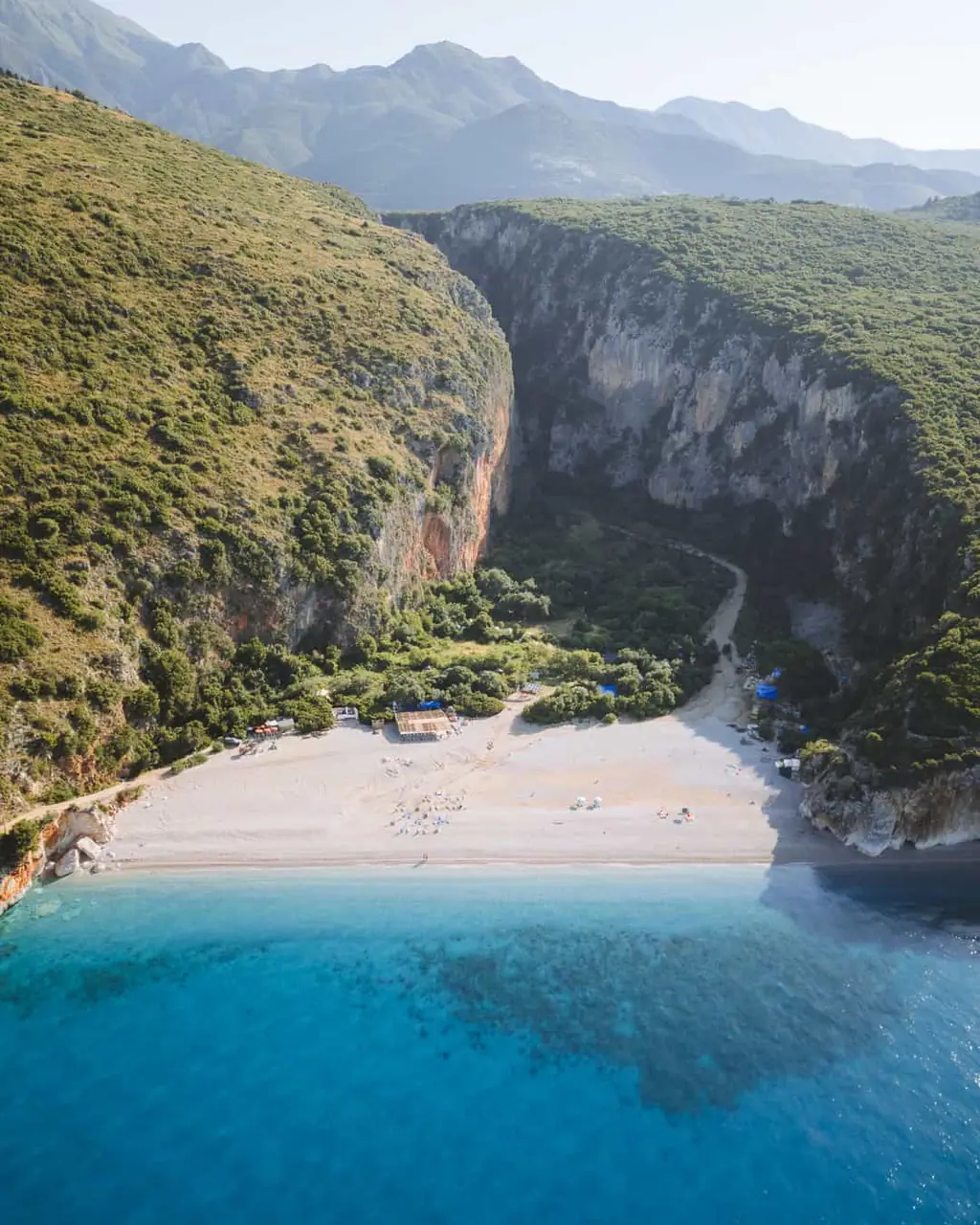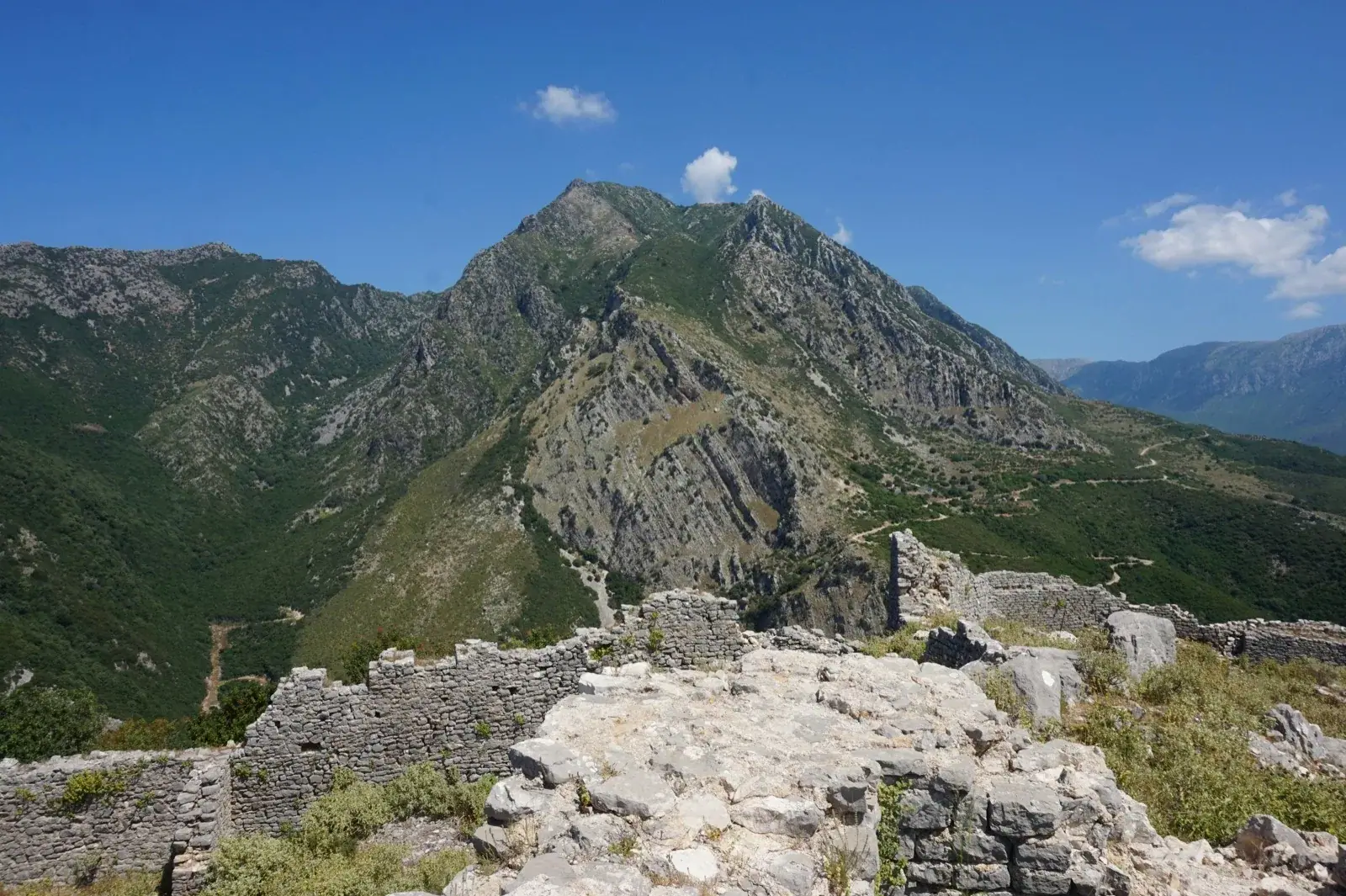
The Akuarium trail from Livadhi is a 1.5 km coastal hike that connects Livadhi Beach (Greek: Παραλία Λιβάδι, Albanian: Plazhi i Livadhit) to Akuarium Beach, one of the smallest and clearest coves on the Albanian Riviera (Greek: Αλβανική Ριβιέρα, Albanian: Riviera Shqiptare). The walk takes 30-40 minutes one way, follows red trail markers along exposed coastal rock, and ends at a tiny turquoise cove with no facilities. It is the most practical route to Akuarium for independent travelers staying in or near Himara.
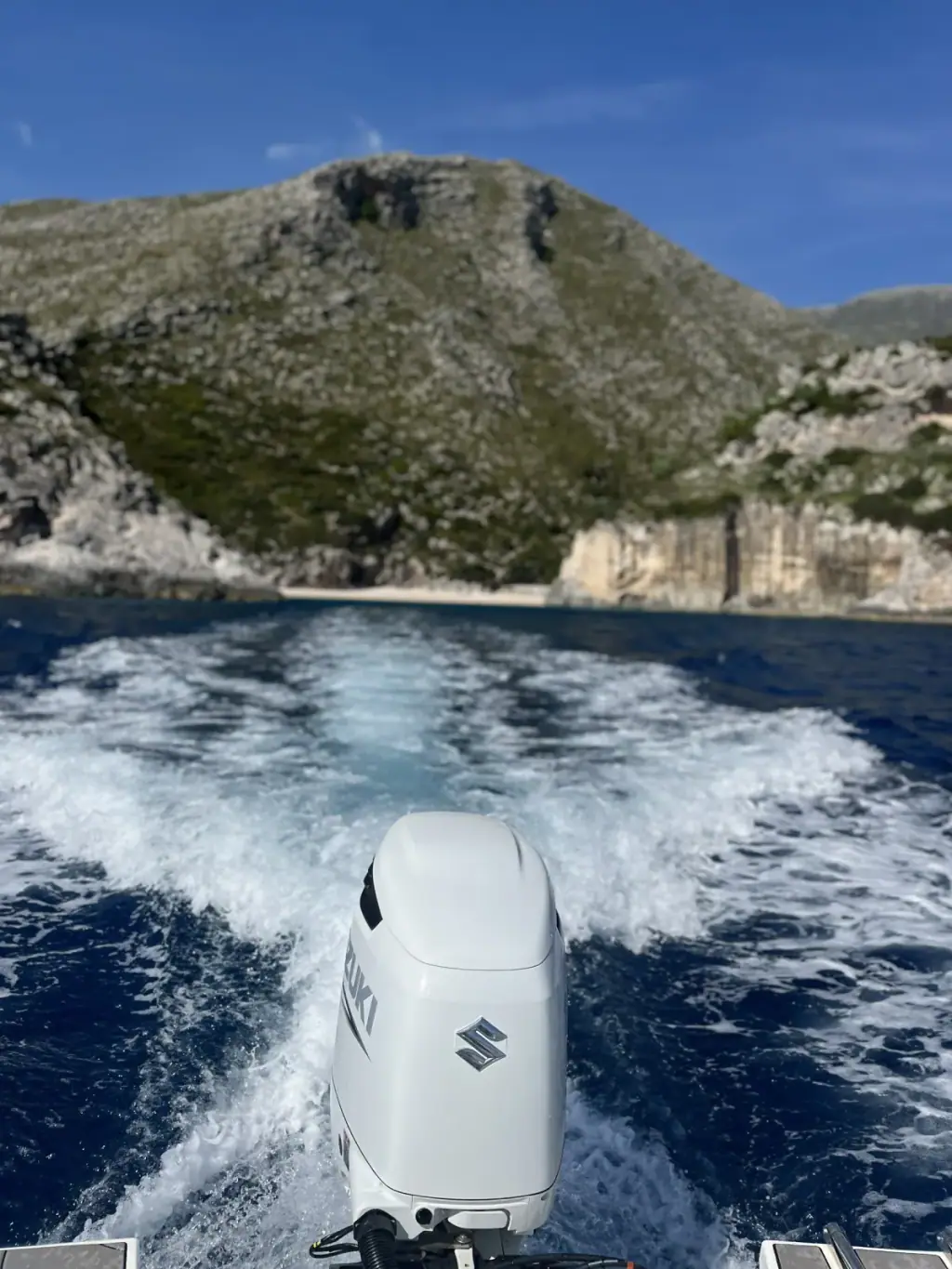
Want to skip the hike? Akuarium is a standard 20-minute swim stop on every Himara boat tour, typically less crowded than the midday hiker rush.
Compare hotels, apartments, and Vrbo rentals on the map. Powered by Stay22.
Book tours & activities: Compare guided day trips, boat tours, and excursions on GetYourGuide.
Quick summary
| Detail | Info |
|---|---|
| Distance | ~1.5 km one way |
| Time | 30-40 minutes each way |
| Difficulty | Moderate |
| Trail markings | Red paint blazes on rocks |
| Elevation gain | Minimal, mostly coastal traversal with short climbs |
| Facilities at destination | None (no shade, water, toilets, or vendors) |
| Entry fee | Free |
| Best season | May-June and September |
Trail overview
The Akuarium trail from Livadhi follows the coast northward from Livadhi Beach, tracing a rocky headland before descending to the cove. The route is marked with red paint blazes on rocks and is well-worn enough that you will not lose your way in clear conditions.
The terrain is exposed limestone and scrub. There is no tree cover on the trail. You walk along clifftops, across rocky shelves, and through short scramble sections where you use your hands for balance. The path is not technical climbing, but it is not a paved promenade either. The reward is constant views of the Ionian Sea and, at the end, one of the most photogenic swim spots on the entire Riviera.
Most of the 1.5 km distance is flat or gently undulating. The steepest sections are at the beginning (climbing away from Livadhi) and the final descent into the Akuarium cove. Total elevation gain is modest, and the moderate difficulty rating comes from the rocky footing rather than the physical effort of climbing.
Getting to the trailhead
The trail starts at the northern end of Livadhi Beach, which is the long sandy-pebble beach about 2 km north of Himara center.
By car or taxi: Drive or take a taxi to Livadhi Beach. Parking is free along the beach road and in the informal lot near the northern end. In July and August, arrive before 10 AM if you want a spot close to the trailhead.
On foot from Himara: You can walk to Livadhi from Himara center in about 25 minutes along the road or coastal path. This adds distance but avoids the need for a vehicle.
Once at Livadhi, walk to the far northern end of the beach where the sand meets the rocks. The trailhead is at the base of the rocky headland. Look for the first red paint markers on the boulders. They are visible from the beach. There is no formal signpost, but the path is obvious once you spot the blazes.
Step-by-step route
Section 1: Leaving Livadhi (0-400 m)
From the northern rocks at Livadhi, the trail climbs over the first headland. This is the steepest uphill section of the entire hike. You gain perhaps 30-40 meters of elevation over rough stone. Follow the red blazes carefully here. A few social paths dead-end on the rocks.
After the initial climb, the path levels out along the clifftop. You get your first panoramic view back toward Livadhi and forward along the coast. On a clear day, you can see down to Jale Beach (Greek: Γιάλα, Albanian: Jale) and beyond.
Section 2: coastal traverse (400 m-1.1 km)
The middle section is the most enjoyable part of the hike. The trail follows the coast at moderate height, crossing rocky shelves and patches of low Mediterranean scrub. The footing is uneven but manageable at a steady pace.
Red blazes appear every 30-50 meters. When in doubt, stay close to the coastline rather than cutting inland, there are a few short scramble sections where you step over or between large rocks, nothing exposed or dangerous, but you want both hands free.
The views along this stretch are outstanding. The water below shifts from deep blue to bright turquoise over shallow rock shelves. You will likely spot small beaches and coves below that are inaccessible from this trail. They are part of what makes this coastline so striking from above.
Section 3: descent to Akuarium (1.1-1.5 km)
The final section drops from the clifftop down to the cove. The descent is short but requires careful footing. You pick your way down over rocks and loose gravel, using red markers to guide the line. Some people sit and slide on the steepest bit. There is no shame in that approach.
As you descend, Akuarium Beach comes into view below: a tiny pocket of turquoise water framed by pale rock on three sides. The visual payoff is immediate. The trail deposits you on the rocks at the edge of the cove, where you can pick a spot on the pebbles or smooth stone ledges.
Difficulty and terrain
The Akuarium trail from Livadhi is rated moderate. Here is what that means in practice:
- Rocky footing throughout. The path crosses limestone shelves, loose gravel, and some sections with large boulders. Ankle-twisting terrain if you rush.
- Short scramble sections. You will use your hands for balance in 2-3 spots. Nothing vertical, but you need both hands free.
- Fully exposed. There is zero shade on the trail. In July and August, surface rock temperature can be punishing by midday.
- Slippery when wet. Limestone gets extremely slick after rain. Do not attempt this trail in wet conditions.
- Not suitable for flip-flops or sandals. This is the single most important practical point. Closed-toe shoes with grip are essential.
- Not suitable for young children or anyone with mobility issues. The scramble sections and uneven terrain make it a poor choice for strollers, toddlers, or anyone unsteady on rough ground.
If you have done any coastal hiking in Greece or Croatia, this trail is comparable in difficulty, it is harder than a promenade walk, easier than a mountain scramble.
What to bring
There are no facilities at Akuarium Beach: no bar, no shop, no shade structure, no toilet. You carry everything in and out.
Essential:
- Sturdy closed-toe shoes with grip (trail runners or hiking sandals with heel straps work well)
- At least 1.5 liters of water per person (more in July-August)
- Sunscreen and a hat
- A small daypack to keep hands free on scramble sections
Highly recommended:
- Snorkel mask, because the water clarity at Akuarium is exceptional and the rocky seabed is worth exploring
- Food and snacks, since you will likely spend 1-3 hours at the cove and the nearest restaurant is back at Livadhi
- A microfiber towel
- Waterproof phone case or dry bag
Leave behind:
- Large coolers or heavy bags (the scramble sections make them impractical)
- Umbrellas (no flat ground to anchor them; use a hat instead)
The beach itself
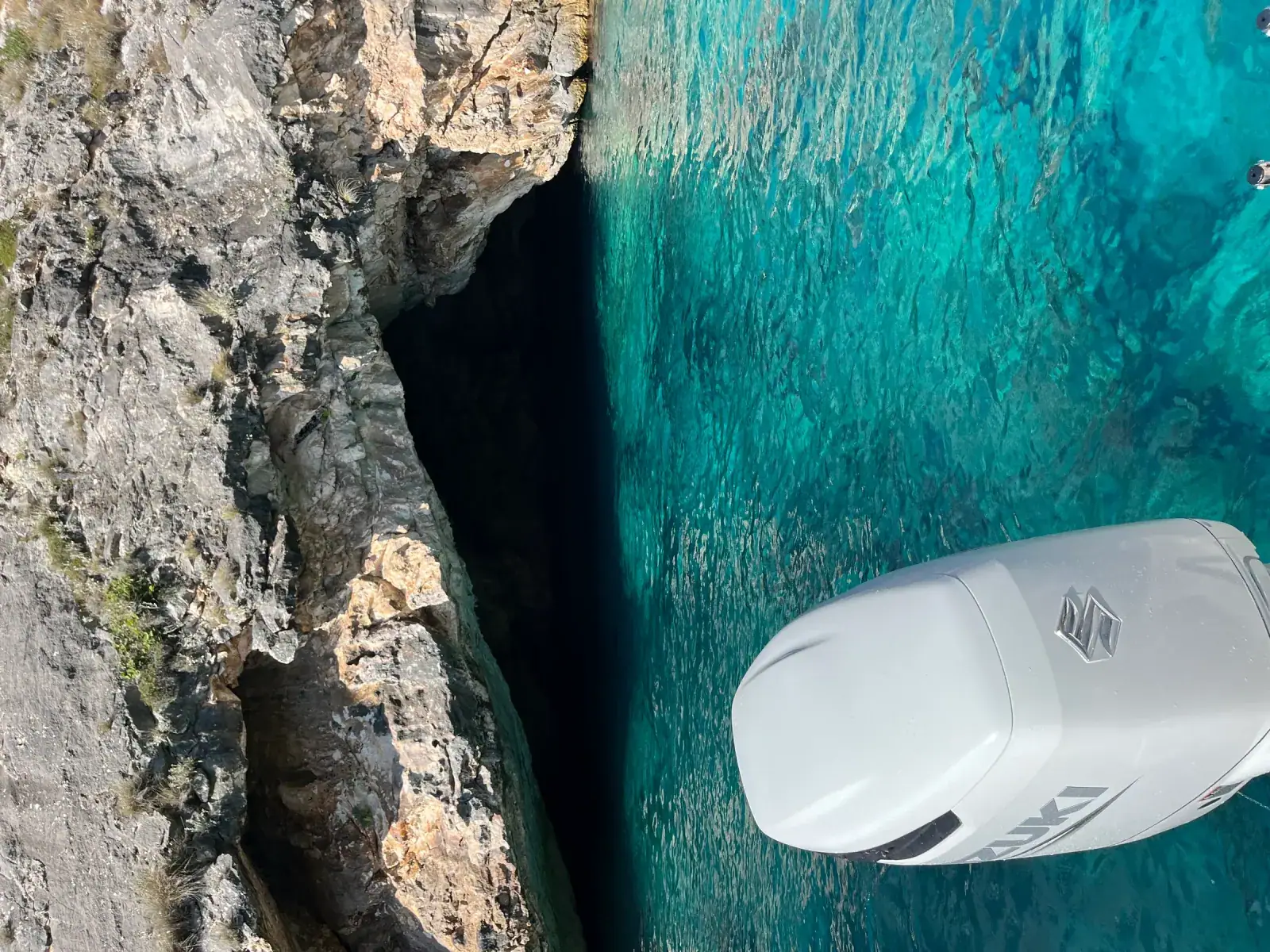
Akuarium Beach earned its name because the water looks like a natural aquarium: bright turquoise and shallow enough near shore to see every stone on the bottom. The cove is tiny, roughly 20-25 meters of usable shoreline, framed by pale limestone cliffs that shelter it from wind on most days.
The entry is over smooth pebbles and submerged rocks. The water deepens quickly a few meters out, shifting from translucent turquoise to deep blue. Visibility regularly exceeds 15 meters. If you brought a snorkel mask, this is where it pays off. The rocky seabed hosts small fish, sea urchins, and varied underwater formations.
The cove faces roughly west-northwest, which means it catches afternoon sun and is often calm in the morning before onshore winds pick up. The sheltered position keeps waves small on most days, making it a comfortable swim spot even when nearby open beaches are choppy.
Space is the main constraint. Akuarium can comfortably hold 15-20 people. Beyond that, it feels crowded and there is genuinely nowhere to sit. In peak season (late July through mid-August), the cove can fill by 11 AM. Arriving early is the difference between having the place to yourself and finding no room at all.
For more detail on the beach itself, including water conditions and what to expect, see the full Akuarium Beach guide.
Alternative access from Jale Beach
You can also reach Akuarium from the south via Jale Beach. A rough 4x4 track runs along the coast from Jale toward the cove. The track is unpaved, steep in places, and only suitable for vehicles with high clearance. Most visitors who take this route do so on foot or by ATV.
The Jale approach is roughly the same distance (about 1.5 km) but the terrain is different, more dirt track and less coastal scrambling. It is a reasonable alternative if you are already based in Jale or if you want to make a loop: hike from Livadhi to Akuarium, then continue south to Jale and arrange transport back.
In peak season, some local operators run informal transfers from Jale. Availability changes year to year, so confirm on the day rather than planning your entire trip around it. If you'd rather not hike at all, Himara boat tours typically include an Akuarium swim stop.
For more on hiking routes in the area, including trails that connect to this one, see the full hiking guide.
Best time to visit
Time of day: Early morning. Aim to start the trail by 8-9 AM. You avoid the worst heat on the exposed path. Arrive at the cove before it fills, and have calmer water for swimming. Late afternoon (after 4 PM) also works for the hike itself, but the cove loses direct sun earlier than you might expect due to the surrounding cliffs.
Time of year: May-June and September are the sweet spot. Water temperature is comfortable for swimming (20-24 degrees Celsius), the trail is dry and safe, and visitor numbers are a fraction of peak season. July and August are fine but expect company at the cove and punishing heat on the trail.
Avoid the trail after heavy rain. The limestone becomes dangerously slick and the descent to the cove is not worth the risk. Check weather the morning of your hike.
For broader timing advice and what to expect each month, see the practical info page.
Combining with other beaches
The Akuarium trail from Livadhi works well as a morning activity paired with a relaxed afternoon at a nearby beach. Some combinations worth considering:
- Akuarium + Livadhi: Hike to Akuarium early, swim for an hour or two, hike back, and spend the afternoon on Livadhi Beach where you have sunbeds, restaurants, and shade. This is the most popular combination and the easiest to execute.
- Akuarium + Jale: Continue south from Akuarium to Jale Beach instead of returning to Livadhi. Jale has beach bars, food, and a different vibe. Arrange a taxi or ride back to Himara from Jale.
- Full coastal day: For strong hikers, the trail from Livadhi to Akuarium connects to the broader Southern Coastal Trail network. You can continue south all the way to Gjipe if you have the stamina and water supply.
For a curated list of the clearest water beaches near Himara, including Akuarium, see the dedicated guide. And for a wider beach-hopping plan, the best beaches in Himara overview covers all the main options.
Frequently asked questions
How do I find the Akuarium trail from Livadhi?
Walk to the far northern end of Livadhi Beach where the sand meets the rocky headland. Look for red paint blazes on the boulders. These mark the start of the trail. There is no formal sign, but the red markers are visible from the beach and continue for the entire 1.5 km route. Follow them along the coast and you will reach the cove in 30-40 minutes.
Is the Akuarium trail difficult?
The trail is rated moderate. Most of the route is rocky coastal terrain with a few short scramble sections where you use your hands for balance. It is not technical climbing, but flip-flops and sandals are not safe choices. Wear closed-toe shoes with grip. Bring water, and allow 30-40 minutes each way. Anyone with reasonable fitness and sturdy footwear can complete it.
Can you drive to Akuarium Beach?
There is no standard road to Akuarium Beach. A rough 4x4 track approaches from the Jale Beach side, but it requires high-clearance vehicles and conditions vary. For most visitors, hiking from Livadhi is the most reliable and practical access. The walk is short enough that driving is unnecessary unless you have mobility constraints.
How clear is the water at Akuarium?
The water clarity at Akuarium is among the best on the Albanian Riviera. Visibility regularly exceeds 15 meters, and the shallow turquoise zone near shore lets you see individual stones on the seabed from standing height. The cove's sheltered position keeps sediment low and waves small, which preserves the clarity even on days when nearby open beaches are stirred up.
When is the best time to hike the Akuarium trail?
Start between 8-9 AM to avoid heat on the exposed trail and to reach the cove before it fills with other visitors. The best months are May-June and September, when water temperature is comfortable, the trail is dry, and crowds are manageable. In July-August the trail is very hot by midday and the small cove can fill by late morning.