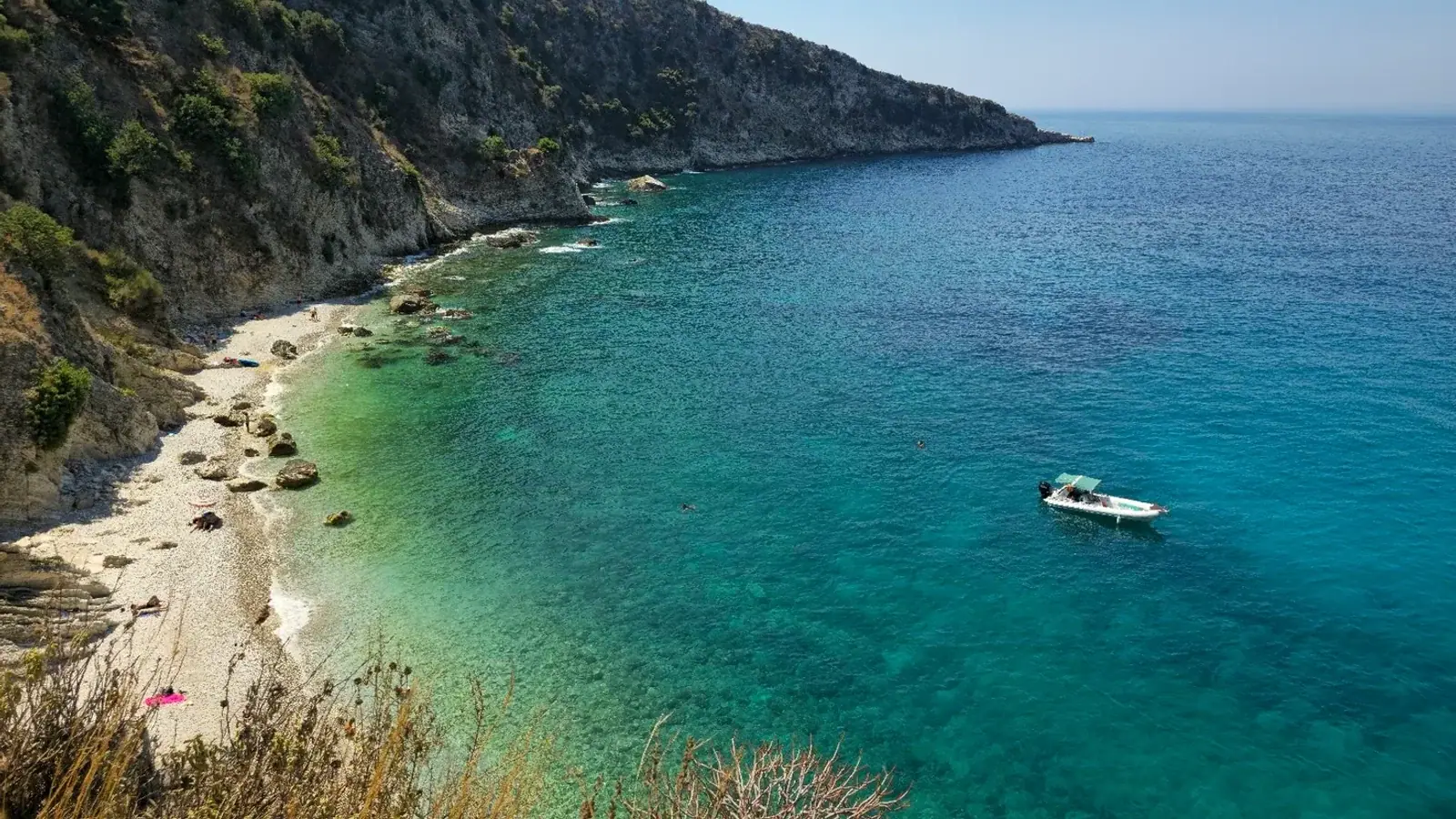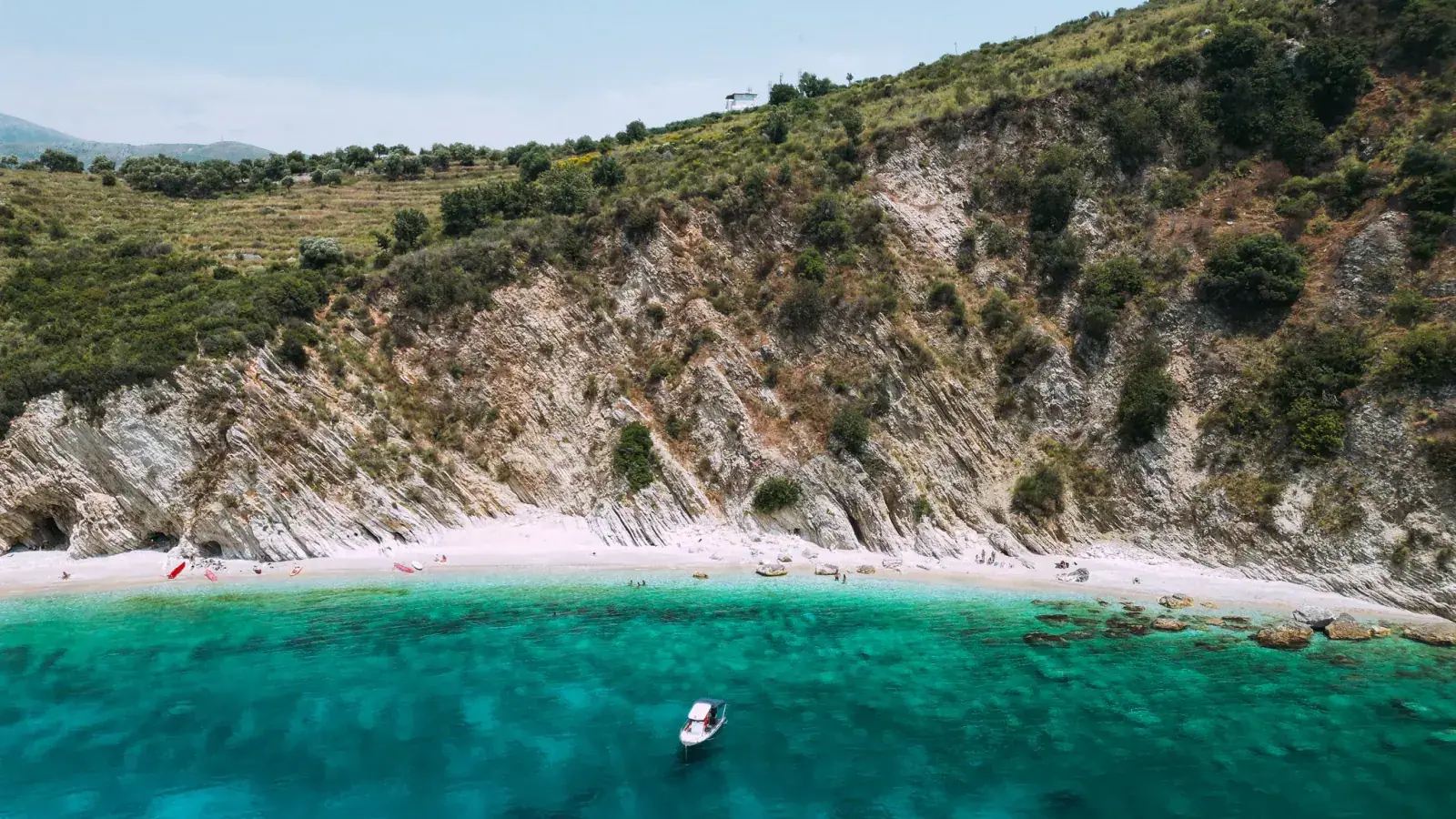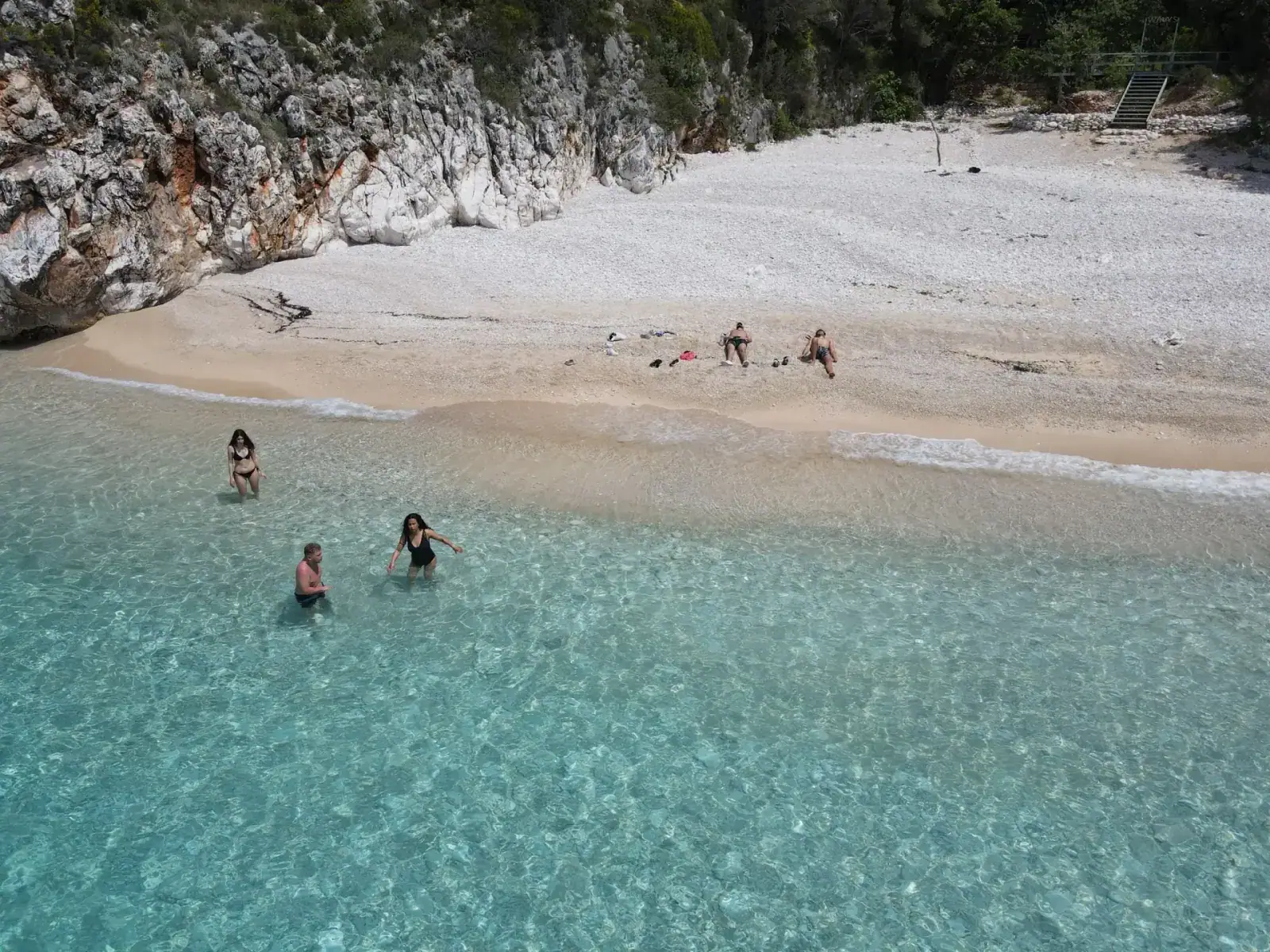
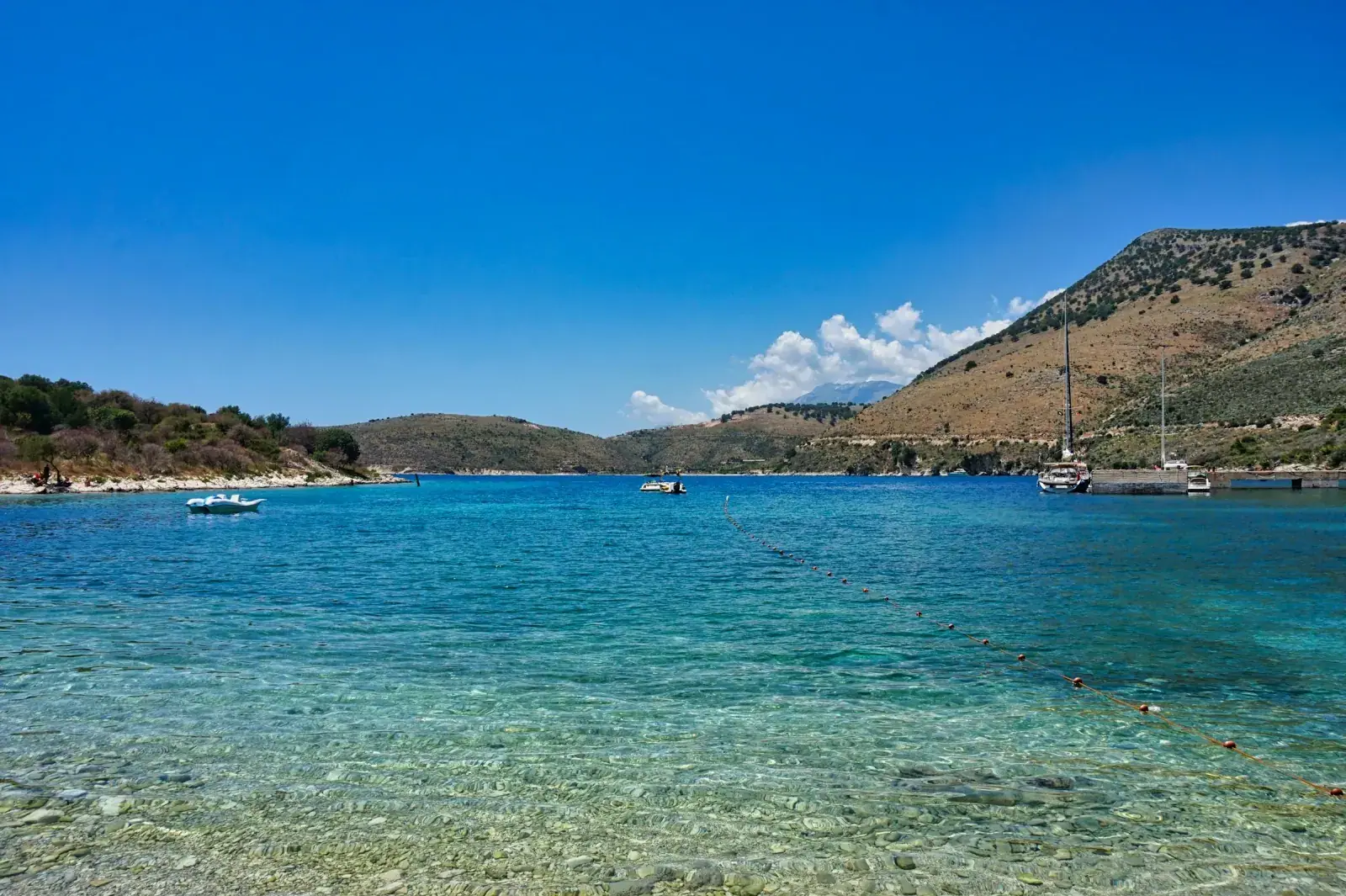
If you care about water clarity above everything else, the clearest water Himara beaches are not the ones most people visit first. The town promenade beaches are fine for a swim, but the coves with genuinely exceptional visibility, the kind where you can count pebbles four meters below you, require a short hike, a boat ride, or at least a willingness to drive 15 minutes south. Himara sits on the Ionian coast where visibility regularly exceeds 15 meters, but some spots are dramatically clearer than others.
This guide ranks every beach near Himara by water clarity, with attention to snorkeling: what you'll see, how to get there, and whether it's worth bringing a mask.
Compare hotels, apartments, and Vrbo rentals on the map. Powered by Stay22.
Quick ranking: clearest water beaches near Himara
| Rank | Beach | Water Clarity | Snorkeling | Access | Best For |
|---|---|---|---|---|---|
| 1 | Filikuri Beach | Exceptional | Excellent, fish and rocky formations | Hike/kayak/boat | Experienced snorkelers |
| 2 | Akuarium Beach | Exceptional | Very good, shallow cove and vivid colors | 1.5 km hike | Photography, beginners |
| 3 | Gjipe Beach | Excellent | Good, caves and rock walls | 30 min hike or boat | Explorers |
| 4 | Porto Palermo | Excellent | Good, deep blue and rocky bottom | Drive (8 km south) | History + snorkeling combo |
| 5 | Llamani Beach | Excellent | Moderate, deep water and large rocks | Short drive | Confident swimmers |
| 6 | Livadhi Beach | Very good | Good at headlands | Drive (10 min) | Families, beginners |
| 7 | Jale Beach | Very good | Decent, clean turquoise | Drive (20 min) | Casual snorkelers |
| 8 | Buneci Beach | Good | Limited, open water | Drive (30 min south) | Swimmers, not snorkelers |
| 9 | Spile Beach | Good | Light snorkeling only | Walk from town | Convenience |
| 10 | Dhermi Beach | Good | Minimal | Drive (25 min) | Beach clubs, not snorkeling |
1. Filikuri Beach, the clearest water near Himara
Filikuri Beach has the clearest water of any beach near Himara, full stop. This secluded cove between Himara and Llamani has turquoise water with visibility that makes the seabed look like it's behind glass. The underwater terrain is a mix of rocky formations, boulders, and sand patches, the kind of varied landscape that attracts colorful fish and rewards time spent with a mask on.
What you'll see snorkeling: Small schools of fish darting between rock formations, sea urchins on the ledges, and submerged boulders with vivid green-and-turquoise contrasts. The rock shelves along the cove edges are the most productive zone.
Getting there: You have three options: a 20-30 minute hike from Spile Beach along the coastal trail, a kayak paddle from town (roughly 30 minutes), or a boat taxi. There is no road access.
Facilities: None. Bring at least 2 liters of water, food, sunscreen, and a hat.
Snorkeling tip: Bring your own gear. There is nowhere to rent at Filikuri. Morning light (before 11 AM) gives the best underwater visibility as the sun illuminates the seabed directly.
Cost: Free. The kayak rental from Spile Beach runs about 1,000 ALL (~9 EUR) per hour. Boat taxis vary by negotiation but expect 2,000-3,000 ALL (~18-27 EUR) for a return trip.
Read the full Filikuri Beach guide for detailed trail directions and safety notes.
2. Akuarium Beach, natural aquarium clarity
Akuarium Beach earned its name honestly. This tiny cove between Livadhi and Jale has clear blue-turquoise water that genuinely looks like a swimming pool. The color gradient from shallow turquoise to deeper blue is almost surreal. On a calm morning with direct sun. You can see every pebble on the bottom without putting your face in the water.
What you'll see snorkeling: Fish congregate along the rocky edges of the cove. The snorkeling is more about clarity and colors than spotting rare species, all of it bright and close enough to the surface that everything is visible without diving down. The shallow depth makes it ideal for beginners.
Getting there: Two routes. The most popular is a 1.5 km hike from Livadhi Beach, following red trail markers (30-45 minutes). The alternative is from Jale Beach with a 4x4 vehicle.
The catch: Akuarium went viral on social media. By 10 AM in summer, this tiny cove is packed. It fits maybe 30-50 people. Arrive early or skip it.
Facilities: None. Bring water, food, and sun protection.
Cost: Free. No rentals, no fees.
Read the full Akuarium Beach guide for hiking routes and timing advice.
3. Gjipe Beach, clear water with caves to explore
Gjipe Beach is famous for its canyon setting, but the water clarity deserves its own recognition. The clear blue water at the mouth of the canyon offers excellent swimming conditions, and the real snorkeling value lies along the cliff walls on both sides of the cove.
What you'll see snorkeling: At low tide, small caves and rock formations appear along the base of the canyon walls. Rock overhangs create sheltered pockets where fish gather, and the visibility in the shallow sections near the walls is outstanding. Farther out, the seabed drops into deep blue, dramatic but less interesting for snorkeling than the edges.
Getting there: 30-minute hike from the parking area, 15 km north of Himara. Parking costs 300 ALL (~3 EUR). You can also reach Gjipe by boat tour from Himara. The boat-in, hike-out combination saves you the hot downhill walk.
Facilities: Small huts selling drinks, umbrella and lounger rentals. Camping is allowed.
Snorkeling tip: Morning visits get the calmest water and best light. The cave formations are most accessible at low tide when water levels drop and the entrances widen. Stick to the cliff edges for the best underwater terrain.
Cost: Parking 300 ALL (~3 EUR). Umbrella/lounger rentals available. The beach itself is free.
Full details in our Gjipe Beach guide.
4. Porto Palermo, deep blue clarity with a castle view
Porto Palermo is an outlier on this list. The water here is described as "bluer than other beaches," and that's accurate. The bay sits 8 km south of Himara near Ali Pasha's triangular fortress and a Cold War-era submarine tunnel, giving it a combination of history and natural beauty that no other beach on the Riviera matches.
What you'll see snorkeling: The rocky bottom and deep blue water create good visibility. You won't find the dense fish populations of Filikuri, but the underwater landscape is dramatic, with submerged rocks, clean sand patches, and intense blue that deepens the farther out you swim. The area near the castle walls where rocks meet the water is the most interesting zone.
Getting there: Easy drive, 8 km south of Himara center on the SH8 road.
Practical notes: Water shoes are recommended. The mixed sand-and-pebble bottom has some rough patches. Very few people visit this beach. On most days you'll have the water nearly to yourself.
Cost: The beach is free. Porto Palermo Castle entrance is 300 ALL (~3 EUR), and it's worth combining.
Learn more in our Porto Palermo Castle guide.
5. Llamani Beach, deep water over submerged boulders
Llamani Beach is not your typical snorkeling spot, and that is what makes it interesting. Instead of a shallow cove, you get a deep bay surrounded by cliffs where large rocks and boulders sit on the seabed several meters below the surface. The clarity is excellent, but the experience is different: you're floating above a submerged landscape of house-sized stones with blue water fading into the distance below.
What you'll see snorkeling: Large boulders and rock formations far below, with deep-water species that don't appear at shallower beaches. The cliff edges on both sides of the bay are the most rewarding zones. This is for confident swimmers comfortable in deep water.
Getting there: Short drive south of Himara (3.5 km), then a gravel path down to the beach.
Essential gear: Water shoes are non-negotiable at Llamani. The seabed stones are large and unforgiving, and the entry point is rough on bare feet.
Cost: Sunbed rentals 10-20 EUR. The beach is free.
6. Livadhi Beach, best clear water for families
Livadhi Beach is Himara's main long beach, 1.5 km of pebbles with clear, shallow water that deepens slowly. The open stretches of the beach are fine for swimming but unremarkable for snorkeling. The real value is at both ends: where the pebbles give way to rocky headlands, the underwater terrain becomes interesting.
What you'll see snorkeling: Small underwater walls and shelves where fish gather at the headland edges. The south end toward the cliffs has better marine life. Water stays shallow enough to touch bottom, the most comfortable introduction to snorkeling near Himara for children.
Getting there: 10-minute drive north of Himara center. Free parking on the beach.
Facilities: Sun loungers, parasols, restaurants including The Jester's Taverna and Tonea's Brunch.
Snorkeling tip: Walk to either end of the beach. The middle section has little to see underwater. Buy a basic mask in town and bring it here for an easy afternoon session.
Cost: Beach is free. Sunbed rentals available. Restaurants on-site.
7. Jale Beach, clean turquoise and decent snorkeling
Jale Beach has turquoise, clean water 12 km north of Himara. The clarity is better than the town beaches, but the open pebble shore doesn't offer the rocky terrain that makes snorkeling rewarding. The edges near rocks are worth a quick look with a mask, but this is not a destination snorkeling beach.
Getting there: 20-minute drive north. Easy car access, ample parking.
Facilities: Beach clubs (Favela Beach Club is the standout), parking, hotels, sunbed rentals.
Cost: Sunbeds at beach clubs typically run 1,500-2,500 ALL (~13-22 EUR) for a pair.
Beaches that are not good for snorkeling
Not every beach with pretty water is a snorkeling destination. Here's where to skip the mask:
Spile Beach. The town promenade beach has clear water suitable for swimming and "light snorkeling," but the sandy-pebble bottom and boat traffic from the pier mean there's little to see underwater. Good for a casual dip, not for dedicated snorkeling.
Sfageio Beach. Shallow and turquoise, perfect for children splashing around. But the flat, uniform bottom offers nothing for a snorkeler. Leave the mask at the hotel.
Potami Beach. Turquoise and family-friendly, but a flat pebble stretch without rocky formations. Nice for swimming, skip for snorkeling.
Dhermi Beach and Drymades Beach. Blue Ionian waters, but the open pebble shores mean the underwater experience is flat. Premium prices for atmosphere above water, not below it.
Borsh Beach. Deep blue and shallow across 7 km of sand and gravel, but almost no underwater features. Great for families wanting space, irrelevant for snorkelers.
Snorkeling gear and practical tips
What to bring
Shops on the Himara promenade sell basic masks and snorkels for 1,500-3,000 ALL (~13-27 EUR). For serious snorkeling at Filikuri or Gjipe. Bring your own quality mask. A leaking seal ruins the experience.
Essential gear:
- Mask and snorkel (bring from home for best fit)
- Water shoes, essential for Llamani, Porto Palermo, and any rocky entry
- Rash guard or UV shirt for extended face-down time in strong sun
- Reef-safe sunscreen, important in small coves where chemicals concentrate
Best time for clear water snorkeling
Time of day: Morning, always. Between 8-11 AM the water is calmest, the light penetrates deepest, and the popular coves are least crowded. By afternoon, wind picks up along the Ionian coast and churns sediment at the shallower beaches.
Time of year: June and September offer warm water (22-25 degrees C), excellent visibility, and manageable crowds. July and August are warmer but the popular coves get overcrowded. May has clear water but temperatures around 18-20 degrees C, cold for extended sessions without a wetsuit.
After storms: Visibility drops for 1-2 days as runoff clouds the water. The deeper coves (Filikuri, Gjipe) recover faster than the shallow town beaches.
Boat tours with snorkeling stops
The boat tours from Himara visit snorkeling spots only accessible by water. Pirate's Cave, Blue Cave, and Crystal Beach all have excellent visibility. Half-day tours run 3,000-5,000 ALL (~27-45 EUR) per person.
Browse all beaches on our beaches page, read our complete best beaches in Himara guide, or go further with our snorkeling and diving in Himara article.
Frequently asked questions
Which Himara beach has the clearest water?
Filikuri Beach has the clearest water near Himara. The secluded cove offers exceptional visibility with clear turquoise water, colorful fish, and rocky formations ideal for snorkeling. Akuarium Beach is a close second with clear blue-turquoise water in a tiny, photogenic cove. Both require hiking to reach, which keeps the water undisturbed.
Do I need water shoes for snorkeling in Himara?
Water shoes are essential at Llamani Beach and Porto Palermo, where large stones and mixed surfaces make barefoot entry painful. At Filikuri and Akuarium the entry is manageable without shoes, but they help on the rocky trail getting there. For most Himara beaches, a pair of basic water shoes costing 500-1,500 ALL (roughly 4-13 EUR) from town shops will cover you.
What is the best month for snorkeling near Himara?
June and September offer the best snorkeling conditions: water temperatures of 22-25 degrees C, excellent visibility, and far fewer crowds than peak summer. July and August are warmer but the popular coves get overcrowded. May works if you tolerate cooler water around 18-20 degrees C. Always check conditions after storms, as runoff reduces visibility for one to two days.
Can I rent snorkeling gear in Himara?
Basic masks and snorkels are available at shops on the Himara promenade for 1,500-3,000 ALL (approximately 13-27 EUR) to purchase. Rental options are limited and unreliable. Buying a cheap set is more practical. For the best experience at remote beaches like Filikuri. Bring your own quality gear from home since there are no rental facilities at the beach itself.
Is snorkeling in Himara safe for beginners?
Livadhi Beach and Akuarium Beach are the safest options for beginner snorkelers. Both have shallow water where you can touch bottom, calm conditions in the morning, and enough underwater features to make it interesting. Avoid Llamani Beach as a beginner. The deep water and strong currents near the cliffs require swimming confidence. Children do well at Livadhi's headland edges where the depth stays under two meters.