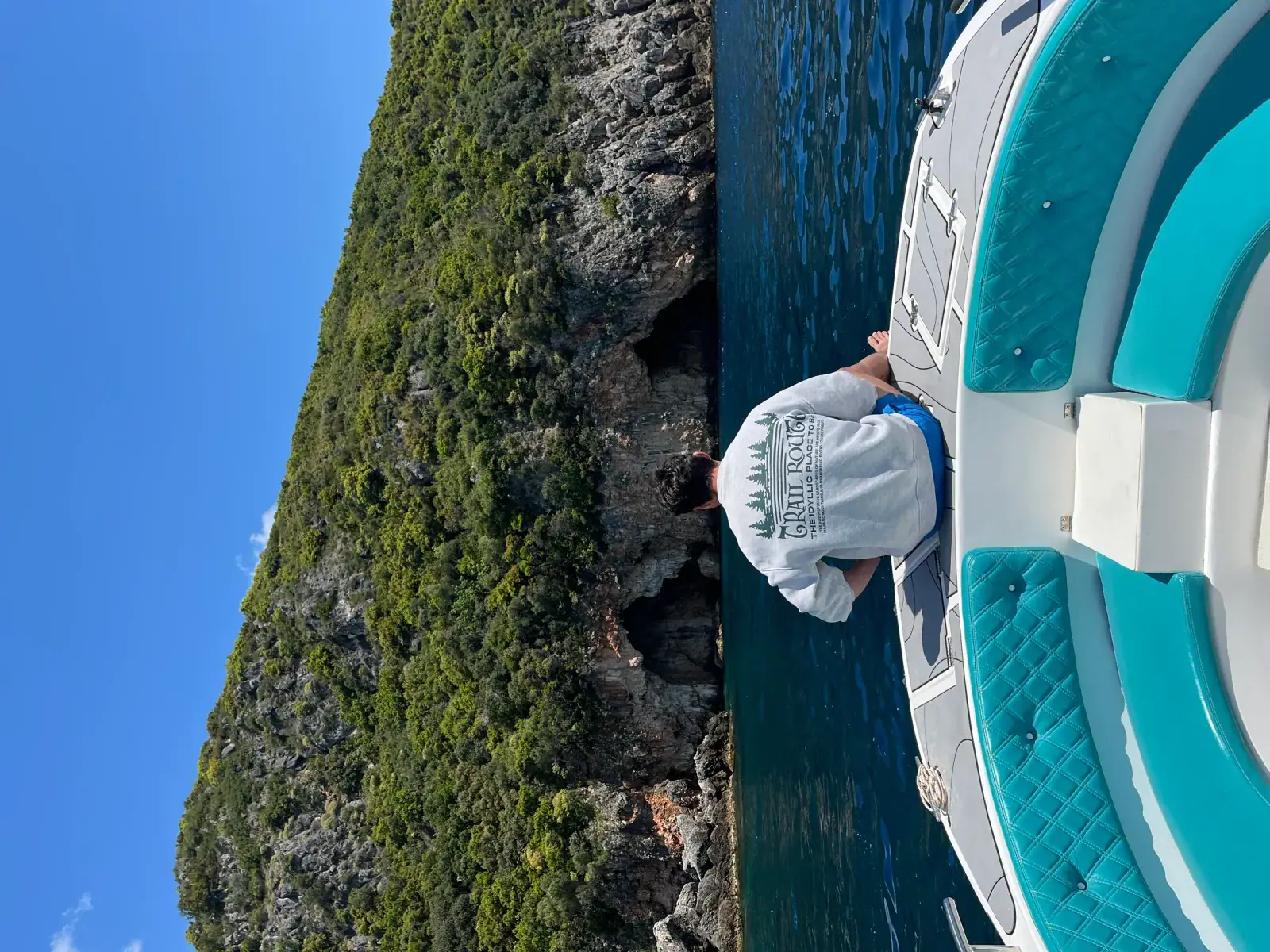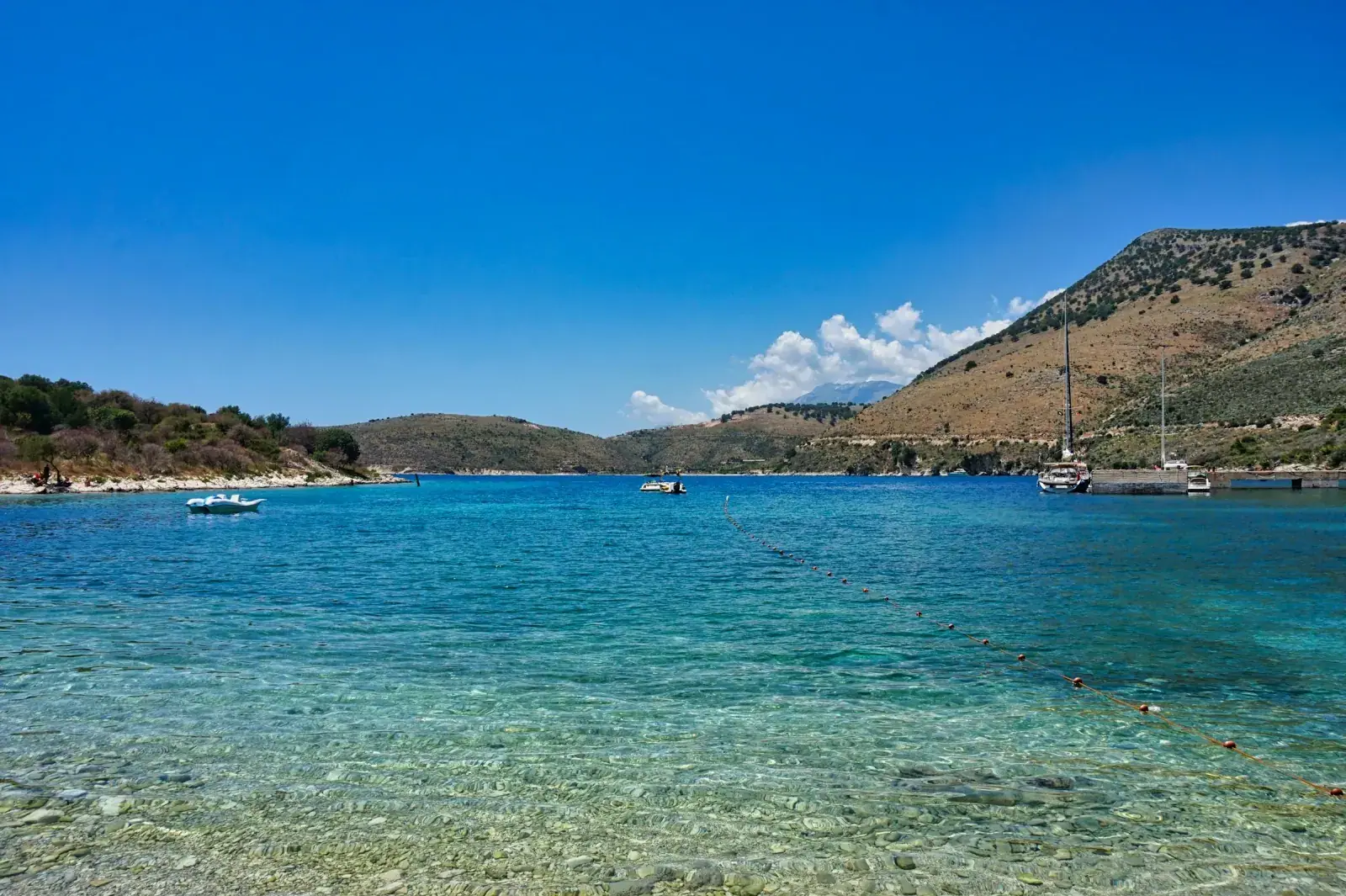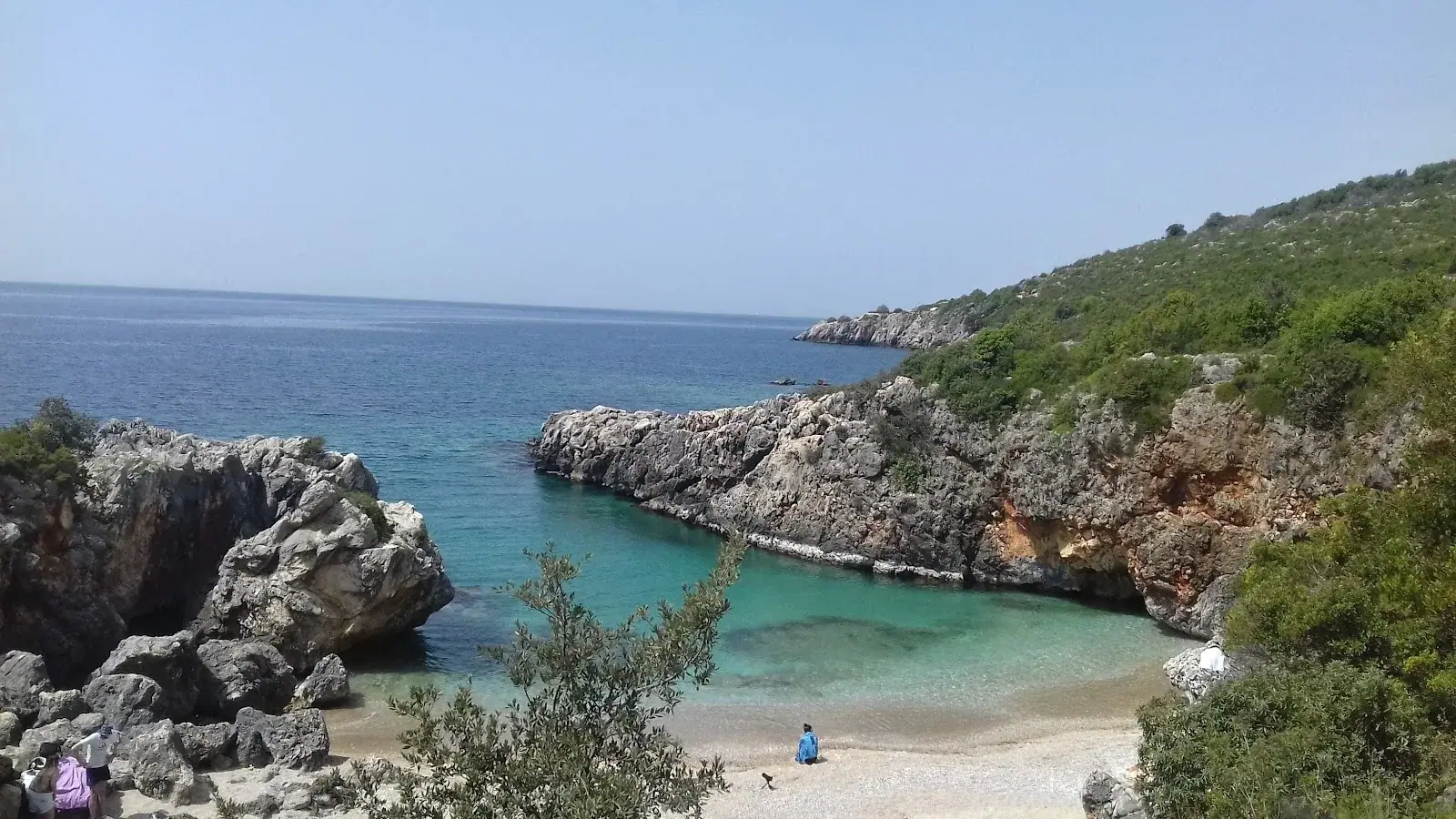
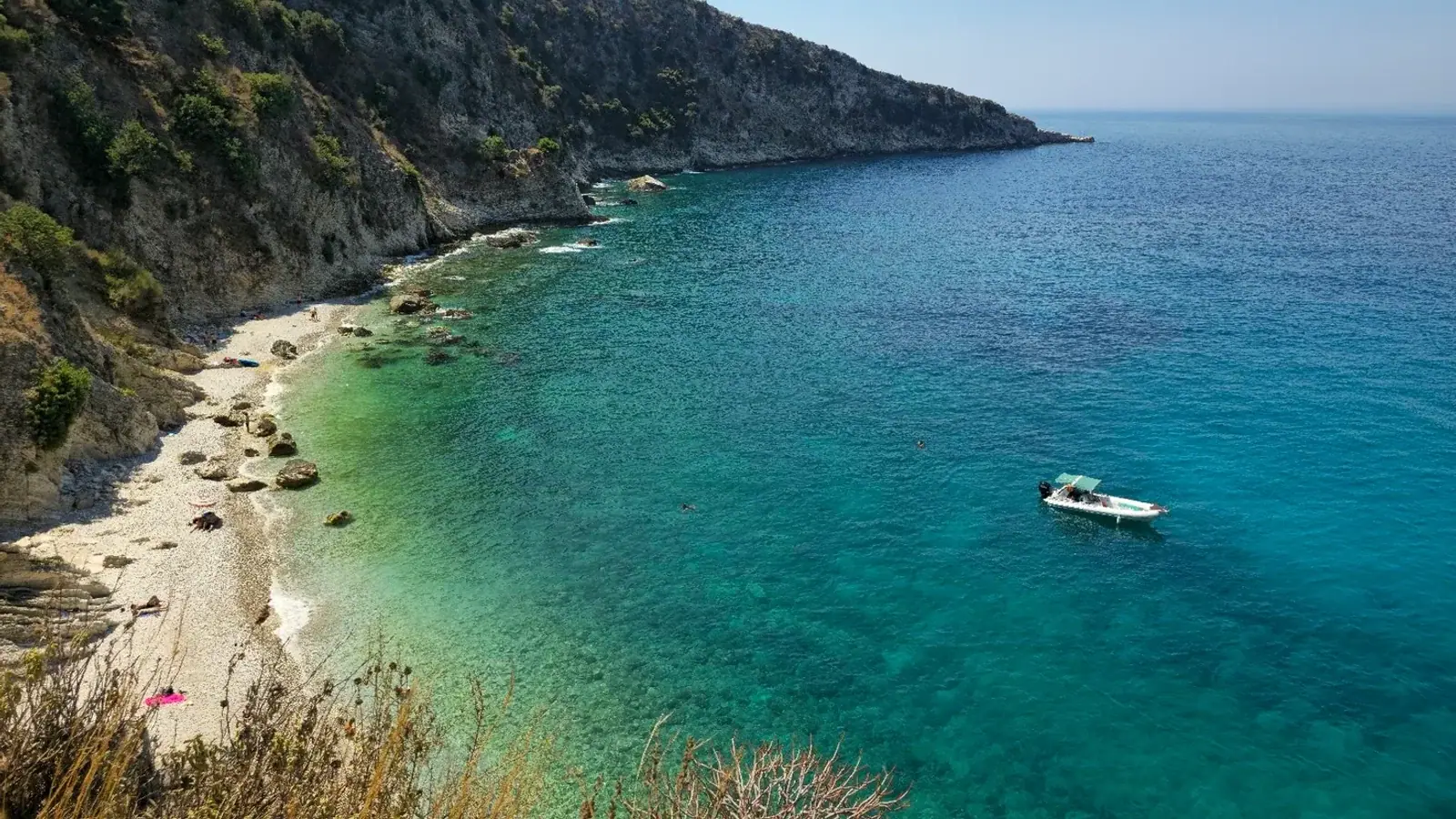
Filikuri Beach is one of the wildest coves near Himara, and this is the direct answer if you are deciding whether it is worth the effort: yes, if you want clear water, snorkeling, and a no-facilities beach with a true hidden-cove feel. The catch is access. Filikuri Beach is not a drive-down beach. You reach it by a steep 20-30 minute hike, by kayak/SUP from Himara or Potami, or by private boat drop-off. If you come prepared, Filikuri Beach is one of the best half-day adventures on the Albanian Riviera.
Compare hotels, apartments, and Vrbo rentals on the map. Powered by Stay22.
Filikuri Beach Quick Overview
| Detail | Info |
|---|---|
| Location | Between Himara town and Llamani Beach |
| Coordinates | 40.0859, 19.7519 |
| Beach type | Small pebble cove under steep cliffs |
| Road access | No direct road to the shoreline |
| Main access | Steep foot trail (20-30 min), kayak/SUP, or boat |
| Facilities | None (no toilets, no bars, no sunbeds) |
| Water | Very clear, deepens quickly, excellent snorkeling |
| Best for | Strong swimmers, hikers, snorkelers, couples |
| Best months | June and September for best balance of weather and crowd level |
Where Filikuri Beach Is and Why It Feels Different
Filikuri sits south of Himara center, tucked below high limestone walls between Potami Beach and Llamani Beach. On the map, it looks close to town. In practice, it feels remote because the cove is sealed off by terrain.
That terrain is exactly why people love it. You do not get promenade noise, beach clubs, or rows of loungers. You get a small pebble strip, rock walls, and transparent Ionian water that usually looks better in real life than in photos.
If your trip style is "comfortable sunbed + beach lunch," Filikuri is the wrong pick. If your trip style is "carry your own water, swim, snorkel, and stay off-grid for a few hours," Filikuri is one of the strongest choices around Himara.
Filikuri Beach Access Options
1. Hiking Route (Most Common)
The standard route is a steep footpath from the upper road area above the cove. Most visitors need around 20-30 minutes each way, depending on heat, footwear, and confidence on uneven ground. For a step-by-step description of the path, see the Filikuri trail guide.
What matters most is the return. Going down feels quick. Climbing back up in midday heat is where people underestimate the effort. Plan your timing around that reality.
Practical notes:
- Wear shoes with grip, not flip-flops.
- Start early to avoid full sun on the climb out.
- Keep both hands free on the steepest section.
- Do not hike down with large hard coolers or heavy bags.
2. Kayak or SUP from Himara/Potami
If sea conditions are calm, paddling in is often the best way to visit Filikuri. You avoid the steepest hiking sections and get the coastline views from water level.
Approximate planning ranges:
- Kayak rental around Himara: about 1,000 ALL/hour (about 10€), depending on season and model.
- Paddle time from nearby launch points: usually 25-50 minutes one way, depending on your route and pace.
Before you launch, check wind and swell. Morning windows are typically calmer than late afternoon.
For wider route planning, use the kayaking guide.
3. Private Boat Drop-Off
Local skippers and small boat operators can drop you near the cove in suitable sea conditions. This is the lowest-effort option physically, but timing is less flexible and price is higher than self-guided hiking.
Typical planning range: around 15€-25€ per person for short transfer-style runs, depending on season, group size, and pickup location.
If you want a packaged sea day, check Himara boat tours, or read about paddling routes to nearby hidden coves in our secret coves kayak guide.
Filikuri Beach Access Comparison
| Access type | Typical time | Effort | Cost range | Best for |
|---|---|---|---|---|
| Hike | 20-30 min each way | High | Free | Active travelers who want flexibility |
| Kayak/SUP | 25-50 min one way | Medium to high | ~1,000 ALL/hr (~10€) rental basis | Adventure travelers and snorkelers |
| Boat drop-off | 10-20 min ride | Low | ~15€-25€/person | Visitors prioritizing comfort |
What to Expect Once You Arrive
Filikuri is a small pebble beach framed by cliffs, with no commercial setup. In other words, bring everything you need. There are no guaranteed services for water, shade, food, or emergency supplies.
The beach is usually quieter than Spile, Livadhi, and Jale because access filters out casual drop-in traffic.
Water conditions are usually very clear. The seabed drops faster than at family beaches like Livadhi, so Filikuri is better for confident swimmers than for very young kids.
Snorkeling at Filikuri Beach
Filikuri is one of the better casual snorkeling spots in the Himara area because of the rocky edges and cleaner water. Visibility is often strongest in the morning, especially on calmer days.
What makes snorkeling here good:
- Rocky structures on both sides of the cove.
- Fewer boats than busier beaches.
- Less suspended sand than larger mixed-surface beaches.
If snorkeling is your priority, combine Filikuri with Snorkeling & Diving in Himara and avoid windy afternoons.
Safety Rules That Matter at Filikuri
Filikuri is not dangerous if you treat it like a remote cove and plan correctly. Most problems happen when visitors arrive late, under-hydrated, or with poor footwear.
Use this checklist before you go:
| Safety item | Why it matters |
|---|---|
| 2 liters of water per person | No refill points on-site |
| Grippy footwear | Steep and uneven trail sections |
| Early start | Safer climb-out temperature window |
| Dry bag for phone/docs | Wet access by kayak or splash zones |
| Small first-aid basics | No immediate on-beach services |
| Emergency number: 112 | Albania national emergency line |
If wave or wind conditions look unstable. Skip paddle access and use hiking or postpone. A "maybe fine" sea state is not a good risk decision in a cove without services.
What to Pack for Filikuri Beach
Pack lighter than you think, but pack smarter than a normal town beach day.
Must-have
- Water (minimum 2 liters each)
- High-SPF sunscreen
- Hat and sunglasses
- Snorkel mask
- Water shoes or trail sandals with grip
- Cash (for transport/rentals in town)
Strongly recommended
- Light food (energy bar, fruit, sandwich)
- Compact shade option (cap or travel umbrella)
- Power bank
- Basic blister care
What to skip
- Heavy glass bottles
- Large hard coolers
- Bulky gear that makes the climb unsafe
Best Time to Visit Filikuri Beach
For most travelers, the best months are June and September. You still get warm water and good visibility, but less pressure on access paths and transport.
Peak July-August can still work, but you should shift earlier:
- Arrive before 10:00 for easier heat management.
- Leave before late afternoon wind windows if returning by kayak.
- Assume the climb out feels 30-40% harder in midday heat.
For broader trip timing, use best time to visit Himara.
Filikuri vs Nearby Hidden-Cove Beaches
| Filikuri | Akuarium | Gjipe | |
|---|---|---|---|
| Core vibe | Steep-access hidden cove | Tiny clear-water cove | Canyon beach destination |
| Access | Hike, kayak, boat | Hike or rough-road transfer | Hike or boat |
| Facilities | None | None | Basic seasonal huts |
| Crowding pattern | Usually lower than Akuarium | Can crowd early due social media | Moderate to high in peak months |
| Best for | Snorkeling + low-service adventure | Quick swim + photo stop | Full-day beach + canyon walk |
If your priority is isolation and water clarity, Filikuri is usually the best fit. If your priority is iconic cove photos with shorter stop time, Akuarium Beach often wins.
Suggested Half-Day Plan from Himara
- Start from Himara around 08:30.
- Reach access point before 09:00-09:30.
- Swim/snorkel until noon.
- Leave cove before peak heat on the uphill route.
- Late lunch in town or at Potami.
This timing gives you better light, easier temperatures, and safer decision margins.
Final Take: Is Filikuri Beach Worth It?
If you are choosing based on raw beach comfort, Filikuri Beach is not the easy option. But if you want one adventurous cove day on this trip, Filikuri Beach is absolutely worth it. The water quality, cliff setting, and low-service wild feel are hard to replicate on drive-down beaches. Plan access seriously, carry what you need, and Filikuri Beach will likely be one of your best Himara memories.
FAQ
How do you get to Filikuri Beach?
Three ways: a steep 20-30 minute foot trail from the upper road above the cove, by kayak or SUP from Himara or Potami in calm conditions, or by private boat drop-off. There is no road that reaches the shoreline, so every option ends with hiking or arriving by sea.
Is there parking at Filikuri Beach?
There is no shoreline parking lot. You can drive close to the upper trailhead and park informally along the road area, then hike down the steep path to the cove. Unlike town beaches, there is no managed parking at the beach itself.
Is Filikuri Beach suitable for children?
It depends on age and hiking ability. The cove has deepening water and a steep access route, so it is better for older kids who are strong walkers and swimmers. For easier family logistics, Livadhi Beach is usually the safer default.
Can you drive directly to Filikuri Beach?
No. You can get close by road, but the last section requires a steep hike or sea access. There is no standard direct drive-down parking at the shoreline like on town beaches.
Is Filikuri Beach good for snorkeling?
Yes. Filikuri is one of the better snorkeling spots near Himara because of rocky edges, clear water, and lower boat traffic than busier bays. Morning conditions are usually better for visibility.
Are there restaurants or sunbeds at Filikuri Beach?
No. Filikuri has no reliable beach facilities. Bring your own water, food, and shade planning. Treat it as a remote cove, not a serviced beach club destination.
Is kayaking to Filikuri Beach difficult?
In calm conditions, moderate paddlers can do it. In wind or chop, it becomes significantly harder and riskier. Check conditions before launching and avoid late-afternoon returns if the sea is building.