We've been driving Albanian roads from a Himara base for the past three seasons, and the thing that keeps catching tourists is not what they expect. It isn't potholes. It isn't the SH8 hairpins. It isn't the trucks. It's the gap between the type of road they're told to expect and the actual condition of the specific stretch they're on at the specific season they're driving it. A glowing review of "Albanian motorways" written from a Tirana-Durres airport run is technically correct and operationally useless if you're about to drive Vlora to Saranda in early May with rentals due back at sunset. So this guide is built differently. We rate every road we drive regularly, in 2026, on a 1-10 scale, with notes on what actually changed this season and where the published advice is no longer accurate.
Pair this with our SH8 Vlora to Himara drive guide for the segment-by-segment breakdown of the road most visitors actually drive, our Albania driving rules for tourists for what police enforce, and our Albanian Riviera road trip map for full route planning.
Our 2026 Road Ratings (Drove These in April)
These ratings are ours. We use a 1-10 scale where 10 is "drives like Switzerland" and 1 is "we don't take rental cars on this." The justification matters more than the number, the same road earns different scores in different months and different vehicles.
| Road | Our 2026 score | What we drove it in | Honest one-liner |
|---|---|---|---|
| A1 Tirana–Durrës | 9 / 10 | Hatchback, every direction | The one road that won't surprise you. Drive normally |
| A2 Tirana–Lushnjë–Fier | 8 / 10 | Hatchback, southbound | Modern, but speed limits drop without warning. Watch the cameras near Rrogozhinë |
| A2 extension toward Tepelenë | 6 / 10 | Hatchback, April 2026 | Active construction. Fine if you accept the lane shifts; frustrating in rain |
| SH4 Fier–Vlora | 8 / 10 | Hatchback, multiple times | Surprisingly straight, recently maintained. Trucks are the variable |
| SH8 Vlora–Llogara | 7 / 10 | Hatchback, April 2026 | Good asphalt, hairpins handled at 30–40 km/h. Tour buses queue you up |
| SH8 Llogara descent–Dhërmi | 6 / 10 | Hatchback, April + October | The drop into Dhërmi is the steepest part. Use engine braking |
| SH8 Himara–Borsh | 7 / 10 | Hatchback, monthly | Rebuilt sections feel new. Watch for rockfall warnings after spring rain |
| SH8 Borsh–Saranda | 6 / 10 | Hatchback, April 2026 | Two cliff-cut sections still narrow; one lane is sometimes how it works |
| SH99 Saranda–Gjirokastër | 6 / 10 | Hatchback, March 2026 | Mountain road, scenic. Patches of rough surface near the summit |
| Llogara Pass old road | 5 / 10 in fog, 8 / 10 in sun | Hatchback, mixed seasons | Spectacular when clear, dangerous when not. We don't drive it after dark |
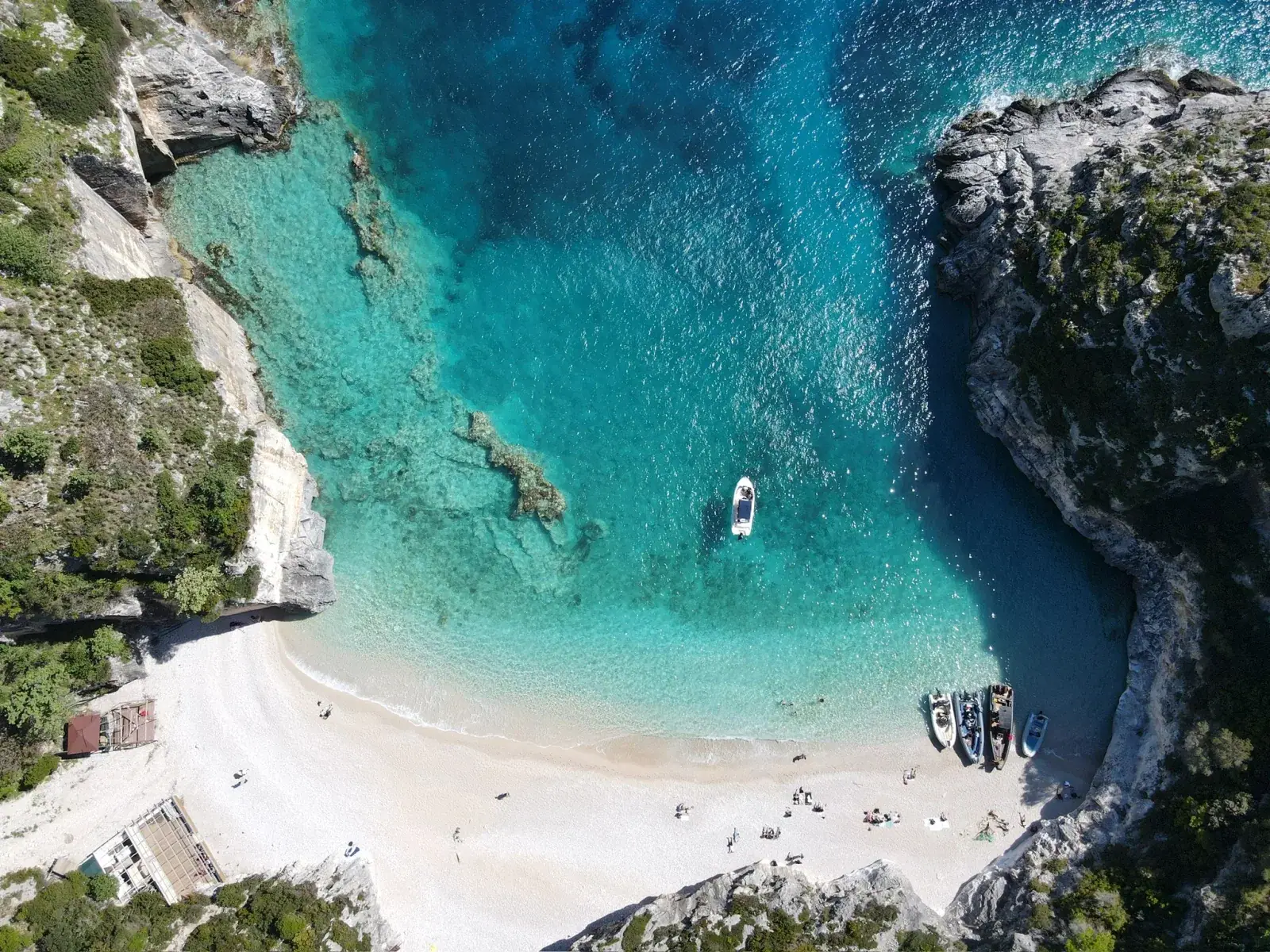
| Gjipe Beach access track | 2 / 10 | We don't take rentals down it | Unpaved, single-lane, washouts. Walk it or take a 4x4 |
| Pilur / Vuno mountain spurs | 4 / 10 | Compact, dry weather only | Paved start, then variable. Doable in a hatchback if you commit |
The rating that surprises tourists most is the SH8 Himara-to-Borsh stretch. We score it 7 not because the asphalt is great everywhere, but because the rebuilt sections from late 2024 still hold up and the bad sections are predictable, the same blind cliff cut south of Porto Palermo, the same landslide-prone curl near Bunec. Once you've driven it twice, it stops being a hazard and starts being a route. Tourists writing in panic on forums have usually driven it once, in summer traffic, behind a tour bus, at 2 PM.
What's Actually Different in 2026
Three changes matter. Everything else is the same Albanian driving you'd recognise from 2023.
The Llogara Tunnel is still not open. We get this question every week. Despite multiple announcements, the tunnel has not entered passenger-vehicle service as of May 2026. The old pass road remains the only way over Llogara unless you're routing through Gjirokastër. Best current estimate is late 2026 or early 2027. Toll pricing is unconfirmed; speculation puts it at 250–500 ALL (~2.50–5 EUR) for cars. We'll update this section the day it opens. Until then, the old pass is your only option.
A2 extension construction is heavier than 2025. If you're routing Tirana → Gjirokastër → Saranda (the inland route). Expect 30–60 minutes of construction-zone slowdowns through April-October 2026. The single-lane stretches near Tepelenë are the worst. We routed through here on April 14, 2026, the lane shifts were unmarked twice.
SH8 sections south of Porto Palermo got patched in March. The patch crew finally hit the worst sections we'd been complaining about. The asphalt is fresh but unmarked, no centerline yet, through three roughly 200m stretches. Drive these like single-lane roads regardless of how they look.
What hasn't changed: livestock crossings, blind-corner overtaking, fuel-station gaps in mountain corridors, and the unanimous bad-idea status of night driving outside the A1.
SH8 in Detail: The Road You'll Actually Spend Hours On
Most visitors to the Riviera will spend more time on the SH8 than on any other road in Albania, so it gets the most space here. The full play-by-play is in our SH8 Vlora to Himara drive guide; below is the condition-only summary.
Vlora to Llogara Pass base (~25 km)
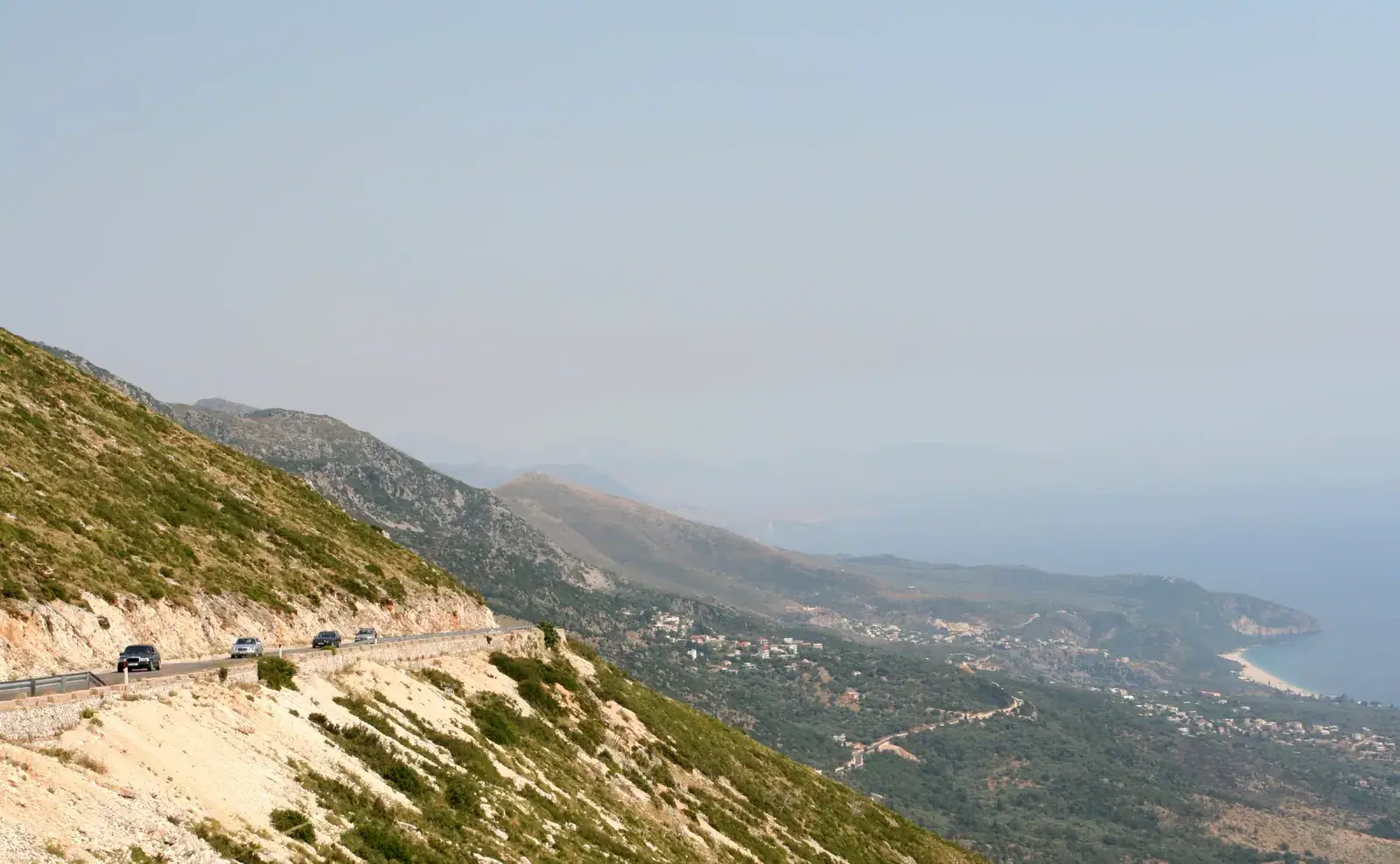
Recently maintained asphalt. Climbs through Llogara National Park with over a dozen hairpins. Width is fine for two cars but tight for tour buses; expect to be queued behind one for 5-15 minutes at a time. Guardrails present on the most exposed switchbacks, missing on others. We drive this stretch at 40 km/h and let faster traffic pass at the pull-outs.
Llogara Pass crossing (1,027 m elevation)
Steep, 8-10% gradients on both sides. Fog forms most mornings between April and October, usually clears by 11 AM. The descent toward Dhërmi has the tightest switchbacks on the route. Engine-brake the descent in 2nd gear; riding the brakes will overheat them by the bottom. We've seen rentals stopped at the lay-bys with smoke off the rotors. Don't be that car.
Dhërmi to Himara (~25 km)
Generally good. One narrow cliff-cut section just south of Drymades. Tour-bus traffic is heaviest here in July-August. Pull-outs are spaced every few kilometres for photos and for letting impatient drivers past.
Himara to Saranda (~55 km)
Mostly good with two narrow cliff sections, one south of Porto Palermo, one near Bunec. After heavy rain (typically late October through March), small rockfalls occasionally close one lane for 1-2 hours. The final 10 km into Saranda pull inland and are well-surfaced. We've never been delayed more than 30 minutes on this stretch in 2026 so far.
For US travelers: Distances above in km, multiply by 0.62 for miles. The Vlora-Saranda full SH8 run is ~85 mi but takes 2.5-3 hours, not 90 minutes; American instinct on driving time will be wrong here. Fuel runs
$2.65/USD per liter ($10/gallon) at May 2026 exchange rates. Most US driver licenses are accepted with an International Driving Permit; without an IDP, rental companies can refuse the car at pickup. Confirm cross-border insurance to Greece if doing a Corfu loop.
For UK travelers: SH8 hairpins feel familiar if you've driven Snowdonia or the NC500, same physical demands, less guardrail. UK driving licenses are accepted directly without IDP. Standard rental CDW excess runs €500–€1,000; a UK-issued credit card with rental cover may handle it, but verify Albania is in scope (some explicitly exclude). UK FCDO advice for Albania remains low-risk for road travel.
Construction & New Infrastructure: Status as of May 2026
| Project | Affects | Current status (May 2026) | Estimated finish |
|---|---|---|---|
| Llogara Tunnel | SH8 over the pass | Not open. Construction visible from old road | Late 2026 or early 2027 |
| Tepelenë bypass | A2 extension corridor | Active construction; lane shifts | No firm date |
| A2 toward Gjirokastër | Inland southbound route | Sections under construction | 2027-2028 |
| SH8 patch program (south of Porto Palermo) | Riviera south of Himara | Patched March 2026, unmarked | Centerline striping summer 2026 |
Together, the Llogara Tunnel and A2 extension will compress Tirana-Himara from today's 4-5 hours to an expected 3-3.5. Neither is helping you in May 2026. Plan for current times.
Hazards: What We Actually Watch For
These are listed in order of how often they bite tourists, based on conversations we have most weeks.
Overtaking on blind corners. The single most common cause of close calls. Albanian drivers commit to overtakes that European drivers wouldn't. Solution: drive defensively, hug your edge of the lane. Expect oncoming traffic in your lane on every blind turn. Treat every yellow centerline as if it were dashed.
Livestock. Goats and sheep cross SH-roads daily. Cattle less common but bigger problem. The herd usually crosses in 30-90 seconds; stop, wait, don't honk, you'll spook them onto your hood.
Unlit vehicles after dark. Tractors without taillights, mopeds without headlights, donkey carts with one reflector. We don't drive secondary roads after sunset. Period.
Potholes hidden by water. In rain, every depression looks the same. The real ones eat wheels. If the road ahead has standing water, slow to walking speed.
No hard shoulder. When asphalt ends, the ground often drops away with no margin. Don't drift. Don't take a phone call you'd take your eyes off the road for.
Construction-zone speed traps. The speed-limit-drops-to-30 game on A2 construction zones is enforced. Cameras and standing patrols both. Fines start at 2,000 ALL (~20 EUR / £17 / $22).
Fuel: Where to Fill, Where Not To
Fuel is generally available on main routes. The gap that catches people is between Vlora and Himara, 55 km of mountain road with no functioning station. Fill in Vlora before Llogara, every time.
| What | Detail (May 2026) |
|---|---|
| Main chains | Kastrati, EKO, Europetrol, these accept cards |
| Fuel types | 95 octane, diesel, LPG (most stations) |
| Price (May 2026, our last fill-ups) | ~250 ALL/litre gasoline, ~245 ALL/litre diesel |
| Card acceptance | Reliable in Tirana, Durrës, Vlora, Saranda. Rural: cash |
| Mountain corridors | Fill before entering. Vlora→Himara has zero stations |
| Riviera coverage | Stations in Vlora, Himara, Borsh, Saranda. Nothing between |
Specific Riviera-side stations are mapped in our petrol stations near Himara guide.
Tolls: What You Pay (Spoiler: Nothing, Yet)
Albania has no active toll roads as of May 2026. The A1 has had toll infrastructure installed for years; collection has not started. The Llogara Tunnel is expected to carry a toll once operational. There are no vignettes, no stickers, no booths to pre-pay. Budget zero for tolls in 2026.
We track this in the Albania tolls and tunnel fees guide and will update both pages the day collection actually begins.
Night Driving: The One Rule We're Strict About
Don't, outside the A1 and major town centers.
The reason isn't the asphalt. It's the absence of every visual cue you depend on at night: streetlights, reflective markers, painted lines, lit hazards, lit pedestrians, lit livestock. The SH8 has hairpins on Llogara Pass with no guardrail and no reflectors. Add a tractor without taillights and a herd of goats around the next corner, and you've assembled the conditions of every Albania-road horror story you'll read on Reddit.
If your flight or ferry lands late, sleep at a Tirana or Durrës hotel and start fresh. The cost of one night's hotel is less than the deductible on a single bumper scrape.
Car Rental: What Actually Matters for Albanian Roads
A standard compact car handles every road in this guide. You do not need a 4x4 for the Riviera. Manual is standard; automatics cost more and are scarcer.
- Photograph every panel before driving off. Albanian rental companies dispute scratches aggressively. The photos protect you.
- Check the spare and the jack. Pothole punctures are not unusual on secondary roads, and we've collected rentals where the spare was missing.
- Top up the insurance excess. Standard CDW carries 500-1,000 EUR / £430-£860 / $540-$1,080 excess. The 5-10 EUR/day add-on is worth it.
- IDP if non-EU. US, Canadian, Australian, and most non-EU drivers should carry an International Driving Permit. UK and EU licenses are accepted directly.
- Cross-border permission. If you plan a Corfu (Greece) or Montenegro detour. Confirm in writing the rental allows it. Many don't, by default.
For options, see Tirana airport car rental, Himara car & scooter rental, or no-credit-card rental options.
Frequently Asked Questions
Are Albania's roads safe for tourists in 2026?
Yes for the routes most tourists drive. The A1, SH4, and main SH8 are all driven daily by visitors without incident. Risks, aggressive overtaking, livestock, potholes, poor night visibility, are manageable with defensive driving, daylight-only secondary roads, and a standard rental. Mountain spurs and unpaved tracks are a different question and need a 4x4.
How long does it really take to drive from Tirana to Himara in 2026?
Plan 4.5 hours including a fuel-and-coffee stop. The route is A2 → SH4 → Vlora → SH8 over Llogara Pass. Add an hour in July-August traffic. Once the Llogara Tunnel and A2 extension complete (2027+), this should drop to 3-3.5 hours. We do not recommend attempting it after dark unless you've driven it before in daylight.
Do I need a 4x4 for the Albanian Riviera?
No, with one exception. The SH8 from Vlora to Saranda is fully paved and a hatchback handles it without issue. Beach access tracks like the road down to Gjipe are unpaved, washboarded, and inappropriate for a normal rental. Walk Gjipe from the highway, or hire a local 4x4 transfer. For everything else on this guide, a compact rental is fine.
Is the SH8 actually prone to landslides?
The sections south of Porto Palermo and around Bunec are landslide-prone after heavy rain. Most events are minor, a few rocks, one lane blocked, cleared in 1-2 hours. Major closures are rare. The risk peaks in late October-March. In summer, the practical risk is close to zero. Check local conditions only after sustained rain in shoulder season.
Will the Llogara Tunnel be open by my trip?
Probably not, unless you're traveling late 2026 or 2027. As of May 2026, the tunnel is not in passenger service. The opening date has slipped repeatedly; we don't trust any announced date until we drive it ourselves. For now, plan around the old Llogara Pass. When the tunnel opens, our pass vs tunnel comparison will be your decision-maker.
What happens if I break down on the SH8?
Mobile coverage is reliable along the entire SH8. Vodafone and One Albania both work. Call your rental's roadside number first; most have 24-hour assistance. From Himara, tow trucks reach most points on the SH8 within 60-90 minutes. Carry water, a charged phone, and the rental contract showing roadside coverage. Don't try to flag down passing cars on hairpins; wait at a pull-out.
Are there speed cameras and how strict are fines?
Cameras exist on the A1, A2 construction zones, and approaches to larger towns. Live police checkpoints are more common than cameras. Fines start at 2,000 ALL (~20 EUR / £17 / $22) and scale up for serious offenses. Pay at the post office, never roadside in cash. More in our driving rules guide.
Can I drive my Albanian rental into Greece or Montenegro?
Often, but not by default. The Kakavija crossing into Greece and the Muriqan crossing into Montenegro are most common. Most rental contracts either prohibit this or charge a daily cross-border fee (5-15 EUR/day) plus require pre-authorization. Get it in writing before you drive, border officers can ask, and unauthorized crossings void your insurance. Details in our border crossing by car guide.