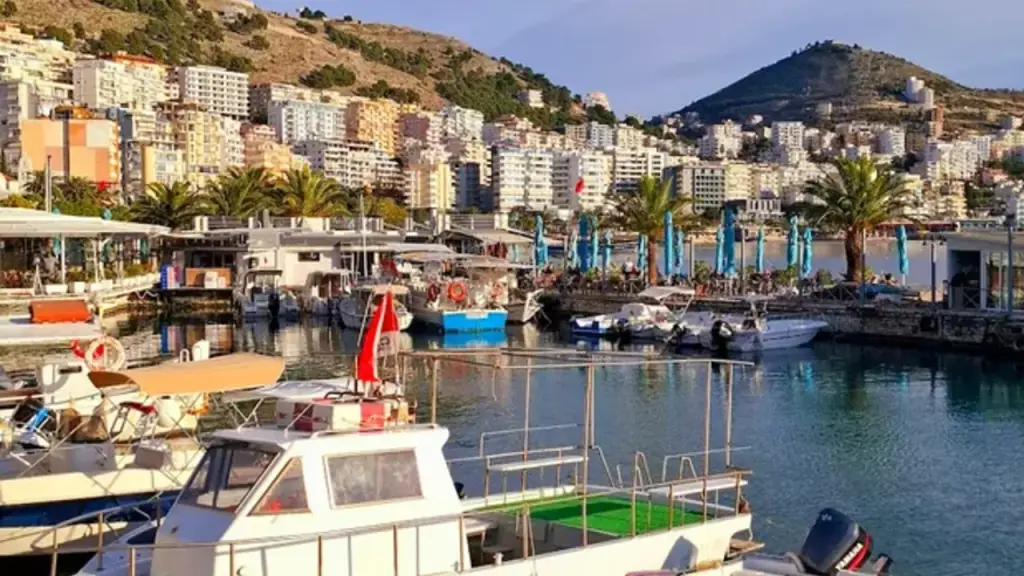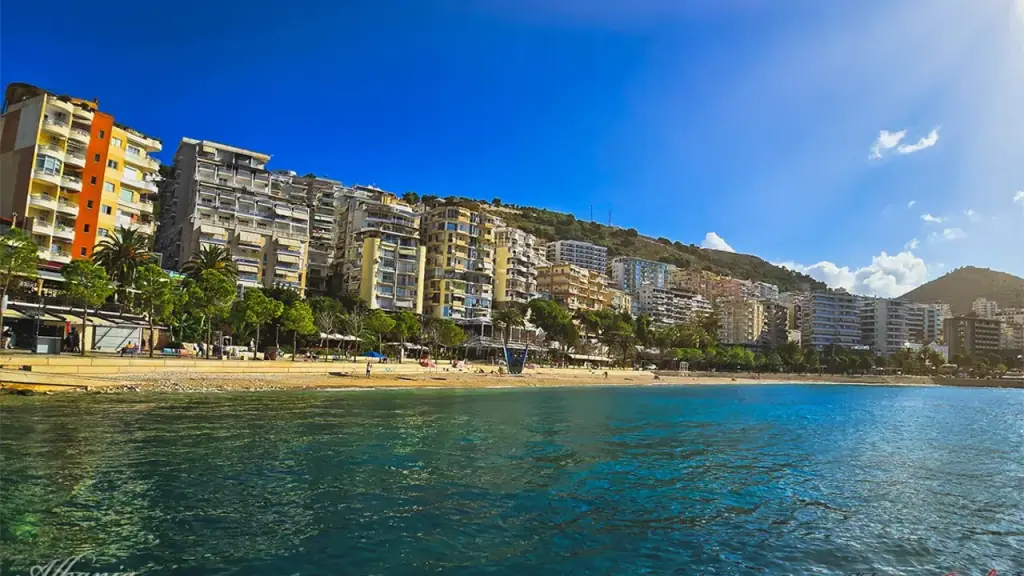
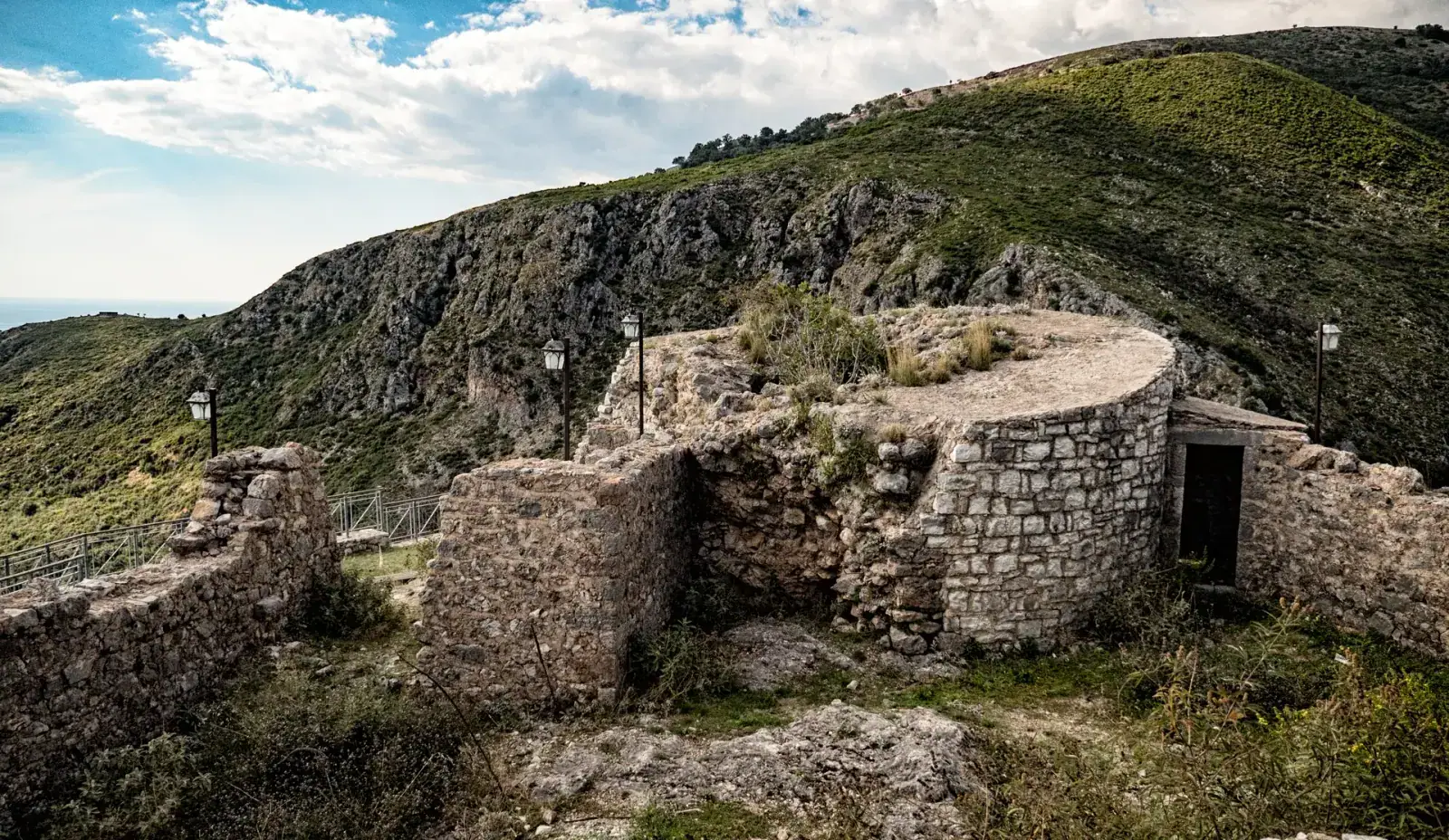
The short answer is Himara is in Albania, on the Albanian Riviera coast in the Vlorë County of southern Albania. There is no political ambiguity. The town is sovereign Albanian territory, with Albanian government administration, Albanian currency, and an Albanian postal code. But people search "Himara Greece" several thousand times a year for a real reason: this is one of the most ethnically and linguistically complex coastal towns in the Mediterranean, with a Greek-speaking minority population, Greek Orthodox cultural roots, and a name that comes from Ancient Greek. See the meaning of the name Himara for the full etymology.
The full answer, the one this article exists for, is that the geographic question and the cultural question give different answers, and getting both right is the difference between a flat trip and a genuinely interesting one.
The quick geographic answer
| Question | Answer |
|---|---|
| Country | Albania (sovereign territory, no dispute) |
| Region | Albanian Riviera, southern Albania |
| County (qark) | Vlorë County |
| Distance to Greece | ~40 km from Greek-Albanian border (Kakavia crossing); ~50 km from Corfu by sea |
| Currency | Albanian Lek (ALL); EUR widely accepted |
| Language (official) | Albanian |
| Government | Albanian municipal administration |
| Calling code | +355 (Albania) |
| Time zone | CET / CEST (UTC+1 / UTC+2) |
If you are crossing a border on a map: you are crossing into Albania to reach Himara, not into Greece.
So why do people think it might be Greek?
Five overlapping reasons. Each one is a real signal, and they compound, which is why the search query exists.
1. The town has a Greek-speaking population
Himara has historically been home to a Greek minority community, with Greek as a co-spoken everyday language alongside Albanian. The exact number is contested politically, since Albanian census figures and Greek-government estimates differ, but in practice you will hear both Albanian and Greek spoken in shops, restaurants, and on the street, especially in the older parts of town and in nearby villages like Dhërmi, Palasë, and Vuno. See our deeper Greek minority in Himara guide for the full cultural picture.
2. The name itself is Ancient Greek
The name "Himara" comes from the Ancient Greek Χίμαιρα (Khimaira), meaning "she-goat" or, mythologically, the Chimera. The town's full historical inscription reads "ΦΟΙΒΟΣ ΑΠΟΛΛΩΝ ΧΙΜΑΙΡΑΝ ΕΠΟΛΙΣΕΝ," or "Phoebus Apollo founded the city of Chimaira." The name has remained linguistically stable for over two millennia. See our Himara meaning / name origin page for the full etymology.
3. Greek Orthodox churches dominate the religious landscape
Himara's architecture is Greek Orthodox in religious tradition. See our Orthodox churches in Himara guide. The Old Town's churches, the Athali Monastery above town, and Saint Theodore Monastery in Dhërmi all sit in this tradition. By contrast, central Albania has a more mixed Catholic / Bektashi / Sunni religious landscape.
4. The cuisine reads Greek
What you eat in Himara, meaning grilled fish, tzatziki, taramasalata, Greek salads and lamb-and-orzo (giouvetsi), is Greek-leaning Mediterranean, not the meat-and-byrek-heavy interior Albanian cuisine you would find in Tirana or Korçë. This is a function of geography (this is the Ionian coast, eating like the Ionian coast) and ethnic mix (Greek-speaking households cooking traditionally Greek dishes).
5. The historical sovereignty was complex
Across two millennia, Himara has been under: Greek-speaking polities, Roman, Byzantine, Venetian, Ottoman, Italian (briefly during WWII), and Albanian rule. The local Himariotes maintained substantial autonomy under most of these, and the so-called "Himariote autonomy" is a real historical phenomenon. By Albanian independence in 1912, the town became and has remained part of Albania.
What this means for travelers
You are entering Albania
Practically: you cross into Albania, you use Albanian visas (or visa-free entry for many passports; see our Albania visa requirements), and the Albanian government's immigration rules apply. Greek visas do not cover Albania. Schengen rules do not apply in Albania. See our Albania Schengen status for the 90/180-day separate counter explanation.
Greek language goes a long way
If you speak any Greek, use it, especially in older shops, restaurants outside the high-tourism strip, or Orthodox church contexts. Locals will appreciate it and often switch from Albanian to Greek mid-sentence. English is also widely spoken in tourism contexts.
The dual identity is the experience
Himara is one of the few places in Europe where you can drink Albanian wine in a Greek-Orthodox-dominated town, eating a Greek-style grilled fish, looking at a 13th-century Byzantine monastery, on Albanian sovereign soil. That is the appeal. Travelers who arrive expecting either "pure Albania" or "pure Greece" find a more interesting reality.
Currency: lek + euro both work
Albanian Lek (ALL) is the official currency. Euros are widely accepted in restaurants, hotels, and tourist contexts at roughly 1 EUR = 100 ALL. Greek euros and German euros and Italian euros are all just "euros" here. Cards are accepted in most tourism-facing businesses; cash-only places exist (notably To Steki sti Gonia). See our Himara money / ATM guide.
The border question
If you are coming from Greece (Corfu, Athens, Thessaloniki, the Greek mainland), you cross a border to enter Albania. Three common routes:
| Route | Border crossing | Time |
|---|---|---|
| Corfu → Saranda → Himara (ferry) | Corfu Port → Saranda Ferry Terminal | 30-90 min ferry + 1.5 h drive; see Corfu to Himara |
| Athens / Ioannina → Kakavia → Gjirokaster → Himara | Kakavia land crossing | 2-3 h driving via Gjirokaster; see Himara to Kakavia border guide |
| Athens → Saranda by bus | Land crossings via Kakavia or Kapshtica | 11-13 h bus; see Himara to Athens |
You will need: valid passport (no national ID for non-EU/non-Schengen-area travelers), and your visa or visa-free authorization for Albania (most US, UK, EU, Australian, NZ, Japanese, and South Korean passports get visa-free entry; see our Albania visa requirements).
Common confusions cleared up
"Is Himara claimed by Greece?"
No. Greece does not have a territorial claim on Himara or any other part of Albania. There are political tensions periodically about the rights of the Greek-speaking minority, but borders are not in dispute.
"Is Himara part of the Greek Schengen area?"
No. Albania is not in Schengen. Greek Schengen entry/exit rules do not apply in Himara. See our Albania Schengen status.
"Are people in Himara Greek or Albanian?"
Both, depending on individual identity. The town has a Greek minority population that identifies ethnically and linguistically as Greek, alongside an Albanian-speaking majority. Many families are bilingual and bicultural. Both identities are present and lived day-to-day.
"Should I learn Albanian or Greek for a Himara trip?"
If you only learn one, basic Albanian is more broadly useful, it is the official language, signage is Albanian, and any travel into central or southern Albania (Tirana, Berat, Saranda, Gjirokaster) needs Albanian or English. See our English language in Albania guide. Greek phrases will charm people in Himara and the immediate Riviera, but won't help you in the rest of Albania.
"Is Himara closer to Greece or to Tirana?"
Closer to Greece geographically. 40 km to the Albanian-Greek border, 50 km by sea to Corfu, and 230 km by road to Tirana (the Albanian capital). See our drive times matrix for transit times.
What this means in practice
If you are planning a Himara trip and the "is it Greece?" question was a real point of confusion, here is the practical takeaway:
- Plan it as an Albania trip. Visa, currency, transport logistics, and entry rules are all Albanian.
- Expect Greek heritage to color the experience. Language, food, religion, architecture all carry that influence.
- It is closer to Corfu than to Tirana. If you are combining destinations, Corfu to Himara via Saranda is the natural pairing.
- The Greek minority is part of the place. Engaging with it (a Greek phrase in a shop, a visit to an Orthodox monastery) opens doors.
FAQ
Is Himara in Albania or Greece?
Himara is in Albania. It is a town on the Albanian Riviera coast, within Vlorë County in southern Albania. There is no territorial dispute; it is sovereign Albanian territory and uses Albanian government, currency, and laws.
Why do people think Himara is in Greece?
Because the town has a Greek-speaking minority population, the name comes from Ancient Greek, the religious tradition is Greek Orthodox, and the cuisine is Greek-leaning Mediterranean. The cultural overlap with Greece is real and significant, but the political border has Himara on the Albanian side.
Is Himara closer to Greece than to the rest of Albania?
Geographically, yes. Himara is about 40 km from the Albanian-Greek land border at Kakavia and roughly 50 km by sea from Corfu. It is 230 km by road from the Albanian capital Tirana. The proximity to Greece is part of what shapes the local culture.
Do they speak Greek in Himara?
Yes. Greek is widely spoken alongside Albanian, especially among the older population and in nearby villages like Dhërmi and Palasë. Greek is not an official language of Albania, but in Himara it is part of daily life. Most younger residents are bilingual; English is also commonly spoken in tourist contexts.
Is Himara safe for travelers from Greece?
Yes. Albania-Greece relations are generally friendly, the border is straightforward to cross, and Himara as a destination is one of the most welcoming towns to Greek visitors specifically. See our is Albania safe guide for broader context.
Do I need a Greek visa to visit Himara?
No, Greek visas do not cover Albania. To enter Albania (and therefore Himara), you need either visa-free authorization (which most US, UK, EU, Australian, Canadian, NZ, Japanese, and South Korean passports receive automatically) or an Albanian visa. See our Albania visa requirements 2026.
For the deeper cultural picture, see our Greek minority in Himara guide. For the etymology of the town's name, see Himara name origin / meaning. For the practical "where exactly is Himara" question, see what is the Albanian Riviera and our Albanian Riviera interactive map.