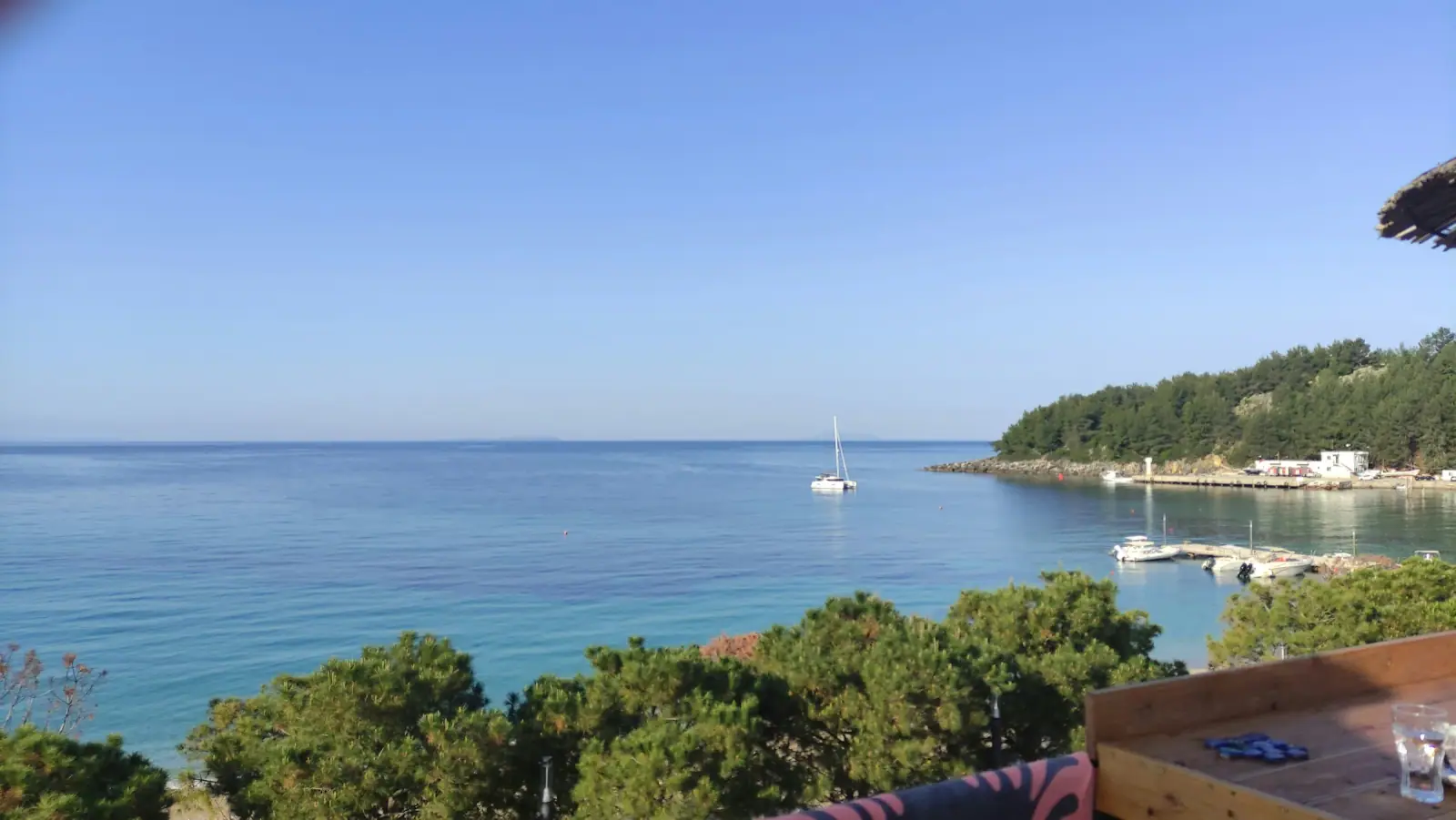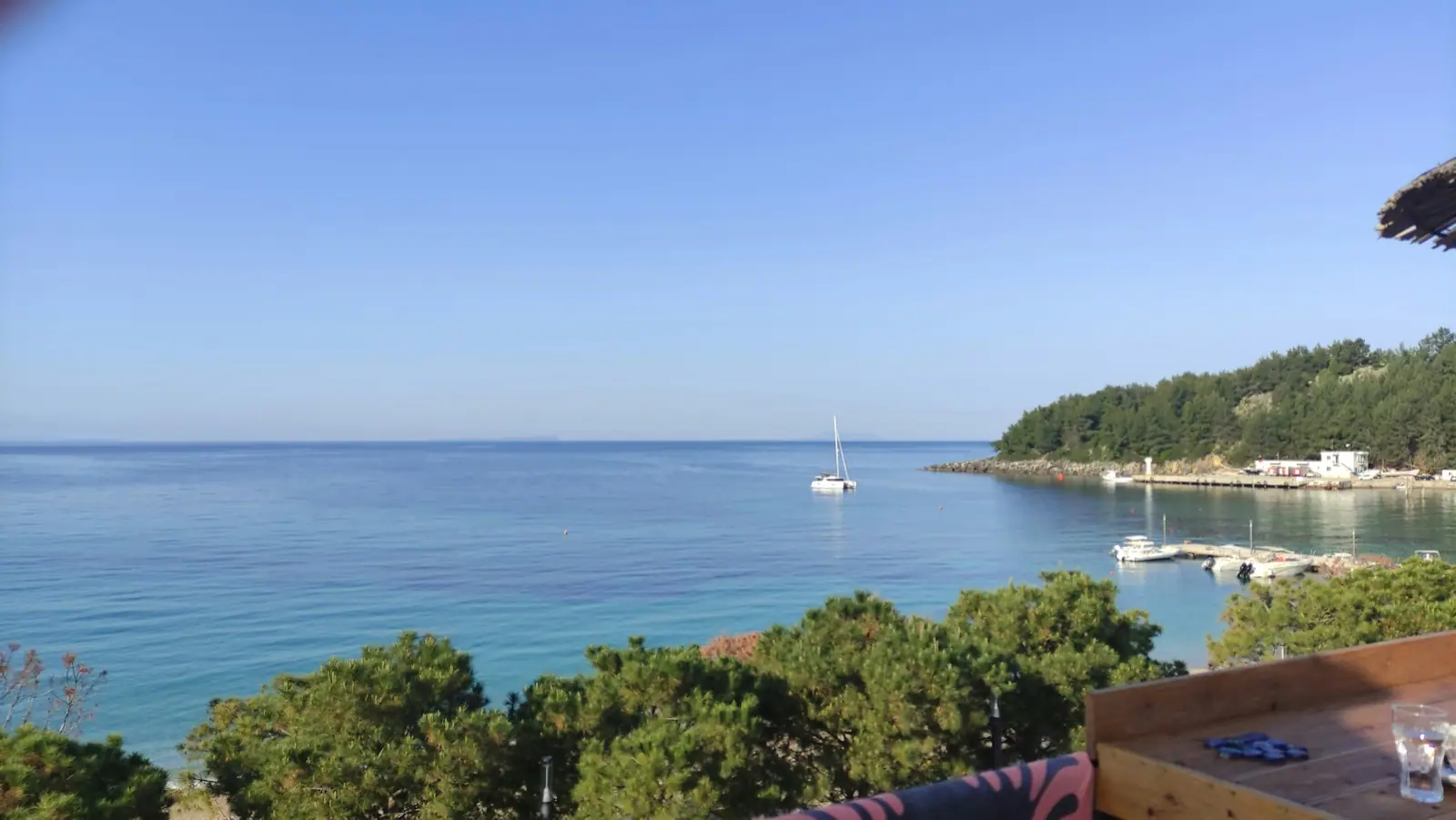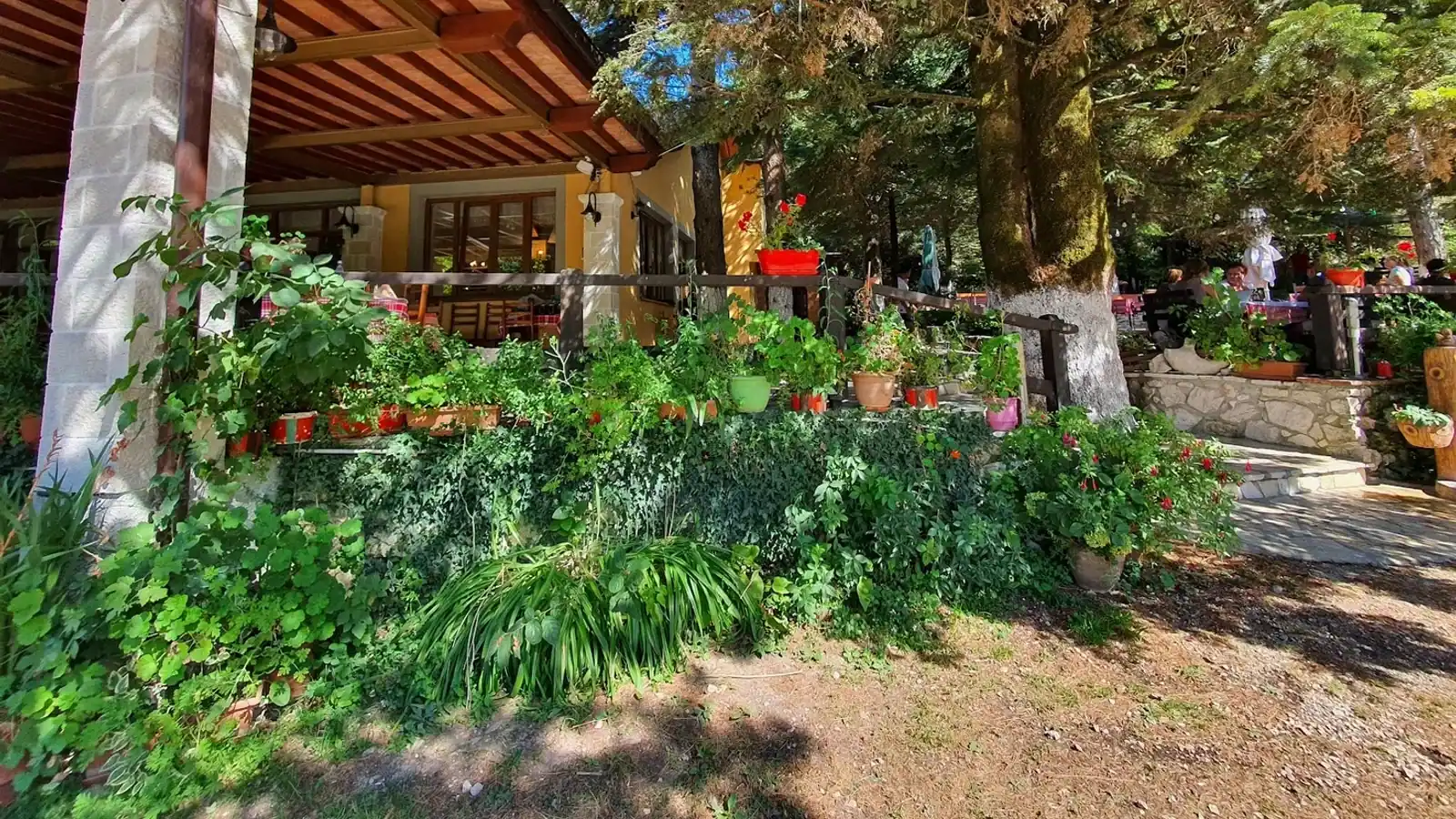
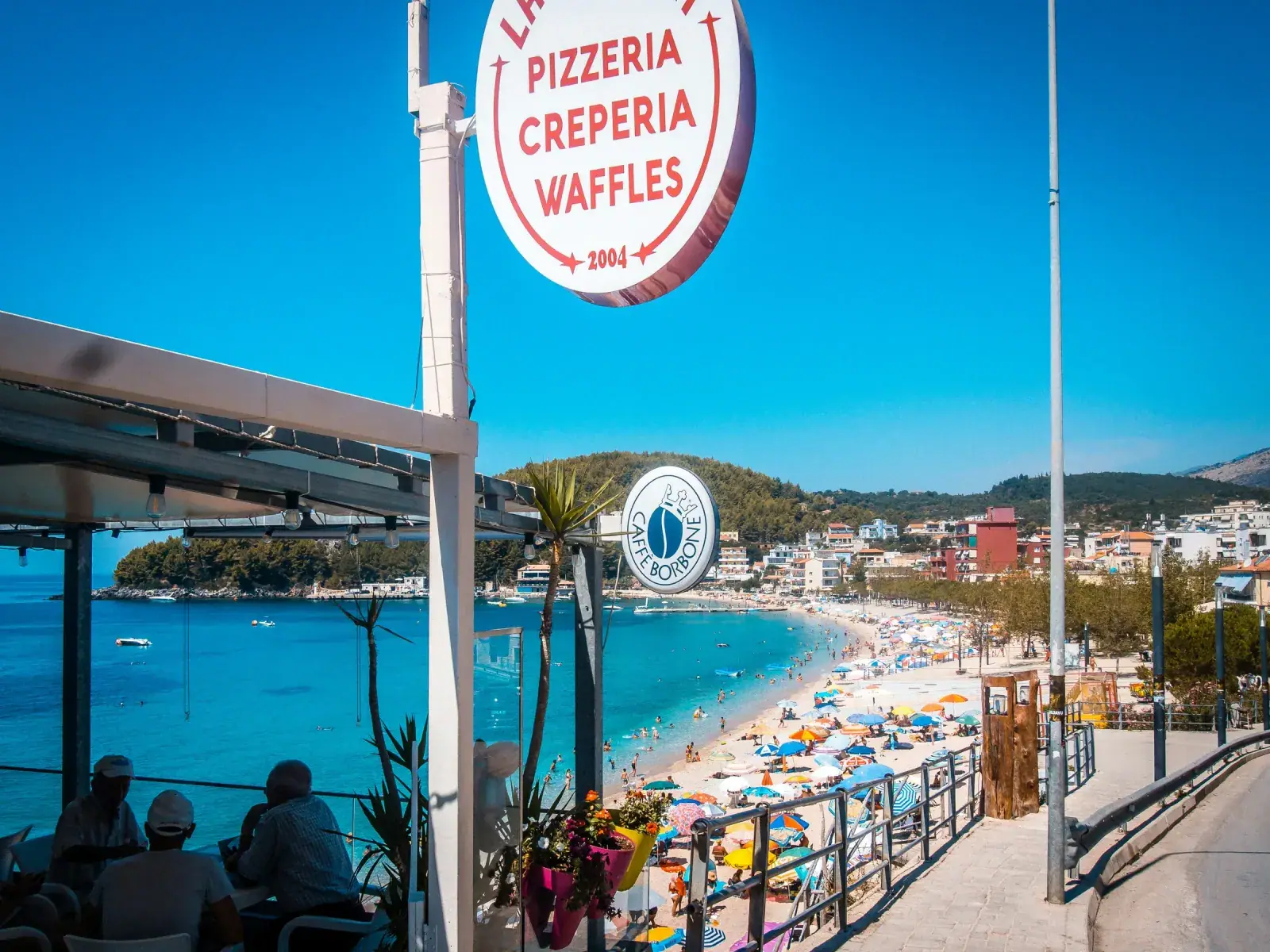
Albanian food in Himara is unlike what you'll find anywhere else in the country. Himara sits at the crossroads of Albanian, Greek, and Mediterranean cooking traditions, and the result is a cuisine that's heavy on grilled seafood, fresh vegetables, phyllo pastries, and olive oil, not the heavier mountain food of inland Albania. Himara has a significant Greek minority, and many locals are bilingual. That dual identity shows up on every menu. You'll eat Greek salad next to Albanian byrek, finish lamb with a glass of raki, and pay a fraction of what the same meal costs across the water in Corfu. If you care about food, Himara is the best-eating town on the Albanian Riviera.
Compare hotels, apartments, and Vrbo rentals on the map. Powered by Stay22.
Must-Try Dishes at a Glance
| Dish | What It Is | Where to Try It | Price Range |
|---|---|---|---|
| Peshk ne zgare | Whole grilled fish (branzino or dorado) | Taverna Lefteri | 1,000-1,500 ALL (10€-15) |
| Tave Kosi | Lamb baked in yogurt custard, the national dish | Traditional tavernas | 800-1,200 ALL (8€-12) |
| Grilled octopus | Charred tentacles with lemon and olive oil | Taverna Lefteri | 800-1,200 ALL (8€-12) |
| Byrek | Flaky phyllo pie with cheese, spinach, or meat | Any bakery | 100-150 ALL (1€-1.50) |
| Trilece | Tres leches cake with burnt caramel top | Kafe Pasticeri 1928 | 250-400 ALL (2€.50-4) |
| Sufllaqe | Albanian gyro wrap with grilled meat and veggies | Brothers Grill | 400-600 ALL (4€-6) |
| Fergese | Baked peppers, tomatoes, and cheese | Traditional restaurants | 500-800 ALL (5€-8) |
Traditional Albanian Dishes
Start with the national dish: Tave Kosi. It's lamb baked slowly in a custard of yogurt and eggs until the top sets into a golden crust. The dish originates from Elbasan in central Albania, but good versions appear on menus throughout Himara. It's rich, tangy, and unlike anything in the broader Mediterranean repertoire.
Fergese is another essential. Peppers, tomatoes, and a local white cheese are baked together until bubbling, think of it as Albania's answer to a gratin. It works as a side dish or a light main, and vegetarian travelers will find it on almost every menu. Taverna Pirosia does an especially good version, drawing from garden produce.
Qofte, grilled meatballs seasoned with herbs and sometimes onion, are the default bar snack and casual lunch option across Albania. They're simple, cheap, and everywhere. You'll find them alongside grilled peppers and bread at most tavernas for 400-600 ALL (4-6€).
Seafood: Himara's Strongest Suit
The Ionian coastline here is clean, deep, and productive. Local fishing boats supply many of the waterfront restaurants directly, which means the gap between sea and plate is sometimes measured in hours, not days.
Peshk ne zgare, whole grilled fish, is the dish to order. Branzino (levrek) and dorado (koce) are the most common catches. A whole grilled fish plate with salad and bread typically runs under 1,500 ALL (15€), which is genuinely remarkable for the quality. The fish is dressed simply: olive oil, lemon, salt. Nothing more is needed.
Grilled octopus is the other star. When done right, charred on the outside, tender within, it's one of the best things you'll eat on the Albanian Riviera. Taverna Lefteri on the Spile waterfront is the go-to spot for this. Fried calamari, grilled shrimp, seafood risotto, and fish soup round out most seafood menus. To Steki sti Gonia is widely considered to have the best seafood in town. Bring cash, as they don't take cards.
For a full breakdown of where to eat, including ratings and specific recommendations, see our restaurant guide and complete restaurant listings.
The Greek Influence
Himara's Greek minority isn't a footnote, it shapes the food culture fundamentally. Walk into any taverna and you'll find moussaka, souvlaki, Greek salad (horiatiki), and tzatziki sitting naturally alongside Albanian dishes. This isn't tourist appropriation. These dishes have been cooked here for generations.
Skepasti, a stuffed pita with grilled meat, similar to a gyro but thicker and messier, is a Himara staple. Brothers Grill, rated 4.9 stars, does some of the best gyros and grilled meats in town at budget prices. The Greek influence also shows in how meals are structured: generous mezze spreads, shared plates, and the assumption that you'll linger over the table for hours.
This dual Greek-Albanian identity is part of what makes eating in Himara more interesting than Saranda or Vlora. You get both culinary traditions, authentically prepared, at the same table.
Street Food and Breakfast
Street food in Himara is cheap and filling. The prices here make it easy to visit Himara on a budget.
Byrek is the king. This flaky phyllo pastry comes filled with cheese (djath), spinach (spinaq), or ground meat (mish), and costs 50-100 ALL (0.50-1€) from any bakery (furre buke). Locals eat byrek for breakfast with a cup of yogurt on the side, it's the standard Albanian morning meal, and once you try it, you'll understand why. Find a bakery that pulls them from the oven fresh and you're set until lunch.
Petulla are fried dough fritters, sometimes served plain with powdered sugar, sometimes stuffed with cheese or jam. They're Albania's answer to beignets, and they pair perfectly with morning coffee.
Sufllaqe, the Albanian take on a gyro, is your best budget lunch. Grilled meat, vegetables, tzatziki, and fries wrapped in flatbread for 300-500 ALL (3-5€). Brothers Grill is the spot.
A typical Albanian breakfast spreads across the table: bread, white cheese, olives, tomatoes, cucumbers, eggs, and suxhuk (a spiced beef sausage that's similar to Turkish sucuk). Hotels serve this style, but you'll also find it at cafes. Expect to pay 400-700 ALL (4-7€) at a sit-down place.
Desserts Worth Seeking Out
Albanian desserts pull from Ottoman, Italian, and Balkan traditions. The one you absolutely must try is trilece, a tres leches cake soaked in three types of milk and topped with burnt caramel. It's everywhere in Albania, but the version at Kafe Pasticeri 1928 is the one to get. This cafe has been operating for nearly a century and does traditional pastries seriously. A slice runs about 200-300 ALL (2-3€).
Baklava here uses walnuts and honey rather than the pistachios common in Turkish versions. It's denser and less syrupy, better, frankly. Sheqerpare are small semolina cookies soaked in sugar syrup, soft and crumbly. Kabuni is a sweet rice dish with raisins, cinnamon, and caramelized sugar that you'll see less often but should order when available.
Dessert prices across Himara are uniformly cheap. Budget 200-400 ALL (2-4€) for a proper pastry and coffee at a cafe.
Coffee and Drinks
Albania has 654 coffeehouses per 100,000 inhabitants, one of the highest ratios in Europe. Coffee isn't a habit here; it's infrastructure. You'll spend a significant portion of your time in Himara sitting at cafe tables, and you should lean into it.
Kafe turke (Turkish coffee) is the traditional preparation, unfiltered, strong, served in a small cup with the grounds settled at the bottom. Espresso and macchiato are equally common, a legacy of the Italian influence on Albanian culture. A macchiato is the default order for many locals. Coffee costs 50-150 ALL (0.50-1.50€), which means you can caffeinate four times a day for under 5€.
Raki is the national spirit, a clear grape brandy ranging from 45-55% alcohol. It's offered to guests as a welcome drink, poured after meals as a digestif, and consumed at celebrations. Refusing raki can feel impolite. Sip it slowly. Homemade raki from village production is common and often stronger than commercial versions. Raki is the traditional accompaniment to any Albanian meal, see our Albanian raki guide for the full story.
Albanian wine is underrated. Look for Shesh i Zi (a local red grape variety) and Shesh i Bardhe (white). The wines are rustic but honest, and a glass at dinner costs 200-400 ALL (2-4€). House wine by the carafe is even cheaper.
Caj mali (mountain tea) is a caffeine-free herbal tea made from sideritis, a plant that grows wild in the Albanian mountains. It's served everywhere and is the traditional evening drink. Ask for it after dinner instead of a second raki.
For an overview of Himara's bar scene and evening options. Check our nightlife guide.
Price Comparison: What a Meal Costs
| Budget breakfast | Byrek + yogurt + coffee | 250-400 ALL | 2€.50-4 | | Budget lunch | Sufllaqe or qofte plate | 400-800 ALL | 4€-8 | | Budget dinner | Pasta or grilled meat + salad | 800-1,200 ALL | 8€-12 | | Mid-range dinner | Grilled fish + salad + wine | 2,000-3,000 ALL | 20€-30 | | Seafood splurge | Seafood platter + appetizers + wine | 3,500-5,000 ALL | 35€-50 | | Coffee | Espresso or macchiato | 100-200 ALL | 1€-2 | | Raki (shot) | Local grape brandy | 150-300 ALL | 1€.50-3 | | Full dessert + coffee | Trilece or baklava + espresso | 350-600 ALL | 3€.50-6 |
A full day of eating in Himara, three meals, a couple of coffees, and a dessert, runs 1,500-3,000 ALL (15-30€) depending on how much seafood and wine you add. That's hard to beat anywhere on the Mediterranean.
Dining Etiquette
A few things to know so you don't look confused when plates start arriving.
Food arrives all at once. Albanian restaurants don't follow the Western European course-by-course structure. Appetizers, mains, and salads land on the table together. This is intentional, meals are meant to be shared and picked at communally.
Lunch is the main meal. Dinner exists, and restaurants are open at night, but traditionally the biggest meal of the day is lunch. Many locals eat a substantial midday meal and have a lighter evening. Tourist restaurants cater to the dinner crowd, but you'll often find lunch specials and fresher preparations if you eat your big meal earlier.
Tipping is 5-10%. It's appreciated but not expected. Nobody will chase you down for skipping it. At casual spots and bakeries, tipping isn't done at all. For more on money and practical matters, see our practical info guide.
Cash is still king in some places. To Steki sti Gonia, one of the best seafood spots in town, is cash only. Always carry some lek. The exchange rate hovers around 100 ALL to 1€.
Frequently Asked Questions
Is the food in Himara more Albanian or Greek?
Both, genuinely. Himara's Greek-Albanian minority means the two cuisines have blended over generations rather than competing. You'll find authentic Greek dishes and authentic Albanian dishes at the same restaurant. The seafood leans Greek in preparation; the pastries and meat dishes lean Albanian.
How much should I budget for food per day in Himara?
Budget travelers can eat well on 800-1,500 ALL (8-15€) per day with street food and bakery meals. Mid-range eating, sit-down restaurants with wine, runs 1,500-2,000 ALL (15-20€) per person. Even a splurge dinner rarely exceeds 4,000 ALL (40€) for two.
Is the seafood in Himara fresh and safe to eat?
Yes. Many waterfront restaurants source directly from local fishing boats, and the Ionian Sea along this stretch of coast is exceptionally clean. Fish is typically grilled whole so you can see exactly what you're getting. Stick to restaurants that display their catch and you'll eat better seafood here than in most of Greece at half the price.
Can vegetarians eat well in Himara?
Reasonably well. Fergese, Greek salad, grilled vegetables, cheese byrek, and bean dishes appear on most menus. Taverna Pirosia grows its own vegetables and is the most vegetarian-friendly option. However, Albania is a meat-and-fish culture, strict vegans will find fewer dedicated options.
What is the best restaurant in Himara for a first-time visitor?
Taverna Lefteri on the Spile waterfront. Order the grilled octopus, a whole fish, and a Greek salad. Sit on the deck over the water. You'll spend around 3,000-4,000 ALL (30-40€) for two, and you'll immediately understand what eating in Himara is about.