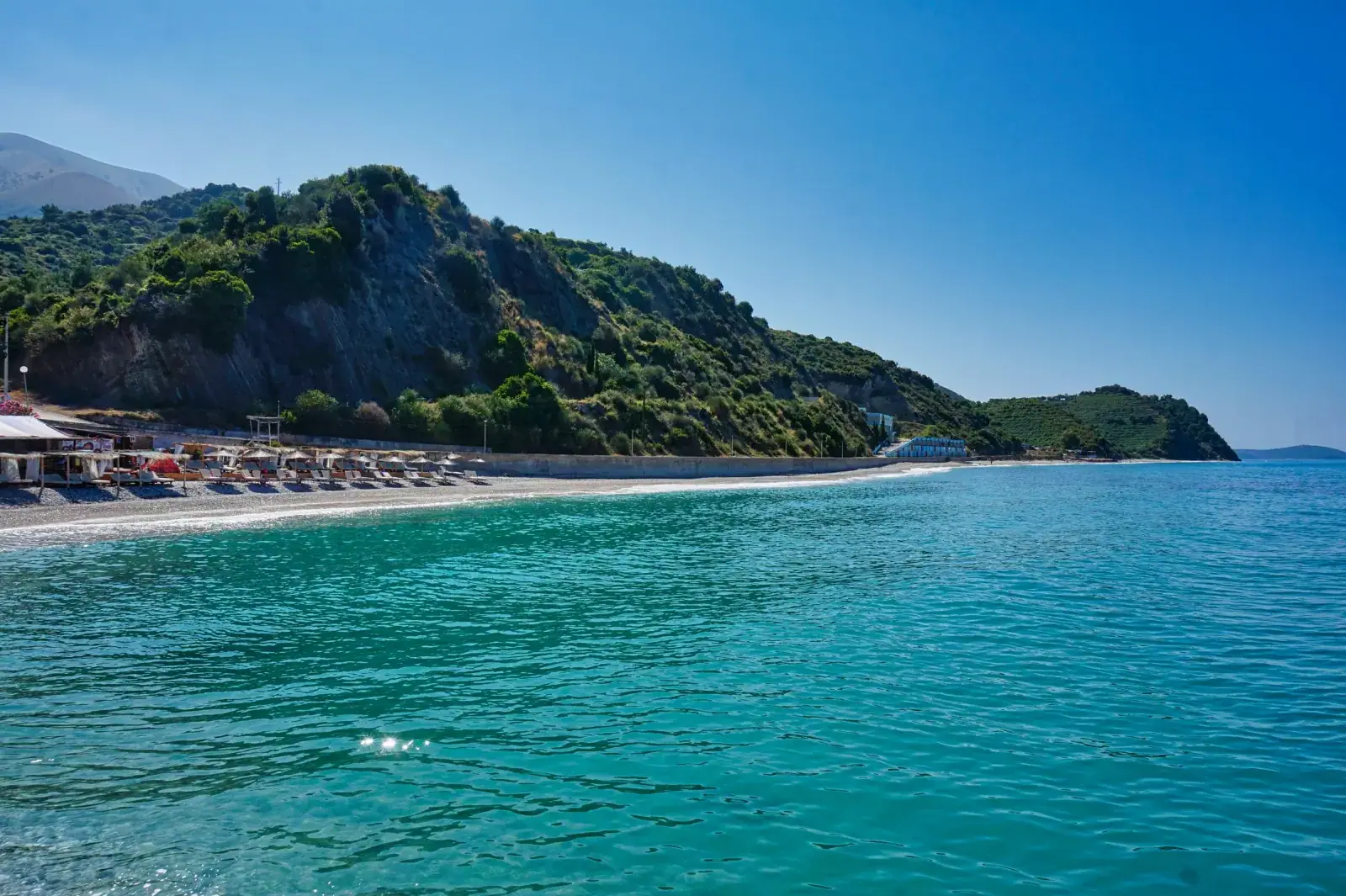
The Albanian Riviera stretches roughly 120 km along the Ionian coast from Llogara Pass in the north to Lukova in the south (or Saranda, depending on who's drawing the line). One main road, the SH8 highway, connects everything. Most beaches branch off this road via short turns and steep descents. This albanian riviera map guide covers every key location organized geographically from north to south, with distances, driving times, and practical navigation tips so you can plan your route without guessing.
If you're based in Himara, you're roughly in the middle of the Riviera. Everything north (Dhermi, Drymades, Llogara) and everything south (Jale, Porto Palermo, Borsh) is reachable in under an hour. The full drive from Llogara Pass to Saranda takes about two hours with no stops, though you'll want to stop constantly.
Quick Reference: Major Areas North to South
| Area | Distance from Himara | Drive Time | Known For |
|---|---|---|---|
| Llogara Pass | 30 km north | 35-40 min | Mountain pass views, 1,027 m elevation |
| Palase | 22 km north | 25 min | Quiet beach, Caesar's landing legend |
| Dhermi | 18 km north | 20-25 min | Beach clubs, nightlife, white pebble beach |
| Drymades | 20 km north | 35–40 min | Famous cove, turquoise water |
| Vuno | 10 km north | 12 min | Hilltop village, Gjipe access |
| Gjipe | 8 km north | 15 min + hike | Canyon beach, remote |
| Himara | , | , | Central town, promenade, services |
| Jale | 8 km south | 10 min | Party beach, camping |
| Filikuri | 10 km south | 15 min + hike | Hidden beach, boat access |
| Bunec | 14 km south | 18 min | Double beach, river meets sea |
| Porto Palermo | 18 km south | 20 min | Castle, sheltered bay |
| Borsh | 19 km south | 30–45 min | Longest beach on the Riviera |
| Lukova | 38 km south | 40 min | Turquoise coves, quieter |
| Saranda | 60 km south | 1.5 hrs | Largest city, Corfu ferries |
Understanding the Riviera Layout
The Albanian Riviera is linear. This is the single most useful thing to understand when reading any albanian riviera map. The coastline runs roughly north-south, and the SH8 highway follows it like a spine. Every beach, village, and hotel sits either on this road or a short distance off it.
The road hugs the mountains, not the waterline. Most of the time you're driving at elevation, 100 to 400 meters above the sea, with the beaches far below. When you see a sign for a beach, expect a steep descent on a narrow side road. Some of these turnoffs are well-paved (Dhermi, Borsh). Others are gravel tracks that test your rental car's suspension (Gjipe, Filikuri).
The northern anchor is Llogara Pass, a dramatic mountain crossing at 1,027 meters where the road drops from the Albanian interior to the coast. The southern anchor depends on definition, locals often say Lukova, tourism boards extend it to Saranda. For practical purposes, the stretch from Palase to Borsh is the core Riviera.
There are no parallel roads. No inland shortcuts. If the SH8 is blocked (rare but it happens with landslides in spring), there's no detour. This simplicity makes navigation easy but means you'll share the road with everyone else in peak season.
North Section: Llogara to Dhermi
This is the most dramatic entry point. Coming from Vlora, the SH8 climbs over Llogara Pass through dense pine forest, then descends toward the coast with views that make passengers reach for their phones.
Llogara Pass (1,027 m)
The highest point on the coastal highway. The national park here has restaurants, hiking trails, and cold mountain air, a contrast to the beaches 30 minutes below. Caesar reportedly camped his legions here before crossing to fight Pompey. The pass marks the transition from mainland Albania to the Riviera coast.
The new Llogara Tunnel bypasses the pass entirely if you're in a hurry. But the pass road is worth driving at least once for the views alone.
Palase
The first beach you encounter descending from the pass. A quiet, relatively undeveloped stretch of coast with a small pebble beach. Legend places Caesar's landing here. Limited facilities, bring your own supplies. The access road from the highway is steep but paved.
Dhermi
The Riviera's nightlife and beach club hub. Dhermi village sits above the beach at elevation, with a winding road descending to the shore. The main beach is about 1 km of white pebble, backed by bars and sunbed operations. This is where the younger crowd concentrates, beach parties, DJ sets, cocktail bars. Accommodation ranges from budget guesthouses in the village to beachfront hotels.
Drymades
Technically part of Dhermi's coastline but distinct in character. Drymades sits in a cove south of the main Dhermi beach, backed by cliffs and greenery. The pebbles are finer, the water arguably bluer, and the beach club scene more curated. Parking is limited in July-August. Arrive before 11:00 or take a boat taxi from Dhermi.
Central Section: Himara Area
Himara is the Riviera's functional center, the town with actual year-round infrastructure, a hospital, banks, supermarkets, and the widest range of accommodation. Our Himara map guide covers the town in detail. The beaches flanking Himara are among the best on the coast, and they're walkable or a short drive from the center.
Livadhi Beach
Himara's main beach, stretching over 1 km south of the town center. Pine trees provide natural shade along parts of the back, unusual for a Riviera beach. Shallow entry, organized sunbed areas, and several beachfront restaurants. This is the family-friendly option.
Spile Beach
Tucked below Himara's old town castle on the south side of the peninsula. About 500 meters of pebble with beach bars, dramatic cliff framing, and the famous rock arch at the eastern end. West-facing, so it catches the sunset. More atmosphere than Livadhi, less space. See our Spile Beach guide for access routes.
Sfageio Beach
Smaller, tucked into the next cove south of the promenade. Quieter than Spile and Livadhi, with fewer sunbed operations. A solid choice when the main beaches feel too crowded.
Potami Beach
A small beach south of Himara center where a freshwater stream meets the sea. The mix of cold river water and warm sea creates a temperature contrast swimmers either love or hate. Limited facilities.
Llamani Beach
A tiny cove roughly 3 km south of Himara, accessible via a steep path from the highway. Clear water, few people, no facilities worth mentioning. Bring everything you need. The turnoff from the SH8 is easy to miss. Look for the small sign.
Gjipe Beach
The canyon beach. Gjipe sits at the bottom of a dramatic gorge between Himara and Dhermi (technically closer to Dhermi/Vuno). Parking is at the top of the cliff, then a 20-30 minute hike down a rocky trail. No driving to the sand. The effort filters out casual visitors, leaving a relatively uncrowded beach with dramatic cliff walls. Boat tours from Himara offer a no-hike alternative.
South Section: Jale to Borsh
South of Himara, the coast gets quieter and the beaches get longer. This stretch has some of the Riviera's best swimming, plus a Venetian-Ottoman castle you can actually visit.
Jale Beach
About 10 minutes south of Himara. Jale draws a younger crowd with beach camping, music, and a more free-spirited vibe than the organized beaches farther north. The beach is pebbly with clear water and a few bar-restaurant operations. Camping on the beach is part of Jale's identity, if that's not your scene, the beach bars work fine for a day visit.
Filikuri Beach
Reachable only by boat or a steep 30 to 40 minute hike from the road. No facilities whatsoever. The water is extraordinarily clear, and on most days you'll share the beach with a handful of people at most. Boat taxis from Jale or Himara are the easiest access.
Bunec Beach
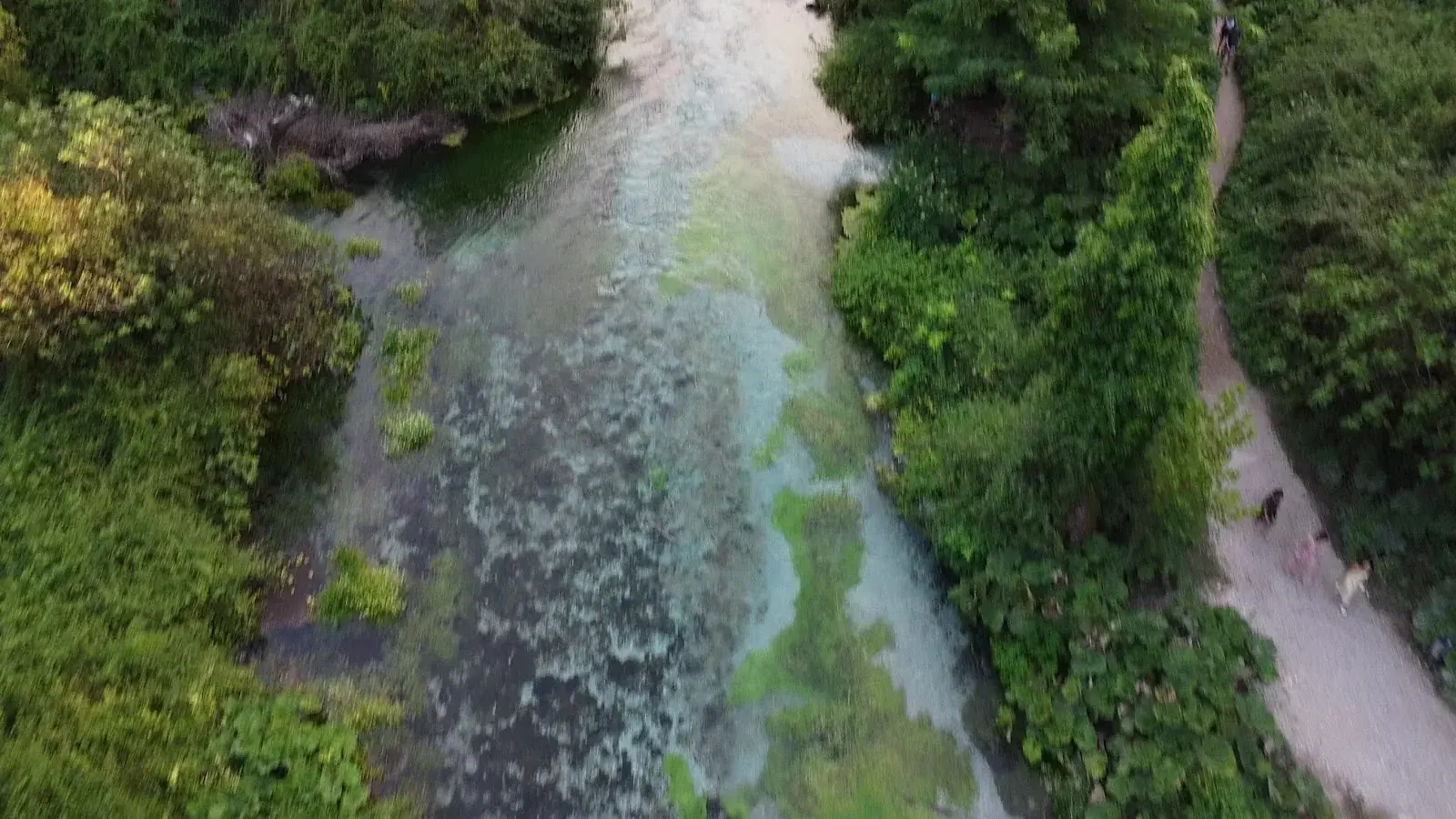
Where a freshwater river splits a pebble beach in two, creating a distinctive double-beach layout. The river water is cold and the sea water is warm, swimming where they meet is a unique experience. Small beach bar, limited sunbeds. About 18 minutes south of Himara.
Porto Palermo
A sheltered bay dominated by an Ottoman fortress built on a small peninsula. You can visit the castle (entry fee ~200 ALL) and swim in the bay, which is calmer than open-coast beaches. The bay is popular with boats and occasionally with military vessels (there's a naval base nearby). One of the Riviera's most photogenic spots.
Borsh Beach
At roughly 6 km, Borsh is the longest beach on the Albanian Riviera. The village sits above, and a road descends to the seafront where a line of hotels, restaurants, and sunbed operations stretches along the pebble shore. Borsh is quieter and more affordable than Himara or Dhermi, popular with families and visitors who prefer space over scene. The southern end of the beach is usually less crowded.
Far South: Lukova to Saranda
Past Borsh, the Riviera starts transitioning toward the larger city of Saranda. The coastline remains beautiful, but the infrastructure and vibe shift.
Lukova
A small town with some of the Riviera's most striking coves. The beaches here, particularly the one visible from the highway overlook, have that almost-unreal turquoise color. Lukova is quieter than the Himara-Dhermi stretch, with fewer tourists and more affordable accommodation. It's gaining popularity fast.
Kakome Bay
A remote bay south of Lukova, accessible by boat or a long unpaved road. Almost no development. If you want a true Robinson Crusoe beach day on the Albanian coast, this is it.
Saranda
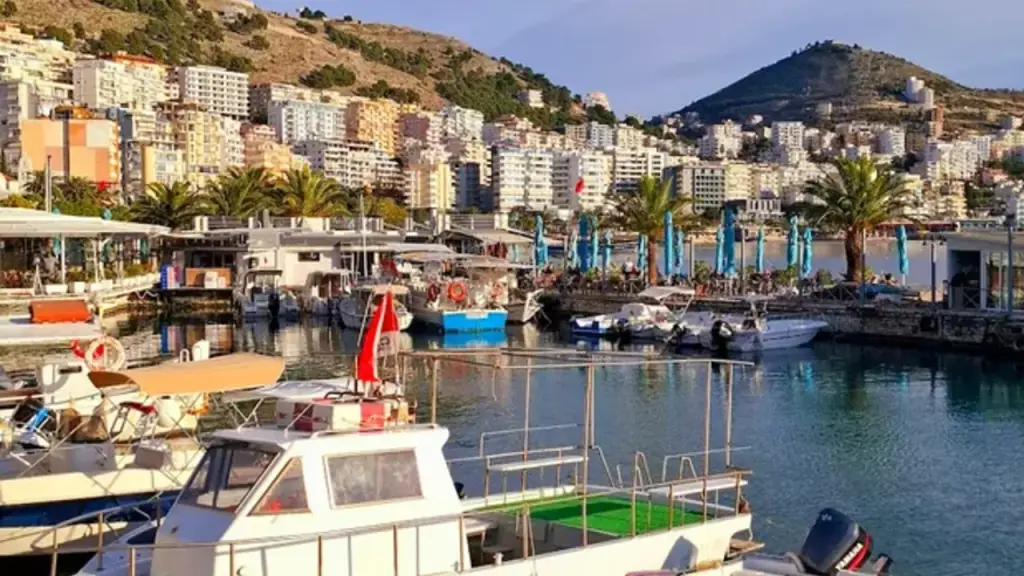
The Riviera's largest city, population around 40,000, with the ferry to Corfu. Saranda has an urban waterfront promenade, a wide range of hotels and restaurants, and a different energy than the small beach villages to the north. It's a base for visiting Butrint (UNESCO World Heritage Site) and Ksamil. Most people wouldn't call Saranda part of the Riviera proper, but it's the southern endpoint of any coast road trip.
Ksamil
The southernmost beach destination, famous for small islands reachable by swimming or paddle boat. Ksamil has the sandiest beaches on Albania's Ionian coast, a rarity compared to the pebble beaches farther north. Extremely popular in July-August. About 30 minutes south of Saranda.
Every Beach at a Glance
| Beach | Type | Access | Difficulty | Facilities |
|---|---|---|---|---|
| Palase | Pebble | Steep road from SH8 | Easy | Minimal |
| Dhermi | White pebble | Paved road | Easy | Full |
| Drymades | Fine pebble | Paved road, steep | Easy | Full |
| Gjipe | Pebble/sand | 20-30 min hike or boat | Moderate | Minimal |
| Livadhi | Pebble | Walk from Himara | Easy | Full |
| Spile | Pebble | Walk from Himara | Easy | Full |
| Sfageio | Pebble | Walk from promenade | Easy | Moderate |
| Potami | Pebble | Short walk from road | Easy | Minimal |
| Llamani | Pebble | Steep path from SH8 | Moderate | None |
| Jale | Pebble | Road from SH8 | Easy | Moderate |
| Filikuri | Pebble | 30-40 min hike or boat | Hard | None |
| Bunec | Pebble | Short walk from road | Easy | Minimal |
| Porto Palermo | Pebble | Road to bay | Easy | Minimal |
| Borsh | Pebble | Paved road | Easy | Full |
| Lukova | Pebble | Road from SH8 | Easy | Moderate |
| Ksamil | Sand | Paved road | Easy | Full |
For a full breakdown of every beach with ratings and photos, see our best beaches in Albania guide and the albanian riviera beaches map.
Driving Times Between Key Points
All times assume normal summer traffic and no stops. Add 20-30% for July-August peak congestion, especially near Dhermi and on the Llogara Pass.
| From → To | Distance | Drive Time |
|---|---|---|
| Llogara Pass → Dhermi | 12 km | 15 min |
| Dhermi → Himara | 18 km | 20-25 min |
| Himara → Jale | 8 km | 10 min |
| Himara → Porto Palermo | 18 km | 20 min |
| Himara → Borsh | 19 km | 30–45 min |
| Borsh → Lukova | 16 km | 20 min |
| Lukova → Saranda | 22 km | 30 min |
| Llogara Pass → Himara | 30 km | 35-40 min |
| Llogara Pass → Saranda | 120 km | ~2 hrs |
| Himara → Saranda | 60 km | 1.5 hrs |
The full Albanian Riviera road trip from Llogara to Saranda is doable in a day, but two or three days lets you actually swim at the beaches instead of just photographing them from the road.
Google Maps Tips for Albania
Google Maps works on the Albanian Riviera but has quirks that catch visitors off guard. Our full Google Maps Albania guide covers these in detail, but here's the essential summary.
Road data is mostly accurate for the SH8. The main highway is well-mapped. Drive times are usually realistic, sometimes slightly optimistic.
Beach access roads are unreliable. Google sometimes routes you down roads that don't exist, are gated, or require a 4x4. For beaches like Gjipe, Filikuri, and Llamani, research access before trusting the blue line.
Business hours and listings are often wrong. A restaurant showing "Open" on Google might be closed for the season or permanently shut. Call ahead or check when you arrive. This improves every year but isn't reliable yet.
Offline maps are essential. Cell signal drops out in canyon areas, on parts of the Llogara Pass, and at remote beaches. Download the area before you leave your hotel's WiFi.
Use coordinates for beach parking. When navigating to less-known beaches, search for GPS coordinates rather than the beach name. Beach names on Google Maps sometimes point to the wrong location or to a random point in the sea. Local blogs and forums usually share parking lot coordinates. These are more reliable than the map pin.
Waze is an alternative. Some expats and frequent visitors prefer Waze for the Riviera, claiming it handles the mountain roads better. Both apps work; neither is perfect.
How to Use This Guide
This albanian riviera map guide is meant to help you orient before and during your trip. Here's how to get the most from it.
Planning stage. Use the quick reference table and driving times to decide where to base yourself. Himara gives you the best central access. Dhermi is better for nightlife. Borsh or Lukova are quieter and cheaper.
On the ground. Use the beaches table to decide your daily plans based on what kind of beach day you want, full facilities vs. secluded, easy access vs. adventure.
For road trips. Follow the north-to-south order of this guide as your itinerary. The sections mirror the actual driving sequence on the SH8.
For more detailed planning, see our Albanian Riviera travel guide and the beaches page with individual beach profiles.
Frequently Asked Questions
Is there one good map app for the Albanian Riviera?
Google Maps is the most widely used and works for main roads. Download offline maps before heading to remote areas. For beach-specific navigation, GPS coordinates are more reliable than place names. See our Google Maps Albania guide for detailed tips.
How long does it take to drive the entire Albanian Riviera?
The full drive from Llogara Pass to Saranda takes about 2 hours without stops. Most visitors spend 2-3 days to cover the route properly, stopping at beaches and villages along the way. The road trip guide has suggested itineraries.
Can I see the whole Riviera from one base?
Yes, if you stay in Himara. It's roughly centered on the coast, with the northern beaches (Dhermi, Drymades) 20-25 minutes away and the southern beaches (Borsh, Porto Palermo) about the same. Lukova is 40 minutes, Saranda is 1.5 hours. Most day-trippable.
Are the beaches hard to find?
The main beaches (Dhermi, Livadhi, Borsh) are well-signed from the SH8. Smaller beaches (Llamani, Filikuri, Gjipe) require knowing the turnoff and sometimes hiking. This guide's beaches table and our individual beach guides give specific access instructions.
Do I need a car to explore the Riviera?
Strongly recommended. The SH8 is the only connecting road, and while furgons (shared minibuses) run between towns in summer, they're infrequent and won't take you to remote beaches. A rental car or scooter gives you the freedom to explore at your pace. Our Albanian Riviera travel guide covers transport options in detail.