Butrint National Park (Parku Kombëtar i Butrintit in Albanian; the ancient Bouthrotos, Βουθρωτό in Greek) is the one sight in southern Albania that people plan a trip around rather than squeeze in. It is also the one most often done badly: arrive at 11:00 with two coachloads off the Corfu ferry, shuffle round the theatre in a queue, miss the museum because it shut before the park did, and leave thinking it was a pile of stones under some trees.
It does not have to go that way. The site rewards two things, timing and order, and almost nothing written about it covers either. Below is what the ticket costs this year, when the gates open and close, the order to walk it in, and the hours of the day when Butrint is genuinely worth the trip from Ksamil or Saranda.
Butrint at a glance (2026)
| What | Detail | Why it matters |
|---|---|---|
| Ticket | 1,000 lek (about €10) per adult | Same price for Albanians and foreigners |
| Children | 500 lek aged 12-18, free under 12 | Groups of 10+ pay 800 lek each |
| Summer hours | 1 April to 31 October: 08:30-20:00, last entry 18:00 | The last two hours are the best two |
| Winter hours | 1 November to 31 March: 09:00-17:30, last entry 15:00 | Short days, plan for the morning |
| Museum | Inside the ticket, on the acropolis | Keeps shorter hours than the park |
| Time needed | 2-3 hours for the full loop | Add an hour for the Vivari channel |
| From Ksamil | ~4 km, about 10 min by bus or taxi | The closest base by far |
| From Saranda | ~18 km, about 45 min by bus, 200-250 lek | Same bus, roughly hourly, via Ksamil |
| Status | UNESCO World Heritage Site since 1992, national park since 2000 | The lagoon is also a Ramsar wetland |
Pay at the kiosk inside the entrance. Bring cash in lek, because card payment works some days and not others.
Is Butrint worth visiting? Who should go, and when
The honest answer depends on when you can get there, more than on whether you like ruins.
| If you are... | Go | Skip or rethink | Our call |
|---|---|---|---|
| Staying in Ksamil | 08:30 or after 16:00 | 10:00-14:00 in July and August | Easily worth it, it is 10 minutes away |
| Staying in Saranda | Morning bus, back for lunch | A late start with the last bus to catch | Worth it, budget half a day |
| On a day trip from Corfu | Whatever your boat allows | Nothing, you have no choice of slot | Worth it, but you will see it busy |
| Travelling with small children | Early, with water and snacks | Midday, the paths are uneven | Fine, most of the loop is shaded |
| Only here for beaches | A late-afternoon visit after a swim | A full day | Two hours is enough |
Most of the loop runs under tree cover, which is the detail that changes everything in summer. Butrint is one of the few outdoor sights in Albania that is more comfortable in an August afternoon than a beach, provided you skip the crowded middle of the day.
What to see inside Butrint National Park
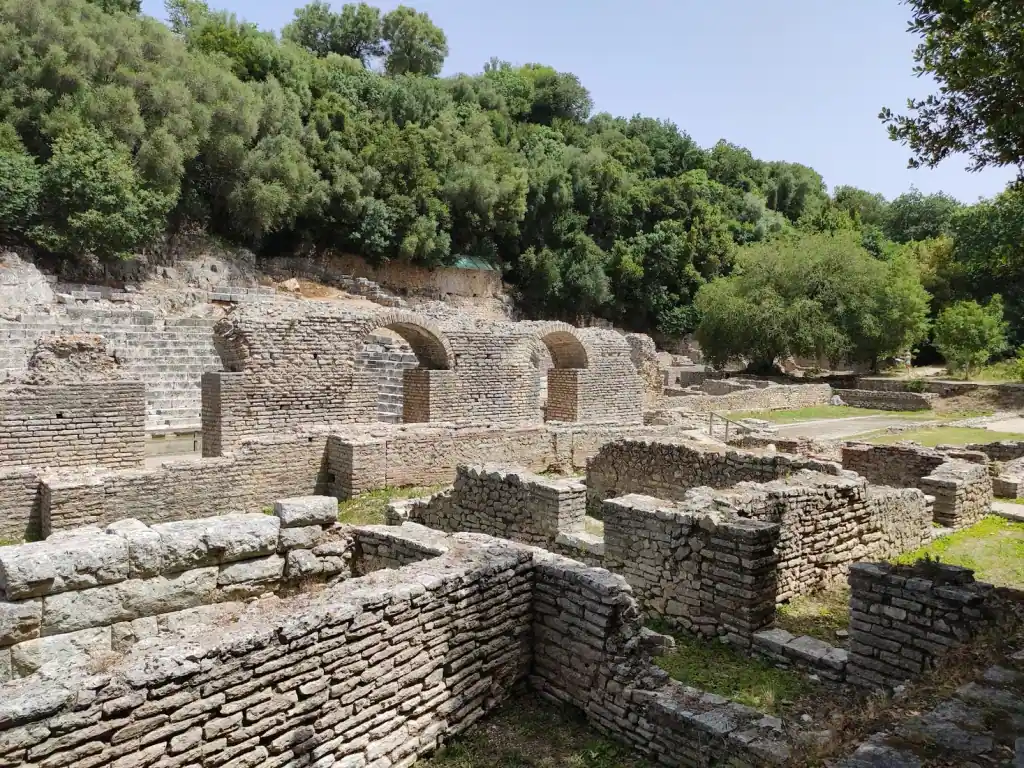
The site sits on a wooded headland between Lake Butrint and the Vivari Channel. People lived here from at least the 8th century BC, and Greeks, Romans, Byzantines, Venetians and Ottomans all built on top of each other. The circuit is a single loop from the gate, and walking it anticlockwise puts the big monuments first and the climb to the museum at the end, when the crowds have thinned.
| Stop | Era | On the loop | What to look for |
|---|---|---|---|
| Venetian tower | Medieval | By the entrance | The first thing you see, beside the water |
| Theatre | Greek, 4th century BC, rebuilt by the Romans | First major stop | Inscriptions freeing slaves cut into the stage walls; it floods in wet winters |
| Sanctuary of Asclepius and Roman baths | Greek and Roman | Beside the theatre | Hypocaust floors, the underfloor heating |
| Baptistery | 6th century AD | Mid-loop, in the trees | A huge mosaic floor, usually under protective sand |
| Great Basilica | 6th century, rebuilt in 1267 | Mid-loop | Standing walls and arches, the most photographed ruin |
| Lion Gate | Defensive walls | Mid-loop, past the basilica | A relief of a lion bringing down a bull |
| Lake Gate and the Scaean Gate | Hellenistic walls | Later in the loop | Huge polygonal blocks, part of an 870 m circuit wall from around 380 BC |
| Acropolis and museum | Venetian castle on older foundations | The top of the hill | Statues, coins, pottery, and the best view over the lagoon |

The baptistery mosaic: will you see it?
Probably not. The baptistery floor is one of the largest early Christian mosaics anywhere in the Roman world, and it sits low enough that the lagoon's seasonal water keeps soaking and drying it. To stop it breaking up, the park keeps it buried under sand and fabric and uncovers it only for short periods every few years. Other mosaics, from the Roman baths and the gymnasium, were opened to visitors from 22 July to 15 August in 2025. If seeing a mosaic is the point of your trip, watch the park's own social channels before you go rather than trusting any blog, including this one.
The museum on the acropolis
The small museum is in the Venetian castle at the top of the hill and is included in your ticket. It is worth the climb for the view alone, out over Lake Butrint and the channel to the mountains. Inside are finds from the excavations: headless Roman statues, coins, pottery and tools. Photos are not allowed inside. It keeps shorter hours than the park, roughly 09:00 to 16:00 in recent visitor reports, so if you arrive late in the afternoon, walk the loop in reverse and climb to the museum first.
Lake Butrint, the bay and the Vivari Channel
The ruins are only half of the national park. Butrint sits where a large saltwater lagoon, Lake Butrint, drains to the sea through the Vivari Channel, and that whole wetland has been protected as a Ramsar site since 2003. In practice this gives you three things beyond the ruins.

- The cable ferry and the Venetian Triangular Castle. A small platform hauls itself across the Vivari Channel on cables, next to the park entrance. It takes cars and foot passengers to the far bank, where the Venetian Triangular Castle, with round towers on its corners, stands directly opposite the park. The car fare has been reported at around 700 lek one way. Check at the slip, it runs to its own rhythm.
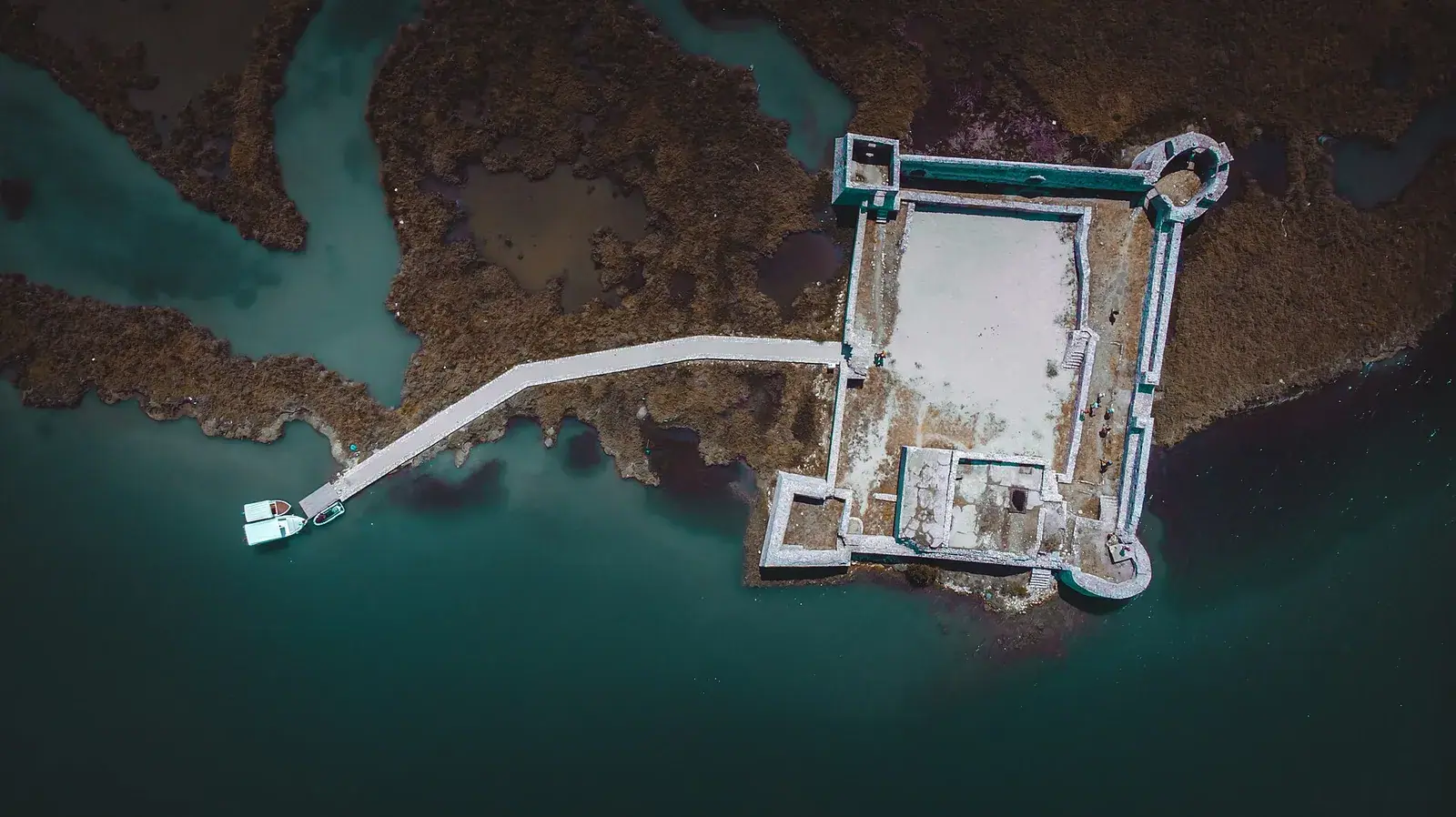
- Ali Pasha's castle. A different fort, on an islet at the mouth of the channel about 2.4 km west, reached only by boat from the park car park. Our Ali Pasha Castle, Butrint guide covers how to reach it and whether it is worth the extra hour.
- The lagoon itself. The lake is farmed for mussels, and the tavernas on its shore are a better lunch than anything inside the park gates. Day trips from Ksamil covers the lagoon side.
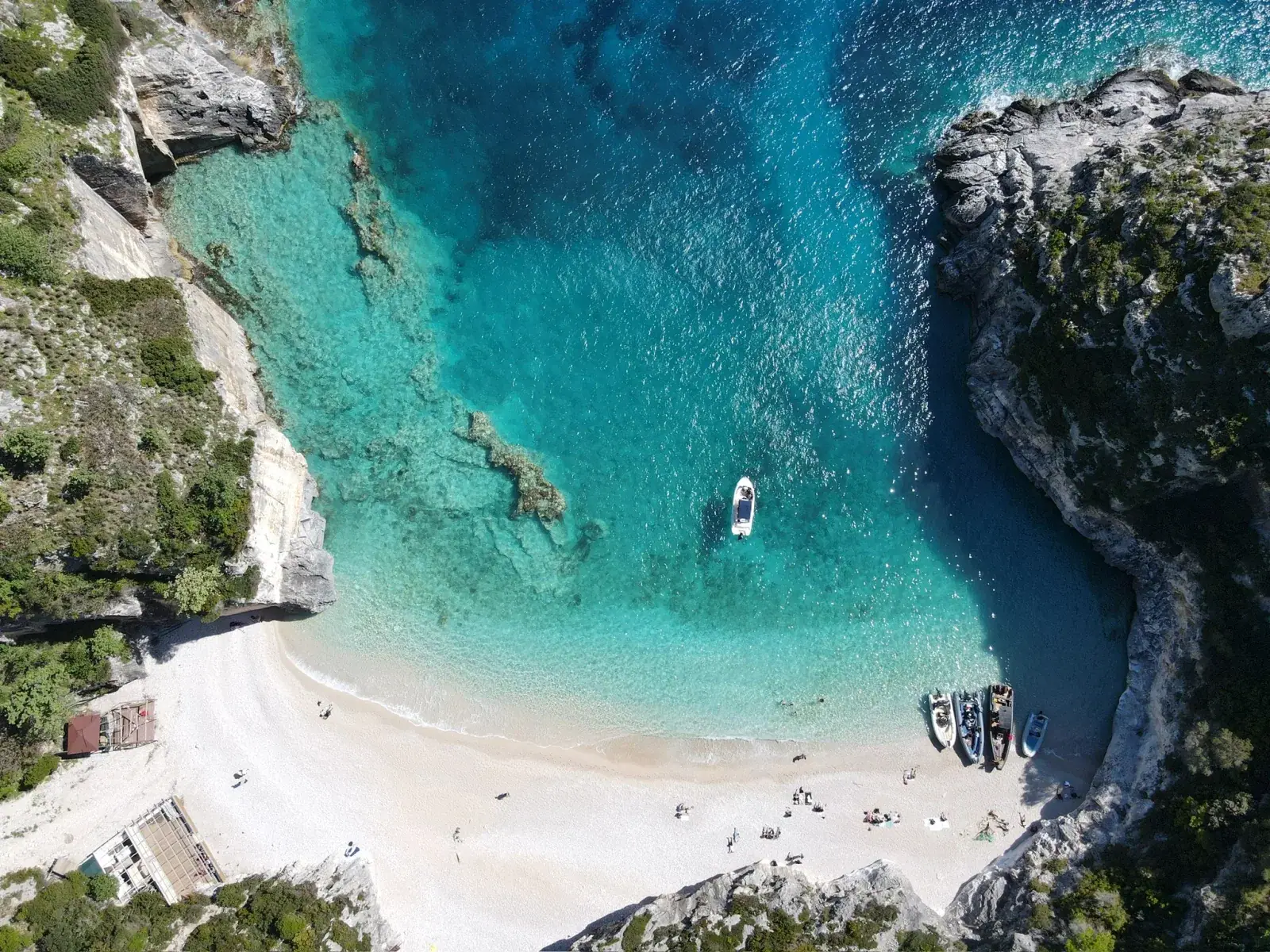
Visitors also ask about "the bay of Butrint". There is no beach inside the park. The nearest proper sand is in Ksamil, about 4 km back up the road, and our Ksamil beaches guide picks the right stretch for a swim after the ruins.
Butrint tickets, hours and the museum
The ticket is 1,000 lek per adult in 2026, about €10, and foreigners pay the same as Albanian visitors. Children aged 12 to 18 pay 500 lek, under-12s go free, and groups of ten or more pay 800 lek each. Tickets are sold at the kiosk just inside the entrance.
Opening hours change twice a year:
| Season | Opens | Last entry | Closes |
|---|---|---|---|
| 1 April to 31 October | 08:30 | 18:00 | 20:00 |
| 1 November to 31 March | 09:00 | 15:00 | 17:30 |
A few guides still print "08:00 until sunset" or "09:00-19:00". The table above is the published schedule; treat anything else as out of date. The last-entry time is the one that catches people out in winter, when a 15:00 cut-off arrives fast.
There are toilets and a café by the entrance and very little else. Carry water, wear shoes with real soles, and bring insect repellent from late spring onwards; it is a wetland.
Getting to Butrint from Ksamil and Saranda
From Ksamil, it is about 4 km. The Saranda–Ksamil–Butrint bus passes through the village and continues to the park gate in around 10 minutes, cash to the driver; it runs roughly hourly, so check the time at your stop. A taxi is short enough to split between two or three people.
From Saranda, it is about 18 km by road. The same municipal bus leaves from the port stop on Rruga Jonianet by the ferry terminal, roughly hourly on the half hour from about 06:30 to 18:30, takes about 45 minutes and costs 200-250 lek. The last bus back from Butrint leaves around 19:30, before the park closes in summer. Ask the driver to confirm, and do not rely on a timetable you read online. Our Saranda to Butrint transport guide has the detail, including taxi prices.
By car, follow the SH81 south through Ksamil to the end of the road. The small official car park opposite the entrance holds only a couple of dozen cars and fills early in summer; a larger free lot on the approach is shared with tour coaches.
From Himara, it is a long day, roughly two hours each way via Saranda. Our Butrint day trip from Himara has the route and timing plan.
Guided tours, many of them bundling Butrint with the Blue Eye or Ksamil, are on GetYourGuide's Butrint page. They arrive in the busiest window, which is the trade-off for having a guide.
When to go: the crowd curve
Butrint's day has a shape, and it is predictable:
- 08:30-10:00: quiet. Morning light on the theatre, birds on the lagoon, nobody in your photos.
- 10:00-14:00: the cruise passengers from Corfu and the coach tours from Saranda arrive together. The theatre and the basilica clog, and the narrow paths become a queue.
- From about 15:00: the groups leave. In summer this is the best window of the day, and with last entry at 18:00 you still have three hours.
Spring (April and May) and autumn (late September and October) are the best months overall. The site is green, the heat is manageable, and the lagoon is full of birds. July and August work only at the two ends of the day. The Blue Eye guide makes the obvious pairing for a second day trip, and things to do in Ksamil covers the rest of the area.
FAQ
How much is the Butrint National Park ticket in 2026?
1,000 lek per adult, about €10, with no separate foreigner price. Children aged 12 to 18 pay 500 lek, children under 12 enter free, and groups of ten or more pay 800 lek each. The museum on the acropolis is included. Bring cash in lek, since card payment at the kiosk is not reliable.
What are Butrint's opening hours?
From 1 April to 31 October the park opens at 08:30, takes its last visitors at 18:00 and closes at 20:00. From 1 November to 31 March it opens at 09:00, last entry is 15:00 and it closes at 17:30. The acropolis museum keeps shorter hours, so climb to it first if you arrive after lunch.
How long do you need at Butrint?
Two to three hours covers the full loop from the theatre to the museum at an easy pace. Add an hour if you want to cross the Vivari Channel on the cable ferry to the Venetian Triangular Castle or take a boat to Ali Pasha's castle at the channel mouth, or eat at the mussel tavernas on the lagoon on the way back to Ksamil.
Can you see the Butrint baptistery mosaic?
Usually not. The mosaic floor stays covered with sand to protect it from the lagoon's rising and falling water, and the park uncovers it only for short periods every few years. Other mosaics have been opened for a few summer weeks, as in late July to mid-August 2025. Check the park's social channels before you go.
Is Butrint better from Ksamil or Saranda?
Ksamil, clearly. It is about 4 km away, 10 minutes on the bus or by taxi, which makes the quiet early-morning and late-afternoon windows easy. From Saranda it is about 45 minutes each way, and the last bus back limits how late you can stay. See our Ksamil travel guide for staying there.
The bottom line
Butrint is worth the trip, and it is worth doing properly. Go at opening time or after 15:00, walk the loop so the museum comes before it closes, accept that the baptistery mosaic is probably under sand, and finish with a swim in Ksamil or lunch on the lagoon. Two to three hours at the right end of the day beats a full day in the middle of it.