This south Albania itinerary covers the best of the country's southern half in five days: a UNESCO World Heritage city, the dramatic Llogara Pass crossing, Albanian Riviera beaches, Ottoman-era Gjirokastër, the Blue Eye spring, ancient Butrint, and a finish in the coastal town of Saranda. The route runs roughly 300 km from Berat to Saranda, but the real value is in the quality of what you see, not the distance you cover.
Most travelers either rush this stretch in two days and regret it, or spend two weeks and run out of budget. Five days is the practical sweet spot, enough time to absorb each stop without burning out on daily transfers.
Compare hotels, apartments, and Vrbo rentals on the map. Powered by Stay22.
Quick facts
| Detail | Info |
|---|---|
| Total distance | ~300 km (Berat to Saranda) |
| Duration | 5 days / 4 nights |
| Best months | May through October; peak June through September |
| Transport | Rental car recommended; bus possible with trade-offs |
| Budget (mid-range) | 50-80 EUR per person per day |
| Budget (budget) | 30-45 EUR per person per day |
| Overnights | Berat (1), Himara (2), Gjirokastër (1) |
| Highlights | Berat Castle, Llogara Pass, Livadhi Beach, Porto Palermo, Gjirokastër old town, Blue Eye, Butrint |
Route overview
| Day | Route | Distance | Drive time | Overnight |
|---|---|---|---|---|
| Day 1 | Explore Berat | -- | -- | Berat |
| Day 2 | Berat to Himara via Llogara Pass | ~150 km | 3.5-4.5 hours | Himara |
| Day 3 | Himara beaches + Porto Palermo | ~30 km round trip | 30 min total | Himara |
| Day 4 | Himara to Gjirokastër | ~75 km | 1.5-2 hours | Gjirokastër |
| Day 5 | Gjirokastër to Saranda via Blue Eye + Butrint | ~60 km | 1.5 hours + stops | Saranda |
Day 1: Berat, city of a thousand windows
Berat is a UNESCO World Heritage Site and one of the oldest continuously inhabited cities in Albania. If you are arriving from Tirana (a 2-hour drive or bus ride). Aim to reach Berat by late morning so you have the full afternoon and evening.
Morning and afternoon
Start with the Mangalem Quarter, the hillside Ottoman neighborhood on the north bank of the Osum River. The stacked white houses climbing the slope are the image that earned Berat its nickname. Walk up through the neighborhood toward Berat Castle (Kalaja e Beratit), which sits at 187 meters above the town. The castle is not a ruin. People still live inside its walls, and there are Byzantine churches and a mosque within the fortification. Entry is 700 ALL (~7 EUR). Allow 1.5-2 hours for the castle grounds.
Cross the river to the Gorica Quarter for the opposite-bank perspective. The pedestrian bridge connecting Mangalem and Gorica is one of the most photographed spots in Albania.
Late afternoon
Drive or taxi 15 minutes west to Cobo Winery (Cantina Cobo), one of Albania's best-regarded vineyards. Tastings run about 1,500-2,500 ALL (15-25 EUR) per person and include 4-5 wines paired with local cheese and olives. The Shesh i Bardhë white grape is the local variety worth trying. Book ahead in summer, because they close when tour groups fill the slots.
Evening
Dinner in Mangalem. Restaurants along the river promenade serve traditional Berat dishes. Try fergese (baked peppers, tomatoes, and cottage cheese) or tavë kosi (lamb baked with yogurt and rice). Expect 800-1,500 ALL (8-15 EUR) per main course.
Where to stay: Guesthouses and boutique hotels inside the castle walls or in Mangalem start at 3,000-5,000 ALL (30-50 EUR) per night for a double room.
Day 2: Berat to Himara via Llogara Pass
This is the big transfer day, but it is also one of the most scenic drives in the Balkans. Leave Berat by 9:00 AM at the latest.
The drive
The route follows the SH8 south through the Myzeqe plain, then climbs into the Ceraunian Mountains before crossing Llogara Pass at 1,027 meters. The pass section is 30 km of hairpin turns through dense pine forest with occasional viewpoints over the Ionian Sea. On a clear day, you can see Corfu from the top.
The Llogara stretch requires concentration. The road is well-paved but narrow in sections, and oncoming tour buses take wide lines on the curves. Do not rush this segment. For full driving details, see our Llogara Pass driving guide.
Llogara Pass stop
At the pass summit, stop at one of the roadside restaurants for a lamb or goat lunch. The Llogara National Park restaurants serve spit-roasted meat and mountain herbs with views down to the coast. Budget 1,000-2,000 ALL (10-20 EUR) for lunch. There is no entrance fee for the park if you are just driving through.
Descent to the coast
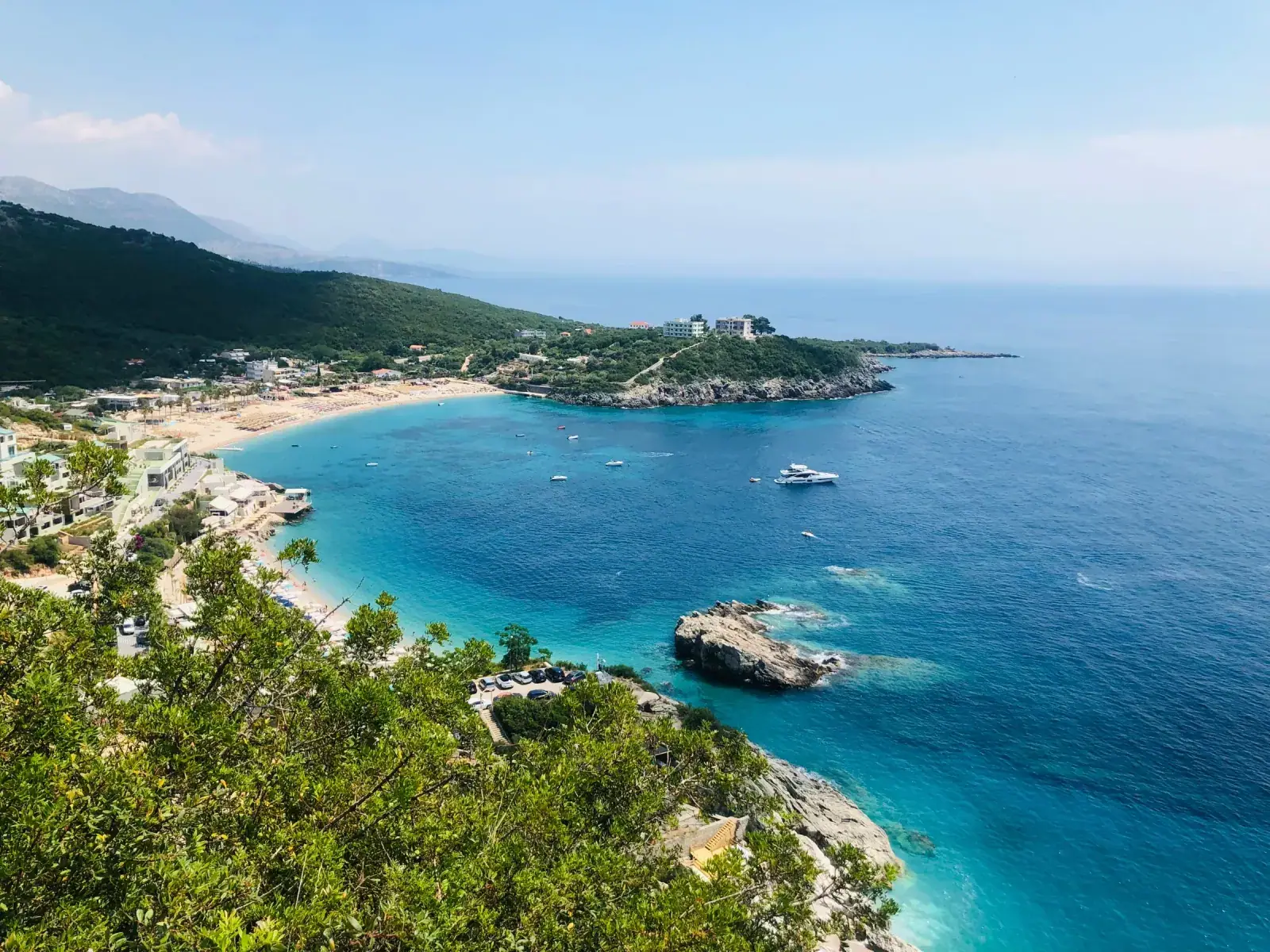
The descent from Llogara toward Palasë and Dhermi is one of the most dramatic coastal reveals in the Mediterranean, with the road dropping through switchbacks with the turquoise Ionian stretching below. Total drive time from Berat to Himara is 3.5-4.5 hours depending on your Llogara stop.
Arrival in Himara
Arrive in Himara by mid to late afternoon. Check in and head to the waterfront promenade for an evening swim and dinner. For accommodation options, see our Himara accommodation guide.
Where to stay: Himara for two nights. Budget guesthouses start at 2,500 ALL (25 EUR); mid-range hotels with sea views run 5,000-8,000 ALL (50-80 EUR).
Day 3: Himara beaches and Porto Palermo
A full day based in Himara with no long drives. This is the day to slow down.
Morning: beach time
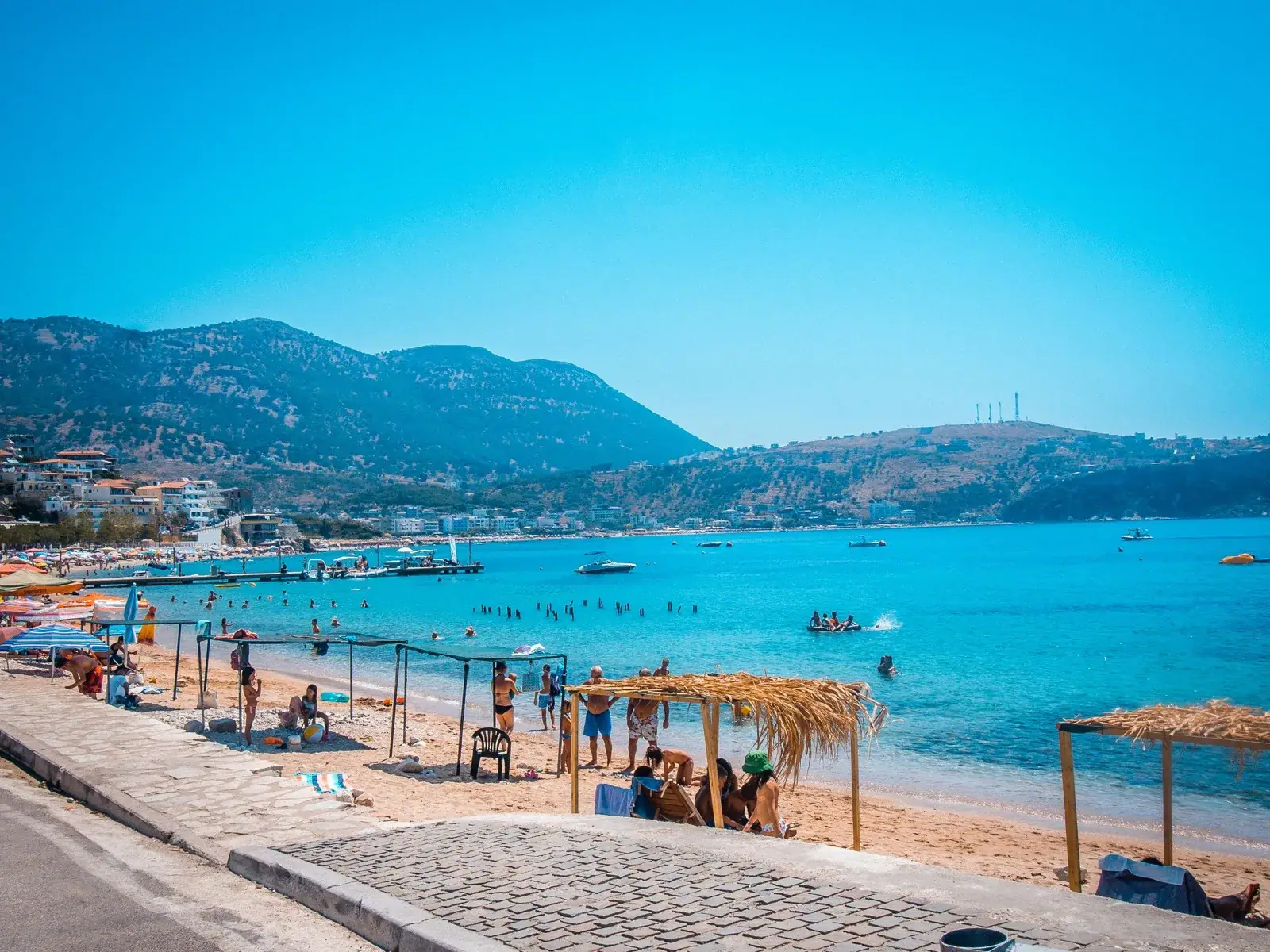
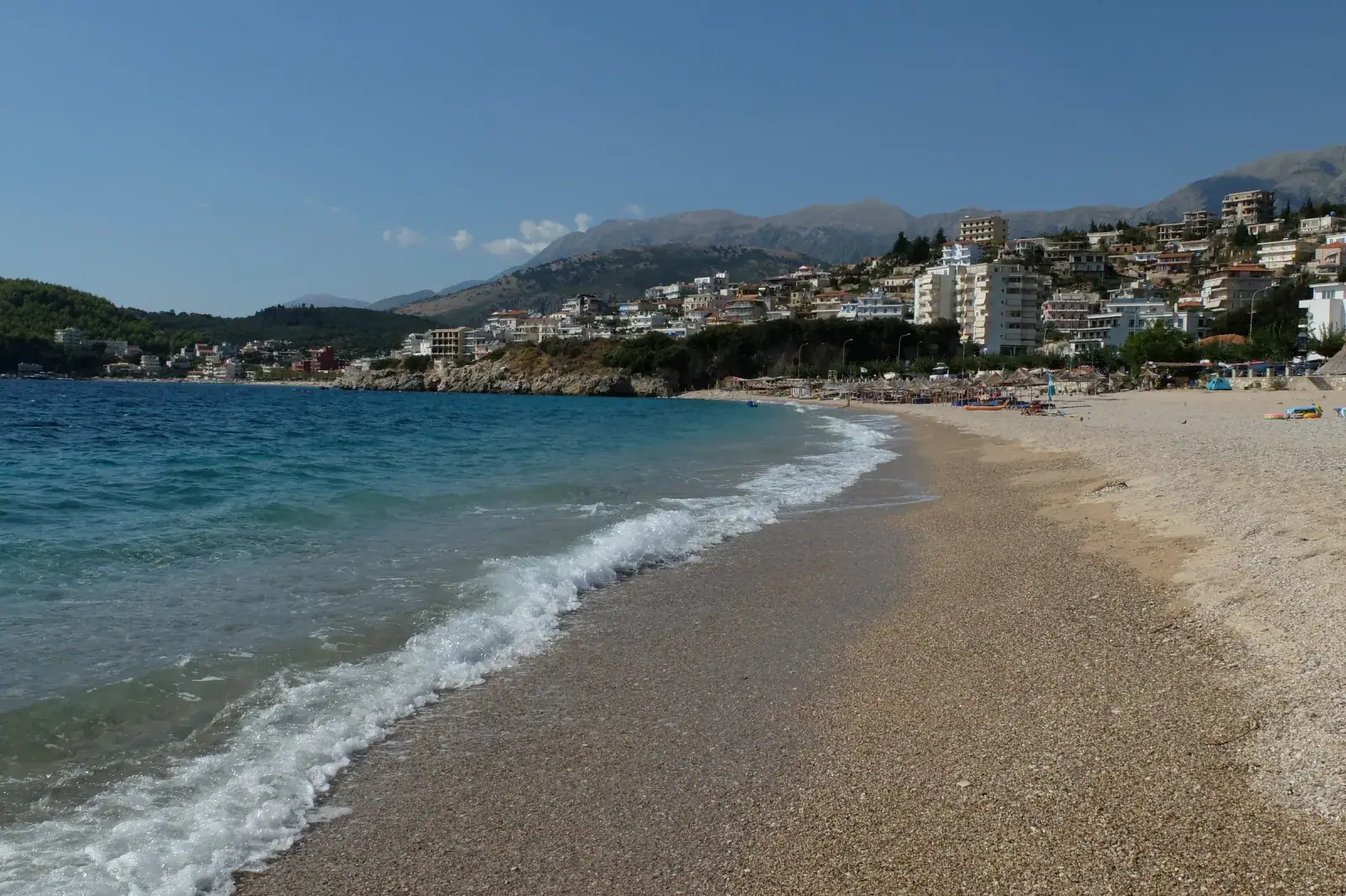
Start your morning at Livadhi Beach (Plazhi i Livadhit), a 1.2-km crescent of fine pebbles and clear water just south of Himara center. It is walkable from most hotels. Sunbed sets cost 500-1,000 ALL (5-10 EUR). The water is deep turquoise and the beach faces west, so mornings get sun from behind the mountains while the sea stays calm. See the Livadhi Beach guide for details.
Alternatively, if you have a car or scooter. Drive 20 minutes north to Gjipe Beach (Plazhi i Gjipesë), a wild cove at the mouth of a canyon accessible via a steep 30-minute downhill walk from the parking area. Gjipe has no sunbeds and no facilities, so bring water and snacks. It is the most dramatic beach landscape on this itinerary. See the Gjipe Beach guide for trail conditions and access.
If you need transport, car and scooter rentals in Himara start around 3,000 ALL per day for a scooter and 4,000-6,000 ALL for a compact car.
Afternoon: Porto Palermo
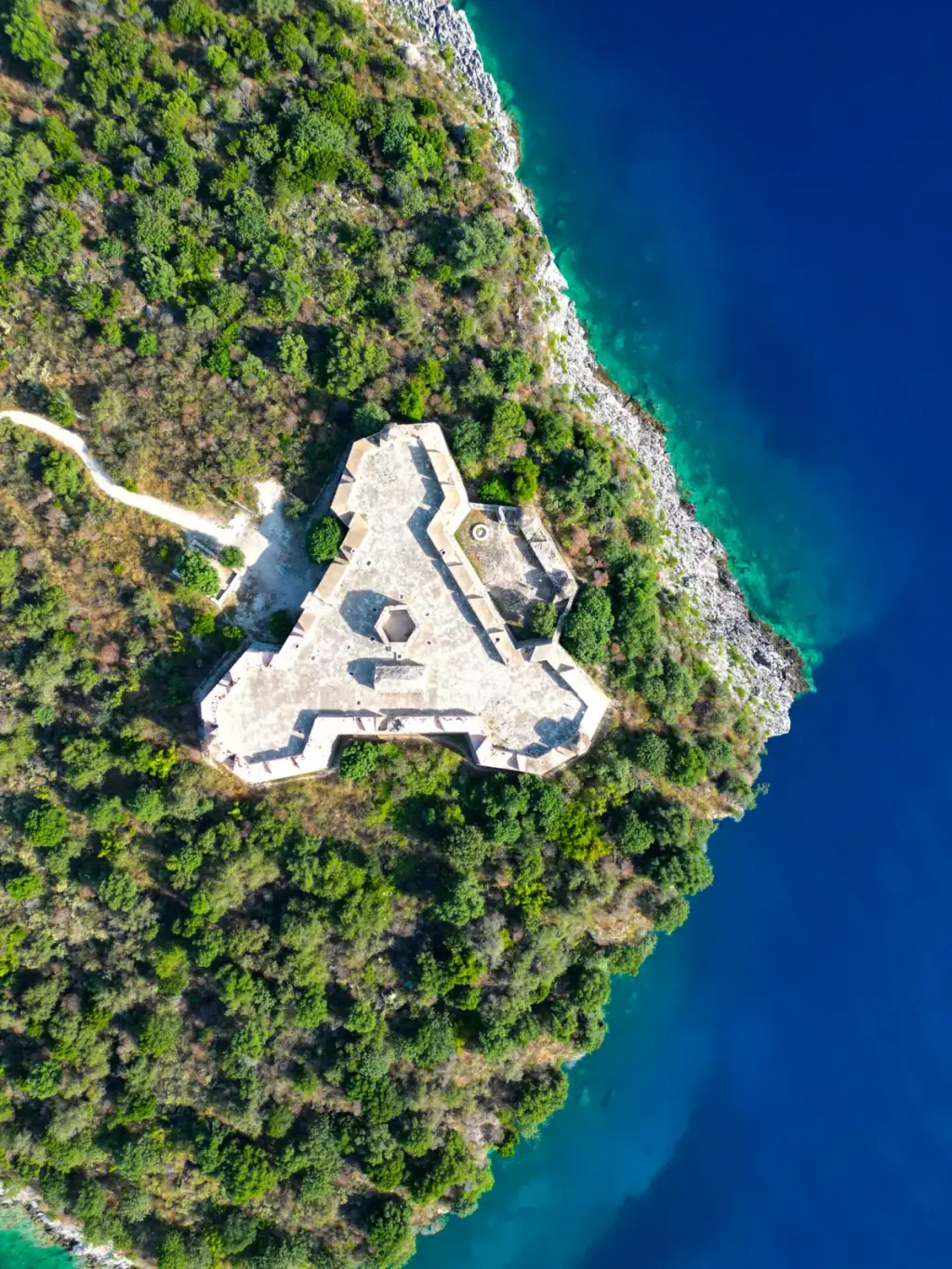
After lunch in Himara, drive 8 km south on the SH8 to Porto Palermo. This sheltered bay holds Ali Pasha's triangular fortress (built 1804, entry 300 ALL / 3 EUR, cash only) and a Cold War submarine tunnel visible from the water. The bay itself has some of the clearest water on the Riviera, so bring a mask for snorkeling near the castle rocks. Budget 2-3 hours for the castle visit and a swim.
Full logistics are in our Porto Palermo day trip guide.
Evening
Return to Himara for sunset from the Old Town (Kastro) hillside, then dinner at one of the seafood restaurants on the waterfront. For more day trip ideas from this base, see day trips from Himara.
Day 4: Himara to Gjirokastër
Leave Himara after breakfast. The drive to Gjirokastër takes 1.5-2 hours via the SH8 south to the Kakavija junction, then inland on the SH4.
The drive
The road follows the coast south past Borsh, Albania's longest beach (7 km), then cuts inland through the Drino Valley toward Gjirokastër. The valley section is flat and fast after the winding coastal road.
Gjirokastër: the stone city
Gjirokastër is Albania's second UNESCO World Heritage city. The entire old town is built from grey stone: slate roofs, stone walls, cobbled lanes. It looks nothing like the white-washed coast you just left.
Gjirokastër Castle is the anchor stop. It is one of the largest castles in the Balkans, dating to the 12th century with major Ottoman-era expansion. Inside you will find a captured American Air Force jet (from a 1957 overflight), an artillery collection, a clock tower, and sweeping views over the Drino Valley. Entry is 400 ALL (~4 EUR). Allow 1.5-2 hours.
After the castle, walk down through the Old Bazaar (Pazari i Vjetër), a restored Ottoman commercial street with craft shops, cafes, and guesthouses in converted tower houses (kulla). The Skenduli House and Zekate House are the two best-preserved tower houses open to visitors, and each costs 200 ALL (2 EUR) to enter.
For the full exploration plan, see our Gjirokastër day trip guide.
Evening
Gjirokastër has excellent food. Try qifqi (fried rice balls, a local Gjirokastër specialty found almost nowhere else in Albania) and japrak (stuffed grape leaves). Dinner mains run 600-1,200 ALL (6-12 EUR).
Where to stay: Converted stone houses in the old town run 3,000-6,000 ALL (30-60 EUR) per night. These are among the most atmospheric places to sleep in Albania. Alternatively, drive back to the coast (1.5 hours to Saranda) if you prefer a seaside overnight.
Day 5: Blue Eye, Butrint, and Saranda
The final day packs in two major attractions on the way to Saranda. Leave Gjirokastër by 8:30 AM.
Blue Eye Spring (Syri i Kalter)
The Blue Eye is a karst spring where water emerges from a depth of over 50 meters at a constant 10 degrees Celsius. The deep blue center surrounded by vivid turquoise shallows is one of Albania's most photographed natural sites.
From Gjirokastër, the Blue Eye is a 25-minute drive south on the SH99, then a signed left turn onto a 3-km access road. Entry is 100 ALL (1 EUR). Parking is free. The walk from the parking area to the spring takes 10-15 minutes on a flat forest path.
Arrive early. By 10 AM in summer, the wooden viewing platform over the spring gets crowded. Swimming is officially prohibited in the spring itself, but wading in the outflow river is permitted and refreshing. Budget 45-60 minutes on site.
See our Blue Eye day trip guide for detailed logistics.
Butrint National Park
From Blue Eye, drive 45 minutes south to Butrint, a UNESCO World Heritage archaeological site on a peninsula surrounded by a lagoon near the Greek border. Butrint has continuous settlement layers from the Greek colony period (7th century BC) through Roman, Byzantine, Venetian, and Ottoman eras.
The site includes a Greek theatre, Roman baths, a Byzantine basilica with intact floor mosaics, a Venetian castle, and a Lion Gate. Entry is 1,000 ALL (~10 EUR). Budget 2-3 hours for a thorough visit. The shaded forest paths make this manageable even in summer heat.
Full visit planning is covered in our Butrint day trip guide.
Arrive Saranda
From Butrint, Saranda is a 20-minute drive north along the coast. You will arrive by mid-afternoon with time to settle in and walk the harbor promenade.
Saranda is the largest town on the southern Albanian coast and a natural endpoint for this itinerary. From here you can catch a ferry to Corfu (30-45 minutes), continue south to Ksamil, or return north. For travel options heading south along the coast, see our Himara to Saranda transport guide.
Transport: car vs. bus
| Segment | By car | By bus |
|---|---|---|
| Berat to Himara | 3.5-4.5 hours, full Llogara flexibility | No direct bus; change in Fier or Vlora, 6-7 hours total |
| Himara local (Day 3) | Easy access to Gjipe, Porto Palermo | Local buses/taxis possible but limiting |
| Himara to Gjirokastër | 1.5-2 hours direct | 1 daily bus, ~2 hours, schedule unreliable |
| Gjirokastër to Blue Eye | 25 min, own schedule | No public transport to Blue Eye; taxi ~2,000 ALL round trip |
| Blue Eye to Butrint | 45 min, your pace | No public link; taxi required |
| Butrint to Saranda | 20 min | Local bus every 30 min, 200 ALL |
Verdict: A rental car makes this itinerary dramatically easier. Without one, Days 2 and 5 require significant taxi spend or schedule compromises. If you are arriving from Tirana, see our guide on getting to Himara from Tirana for one-way rental options.
Budget breakdown (5 days, per person)
| Category | Budget traveler | Mid-range traveler |
|---|---|---|
| Accommodation (4 nights) | 10,000 ALL (100 EUR) | 22,000 ALL (220 EUR) |
| Food (5 days) | 7,500 ALL (75 EUR) | 15,000 ALL (150 EUR) |
| Car rental + fuel (5 days) | -- (bus: ~4,000 ALL / 40 EUR) | 15,000 ALL (150 EUR) |
| Attractions (entries) | 2,500 ALL (25 EUR) | 2,500 ALL (25 EUR) |
| Activities (wine, kayak, etc.) | 1,000 ALL (10 EUR) | 5,000 ALL (50 EUR) |
| Total | ~25,000 ALL (250 EUR) | ~59,500 ALL (595 EUR) |
These are per-person estimates for shared accommodation. Solo travelers add 30-50% for accommodation. Prices reflect 2025-2026 ranges and shift significantly between shoulder and peak season.
Best time to visit
| Month | Conditions | Crowd level |
|---|---|---|
| May | Warm days (22-26C), cool evenings, some rain | Low |
| June | Warm and dry, sea swimmable (22-24C) | Moderate |
| July-August | Hot (30-35C), dry, all facilities open | High |
| September | Warm (25-30C), sea at its warmest | Moderate |
| October | Cooler (18-24C), shorter days, some closures | Low |
June and September offer the best balance of weather, prices, and crowd levels. July and August are the busiest months on the Riviera, so book Himara accommodation at least 2-3 weeks ahead. See our best time to visit Himara guide for monthly detail.
Variations and extensions
Extend to 7 days
Add a second night in Gjirokastër to explore the city at a relaxed pace, and add a day in Saranda or Ksamil at the end. Alternatively, add a beach day in Dhermi or Drymades between Days 2 and 3 before continuing to Himara. For a full week plan focused on the coast, see our 5-day Albanian Riviera itinerary.
Add Korce (2 extra days)
Start in Korce instead of Berat. Korce is southeastern Albania's cultural capital with a strong cafe scene, the National Museum of Medieval Art, and the Voskopoja village churches nearby. Drive Korce to Berat (2.5 hours) on Day 1, then continue the itinerary as written.
Add Permet and Benja hot springs (1 extra day)
Insert a stop in Permet between Himara and Gjirokastër. Permet sits in the Vjosa Valley and is known for its thermal baths at Benja (free, open-air, on a stone bridge over a turquoise river). The detour adds about 1.5 hours of driving but breaks up Day 4 nicely. Permet also produces Albania's best raki and gliko (fruit preserves).
FAQ
Is this itinerary doable without a car?
Technically yes, but Days 2 and 5 become significantly harder. The Berat-to-coast leg has no direct bus and requires a change in Vlora. Blue Eye has no public transport access. Budget for taxis on those segments or accept schedule limitations.
Which direction should I drive, Berat to Saranda or Saranda to Berat?
Berat to Saranda (south) is the recommended direction. You descend the Llogara Pass toward the coast, which gives you the dramatic Ionian Sea reveal. Driving northbound, the view is behind you. The afternoon light also works better heading south.
Can I do this in 3 days instead of 5?
You can compress it to 3 days by cutting either Berat or Gjirokastër, but the drives become long and you lose the relaxed beach day in Himara that makes the trip enjoyable. Four days is a reasonable minimum if you cut Day 3 in half.
Is the Llogara Pass road safe?
Yes, the road is fully paved and maintained. It has guardrails on exposed sections. Drive cautiously on the hairpins, especially when meeting oncoming buses or trucks. Avoid driving the pass at night or in heavy rain when visibility drops. See the Llogara Pass guide for current conditions.
Where should I book accommodation in advance?
Himara in July-August fills up fast, so book 2-4 weeks ahead. Berat and Gjirokastër have more availability year-round but still benefit from advance booking on weekends. Saranda has high supply and is easier to book last-minute except during Albanian holidays.
How much cash do I need?
Carry Albanian Lek (ALL) for castle entries, small restaurants, and rural stops. Most Himara and Saranda hotels accept cards, but Berat Castle, Blue Eye, Porto Palermo, and roadside restaurants along Llogara are cash-only. ATMs are available in Berat, Himara, Gjirokastër, and Saranda. Budget 5,000-10,000 ALL (50-100 EUR) in cash as a rolling reserve.
Is this route suitable for families with children?
Yes. The daily drives are short enough (under 2 hours except Day 2) to keep kids comfortable. Livadhi Beach in Himara is family-friendly with shallow entry. Butrint has shaded forest paths. The only challenge is the Llogara Pass road, which can cause car sickness in younger children. Bring motion sickness tablets and stop at the viewpoints.