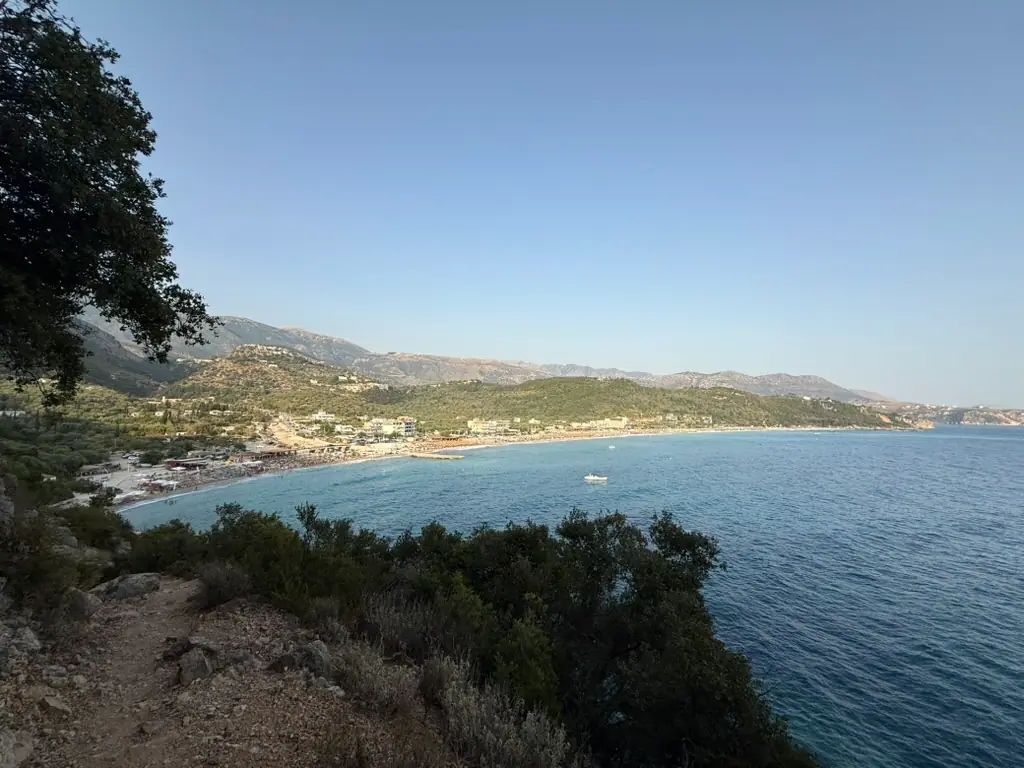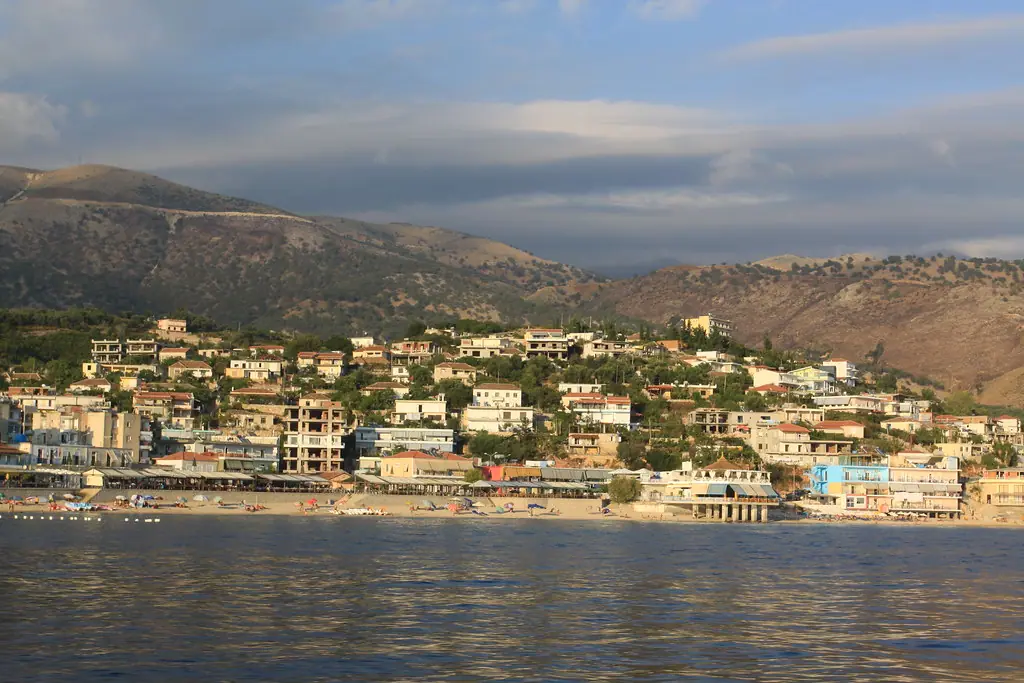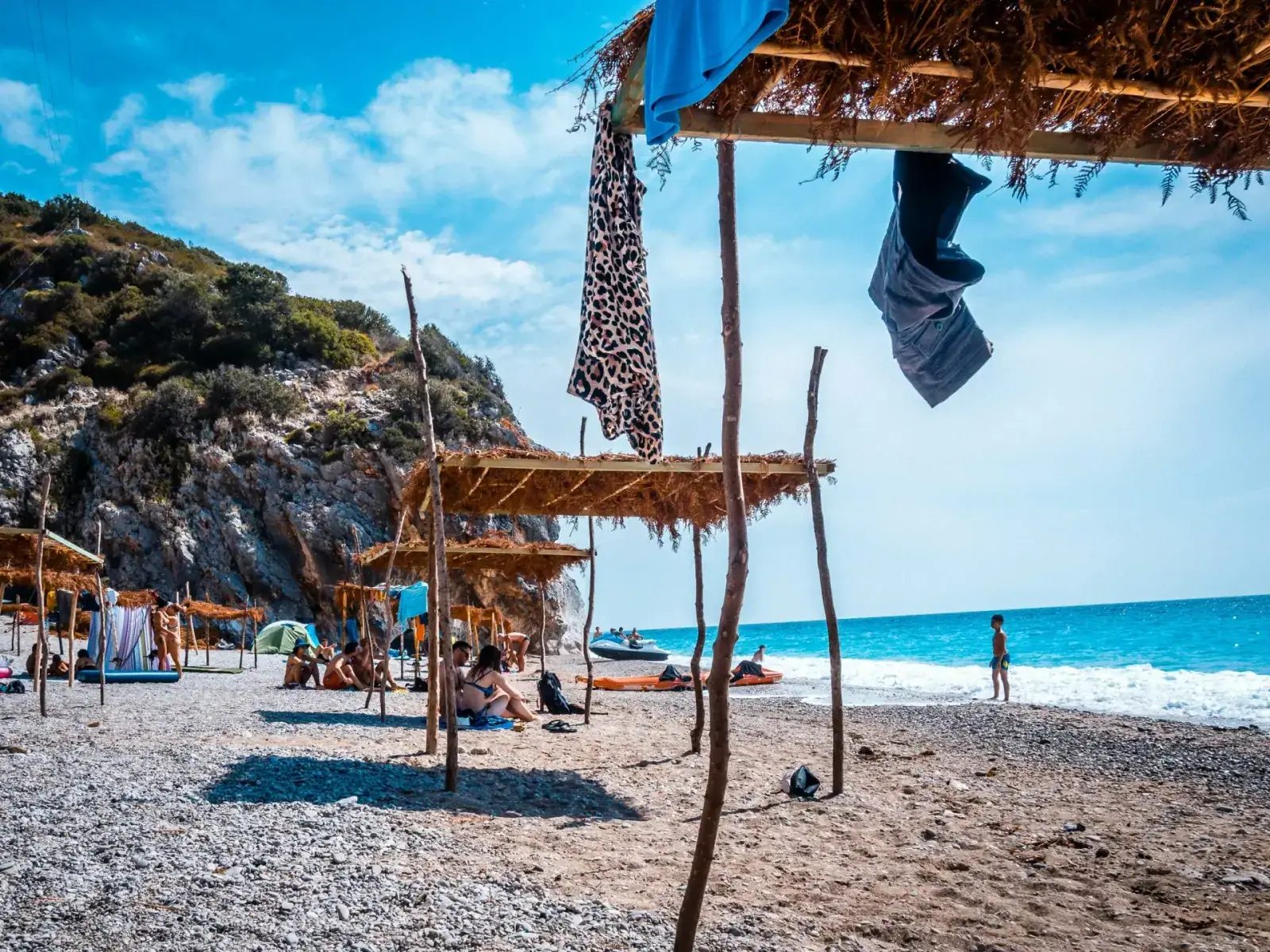
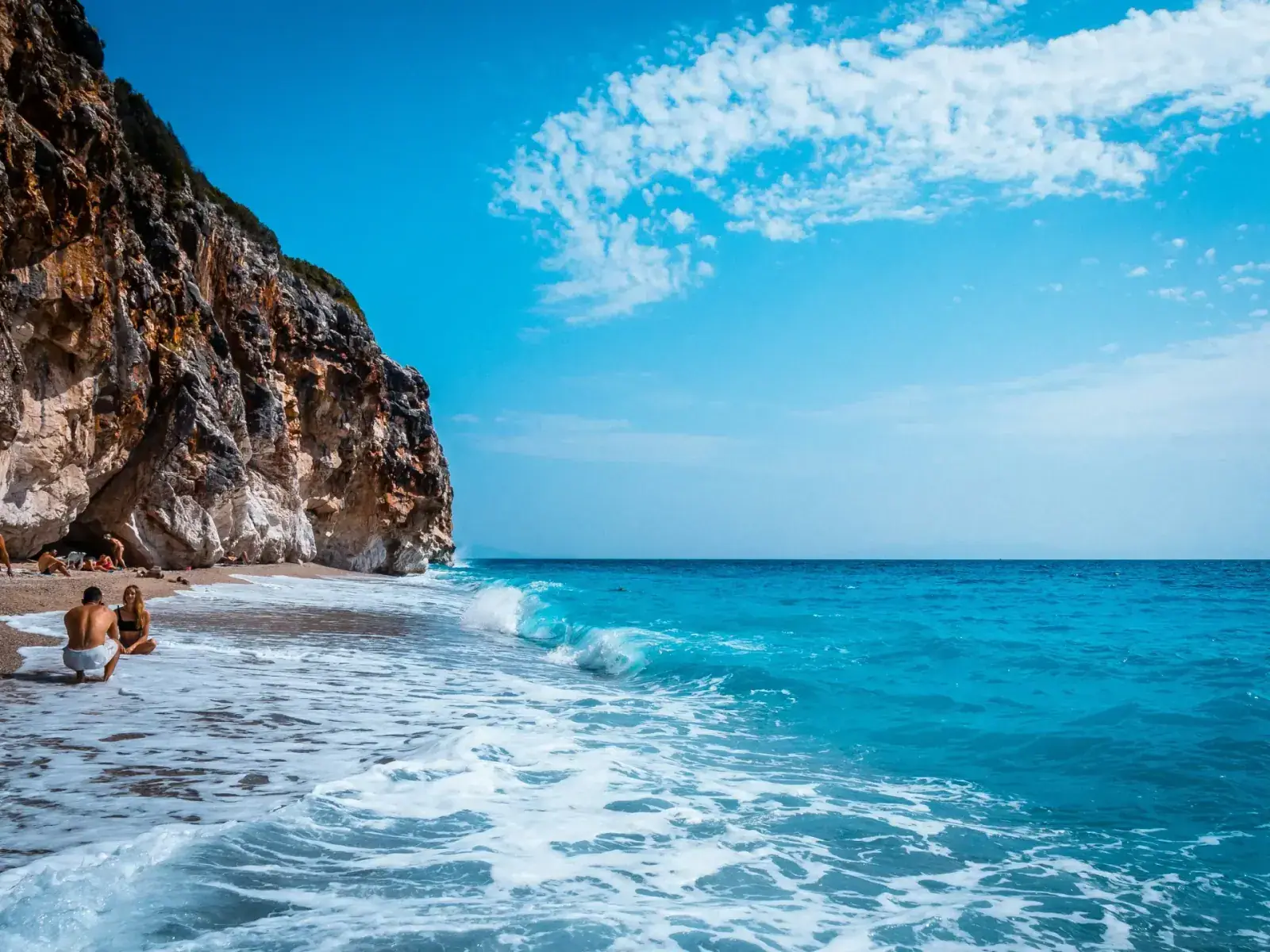
Albania's Ionian coast has quietly become one of the Mediterranean's most interesting diving frontiers. The scene is young, the country's first PADI center opened barely a decade ago, but the underwater conditions are genuinely excellent: visibility regularly hits 15-30 meters, water temperatures sit at 20-26 degrees C from June through October, and the coastline from Vlora to Ksamil holds WWII wrecks, underwater caves, submerged cliff walls, and marine life that hasn't been pressured by decades of mass tourism.
If you've dived in Greece or Croatia, imagine the same Ionian water clarity with a fraction of the boat traffic, far fewer divers on any given site, and prices roughly half of what you'd pay across the strait.
Compare hotels, apartments, and Vrbo rentals on the map. Powered by Stay22.
Book tours & activities: Compare guided day trips, boat tours, and excursions on GetYourGuide.
Quick Facts
| Detail | Info |
|---|---|
| Coastline | Vlora to Ksamil (~120 km of Ionian coast) |
| Visibility | 15-30 meters (summer average) |
| Water temperature | 20-26 degrees C (June-October) |
| Dive season | May-October |
| Marine park | Karaburun-Sazan National Marine Park |
| Certifications available | PADI, SSI |
| Discovery dive price | 40-60 EUR |
| Certified 2-tank dive | 60-90 EUR |
| PADI Open Water course | 350-450 EUR |
| Languages | English, Italian, Albanian |
Karaburun-Sazan National Marine Park
Albania's only marine protected area covers the Karaburun Peninsula and Sazan Island, the large island guarding the entrance to the Bay of Vlora. Established in 2010, the park protects roughly 12,570 hectares of sea and coastline that includes the best wreck diving in the country.
The park matters for divers because it restricts fishing and anchoring across key zones, which means healthier reefs, more fish, and better-preserved wrecks than anywhere else on the Albanian coast. Access is from Vlora only, no dive operators based further south run trips here, so if wreck diving is your priority, you need to start from the Vlora area.
What makes this park unusual is the combination of natural and historical underwater sites within a small radius: WWII-era Italian military wrecks, underwater cave systems, posidonia meadows, and rocky reef walls all sit within a 30-minute boat ride of each other.
Dive Sites by Area
Vlora and Karaburun Peninsula
This is where Albania's diving is most developed and where the headline sites are.
Sazan Island wrecks. The waters around Sazan hold several WWII-era wrecks, most notably an Italian cargo vessel and the remains of military infrastructure from when Italy used the island as a naval base. Depths range from 18-40 meters depending on the site. The shallower wrecks are accessible to Advanced Open Water divers; the deeper ones require technical certification. Marine growth on the metal hulls has created artificial reefs that attract grouper, moray eels, and dense schools of sea bream.
Italian submarine wreck. The most talked-about dive in Albania. An Italian submarine from WWII rests on the seabed near Sazan at around 30-35 meters depth. The hull is largely intact, covered in sponges and soft coral, with fish sheltering in and around the conning tower. This is an advanced dive, depth, limited bottom time, and current make it unsuitable for newly certified divers. Dive operators in Vlora run trips here weather permitting, typically as part of a two-tank day.
Haxhi Ali Cave (Shpella e Haxhi Aliut). A dramatic sea cave on the western face of the Karaburun Peninsula with both above-water and underwater entrances. The underwater entrance leads into a partially submerged chamber where light filters through gaps in the rock ceiling. Depth at the entrance is around 8-12 meters, accessible to Open Water certified divers with cave orientation. The play of light inside is the main draw, not marine life.
Cathedral Cave. A large underwater cavern system along Karaburun's coast, named for the scale of the interior chambers. The main room has enough vertical space that divers can surface inside and find air pockets with cathedral-like acoustics. Stalactites and geological formations on the walls and ceiling make this feel more like an underground cathedral than a typical sea cave. Depth varies, but entry is manageable for competent Open Water divers with a guide.
Albanian Riviera (Himara Area)
The stretch from Dhermi (Albanian: Dhermi, Greek: Drimades) south to Porto Palermo offers different diving character, less wreck-focused, more reef walls and rocky terrain.
Porto Palermo Bay. The bay around Porto Palermo Castle offers both diving and excellent snorkeling. The Cold War submarine tunnel carved through the peninsula is visible from the water, and the surrounding rocky walls drop into clear water with good fish life. The bay is sheltered, making it one of the more reliable dive spots when wind shuts down exposed sites. Depths range from 5-20 meters, with the rocky walls providing the most interesting terrain. Snorkelers can explore the shallower sections along the castle peninsula with ease.
Dhermi and Drymades reef walls. The coastline between Drymades Beach and Dhermi drops steeply underwater, creating vertical and near-vertical rock walls that run parallel to shore. These walls are covered with sponges, red coral patches, and small overhangs where octopus and moray eels hide. Depths along the wall faces range from 10-30 meters. The wall diving here is the closest Albania gets to the dramatic drop-offs you find in the Red Sea, on a smaller and more Mediterranean scale, but with outstanding visibility on calm days.
Gjipe underwater cliffs. The canyon that forms Gjipe Beach continues below the waterline. Submerged cliff faces on both sides of the canyon create a dramatic underwater landscape, with boulders, overhangs, and channels between rock formations. Depths near the cliff bases reach 15-25 meters. The site is exposed to swells and best dived in calm conditions. Access is by boat from Himara, boat tours pass Gjipe regularly, and dive operators sometimes use the same route.
For snorkeling-focused options closer to Himara, see our snorkeling and diving guide for Himara which covers shore-accessible spots like Filikuri, Akuarium, and Llamani in detail.
Saranda and Ksamil
The southern end of Albania's Ionian coast, close to the Greek border, offers warmer water and a different underwater landscape.
Ksamil Islands reef. The four small islands off Ksamil sit in shallow turquoise water, and the rocky reefs between and around them provide the best easy-access snorkeling and discovery diving in southern Albania. Depths are mostly 5-15 meters, with sandy channels between rock formations. Sea turtles (loggerhead, Caretta caretta) are occasionally spotted in the channels between the islands, not guaranteed, but frequent enough that local operators mention them. Posidonia meadows surround the islands, harboring juvenile fish, seahorses, and cuttlefish.
Butrint Channel. The narrow strait connecting Butrint Lake to the Ionian Sea creates a current-rich environment where nutrients flow and fish concentrate. Diving the channel means drift diving in mild current with good chances of seeing larger pelagic fish. Visibility can be lower than open-coast sites due to the freshwater mixing, but the density of marine life compensates. This is an unusual dive, not scenic in the classic sense, but rewarding for divers interested in biodiversity over blue water aesthetics.
Mirror Beach caves (Plazhi i Pasqyrave). South of Saranda, the coastline near Mirror Beach features small underwater cave formations and rock arches at 8-15 meters depth. These are not deep cave penetrations, more like swim-throughs and shallow grottos that frame the blue water behind you as you pass through. Good for Open Water divers and excellent for underwater photography when the light is right.
Dive Centers
Vlora Area
Albania Diving (Radhime). The main PADI 5-Star center in Albania, based at Radhime beach south of Vlora city. This is the most established operation in the country with full equipment, multiple boats, and instructors who speak English and Italian. They run the Karaburun-Sazan wreck dives, cave dives, and all certification courses from Discover Scuba through Divemaster. If you want to dive the submarine wreck or the major cave sites, this is realistically your only option. Book ahead in July-August, their boat capacity limits daily numbers.
Himara Area
Dive operations around Himara are smaller and more seasonal. A few operators run discovery dives and guided reef dives from the Himara waterfront or Dhermi during peak season (June-September). These tend to be one or two-boat operations with flexible scheduling. They cover Porto Palermo Bay, local reef walls, and the Gjipe area. Expect less infrastructure than Vlora but more personal attention and shorter boat rides to sites. Check locally for current season operators, the lineup changes year to year.
For non-diving water activities from Himara, boat tours, kayaking, and snorkeling trips are available throughout summer.
Saranda Area
Saranda has a few dive operators running trips to Ksamil Islands, Mirror Beach, and the Butrint Channel. These are typically smaller outfits offering discovery dives, fun dives for certified divers, and snorkeling excursions. SSI certification is more common here than PADI. The Saranda operators are a practical choice if you're based in the south and don't want to travel up to Vlora for a day of diving.
Prices
Dive pricing in Albania is significantly cheaper than Greece, Croatia, or Montenegro for equivalent services.
| Service | Price Range | Notes |
|---|---|---|
| Discovery / intro dive | 40-60 EUR | Includes briefing, equipment, guided shallow dive |
| Single certified dive | 35-50 EUR | Own certification card required |
| 2-tank boat dive | 60-90 EUR | Typical half-day format, 2 sites |
| PADI Open Water course | 350-450 EUR | 3-4 days, all equipment included |
| PADI Advanced Open Water | 300-400 EUR | 2 days, 5 adventure dives |
| SSI Open Water course | 300-400 EUR | Similar structure to PADI equivalent |
| Snorkeling boat trip | 15-25 EUR | Half-day, equipment included |
| Equipment rental (full set) | 20-30 EUR/day | If you have your own certification |
Prices tend to be at the lower end in Saranda and at the higher end in Vlora, reflecting the difference in site quality and boat operating costs.
Certification
Both PADI and SSI certifications are available on the Albanian coast. Courses are taught in English (and often Italian) by certified instructors.
PADI Open Water takes 3-4 days and qualifies you to dive to 18 meters worldwide. Albania Diving in Vlora runs the most structured program. Himara and Saranda operators also offer it during peak season, though availability is less consistent.
PADI Advanced Open Water adds another 2 days and qualifies you to 30 meters, necessary if you want to dive the deeper wrecks around Sazan.
SSI equivalents are available in Saranda and sometimes in Himara. SSI and PADI certifications are mutually recognized worldwide, so the choice between them is largely about which center you prefer.
If you already hold certification. Bring your card and logbook. All operators will ask to see them before taking you on a dive.
Best Months to Dive
| Month | Water Temp | Visibility | Conditions | Verdict |
|---|---|---|---|---|
| May | 18-20 degrees C | Excellent | Some wind days, cool | Season opening. Wetsuit essential. Fewer divers. |
| June | 21-23 degrees C | Excellent | Calm seas, long days | Best month overall. Warm enough, uncrowded. |
| July | 24-26 degrees C | Very Good | Afternoon chop common | Good diving. Morning dives essential. |
| August | 25-26 degrees C | Good | Boat traffic, some haze | Peak crowds but warm water. Book ahead. |
| September | 23-25 degrees C | Excellent | Calm, clear | Outstanding conditions. Second-best month. |
| October | 20-22 degrees C | Very Good | Variable weather | Cooling. Some operators closing for season. |
Peak diving conditions: A calm June morning off the Karaburun Peninsula, 25+ meters visibility, 22-degree water, and nobody else on the site. September offers nearly identical conditions with even fewer divers.
May and October are shoulder months, cooler water and some operators not yet open or already closed, but visibility can be exceptional precisely because there's less boat traffic stirring up sediment.
What You'll See Underwater
The Albanian Ionian coast is Mediterranean habitat, not tropical reef, but rich and varied in its own way.
Fish: Grouper (the star residents of wreck and reef sites), sea bream in large schools, damselfish, wrasse, blennies in rock crevices, barracuda in open water near Sazan. Moray eels are common in crevices on reef walls and wrecks. Look for the rhythmic jaw opening as they breathe.
Cephalopods: Octopus are everywhere but brilliantly camouflaged. Look for the telltale shell midden near rock crevices. Cuttlefish frequent the posidonia meadows around Ksamil.
Sea turtles: Loggerhead turtles (Caretta caretta) are occasionally seen in the Ksamil area and along the southern coast. Not every dive, but often enough to make it a realistic possibility rather than a fantasy.
Coral and sponges: Red coral (Corallium rubrum) grows on deeper reef walls and overhangs, particularly along the Karaburun Peninsula and Dhermi walls. Yellow and orange sponges cover wreck surfaces. This is not tropical hard coral, it's slow-growing, delicate Mediterranean growth that makes wreck sites look ancient.
Posidonia meadows: Dense seagrass beds of Posidonia oceanica carpet sandy areas throughout the coast, particularly around Ksamil and in sheltered bays. These meadows are a protected habitat across the Mediterranean, a sign of healthy, clean water and a nursery for dozens of fish species.
Wrecks: Metal hulls encrusted with decades of marine growth, structural elements you can swim through (on guided dives with appropriate certification), and the eerie outlines of ships and a submarine that went down 80 years ago. The WWII wrecks around Sazan are Albania's unique underwater offering, nothing else on the Albanian coast compares.
Snorkeling vs. Diving
Many of Albania's best underwater sites are accessible without scuba certification. If you're not a diver or traveling with mixed groups, snorkeling works well at several locations.
Best snorkeling sites:
- Porto Palermo Bay. Shallow rocky walls around the castle peninsula with clear water and abundant fish. See our Porto Palermo guide for access details.
- Ksamil Islands. Reef systems in 2-5 meters of water between the islands. Perfect for snorkeling directly from shore or from a small boat.
- Llamani Beach area. Deep, clear water over dramatic rock formations near Himara. Our Llamani Beach guide has specifics.
- Grama Bay. Accessible by boat from Himara, with clear water for snorkelling in a sheltered cove inside the Karaburun-Sazan Marine Park.
- Haxhi Ali Cave. Albania's largest sea cave, on Karaburun's far western flank; the turnaround point of long-haul Grama Bay tours from Himara.
Snorkeling trips run 15-25 EUR from most coastal towns and typically include gear. For serious snorkeling around Himara specifically, see our dedicated snorkeling and diving guide.
The practical difference: snorkeling keeps you in the top 3-5 meters, which covers caves, shallow reef, and fish in the coves. Diving gives you the wrecks (18-40 meters), deeper wall features, and the larger marine life that stays below the surface zone.
Practical Tips
Bring your own mask. Rental masks from budget operators leak and fog. A well-fitted mask transforms both snorkeling and diving experiences. Even a 20 EUR mask from home will outperform what you'll find at most Albanian dive shops.
Book Vlora dives in advance. Albania Diving in Radhime has limited boat capacity and fills up in peak season. Contact them before your trip, especially for wreck dives and courses.
Morning dives are best. Afternoon wind picks up along this coast most days June through September, creating surface chop that makes boat rides rougher and surface conditions less pleasant. Most operators schedule dives for 8-9 AM departure.
Bring certification cards. No card, no dive, operators won't take you on certified dives without proof. Digital cards on your phone are usually accepted, but bring the physical card as backup.
Don't skip the Riviera for Vlora. If you're based in Himara, the local reef and wall dives are worthwhile even without the headline wrecks. Porto Palermo in particular is an underrated dive site that combines history, clear water, and easy conditions.
Want a guided experience? Browse Albania diving and snorkeling tours on GetYourGuide for fixed prices, free cancellation, and verified reviews from past divers.
Frequently Asked Questions
Is diving in Albania safe?
Yes, when done through certified operators. The main PADI center (Albania Diving in Vlora) maintains international safety standards with regularly serviced equipment and certified instructors. Smaller operators along the coast vary in professionalism. Ask about certification affiliations and equipment maintenance before booking.
Do I need diving certification to try diving in Albania?
No. Discovery dives (also called Discover Scuba or try dives) are available for complete beginners at all dive centers. You'll get a pool or confined water briefing, then a guided shallow dive to 6-12 meters with an instructor. No prior experience required. Costs 40-60 EUR.
What is the best dive site in Albania?
The Italian submarine wreck near Sazan Island is the most iconic dive, but it requires Advanced Open Water certification and good conditions. For overall experience combining accessibility, marine life, and atmosphere, the Karaburun Peninsula cave dives (Haxhi Ali Cave, Cathedral Cave) are hard to beat. Porto Palermo Bay is the best site for divers who want easy conditions with historical backdrop.
Can I see the Porto Palermo submarine tunnel underwater?
The submarine tunnel itself is a military restricted zone and cannot be entered. However, you can see the tunnel entrances from the water while snorkeling or diving in Porto Palermo Bay. The surrounding underwater terrain is interesting in its own right.
How does Albania diving compare to Greece or Croatia?
Similar Ionian water clarity and marine life, but with far fewer divers on any given site, significantly lower prices (roughly 40-50% cheaper), and less developed infrastructure. Albania's unique advantage is the WWII wreck collection around Sazan, nothing comparable exists at recreational diving depths in neighboring countries. The trade-off is fewer dive centers, less predictable scheduling, and more basic surface facilities.
Is there diving near Himara specifically?
Yes. Porto Palermo Bay (10 km south), Dhermi/Drymades reef walls (15-20 km north), and Gjipe underwater cliffs are all accessible from Himara by boat. Local operators run seasonal dive trips. For the major wreck and cave sites on the Karaburun Peninsula, you'll need to travel to Vlora (~75 km north). See our Himara snorkeling and diving guide for shore-accessible options.
When is the best time to go diving in Albania?
June and September offer the best combination of warm water, excellent visibility, and uncrowded sites. July and August are warm but busier. May and October are cooler (wetsuit required) but can have exceptional visibility and near-empty dive sites.
What should I bring for a dive trip?
Your certification card (mandatory for certified dives), a well-fitted mask if you have one, reef-safe sunscreen, a rash guard for surface intervals, and water shoes for shore entries. Dive operators provide all scuba equipment. For snorkeling, bring your own mask and snorkel, the quality of rental gear is inconsistent.