What a Blue Cave Trip Costs
There is no road, no ticket office and no entry fee — the only cost is the boat, and it is charged per person for the whole day out. Prices below are the live GetYourGuide range read on 22 September 2026, across the 42 trips that list the Blue Cave as a stop:
| Trip shape | Length | Price | Rating (reviews) | Worth knowing |
|---|---|---|---|---|
| Shared speedboat, cheapest | 8 hrs | €60 | 5.0 (78) | Smuggler's Canyon + Blue Cave; no meal listed |
| Shared speedboat, best-selling | 8 hrs | €65 | 4.9 (1,745) | Grama Bay + Blue Cave; the coast's #1 water activity |
| Shared, meal included | 7 hrs | €67–€69 | 4.8–4.9 (66–504) | One of these departs Vlorë explicitly |
| Small group, half-day | 5–5½ hrs | €74 | 4.7–5.0 (5–86) | Fewer people, less time in the water |
| From Himara | 5½ hrs | €76 | new listing | The only listing that names Himara as the port |
| Full Karaburun perimeter | 8 hrs | €96 | 5.0 (2) | Adds the rest of the peninsula |
| From Ksamil / Sarandë | 8 hrs | €180 | new listing | Private only, road transfer included |
| Private charter | 5–8 hrs | €720–€1,200 per group | — | Group caps are small (5 and 8), so per-head it lands above the shared seats |
The headline number to hold onto: the best-selling trip on this coast is an 8-hour Grama Bay + Blue Cave run at €65, rated 4.9 across 1,745 reviews. Most listings show a struck-through higher price (€85–€120) beside the figure you actually pay, so the number in the search results is already a discounted one — check whether it still applies to your date.
Most operators do not name a departure port in the listing title at all — they leave from Vlorë, because it is the closest harbour to Karaburun. Only one listing names Himara, and one names Ksamil/Sarandë. If the port matters to you, confirm it in the listing before booking rather than assuming the nearest town runs it.
Compare the current Blue Cave departures and prices before you commit to a date — availability on the calm-sea days goes first.
Don't Book the Wrong Blue Cave
Three different caves on this coast are marketed with "blue" in the name, and the booking pages do not make the distinction obvious:
| Name | Where | Is it the Blue Cave? |
|---|---|---|
| Blue Cave / Shpella e Kaltër | Karaburun peninsula | Yes — this page |
| Blue Gem Cave | Karaburun, separate stop | No — sold as its own 8-hour tour, listed at €59 |
| Blue Eye | Inland, near Sarandë | No — a freshwater spring, not a sea cave, no boat involved |
This matters at the cheap end: the single lowest price on the whole results page, €59, is a Blue Gem tour, not this cave. If a listing says "Blue Gem" or never mentions Grama Bay, you are buying a different trip. The Blue Gem Cave stop is worth doing, just do not pay for it expecting this one, and the Blue Eye is a different day out altogether.
What the Blue Cave Is
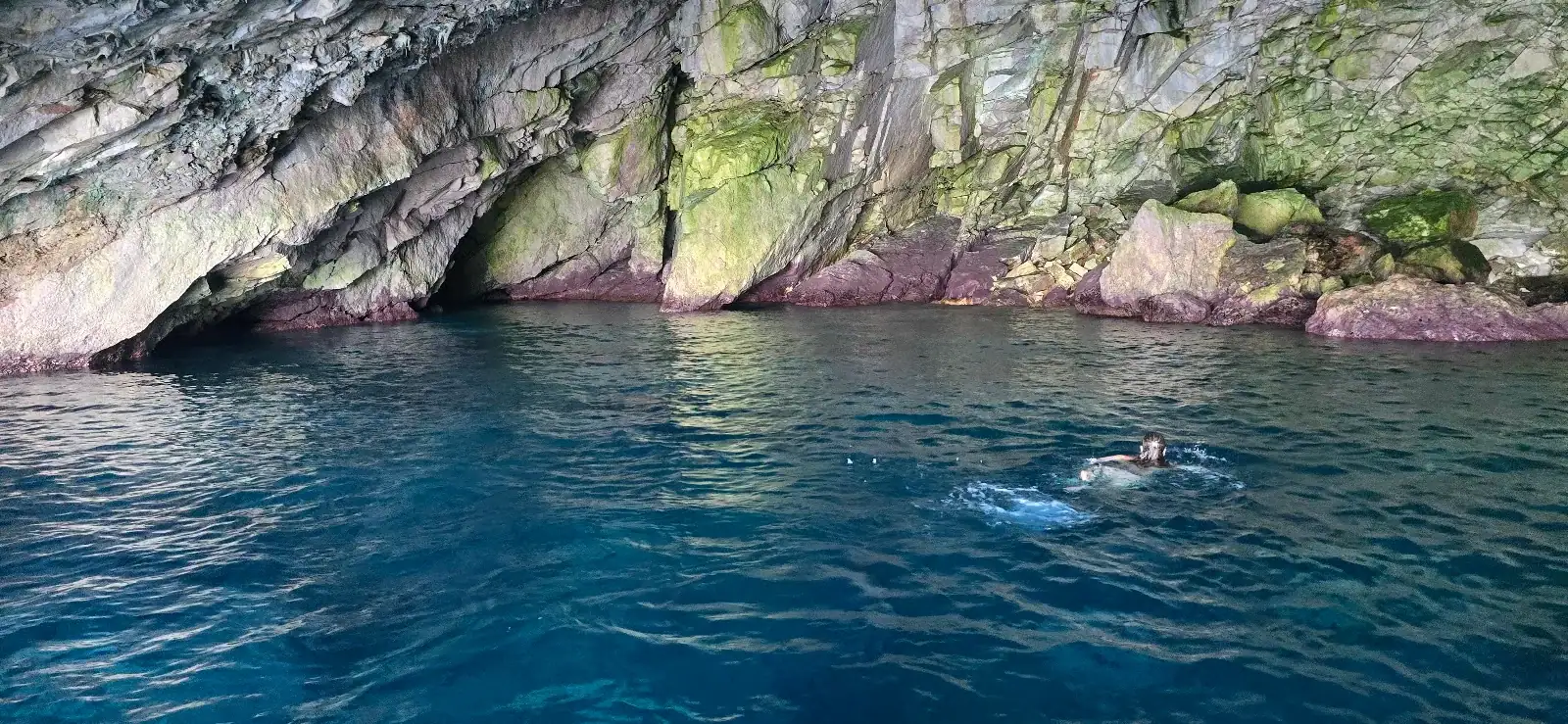
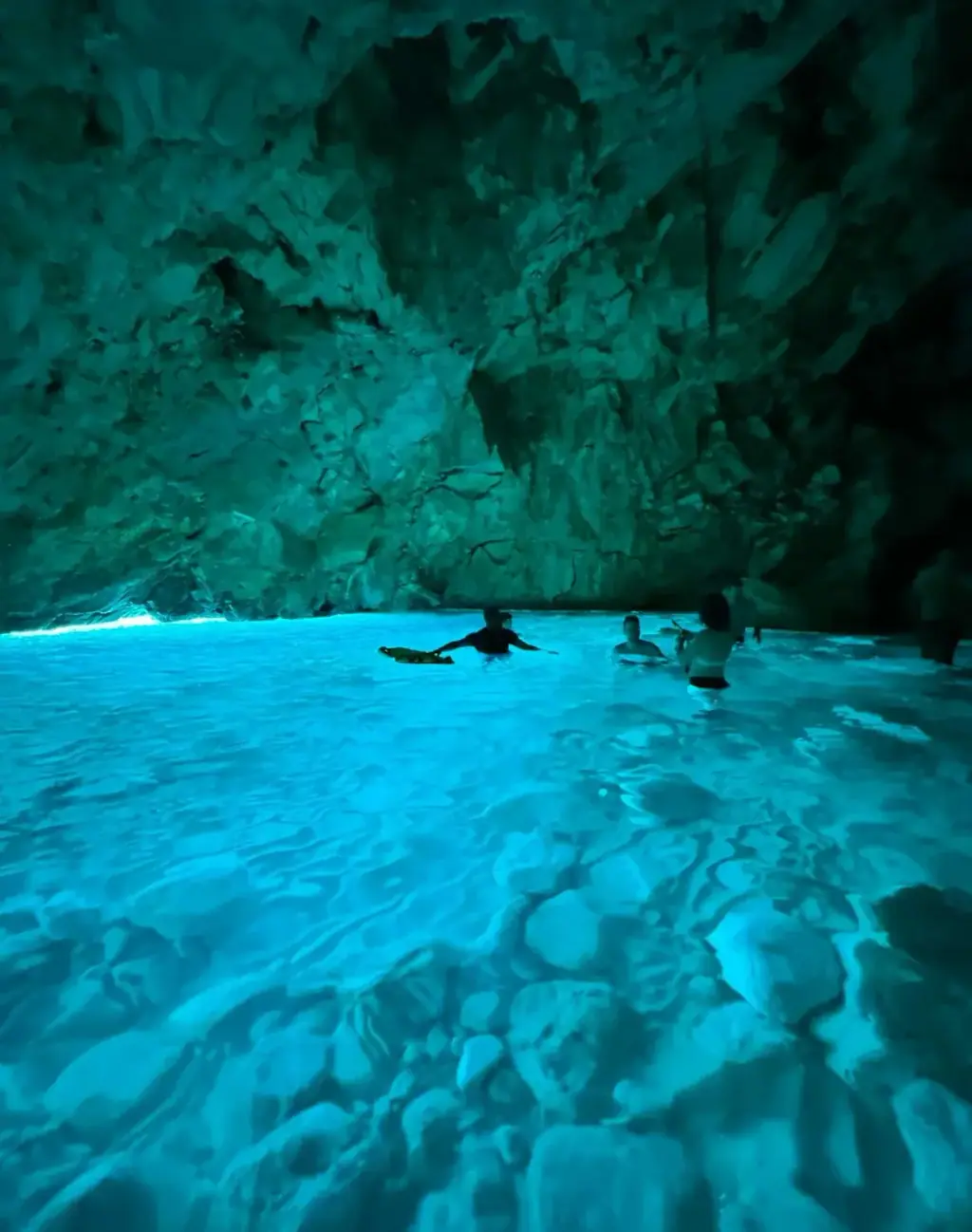
The Blue Cave (Shpella e Kaltër) is a karst sea cave on the Karaburun peninsula, inside the Karaburun–Sazan National Marine Park. Operators name it for its defining feature: on a calm, sunny day, the interior glows a luminous blue.
The effect is the same physical phenomenon that lights Capri's Blue Grotto. Sunlight enters through the cave mouth, refracts through the seawater, and reaches the back wall after the red and yellow wavelengths have been absorbed, leaving only blue. Around midday, the whole cave can glow.
Why It's a Long-Haul Stop
The Blue Cave is on the Karaburun stretch of the coast, reached by committing to the long-haul route, typically the same Grama Bay full-day tour that also takes in Saint Andrew's Bay and Grama Bay. If the Blue Cave is your priority and you're based near Vlorë, a half-day Vlorë RIB tour reaches this part of Karaburun faster than the full crossing from Himara.
What the Stop Is Like
Standard swim time is around 30 minutes. When the sea is calm, the boat eases in through the cave mouth and holds position so passengers can swim:
- The water inside is deep, exceptionally clear, and unusually still
- The blue light is most intense looking from the back of the cave toward the entrance
- Snorkelling along the walls reveals limestone formations and small fish
- A waterproof camera or sealed phone case is essential, the photos are the point
- Bring insect repellent. The shaded, damp, still interior is thick with mosquitoes, locals only half-joke that it's like stepping into the jungle. Apply repellent before you go in, not once you're in the water.
Sea Conditions
The Blue Cave faces open western water and is exposed to swell, so operators watch the sea state closely:
- Calm sea + late-morning sun = the cave at its best
- Choppy sea = the operator may stop at the entrance only or skip the cave
- Heavy swell = the route is cut short and the tour returns from Grama Bay
If conditions on your day are marginal. Ask the skipper before departure whether the Blue Cave is still on the itinerary.
Compare With Pirate's Cave
Travellers conflate the two constantly. Quick distinction:
| Pirate's Cave | Blue Cave | |
|---|---|---|
| Where | Himara coast (off Dhërmi) | Karaburun peninsula |
| Tour length | Half-day from Himara | Full-day from Himara (or half-day from Vlorë) |
| Defining feature | Tall semi-circular arch with a skylight slit | Karst sea cave with luminous blue light |
| Sea exposure | Moderate | Highly exposed |
| Always reached? | Usually yes | Conditional on weather |
Pirate's Cave is the headline of any short Himara tour; the Blue Cave is the prize on the long Karaburun day.
Want to book this stop? The Dhërmi → Grama Bay & Blue Cave boat tour is a popular route that includes the Blue Cave, fixed-price online booking with free cancellation on GetYourGuide.