What Alevra Beach is
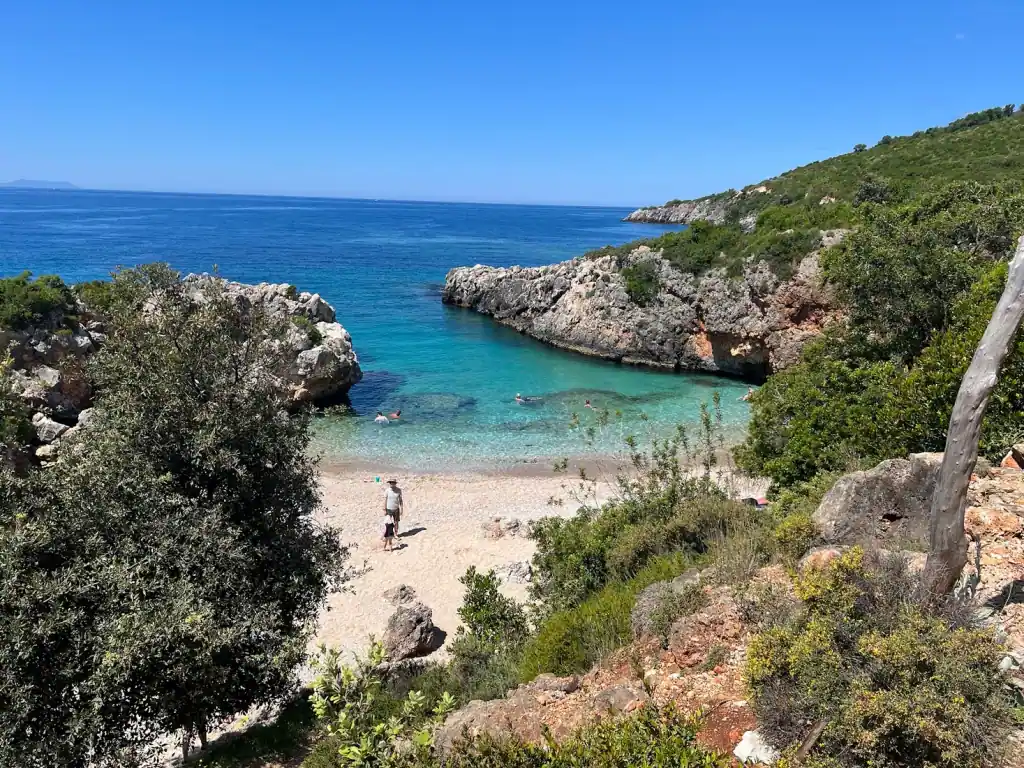
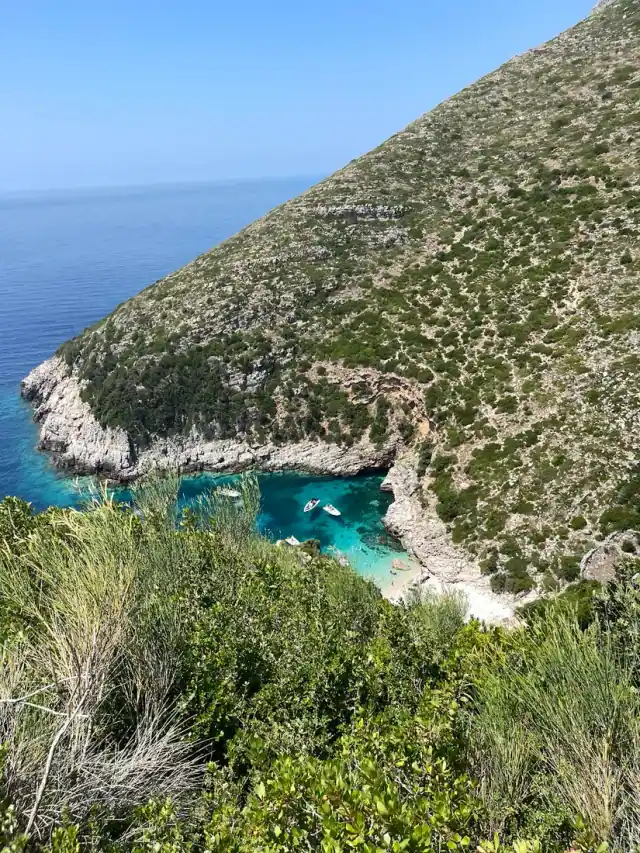
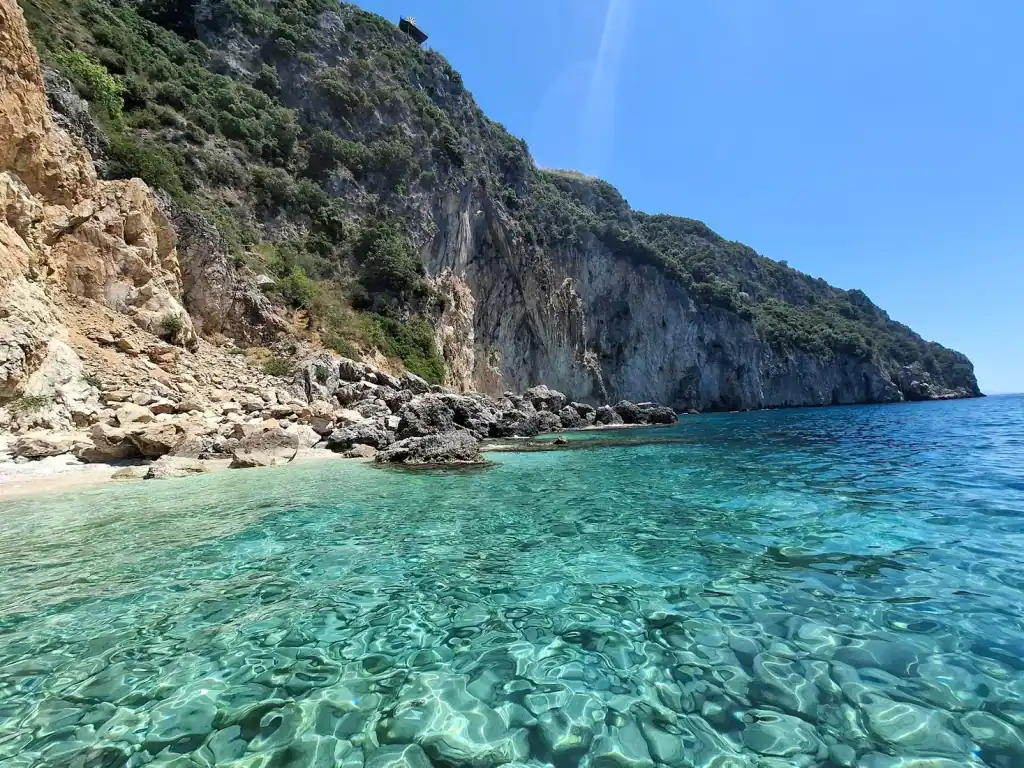
Alevra Beach is a narrow stone shore at the foot of the cliff wall between Dhërmi and Gjipe, the kind of place that exists because the cliff steps back for fifty metres and lets a beach form. Above it the limestone runs up several hundred metres, banded grey and rust, with scrub holding on wherever it can. Below it the water goes from ankle-deep and completely transparent to deep blue within a few strokes.
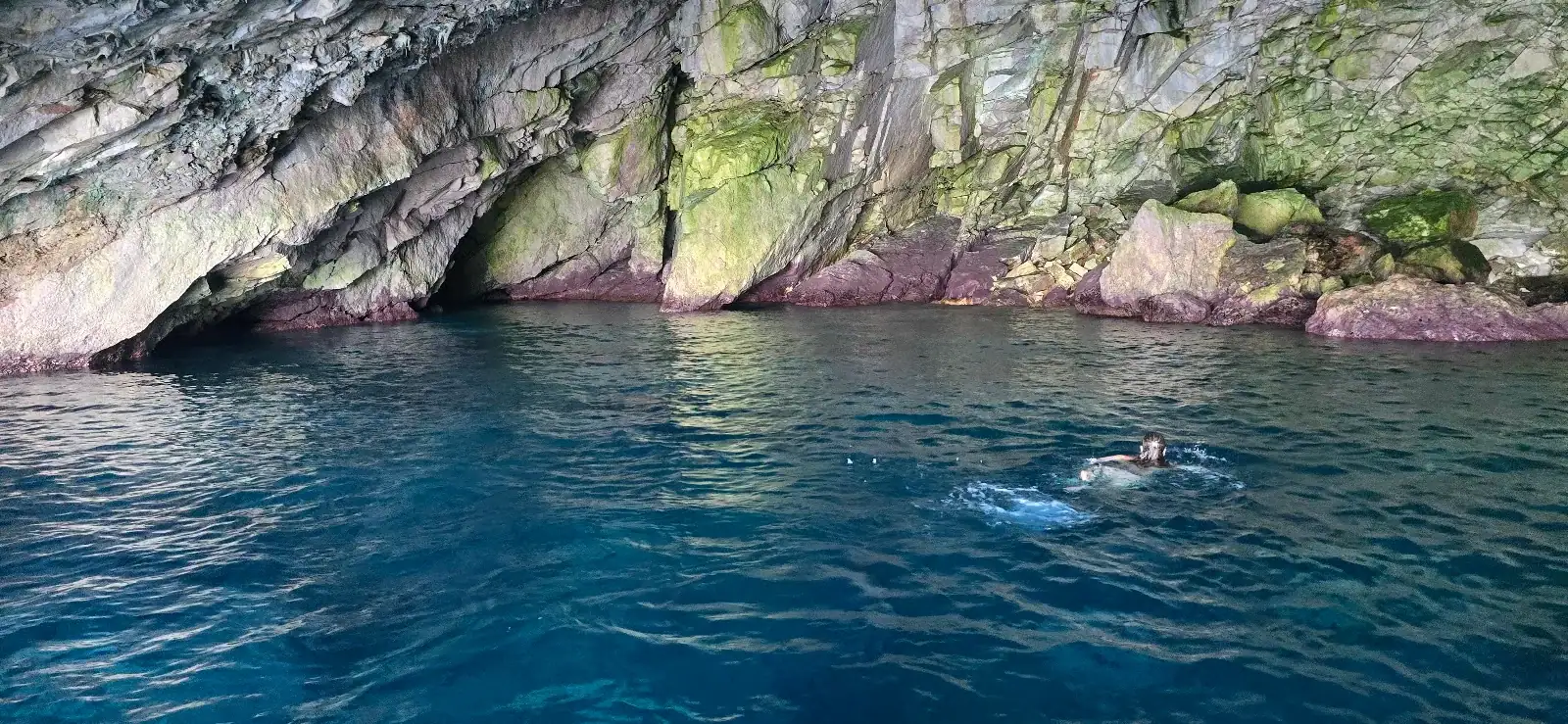
The name belongs to the bay before it belongs to the beach. Alevra, sometimes written Alevrat, is the toponym for this whole stretch of water, and the boat tours leaving Dhërmi describe their first leg as sailing through Alevra bay, past the rock of Saint Theodore, on toward Pirate's Cave, both of which sit inside it.
Position on the coast
Coordinates 40.1333°N, 19.6499°E, about 9 km north of Himarë by sea and a few minutes out from Dhërmi Beach. It is the northernmost of the cliff-base stops on this coast:
| Landmark | Distance |
|---|---|
| Pirate's Cave | 480 m south |
| Saint Theodore's Cave | 770 m south |
| Gjipe Beach | 1.9 km southeast |
| Drymades Beach | 4.2 km north |
The stop
Where operators do anchor here. It is a 15–20 minute swim:
- Shallow, glass-clear water over pale stone at the shore, among the most transparent water on this coast
- Rock at both ends of the cove, which is where the snorkelling is
- The cliff shades the water early and late, so the light is best in the middle of the day
- No facilities, no shade at the shoreline, nothing to land a boat on
Good to know
- It is a Dhërmi stop, not a Himarë one. The short Himara half-day tour turns at Pirate's Cave; Alevra is a few hundred metres further on, which puts it on Dhërmi-departing itineraries.
- Water shoes. The shore is fallen limestone as much as pebble.
- Calm days only. The cove is open to the west with nothing between it and the Ionian.