Qeparo (Greek: Κηπαρό, Albanian: Qeparo) is the answer when the rest of the Albanian Riviera starts to feel oversold. It sits exactly halfway between Himara and Borsh on the coastal SH8, and it splits geographically into two completely different places: the modern seafront cluster at the water and the semi-abandoned stone village 450 metres uphill. Together they give it a "two villages, one name" character that travelers who only stop at the beach almost always miss. The 2026 trend signal is that "qeparo" search interest is up 70% year-over-year, which means the open secret is becoming a known secret; the window to visit before it lifts into the Dhërmi crowd tier is the next two summers.
For the beach-specific deep-dive, see Qeparo Beach Guide. For the stone-village specifics, see Old Qeparo Village Guide. For the broader hill-village context including Vuno, see Vuno + Qeparo Villages. This page is the overview that hub-links those three and adds the practical "when to come, where to base, how to plan" frame.
Two Qeparos in one name
| Layer | What it is | Why you'd visit |
|---|---|---|
| Lower Qeparo | Seafront cluster: new promenade (completed 2025), beach access, hotels, restaurants | Beach day, base for 1-2 nights, easy SH8 access |
| Upper Qeparo | Semi-abandoned stone village at 450m elevation, 4 km uphill | Half-day cultural walk, photography, near-empty even in August |
These two layers are connected by a single road that switchbacks up the hillside. By car: 10-12 minutes between them. On foot: 60-90 minutes uphill. Most travelers never make the journey up, which is the secret-keeping mechanism. The upper village is reliably emptier than anywhere else within an hour of Himara.
When to visit
The honest pattern: early June or September for the goldilocks combination of an authentic village still mostly empty and a beach that's warm enough to swim from. July-August Qeparo loses about half its empty-village character to day-tripper traffic; the beach side gets busier, the upper village stays quiet only because the cobblestone climb is too much for most peak-season visitors.
| Month | Lower Qeparo (beach) | Upper Qeparo (village) | Verdict |
|---|---|---|---|
| April-May | Quiet, sea cold | Empty, comfortable temp | Hike + culture, not swim |
| June (first half) | Beach feasible, half-full | Empty | Sweet spot |
| July-August | Busy by Riviera standards (still less than Himara/Dhërmi) | Quiet because climb deters tourists | Beach if you must |
| September | Beach warm, thinning crowds | Empty | Best month |
| October | Last swim window | Comfortable hiking | Shoulder excellent |
| Nov-March | Most businesses closed | Stone village is yours alone | Off-season hike, no swim |
For full month-by-month Riviera climate context, see Himara Weather Guide.
Lower Qeparo: the seafront side
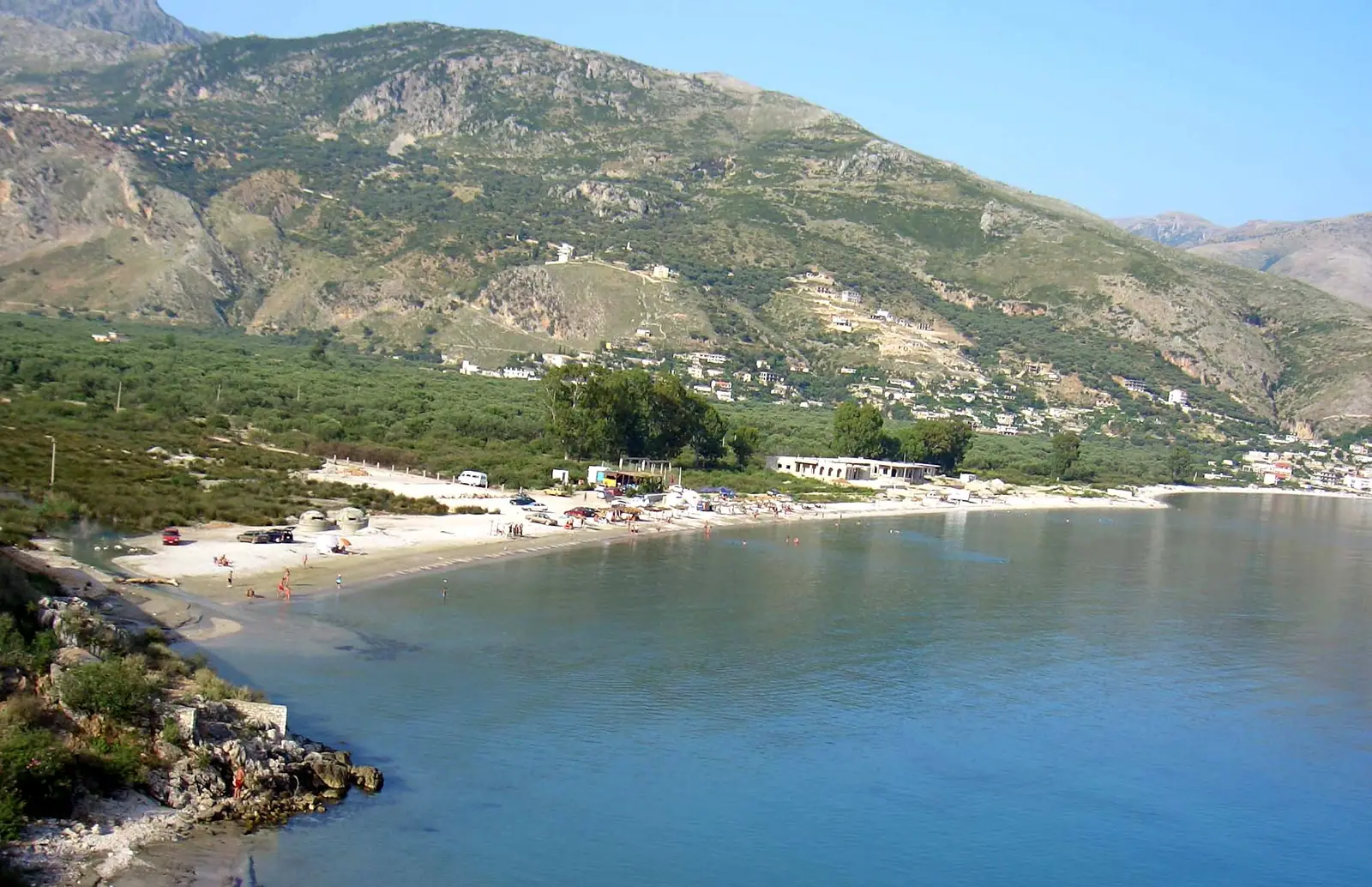
The lower village is built around the SH8 coastal road and the pebble-beach strip. As of 2026 the new paved promenade is complete (finished summer 2025), several new mid-range hotels are operating, and the beach has retained a "low-rise, no high-rise" character that distinguishes it from the more developed Dhërmi-Drymades stretch.
What to expect:
- Beach surface: pebble, mixed sizes. A 3-4m strip of larger boulders just at the waterline makes entry into the sea uncomfortable barefoot, so wear water shoes for the first metre, then it softens to sand underfoot. Full beach analysis in our Qeparo Beach Guide.
- Restaurants: roughly 8-12 active in season. Greek-leaning menus (Qeparo, like the rest of the Himara municipality, has a strong Greek-minority population; see Greek Minority in Himara for the cultural context).
- Accommodation: small-to-mid-range guesthouses and family-run hotels. No 5-star international chains. Booking 2-4 weeks ahead is sufficient in shoulder season; 6-8 weeks for July-August.
- Connectivity: mobile coverage is good. Wi-Fi at most accommodations.
The lower village is the right base for a 1-2 night Qeparo stay if you want easy beach access and don't want to drive.
Upper Qeparo: the stone village
The upper village is the reason Qeparo is on the cultural-traveler map. Stone houses, narrow lanes, an Orthodox church, partial dereliction, and 450m of elevation that gives you a panoramic view back over the bay and the lower village. The semi-abandoned character is real. Many houses are empty for nine months of the year, returned to only by diaspora families in August.
What to see:
- Karos Castle ruins. Iron Age structure on a hilltop above the village, reached via a 20-30 minute walk through olive groves. Free access; bring water.
- Orthodox church. Small, often locked, but the exterior and the surrounding stonework are the photographs.
- Village stonework and view terraces. The entire walking circuit is the attraction. Allow 90 minutes for a slow loop.
How to get up:
- By car: drive the 4 km switchback road. Free street parking at the village entrance. 10-12 minutes from the SH8 junction.
- On foot: 60-90 minutes uphill from the lower village. Steep, switchback. Bring water and start early in summer.
- By taxi: €5-10 one-way from the lower village. Negotiate a wait-and-return if you want a guaranteed ride back down.
The upper village has no restaurants in operation as of 2026, so eat in the lower village before or after.
Where to stay
For a 1-2 night Qeparo stay, base in the lower village (seafront cluster). Upper village has guesthouses but inconsistent availability and is genuinely remote in evenings.
What we'd book in Qeparo:
- For a couple, 2 nights: mid-range guesthouse with sea view, walking distance to the promenade. Budget €60-90/night in shoulder season, €100-150 in July-August.
- For a family, 2-3 nights: family room or apartment with kitchen. Many lower-village hotels offer apartment-style units; Qeparo apartments are also listed under Himara family apartments with kitchen which covers the broader Himara-area inventory.
- For someone basing in Himara who wants Qeparo as a day stop: book Himara. Drive 25 minutes south to Qeparo, spend the day. Drive back. The Himara to Borsh transport guide covers the bus option (Qeparo is on the Himara-Borsh line).
What's around Qeparo
Qeparo isn't isolated; it's an axis. Within a 30-minute drive: Himara town to the north, Borsh and its waterfall to the south, Porto Palermo Castle to the northeast, the Llogara Pass further north. A 2-night Qeparo base lets you day-trip in either direction without long drives.
| From Qeparo | To | Driving time |
|---|---|---|
| North | Himara | 25 min |
| North | Porto Palermo | 20 min |
| North | Dhërmi | 40 min |
| South | Borsh beach | 15 min |
| South | Borsh waterfall | 25 min |
| South | Saranda | 60 min |
For the day-trip pattern from Himara, see Borsh Day Trip from Himara. Qeparo is the natural midway stop on that route.
Why Qeparo is quieter than Himara
Three structural reasons the "off-the-beaten-path" character holds:
- No major hotel chain or large resort. Inventory caps at small-medium scale; the village can't absorb the same tourist load as Himara or Ksamil.
- The beach is pebble, not sand. Sand-beach demand routes to Ksamil; pebble-beach travelers self-select for the lower-volume crowd.
- The cultural attraction (upper village) requires effort. The 450m elevation gain filters out casual day-trippers.
This is sustainable as long as 1 and 2 hold. Point 3 is the weakest defense. If a road improvement or shuttle service makes the upper village trivially accessible, the character changes fast. The 2026 visit is meaningfully different from the 2030 visit. Go now.
What Qeparo doesn't have
Set expectations correctly:
- No nightclubs or beach-club nightlife. The promenade has a few bars; evenings are quiet by 23:00.
- No major supermarket. Small markets in the lower village; for larger shopping. Drive to Himara.
- No bank with ATM in the upper village. ATMs in the lower village; carry cash for the upper village.
- No taxi rank. Hotel-called taxis are the norm.
- No major tourist information centre. This guide is part of why we built it.
FAQ
Is Qeparo worth visiting from Himara?
Yes, as a day trip or a 1-2 night stay. The two villages (lower seafront + upper stone) give it twice the content of a single-village stop, and it's reliably quieter than Himara or Dhërmi. Drive time from Himara is 25 minutes south on the SH8.
How long should I spend in Qeparo?
Half a day is enough for the beach. A full day if you also walk to the upper village. Two nights if you want to slow down. Qeparo's evening rhythm is the part day-trippers miss, and it's the strongest argument for staying overnight rather than passing through.
Is the upper Qeparo village really abandoned?
Semi-abandoned. Many houses are unoccupied most of the year and returned to by diaspora families in August. The village isn't completely empty, since a small year-round population remains, but it's reliably the quietest village within an hour of Himara. The stone houses, narrow lanes, and partial dereliction are the photograph the upper village is known for.
Can I visit Qeparo without a car?
Yes. The Himara-Borsh minibus stops at Qeparo. Frequency in summer is roughly every 1-2 hours. The walk from the SH8 bus stop to the beach is 5-10 minutes. The upper village is harder without a car: taxi or 60-90 minute uphill walk.
When is Qeparo beach warmest?
August (sea at 25.5°C average), as with the rest of the Riviera. September stays at 24°C with far fewer crowds, and that's our pick. June first half is the underrated swim window. See Himara Weather Guide for the full table.
Bottom line
Qeparo is the right answer for a 1-2 night Albanian Riviera stop if you want a quieter alternative to Himara or Dhërmi, you accept pebble over sand, and you're willing to climb to the upper village to get the cultural payoff. Book in shoulder season; expect a slow-evening rhythm; carry cash for the upper village; eat in the lower one. The 2026-2027 window is the right time to see it before the rising-trend curve turns it into another Dhërmi.