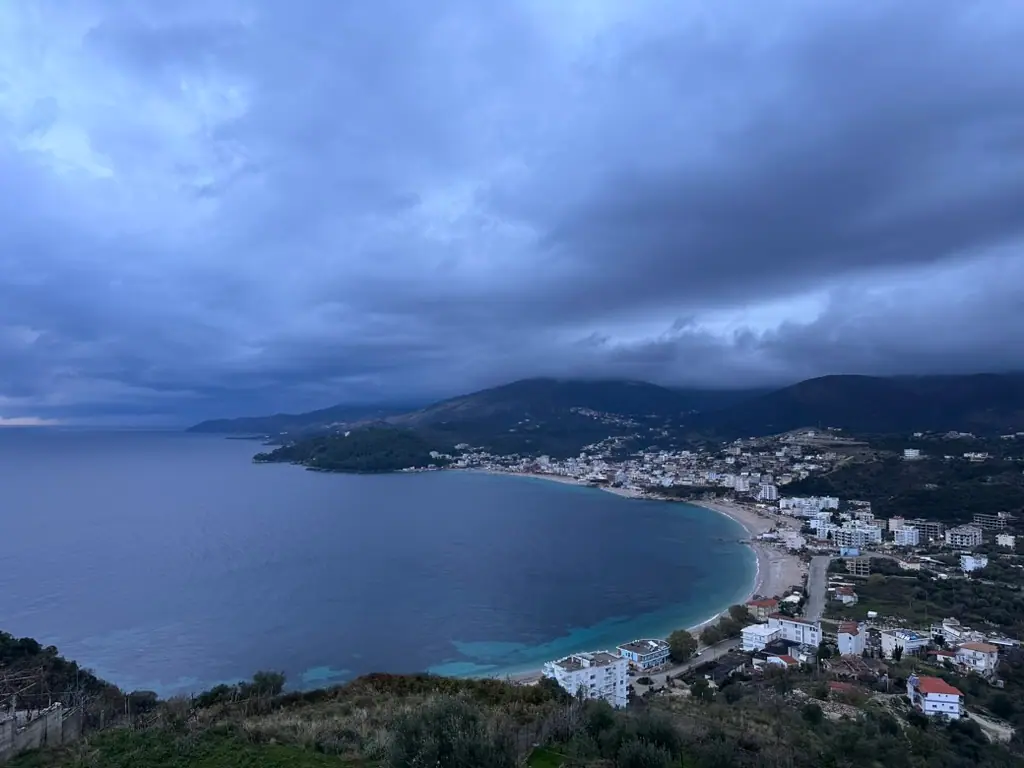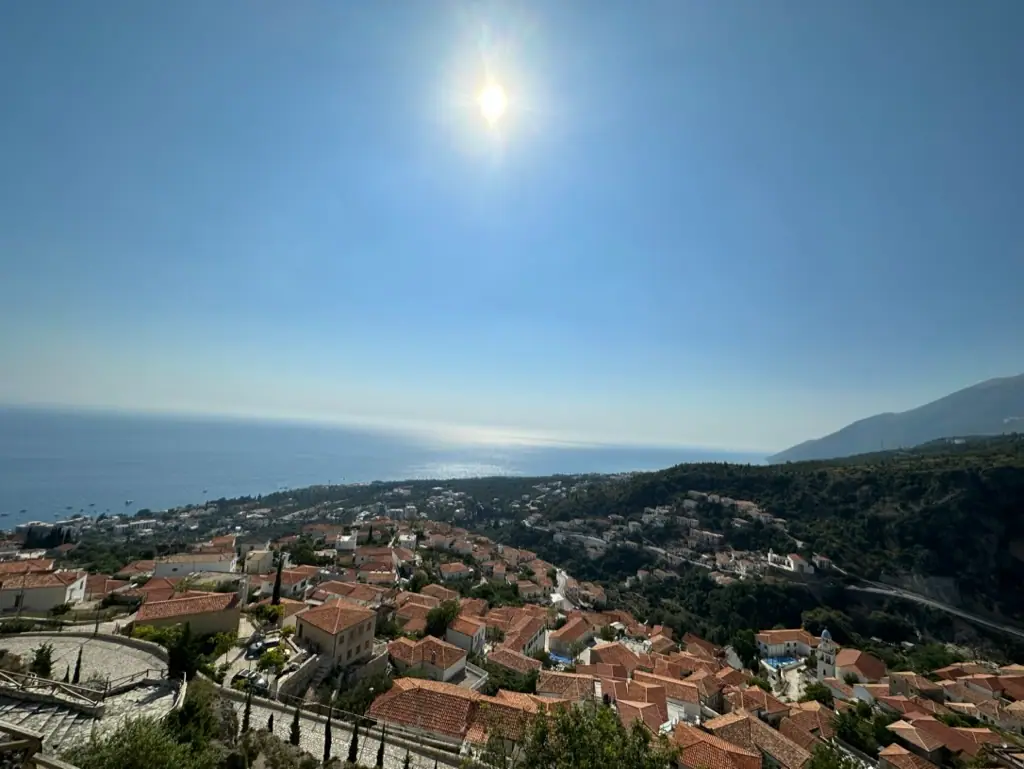
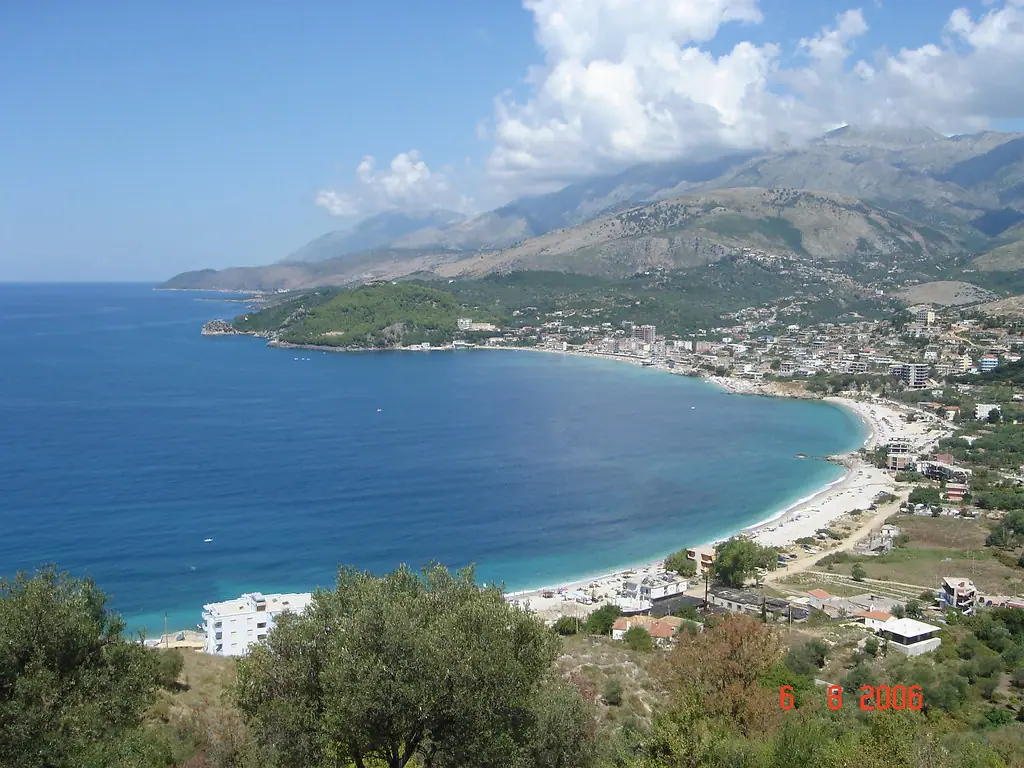
The route from Himara to Borsh is one of the shortest and most rewarding transfers on the Albanian Riviera. Himara to Borsh is roughly 20 km south on the SH8 coastal road, and real-world travel time runs between 25 and 40 minutes depending on transport mode and traffic. Borsh is home to Albania's longest beach, approximately 7 km of sand and pebble coastline, and is a natural next stop for anyone based in Himara.
This guide covers every practical transport option, what each costs, and how to choose based on your travel style.
Compare hotels, apartments, and Vrbo rentals on the map. Powered by Stay22.
Quick Decision Table
| Option | Typical Duration | Typical Cost | Best For |
|---|---|---|---|
| Bus/furgon | 30-45 min | ~3-5€ | Budget travelers, solo backpackers |
| Taxi | 25-35 min | ~15-25€ per car | Comfort, luggage, small groups |
| Rental car | 25-35 min driving time | ~35-55€/day + fuel | Flexibility, scenic stops |
| Scooter | ~25-30 min | ~15-25€/day rental | Experienced riders, light luggage |
Option 1: Bus/Furgon (Cheapest)
Borsh sits on the main Himara-Saranda bus corridor, which means most southbound bus and furgon services stop there. You do not need a dedicated Borsh service, you catch the same vehicle heading toward Saranda and get off at the Borsh junction or village stop.
What to expect:
- Typical fare: 3-5€ (often paid in ALL cash)
- Typical duration: 30-45 minutes including intermediate stops
- Cash strongly preferred; exact change helps
- No guaranteed luggage space on furgons
How to make it work:
- Ask your hotel desk or a local contact for same-day departure times. Printed schedules are unreliable and shift by season.
- In peak season (July-August), services run more frequently, but vehicles fill faster. Arrive at the pickup point early.
- Confirm with the driver that the vehicle stops at Borsh before boarding. Most do, but express runs to Saranda occasionally skip it.
- For the return trip, flag down a northbound furgon from the main road near the Borsh junction. Waiting time varies, 15 minutes on a good day, over an hour on a bad one.
Bus/furgon is the right choice if you are traveling light, flexible on timing, and want to keep costs minimal. It is not the right choice if you have luggage, need to arrive at a specific time, or want to stop at Porto Palermo en route.
Option 2: Taxi (Fastest, Lowest Stress)
Taxi is the most straightforward option and offers the best value once you split the fare between two or more people.
Typical range:
- 15-25€ per car one way
- 25-35 minutes travel time
- Price depends on negotiation, season, and whether the driver waits or returns
Taxi is especially strong for:
- Couples or small groups splitting cost (works out to 5-12€ per person)
- Travelers with luggage or beach gear
- Connection days where timing matters
- Return trips after dark, when bus frequency drops
Booking tips:
- Confirm the total fare before departure. Ask if any stops (like Porto Palermo) are included or cost extra.
- Hotel desks in Himara can usually arrange a taxi within 30 minutes.
- If you want a round trip with a wait at Borsh, negotiate a total price upfront. Expect to pay more than two one-way fares, but less than double.
- Keep cash available. Card payment in taxis is rare outside Tirana.
For day-trip logistics, a taxi combined with a return by furgon is a practical hybrid: taxi down in the morning when you want certainty, bus back in the afternoon when timing is relaxed.
Option 3: Rental Car (Best for Stops and Flexibility)
Driving from Himara to Borsh on the SH8 is one of the most scenic short drives in Albania. The road is paved and in reasonable condition, but it is narrow in sections with tight curves and no guardrails in some stretches. Daylight driving is recommended.
Typical cost:
- Daily rental: 35-55€ (varies by vehicle type and season)
- Fuel for the round trip: minimal, roughly 2-3€
- Parking in Borsh: free at the beach and village
Who should drive:
- Travelers planning to stop at Porto Palermo Castle en route
- Anyone doing a multi-stop south-coast day (Himara > Porto Palermo > Borsh > return)
- People comfortable with winding coastal roads
For rental options and tips, see Car and scooter rental in Himara.
The biggest advantage of driving is control over your schedule and the ability to stop at viewpoints and Porto Palermo without coordinating with a driver or bus timetable. The biggest downside is that parking at Borsh Beach in August can require patience.
Option 4: Scooter (Scenic, Budget-Friendly, Not for Everyone)
A scooter handles this route well if you are an experienced rider traveling with minimal luggage.
Typical:
- Scooter rental: 15-25€/day
- Travel time: ~25 minutes without stops
- Helmet mandatory (and genuinely important on this road)
Scooter works if:
- You have ridden scooters on similar roads before
- Your luggage fits in a small backpack
- You are traveling in calm weather during daylight
Scooter does not work if:
- You are carrying beach gear, bags, or supplies for more than one person
- Winds are strong (common in afternoons along the coast)
- You are not confident on curves with occasional oncoming traffic in your lane
- You plan to return after dark
The SH8 between Himara and Borsh is beautiful but demands attention. Treat the scooter option as a choice for riders who already know what they are doing.
For full mobility context: Getting around Himara.
Himara to Borsh: Stops En Route
The 20 km stretch between Himara and Borsh passes through one of the best short detours on the Riviera.
Porto Palermo Castle and Bay
Porto Palermo sits roughly halfway between Himara and Borsh. The bay is striking, a protected inlet with clear water, and the Ottoman-era castle is accessible on foot from the road.
- Entry: free or a small fee depending on season
- Time needed: 20-40 minutes for the castle, longer if you swim
- Access: signposted turnoff from the SH8
If you are driving or on a scooter, stopping here adds minimal time and is genuinely worth it. By taxi, ask the driver to stop. Most will accommodate for a short wait, especially if agreed upfront.
For a full guide: Porto Palermo day trip from Himara.
SH8 Viewpoints
Several unmarked pulloffs between Himara and Porto Palermo offer elevated views of the coastline. These are best enjoyed by car or scooter, buses and taxis do not stop here.
Total Cost by Traveler Profile
| Traveler Profile | Recommended Mode | Typical One-Way Spend |
|---|---|---|
| Solo backpacker | Bus/furgon | ~3-5€ |
| Couple, light luggage | Taxi (split) | ~8-13€ per person |
| Family of 3-4 | Taxi or rental car | ~15-25€ total (taxi) or day rental cost |
| Day-tripper wanting stops | Rental car or scooter | ~35-55€/day (car) or ~15-25€/day (scooter) |
| Comfort-first traveler | Taxi with wait | ~30-40€ round trip negotiated |
Timing by Season
| Season | Road Conditions | Bus Frequency | Recommendation |
|---|---|---|---|
| May-June | Light traffic, good weather | Moderate | Best overall window for this route |
| July-August | Peak traffic, parking pressure at Borsh | Highest frequency | Leave early, especially by car |
| September | Quieter roads, warm water | Good frequency | Strong month for a relaxed day trip |
| October-April | Very light traffic, fewer services | Limited or suspended | Confirm bus availability in advance; taxi or car preferred |
Common Mistakes
-
Assuming fixed bus schedules from online sources. Furgon and bus times on the Himara-Saranda corridor shift regularly. Always confirm locally on the day of travel.
-
Skipping Porto Palermo because it looks like a detour. It is directly on the route. Stopping adds 20-40 minutes and is one of the best things you can do between Himara and Borsh.
-
Taking a scooter with heavy luggage. The road is scenic but technical. Overloaded scooters on coastal curves are a genuine safety concern.
-
Not carrying cash. Bus drivers, taxi drivers, and many vendors in Borsh operate cash-first. Have small ALL and EUR notes available.
-
Waiting for a return bus too late in the day. Northbound furgon frequency drops sharply after late afternoon. If your plans at Borsh run long, have a taxi number saved as backup.
Conclusion
For the himara to borsh route, the right transport choice depends on your priorities. Bus is cheapest and works fine for flexible solo travelers. Taxi is the best balance of cost and convenience, especially for two or more people splitting the fare. Rental car wins if you want to stop at Porto Palermo and control your schedule. Scooter is a strong option for experienced riders traveling light.
At 20 km and under 40 minutes in any mode. This is one of the easiest and most rewarding short transfers on the Albanian Riviera. The main risk is not the distance. It is leaving too late, skipping Porto Palermo, or getting stuck without a return ride.
Frequently Asked Questions
Is there a direct bus from Himara to Borsh?
There is no dedicated Himara-to-Borsh bus service. Borsh is a stop on the Himara-Saranda furgon/bus corridor. Most southbound services stop at the Borsh junction or in the village. Confirm with the driver before boarding.
How much does a taxi from Himara to Borsh cost?
A one-way taxi typically costs 15-25€ per car, depending on season and negotiation. For a round trip with a wait, expect 30-40€ negotiated upfront. Splitting between two or more passengers makes taxi competitive with other options.
Can I stop at Porto Palermo on the way to Borsh?
Yes. Porto Palermo is directly on the SH8 between Himara and Borsh. By car or scooter, stop anytime. By taxi, ask the driver to include a stop. Most will agree if you negotiate before departure. By bus, you would need to get off at Porto Palermo and catch a later furgon to continue to Borsh, which adds uncertainty.
How long does it take to drive from Himara to Borsh?
Driving time is typically 25-35 minutes on the SH8. Add 5-10 minutes in peak summer traffic. The road is paved but curvy, drive at a comfortable pace and enjoy the views rather than rushing.
Is the road from Himara to Borsh safe?
The SH8 is paved and maintained, but it is a two-lane coastal road with curves, limited shoulders, and occasional oncoming traffic crossing the center line. Drive during daylight, maintain moderate speed on curves, and watch for slower vehicles. The road is not dangerous, but it demands attention.