You have been to Himara before. You swam at Livadhi and Spile, took the boat tour, ate grilled octopus on the waterfront, and drove down to Porto Palermo. You left thinking you would come back. Now you are planning that return trip, and you want more than a repeat of the highlights reel. This guide is for you, the second-timer, the third-timer, the person who already knows the basics and wants to go deeper into what the Albanian Riviera actually has to offer when you move past the obvious.
Compare hotels, apartments, and Vrbo rentals on the map. Powered by Stay22.
Hidden beaches to add to your list
You have done the main beaches. Now reach the ones that most visitors never see.
Filikuri Beach by kayak
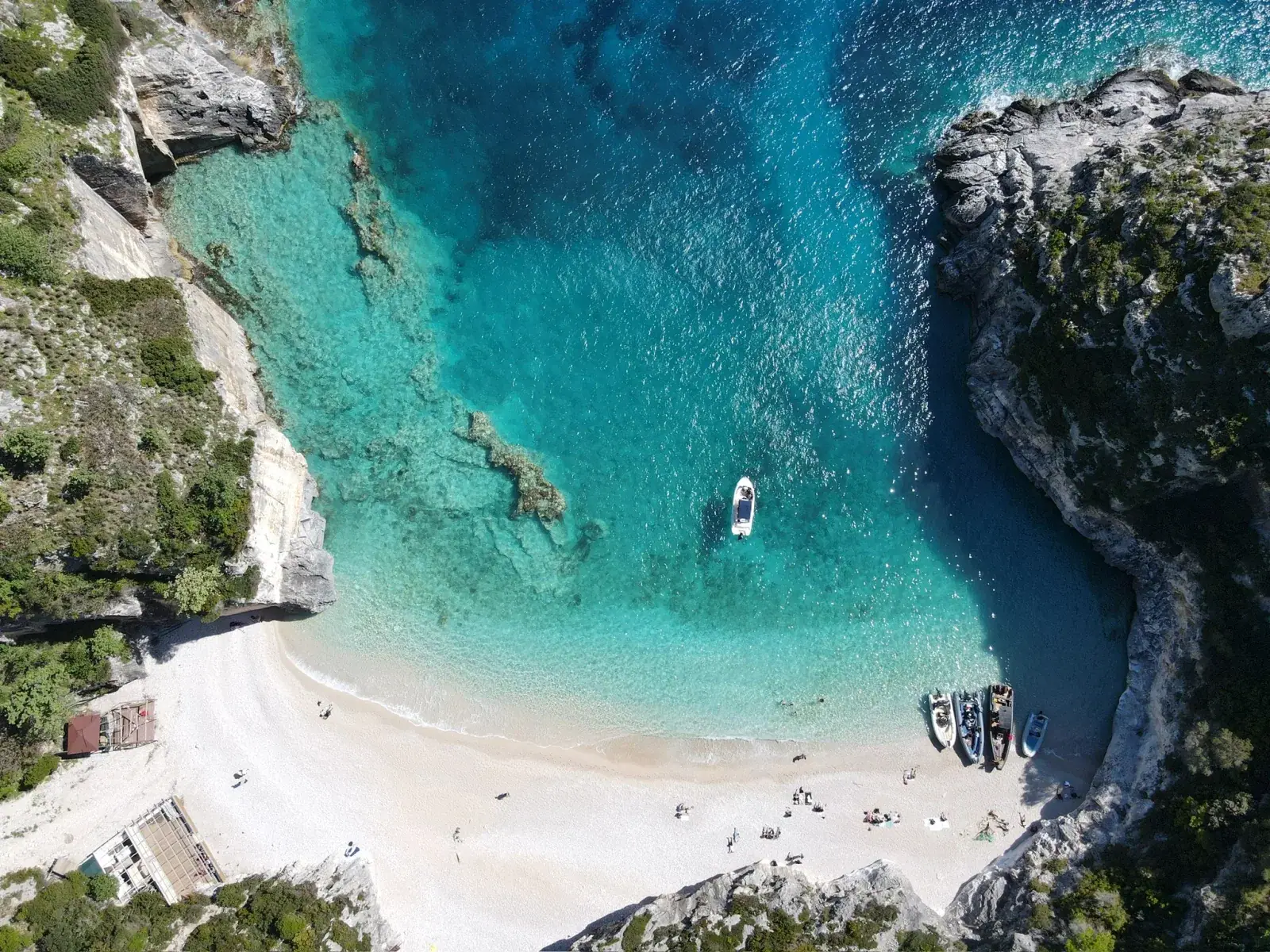
Filikuri Beach is accessible by hiking trail, but the better approach for a return visit is by kayak. Rent a single or double from Spile Beach and paddle south along the cliff line for 20-30 minutes. You arrive at a secluded pebble cove backed by steep limestone walls, with water clarity that makes the main beaches look murky by comparison. No facilities, no sunbeds, no vendors. Bring water, a snorkel, and something to eat. The paddle back is easy if the sea stays calm. Go in the morning before wind picks up.
For full route details and rental prices, see our secret coves by kayak guide.
Unnamed coves between Spile and Livadhi
The short stretch of coastline between Spile and Livadhi hides a series of small inlets that have no names, no trails, and no signs. You reach them by kayak, hugging the cliff face and watching for gaps where the rock opens into tiny pebble strips barely wide enough for two towels. The water shifts from deep blue to pale green wherever a shallow shelf sits beneath the surface. These coves exist for whoever finds them. On a calm morning, you can have one entirely to yourself for hours.
Akuarium Beach via trail
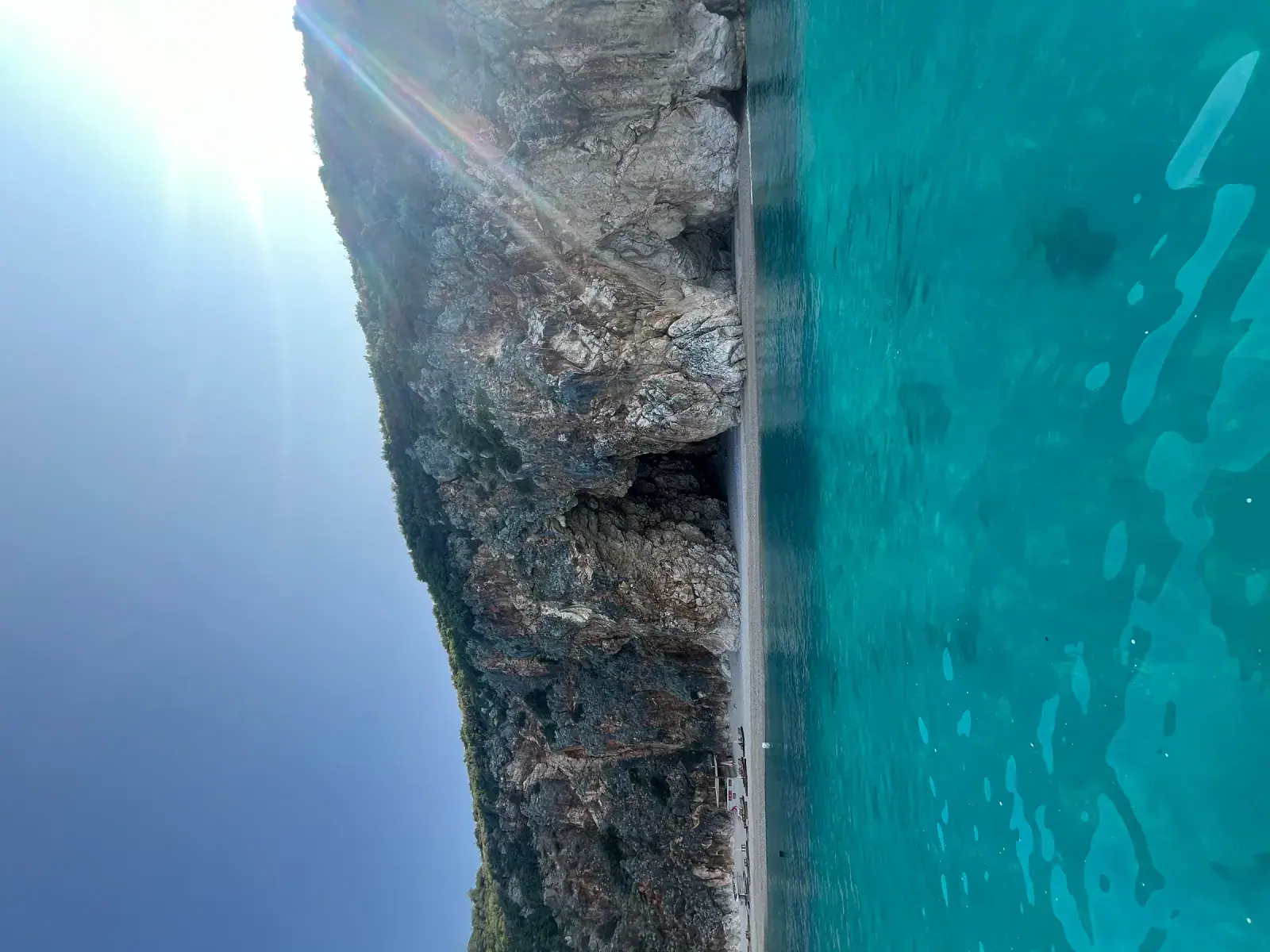
Akuarium Beach sits south of Livadhi and requires either a kayak or a 30-40 minute hike along a coastal trail. The name comes from the turquoise pool effect created by rock formations that partially enclose the swimming area. It is one of the most visually striking spots on this coastline, and most first-time visitors never hear about it. The trail from Livadhi is well-worn but unmarked in places. Wear proper shoes, not flip-flops. Our Akuarium trail guide has the full breakdown.
Village explorations beyond Himara town
The coast gets all the attention, but the hillside villages above the beaches hold some of the most rewarding experiences on the Riviera. These are half-day trips that show you a completely different side of the region.
Vuno: stone village above Jale
Vuno sits on a steep hillside directly above Jale Beach. The village is a cluster of traditional stone houses connected by narrow cobblestone paths, with views down to the Ionian Sea that are genuinely jaw-dropping. Most of the buildings date to the Ottoman period, and many are being slowly restored. Walk through the village in the late afternoon when the light turns golden and the stonework glows. A handful of guesthouses and one or two small bars have opened in recent years, but Vuno remains quiet and largely untouristed. The drive from Himara takes about 20 minutes north on the SH8, turning off toward Jale.
Qeparo: hilltop and beach
Qeparo is actually two places. Lower Qeparo sits near the beach and has a few restaurants and guesthouses. Old Qeparo, the one worth your time, perches on the hillside above, a partially abandoned stone village with Ottoman-era houses, a Byzantine church, and a silence that feels almost theatrical after the busyness of the coast. Walk through the old village, peer into crumbling courtyards, and look out over the bay. It is 15 minutes south of Himara by car.
Pilur: remote mountain village
For something more remote, drive inland to Pilur, a small mountain village in the hills above Himara. The road is rough in places and the village itself is tiny, but the journey passes through olive groves and grazing land with mountain views that look nothing like the coastal scenery. This is the Albania that existed before tourism arrived. Bring a picnic and spend a morning.
Food beyond the main restaurants
You have eaten at the waterfront restaurants. They are good. But the food scene in Himara runs deeper than what sits on the promenade. For a comprehensive first pass, see our restaurant guide. But here is where to go on a return visit.
Family tavernas in the old town
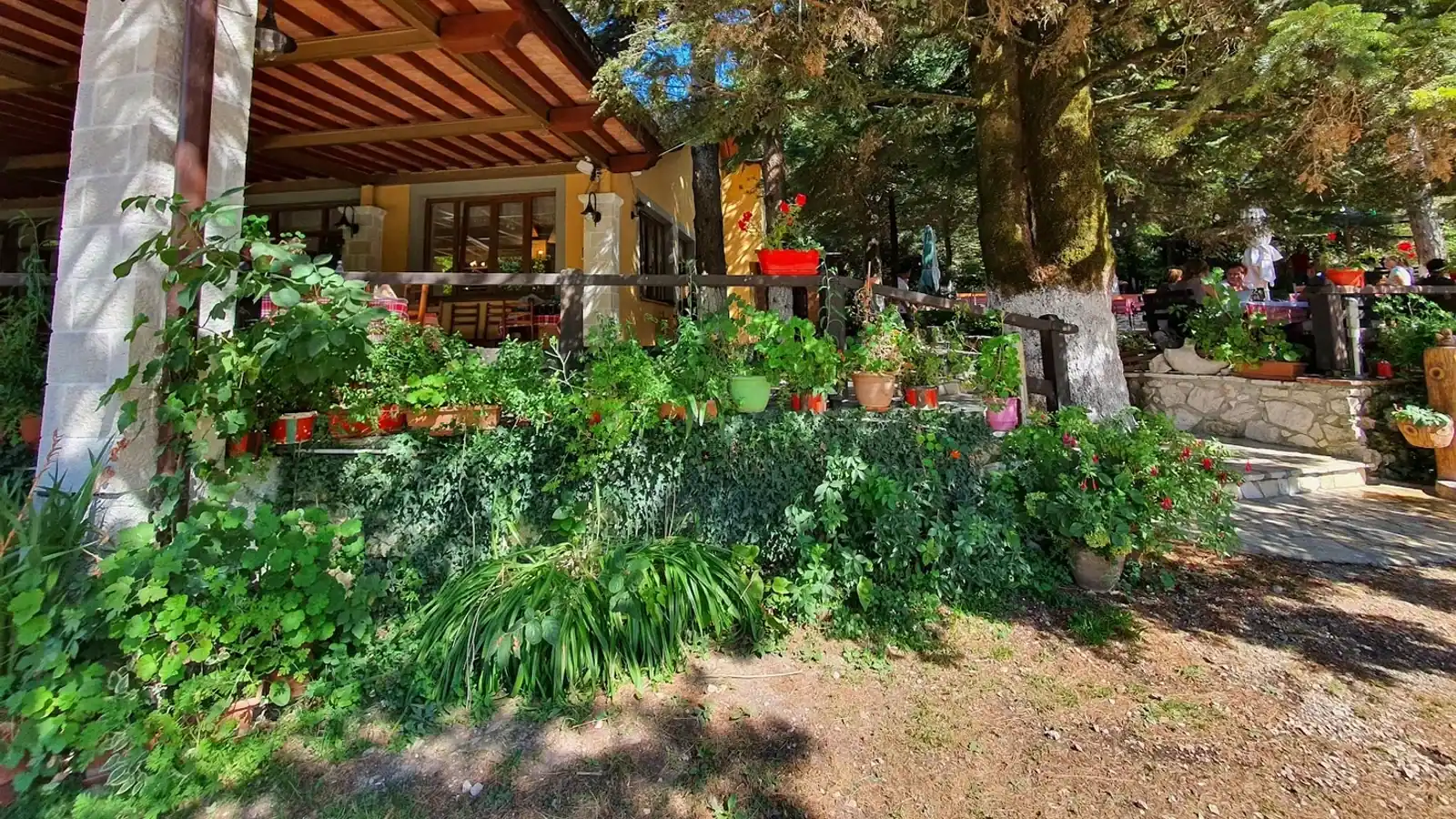
Walk up toward Himara's old town and you will find small family-run tavernas that do not advertise and do not have English menus. These places cook whatever is fresh, with grilled lamb, stuffed peppers, white beans in tomato sauce, and handmade pies. They serve it at prices well below the waterfront. Ask for the daily dish and you will rarely be disappointed. The cooking here leans traditional Albanian-Greek, with generous use of local olive oil, fresh herbs, and slow preparation.
Kafenejos where locals eat
Every neighborhood in Himara has a kafenejo, a simple coffee house that also serves basic food. These are where retired fishermen play dominos and where working locals eat lunch. The menus are short or nonexistent. You point at what someone else is eating, or the owner tells you what they made today. Expect heavy, honest food: grilled meats, bean stews, fresh bread, village salad. A full meal runs 400-600 lek (4-6 EUR). You will not find these places on Google Maps.
Cooking with seasonal ingredients
If you are staying in an apartment with a kitchen, the return visit is when you start cooking with local ingredients. Himara's weekly market sells produce from surrounding farms, citrus in winter and spring, tomatoes and peppers in summer, olives and olive oil year-round. Local honey from the hills above town is exceptional. Buy a bottle of olive oil from a family producer, pick up fresh fish from the morning boats at the harbor, and cook a meal that tastes like the place you are in.
Activity upgrades
First-timers take the boat tour and swim at the beaches. Repeat visitors go further.
Multi-day kayak trips
Single-day kayak rentals are great, but the coastline rewards a longer commitment. Some operators offer two- or three-day guided trips that follow the coast from Himara south toward Porto Palermo or north toward Dhermi, camping on remote beaches along the way. You cover stretches of shoreline that even boats skip, sleep under the stars on pebble beaches, and see the Riviera at a pace that makes the coastal road feel rushed. Check our kayaking guide for operator details.
Diving deeper sites
If you snorkeled on your first visit, upgrade to scuba diving on your return. The waters around Himara have deeper sites, underwater cliff walls, rocky reefs with grouper and moray eels, and a few submerged features near Porto Palermo that require a proper dive to reach. Local dive centers offer discovery dives for beginners and guided dives for certified divers at sites that most boat tours never visit.
Night fishing with locals
This one requires a connection. Ask at the harbor or at a taverna if anyone takes visitors out for night fishing. A few local fishermen will take a paying guest on their evening runs, leaving around sunset and returning with the catch a few hours later. You fish with handlines or simple nets, learn the local methods, and gain an experience that no tour operator packages. It is not widely advertised, so you need to ask around.
Sunrise hike to Himara Castle
You have probably walked up to the castle during the day. Now do it at dawn. Leave your accommodation 30 minutes before sunrise and climb through the quiet streets to the old fortifications. From the castle walls, you watch the sun come up over the mountains behind the coast while the Ionian Sea turns from grey to blue below. There is no crowd, no noise, and no entrance fee. Bring coffee in a thermos. For more on the castle and old town, see our Himara Castle guide.
Shoulder season timing
If your first visit was in July or August, your second should not be. The shoulder season transforms the experience.
May and June offer warm weather (22-28 C), calm seas, green hillsides from spring rain, and a fraction of the peak-season crowds. Restaurants are open but not overwhelmed. Beaches have space. Prices for accommodation drop 30-50% compared to August.
September and October are even better in some ways. The sea is at its warmest after absorbing heat all summer, the air cools to comfortable temperatures, and the summer crowds have gone home. Late September often has the clearest water of the year. October is a gamble. You may get a week of perfect weather or a stretch of rain. But when it works, it is Himara at its absolute best.
The sweet spot is the last two weeks of September. Warm enough to swim every day, quiet enough to feel like you have the coast to yourself, and cheap enough to stretch your budget significantly. For a detailed breakdown, see our best time to visit Himara guide.
Day trips you skipped last time
First visits tend to stay close to the coast. A return trip is the time to explore inland.
Gjirokaster
The UNESCO-listed stone city is a 2-2.5 hour drive from Himara through dramatic mountain scenery. Most first-timers skip it because the drive seems long, but it is one of the best day trips in southern Albania, an Ottoman fortress city with a massive castle, a well-preserved bazaar, and stone architecture unlike anything on the coast. Go early, spend the day, and drive back in the evening. Our Gjirokaster day trip guide covers the full logistics.
Permet hot springs
Continue past Gjirokaster to reach Permet and its natural thermal springs. Benja Thermal Baths sit beside a river in a dramatic canyon, with warm sulphur water flowing into natural stone pools. It is a long day trip from Himara (3-4 hours each way), so consider making it an overnight. The combination of Gjirokaster and Permet as a two-day loop inland is one of the best side trips from the Riviera.
Blue Eye in the morning
If you visited the Blue Eye Spring (Syri i Kalter) on your first trip, you probably arrived in the afternoon with a crowd of tour buses. Go back, but this time arrive at opening time in the morning. The spring is dramatically more impressive when the sun is low and fewer people are standing around the viewing platform. The early light penetrates the water at an angle that intensifies the blue. It is a 1.5-2 hour drive from Himara. Leave at 7 AM and you will have the place nearly to yourself. See our day trips guide for driving details.
Porto Palermo submarine tunnels
You have seen the castle. Now find the Cold War-era submarine tunnel carved into the hillside above it. During Enver Hoxha's regime, Albania built a network of military bunkers and tunnels along the coast, and the Porto Palermo tunnel is one of the most accessible. It is partially flooded and not officially open to the public, but the entrance is visible from the road above the fortress. The bay itself is also worth revisiting. The water is some of the bluest on the entire Riviera, and with a snorkel you can explore the rocky underwater terrain around the castle peninsula.
Rent an apartment instead of a hotel
On your first visit, a hotel makes sense. You want convenience, you are still learning the town, and you are only staying a few days. On a return visit, switch to an apartment.
Monthly rates are negotiable. Outside of July-August, landlords will cut significant deals for stays of two weeks or longer. A one-bedroom apartment with a kitchen, balcony, and sea view runs 300-500 EUR per month in the shoulder season, a fraction of hotel costs. Even in peak season, monthly rates drop well below the nightly price. Ask directly; most apartment owners prefer a guaranteed long-term tenant.
Living like a local changes the trip. With a kitchen, you shop at the market, cook local produce, and eat out only when you want to rather than because you have to. You learn the neighborhood rhythms, which bakery opens first, where to get the best morning coffee, when the fishing boats come in. Your daily costs drop dramatically.
For more on long-stay logistics, including Wi-Fi speeds, cost of living breakdowns, and apartment hunting tips, see our digital nomad guide to Himara. For visa and entry requirements. Check the practical info page.
Frequently asked questions
What do repeat visitors do in Himara?
Repeat visitors explore hidden beaches by kayak, visit hillside villages like Vuno and Qeparo, eat at family tavernas in the old town instead of waterfront restaurants. Take inland day trips to Gjirokaster and Permet, and time their visit for the shoulder season when crowds thin out and prices drop. The coast rewards deeper exploration on every return.
Are there hidden beaches near Himara?
Yes, dozens. The coastline between the named beaches is lined with unnamed coves accessible only by kayak or on foot. Filikuri Beach, the small inlets between Spile and Livadhi, and Akuarium Beach are three standouts. None have facilities, which is the point. A kayak rental and a calm morning are all you need to find them.
When is the best time for a second visit to Himara?
Late May through mid-June or mid-September through early October. The weather is warm enough for swimming, accommodation prices are 30-50% lower than peak season, beaches are uncrowded, and restaurants give you more attention. Late September often has the clearest water and most pleasant temperatures of the entire year.