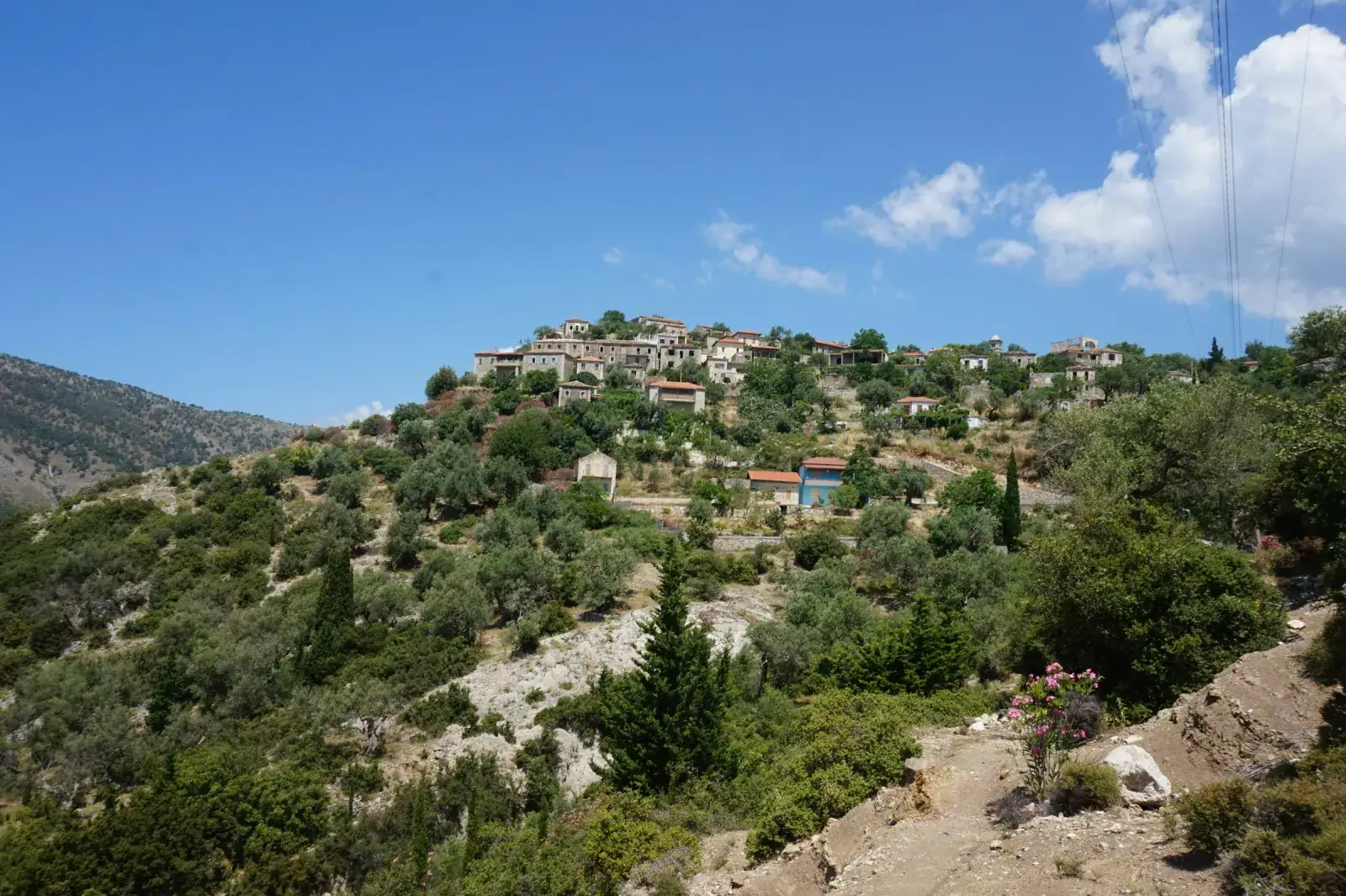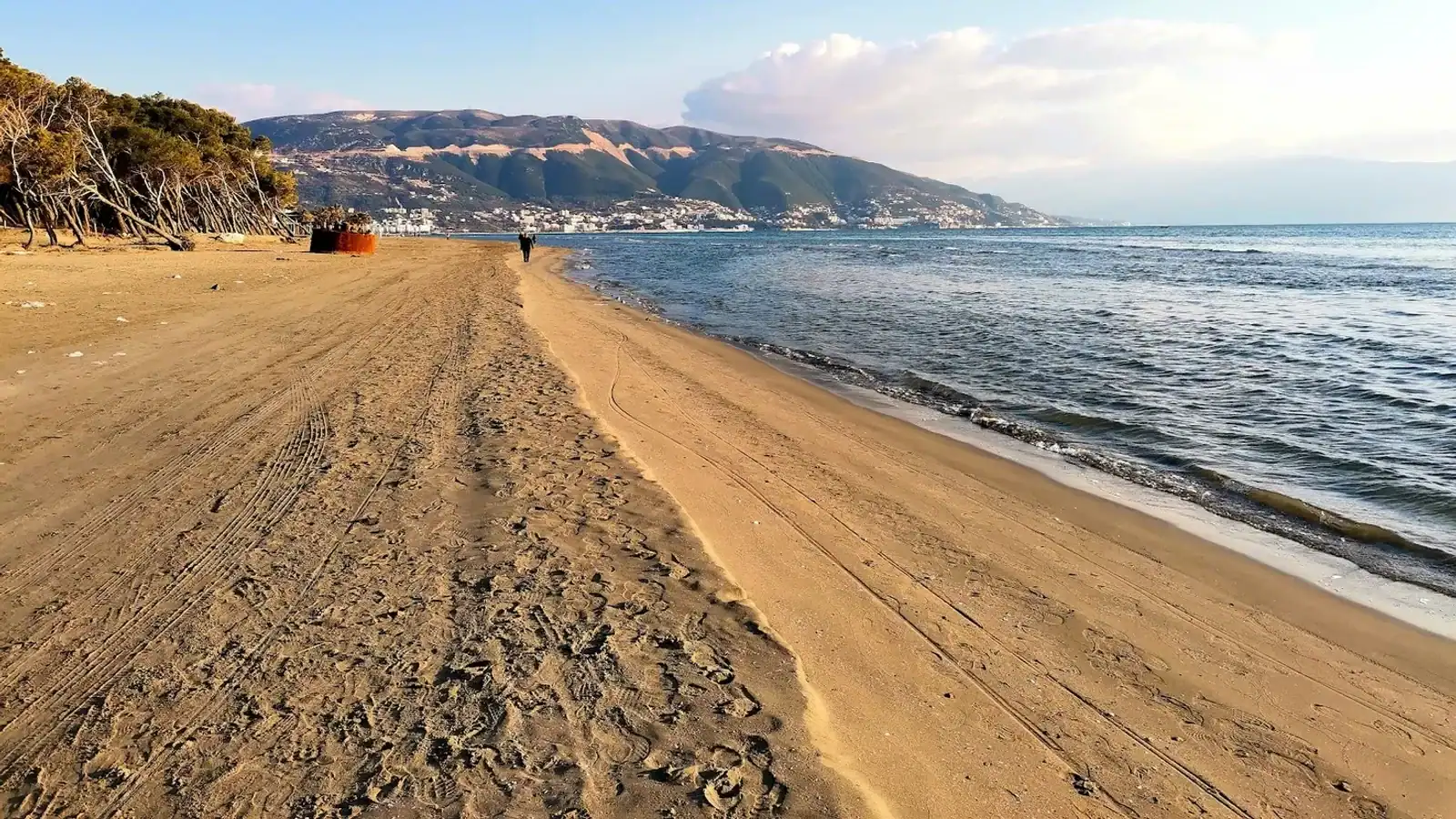
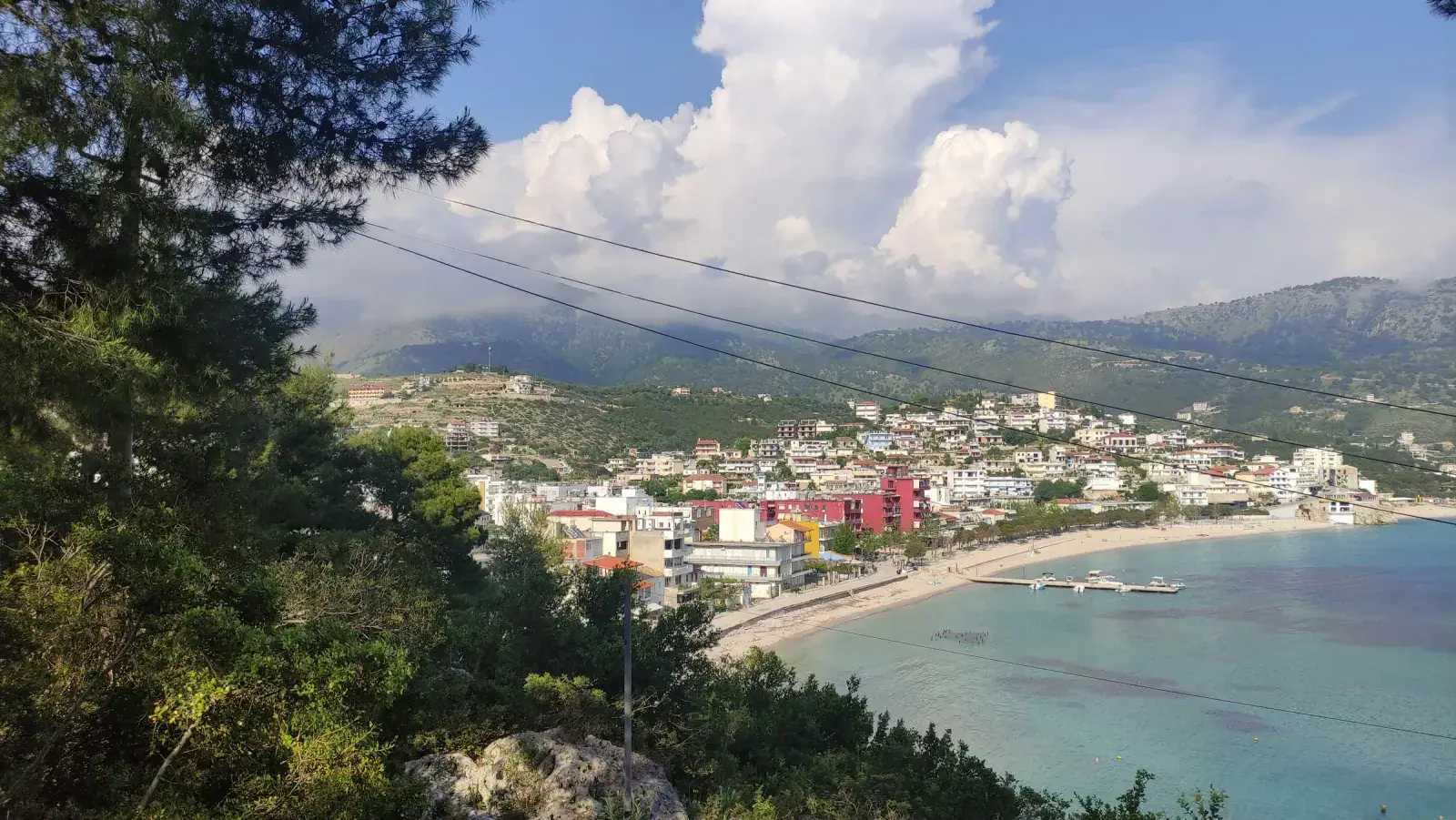
Albania is safe for tourists. INSTAT, the national statistics institute, counted 12,466,038 foreign-citizen arrivals at Albanian borders in 2025, and the Albanian Riviera specifically is one of the most relaxed, welcoming stretches of coastline in the Mediterranean. Himara is a case in point, a compact, walkable town where safety is never a second thought.
But "is Albania safe?" is one of the most-searched questions about the country, and it deserves a thorough, honest answer. Albania's reputation still carries baggage from decades of isolation, outdated stereotypes, and a few bad years in the 1990s that have nothing to do with the country you'll visit today. This guide covers what's genuinely worth knowing: the real risks, the non-risks, and everything in between.
The short answer
Albania is safe for tourists in 2026. No government that publishes travel advice flags violence against visitors as a concern here, the country has a deep cultural tradition of protecting guests, and tourism infrastructure has been growing rapidly since the mid-2010s. The UK Foreign Office's own summary is that "there is crime and violence in some areas, but reports of crime targeting foreigners are rare."
That doesn't mean you can abandon all common sense. Like anywhere, there are things to be aware of: driving conditions, tap water quality, petty theft in crowded areas. But if you're comfortable traveling in Greece, Croatia, or Portugal, you'll be comfortable in Albania. Most people find it feels safer than those places, not less.
Official travel advisories
Travel advisories give a useful baseline, and Albania's are reassuringly boring. All three below were checked on 20 September 2026.
- UK Foreign, Commonwealth & Development Office (FCDO): no advisory against travel to any part of Albania, and no regional risk section at all, which the FCDO only publishes for countries where risk varies sharply by area. Its Albania advice was updated on 13 August 2026.
- US State Department: Level 2, "Exercise increased caution", issued 26 August 2026. Its summary gives two reasons: violent crime tied to illicit drug networks and organised crime, with limited police capacity in remote regions, and large-scale political demonstrations that can start with little notice. Level 2 is the same tier carried by France, Germany, Italy, Spain, the UK, Belgium, the Netherlands, Sweden and Denmark.
- Government of Canada: "Take normal security precautions", the lowest of Canada's four levels, last modified 9 September 2026.
The pattern is clear, and it is worth noting that the most recent of the three, Canada's, sits at the lowest risk tier there is. None of them advises against travel, and none describes a terrorist threat specific to Albania, though the US advisory notes that large-scale political demonstrations can start with little notice and Canada warns that even peaceful demonstrations can turn violent. What every one of them does flag is the roads.
Crime and personal safety
Crime against foreigners is rare, and that is the claim worth making, because the broader "safer than Western Europe" line does not survive the statistics. Take 2023, the most recent year UNODC publishes for all four countries: the intentional homicide rate was 1.39 per 100,000 in Albania, 1.34 in France, 0.69 in Spain and 0.57 in Italy. UNODC's newest Albanian figure, for 2024, is higher again at 1.76, and it has published no 2024 figure for Italy or Spain. Albania is not an outlier for homicide, but it is not lower than Italy or Spain either, and homicide is in any case a poor proxy for what a visitor experiences. What the advisories say about visitors specifically is the more useful signal: "reports of crime targeting foreigners are rare" (FCDO).
Petty theft exists but is not a significant problem. Pickpocketing occasionally happens in Tirana, particularly around crowded markets and bus stations. On the Albanian Riviera, it's almost nonexistent. Himara, Saranda, and the coastal towns are small enough that theft is noticeable and socially unacceptable. People know each other, and tourists are valued.
Practical precautions (same as anywhere):
- Don't leave valuables visible in parked cars, especially at beach parking areas
- Use your hotel safe for passports and large amounts of cash
- Keep your phone in a front pocket in crowded bus stations
- Lock your accommodation; most places provide keys or codes
Albanian hospitality culture is a real thing, not a tourism marketing line. The concept of besa, a code of honor that includes protecting guests, runs deep in Albanian culture. You'll notice this in practice: restaurant owners who refuse to let you pay for the last round of raki, locals who walk you to your destination instead of giving directions, strangers who insist on helping with your bags. Albania is a country where being a guest carries genuine cultural weight.
Driving safety
This is the one area where Albania deserves a genuine warning. Driving is the biggest real safety risk for tourists. The FCDO puts it bluntly: "driving can be very hazardous and often aggressive and erratic. Deaths from road traffic accidents are amongst the highest in Europe." Canada's advice adds that "drivers are aggressive and can be reckless. They don't always respect traffic laws," and the State Department notes that "traffic law enforcement is inconsistent."
What to expect on the roads
- Aggressive driving culture. Albanian drivers overtake on blind curves, tailgate on mountain roads, and treat lane markings as suggestions. This isn't universal, and plenty of drivers are cautious, but the baseline aggressiveness is higher than in Western Europe.
- Mountain roads. The route from Tirana to the Riviera crosses Llogara Pass at over 1,000 meters, with tight hairpin turns, sheer drops, and no guardrails in places. It's one of the most scenic drives in Europe. It's also demanding.
- Narrow coastal roads. The SH8 between Vlore and Saranda is mostly two lanes, often without dividers. Tour buses swing wide around curves. Motorcycles appear from nowhere.
- Livestock. Goats, sheep, donkeys, and occasionally cows wander onto roads without warning, particularly on rural stretches and mountain passes.
- Road quality varies. Main highways are generally fine. Side roads to beaches like Gjipe involve unpaved gravel tracks. Conditions can change quickly after rain.
The blood alcohol limit
Treat it as zero. Both the US State Department and the Government of Canada state the legal limit as 0.01 percent, "effectively a zero tolerance policy". Albania's Road Code is stricter still in its wording: article 184 opens "driving after consuming alcoholic drinks is prohibited", and the penalty scale starts at any detected level up to 0.3 g/l, with a 5,000 to 15,000 lek fine, rising to licence suspension above that and a criminal file above 0.5 g/l. Drivers with less than three years on their licence lose it even in the lowest band. Ligj nr. 58/2026, published in Fletorja Zyrtare on 22 July 2026, sets a flat 0.0 limit for anyone who got a category B licence in the previous 24 months, and permanent revocation for a repeat offender caught above 0.5 g/l. One beer is a bad idea. If you're driving, don't drink at all.
Driving tips
- Fill up your tank before mountain crossings. Stations are sparse on the Llogara section and you do not want to be hunting for one on a mountain road at dusk.
- Drive defensively. Assume other drivers will overtake on blind corners. Dipped headlights are compulsory at all times on interurban roads under article 150 of the Road Code, so keep them on the moment you leave town.
- Avoid driving at night on mountain roads. Unlit roads, no reflectors, and potential livestock make nighttime mountain driving genuinely dangerous.
- Consider hiring a driver or taking the bus if mountain roads stress you out. Buses run the Tirana-Himara route daily.
- Rent the smallest car that fits your group. Narrow roads and tight parking in coastal towns favor compact vehicles.
For a full breakdown of getting to the coast, read the getting here guide and the Llogara Pass driving guide.
Health and medical
Albania won't make you sick, but the healthcare infrastructure is more basic than in Western Europe. Know what's available before you go.
Tap water
Do not drink tap water in Albania. That is the FCDO's instruction, not a traveller rumour: "do not drink the tap water in Albania, as it may cause illness. Only drink bottled water." Bottled water is cheap and available everywhere. Use bottled water for drinking and brushing teeth. Ice in restaurants is generally made from filtered water, but if you're cautious. Skip it at very small, basic establishments.
Hospitals and clinics
Himara has a basic health center that can handle minor injuries, infections, and common illnesses. For anything serious, meaning broken bones, surgery, or significant illness, you'll be transferred to Vlora, 62 km north and a 1.5 to 2.5 hour drive, to Saranda 53 km south, or on to Tirana, about four hours away. Set your expectations accordingly: the FCDO says "medical and dental facilities, including accident and emergency facilities, are very poor, particularly outside Tirana," and Canada warns that "ambulance services are very limited." See our Himara health guide for the detail.
Pharmacies
Himara has pharmacies in the town center and they are generally well stocked for everyday needs. Bring your own prescription medicines in original packaging with enough for the whole trip: the CDC warns that "in some countries, medicine (prescription and over-the-counter) may be substandard or counterfeit" and to bring what you need from home.
Travel insurance
Get travel insurance before you come. Make sure it covers medical evacuation: the CDC advises travelers to Albania to "consider purchasing travel health and medical evacuation insurance" because "trauma care centers are uncommon outside urban areas," and the FCDO tells UK travelers to have cover for "evacuation by air ambulance and repatriation." A UK GHIC or EHIC is not valid in Albania, which is neither in the EU nor the EEA; the NHS card list covers the EU plus Iceland, Liechtenstein, Norway, Switzerland and a handful of others including Montenegro, and Albania is not on it.
Sun and heat
The Albanian Riviera gets hot in July and August, 30-35°C with intense sunshine. Heatstroke and sunburn are more likely to ruin your trip than any crime. Wear sunscreen, carry water, and take the midday hours easy. This is not a joke risk. Every summer, tourists underestimate the Mediterranean sun.
Stray dogs
Albania has a visible stray dog population, most noticeable in smaller towns and during the quiet off-season. The vast majority are docile and used to people, but don't approach or feed strays you don't know, and give a wide berth to any dog guarding a property.
Take a bite or scratch seriously. The UK's National Travel Health Network and Centre states that "rabies is considered to be a risk in this country," and its guidance after any animal bite, scratch or lick to broken skin is to flush the wound under running water for several minutes, wash it with soap, apply a disinfectant such as 70% alcohol or povidone-iodine, cover it loosely, and then "get urgent medical help, even if the wound... seems very trivial. Seek medical attention locally, do not wait until you return to the UK." Post-exposure treatment is needed even if you have had the pre-exposure vaccine course. The CDC's Albania page characterises the risk more mildly, saying "dogs infected with rabies are not commonly found in Albania" and that rabies vaccines "are typically available throughout most of the country", but the after-a-bite advice is the same in both: get seen straight away. Our full guide to stray dogs in Albania covers what to expect and how to handle an encounter.
Solo female travel
Albania is generally very safe for solo female travelers. Women travel the Albanian Riviera alone every year without problems, and many report feeling safer than in more "established" tourist destinations in Southern Europe.
That said, honesty matters here. Albania is a traditionally patriarchal society, and while attitudes are changing rapidly, especially in tourist areas and among younger generations, some things are worth knowing:
- Unwanted attention is possible, particularly outside major tourist areas. This is more likely in the form of persistent conversation attempts or staring than anything threatening. A firm "no" or walking away is usually effective.
- In Himara and the Riviera towns, you'll find a cosmopolitan, tourist-accustomed atmosphere. Solo women eat alone in restaurants. Walk at night, and go to bars without any issues. The promenade in Himara feels completely safe after dark.
- In rural or very traditional areas inland, being a solo woman attracts more curiosity. This is rarely hostile, more a product of unfamiliarity than ill intent, but it can feel uncomfortable.
Practical tips:
- Trust your instincts, same as anywhere
- A confident, direct demeanor goes further than avoiding eye contact
- Himara's hostels and guesthouses are great for meeting other travelers
- If you want a full solo travel perspective, read our solo travel Himara guide
LGBTQ+ travelers
The legal position is settled. The FCDO states: "same-sex relationships are legal in Albania. Anti-discrimination and anti-hate-crime legislation is in place. Tirana has several gay-friendly bars and a number of LGBT+ support groups." In practice, the cultural reality outside the capital is mixed.
- Tirana has a small but visible LGBTQ+ scene, with gay-friendly bars, support groups, and Pride events that have run in most recent years.
- Outside Tirana, including the Riviera, attitudes are more conservative. Same-sex couples holding hands or showing public affection will attract attention in most places. Hostility is unlikely but not impossible.
- Himara and the tourist coast are more relaxed than inland Albania. The international tourist presence creates a more tolerant atmosphere, and most hotel and restaurant staff won't bat an eye. But this is still a conservative Mediterranean society at its core.
Practical advice:
- LGBTQ+ travelers visit Albania safely every year, and most report no issues
- A degree of discretion in public spaces outside Tirana is the practical reality
- Booking accommodation won't be an issue; hotels don't ask or care
- Albania is not dangerous for LGBTQ+ travelers, but it's not Amsterdam or Barcelona either. Calibrate expectations accordingly
For LGBTQ+ specific safety advice, see our LGBTQ+ travel guide to Albania.
Common scams
Albania has remarkably few tourist scams compared to most European destinations. You won't encounter organized touts, aggressive street vendors, or the elaborate con artists common in Rome, Paris, or Prague. That said, a few things to watch for:
- Taxi overcharging. Some taxi drivers in Tirana and at airport pickups will try to charge inflated fares. Always agree on the price before getting in, or insist on the meter. In Himara and the Riviera towns. This is rarely an issue, since distances are short and prices are known.
- Restaurant prices. The vast majority of restaurants are honest, but check that the menu has prices listed. In rare cases, tourist-facing restaurants at major attractions may bring items you didn't order (bread, appetizers) and charge for them. If something arrives that you didn't ask for, clarify whether it's complimentary or paid.
- Currency confusion. Albania uses the lek (ALL), at roughly 92 ALL to 1€ as of September 2026. Some places will quote prices in "old lek" (multiply by 10), which can cause confusion. A meal quoted as "3,000 lek" is either 3,000 ALL or 300 ALL in old lek. If a price seems absurdly high or low. Ask for clarification. Check our budget guide for a full breakdown of what things actually cost.
- Money exchange. Use ATMs rather than exchange offices for the best rates. Albanian ATMs are reliable and widely available.
That's genuinely the full list. Albania is not a scammy country.
Cultural norms to know
Albania won't punish you for cultural missteps, but knowing a few things makes the experience smoother and shows respect.
Head gestures
This one catches everyone. Some Albanians shake their head to mean "yes" and nod to mean "no." It's the opposite of the Western norm, and it's exactly as confusing as it sounds. This is more common among older people and in rural areas. Younger Albanians, especially those in tourist-facing jobs, have generally adopted the Western convention. When in doubt, listen to the words, not the head movement.
Hospitality is serious
If an Albanian invites you for coffee or food, they mean it. Refusing repeatedly can come across as rude. You don't have to accept every invitation, but a gracious acknowledgment goes a long way. If you're invited into someone's home, it's customary to remove your shoes at the door.
Tipping
Tipping is not expected in Albania. Service charges are not added to bills. If you had good service, leaving 10% is appreciated but absolutely not required. Rounding up the bill is a common middle ground. Nobody will chase you out the door for not tipping.
Dress
Albania is one of the most secular countries in Europe. You won't encounter dress codes related to religion anywhere on the Riviera. For beaches, anything goes. For restaurants and cafes, casual dress is fine everywhere. If you visit a mosque or church, cover your shoulders and knees out of respect. Standard Mediterranean etiquette.
Ramadan
Albania has a Muslim-majority population on paper, but in practice it's one of the most secular countries in Europe. Ramadan has virtually no impact on tourism, restaurant hours, or alcohol availability. Everything operates as normal year-round.
Safety on the Albanian Riviera specifically
If you're visiting the Albanian Riviera, meaning Himara, Dhermi, Saranda, Ksamil, and the surrounding beaches, the safety picture is even better than Albania as a whole.
The Riviera is Albania's premier tourist region, and it's treated accordingly. Police presence increases during summer months. Tourist-facing businesses are accustomed to international visitors. The local economy depends on tourism, which means visitors are valued and protected, both culturally and practically.
Himara specifically is a compact, walkable town with a strong sense of community. The promenade is lively and well-lit until late. Beaches are family-friendly. The restaurant and bar scene is relaxed without being rowdy. Violent incidents involving tourists are essentially unheard of.
The things to be careful about on the Riviera are mundane:
- Swimming safety. Some beaches have strong currents, and lifeguards are not present at most coves. Swim within your ability, especially at less-developed beaches.
- Beach road access. Driving to beaches like Gjipe involves steep gravel roads. Take it slow.
- Sun exposure. The coast gets intense sun from June through September. Shade is limited on many beaches.
For a broader perspective on the Riviera, read is Himara worth visiting and best time to visit.
Emergency numbers and useful contacts
Keep these saved on your phone before you arrive.
| Service | Number |
|---|---|
| General emergency (police, fire, everything else) | 112 |
| Ambulance | 127 |
Practical notes:
- 112 is the European emergency number, adopted in Albania under law 45/2019 and free to call on public networks. Both the UK Foreign Office and the US State Department give 112 and 127 as the numbers for Albania
- English-speaking operators are not guaranteed on emergency lines, so speak slowly and clearly, or ask a local to help with the call
- For non-emergency police matters, visit the local police station in Himara's town center
- Your country's embassy in Tirana can assist with lost passports, legal issues, and emergencies. Save their number before you travel
- For practical information including SIM cards, currency, and transport, see our dedicated guide
The reputation problem
Albania has an image problem, and it's worth addressing directly. Many travelers hesitate to visit because of vague associations with crime, instability, or danger. Those perceptions are rooted in a period that ended over two decades ago.
Here's the context: Albania emerged from decades of extreme communist isolation in 1991. The transition was chaotic. A pyramid scheme crisis in 1997 caused civil unrest. Those events, combined with general Western unfamiliarity and some unflattering portrayals in media, created a reputation that has stuck long past its expiration date.
Modern Albania bears no resemblance to that period. The country has been politically stable for years, joined NATO on 1 April 2009, has been an EU candidate since June 2014, and formally opened accession negotiations at the first intergovernmental conference in July 2022. Tourism has exploded: INSTAT recorded 11,696,111 foreign-citizen arrivals in 2024 and 12,466,038 in 2025, against a resident population INSTAT puts at 2,335,930 as of 1 January 2026. Those arrival figures count border entries rather than unique tourists, and include transit and repeat crossings, but the direction of travel is not in doubt.
The gap between Albania's reputation and its reality is one of the largest in European travel. People arrive expecting difficulty and find warmth, beauty, incredible food, and prices that feel like a time warp. The most common sentiment from first-time visitors is some version of: "Why didn't I come sooner?"
That gap is also Albania's appeal. Because the reputation lags behind reality, the country remains uncrowded and affordable in ways that Croatia, Greece, and Montenegro stopped being years ago. The Albanian Riviera today feels like those places did 15-20 years ago, before mass tourism changed them.
This won't last forever. Go now.
Frequently asked questions
Is Albania safe for American tourists?
Yes. Americans face no specific risks in Albania beyond what applies to all tourists. The State Department's Level 2 advisory, issued 26 August 2026, gives organised-crime violence and political demonstrations as its reasons and names no region, noting only that police capacity is thinner in remote areas; Level 2 is the same tier France, Germany, Italy, Spain and the UK carry. Americans are warmly received. Albanian-American cultural ties are strong, and English is widely spoken in tourist areas.
Is Albania safe at night?
Yes, in tourist areas. Himara's promenade and restaurant streets are lively and safe until late. Use normal precautions in any city at night: stick to lit, populated areas and avoid walking alone in unfamiliar neighborhoods. The Albanian Riviera at night feels comparable to any Mediterranean resort town.
Is Albania safe for solo travelers?
Very safe. Both male and female solo travelers visit Albania regularly without issues. The hostel and guesthouse scene makes it easy to meet other travelers, and Albanian hospitality means you'll rarely feel truly alone. For specific guidance, see our solo travel guide.
Do I need to worry about organized crime?
No. Albania, like every country, has organized crime, but it operates entirely outside the tourist sphere. You will not encounter it, be affected by it, or need to think about it. This is comparable to Italy, where the existence of organized crime has zero impact on a tourist's safety.
Is the food safe to eat?
Yes. Restaurant food in Albania is safe. Hygiene standards at tourist-facing restaurants are generally good. Meat is cooked thoroughly, seafood is fresh (the Riviera's fish comes in daily), and produce is locally grown. The only caution is tap water, so stick to bottled.
Is it safe to use ATMs in Albania?
Yes. ATMs from major Albanian banks (Credins, BKT, Raiffeisen) are reliable and widely available. Use ATMs attached to bank branches rather than standalone machines for extra security. Notify your bank before traveling so your card isn't blocked. Card skimming is not a notable problem in Albania.
Should I get travel insurance for Albania?
Absolutely. European Health Insurance Cards don't cover Albania, and while medical costs are low, emergency evacuation can be expensive. A standard travel insurance policy covering medical, evacuation, and trip disruption is essential, not because Albania is dangerous, but because this is basic travel preparation for any country outside the EU.
Is it safe to rent a car in Albania?
Safe, yes. Advisable, with caveats. A rental car gives you the freedom to explore Riviera beaches at your own pace, and the Albanian Riviera road trip is one of the best drives in Europe. But the roads require confidence, because mountain passes, narrow lanes, and assertive local drivers demand full attention. If you're not comfortable with mountain driving, use buses or hire a local driver instead. Check our things to know before visiting for more practical tips.
Sources
- Albania travel advice, safety and security and health - UK Foreign, Commonwealth & Development Office, updated 13 August 2026. Crime against foreigners, road safety, the legal position of same-sex relationships, tap water, medical facilities, ambulance number 127. Checked 20 September 2026.
- Albania Travel Advisory and country information - US Department of State, advisory issued 26 August 2026. Level 2 and its stated reason, alcohol limit, IDP requirement, enforcement, medical care and insurance. Checked 20 September 2026.
- Travel advice and advisories for Albania - Government of Canada, last modified 9 September 2026. "Take normal security precautions", driving behaviour, alcohol limit, health care and ambulances. Checked 20 September 2026.
- Albania travel health information - US Centers for Disease Control and Prevention. Evacuation insurance, counterfeit medicines, rabies characterisation. Checked 20 September 2026.
- Albania country page and rabies factsheet - NaTHNaC, the UK National Travel Health Network and Centre. "Rabies is considered to be a risk in this country" and the post-exposure first aid. Checked 20 September 2026.
- Kodi Rrugor i Republikes se Shqiperise, ligj nr. 8378/1998, i perditesuar - DPSHTRR. Article 184 (alcohol) and article 150 (headlights). Checked 20 September 2026.
- Population of Albania, 1 January 2026 and Movements of citizens in Albania, December 2025 - INSTAT, the Albanian Institute of Statistics. Resident population 2,335,930; foreign-citizen arrivals 11,696,111 in 2024 and 12,466,038 in 2025, with the methodology note that these are border entries including transit. Checked 20 September 2026.
- Intentional homicide victims - UN Office on Drugs and Crime, 2025 release; 2023 is the latest year it publishes for all four countries, and 2024 is published for Albania and France only. Cross-checked against Eurostat crime statistics, which runs to 2024 for EU members and to 2023 for Albania, and against the World Bank's republication of the same UNODC series. Homicide rates for Albania, France, Spain and Italy. Checked 20 September 2026.
- NATO member countries - NATO. Albania's accession, 1 April 2009. Checked 20 September 2026.
- Albania - enlargement - European Commission. Candidate status 2014, negotiations launched July 2022. Checked 20 September 2026.
- Where you can use your card - NHS Business Services Authority. GHIC and EHIC country coverage. Checked 20 September 2026.
Corrected or removed in the September 2026 sourcing pass: the claim that Albania has lower violent crime than most of Western Europe (UNODC and Eurostat put its homicide rate above Italy's and Spain's), the Canadian advisory level (it is the lowest tier, not "a high degree of caution"), the reason given for the US Level 2 advisory (crime, not road safety), the blood alcohol limit stated as "0.01 mg/ml", the population figure of 2.8 million, the "over 1,000 pharmacies" count (no Albanian authority publishes one), the claim that there are no fuel stations between Vlora and Himara, the WTTC ranking, and the assertion of an unbroken annual Tirana Pride since 2012, which contemporaneous reporting contradicts.
Corrected again on 20 September 2026: the homicide comparison was dated to 2024 for all four countries, when UNODC publishes 2024 only for Albania and France, and the figures given for France and Spain matched no UNODC year; the US advisory was described as citing crime alone, when its summary also cites large-scale demonstrations; "nobody is flagging terrorism or civil unrest" was wrong, since both the US and Canadian pages carry demonstration warnings and Canada carries a general European terrorism section; and the June 2026 Road Code amendment, previously reported rather than read, is now cited to the Fletorja Zyrtare text of law 58/2026.