Albania is not the first country that comes to mind for LGBTQ+ travel. It sits in a part of Europe where attitudes lag behind the west, wedged between Greece and the former Yugoslav states, and its own history includes decades of communist-era criminalization. But the Albania you'll visit in 2026 is not the Albania of the 1990s, and the practical reality for LGBTQ+ travelers, especially on the Albanian Riviera, is considerably better than the headlines might suggest.
This guide gives you the honest picture. Not the sanitized version, not the fearful one. Just what you actually need to know to make a decision about visiting, and how to have a good time once you're there.
Quick facts
| Details | |
|---|---|
| Homosexuality legal? | Yes, since 1995 |
| Anti-discrimination law | Yes, since 2010 (covers employment, services) |
| Same-sex marriage | No. No civil unions either. |
| Tirana Pride | Held annually since 2012 |
| LGBTQ+ organizations | PINK Embassy / LGBT Pro Albania (Tirana) |
| General safety | No reported violence targeting LGBTQ+ tourists |
| Practical risk level | Social awkwardness in rural areas, not physical danger |
| Riviera experience | Tourist areas are welcoming; discretion is practical, not hiding |
| Accommodation | No issues booking double rooms as same-sex couples |
Legal status
Albania decriminalized homosexuality in 1995, four years after the fall of communism. In 2010, the country went further, passing a comprehensive anti-discrimination law that explicitly covers sexual orientation and gender identity in employment, education, and access to services. On paper, this puts Albania ahead of several of its Balkan neighbors.
What Albania does not have: same-sex marriage, civil unions, or legal recognition of same-sex partnerships. There is no adoption by same-sex couples. Constitutional amendments defining marriage as between a man and a woman were proposed but never passed, and the current legal landscape has remained largely static since 2010. Progress has stalled rather than reversed.
For travelers, the legal framework means this: you are protected against discrimination by law, your relationship has no legal standing, and neither of those facts will matter in any practical way during a beach holiday. No hotel is going to check your marriage certificate. No restaurant will turn you away. Albanian law is more progressive than Albanian society in some respects, and less progressive in others, but none of this translates into legal risk for tourists.
The reality on the ground
Albanian society is conservative by Western European standards. This is not a country where same-sex couples hold hands on the street as a matter of course, but the reasons are more nuanced than simple homophobia.
Context matters. Even straight Albanian couples are relatively restrained with public displays of affection. Kissing in public or hanging all over each other at a restaurant draws attention regardless of who's doing it. The cultural norm is a degree of reserve that might feel unfamiliar if you're coming from Amsterdam or San Francisco, but it applies broadly, not just to same-sex couples.
The urban-rural divide is significant. Tirana is a different world from a mountain village in the interior. The capital has a visible, if small, LGBTQ+ scene. Pride marches have been held since 2012, openly LGBTQ+ people live and work without significant harassment, and the Blloku district has bars and cafes where nobody blinks at same-sex couples. Move into rural Albania, the deep north and the conservative interior, and attitudes shift toward traditional, patriarchal norms where homosexuality simply isn't discussed.
The Albanian Riviera sits somewhere in the middle, leaning cosmopolitan. Himara, Dhermi, Saranda, and the coastal towns are tourist economies. Locals who run hotels, restaurants, and tour boats interact with international visitors every day, all summer, every summer. They've seen every kind of couple, every kind of family configuration, every kind of traveler. The overriding priority is hospitality and business, not policing anyone's relationship.
What same-sex couples should actually expect
Here's the practical breakdown for same-sex couples traveling the Albanian Riviera.
Accommodation
Booking a double room as a same-sex couple is straightforward. Hotels, guesthouses, and apartments on the Riviera are accustomed to international bookings through Booking.com, Airbnb, and direct reservations. There are no reports of same-sex couples being turned away or given a hard time at check-in. The staff at a boutique hotel in Himara or a beachfront property in Dhermi simply do not care about the gender configuration of their guests. They care about whether you trash the room.
For accommodation options, see our where to stay in Himara guide.
Beaches
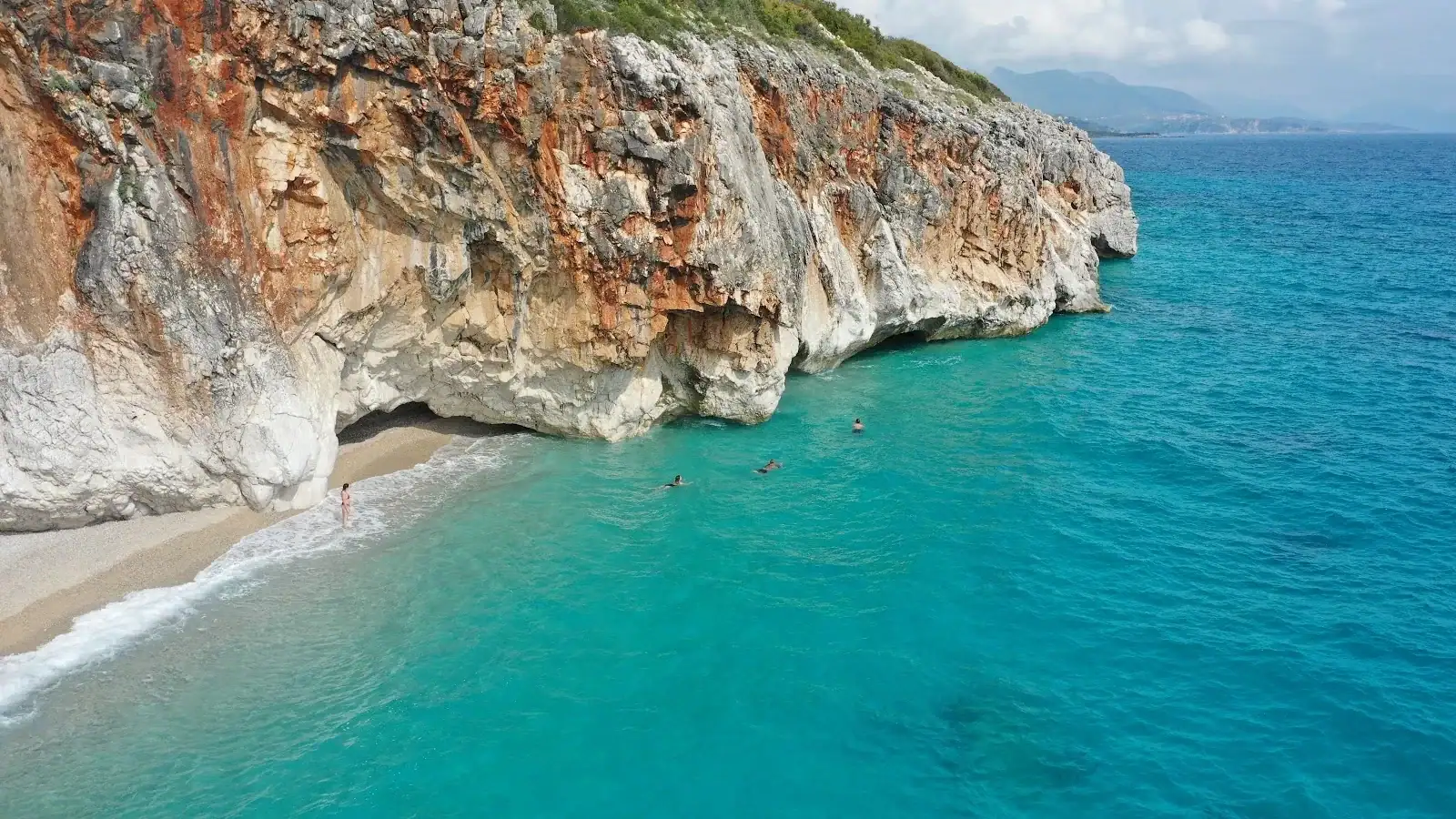
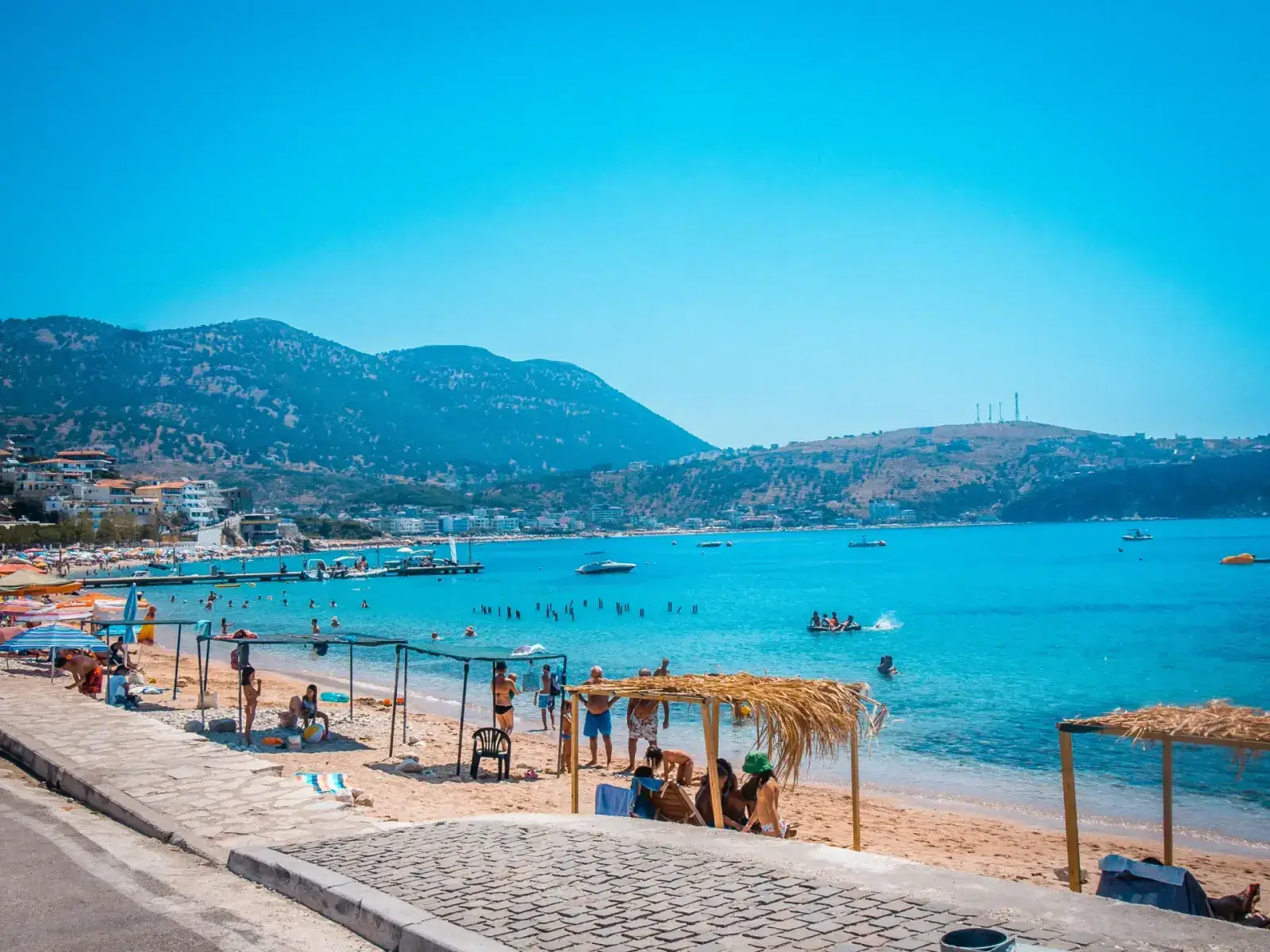
Albanian Riviera beaches range from busy organized beaches with sunbeds and bars to remote coves accessible only by boat. Nobody is monitoring couples at any of them. If you want to hold hands while swimming at Gjipe or share a sunbed at Livadhi, the practical reality is that nobody will confront you. In peak season, the beaches are full of Italians, Greeks, Germans, and other international visitors. The crowd is cosmopolitan enough that a same-sex couple barely registers.
Restaurants and bars
Eating out, having drinks, sharing a meal: all of this is completely normal and unremarkable. Albanian hospitality culture, rooted in the concept of besa (an honor code that includes protecting and welcoming guests), means that restaurant owners and bar staff will treat you like any other customer. You're more likely to get a free round of raki at the end of your meal than a raised eyebrow. For dining options and nightlife, see our Himara nightlife guide and restaurant guide.
Public affection
This is the one area where discretion is practical advice. Hand-holding in the tourist areas of the Riviera is unlikely to cause any problem. Kissing in the middle of a village square in a small interior town will draw stares. The calibration here isn't really about being closeted. It's about reading the room, same as you would in parts of rural Italy, Greece, or Spain.
On the Himara promenade, at Dhermi beach bars and in Saranda's waterfront restaurants, the atmosphere is relaxed and international. In Himara's Old Town, at a traditional village kafeneio, or in a small mountain settlement, more reserve is prudent. This is the same advice you'd find for straight couples who are particularly demonstrative, but it carries more weight for same-sex couples.
Safety
There are no credible reports of violence targeting LGBTQ+ tourists in Albania. The country's safety profile for LGBTQ+ visitors is one of social discomfort at worst, not physical danger. Albanian culture's emphasis on hospitality and protecting guests genuinely extends to everyone, regardless of orientation. For a broader look at safety in Albania, read our full safety guide.
The realistic worst case on the Riviera: an older local stares a beat too long, or a taxi driver makes an uncomfortable comment. This is awkward, not dangerous. It's also the exception, not the rule. Most interactions will be entirely positive, because most interactions in Albania are entirely positive. The country consistently ranks among the friendliest in Europe for tourists of all kinds.
Tirana's LGBTQ+ scene
Tirana is where Albania's LGBTQ+ community is most visible. If you're spending time in the capital before or after the coast, here's what's available.
PINK Embassy / LGBT Pro Albania
The most prominent LGBTQ+ organization in the country, PINK Embassy has been active since 2009. They organize Tirana Pride (held annually since 2012, typically in May or June), provide community support, run awareness campaigns, and have been instrumental in pushing for legal protections. Their social media channels are the best source for current LGBTQ+ events in Tirana.
Tirana Pride
Albania's Pride march has been held every year since 2012, making it one of the longer-running Pride events in the Western Balkans. It's a modest affair compared to Berlin or London, typically a few hundred participants, but it happens, it's peaceful, and police protection is provided. The fact that it's been held continuously for over a decade, without significant incident, says something about the trajectory of the country.
Blloku district
Tirana's main nightlife and cafe district, Blloku, is the closest thing Albania has to a gayborhood, though it's not explicitly that. It's the area where young, cosmopolitan Tirana goes out, and where same-sex couples can be open without a second thought. There are no dedicated "gay bars" in the way Western capitals have them, but the bar and club scene in Blloku is LGBTQ+-friendly by default. Think mixed, liberal, young, international.
Himara specifically
Himara deserves its own section because it's the focus of this site and because its particular character matters for this topic.
Himara sits on a stretch of coast with strong Greek cultural influence. The town has a significant Greek-speaking minority, Greek Orthodox churches, and cultural ties to Corfu and the Ionian islands. This gives it a slightly different character from the Albanian interior: more Mediterranean, more cosmopolitan, more accustomed to international visitors.
The town's economy is almost entirely driven by summer tourism. From June through September, the population swells with visitors from across Europe. Locals who run accommodations, restaurants, and tour services have been doing this for years, and their primary interest is making sure you have a good time and come back next year. Your orientation is not on their radar.
Himara is also compact and walkable, which makes it feel safe. You're never far from the main promenade, the beaches, or the town center. The atmosphere is relaxed, the pace is slow, and the worst thing likely to happen to you is getting overcharged for a sunbed. For general travel planning, our things to know before visiting Himara guide covers the essentials.
For couples specifically, regardless of orientation, Himara offers romantic coves, sunset walks along the castle, and candlelit dinners with sea views. Our couples guide covers the best spots.
How Albania compares to neighbors
Understanding Albania's position relative to its neighbors helps calibrate expectations.
| Country | Legal Status | Same-Sex Unions | Pride Events | Practical Experience |
|---|---|---|---|---|
| Albania | Legal since 1995, anti-discrimination since 2010 | No | Tirana Pride since 2012 | Generally safe, conservative social attitudes |
| Greece | Legal since 1951, civil unions since 2015, marriage since 2024 | Yes | Athens Pride since 2005 | Most progressive in the region on paper and in practice |
| Montenegro | Legal since 1977, anti-discrimination since 2010 | Civil partnership since 2020 | Podgorica Pride since 2013 | Legal progress, social attitudes still mixed |
| North Macedonia | Legal since 1996 | No | Skopje Pride since 2019 | Similar to Albania in practice |
| Kosovo | Legal since 1994, constitutional protection | No | Pristina Pride since 2017 | Less visible scene than Albania |
Greece is the clear frontrunner, having legalized same-sex marriage in 2024. Montenegro has moved ahead on civil partnerships. Albania sits in the middle of the pack legally but matches or exceeds most neighbors in practical tolerance within tourist areas. The Albanian Riviera's proximity to Corfu and the Greek islands means the coastal zone shares some of that Mediterranean openness.
Practical tips for LGBTQ+ travelers
-
Book accommodations normally. Use Booking.com, Airbnb, or contact hotels directly. You don't need to hide anything or request twin beds unless you actually want them.
-
The Riviera is your best bet. Himara, Dhermi, Saranda, and Ksamil are the most tourist-oriented, internationally-minded parts of Albania. If you're testing the waters on Albanian travel. Start here.
-
Tirana is worth a night. Even if the coast is your destination, spending a night in Tirana lets you experience the Blloku scene and a more visibly open atmosphere.
-
Calibrate PDA by context. Tourist beach, international restaurant, Himara promenade: be yourselves. Traditional village kafeneio or rural interior: dial it back. This is practical advice, not a moral judgment.
-
Connect with PINK Embassy. Follow them on social media before your trip for current events and any community meetups. They're the best source of on-the-ground information.
-
Travel insurance covers everything else. Albania is safe for all travelers, but carry standard travel insurance regardless.
-
Learn a few Albanian phrases. "Faleminderit" (thank you), "Tungjatjeta" (hello). Basic courtesy goes a long way in a culture that values hospitality. People will warm to you faster for the effort.
-
Consider traveling in shoulder season. June and September offer warm weather, fewer crowds, and a more relaxed atmosphere everywhere. If you're concerned about standing out, a less crowded beach feels more private.
The bottom line
Albania in 2026 is not a queer haven. It's a conservative, traditional society that is slowly, unevenly modernizing. But it's also a country where hospitality is deeply embedded in the culture, where tourist areas genuinely welcome everyone, and where the practical experience of LGBTQ+ travelers is overwhelmingly positive. Not because Albania has resolved its societal attitudes toward homosexuality, but because the threat was never physical violence toward visitors in the first place.
The Albanian Riviera, and Himara in particular, is a place where the biggest risk you face is the same one everyone faces: sunburn, aggressive drivers on mountain roads, and the possibility of eating so much grilled fish that you never want to leave. Your orientation will not define your trip. The water, the mountains, the food, and the people will.
If you're a same-sex couple considering Albania: come. Book your hotel, pack your bags, and prepare for one of the most underrated coastlines in the Mediterranean. You'll be fine. Better than fine: you'll probably fall in love with the place.
Frequently asked questions
Is Albania safe for LGBTQ+ tourists?
Yes. There are no credible reports of violence targeting LGBTQ+ tourists in Albania. The risk profile is social awkwardness in conservative areas, not physical danger. Tourist areas like the Albanian Riviera are welcoming and accustomed to international visitors of all kinds. Albanian culture's emphasis on hospitality (besa) extends to all guests. For more detail, see our full Albania safety guide.
Can same-sex couples book double rooms in Albanian hotels?
Absolutely. Hotels, guesthouses, and vacation rentals across the Albanian Riviera accept same-sex couple bookings without issue. Booking through major platforms like Booking.com or Airbnb works exactly as expected. Staff at tourist-area accommodations are professional and unlikely to comment on or care about the gender of their guests.
Is there a gay scene in Albania?
Tirana has a small but real LGBTQ+ scene centered around the Blloku district. There are no dedicated gay bars, but the nightlife in Blloku is LGBTQ+-friendly and mixed. PINK Embassy / LGBT Pro Albania organizes community events and Tirana Pride (held annually since 2012). On the coast, there's no specific LGBTQ+ scene, but the general atmosphere at beach bars and restaurants is relaxed and international.
How does Albania compare to Greece for LGBTQ+ travel?
Greece is more progressive both legally and socially. Same-sex marriage has been legal in Greece since 2024, Athens has an established gay scene, and islands like Mykonos and Lesbos are iconic LGBTQ+ destinations. Albania is more conservative but significantly cheaper, less crowded, and increasingly welcoming in tourist areas. Many travelers combine both. A ferry from Corfu to Saranda takes 30 minutes, making it easy to experience both sides of the Ionian.
Should LGBTQ+ travelers avoid rural Albania?
Not necessarily avoid, but calibrate expectations. Rural Albania is more conservative, and same-sex PDA will draw attention in small villages. However, the hospitality culture applies everywhere, and you're unlikely to face hostility as a guest. If you're visiting for beaches and coastal towns, the Albanian Riviera is tourist-oriented and comfortable. If you're venturing into the interior for hiking or cultural sites, discretion is prudent but the experience is generally positive.
Does Himara have any LGBTQ+-specific events or venues?
No. Himara is a small coastal town without dedicated LGBTQ+ venues or events. What it does have is a relaxed, internationally-minded tourist atmosphere where same-sex couples are welcome at every beach, restaurant, and bar. The town's Greek-influenced culture and years of hosting international visitors mean locals are accustomed to diversity without making it a focal point. For nightlife options, see our Himara nightlife guide.