
Albania has stray dogs. You will see them in every town, on every beach, and along every road on the Albanian Riviera. If you have traveled in Greece or Turkey, the sight will be familiar. If you haven't, it can be surprising -- sometimes unsettling. This guide covers what to expect, how to behave, and the few situations where you actually need to be careful.
Quick Facts
| Detail | Info |
|---|---|
| Stray dogs present? | Yes -- every town, village, and beach |
| Generally dangerous? | No. Most are docile and accustomed to people |
| Rabies risk | Present in Albania. Pre-exposure vaccination recommended for extended stays |
| Post-exposure treatment | Available in Tirana hospitals. Very limited in Himara |
| Emergency number | 112 (nationwide) |
| TNR programs | Increasing, mainly in Tirana and Saranda |
| Ear-clipped dogs | Neutered and vaccinated through TNR programs |
| Best precaution | Stay calm, don't run. Avoid packs at night |
The Reality on the Ground
Albania's stray dog population is visible and widespread. Walk through Himara at any time of day and you will pass several dogs lying in the shade, trotting along the waterfront, or sleeping under restaurant tables. The same is true in Dhermi, Saranda, and every village in between.
Most of these dogs are not feral in the aggressive sense. They are street dogs -- born outdoors, raised around people, and fed by the community. Many have informal owners: a restaurant that puts out scraps every evening, a family that lets a dog sleep on their porch but never brings it inside, a shopkeeper who fills a water bowl by the door each morning. Some of these dogs have names. Some are beloved neighborhood fixtures that have been around for years.
The key point for travelers: these dogs are habituated to humans. They are not wild animals encountering people for the first time. Most will ignore you entirely. Some will approach hoping for food. A few will follow you for a block and then lose interest. Genuine aggression toward people is uncommon.
Why Albania Has So Many Strays
The short explanation is historical. Under communism, Albania had collective farms and state-managed animal populations. When the system collapsed in the early 1990s, the country went through years of economic chaos. Pet ownership was never a strong tradition, spaying and neutering were not practiced, and stray populations grew unchecked.
Unlike Turkey, which implemented a nationwide ear-tagging and vaccination program years ago, Albania had no coordinated trap-neuter-return (TNR) system until relatively recently. Cultural attitudes also play a role -- many Albanians view street dogs as part of the landscape rather than a problem to solve. Dogs are generally treated with casual tolerance rather than active management.
This is changing. NGOs now operate TNR programs in Tirana and several coastal towns, and you will see ear-clipped dogs -- the universal sign that an animal has been neutered and vaccinated -- more frequently each year. But the process is slow, and Albania's stray population remains large.
Stray Dogs on the Albanian Riviera
The Riviera has its own stray dog culture, shaped by tourism and the beach-town rhythm of the coast.
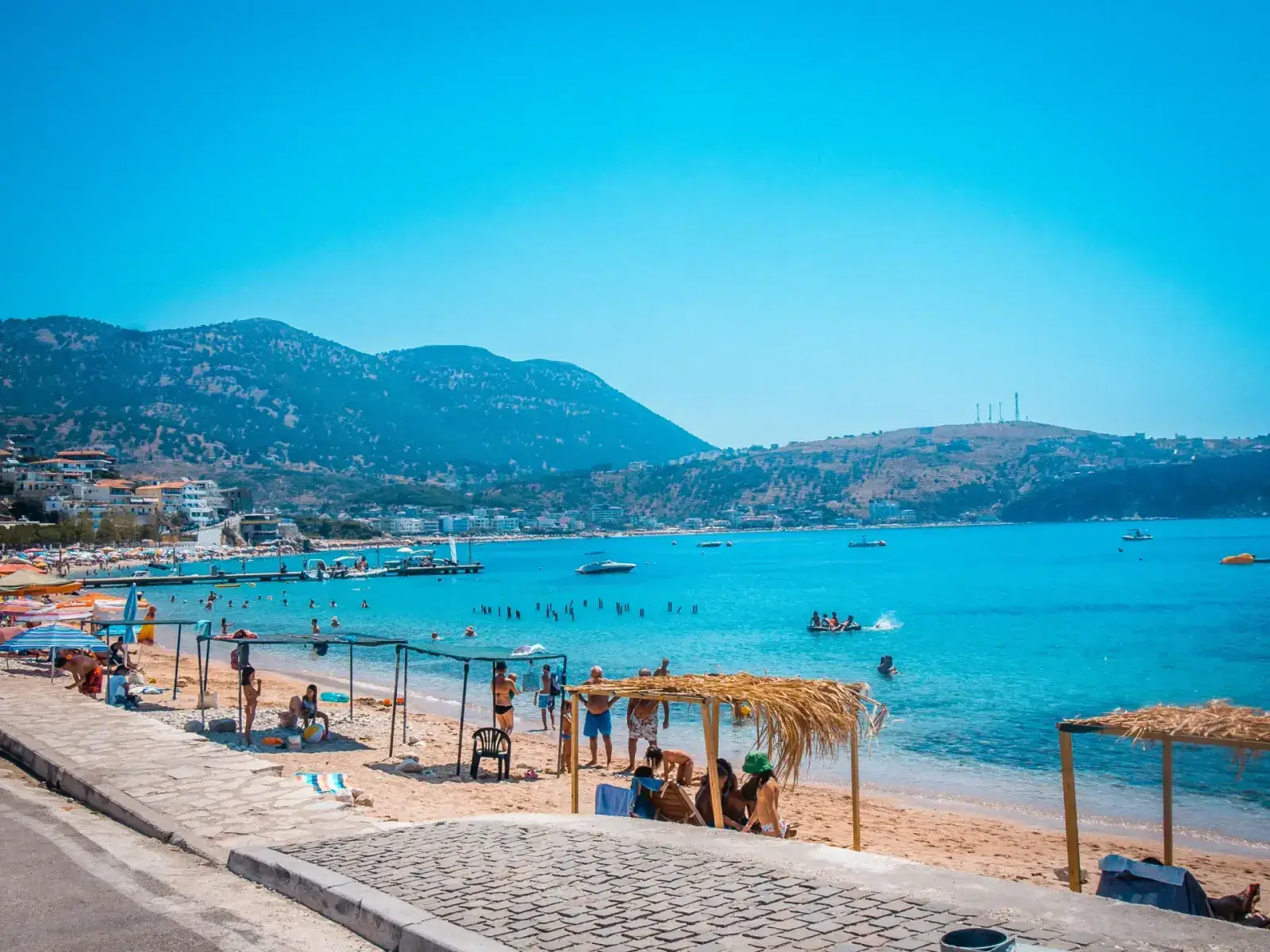
Beach dogs are a specific category. These are strays that have claimed a stretch of sand as their territory, often near a beach bar or restaurant that feeds them. They tend to be well-fed, calm, and accustomed to sunbathers. At popular beaches like Livadhi in Himara or the main beach in Borsh, you may find a dog settling down next to your sunbed. This is normal. They are looking for shade, not confrontation.
Restaurant dogs are the strays that hang around outdoor dining areas. Most restaurant owners along the Riviera tolerate or actively feed one or two regulars. These dogs are often the friendliest strays you will encounter -- they have learned that people at tables sometimes share food.
Village dogs in the hill towns above the coast -- places like Himara's Old Town (Kastro), Qeparo, and Vuno -- tend to be more territorial. They may bark at unfamiliar people walking through narrow lanes, especially at night. This is territorial behavior, not aggression. They are announcing your presence and will typically stop once you have passed through their area.
Road dogs are the strays that live along the SH8 highway and rural roads. You will see them lying on roadsides, sometimes in the road itself. If you are driving the Riviera, be alert for dogs on the road, particularly at dawn and dusk.
How to Behave Around Stray Dogs
These guidelines apply everywhere in Albania, not just the coast.
If a dog approaches you:
- Stand still. Do not run -- running triggers a chase instinct in any dog
- Avoid direct eye contact, which dogs can interpret as a challenge
- Keep your hands at your sides. Do not reach out to pet an unfamiliar stray
- Wait. The dog will sniff, assess, and almost always lose interest within seconds
- Walk away slowly once the dog has relaxed
If you encounter a pack:
- Packs are more unpredictable than individual dogs, especially at night
- Do not walk through the middle of a resting pack. Go around
- If a pack is blocking your path, wait or take a different route
- If dogs from a pack approach aggressively -- barking, hackles raised, circling -- back away slowly while facing them
The stone trick:
This is widely known in the Balkans and it works. Dogs in Albania have a learned association between a person bending down to pick up a stone and being chased off. If a dog is being persistently aggressive, bend down as if picking up a rock. In most cases, the dog will back off immediately. You do not need to actually throw anything -- the gesture alone is usually enough. If you are in an area with no stones and the bluff fails, clapping your hands loudly and shouting a firm "IK!" (Albanian for "go away") also works.
General rules:
- Do not feed strays. It encourages them to follow you and associate all tourists with food
- Give sleeping dogs space. A startled dog is more likely to snap than an alert one
- Avoid dogs that are guarding food, nursing puppies, or eating from garbage. These situations raise defensive behavior
- On hiking trails near Himara, you may encounter livestock guard dogs. These are working dogs, not strays, and they can be large and assertive. Give them a wide berth, do not approach the flock they are guarding, and wait for them to verify you are not a threat before passing
Night Barking
If you are staying in a village guesthouse, a hillside apartment, or anywhere outside the main tourist strips, you will hear dogs barking at night. This is not a safety issue -- it is a noise issue. Stray dogs are more active after dark, and they bark at each other, at passing cars, at cats, and at nothing in particular.
In quieter areas like Himara's Old Town, Qeparo, or Vuno, the barking can be persistent enough to disrupt sleep, particularly if you are a light sleeper. Pack earplugs. This is practical advice, not an exaggeration. If you are booking accommodation in a village or rural area, factor this in.
Hotels and guesthouses in central Himara town or along the main Livadhi beachfront tend to be less affected, simply because there is more ambient noise from restaurants and traffic.
Rabies: What You Need to Know
This is the section that matters most. Albania has rabies present in its animal populations. The risk to tourists is low, but it is not zero, and rabies is fatal once symptoms appear -- there is no cure after that point.
Before You Travel
The WHO recommends pre-exposure rabies vaccination for travelers who will spend extended time in countries where rabies is present, especially if they will be in rural areas or around animals. The pre-exposure series is three doses given over 21-28 days. It does not make you immune -- it buys you time and simplifies post-exposure treatment.
If you are spending a week at a Riviera beach hotel, pre-exposure vaccination is a reasonable precaution but not strictly essential. If you are spending months in Albania, hiking in rural areas, or traveling with young children, it is strongly recommended. Discuss it with a travel medicine clinic before your trip.
For a full rundown on medical preparedness, see the Himara health guide.
If You Are Bitten or Scratched
This is a medical situation. Act immediately, regardless of how minor the wound appears.
- Wash the wound thoroughly with soap and running water for at least 15 minutes. This is the single most important first-aid step -- it significantly reduces rabies transmission risk
- Apply antiseptic (iodine or alcohol-based) if available
- Do not close the wound with bandages or stitches
- Get to a hospital for post-exposure prophylaxis (PEP). In Albania, PEP is reliably available at hospitals in Tirana. Availability in Vlora and Saranda is less consistent. Himara's health center does not stock rabies PEP
- If you have not been pre-vaccinated, you will also need rabies immunoglobulin (RIG), which may only be available in Tirana
Timeline matters. Rabies PEP is nearly 100% effective when administered promptly after exposure. Delay increases risk. If you are bitten on the Riviera, clean the wound immediately and get to Tirana the same day if possible. Your travel insurance should cover emergency medical transport -- confirm this before your trip.
Realistic Risk Assessment
The vast majority of tourists in Albania never have a negative encounter with a stray dog. Bites happen but are uncommon. Rabies transmission from a dog bite in Albania is statistically rare. However, "rare" and "zero" are not the same thing, and the consequences of rabies are absolute. Take the precaution seriously without letting it dominate your trip.
Children and Stray Dogs
If you are traveling to Himara with children, stray dogs require extra attention. Young children are more likely to approach dogs impulsively, less able to read warning signals, and closer to face height -- which makes bites to the face and head more likely if something goes wrong.
Practical steps:
- Supervise children around all unfamiliar dogs, including the docile-looking beach dogs
- Teach children not to approach, pet, or feed strays
- On beaches. Keep young children close if dogs are nearby
- Small children should not walk alone in areas with multiple strays, particularly at dusk or after dark
- If your child is bitten, follow the rabies protocol above immediately. Children should have pre-exposure vaccination if you are planning extended travel
How Albania Compares
| Country | Stray Dog Situation | Management Level |
|---|---|---|
| Albania | Large stray population, growing TNR efforts | Low-moderate |
| Greece | Similar numbers, especially on islands. Municipal feeding programs in some areas | Moderate |
| Turkey | Historically large population with national ear-tag program. Recent policy changes ongoing | Moderate-high |
| Croatia | Fewer strays due to municipal shelters and enforcement | High |
| Montenegro | Moderate stray population, concentrated in urban areas | Low-moderate |
Albania's situation is most comparable to Greece. If you have traveled to the Greek islands and were comfortable with the stray dogs there, you will find the Albanian Riviera similar -- perhaps slightly more dogs in some areas, but the same general dynamic of community-fed, human-habituated strays.
TNR Programs and What Ear-Clipped Dogs Mean
If you see a dog with a notch cut from the tip of one ear, that dog has been through a trap-neuter-return program, it has been captured, neutered or spayed, vaccinated against rabies, and released back to its territory. Ear-clipped dogs are the safest strays to be around -- they are vaccinated and, being neutered, tend to be less aggressive and territorial.
TNR programs in Albania are primarily run by international and local NGOs, with some municipal cooperation. The most active programs operate in Tirana and Saranda. Coverage along the Riviera is growing but inconsistent. You will notice more ear-clipped dogs in Saranda than in Himara, and more in towns than in rural areas.
If you want to support these efforts, several Albanian animal welfare organizations accept donations and volunteers. Ask at your accommodation -- many guesthouse owners know the local groups.
FAQ
Are stray dogs in Albania dangerous?
The vast majority are not. Most Albanian strays are docile, accustomed to people, and fed by the local community. Genuine aggression toward tourists is uncommon. The main risks are from packs at night, dogs guarding food or puppies, and the small but real possibility of rabies transmission from a bite. Use common sense, follow the behavior guidelines above, and you will be fine. For broader safety information about Albania, see our full guide.
Should I get a rabies vaccine before visiting Albania?
It depends on your trip. For a standard one- or two-week beach holiday on the Riviera, pre-exposure vaccination is a reasonable precaution but not strictly essential. For extended travel, rural hiking, or travel with young children, the WHO recommends it. The pre-exposure series is three doses over 21-28 days and should be started well before your trip. Consult a travel medicine clinic.
What should I do if a stray dog bites me in Himara?
Wash the wound immediately with soap and running water for at least 15 minutes. Apply antiseptic. Do not bandage the wound tightly. Get to a hospital for post-exposure prophylaxis (PEP) as soon as possible -- Tirana hospitals are the most reliable option in Albania. Himara's health center does not stock rabies PEP. Contact your travel insurance provider for emergency medical transport if needed.
Do stray dogs on Albanian beaches bother sunbathers?
Generally, no. Beach dogs along the Riviera are usually calm, well-fed by nearby restaurants, and content to lie in the shade. Occasionally a dog will settle near your sunbed or wander through the beach area. They are rarely pushy or aggressive. If a dog is bothering you, alert the beach bar staff -- they usually know the dog and can move it along.
Are there stray dogs on the hiking trails near Himara?
Yes, you may encounter strays on trails, and more importantly, you may encounter livestock guardian dogs protecting sheep or goat herds. These are working dogs that take their job seriously. Do not approach them or the animals they are guarding. Give the flock a wide berth, move calmly, and wait for the dog to assess you before continuing. Carry a walking stick if it makes you feel more confident.
Will stray dogs keep me awake at night?
Possibly, especially in quieter areas. Stray dogs bark at night -- at each other, at passing vehicles, at cats, at shadows. In village accommodation, hillside guesthouses, or rural areas, the barking can be persistent. Pack earplugs. Hotels in central Himara or along the main beachfront are less affected by nighttime barking.