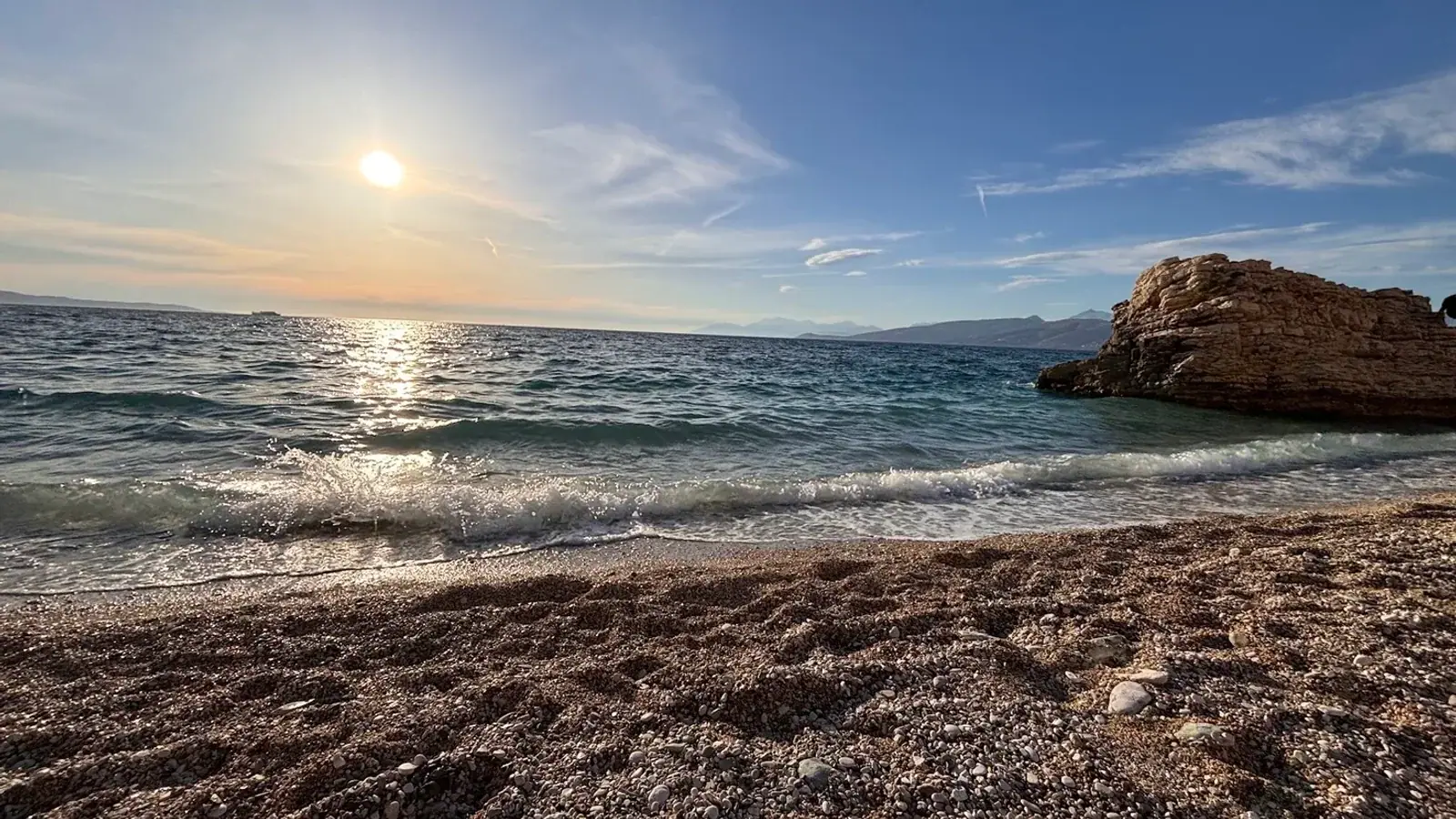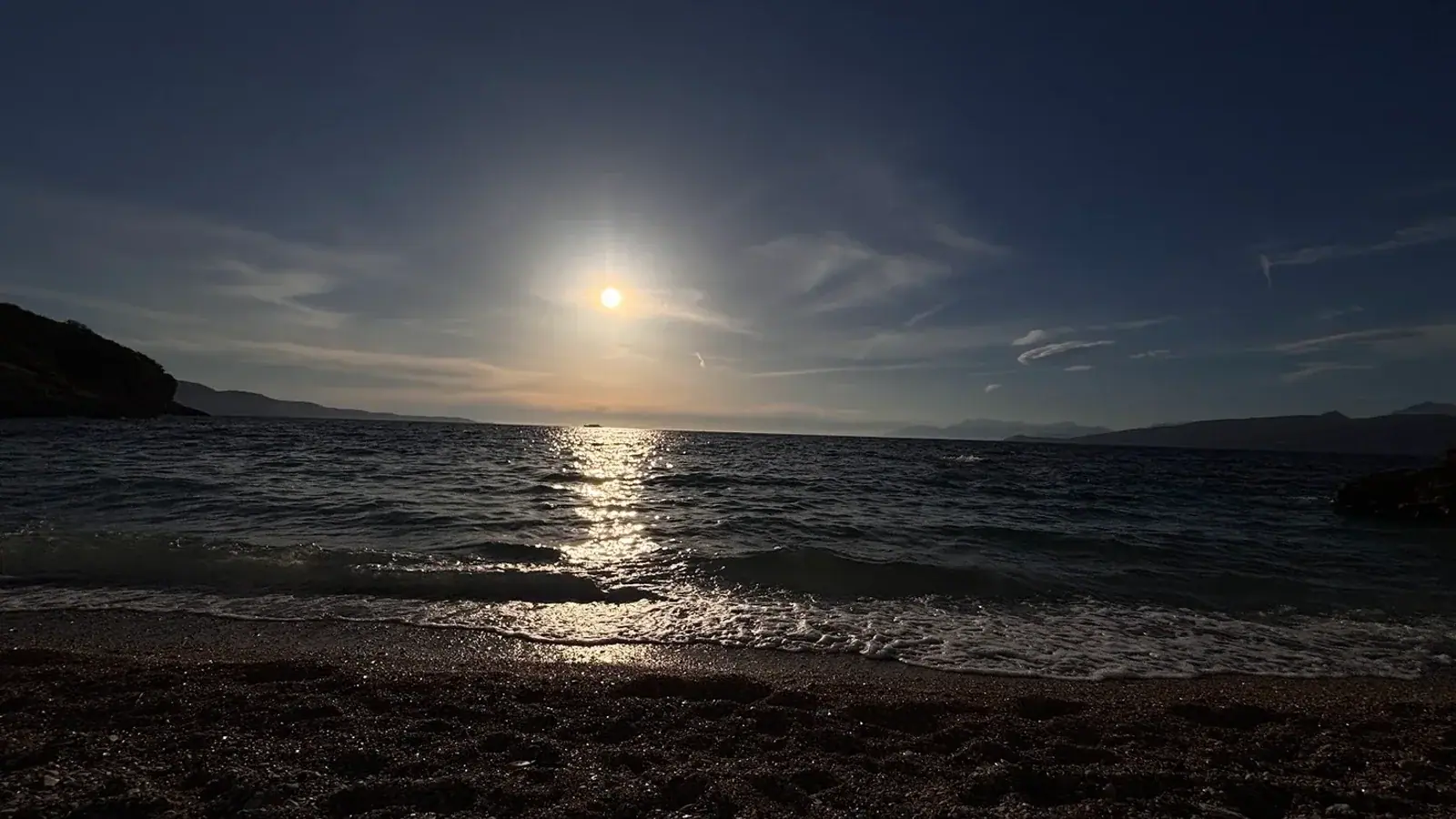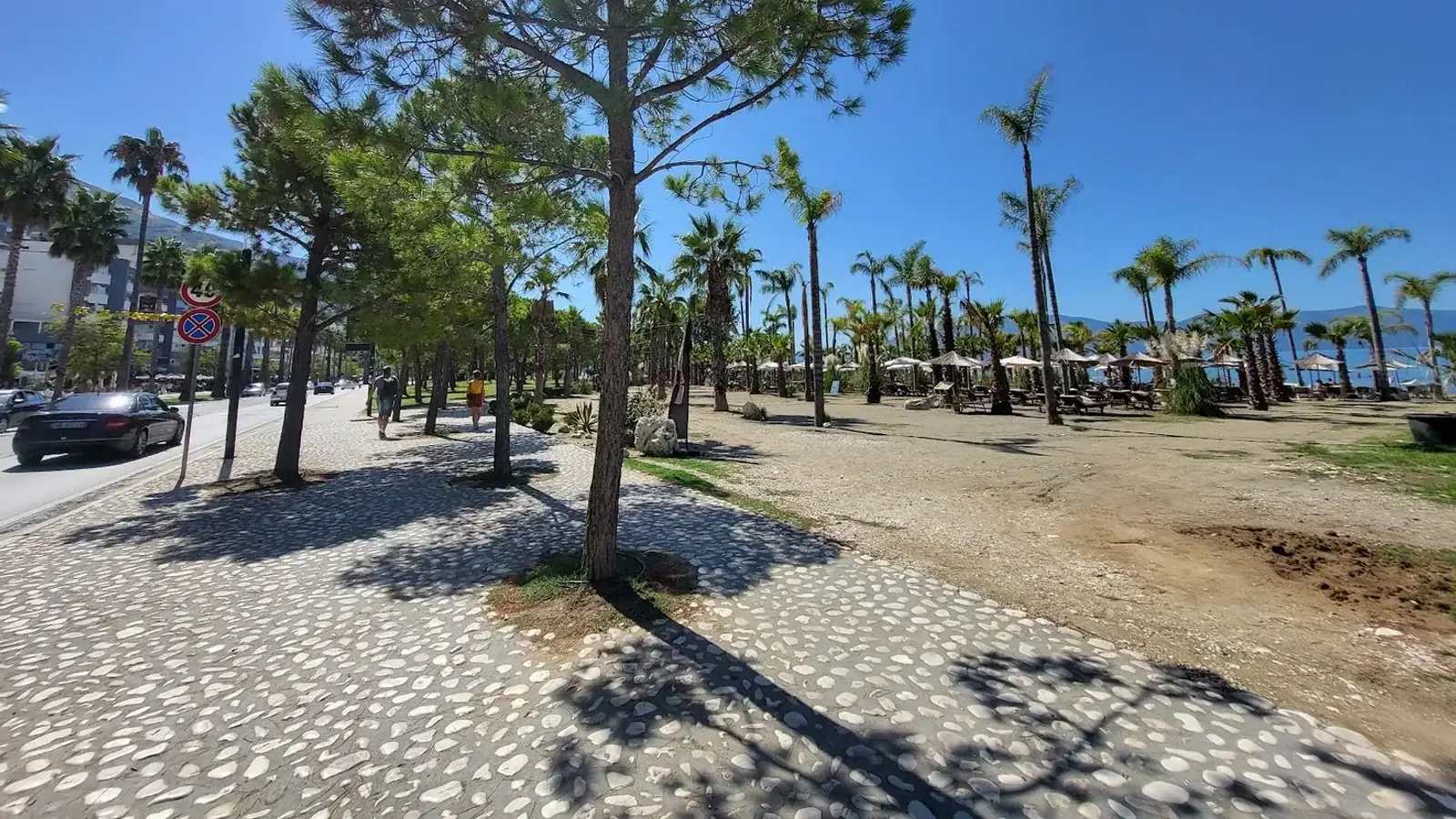
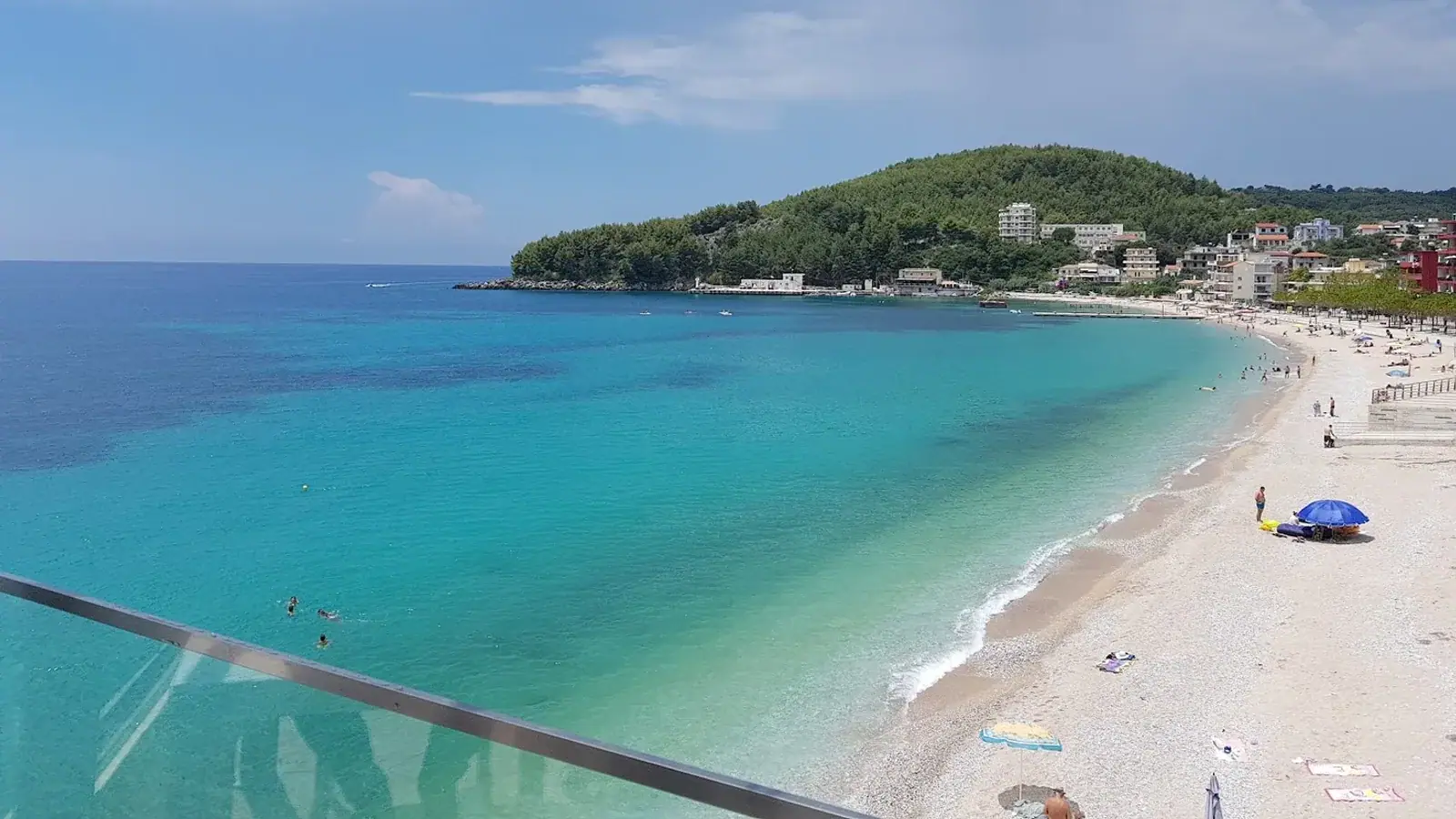
Himara in January is the Albanian Riviera at its absolute emptiest. Himara in the dead of winter is not a destination in any conventional sense. The beach bars are boarded up. The boat tours are months away. The promenade that buzzes with hundreds of visitors in July belongs to a few locals walking their dogs and the occasional stray cat. January is the coldest month on this coast, the quietest, and the cheapest. What remains is a small Albanian coastal town living its real life, stone streets, strong coffee, winter light on the Ionian, and the tail end of olive oil season in the groves above town.
This guide tells you exactly what January in Himara looks like. If you arrive knowing the reality, you might discover something genuinely valuable in the stillness. If you arrive expecting anything resembling summer on the Albanian Riviera, you'll be disappointed before your first coffee gets cold.
Compare hotels, apartments, and Vrbo rentals on the map. Powered by Stay22.
Quick January Snapshot
| Detail | January Reality |
|---|---|
| Air Temperature | 8-14°C (46-57°F) |
| Sea Temperature | 14-15°C (57-59°F) |
| Rain Days | 10-13 per month |
| Wind | Frequent, sometimes strong |
| Crowds | None |
| Hotel Prices | 2,000-4,000 lek (20-40€) per night |
| Restaurants Open | ~10-15% of summer capacity |
| Beach Bars | All closed |
| Boat Tours | Not running |
| Nightlife | None |
| Overall Vibe | Deepest off-season, village life |
January Weather in Himara
January is statistically the coldest month on this stretch of coast. You need to build your trip around that fact, not work around it.
Temperature
Daytime highs sit between 8-14°C on most days, with 10-12°C being the most common range. Anything above 14°C is a bonus. Nights drop to 4-7°C, and the coastal humidity makes it feel colder than the thermometer reads. Indoor heating in budget accommodation is typically a portable electric heater, not central heating. Pack warm layers you can sleep in, this isn't a suggestion, it's a necessity for the cheaper guesthouses.
Rain
Expect 10-13 rainy days through the month. January rain on this coast is not the gentle drizzle of a British winter. It comes in heavy, sustained downpours that can last hours. You might get two or three gorgeous clear days followed by a week of grey. The coast receives less rain than the mountains behind it, but January is firmly a wet month. Don't build a trip that collapses if it rains, because it will.
Wind
January's coastal winds are the factor that catches visitors off guard. The Ionian funnels northwesterly gusts along the shore, and exposed spots like Spile Beach and the promenade feel raw on a windy day. Wind chill can push the perceived temperature well below the actual reading. Some January days are genuinely unpleasant for outdoor activity, not because of cold alone, but because of the combination of cold, wind, and damp. When the wind drops and the sun comes out, the coast is hard to beat.
Sea Temperature
The Ionian sits at 14-15°C in January, the coldest it gets all year. This is not swimmable by any reasonable definition. The beaches are physically accessible and free, but the water is a shock-dip at best. Nobody is swimming, not tourists, not locals, not the fishermen.
What to pack: Warm layers, a proper waterproof jacket, fleece or wool mid-layer, wind-resistant outer shell, shoes that handle wet cobblestones. Leave swimwear at home.
For a broader look at how January fits into the annual cycle, see our month-by-month Himara weather guide.
What's Open and What's Closed
This is the section that determines whether your trip works. The honest version: January has the least open of any month.
What's Closed
- Beach bars: All of them. Every single one. They won't reopen until May at the earliest.
- Boat tours: Not running. Operators are in Tirana or abroad until spring.
- Most restaurants: Around 85-90% of summer dining options are closed. The beachfront and promenade restaurants that define summer Himara are shuttered and dark.
- Most hotels: The majority of accommodation closes from November through March. Many summer apartments lack winter heating entirely.
- Tour operators: All seasonal excursion services are inactive.
- Rental services: Scooter and car rental kiosks are closed. Arranging a vehicle requires calling ahead to Vlora-based agencies or asking your guesthouse.
- Nightlife venues: All closed. No clubs, no late-night bars, no live music.
What's Open
- Town center cafes and restaurants: A small core of year-round places stays open, serving locals first. Expect simple Albanian cooking, byrek, grilled meats, soups, salads, fresh bread, at low prices. You'll eat where the locals eat because there's nowhere else.
- Some hotels and guesthouses: A handful of properties operate year-round. Always contact ahead to confirm they're actually open and heated.
- Mini-markets and bakeries: Basic supplies are always available. Fresh bread, dairy, produce, essentials, you won't go hungry.
- The old town and castle: Open, free, and completely deserted. January is arguably the most atmospheric time to visit.
- Pharmacies and essential services: Operating on reduced hours.
For accommodation that stays open year-round, see our where to stay guide.
The New Year Period
The first few days of January carry the fading energy of the New Year celebrations. Albanians treat New Year's Eve as a major holiday, and the afterglow lingers through January 1-2 with family gatherings, leftover feasts, and a slightly more social atmosphere than the rest of the month. By January 3, the town settles back into its deep winter rhythm.
Orthodox Christmas (January 7)
Himara's population includes a significant Greek-speaking Orthodox community, and January 7. Orthodox Christmas, is observed locally. Services are held in the old town's Byzantine churches, particularly those within the castle complex. These are intimate, candlelit affairs attended by a handful of congregants. Stone walls, chanting, incense, and a centuries-old tradition playing out in near-empty churches. If you happen to be in town, attending a service is worth your time regardless of your faith.
Olive Oil Season
January marks the tail end of the olive harvest and pressing season in the groves above Himara and across the broader riviera. If you're interested in local food culture, this is one of January's genuine draws. Fresh olive oil, hours from press to bottle, is available from local producers. Ask at your guesthouse or any cafe. A liter of fresh-pressed extra virgin runs about 800-1,200 lek (8-12€), and the quality is outstanding. For more on the region's olive oil tradition, see our Albanian Riviera olive oil guide.
Best Things to Do in Himara in January
January activities are land-based, weather-dependent, and mostly free. The options are limited, but each one is better without crowds.
Old Town and Castle Walk
The single best activity in January Himara, and it's not close. The old town castle complex sits above the modern town with sweeping views over the Ionian. In January, the ancient stones, Ottoman-era lanes, and Byzantine churches feel more alive without the summer crowds. Winter light, low, golden, cutting through broken cloud, makes the ruins look like a painting. Budget 1-2 hours. Free. Go when the wind is manageable.
Hiking
January is surprisingly good for hiking when the weather cooperates. Temperatures are comfortable for sustained effort, you won't overheat the way you would in summer. The coastal trail toward Jale, inland village routes, and paths through the olive groves above town are all accessible. The catch: trails can be muddy, slippery, and poorly marked after rain. Don't hike alone in wet conditions, and always check the forecast before setting out.
Our hiking guide covers route details, though adjust expectations for January conditions.
Village Life and Cafe Culture
Sit in a town center cafe, order a macchiato for 100-150 lek (1-1.50€), and watch Himara live its real life. Talk to locals, many speak Greek, some speak English. Read. Write. Think. Do nothing. This is the pace that January offers, and for the right person, it's the entire point.
Storm Watching
Not a throwaway suggestion. January storms on the Ionian are spectacular, massive waves crashing against the seawall, dramatic cloud formations sweeping across the sky, wind-driven spray catching the light. Watching from a waterfront cafe or the castle walls (well back from cliff edges) is one of January's unexpected pleasures. The Mediterranean in winter shows a face you'll never see in the travel brochures.
Drive to Llogara Pass
The road connecting Himara to Vlora over Llogara Pass is one of Albania's most dramatic drives. In January, the pass often has snow at higher elevations, creating a surreal contrast. Mediterranean coast below, alpine conditions above. Check conditions before driving. The road can be icy or occasionally closed after heavy snowfall. When it's clear, the viewpoints are deserted and the scenery is extraordinary.
Where to Stay in January
Your options are the most limited of any month. This simplifies the decision but demands advance planning.
Hotels Open Year-Round
A handful of properties operate through winter. Expect to pay 2,000-4,000 lek (20-40€) per night for a double room, roughly a quarter of what the same room costs in August. Quality is basic but functional. Always confirm heating, hot water, and WiFi before booking.
A few family-run guesthouses keep rooms available at the lower end of that range, around 2,000-3,000 lek (20-30€). Quality varies widely. Some are warm and welcoming; others are barely winterized. Ask specific questions before you commit.
Tips for January Stays
- Call or message before booking. A listing being online doesn't mean the property is actually open or prepared for winter guests.
- Ask about heating explicitly. "Heated room" might mean a single portable electric heater in a poorly insulated room. If you're cold-sensitive, this matters a lot.
- Hot water reliability is inconsistent in budget guesthouses during winter. Confirm before arriving.
- Negotiate longer stays. If you're staying a week or more. Ask for a discount. Owners have virtually zero other business in January and are happy to cut rates.
- January may be the single best month for negotiation, it's the absolute low point of the tourism calendar.
For broader guidance, see our where to stay guide and hotel listings.
Daily Budget in January
January is the cheapest month to be in Himara. Here's what a realistic daily budget looks like.
Budget Traveler (Guesthouse + Simple Meals)
| Expense | Cost (ALL) | Cost (EUR) |
|---|---|---|
| Guesthouse (double room) | 2,000-2,500 lek | 20-25€ |
| Coffee (2x) | 200-300 lek | 2-3€ |
| Lunch (simple taverna) | 500-800 lek | 5-8€ |
| Dinner (taverna, no alcohol) | 800-1,200 lek | 8-12€ |
| Misc (snacks, water) | 200-300 lek | 2-3€ |
| Daily Total | 3,700-5,100 lek | 37-51€ |
Mid-Range (Hotel + Better Meals)
| Expense | Cost (ALL) | Cost (EUR) |
|---|---|---|
| Hotel (double room) | 3,000-4,000 lek | 30-40€ |
| Coffee and pastry (2x) | 400-500 lek | 4-5€ |
| Lunch | 700-1,000 lek | 7-10€ |
| Dinner (with wine or raki) | 1,200-1,800 lek | 12-18€ |
| Misc | 300-500 lek | 3-5€ |
| Daily Total | 5,600-7,800 lek | 56-78€ |
There is no luxury tier in January. The infrastructure doesn't exist. The restaurants with wine lists and tasting menus are closed. This is taverna food and guesthouse beds, and at these prices, the value is extraordinary by any Mediterranean standard.
For more on stretching your budget, see our budget travel guide.
Who Should Visit Himara in January
January Himara works for a very narrow category of traveler. If you see yourself here, you'll probably love it.
- Remote workers wanting the cheapest coastal base in Europe. Reliable WiFi exists at some hotels, and you'll spend 35-55€ per day for room and meals. A month in January Himara costs less than a week in most Western European beach towns. See our digital nomad guide for connectivity details.
- Writers, artists, and anyone who needs deep solitude. Empty beaches, brooding skies, zero distractions, zero social obligations. This is a place to disappear into your work.
- Budget travelers on extended Balkan trips. January prices make Himara the cheapest coastal stop on any winter itinerary through the region.
- Hikers who don't mind weather uncertainty. The cool temperatures are ideal for sustained walking, and the trails are completely deserted.
- Travelers who genuinely love empty places. If a town with zero other tourists sounds like paradise rather than a warning sign, January Himara is for you.
Who Should NOT Visit Himara in January
This matters as much as the previous section. January Himara is not for most people, and pretending otherwise would be dishonest.
- Anyone wanting a beach vacation. The water is 14°C. The beach bars don't exist. There are no sunbeds, no umbrellas, no beach service. Come in June.
- Nightlife seekers. There is no nightlife. The town is dark and silent by 9 PM. No exceptions.
- Travelers who need reliable good weather. It might rain for half your trip. If that destroys your holiday, don't book January.
- Anyone expecting "summer Albania at a discount." The Instagram version of the Albanian Riviera doesn't exist from November through April. The promenade is empty. The beach clubs are shuttered. January is its own thing, plan for that, or don't come.
- Families with young children. Very limited dining, cold weather, no children's activities, and no other families around. This is not a family month.
- Travelers uncomfortable with limited choices. If having only two or three restaurant options and a handful of accommodation choices stresses you out, January Himara will feel constraining rather than restful.
If January doesn't match what you're after, our guide to the best time to visit helps you find a month that fits.
January Compared to Neighboring Months
Here's how January stacks up against the months on either side, so you can pick the right winter window.
| Factor | December | January | February |
|---|---|---|---|
| Air Temp | 8-15°C | 8-14°C | 8-14°C |
| Sea Temp | 15-17°C | 14-15°C | 14-15°C |
| Rain Days | 10-14 | 10-13 | 10-12 |
| Restaurants Open | ~15-20% | ~10-15% | ~15-20% |
| Hotels Open | Very few | Fewest | Very few |
| Crowds | Almost none | None | None |
| Special Events | Christmas, NYE | Orthodox Christmas, olive oil season | Carnival (some years) |
| Best For | Holiday solitude | Deepest winter, cheapest prices | True solitude |
| Daily Budget (mid) | 56-78€ | 56-78€ | 55-78€ |
The takeaway: December offers the holiday period. Christmas, New Year's, slightly warmer sea, and a touch more energy in the last two weeks of the month. January is the absolute bottom of the cycle: coldest sea, fewest open businesses, and zero tourism activity. February is functionally identical to January but with marginally less rain and the occasional pre-Lenten carnival event. If you want the emptiest, cheapest, most stripped-back version of Himara, January is it. If you want the same solitude with slightly better odds of dry weather, February has a thin edge.
Practical Information
Check current Albania visa rules for 2026 before booking.
- Getting there: Buses from Tirana run year-round on reduced winter schedules. Expect one or two daily departures (approximately 5-6 hours). Confirm times locally, schedules are not always reliably posted online. Driving is possible but check Llogara Pass conditions; the road can be icy or closed after heavy snow.
- Currency: Albanian lek (ALL). Euros are widely accepted at shops and restaurants, but you'll get better value paying in lek. ATMs are available in the town center.
- Language: Albanian and Greek are both spoken locally. English is understood at hotels and some cafes but don't count on it everywhere.
- Connectivity: WiFi is available at open hotels and some cafes. Mobile coverage (Vodafone Albania, ONE) is reliable in town, spottier in surrounding villages.
- Power outages: January storms occasionally knock out power. Keep your phone charged and have cash on hand.
For detailed arrival logistics, see our practical info page.
Planning for a Different Month?
Himara in December ← | → Himara in February
Full year comparison: Best Time to Visit Himara
Frequently Asked Questions
Is Himara worth visiting in January?
Only if you know what you're signing up for. January Himara is not a vacation destination, it's a quiet, cheap, atmospheric coastal town in deep hibernation. If you want solitude, rock-bottom prices, winter hiking, and a place to think or work without distractions, it has genuine appeal that no summer month can replicate. If you want beaches, dining variety, nightlife, or sunshine, January is the worst possible month. Be honest with yourself before booking.
What is the weather like in Himara in January?
January is the coldest month on the Albanian Riviera. Daytime highs range from 8-14°C (46-57°F) and nights drop to 4-7°C (39-45°F). Expect 10-13 rainy days, frequent coastal winds, and sea temperatures around 14-15°C (57-59°F). You'll get occasional beautiful clear days, but plan for cold and wet conditions as the baseline. Pack layers, a waterproof jacket, and proper shoes.
Can you swim in Himara in January?
No. The Ionian Sea is at its coldest in January, around 14-15°C. This is uncomfortable even for experienced cold-water swimmers. The beaches are free and accessible, but nobody is swimming, not tourists, not locals. If cold water is your thing, a very brief dip is physically possible, but calling it swimming would be generous. Wait until June for actual swimming conditions.
Are restaurants and hotels open in Himara in January?
Very few. Around 10-15% of summer restaurants operate in January, concentrated in the town center and serving simple Albanian food to locals. Most hotels close from November through March. A handful of year-round properties keep rooms available at 2,000-4,000 lek (20-40€) per night. Always contact accommodation directly before booking to confirm they're genuinely open and heated.
Is January a good time for hiking near Himara?
On clear days, yes. Cool temperatures are ideal for sustained walking, and every trail is deserted. The old town castle route, coastal paths toward Jale, and inland village walks are all accessible. The challenge is weather reliability, you might plan four hiking days and lose two to rain. Trails are muddy and slippery after storms, so bring proper footwear and check forecasts daily. See our hiking guide for route details.