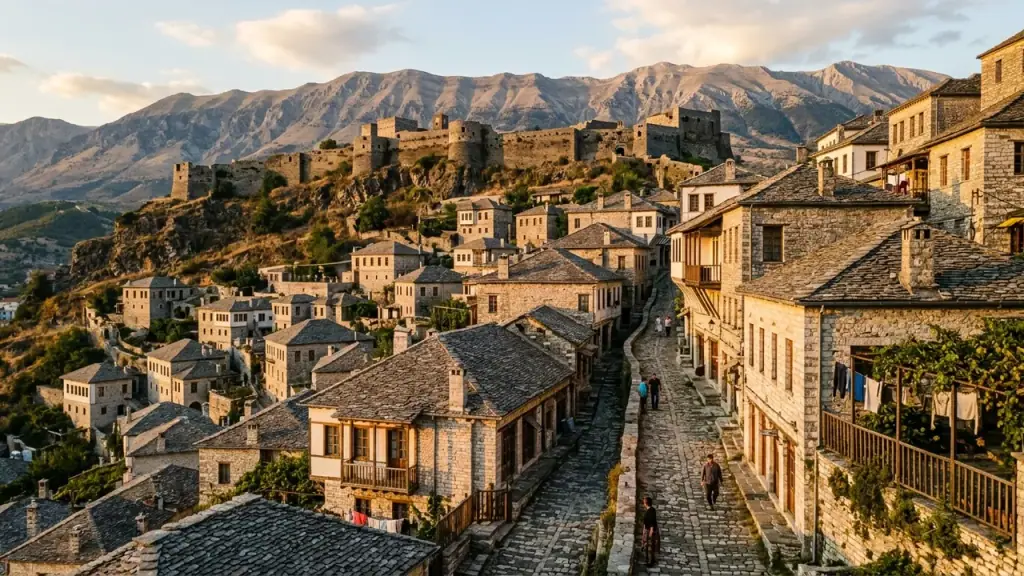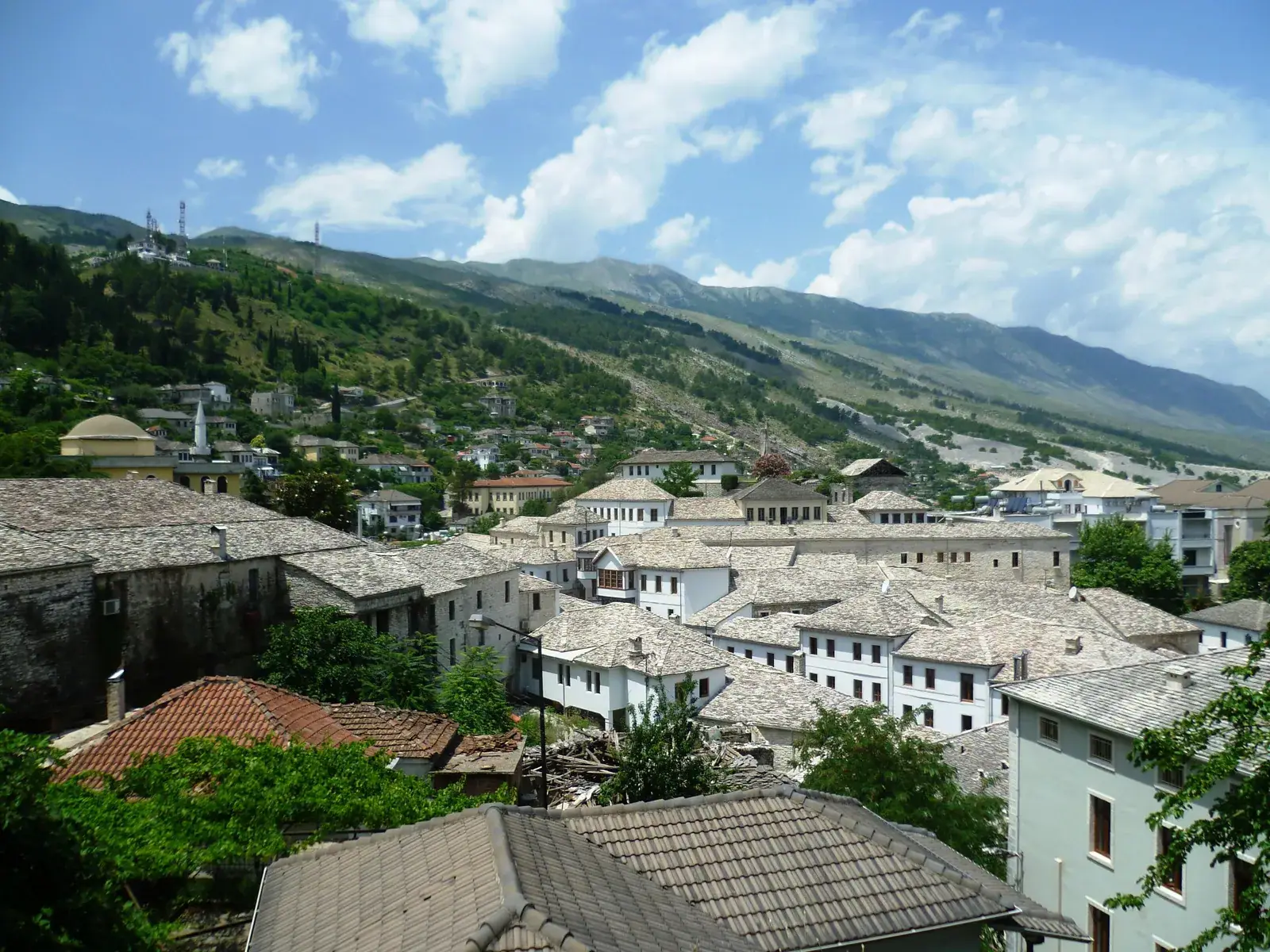
Gjirokastër castle is the building that makes the town look the way it does. It runs along the whole ridge above the stone houses, and from almost anywhere in the old town you are looking up at it. Most visitors give it an hour and leave thinking they have seen it. Most of them have missed half.
The other half is underground and around corners: a vaulted gun gallery, a prison used by a king and then by a dictatorship, a museum that charges its own ticket, and at the far end a silver American jet that has been sitting on the ramparts since the Cold War. Here is what each part costs, when it opens, and the order we would see it in.
Gjirokastër castle at a glance
| Name | Kalaja e Gjirokastrës |
| Where | On the ridge above the old bazaar, about 336 m above sea level |
| Castle ticket | 400 lek; 200 for pensioners, 120 for students, free under 12 |
| Armaments museum | Separate ticket, about 200 lek on the day, per 2026 guides |
| Summer hours (May–Sep) | 09:00–19:00 daily |
| Winter hours (Oct–Apr) | Tue–Sat 09:00–16:00, Sun 09:00–14:00, closed Monday |
| Walk up from the bazaar | 10–15 minutes, steep cobbles |
| Time to allow | 1.5–2 hours with the museums |
| Pay with | Cash in lek; card and QR payment are unreliable |
The prices and hours above are the regional heritage directorate's (DRTK Gjirokastër), checked for our Berat or Gjirokastër comparison in October 2026. Some travel sites still quote 200 lek and 09:00–18:00. Those are old figures.
Gjirokastër castle tickets and opening hours
The castle ticket is 400 lek for adults. Pensioners pay 200, students 120, and children under 12 go in free. The directorate links ticket sales to the government's e-Albania portal, but the booth at the gate sells them too, and that is what nearly everyone uses.
Bring cash. A September 2026 TripAdvisor review describes a group giving up after an hour trying to pay by a QR code at the gate. The armaments museum inside charges separately, 200 lek according to LoveAlbania, Sandal Tan Man and a recent TripAdvisor review, also in cash. An older page on the regional tourism site described a single 200-lek ticket for all the castle museums. That arrangement has changed, so budget 600 lek per adult for the castle and the gun museum together.
Hours change with the season:
| Period | Days | Hours |
|---|---|---|
| May to September | Every day | 09:00–19:00 |
| October to April | Tuesday to Saturday | 09:00–16:00 |
| October to April | Sunday | 09:00–14:00 |
| October to April | Monday | Closed |
The Monday closure catches out a lot of winter day-trippers from Saranda. If your only free day is a Monday between October and April, see the town and the Cold War tunnel instead and save the castle for another trip.
Getting up to the castle
From the old bazaar, follow the signed cobbled lane uphill. It is short, 10 to 15 minutes, and steep, on polished limestone that is slick in rain. Taxis and cars can reach a small parking area close to the entrance, which helps anyone who cannot do the climb, but in summer it fills early.
The entrance tunnel opens into the long vaulted gallery that runs under the castle. That is where the visit starts.
What to see inside Gjirokastër castle
Work from the entrance to the far end of the ridge and back. It keeps the climb gentle and leaves the view for last.
The gun gallery
The first space is a long, dim vaulted hall lined with artillery: Ottoman-era cannons, Italian and German guns from the Second World War, and a small tank. Albanian partisans captured or inherited most of it. It is free with the castle ticket and the most atmospheric room in the building, cool even in August.
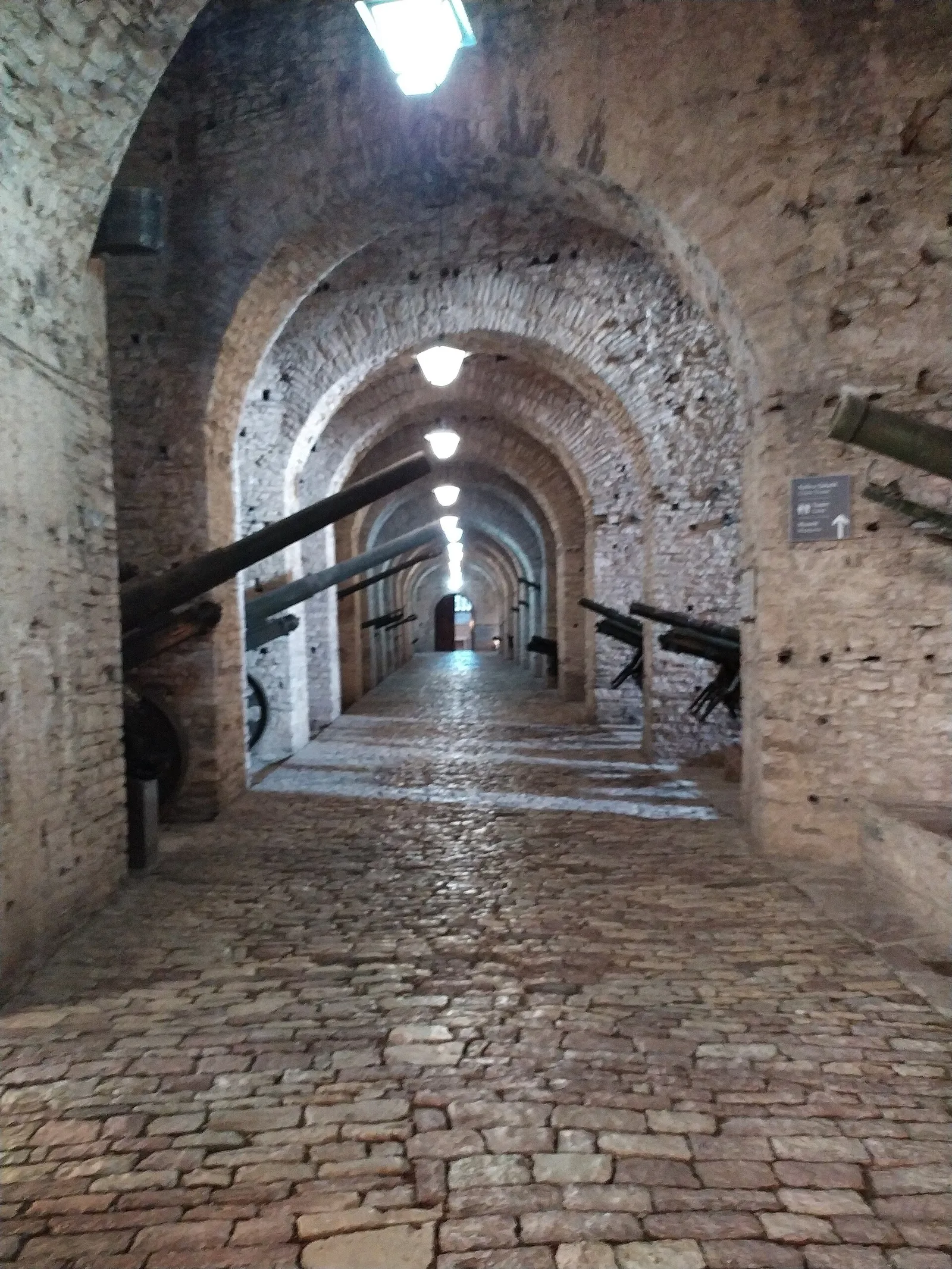 Photo: Leeturtle, CC BY-SA 4.0, via Wikimedia Commons.
The National Museum of Armaments
Off the gallery, the armaments museum fills part of the old prison. It has been here since the communist years, and its exhibits run from Albanian independence in 1912 to the end of the Second World War, with most of the space given to the partisan war against the Italian and German occupations of 1939 to 1944. It charges its own ticket. We would call it a 20-minute stop unless military history is your thing.
The prison
King Zog's government enlarged the castle prison in 1932, and under the communist regime it held political prisoners. The cells are bare and small, and in a castle full of picturesque views, they are the reminder of what the building was used for within living memory.
The Gjirokastër Museum
At the end of the gallery, the Gjirokastër Museum, opened in 2012 according to one 2026 visitor guide, covers the region from prehistory to the present: archaeology from the Drino valley, the town's tower houses, costume and craft. It is the quietest room in the castle and the best context for the stone town you just walked through. Check at the booth whether your ticket covers it on the day, since sources disagree on how the museum tickets are bundled.
The American jet
On the open rampart sits a silver US Air Force Lockheed T-33 Shooting Star. In 1957 the plane came down at Tirana airport; the regime presented it as a spy plane forced to land, while later accounts point to a technical fault. The pilot was sent home and the plane stayed, ending up here as propaganda. It is the most photographed object in the castle, and the strangest.
The clock tower and the walls
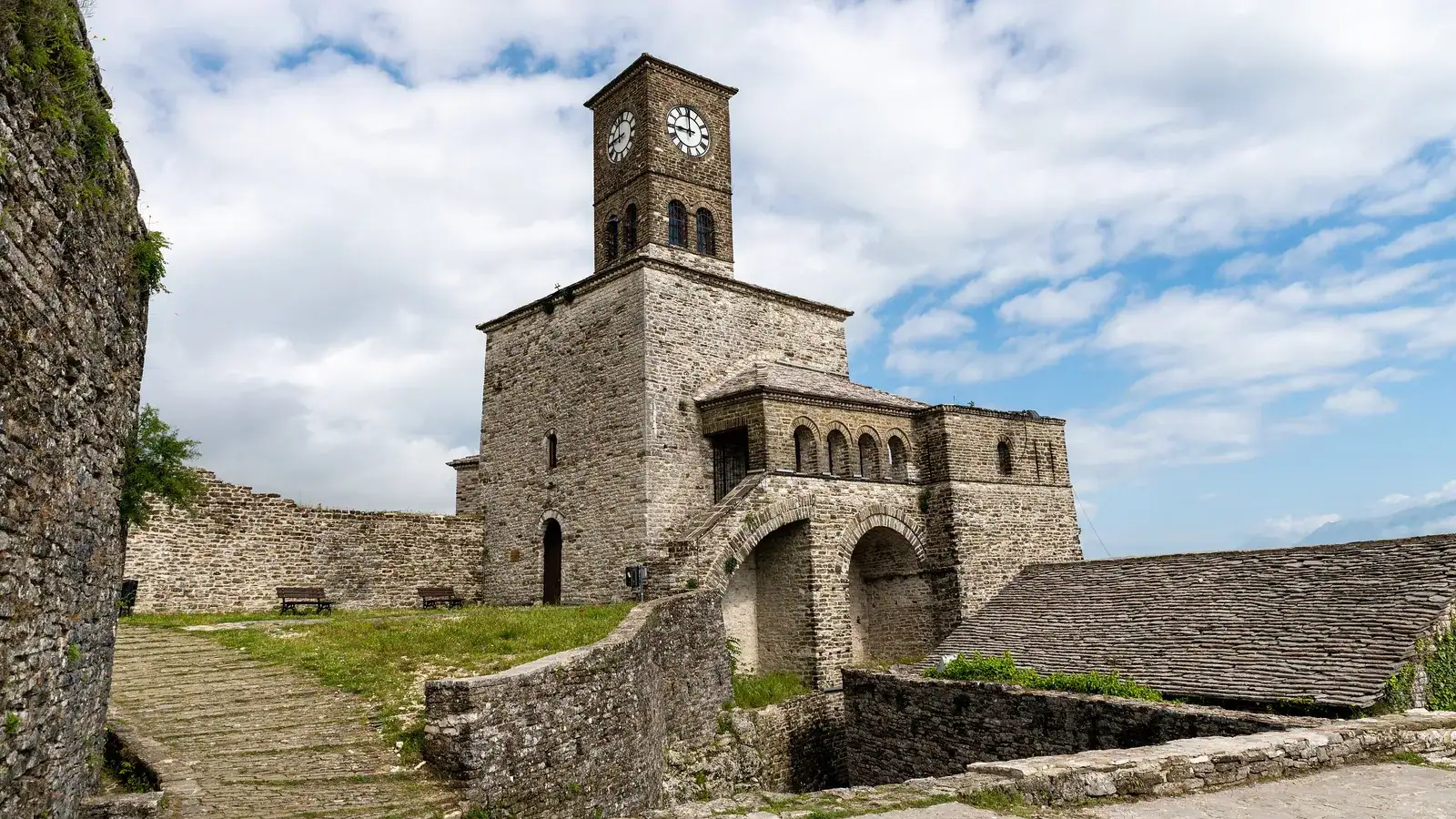
Ali Pasha of Tepelena gave the castle much of its present shape. Wikipedia's account dates his extensive rebuilding and the westward extension to after 1812, and other sources place the clock tower in the same works. The tower is the landmark you see from the bazaar. Walk the ramparts beyond it for the view along the Drino valley to the mountains on the Greek border, and down onto the slate roofs of the old town.
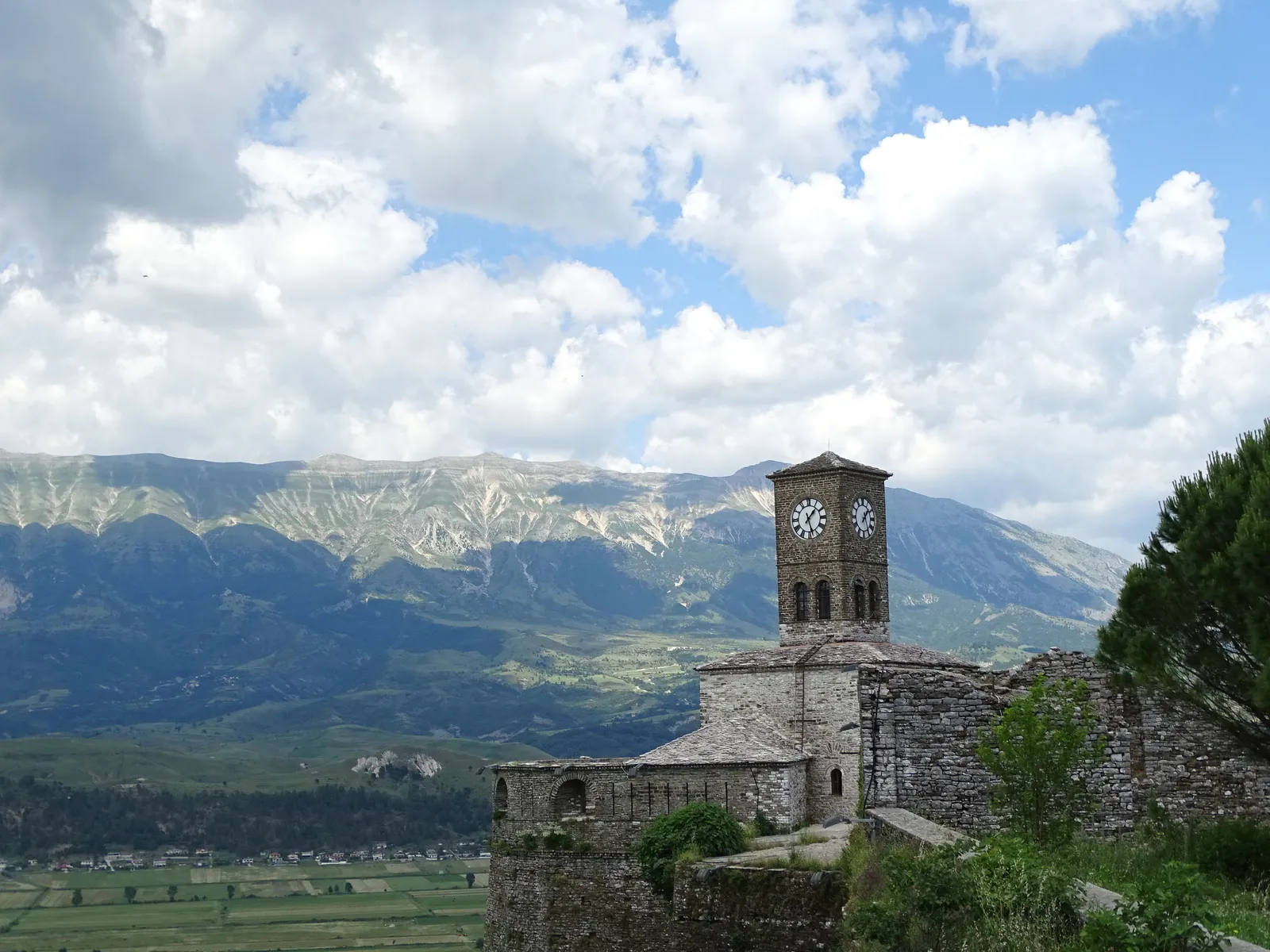 Photo: Adam Jones from Kelowna, BC, Canada, CC BY-SA 2.0, via Wikimedia Commons.
The festival stage
The open terrace with tiered seating is the stage of the National Folklore Festival, Albania's biggest showcase of traditional music and dance. The most recent edition, the 11th, ran from 24 June to 1 July 2023 with about 1,200 performers, and entry was free. The festival is irregular; the gap before 2023 was eight years. Outside festival time the terrace is empty and a good place to sit.
A short history
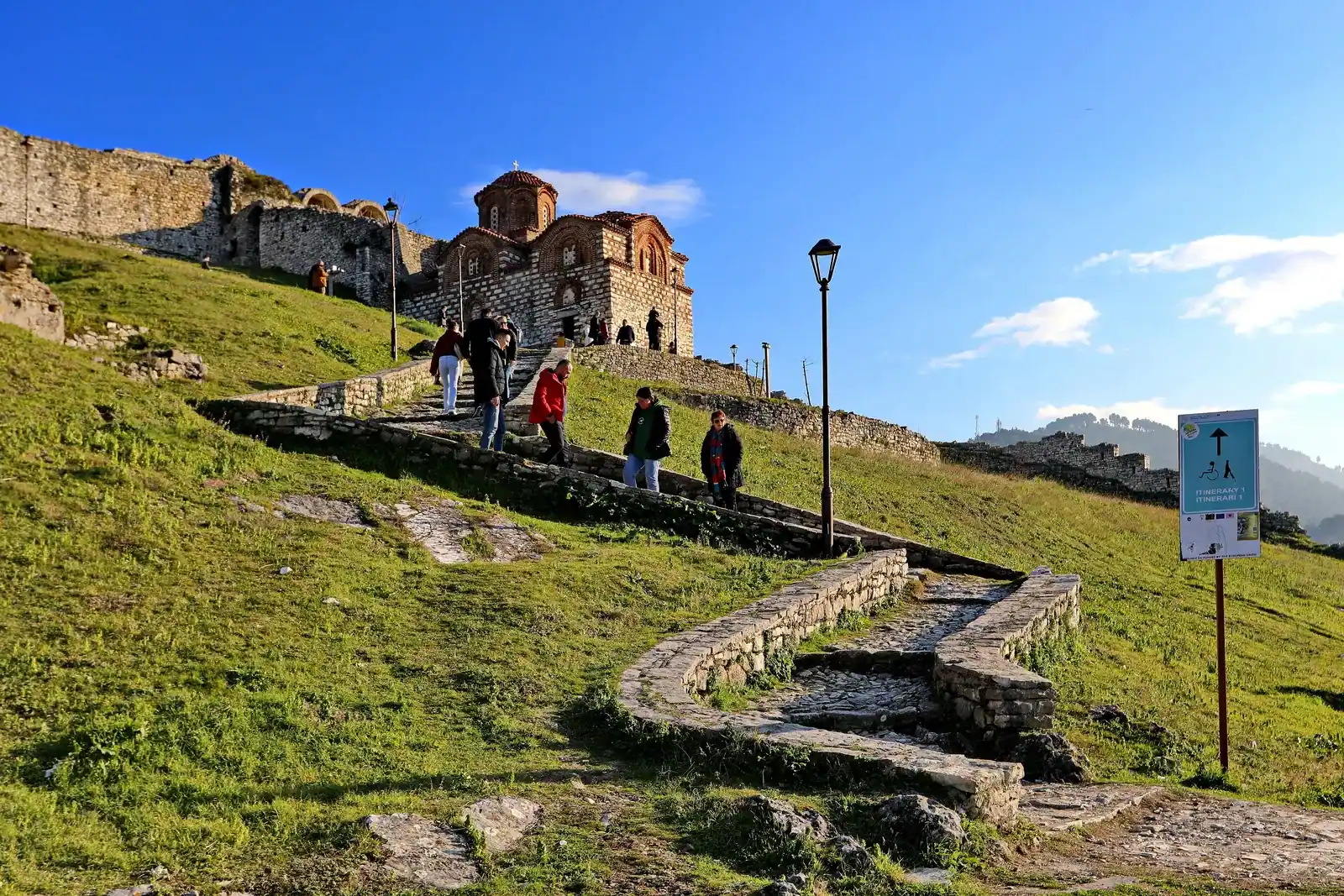
The ridge has been fortified since before the 12th century. The castle passed through Byzantine hands, the Despotate of Epirus and the local Zenevisi lords before the Ottomans took the town. Local legend says Princess Argjiro, a 15th-century noblewoman, threw herself and her child from the walls rather than be captured by the Ottomans. Ismail Kadare, who was born in the town, wrote a poem about her in the 1960s.
Ali Pasha's rebuilding in the early 19th century made it one of the largest castles in the Balkans. In the 20th century it became a prison, then a museum, and in 2005 UNESCO listed the historic centre of Gjirokastër, the castle included, adding Berat in 2008. For the rest of the town, the bazaar, the tower houses and the Cold War tunnel, see our Gjirokastër travel guide. For Berat's very different castle, where people still live inside the walls, see the Berat castle guide.
Where to stay near the castle
The stone guesthouses in the lanes just below the castle are the reason to stay the night. Day-trippers from Saranda leave by late afternoon, the bazaar empties, and the castle floodlights come on over the roofs. The trade-off is the hill: anything near the castle means cobbles and steps with your luggage.
Compare hotels, guesthouses and apartments on the map. Powered by Stay22.
If you are visiting from the coast in a day, the Gjirokastër day trip from Himara has the timings, and GetYourGuide's Gjirokastër page lists guided tours that include the castle.
Frequently asked questions
How much is the ticket for Gjirokastër castle?
Entry is 400 lek for adults, 200 for pensioners, 120 for students and free for children under 12, per the regional heritage directorate. The armaments museum inside charges about 200 lek on top, according to several 2026 guides. Pay in cash; visitors report that card and QR payment at the gate do not always work.
What are Gjirokastër castle's opening hours?
From May to September the castle opens every day from 09:00 to 19:00. From October to April it opens Tuesday to Saturday 09:00–16:00 and Sunday 09:00–14:00, and it is closed on Mondays. Arrive at least 90 minutes before closing to see the gallery, the museums and the ramparts without rushing.
How long do you need at Gjirokastër castle?
Plan on an hour and a half to two hours. That covers the gun gallery, the armaments museum, the prison, the plane and a walk along the ramparts to the clock tower. Add the climb from the bazaar, 10 to 15 minutes each way, and time for the views over the Drino valley.
Why is there an American plane in Gjirokastër castle?
It is a US Air Force T-33 jet that came down at Tirana airport in 1957. The communist government displayed it as a captured spy plane; later accounts describe a technical problem rather than an interception. The pilot was returned to the United States, and the plane ended up on the castle ramparts as part of the armaments museum's display.
Is Gjirokastër castle worth visiting?
Yes, if you give it more than a quick walk-through. The gun gallery, the prison and the jet are what make it different from other Balkan fortresses, and the view down onto the stone town explains why Gjirokastër is on the UNESCO list. Go early or late in summer, when the ridge is less exposed to the sun.
The bottom line
Pay the 400 lek in cash, spend another 200 on the armaments museum if you like military history, and walk to the far end of the ridge before you leave. Gjirokastër castle rewards the extra hour that most day-trippers do not give it, and in winter, remember it is closed on Mondays.
Cover photo: Christoph Strässler, CC BY-SA 2.0, via Wikimedia Commons.