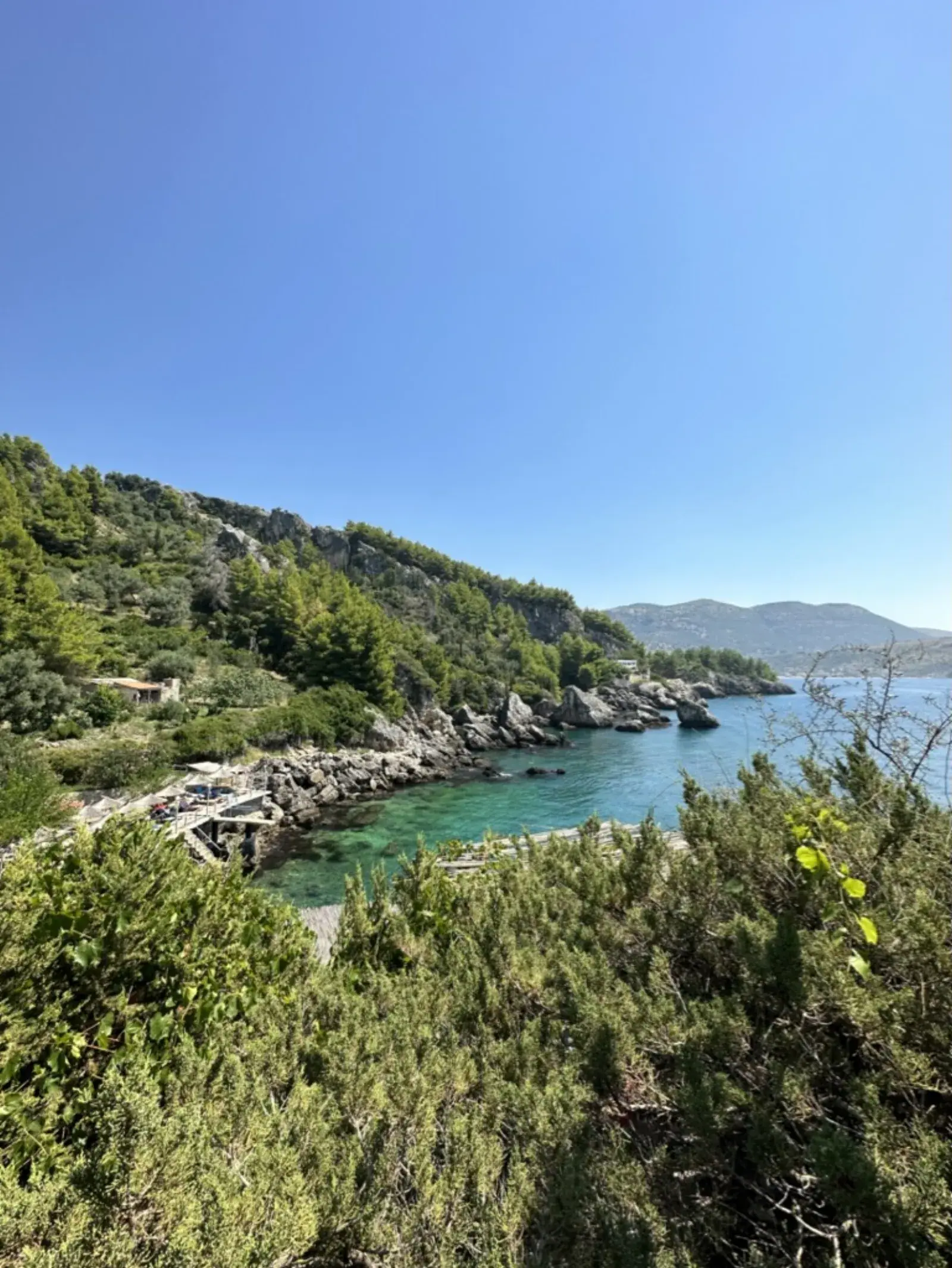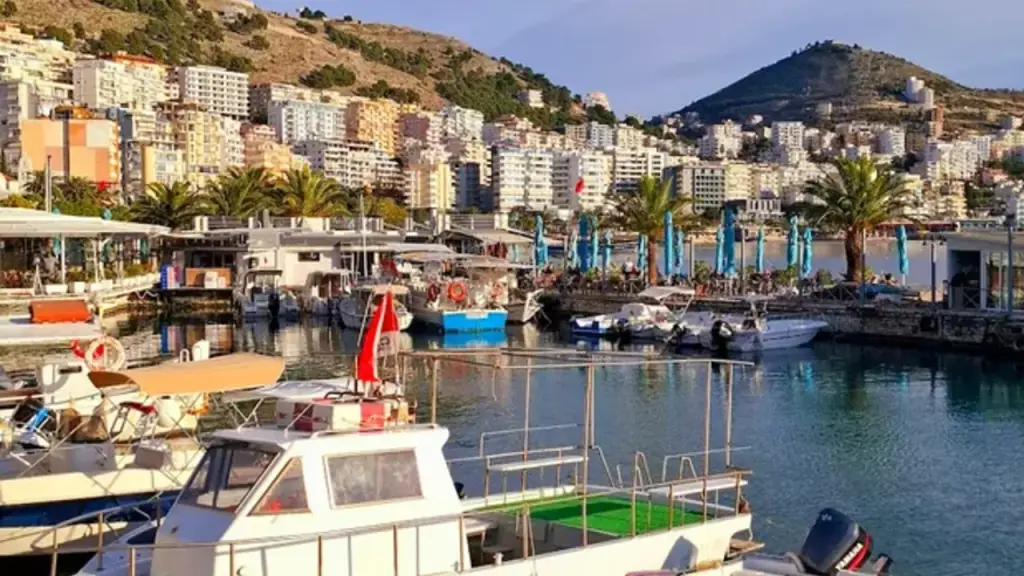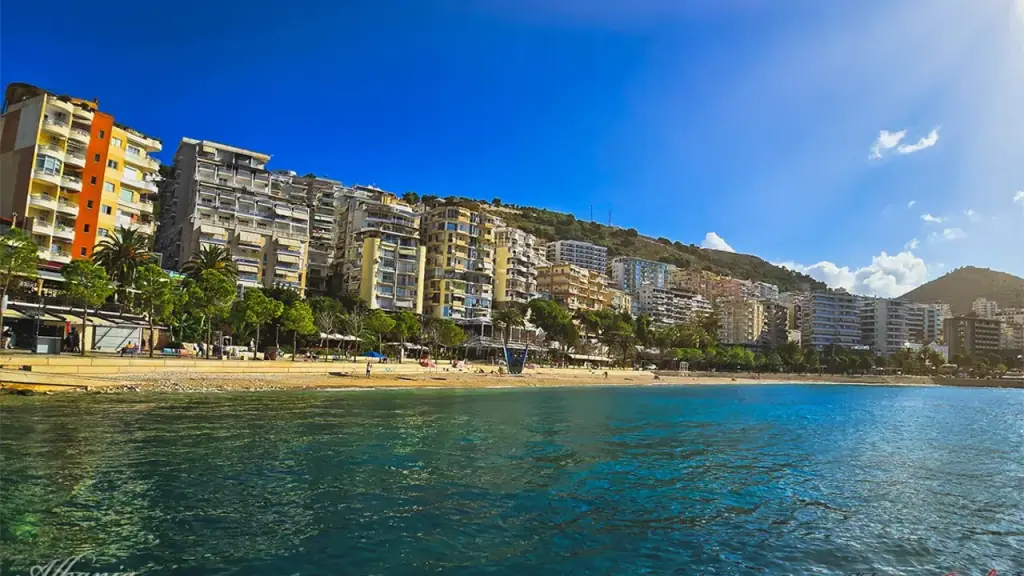
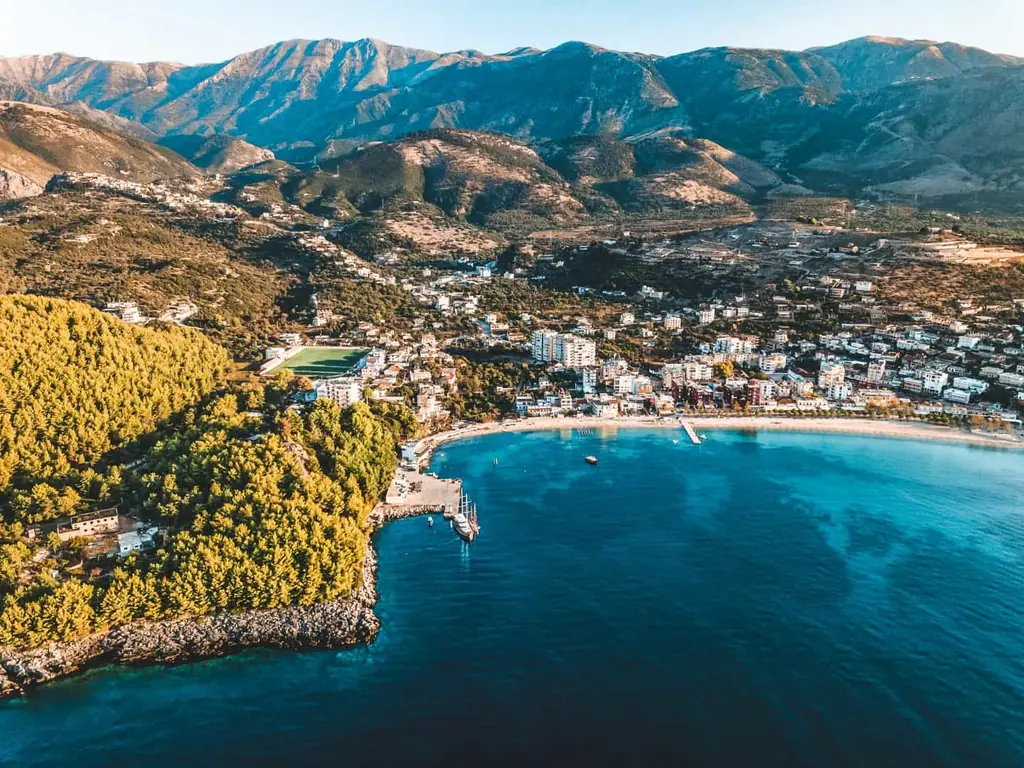
Choosing the best areas to stay in Saranda comes down to what you actually want from your trip. Saranda is built on a horseshoe-shaped bay with neighborhoods stacked up the surrounding hillside, and each pocket of the city delivers a different experience. The promenade buzzes until midnight. The hilltop is dead quiet with panoramic views. The south coastal road has resort pools but no street life. Pick wrong, and you'll spend your holiday walking uphill or paying for taxis you didn't budget for.
This guide breaks down Saranda's five main areas with honest pricing, pros, cons, and a direct recommendation for who should stay where. If you're still deciding between Saranda and other Riviera towns, read our Saranda vs Ksamil comparison first.
Compare hotels, apartments, and Vrbo rentals on the map. Powered by Stay22.
TL;DR: area comparison
| Area | Best For | Double Room (Summer) | Beach | Walkability | Nightlife |
|---|---|---|---|---|---|
| Qender (City Center) | First-timers, nightlife, solo travelers | 5,000–10,000 ALL (50–100 EUR) | 5 min walk | Excellent | Best in town |
| Kodra (Hilltop/West) | Couples. Budget travelers | 3,500–7,000 ALL (35–70 EUR) | 10–15 min walk (downhill) | Steep hills | Quiet |
| Port Area (Northwest) | Ferry travelers, short stays | 4,000–8,000 ALL (40–80 EUR) | 5–8 min walk | Good (flat) | Limited |
| Rruga Butrinti (South Coastal Road) | Luxury seekers, resort lovers | 8,000–20,000 ALL (80–200 EUR) | Private/direct access | Car needed for center | None |
| Lekursi Area (Southeast Hills) | Drivers, views, quiet retreat | 4,000–9,000 ALL (40–90 EUR) | 10–15 min drive | Car essential | None |
Qender (city center / promenade)
This is where most first-time visitors end up, and for good reason. Qender is the flat strip along Saranda's bay. The promenade, the main beach, the bus station, restaurants, bars, supermarkets, and the majority of hotels all sit within a 10-minute walk of each other.
The promenade runs roughly 1.5 km along the waterfront, lined with cafes, gelato shops, and cocktail bars. The city beach (Saranda Beach) is pebbly and unremarkable, but it's free, central, and fine for a morning swim. The ferry terminal is at the western end of the promenade, walkable from any central hotel in under 10 minutes.
Prices
A double room in Qender runs 5,000–10,000 ALL (50–100 EUR) per night in summer. Budget guesthouses and apartments start around 3,000 ALL (30 EUR) if you book early. Dinner for two at a promenade restaurant costs 3,000–5,500 ALL (30–55 EUR). A beer on draft is 300–400 ALL (3–4 EUR). Cocktails hit 600–1,000 ALL (6–10 EUR).
Who should stay here
First-time visitors to Albania who want everything on foot. Solo travelers and couples who care about nightlife. Anyone arriving by ferry from Corfu or bus from Tirana without a rental car. Saranda's bus station sits at the edge of Qender, and the ferry port is a 5-minute walk along the promenade.
Pros
- Flat terrain, no hills to climb after dinner
- Walkable to every essential service: ATMs, pharmacies, supermarkets, restaurants
- Best nightlife on the Albanian Riviera, concentrated along the promenade
- Easy access to buses headed to Ksamil, Gjirokaster, and Tirana
Cons
- Noise. Bars along the promenade don't quiet down until 1–2 AM in summer. Request a room facing away from the street.
- The city beach is mediocre, pebbly, often crowded, and not the clear water you see in Albania marketing photos
- Tourist-priced restaurants line the waterfront. Better food is one street back.
- Traffic and parking are a headache from June through August
Kodra (hilltop / western hills)
Kodra covers the hillside rising west and above the city center. The lower portion, closer to the water, has newer condo buildings, some boutique hotels, and a handful of restaurants. The upper portion is residential: low-rise apartment blocks, local grocery stores, neighborhood cafes, and families going about their day.
This is Saranda's most "local" neighborhood. You'll hear less English and more Albanian. The views improve dramatically as you climb. Many hotels and apartments up here offer balconies overlooking the entire bay and Corfu on the horizon.
Prices
Kodra is the budget pick. A double room or apartment runs 3,500–7,000 ALL (35–70 EUR) per night, sometimes less for longer stays. An apartment with a kitchen and sea-view balcony can go for 4,000–5,000 ALL (40–50 EUR), genuinely good value. Eating is cheaper too, since the restaurants up here serve locals, not tourists.
Who should stay here
Budget travelers and digital nomads who want a base with low costs and reliable wifi. Couples who prefer quiet evenings and sea views over bar-hopping. Anyone staying more than 3–4 nights who wants to feel like a temporary local rather than a tourist passing through.
Pros
- Lowest accommodation prices in Saranda proper
- Best panoramic views of the bay, especially at sunset
- Quieter, more authentic atmosphere
- Many apartments have kitchens, enabling self-catering savings
Cons
- Hills. Saranda is steep, and walking from upper Kodra to the promenade means a 10–15 minute downhill walk (pleasant) followed by a 15–20 minute uphill return (not pleasant, especially in 35-degree heat)
- Limited dining options in the upper sections
- No beach access without walking or driving down to the center
- You'll want a car or be comfortable with taxis (200–400 ALL / 2–4 EUR to the center)
Port Area (northwest waterfront)
The area around Saranda's port, northwest of the city center, is a quieter pocket that often gets overlooked. It sits on relatively flat ground along the waterfront, west of the ferry terminal, with a handful of hotels, cafes, and restaurants that cater to a mix of ferry travelers and locals.
This is not a glamorous neighborhood. It's functional, a place where fishermen mend nets in the morning and families walk along the water in the evening. Some of the oceanfront hotels here have private beach access or swimming platforms, which is a meaningful upgrade over the crowded city beach.
Prices
Expect 4,000–8,000 ALL (40–80 EUR) for a double room. Hotels with direct sea access sit at the higher end. The area has fewer restaurants than Qender, but what's here tends to be locally priced. A seafood dinner for two runs 2,500–4,500 ALL (25–45 EUR).
Who should stay here
Travelers catching an early ferry to Corfu who want to be steps from the port. Couples wanting waterfront calm without waterfront noise. Anyone who needs the transfer to Himara and wants to be close to the port for early-morning departures.
Pros
- Walking distance to the ferry terminal (under 5 minutes)
- Quieter than Qender with a more residential feel
- Flat terrain, no hills
- Some hotels offer private beach or swimming platform access
Cons
- Limited restaurant and bar selection. You'll walk into Qender for a proper night out
- Feels a bit empty after dark in shoulder season
- Not the prettiest stretch of waterfront
Rruga Butrinti (south coastal road)
The road heading south from Saranda toward Ksamil and Butrint is called Rruga Butrinti. This is where Saranda's upscale resorts live, purpose-built properties with pools, private beaches, spas, and all-inclusive vibes. Hotels like Saranda Butrinti (affiliated with Melia), Santa Quaranta Premium Resort, and Bougainville Bay Resort cluster along this strip.
The beaches here are better than Saranda's city beach. Several are semi-private, maintained by the resorts, and significantly less crowded. Mango Beach and Maestral Beach are the main public options along this road, pebbly but with cleaner water and more space than downtown.
Prices
This is Saranda's luxury corridor. A double room at a 4-star resort runs 8,000–15,000 ALL (80–150 EUR). Five-star properties like Santa Quaranta push 15,000–20,000 ALL (150–200 EUR) in peak season. Budget options don't really exist along this road.
Who should stay here
Couples on a honeymoon or anniversary trip who want pool-and-beach days without leaving the property. Families who prioritize resort amenities like kids' pools, organized activities, and buffet meals. Anyone who values a polished, all-inclusive beach holiday over exploring a town.
Pros
- Best hotel facilities in Saranda, with pools, spas, and private beaches
- Better beach quality than the city beach
- Quieter and more manicured than the city center
- Direct road access to Ksamil and Butrint National Park
Cons
- Isolated from Saranda's town life. The strip feels resort-corridor, not town. Walking to the center takes 20–40 minutes depending on how far south you are.
- You'll need a car or taxi for anything beyond your hotel: restaurants, nightlife, shopping, the bus station
- From October through May, this area is a ghost town. Most properties close for winter
- You're paying Saranda's highest prices while being furthest from what makes Saranda interesting (the promenade, the nightlife, the local atmosphere)
Lekursi Area (southeast hills)
Lekursi sits on the hills southeast of Saranda, named for the Ottoman-era Lekursi Castle that crowns the ridge. The castle, built in 1537 under Sultan Suleiman the Magnificent, is now a restaurant with the best sunset views in the region, a panorama of Saranda's bay, the Ionian Sea, and Corfu island. The area around it has scattered villas, guesthouses, and a few boutique hotels.
This is not a walkable neighborhood. Lekursi is a 10–15 minute drive from the center and connected by a steep, winding road that you won't want to climb on foot. But if you have a car and want views, quiet, and a genuine escape from the tourist strip. This is the spot.
Prices
Accommodation is varied: guesthouses and villas run 4,000–9,000 ALL (40–90 EUR) per night. The lower prices reflect the inconvenient location. You're getting space, quiet, and views in exchange for needing a car for everything.
Who should stay here
Road-trippers using Saranda as a base for exploring Butrint, Ksamil, Blue Eye Spring, and the southern coast by car. Couples seeking romance, with sunset dinners at Lekursi Castle followed by a short drive home rather than navigating the crowded center. Anyone allergic to tourist infrastructure who wants to sleep above the fray.
Pros
- Arguably the best views in Saranda, over the bay, the mountains, and Corfu
- Peaceful and quiet, even in peak season
- Close to Lekursi Castle restaurant for sunset dinners
- Easy car access to southern day trip destinations
Cons
- A car is non-negotiable. No buses, no walkable grocery stores, no nearby restaurants beyond the castle.
- Steep, narrow roads that test driving confidence
- Completely disconnected from Saranda's social scene
- Limited accommodation options, mostly villas and Airbnb-style rentals
Which area is right for you?
| If You Are... | Stay In | Why |
|---|---|---|
| First-timer without a car | Qender | Everything walkable: buses, ferry, restaurants, beach |
| Couple wanting nightlife + beach | Qender | Best bars, flat terrain, quick beach access |
| Budget traveler or digital nomad | Kodra | Cheapest rooms, local vibe, views |
| Catching an early Corfu ferry | Port Area | 5 minutes to the terminal on foot |
| Luxury resort seeker | Rruga Butrinti | Best hotel facilities, private beaches, pools |
| Family wanting resort amenities | Rruga Butrinti | Kids' pools, organized activities, calm beaches |
| Road-tripper with a rental car | Lekursi | Views, quiet, easy access south |
| Wanting authentic atmosphere | Kodra or Himara | Local feel without the tourist markup |
The Himara alternative
If you've read through these neighborhoods and feel like none is quite right. Consider basing yourself in Himara instead. Maybe the center is too noisy, the hills are too steep, the resorts are too sterile.
Himara sits 90 minutes north of Saranda on the same coastline and delivers what Saranda struggles with: 14+ beaches (versus Saranda's one mediocre city beach), excellent family-run tavernas at lower prices, a walkable town center, and an atmosphere that still feels like a real coastal town rather than a tourist machine. Hotels start at 1,100 ALL (11 EUR) for hostels and go up to 35,000 ALL (350 EUR) for luxury seafront resorts, a wider range than anything Saranda offers.
The trade-off is clear: less nightlife, no Corfu ferry, and a longer transfer from Tirana. But for families, couples, and beach-focused travelers, Himara is the stronger base on the Albanian Riviera. You can always day-trip to Saranda for the nightlife or the ferry to Corfu. For the full comparison, see our Saranda vs Ksamil vs Himara guide.
For practical details on getting between the two towns, see our Saranda to Himara transfer guide and our practical information page.
Frequently asked questions
What is the best neighborhood in Saranda for first-time visitors?
Qender, the city center along the promenade. It puts you within walking distance of the bus station, ferry terminal, restaurants, bars, and the main beach. You don't need a car, taxi, or any advance planning. Just step outside and everything is there. The only downside is noise from promenade bars in summer, so request a room on the quiet side of the building.
Is it better to stay in the center or on the outskirts of Saranda?
For stays under 3 nights, the center wins every time. You'll spend less on taxis, waste less time commuting, and experience more of what makes Saranda worth visiting. For stays of a week or more, the outskirts, particularly Kodra or Lekursi with a rental car, offer better value, more space, and a calmer pace. The Rruga Butrinti resort strip makes sense only if you want a self-contained resort holiday where the town itself is secondary.
How steep are the hills in Saranda?
Steep enough to matter. Saranda is built on a hillside, and any hotel more than one block back from the waterfront likely involves an uphill walk. Kodra, the western hilltop area, requires genuine climbing. Expect 10–15 minutes uphill from the promenade in summer heat. If mobility is a concern, stay in Qender or the Port Area, both of which sit on flat ground along the waterfront. Always check your hotel's exact location on a map before booking.
Can I get around Saranda without a car?
Yes, if you stay in Qender or the Port Area. The promenade, bus station, ferry terminal, supermarkets, and restaurants are all within walking distance. Buses run to Ksamil and other southern destinations from the bus station. Taxis within town cost 200–500 ALL (2–5 EUR). The only areas that truly require a car are Lekursi and the far end of Rruga Butrinti.
When is the best time to book accommodation in Saranda?
Book 2–3 months ahead for July and August stays, when Saranda fills up and prices peak. For June and September, arguably the best months to visit, booking 3–4 weeks ahead is usually fine, with better availability and 20–30% lower prices. Shoulder season (May and October) rarely requires advance booking at all, and many hotels drop rates by 40–60%. Avoid booking during Albanian or Kosovar public holidays in summer, when domestic tourism spikes and rooms disappear fast.