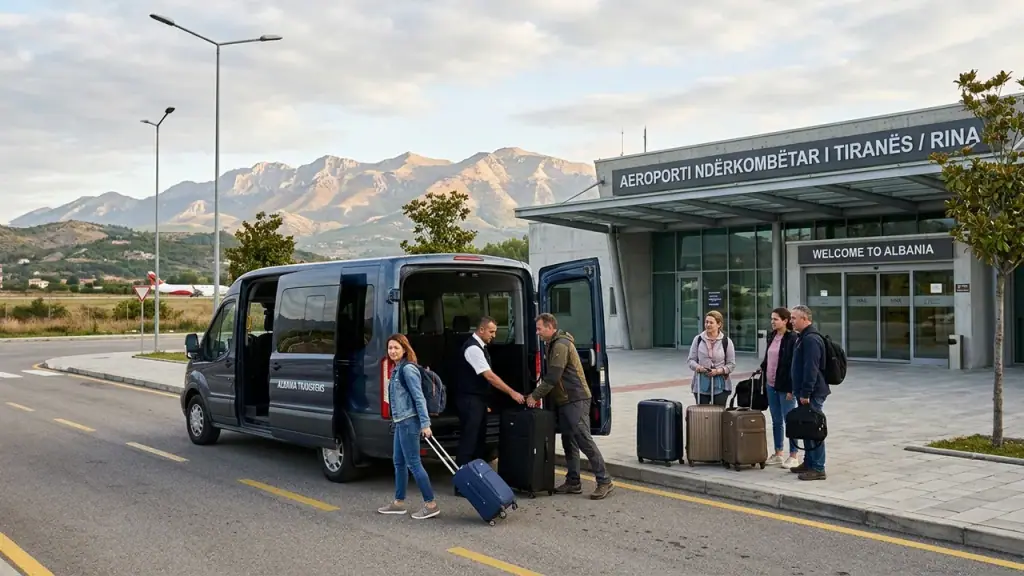
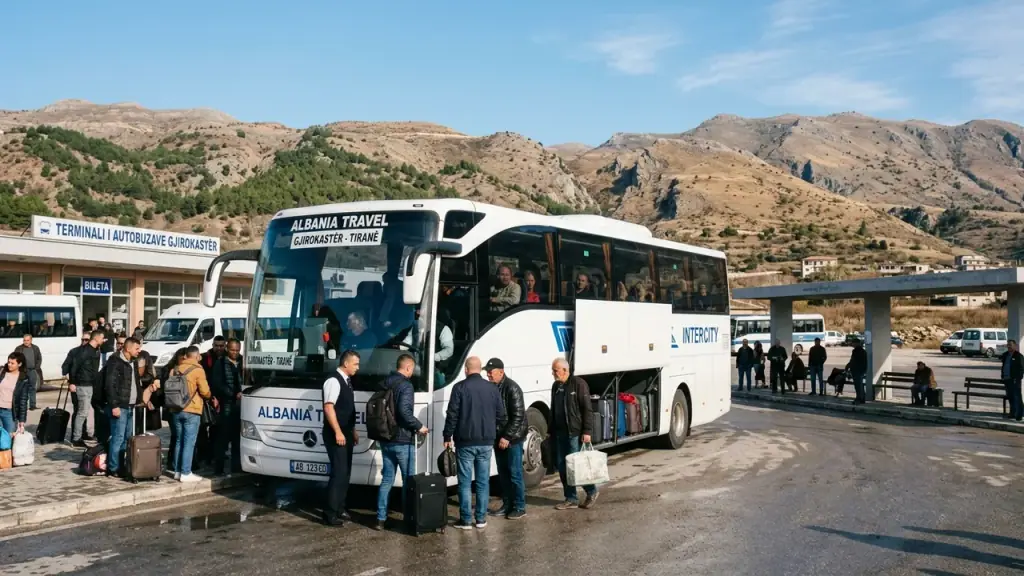
The single thing that derails the Tirana to Saranda bus has nothing to do with the timetable. It's the terminal. Buses south don't leave from anywhere near Skanderbeg Square, they go from the South & North Bus Terminal, a 25-minute ride northwest of the centre, and travellers who only find that out on the morning of travel routinely watch their bus leave without them. Get the terminal right and the rest of this route is easy and cheap. Get it wrong and you're buying a last-minute transfer. For the wider picture, compare every south Albania bus route side by side.
2026 Timetable (Tirana → Saranda)
There are around 10 daily departures, run mostly by Tisa Travel with Olgeno Travel & Tours on a couple of slots. These are the 2026 listed times, treat them as a planning reference and reconfirm the day before, because Albanian intercity schedules shift with season and demand.
| Depart Tirana | Operator | Approx. arrival Saranda | Notes |
|---|---|---|---|
| 05:30 | Tisa Travel | ~09:45 | Best for a same-day Corfu ferry |
| 07:00 | Olgeno Travel | ~13:30 | Slower run, more stops |
| 07:30 | Tisa Travel | ~11:45 | Solid morning option |
| 08:30 | Tisa Travel | ~12:45 | |
| 09:45 | Tisa Travel | ~14:00 | Fastest listed (~4h15m) |
| 10:30 | Olgeno Travel | ~17:00 | Slower run |
| 12:30 | Tisa Travel | ~16:45 | |
| 14:15 | Tisa Travel | ~18:30 | Last comfortable daytime bus |
| 16:00 | Tisa Travel | ~20:15 | Arrives after dark in winter |
| 22:00 | Tisa Travel | ~02:15 | Overnight, arrives middle of the night |
The journey is 264 km and averages about 4 hours 42 minutes, with the quickest runs near 4h15m and summer-traffic days stretching past 5 hours.
The Terminal Trap (Read This First)
The southbound buses use the South & North Albania Bus Terminal (Terminali i Autobusëve të Jugut dhe Veriut), out near the Casa Italia Mega Outlet in the Mëzez/Kamëz area, roughly 25 minutes northwest of Skanderbeg Square and not walkable from the centre.
Two ways to reach it from central Tirana:
| From city centre | Cost | Time |
|---|---|---|
| City bus, "Unaza/Institut–Kamëz" white municipal bus from near Ded Gjo Luli St; ask for "Terminali i Autobusëve të Jugut dhe Veriut" | 40 lek | ~25–35 min |
| Taxi / ride-hail (Bolt works in Tirana) | ~1,200–1,800 lek (12–15 €) | ~20 min |
Build in a margin: aim to be at the terminal 30–45 minutes early in summer. The buses fill, and a missed 09:45 means waiting until 12:30.
Fare & Payment
The standard one-way fare is about 1,500 lek (~15 €), paid in cash to the driver or the terminal kiosk. If you pre-book a seat online through Gjirafa, the all-in price is closer to 17 € with the booking fee, worth it only on peak July–August weekends when buses sell out.
- Carry lek, not euros, euro acceptance is inconsistent and the change rate is poor.
- There's no reserved seating on most runs; pre-booking holds a seat but you still board first-come for position.
- Keep small notes; drivers rarely break a 5,000-lek note cleanly.
Which Departure Should You Take?
- Onward Corfu ferry the same day? Only the 05:30 gives a safe buffer, the last summer ferry to Corfu leaves Saranda in the early evening, and you do not want to bet it on a 14:00 arrival. See the Saranda to Corfu ferry guide for sailing times.
- Just getting to the coast? The 07:30 or 09:45 land you in Saranda with the afternoon still ahead.
- Avoid the 22:00 overnight unless you have a booked bed waiting, a 02:15 arrival into a quiet Saranda is no fun with luggage.
A long bus day runs on your phone for tickets, maps and the live route, grab a Saily Albania eSIM before you fly in so you're not hunting for a SIM kiosk on arrival.
Onward From Saranda
Most people on this bus aren't stopping in Saranda, they're heading further. The handoffs:
| Onward leg | How | Plan for |
|---|---|---|
| Saranda → Ksamil | Local bus 100 lek, every 20–30 min in summer | Saranda–Ksamil bus guide |
| Saranda → Himara | Coastal bus / furgon, ~2h | Himara–Saranda transport |
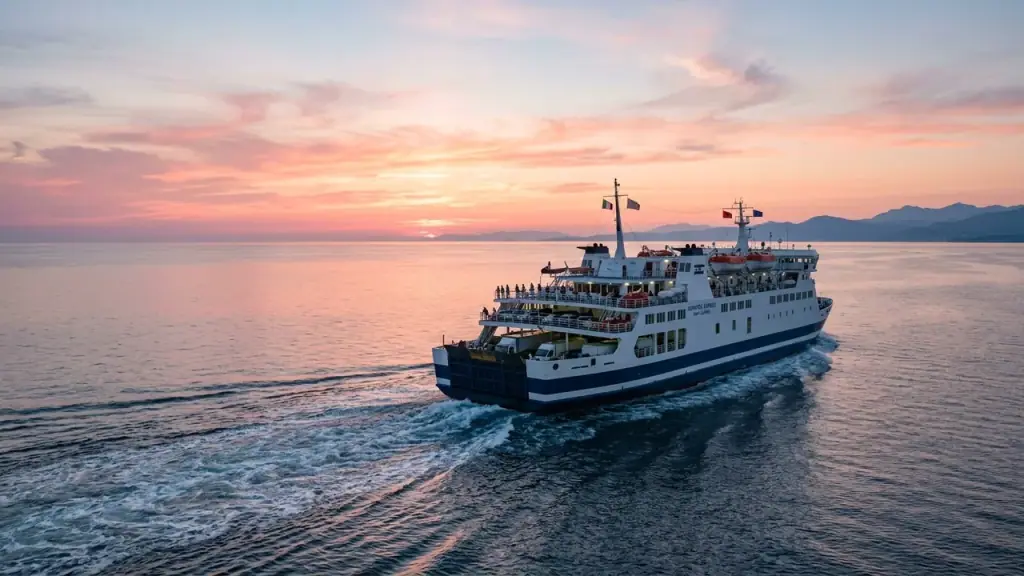
| Saranda → Corfu | Passenger ferry, 30–90 min | Corfu ferry guide |
If you're continuing straight to Ksamil, the dedicated Tirana to Ksamil bus guide covers that transfer end to end.
Arriving in Saranda for the night? Compare hotels and apartments near the promenade and port on the map below.
Once you're settled, Saranda is the launch point for Butrint, Ksamil and Blue Eye day trips if you'd rather have the logistics handled.
Bus vs Other Options
| Mode | Typical cost (1 pax) | Time | Best when |
|---|---|---|---|
| Bus | ~1,500 lek (15 €) | ~4h45m | Budget travel, flexible schedule |
| Shared transfer / minivan | ~25–35 € | ~4.5h | Door-ish pickup, less terminal hassle |
| Private transfer / taxi | ~120–180 € | ~3.5–4h | Hard deadline, group of 3–4 splitting |
| Fly Tirana → no airport | , | , | There's no airport in Saranda; nearest is Tirana |
For solo and budget travellers with any schedule slack, the bus is the obvious value play. The only times it isn't: a tight same-day Corfu ferry, or a family with heavy bags who'll happily pay to skip the terminal logistics.
Frequently Asked Questions
Where does the Tirana to Saranda bus leave from?
From the South & North Bus Terminal near the Casa Italia outlet, about 25 minutes northwest of central Tirana, not from the city centre. Reach it by the 40-lek municipal bus toward Kamëz, or a 12–15 € taxi. Arrive 30–45 minutes early in summer.
How much is the Tirana to Saranda bus?
About 1,500 lek (roughly 15 €) one way, paid in cash to the driver. Pre-booking a seat online via Gjirafa costs around 17 € including the booking fee, which is mainly worth it on busy July and August weekends when buses sell out.
How long does the bus take?
The 264 km trip averages about 4 hours 42 minutes. The fastest direct runs are near 4h15m; in peak summer traffic, allow 5 hours or more. Build a generous buffer if you have an onward ferry or transfer.
Is there a night bus from Tirana to Saranda?
Yes, a 22:00 departure arrives around 02:15. It saves a daytime travel slot, but a middle-of-the-night arrival is only sensible if you have accommodation already booked and confirmed for a late check-in.
Can I get from Tirana to Saranda without changing buses?
Yes. The listed departures are direct services, no transfer required. They make intermediate stops along the way, but you stay on the same bus from Tirana all the way to Saranda's terminal near the port.