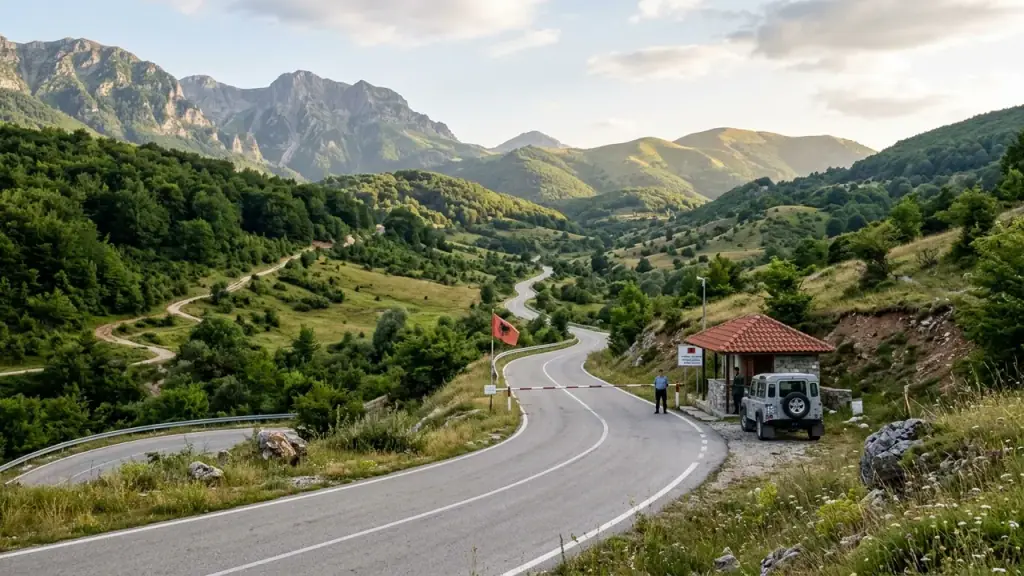
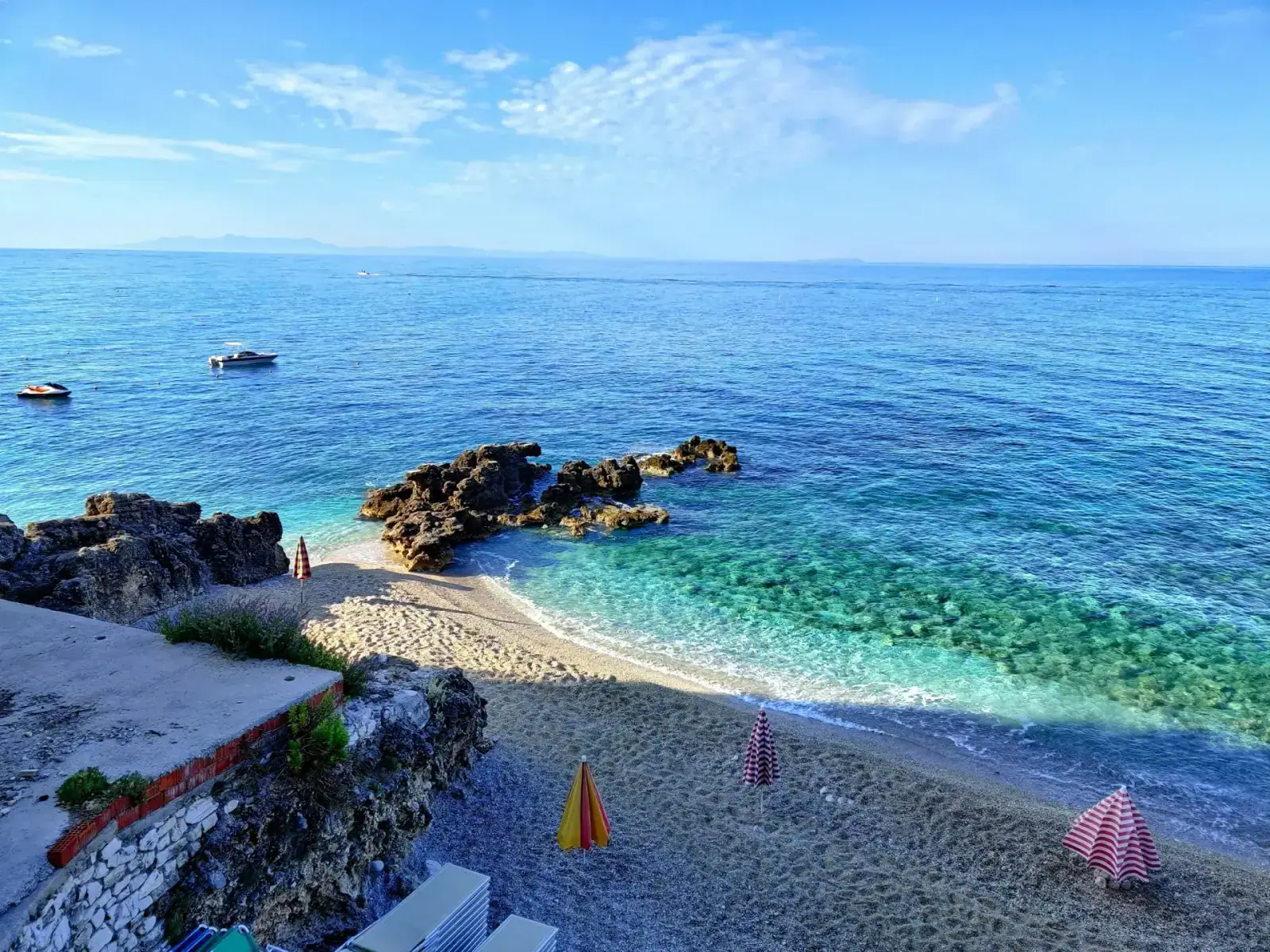
If you need a practical saranda ferry terminal guide, here is the short answer: treat the crossing as a border operation first and a short boat ride second. The sea leg between Saranda and Corfu can be quick, but passport control, queueing, and terminal timing are what decide whether your day is smooth or stressful.
This guide focuses on the operational details that actually matter on travel day: terminal entry timing, gate cutoff windows, what to carry, how to protect onward transfers, and when to use fallback options.
Compare hotels, apartments, and Vrbo rentals on the map. Powered by Stay22.
Quick summary
| Item | Practical baseline |
|---|---|
| Crossing time range | ~30 to 60 minutes depending on vessel/operator |
| Common fast-craft messaging | "30-35 minutes" on operator pages |
| Terminal gate behavior | Some operators note gate closes ~20 min pre-departure |
| Recommended arrival at terminal | Around 1 hour before scheduled departure |
| Peak summer control delay risk | Passport/customs can add ~30-60 min in Corfu direction |
Where exactly is the Saranda ferry terminal?
The main international ferry terminal is on the waterfront area near Rruga Mitat Hoxha in Saranda. You can walk from many central accommodations, but summer heat and luggage can make short taxi hops worthwhile.
| Port point | Operational value |
|---|---|
| Main passenger terminal | Ticket checks, passport control, boarding queues |
| Waterfront access area | Easy hotel access, but can be crowded in peak windows |
| Nearby taxi ranks | Useful for last-mile recovery if delays occur |
The route reality: short sea leg, long process window
The biggest traveler mistake is planning only around crossing minutes.
What operators and route pages emphasize
- Ionian Seaways promotes daily Corfu-Saranda connections and short crossing times.
- On-site guidance notes include:
- arrive at the international passenger terminal around 1 hour before departure
- terminal gate can close around 20 minutes before departure
- in peak summer, Corfu passport/customs processing may add 30-60 minutes
What this means for you
For scheduling, treat total process time like this:
| Planning layer | Time band |
|---|---|
| Arrival to completed check-in | 20-45 min |
| Passport/customs + queue variance | 15-60 min |
| Boarding and sea crossing | 30-60 min |
| Disembark + exit port | 10-30 min |
| Total terminal-to-terminal process | ~1h 15m to ~3h 15m |
That range is the reason tight same-day chains often fail.
Ticketing strategy: book early or buy near departure?
Book early if:
- You travel July-August.
- You have same-day onward commitments.
- You need a specific departure window.
Flexible purchase can work if:
- You are in shoulder season.
- You have no strict hard deadline.
- You can tolerate route/time flexibility.
Foot passenger vs vehicle planning
| Traveler type | Core advice |
|---|---|
| Foot passenger | Arrive early. Keep passport and ticket immediately accessible |
| Car traveler | Confirm vehicle boarding requirements and lane timing with operator |
| Family with children | Prioritize early arrival and clear waiting strategy |
| First-time border crosser | Use wider time buffers than you think you need |
Some sailings accept vehicles, but conditions vary by operator and date. Never assume every departure offers vehicle capacity.
Check-in and document workflow
Minimum document pack
- Passport (valid and easily accessible)
- Ticket/booking confirmation
- Any required visa or residence documentation for your nationality/profile
- Backup digital copies stored offline
Practical queue order
- Terminal entry and initial check.
- Ticket/booking verification.
- Passport control and customs process.
- Boarding gate and vessel boarding.
Keep documents in a single pouch to avoid delay at each control handoff.
Timing rules that save trips
Use these three rules:
- T-60 rule: be at terminal around 60 minutes before departure.
- T-20 rule: treat 20 minutes pre-departure as a hard gate-risk threshold.
- +60 summer rule: in peak season, add up to 60 extra minutes for border-control friction.
Same-day connection risk matrix
| Next commitment after ferry | Risk if buffer is small | Recommended buffer |
|---|---|---|
| Hotel check-in only | Medium | 60-90 min |
| Intercity bus | High | 90-120 min |
| Flight or airport transfer | Very high | 180+ min |
| Tour/activity with strict start | High | 120+ min |
If your next leg is non-refundable, buy more time, not more optimism.
Saranda port arrival and last-mile transfer
When arriving into Saranda from Corfu direction, you still need an arrival plan.
| Last-mile mode | Typical fit |
|---|---|
| Walk | Light luggage + nearby hotel |
| Taxi | Heat, family luggage, or steep accommodation access |
| Pre-arranged hotel pickup | Best for late arrivals or first-time visitors |
Last-mile checklist
- Save accommodation pin in maps.
- Share ETA range with host/hotel.
- Keep some lek cash for short transfer options.
Corfu direction: why delays feel bigger
Operator guidance highlights a recurring issue in summer: passport/customs throughput in Corfu can add 30-60 minutes. The crossing itself may still be short, but port processing can dominate the total journey.
For planning, separate:
- boat time
- border time
- onward transfer time
Most missed-connection stories come from collapsing these into one single optimistic number.
Seasonal reality
| Season | What improves | What worsens |
|---|---|---|
| May-June | Usually manageable demand | Still variable border time |
| July-August | Many departures | Queues, processing delays, terminal crowding |
| September-October | Better comfort than peak | Some schedule adjustments |
| Winter period | Lower crowd pressure | Fewer sailings and narrower windows |
Cost planner (ALL + EUR)
| Cost line | Typical range |
|---|---|
| Ferry ticket (foot passenger, broad planning band) | 1,500 to 5,000 ALL (15EUR to 50EUR) |
| Terminal snacks/water | 200 to 800 ALL (2EUR to 8EUR) |
| Short taxi last-mile | 500 to 2,000 ALL (5EUR to 20EUR) |
| Delay contingency reserve | 1,000 to 3,000 ALL (10EUR to 30EUR) |
Total day budget varies strongly with season and urgency. Keep a contingency reserve to avoid bad last-minute decisions.
Common failures and fixes
| Failure | Why it happens | Fix |
|---|---|---|
| Missed gate | Arriving too close to departure | Respect T-60 and T-20 rules |
| Missed onward bus/transfer | Border queues longer than expected | Add larger post-arrival buffer |
| Document scramble | Ticket and passport in different bags | One document pouch, always ready |
| Cost blowout | No contingency planning | Predefine cash reserve and fallback hierarchy |
Fallback decision tree
If timing degrades, make one of these pre-decided moves:
- Delay next leg and protect the border process.
- Upgrade to faster last-mile option after landing.
- Drop optional activities and preserve core commitments.
The key is to decide early. Late decisions are usually expensive decisions.
Family and luggage planning at the terminal
If you are moving with children, strollers, or multiple bags, terminal friction can be the real bottleneck.
| Pressure point | Why it matters | Practical fix |
|---|---|---|
| Heat exposure during waits | Energy drops before boarding | Bring water and sun protection |
| Multi-bag document access | Slows checks and queue flow | Keep passports/tickets in one pouch |
| Children during queue swings | Hard to manage long standing periods | Arrive earlier and choose calmer windows |
Family boarding posture
- Arrive earlier than your minimum comfort threshold.
- Keep one adult focused only on documents.
- Keep one adult focused only on luggage/children.
- Avoid complex same-day onward commitments after crossing.
Port-to-hotel and port-to-bus transfer windows
Many travelers underestimate the post-port leg. Even after disembarking, you still need to complete your day.
| Destination type | Recommended post-port buffer |
|---|---|
| Nearby Saranda hotel | 30-45 min |
| Saranda bus connection | 60-90 min |
| Himara transfer after arrival | 90-120 min |
| Airport-direction same day chain | 180+ min |
If you are arriving into Saranda and heading directly north/south. Keep your next booking flexible whenever possible.
Peak-day contingency budget
| Contingency use case | Suggested reserve |
|---|---|
| Extra local transfer | 500-2,000 ALL (5EUR-20EUR) |
| Missed timed booking recovery | 1,500-5,000 ALL (15EUR-50EUR) |
| Food/water during long waits | 300-1,000 ALL (3EUR-10EUR) |
A small contingency fund prevents poor forced choices when delays compress your options.
Passport-control micro-checklist
Border steps are simple when you run them in sequence and keep your documents ready.
- Passport open to identity page before you enter the check desk line.
- Ticket or booking confirmation already loaded on your phone, plus offline copy.
- Keep your document pouch out of deep luggage compartments.
- After each control point, re-pack immediately in the same order.
| Micro-failure | Typical cost | Prevention |
|---|---|---|
| Searching for passport in queue | 5-15 min and stress | Keep docs in one dedicated pouch |
| Phone battery drop at ticket scan | Boarding risk | Carry power bank and screenshot proof |
| Splitting documents across travelers | Repeated delays | Assign one document manager per group |
This looks basic, but on high-volume days these details are often the difference between smooth boarding and last-minute panic.
One additional practical rule: if your queue position is already close to cutoff time and you still have unresolved document or baggage issues, immediately ask terminal staff for the fastest correction path rather than self-solving in place. That escalation step often saves missed departures during peak-season pressure windows.
Frequently asked questions
How early should I arrive at Saranda ferry terminal?
A practical default is around 1 hour before departure, especially in peak season. Some operators also state gate closure around 20 minutes before departure, so last-minute arrivals are high-risk.
How long is the Saranda-Corfu ferry crossing?
Sea time is often marketed around 30-35 minutes on fast services, but total terminal-to-terminal journey time is much longer once check-in, passport control, and boarding are included.
Can passport control delay my ferry day?
Yes. Operator guidance explicitly notes that in summer, Corfu passport/customs processing can add around 30-60 minutes. Build that into your itinerary if you have same-day onward plans.
Can I take a car on this route?
Some departures and operators allow vehicle transport, but not all sailings are equivalent. Always verify vehicle eligibility, boarding timing, and documentation directly for your selected departure.
Is Saranda port walkable from town hotels?
Often yes, especially for central stays. But with heat, children, or heavy bags, a short taxi transfer can be the better operational choice and may protect your timing window.
Sources
- Ionian Seaways official site and booking/boarding guidance:
https://www.ionianseaways.com/ - Finikas terms page and operator context:
https://finikas-lines.com/terms-and-condition/ - Direct Ferries route/port information (aggregator cross-check):
https://www.directferries.com/saranda_corfu_ferry.htm - Albania entry requirements context (documents and border readiness):
https://www.gov.uk/foreign-travel-advice/albania/entry-requirements
Fact-check notes
- Verified: Ionian Seaways published terminal guidance (arrival timing, gate closure warning, and peak passport-control delay note).
- Verified: Daily route operation framing from operator pages.
- Range-verified: Crossing and total process durations expressed as broad bands due operator/vessel/date variability.
- Inference: Buffer and fallback strategy derived from border-processing variability and terminal process flow.