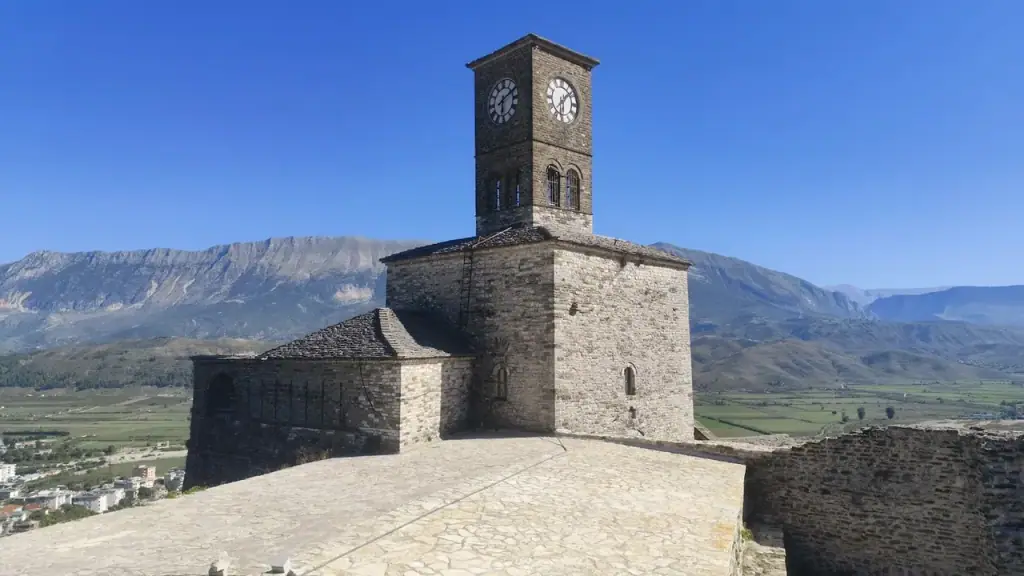
Gjirokastër is the counterweight to a coastal trip: a UNESCO-listed Ottoman town built entirely from grey stone, stacked up a hillside beneath a castle, in a landscape of bare mountains that looks nothing like the Ionian. It is the single best inland day from Saranda, and the road there also passes the Blue Eye, which makes the two an obvious pair.
The short version: roughly 2 hours, about 400-500 lek, with around three buses a day in high season. Here is the detail, including the part where you decide whether to come back or stay.
Quick facts
| Detail | Info |
|---|---|
| Distance | ~120 km by road |
| Journey time | ~1h45 – 2h |
| Fare | |
| Frequency | ~3 daily in high season (Jun–Aug) |
| Off-season | Fewer; confirm locally |
| Payment | Cash to the driver |
| Saranda departure | Saranda bus station, near the port |
| Blue Eye | On or near the route; some services stop |
Reported departure times from the Gjirokastër end have included 08:00, 09:00, 11:30, 13:00 and 17:00 in high season. Albanian intercity timetables are not published centrally and shift with the season, so treat all of this as the shape of the service and confirm at Saranda bus station the day before you travel.
Where it leaves from
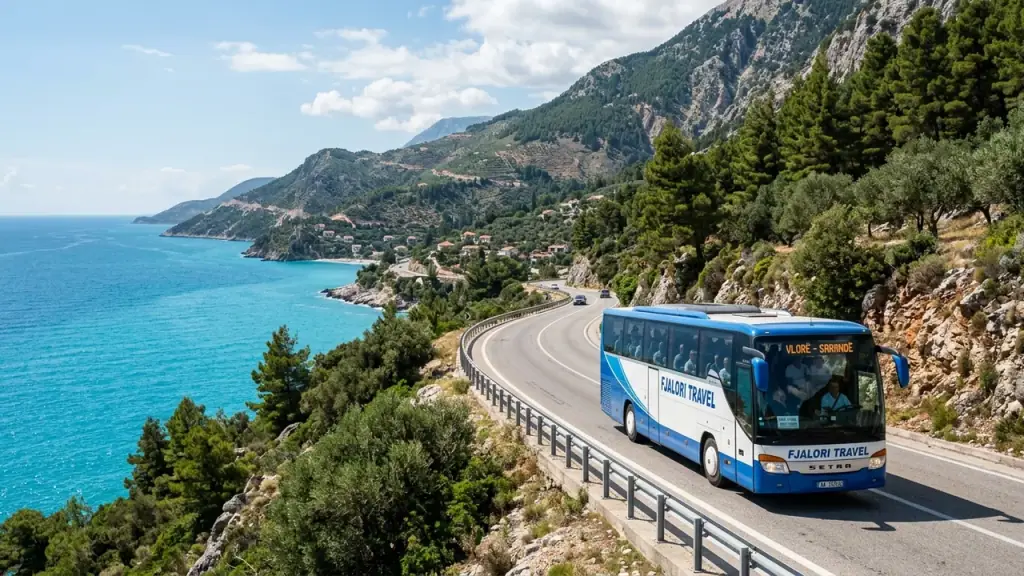
Buses depart from the Saranda bus station near the port on Rruga Mitat Hoxha. The same area that serves Ksamil, Butrint, Himara and the long-distance routes to Tirana and Berat.
There is no ticket office. Find the bus with Gjirokastër on the windscreen and pay the driver in cash. Seats are not reserved, so on a route with three daily departures, arrive early.
The Blue Eye en route
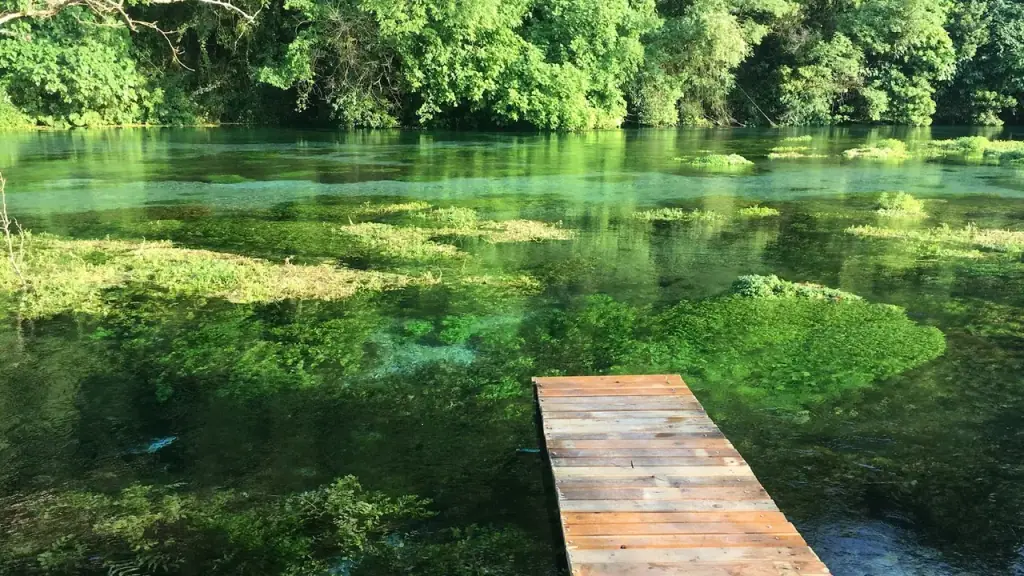
The road inland from Saranda passes the turnoff for the Blue Eye (Syri i Kaltër), and some services stop there. This is the single most efficient way to see both: spring in the morning, stone city for the afternoon.
Two practical warnings. First, not every service stops, ask the driver before boarding, not after. Second, the spring sits a walk inland from the main road, so a bus stop at the turnoff is not a stop at the spring, and getting back out to flag a continuing service on a three-a-day route needs planning.
If seeing both matters and you are not staying over in Gjirokastër, a taxi or hire car for the day is genuinely the better tool. Our Saranda to Blue Eye guide works through the options; entry to the spring is 50 lek and the water holds 10°C year-round.
Day trip or overnight?
As a day trip it works, but it is a full day. Two hours each way plus a meaningful amount of walking on steep stone streets means leaving on an early bus and being back for a late dinner. If you take a mid-morning departure you will get perhaps three hours in the town, which is enough for the castle and a walk through the bazaar and not much else.
As an overnight it is considerably better, and it is what we would suggest if the itinerary allows. Gjirokastër's Ottoman houses are the point, several of them are guesthouses, and the town at night, largely emptied of day-trippers, is the version worth seeing. It also positions you for continuing north to Berat or Tirana without backtracking to the coast.
As a stop on a longer route it is the most efficient of all. Saranda → Blue Eye → Gjirokastër → Berat or Tirana turns a day trip into progress. See the south Albania itinerary.
What the journey is like
The road climbs inland from the coast into the Drino valley, and the landscape changes completely: the Ionian's green slopes give way to dry, bare mountains and a wide river plain. It is a genuinely scenic two hours and worth staying awake for, particularly the descent into the Drino valley with Gjirokastër visible on the hillside ahead.
Roads on this route are reasonable by Albanian standards. Add time in July and August, when the coastal end of the journey carries heavy tourist traffic. Our road conditions guide covers the wider picture.
Driving it
Around 1h30-2h by car depending on traffic and stops. Driving is the best option if you want the Blue Eye properly, want to arrive in Gjirokastër early enough to beat the coach groups, or are continuing north afterwards.
A warning specific to Gjirokastër: the old town is steep, cobbled and narrow, and driving into it is unpleasant in a way that is hard to appreciate until you are reversing down a stone lane. Park where you first can and walk up. See driving rules and car rental insurance.
What to do when you get there
Gjirokastër is compact and the highlights are close together:
- The castle, huge, ruinous, dominating the town, with a weapons collection, views over the Drino valley and a US Air Force jet parked in it, which is a story in itself.
- The Ottoman houses, Skenduli House and Zekate House are the two usually open to visitors, and they explain the whole architectural type better than any museum caption.
- The old bazaar, steep, stone-paved, touristed but genuinely handsome.
- Ismail Kadare's house and the Ethnographic Museum on the site of Enver Hoxha's birthplace.
In midsummer the stone streets are punishing at midday. The castle and the house museums are the right thing to do between roughly 12:00 and 15:00. Tours are on GetYourGuide's Gjirokastër page.
Our Gjirokastër day trip guide covers the town in more detail, written from the Himara end but the same once you arrive.
Getting back
With around three departures a day in high season, the return is the part to plan. Confirm the last bus back to Saranda with the driver on the way out, and treat online timetables, including this page, as approximate.
If you miss it, Gjirokastër has plenty of accommodation and it is a far better place to be stuck than most. A taxi back to the coast is possible but expensive over 120 km.
Where to stay
Compare Ottoman guesthouses and hotels in Gjirokastër. Powered by Stay22.
Staying in one of the restored Ottoman houses in the old town is the reason to overnight here rather than day-tripping. If you are basing on the coast instead, best areas to stay in Saranda covers that end.
FAQ
How do you get from Saranda to Gjirokastër?
By intercity bus from Saranda bus station near the port, taking about 1h45-2h for the 120 km, with roughly three departures a day in high season. Fares are around 400-500 lek, cash to the driver. Driving takes 1h30-2h.
How much is the bus from Saranda to Gjirokastër?
Around 400-500 lek, roughly €4-5 one way. There is no ticket office, pay the driver in cash. Confirm current fares and times at the bus station, as Albanian intercity services are not centrally published and change seasonally.
Does the Saranda to Gjirokastër bus stop at the Blue Eye?
Some services do, but not all, ask the driver before boarding. The spring also sits a walk inland from the main road, and with only about three buses a day, getting back out to flag a continuing service takes planning. A taxi or hire car is easier if you want both in one day.
Can you visit Gjirokastër as a day trip from Saranda?
Yes, but it is a full day: two hours each way plus steep walking. Take the earliest departure to get a useful amount of time there. An overnight is meaningfully better, since the town after the day-trippers leave is the version worth seeing.
How long do you need in Gjirokastër?
Half a day covers the castle and a walk through the bazaar. A full day lets you add the Ottoman house museums, Skenduli and Zekate, which are what make the town distinctive. Staying the night lets you see the old town without day-trip crowds.
The bottom line
Saranda to Gjirokastër is two hours and about 400-500 lek, on a service that runs roughly three times a day in summer, so the return timing is the thing to nail down before you leave. Pair it with the Blue Eye on the way, and if your itinerary has any give in it, stay the night in a stone house rather than racing the last bus back to the coast.