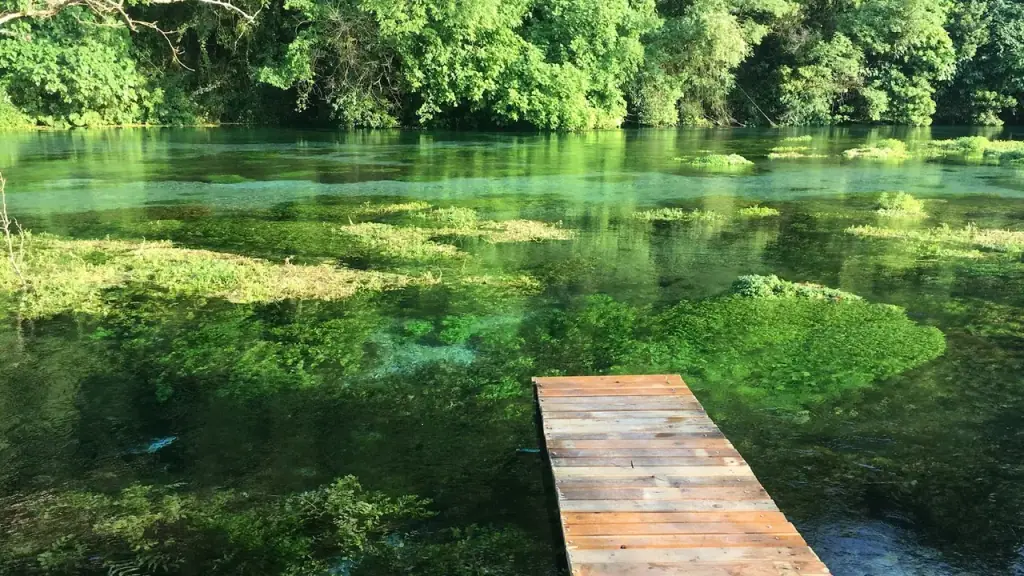
The Blue Eye, Syri i Kaltër, is a karst spring inland from Saranda where water forces up through a limestone shaft that has never been fully measured. Over 50 metres down and still going. The colour is why people come: a dark blue pupil ringed by a vivid turquoise iris, which is exactly what the name describes.
Entry costs 50 lek. The water sits at 10°C year-round, which in an Albanian August is either the best thing that happens to you all week or a genuine shock. Getting there from Saranda is the only slightly awkward part, and this is how it works.
Quick facts
| Detail | Info |
|---|---|
| Distance from Saranda | ~25 km inland |
| Driving time | 35-45 minutes |
| Entry fee | 50 ALL (~€0.50) |
| Water temperature | 10°C, year-round |
| Depth | Over 50 m, never fully measured |
| Time needed at the site | 30-40 minutes |
| Best transport | Car, taxi or tour; bus is possible but awkward |
The important expectation to set: this is a short visit. The spring is striking and it is not large. Thirty to forty minutes covers it comfortably, which is why almost nobody makes it a day of its own.
The honest transport summary
The Blue Eye is the one trip from Saranda where public transport is genuinely inconvenient, and it is worth being straight about why.
The spring sits off the main Saranda–Gjirokastër road, not on it. Buses running that route can drop you at the turnoff, but the spring itself is a walk inland from where the bus stops, and then you have to get back out to the road and flag down something going the right way, on a route with a handful of daily services.
In high season (June, July, August), roughly three buses a day run between Saranda and Gjirokastër, some of them via the Blue Eye area. From the Gjirokastër end, departures have been reported around 08:00, 09:00, 11:30, 13:00 and 17:00, with fares in the region of 400-500 lek for the full Gjirokastër–Saranda run. Albanian intercity timetables shift seasonally and are not published centrally, so confirm at Saranda's bus station the day before rather than trusting any figure online, this one included.
The four ways to do it
1. Organised tour, the easiest. Almost every operator in Saranda bundles the Blue Eye with Gjirokastër, and that pairing makes sense: the spring is a short stop, Gjirokastër is a proper half-day, and they lie along the same inland road. You lose the ability to linger and you arrive in the busy middle of the day, but you solve the entire logistics problem. Options are on GetYourGuide's Blue Eye page.
2. Taxi, the flexible one. A round trip from Saranda with waiting time, agreed as a fixed price before you set off. Sensible for three or four people splitting it, and the only option that lets you arrive early or late enough to see the spring without a crowd. Negotiate the wait explicitly, "wait for us" and "come back later" are different prices.
3. Hire car. The best if you're already driving. The spring has a car park, the road is fine, and having a car means you can combine it with Gjirokastër, stop where you like, and go at 09:00 when it is quiet. See car rental insurance and driving rules before booking.
4. Bus, cheapest, most awkward. Take a Gjirokastër-bound service, ask the driver to stop for the Blue Eye, walk in, and then get back to the road for a return service. Doable, and genuinely fiddly with limited daily departures. Only worth it if you are travelling on a tight budget or continuing to Gjirokastër anyway rather than returning to Saranda.
The combination that actually works
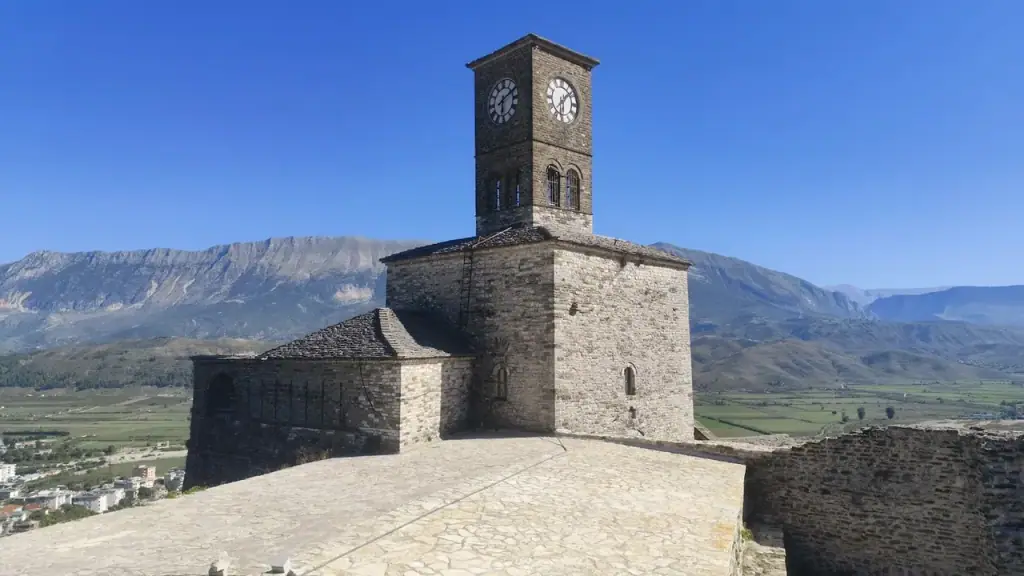
Blue Eye plus Gjirokastër, one day. This is the standard for a reason. The spring is 30-40 minutes; Gjirokastër is a UNESCO stone city that deserves several hours; they are on the same road. Doing them separately wastes a day.
If you are heading onward rather than returning, this works even better: Saranda → Blue Eye → Gjirokastër → onward north, without backtracking. See Saranda to Gjirokastër transport and the south Albania itinerary.
Coming from Ksamil adds roughly 20 minutes each way, see day trips from Ksamil.
At the spring
A short walk from the car park through trees brings you to the pool. There is a viewing platform over the spring itself, and a boardwalk around the water. In summer there is usually a café.
On swimming: it is officially discouraged and unofficially common. The water is 10°C, which is genuinely cold enough to take your breath, people who jump in expecting Ionian temperatures regret the first ten seconds. The current at the spring mouth is strong. Use your judgement, and don't let children in unsupervised.
On timing: the site gets busiest in the middle of the day when the tour buses arrive, and the car park in August is a well-documented misery. Early morning or late afternoon is calmer, which is another argument for a taxi or your own car over a tour.
On expectations: photographs of the Blue Eye are usually taken from directly above in perfect light. In flat light or after rain, the colour is less spectacular. It is still worth 50 lek and forty minutes; just don't build a day around one photograph.
Is it worth it?
Yes, with a caveat. As a combined trip with Gjirokastër, or as a stop on the way north, it is an easy yes. A genuinely unusual natural feature for almost no money.
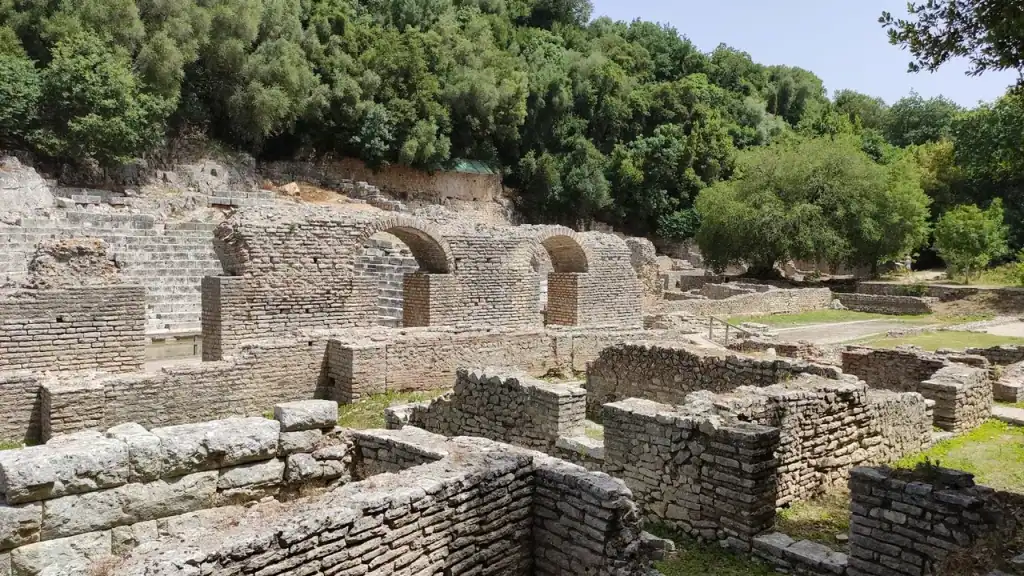
As a dedicated round trip from Saranda involving a taxi and half a day, it is a thinner proposition, and honest guides should say so. If your time in Saranda is short, Butrint and a boat day to the southern coves both give you more for the same investment. The full comparison is in day trips from Saranda.
Where to stay
Compare stays in Saranda. Powered by Stay22.
If you are combining the Blue Eye with Gjirokastër and continuing north, staying a night in Gjirokastër rather than returning to Saranda saves several hours of backtracking, see best areas to stay in Saranda for the coastal end.
FAQ
How do you get from Saranda to the Blue Eye?
By car, taxi or organised tour in 35-45 minutes over roughly 25 km. Public buses on the Saranda–Gjirokastër route can drop you near the turnoff, but the spring is a walk inland from the road and return services are limited, so most visitors drive or take a tour.
How much does the Blue Eye cost to visit?
Entry is 50 lek, around €0.50. The cost of the trip is transport rather than admission. A taxi round trip with waiting time, or a tour that usually bundles the spring with Gjirokastër.
Can you swim in the Blue Eye?
Swimming is officially discouraged and unofficially common. The water holds 10°C year-round and the current at the spring mouth is strong, so it is genuinely cold and not a casual dip. Judge it for yourself and don't let children swim unsupervised.
Can you visit the Blue Eye by bus from Saranda?
It's possible but awkward. Gjirokastër-bound buses, around three a day in high season, can drop you near the turnoff, and you walk in from there, then flag a return service on a limited timetable. Confirm times at Saranda bus station the day before, as schedules shift seasonally.
Is the Blue Eye worth visiting from Saranda?
Combined with Gjirokastër on the same inland road, yes. It's an unusual sight for almost no money. As a dedicated half-day round trip by taxi it's a thinner proposition, and Butrint or a boat trip to the southern coves give more back for the same time.
The bottom line
The Blue Eye is 50 lek, forty minutes and genuinely strange, well worth seeing, but not worth building a day around on its own. Pair it with Gjirokastër, go by taxi or car so you can arrive outside the tour-bus window, and treat the 10°C water with more respect than the photographs suggest.