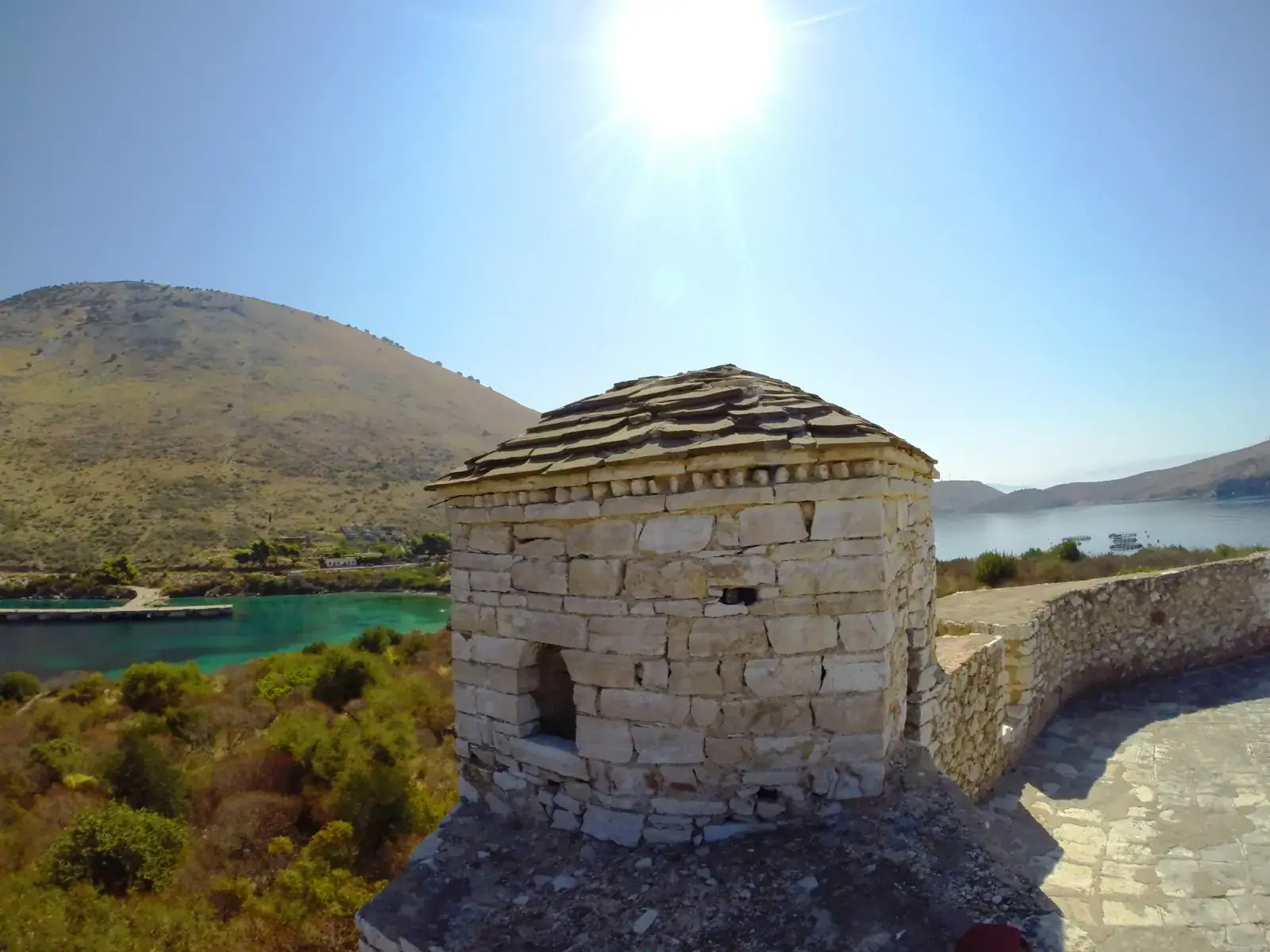
Porto Palermo Castle
~10 km south on SH8 (14–20 min drive)
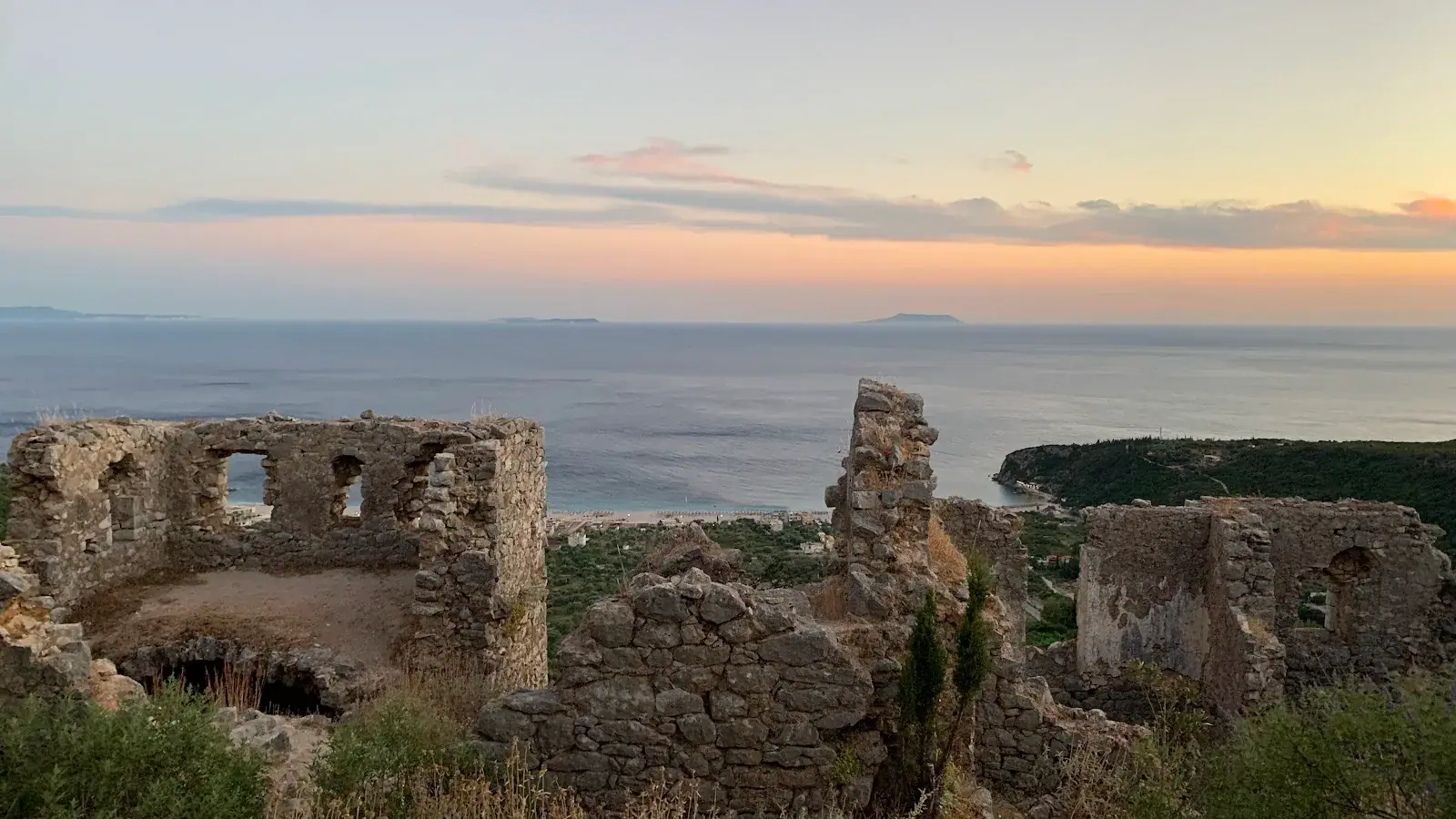
Barbaka hill, above central Himara
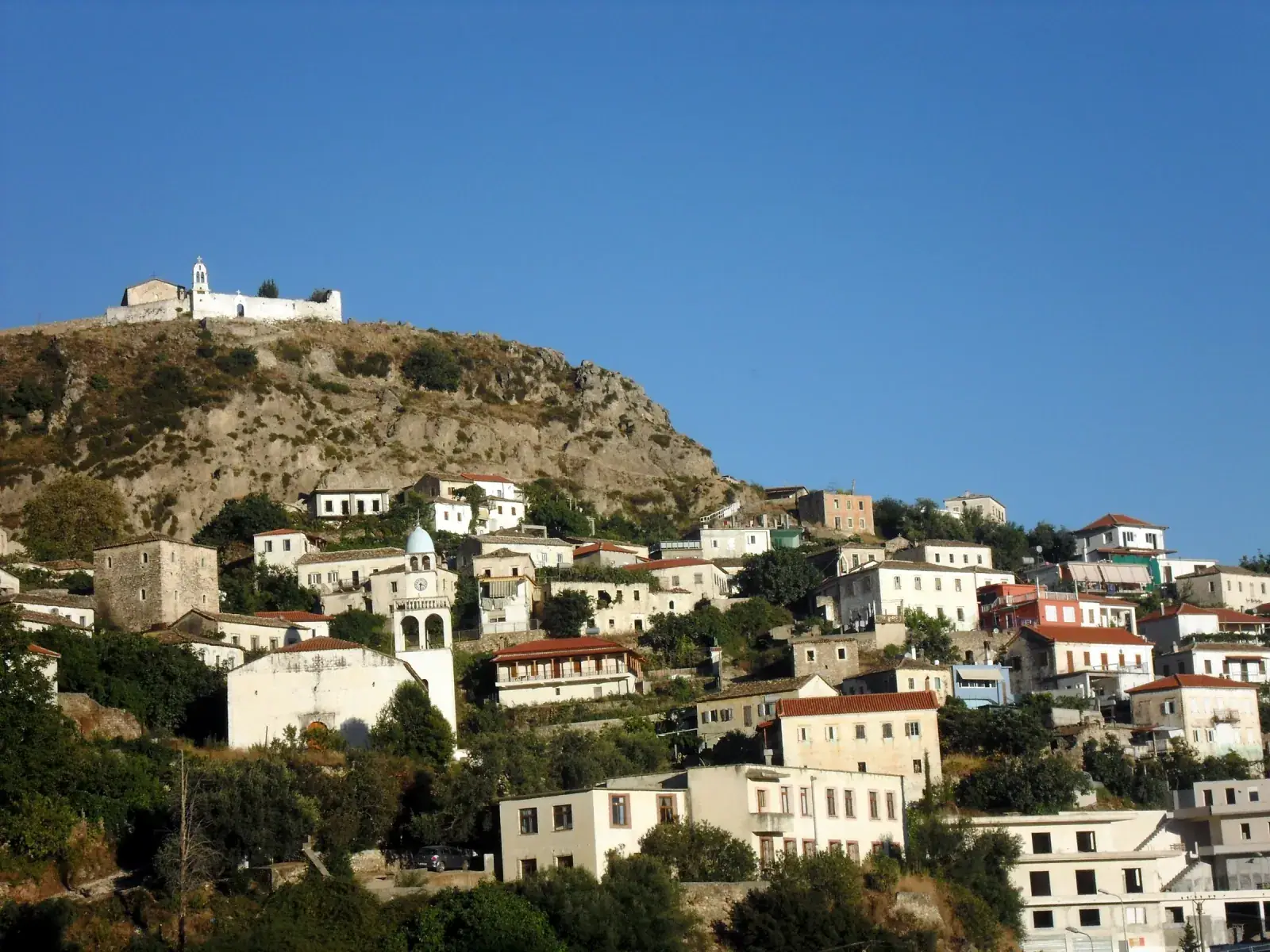
Himara Castle sits on Barbaka hill above the modern town. Fortifications here date to the 5th century BC and have been continuously inhabited since. That makes the old town, locally called Kastro, one of the few castle villages on the Albanian Riviera still lived in. Stone houses stand on the hillside between Byzantine church ruins and faded frescoes, and on a clear day you can see across the Ionian Sea to Corfu.
The earliest walls are Chaonian, built in the 5th century BC by the Greek tribe that controlled this coast. The site was fortified again under the Byzantines, who built the churches whose ruins you can still walk through. Ottoman rule never fully integrated Kastro. The Himariot population kept de facto autonomy for centuries, paying lip service to Istanbul while practising Orthodox Christianity. The old town was still home to hundreds of families in the early 20th century before depopulating during the communist era. A handful of homes are now occupied year-round, with several restored as guesthouses.
Three Byzantine churches with partial fresco remains; the main entrance arch and surviving curtain walls; the panoramic terrace where Cafe Butterfly serves coffee with the best view in Himara; the path down to Livadhi Beach visible directly below; on clear mornings, Corfu on the western horizon roughly 70 km out.
Walk uphill from the Himara promenade, 15–20 minutes on a narrow paved road. By car or scooter you can drive most of the way; park at the designated lot near the entrance (free, limited to a handful of spaces) and walk the last stretch. The road is narrow and winding but manageable. You cannot drive into the old town itself.
Early morning (before 10 AM) for cool temperatures and best visibility toward Corfu, or late afternoon (5–7 PM) for golden light and to time the visit with sunset and a drink at Cafe Butterfly.
History, practical tips, and route notes in long form. The article that goes deeper than this page.
The natural other half of the day. Sand and sea after stone and history.
Walk uphill from the Himara promenade. It takes 15–20 minutes on a paved road. By car or scooter you can drive most of the way and park at a small free lot near the entrance, then walk the last stretch. You cannot drive into the old town itself.
The old town is free to wander. Some operators may collect a small token fee at the gate in peak season, so check on arrival. The Byzantine church ruins and the terrace viewpoint are all accessible at no cost.
Early morning (before 10 AM) for cool temperatures and the best chance of seeing Corfu across the water. Late afternoon (5–7 PM) is the second-best window, with golden light on the stone and sunset from the terrace at Cafe Butterfly.
1–2 hours is enough to walk the main paths, visit the church ruins, take in the panoramic views, and have a drink at Cafe Butterfly. Combine with Livadhi Beach (10 minutes away by car) for a half-day castle-and-beach itinerary.
Yes, on clear days. Corfu sits roughly 70 km to the west on the horizon. Mornings before the afternoon haze builds tend to offer the best visibility. The Greek island is most visible from the terrace at the top of the old town.
Compare live hotel, apartment, and guesthouse prices near Himara Castle & Old Town on the map. Filter by your dates and budget.
Something missing or incorrect? Email us at info@himara.net