Himara Castle & Old Town
In town, 15–20 min walk uphill from the promenade
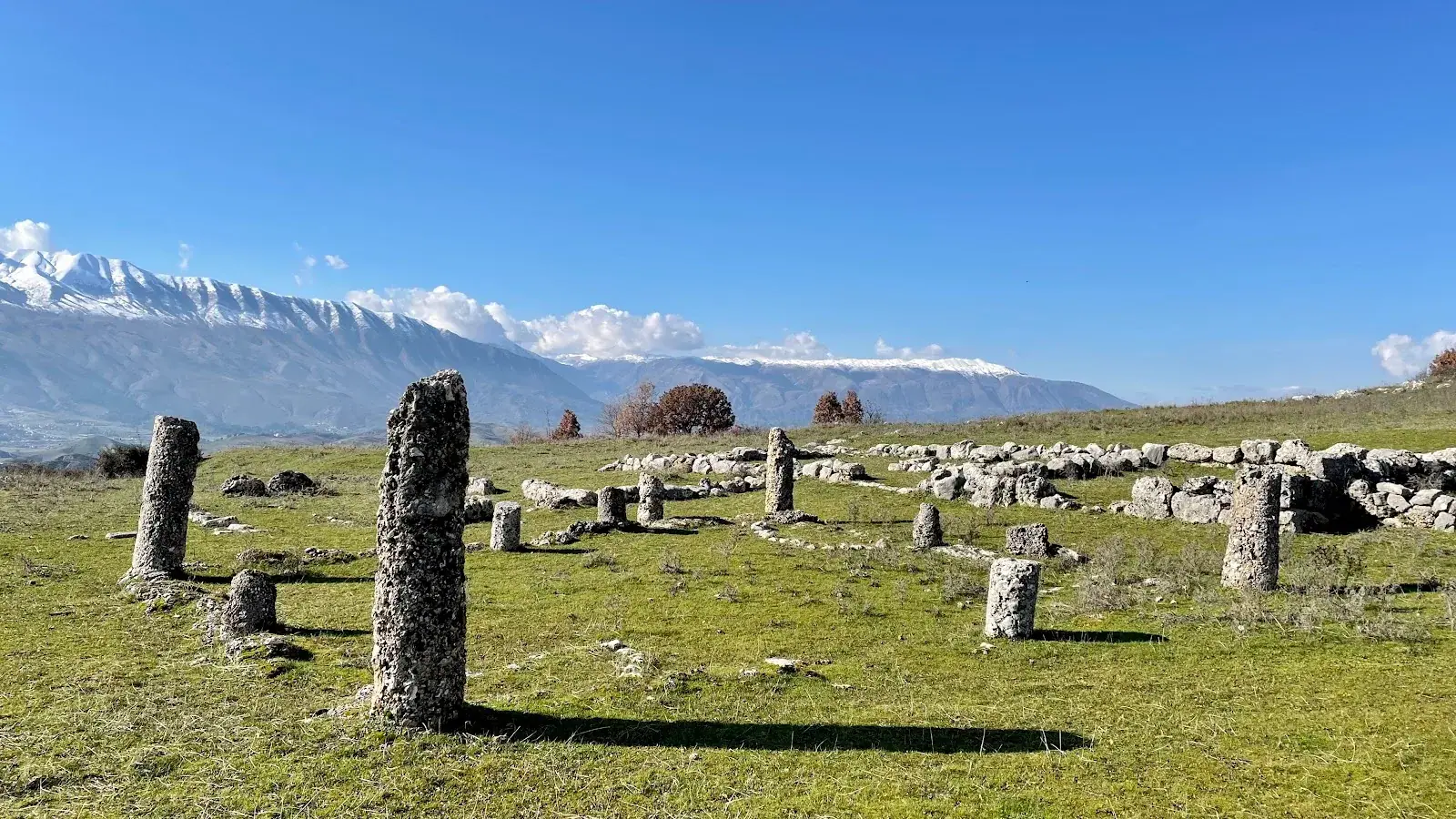
Hilltop above the Drino valley, ~14 km from Gjirokastër
Antigonea is a Hellenistic city founded around 295 BC by King Pyrrhus (of "Pyrrhic victory" fame) and named for his wife Antigone. It once commanded the Drino valley from a long hilltop ridge; today it's an archaeological park of foundations and walls, with wide views over the valley.
Pyrrhus, king of the Molossians (319–272 BC), founded Antigonea around 295 BC and named it after Antigone, his wife and stepdaughter of Ptolemy of Egypt. The city flourished as an Epirote stronghold before the Romans destroyed it in 167 BC. What survives is the footprint of that Hellenistic city: defensive walls, a stoa, and houses with mosaic fragments, spread across a hilltop that makes the ancient scale legible.
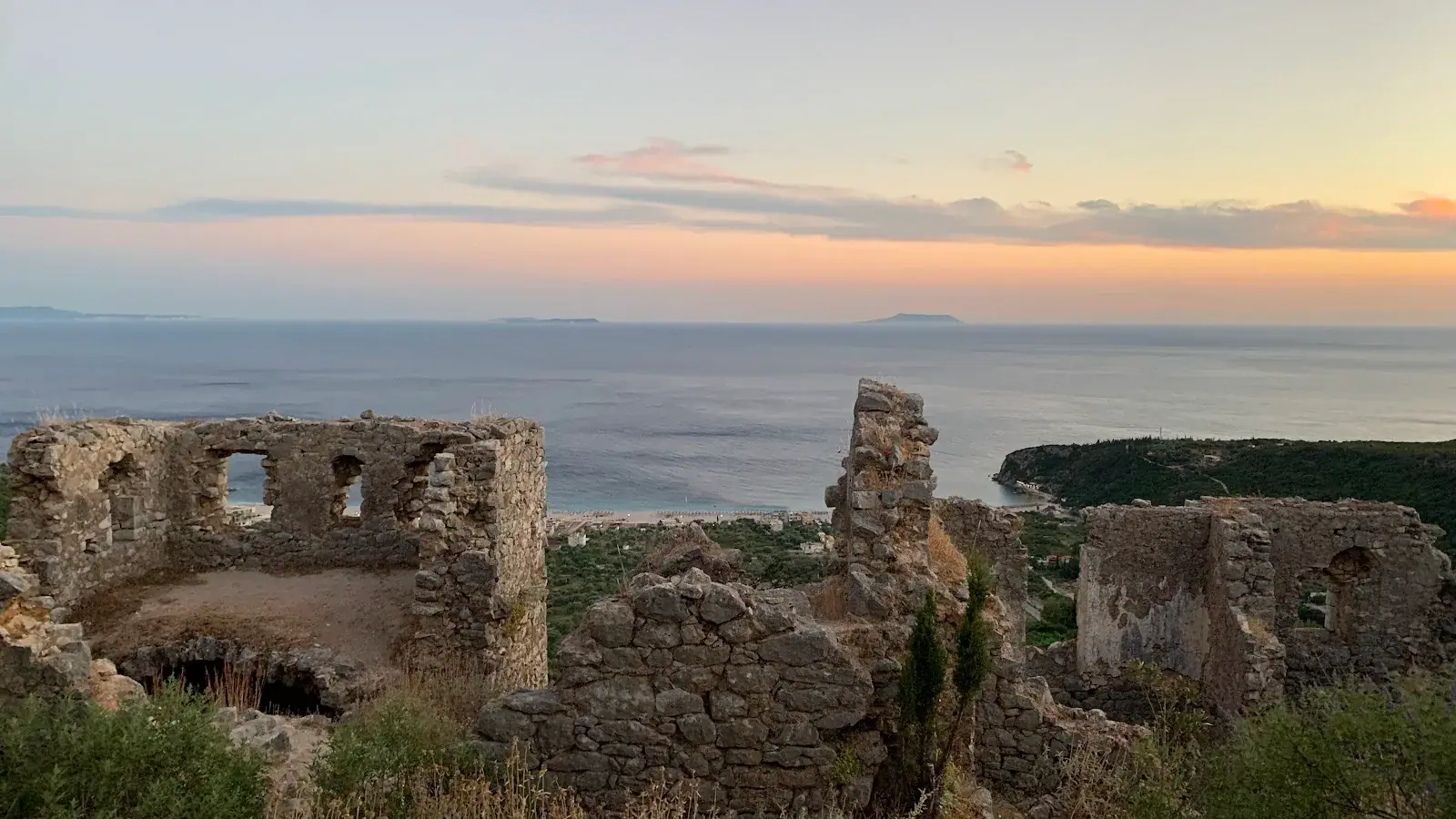
Hellenistic city walls tracing the ridge, the stoa and civic centre, house foundations with mosaic fragments, and sweeping Drino valley panoramas. It's a site read from its outlines rather than standing buildings.
About 14 km / 30 minutes by car from Gjirokastër (≈1.5 hours from Saranda via the Drino valley), up an access road to the hilltop park. No public transport, so drive or take a guided tour. Pairs naturally with Hadrianopolis and Gjirokastër.
Cooler morning or late afternoon; spring to autumn for comfort on the exposed ridge
History, practical tips, and route notes in long form. The article that goes deeper than this page.
Antigonea was founded around 295 BC by King Pyrrhus of Epirus, famous for his "Pyrrhic victories" against Rome, who named the city after his wife Antigone, stepdaughter of Ptolemy of Egypt. It was an important Epirote city until the Romans destroyed it in 167 BC.
An archaeological park of Hellenistic ruins: city walls tracing the hilltop, the stoa and civic centre, house foundations with mosaic fragments, and sweeping Drino valley views. It's a site read from outlines rather than standing buildings, large in scale and rarely crowded.
It's about 14 km / 30 minutes by car from Gjirokastër, up an access road to the hilltop park. There's no public transport to the site, so drive or take a guided tour. Pair it with the Hadrianopolis Roman theatre for a full archaeological day in the Drino valley.
Compare live hotel, apartment, and guesthouse prices near Antigonea Archaeological Park on the map. Filter by your dates and budget.
Something missing or incorrect? Email us at info@himara.net