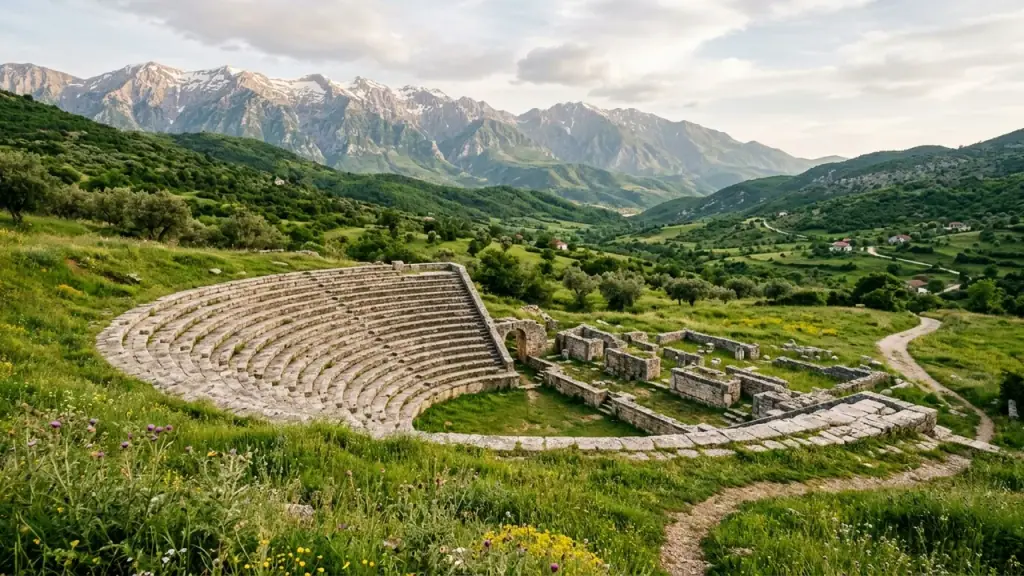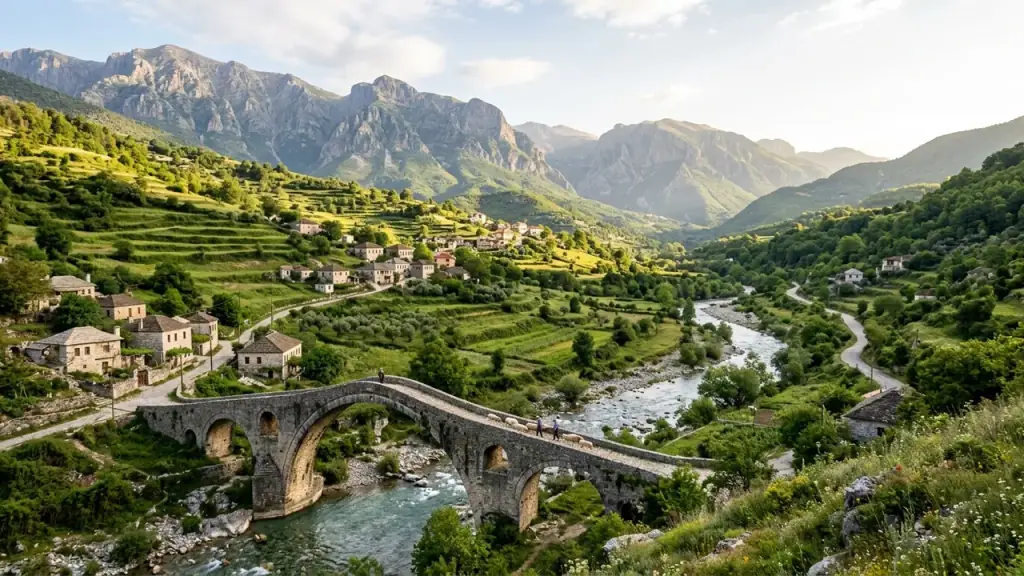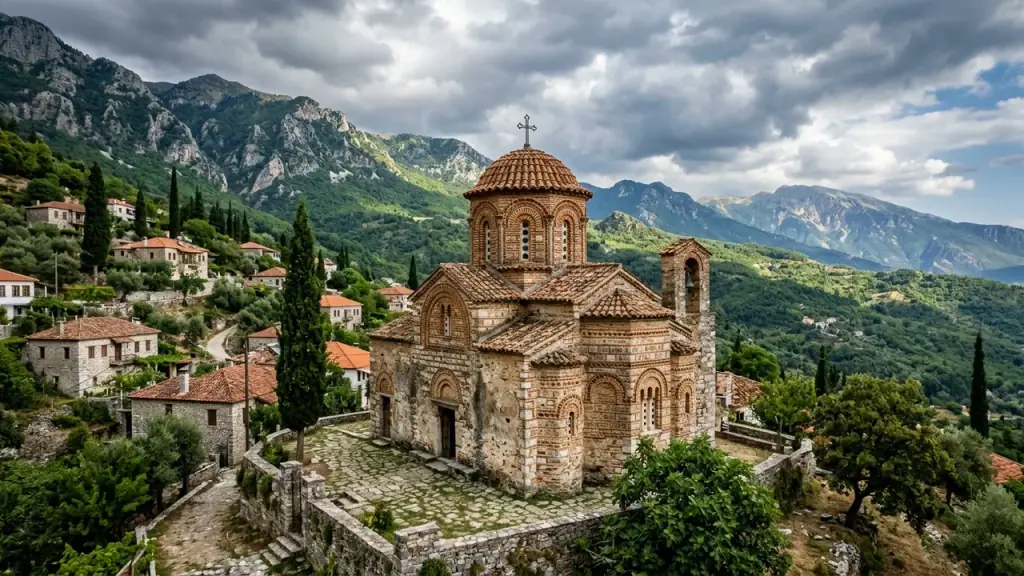
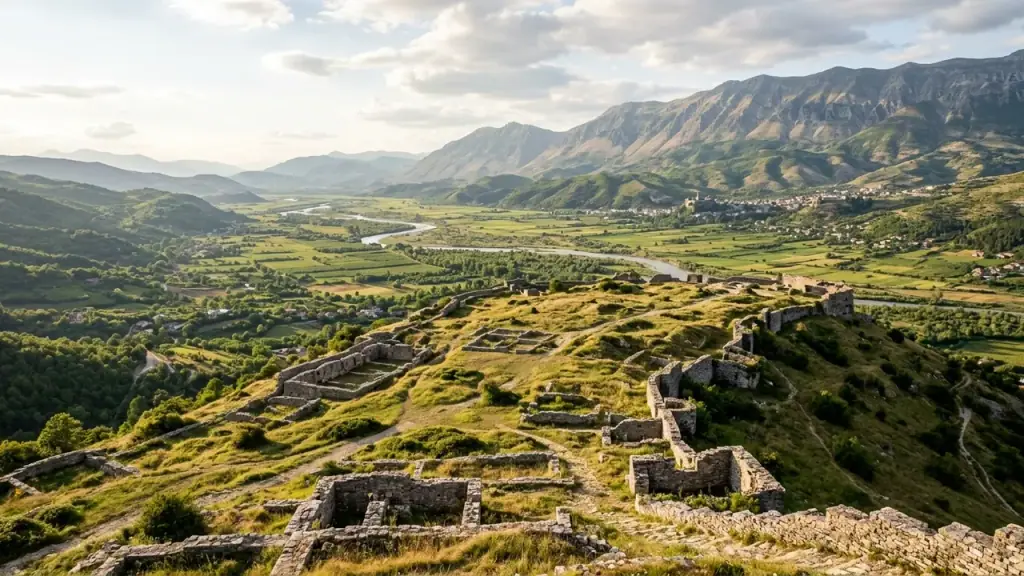
Antigonea is one of southern Albania's most atmospheric ancient sites precisely because so few people make the climb. King Pyrrhus founded it around 295 BC and named it for his wife Antigone. Pyrrhus was the warrior-king whose costly victories gave us the phrase "Pyrrhic victory". The city once commanded the Drino valley from a long hilltop ridge. Today it's an archaeological park of foundations, walls and a powerful sense of scale, with valley views that reward the visit as much as the ruins do. For travelers based in Gjirokastër, it's a quiet, rewarding half-day into deep antiquity.
The history
Pyrrhus, king of the Molossians (319–272 BC), founded Antigonea around 295 BC and named it after Antigone, his wife and the stepdaughter of Ptolemy of Egypt, one of Alexander the Great's generals. The city flourished as an Epirote stronghold before being destroyed by the Romans in 167 BC. What survives today is the footprint of that Hellenistic city, spread across a hilltop that makes the ancient scale immediately legible: defensive walls, a stoa, houses with mosaic fragments.
What to see
| Feature | Detail |
|---|---|
| City walls | Hellenistic fortifications tracing the ridge |
| The stoa & agora area | The civic heart of the ancient city |
| House foundations | Including mosaic fragments |
| Drino valley views | Wide panoramas, worth the visit alone |
| Setting | A national archaeological park, ~14 km from Gjirokastër |
Antigonea is a site for the imagination. You're reading a city from its outlines rather than touring standing buildings. The reward is the combination of genuine antiquity and a near-empty hilltop with sweeping views. Bring water, sun protection, and decent shoes.
How to visit Antigonea from Gjirokastër
| Detail | Info |
|---|---|
| From Gjirokastër | ~14 km / ~30 min by car |
| From Saranda | ~1.5 hr via the Drino valley |
| Best paired with | Hadrianopolis, Gjirokastër |
| Facilities | Minimal, come prepared |
A car is the practical way to reach Antigonea; the access road climbs to the hilltop park. It pairs naturally with the other Drino-valley sites. Combine it with the Roman theatre at Hadrianopolis and the UNESCO stone city of Gjirokastër for a full day of southern Albanian history. Guided tours from Gjirokastër are listed on GetYourGuide. It also fits the Inland South Albania Road Trip.
FAQ
Who founded Antigonea?
Antigonea was founded around 295 BC by King Pyrrhus of Epirus, famous for his "Pyrrhic victories" against Rome, who named the city after his wife Antigone, stepdaughter of Ptolemy of Egypt. It was an important Epirote city until the Romans destroyed it in 167 BC.
What is there to see at Antigonea?
Antigonea is an archaeological park of Hellenistic ruins: city walls tracing the hilltop, the stoa and civic centre, house foundations with mosaic fragments, and sweeping Drino valley views. It's a site read from outlines rather than standing buildings: atmospheric, large in scale, and rarely crowded.
How do you get to Antigonea from Gjirokastër?
It's about 14 km / 30 minutes by car from Gjirokastër, up an access road to the hilltop park. There's no public transport to the site, so drive or take a guided tour. Pair it with the Hadrianopolis Roman theatre for a full archaeological day in the Drino valley.
Bottom line
Antigonea is a rewarding deep-history detour: Pyrrhus's 3rd-century-BC city on a hilltop above the Drino valley, big on scale and atmosphere, light on crowds. Pair it with Hadrianopolis and Gjirokastër. Bring water and good shoes, and let the outlines and the view do the work. For anyone drawn to ancient Albania beyond Butrint, it's one of the least visited ancient sites in the south.